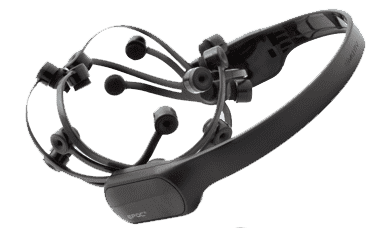
The Complete Guide to Dry Electrode EEG Headsets
Emotiv
Updated on
Feb 26, 2026
The Complete Guide to Dry Electrode EEG Headsets
Emotiv
Updated on
Feb 26, 2026
The Complete Guide to Dry Electrode EEG Headsets
Emotiv
Updated on
Feb 26, 2026
Fields like brain-computer interfaces and neuromarketing are no longer confined to university labs. They are moving into our homes, workplaces, and daily lives. This progress is powered by technology that is more portable, comfortable, and easier to use than ever before. At the heart of this shift is the dry electrode EEG headset. By removing the need for gels and complicated prep, these devices make it possible to study human behavior in natural settings and build practical BCI applications. This guide will explore how this technology works, what to look for in a device, and how it is powering the next wave of innovation.
Key Takeaways
Simplify Data Collection with a Gel-Free Setup: Dry electrode headsets eliminate the need for conductive gels, which means you can get started faster, provide a more comfortable experience for participants, and clean up in seconds.
Select a Headset Based on Your Specific Goals: The best device for you depends on your project's needs, so consider factors like channel count for data resolution and software compatibility for analysis to find the right match for your research or development work.
Ensure a Secure Fit for Reliable Data: A snug yet comfortable fit is crucial for capturing high-quality brain data because it ensures consistent sensor contact and minimizes noise from small movements or muscle tension.
What Is a Dry Electrode EEG Headset?
A dry electrode EEG headset is a device that measures your brain's electrical activity without needing any conductive gels or skin preparation. Think of it as the next step in brain-sensing technology, designed to make electroencephalography (EEG) more accessible and user-friendly for a wide range of applications. Traditionally, getting a good EEG reading involved a somewhat messy and time-consuming process with pastes and gels. Dry electrode systems change that completely by simplifying the entire experience from setup to cleanup.
This innovation has opened up new possibilities for everyone from researchers to developers. Because they are so easy to use, these headsets are perfect for studies outside of a traditional lab, for developing brain-computer interface applications, or for exploring personal cognitive wellness tools. They are also ideal for long-term studies where comfort is key. Essentially, dry electrode headsets offer a streamlined way to gather high-quality brain data, removing many of the old barriers to entry and making advanced neuroscience research more practical than ever before.
How Do Dry Electrodes Work?
So, how do they work without the gel? It's surprisingly straightforward. Dry electrodes are designed to make direct, firm contact with your scalp. These sensors are sensitive enough to pick up the faint electrical signals produced by your brain right through your hair and skin. They are often made from unique materials or have specialized coatings that facilitate this connection without needing a conductive medium. The headset's design ensures the sensors stay in place, providing a stable connection for reliable data collection throughout your session. This direct-contact method is what makes the gel-free experience possible.
Dry vs. Wet Electrodes: What's the Difference?
To really appreciate dry electrodes, it helps to know what they're replacing. A traditional "wet" EEG setup uses small metal discs that are applied to the scalp with a conductive gel or paste. Sometimes, this even requires a light abrasion of the skin to get a clear signal. In contrast, dry electrodes are a game-changer for convenience. The setup is much faster, there's no sticky residue to clean out of your hair afterward, and the experience is generally more comfortable. Our Insight headset, for example, is designed with polymer sensors for a quick, gel-free setup. While wet electrodes were long considered the gold standard for signal quality, advancements in dry sensor technology mean they now provide highly comparable data for many applications.
Why Choose a Dry Electrode EEG Headset?
If you're exploring EEG technology, you've probably noticed that dry electrode headsets are becoming increasingly popular. The reason is simple: they make brain data collection much more practical and accessible. Instead of dealing with messy gels and complicated prep work, dry electrodes offer a streamlined experience without sacrificing the core function of gathering brain data. This convenience opens up new possibilities for researchers, developers, and anyone interested in brain-computer interfaces.
Choosing a dry electrode headset means you can spend less time on setup and more time on what really matters, whether that's conducting academic research, developing an application, or exploring neurofeedback. Let's break down the key advantages that make this technology a game-changer.
Enjoy a Quick, Gel-Free Setup
One of the biggest hurdles with traditional EEG has always been the setup time. Wet electrodes require you to apply a conductive gel to the scalp to ensure a good connection, a process that can take anywhere from 15 to 30 minutes. Dry electrodes eliminate this step entirely. Because they make direct contact with the scalp, you can get a headset like the Emotiv Insight up and running in just a few minutes. This gel-free approach not only saves a significant amount of time but also makes the entire process much less intimidating for participants and users who are new to EEG.
Stay Comfortable During Longer Sessions
Comfort is crucial, especially when you need to collect data over an extended period. Wet electrodes can feel cold, sticky, and uncomfortable, and they always leave behind a gel residue that needs to be washed out. Dry electrodes provide a much cleaner and more pleasant experience. Since there’s no gel, there’s no mess to clean up afterward. This makes them ideal for longer sessions, like those in neuromarketing studies, where participant comfort is essential for gathering authentic data. A comfortable participant is more likely to remain still and engaged, which helps maintain signal quality.
Benefit from Better Hygiene and Reusability
When you’re working with multiple participants, hygiene is a top priority. Dry electrode headsets are inherently easier to clean and maintain than their wet-electrode counterparts. You can simply wipe down the sensors between uses, ensuring a sanitary process for every person. This makes them a practical choice for research labs, educational settings, and development teams where headsets are shared. The durability and reusability of dry sensors also mean you won't have to worry about constantly replacing components, making them a reliable tool for long-term projects.
Save Time and Money with Less Maintenance
The efficiency of dry electrodes translates directly into time and cost savings. By cutting down setup time, you can run more sessions in a day, making your research or development process more productive. You also eliminate the recurring cost of purchasing conductive gels, pastes, and other consumables required for wet EEG systems. This makes dry electrode headsets a more economical option over the long run. For developers and researchers working on a budget, these savings can make a significant difference, allowing resources to be allocated to other critical areas of a project.
What to Look for in a Dry Electrode EEG Headset
Choosing the right dry electrode EEG headset feels a lot like picking the right tool for a project. The best one for you depends entirely on what you plan to do. Whether you're conducting detailed academic research, developing a new brain-computer interface, or exploring cognitive wellness applications, certain features will be more important than others. To help you make an informed decision, let's walk through the key factors to consider, from the technical specifications to the software that brings the data to life. Thinking about these elements beforehand will ensure you get a device that truly fits your needs and helps you achieve your goals.
Check for Signal Quality and Sampling Rate
The core of any EEG system is its ability to capture clean, accurate brain data. Signal quality is paramount. For dry electrodes to be a viable alternative to traditional wet setups, they must provide high-quality signals with minimal noise. This ensures your results are reliable. Look for headsets with advanced sensor technology designed to make solid contact with the scalp. The sampling rate, measured in Hertz (Hz), tells you how many data points the headset records per second. A higher sampling rate captures more detailed information about brain activity, which is crucial for studying fast neural responses. You can usually find these specifications on a product’s technical details page, like those for our Epoc X headset.
Consider Channel Count and Placement
The number of channels on a headset corresponds to the number of electrodes collecting data from your scalp. A higher channel count provides greater spatial resolution, meaning you can pinpoint the origin of brain signals with more accuracy. For some applications, like simple biofeedback or basic brain-computer interface commands, a headset with fewer channels, like our 5-channel Insight, might be perfect. However, for complex academic studies or detailed brain mapping, you’ll likely need a multi-channel device, such as the 14-channel Epoc X or 32-channel Flex. The placement of these channels, often following the international 10-20 system, also determines which brain regions you can gather data from.
Look at Battery Life and Connectivity
Practical features like battery life and connectivity can make a huge difference in your user experience, especially during long recording sessions. You don't want your headset to die in the middle of an important experiment. Look for a device that offers several hours of continuous use on a single charge. Connectivity is another key consideration. Most modern dry EEG headsets use wireless connections like Bluetooth to transmit data to a computer or mobile device. This freedom from wires is a major advantage, allowing for more natural movement and making studies in real-world environments possible. A stable, reliable connection is essential to prevent data loss.
Verify Software Compatibility and Data Tools
A great EEG headset is only as powerful as the software that supports it. Before you commit to a device, check what software tools are available. Does the manufacturer offer a user-friendly application for viewing data in real-time? For more advanced users, look for a professional-grade platform that provides in-depth analysis and visualization tools, like our EmotivPRO software. If you're a developer, you'll want to see if there's a software development kit (SDK) or application programming interface (API) available. This will allow you to build custom applications and integrate the EEG data into your own projects, opening up a world of new research and use-cases.
Find a Headset in Your Price Range
Finally, your budget will play a significant role in your decision. The cost of dry electrode EEG headsets can vary widely, often depending on the channel count, signal quality, and included software packages. An entry-level device might be suitable for personal projects or educational purposes, while a high-density, research-grade system will represent a more significant investment. It's helpful to outline your project's specific needs so you can find a headset that meets your technical requirements without overspending. By balancing features and cost, you can find the right device to help you achieve your goals. You can explore a range of Emotiv products to see how features and pricing align.
Find the Right Dry Electrode EEG Headset for Your Needs
Choosing the right EEG headset comes down to what you want to accomplish. Whether you’re conducting in-depth scientific studies, developing your first BCI application, or looking for a discreet way to gather data in a real-world setting, there’s a device designed for your specific goals. Let’s look at a few Emotiv headsets to help you find the perfect match for your project.
For Multi-Channel Research: Emotiv Epoc X
If you’re a researcher who needs high-density data for complex studies, the Emotiv Epoc X is your go-to professional tool. With 14 channels, it provides the detailed spatial resolution required for serious academic research and education. This headset strikes a great balance between comprehensive data collection and the convenience of a portable, wireless design. The setup is quick, allowing you to focus more on your experiment and less on preparation. The Epoc X is built for scientists and innovators who need reliable, research-grade brain data to power their work in fields like neuroscience, psychology, and engineering.
For Everyday Applications: Emotiv Insight
For those just starting their journey with EEG or developing applications, the Emotiv Insight is the perfect entry point. This 5-channel wireless headset offers a fantastic blend of performance and accessibility, making it ideal for students, developers, and BCI enthusiasts. It provides a solid foundation for a wide range of projects, from building a simple brain-computer interface to exploring personal cognitive metrics. The Insight is designed to be user-friendly, so you can get it up and running quickly without needing extensive technical knowledge. It’s a versatile and affordable option for learning, creating, and experimenting with brain data.
For Unobtrusive Data Collection: Emotiv MN8
When you need to collect data discreetly in a natural environment, the Emotiv MN8 is the ideal solution. Designed as a pair of smart earbuds, the MN8 allows for seamless data collection without the distraction of a traditional headset. This makes it perfect for neuromarketing studies where you want to capture genuine reactions or for anyone interested in accessing cognitive wellness tools throughout their day. The unobtrusive design ensures that the technology doesn't interfere with the user's experience, providing more authentic data from real-world situations. Its ease of use and comfortable fit make it a powerful tool for continuous data gathering on the go.
What Are the Best Applications for Dry Electrode Headsets?
The real magic of dry electrode EEG headsets is how they’ve moved brain data collection out of the lab and into the real world. Because they are so easy to set up and comfortable to wear, they have become essential tools across a wide range of fields. From academic labs to marketing agencies and development studios, professionals are using this technology to gather insights that were once incredibly difficult to obtain. Whether you're a researcher, developer, or just curious about your own cognitive processes, dry electrode headsets offer a practical way to explore brain activity.
Power Your Academic Research
For researchers, dry electrodes are a game-changer. The ability to operate without conductive gel or time-consuming skin preparation means you can collect data more efficiently, whether you're in a lab or out in the field. This innovation makes it possible to conduct studies in more naturalistic settings, capturing brain activity as participants go about their tasks. This ease of use allows for larger sample sizes and faster turnaround times, helping you advance your academic research and gather high-quality data with less friction for both you and your subjects.
Develop Brain-Computer Interfaces
Brain-computer interface (BCI) technology is one of the most exciting frontiers in tech, and dry electrode headsets are helping to lead the charge. Because they are so much more user-friendly than their wet-electrode counterparts, they make BCI applications more accessible for everyday use. Developers can create more practical and wearable systems that people can use comfortably in their homes or workplaces. This is a key step in creating the next generation of assistive technologies and interactive experiences powered by a direct brain-computer interface.
Conduct Neuromarketing Studies
Understanding how people truly react to advertisements, products, and brand experiences is the core of neuromarketing. Dry electrode headsets are ideal for this work because they can capture real-time brain responses in a non-invasive way. You can see how a person’s brain activity changes as they watch a commercial or browse a website, all without the distraction of a complex lab setup. This allows for more authentic data collection, giving you genuine insights into consumer attention and emotional engagement. Our tools make it simple to conduct effective neuromarketing studies.
Explore Cognitive Wellness and Neurofeedback
There's a growing interest in using EEG technology for personal insight and training. The comfort, mobility, and ease of use of dry electrode headsets make them a great fit for personal applications. They provide access to tools for neurofeedback and allow you to explore your own brain activity during different tasks, like meditation or focused work. While not a medical device, a dry headset can be a powerful instrument for anyone interested in cognitive wellness and learning more about their own mental states through objective data.
What Challenges Can You Expect with Dry Electrode Technology?
Dry electrode headsets make EEG technology incredibly accessible, but it’s helpful to understand their unique characteristics to get the best results. While they remove the hassle of gels and extensive prep time, the direct-to-skin contact presents a few challenges that are easy to manage once you know what to look for. The key is to balance a quick setup with clean, reliable data.
Getting familiar with these nuances will help you troubleshoot issues and feel more confident in the data you collect. Think of it less as a list of drawbacks and more as a guide to using your dry electrode headset like a pro. With the right techniques, you can easily overcome these hurdles and capture high-quality brain data for your projects.
Understand Signal Quality
One of the most common questions about dry electrodes revolves around signal quality. Because they don’t use a conductive gel, dry sensors can have a higher impedance, which is the measure of opposition to electrical current. This can sometimes make the signal more susceptible to noise from non-brain activity, like muscle tension in the jaw or blinking.
This doesn't mean the data is unreliable. It just means that a good setup is crucial. High-quality dry electrode systems are designed to account for this, but you’ll get the cleanest data by ensuring the subject is relaxed and the environment is free from major electrical interference. Understanding the basics of what an EEG signal represents will help you better distinguish between brain activity and potential noise in your recordings.
Manage Impedance and Artifacts
Higher impedance and movement artifacts are two sides of the same coin. Artifacts are electrical signals picked up by the EEG that don’t come from the brain, and they are a common factor in any EEG recording. With dry electrodes, artifacts from small movements can be more pronounced if the headset doesn't have a secure fit.
To manage this, always check your sensor contact quality in your software before starting a session. Our EmotivPRO software, for example, gives you a real-time visual of sensor contact, so you can make adjustments on the fly. Encouraging your research participant to remain still and relaxed during recording periods is also a simple but effective way to ensure you’re capturing clean data.
Optimize for Comfort and Fit
Comfort is king, especially during longer recording sessions. But with dry electrodes, a good fit is also directly linked to signal quality. A headset that is too loose will fail to make consistent contact, leading to signal loss. On the other hand, a headset that is too tight can cause discomfort and even introduce artifacts from pressure on the scalp.
The goal is to find a snug, secure fit that applies gentle, even pressure across all sensor locations. Modern headsets like the Emotiv Epoc X are designed with flexible arms and pivoting sensor heads to adapt to different head shapes and sizes. Take a few minutes before each session to adjust the headset properly. This small step ensures both participant comfort and the collection of high-quality, reliable data.
How to Set Up and Optimize Your Dry Electrode Headset
Getting high-quality data from your dry electrode headset starts with a solid setup. While these devices are designed for ease of use, a few extra steps can make a significant difference in your results. Taking the time to properly position the headset, connect with your software, and minimize potential interference will ensure your sessions run smoothly. Think of it as setting the stage for a great performance; a little preparation goes a long way. Whether you're conducting formal research or exploring your own brain activity, these practices will help you gather the cleanest, most reliable data possible.
Calibrate and Integrate Your Software
Once your headset is comfortably in place, the next step is to connect it with the right software. This is where the raw electrical signals from your brain are translated into understandable data. To get started, you’ll need to pair your device with an application like our Emotiv App or the more advanced EmotivPRO. The software will guide you through a calibration process, which checks the signal quality of each sensor. This step is essential for confirming that the headset is measuring brain activity correctly and that the data you collect is a valid representation of neural signals.
Follow Best Practices for Data Collection
One of the biggest advantages of dry electrodes is that they work without messy gels or skin preparation. This allows you to get started much faster. To make the most of this technology, focus on creating a good recording environment. First, ensure the headset fits snugly but comfortably, with each sensor making firm contact with your scalp. This minimizes movement artifacts, which are non-brain signals caused by the headset shifting. Try to find a quiet space for your sessions and remain as still as possible, especially during sensitive recordings. Relaxing your jaw and facial muscles can also reduce muscle interference, giving you a cleaner EEG signal for your academic research or BCI project.
Troubleshoot Common Setup Issues
Even with a careful setup, you might run into a few common issues. The most frequent is high impedance, which means the connection between the sensor and your scalp isn't optimal. If your software shows a poor signal quality, try adjusting the headset to make sure the sensors have direct contact with your skin, pushing aside any hair that might be in the way. Another common challenge is dealing with artifacts from muscle movements or eye blinks. While our software has filters to help with this, you can also minimize them at the source. Simply relaxing and limiting unnecessary movements can significantly clean up your data, which is especially important for sensitive applications like brain-computer interfaces.
Where Can You Buy Dry Electrode EEG Headsets?
Once you've decided a dry electrode EEG headset is right for you, the next step is figuring out where to get one. You have a few great options, from buying straight from the source to working with a specialized reseller. Understanding these pathways, along with what influences price, will help you make a confident purchase.
Buy Directly from the Manufacturer
Going straight to the source is often the most straightforward way to purchase a dry electrode EEG headset. When you buy directly from a manufacturer like us at Emotiv, you know you’re getting the latest device with a full warranty and direct access to customer support. This path ensures authenticity and gives you a direct line for any questions about setup or software. Other companies, such as Wearable Sensing, also sell their dry EEG systems directly to customers. Buying direct is a great choice if you value having a close relationship with the company behind the technology and want to ensure you receive the most up-to-date product and information.
Find an Authorized Reseller
Another excellent option is to purchase your headset through an authorized reseller. These are trusted partners who specialize in neurotechnology and can often provide localized support, training, or bundled packages tailored to specific regions or applications. Buying from an authorized reseller guarantees you’re getting a genuine product, not a counterfeit, and that your warranty will be honored. For example, devices like the MindRove ARC 2 are available through various authorized channels. This route can be particularly helpful if you’re looking for in-person guidance or if a reseller is located closer to you, potentially simplifying shipping and logistics.
What Affects Price and Availability?
The price of dry electrode EEG headsets can vary quite a bit, so it helps to know what factors are at play. The biggest driver of cost is the channel count. A headset with more channels can capture more detailed brain activity data, which requires more advanced hardware. Prices can range from around $1,000 to well over $50,000, depending on the device's complexity. At Emotiv, we offer a spectrum of options, from the 5-channel Insight headset for everyday applications to the 14-channel Epoc X for research. Availability can also depend on your location and the manufacturer’s shipping capabilities, which is another reason why checking with both the direct source and local resellers is a smart move.
Related Articles
Frequently Asked Questions
How does the data quality of a dry electrode headset compare to a traditional wet electrode system? This is a great question. While wet electrodes have long been a standard in clinical settings, advancements in dry sensor technology have made them highly comparable for a vast range of applications. For many research and development projects, especially those conducted outside of a traditional lab, a high-quality dry headset provides reliable and clean data. The key is ensuring you have a secure fit, as this direct contact is what allows the sensors to capture clear brain signals.
Do I need to be a scientist to use one of these headsets? Absolutely not. While our headsets are powerful enough for serious academic research, they are designed with accessibility in mind. Our software provides a user-friendly experience that lets you see and work with your brain data right away, without needing a technical background. If you're a developer or researcher who wants to go deeper, more advanced tools are available, but anyone can get started.
How do I know how many channels I need? The right number of channels really depends on your goals. If you're developing an application, exploring neurofeedback, or building a simple brain-computer interface, a device with fewer channels like our 5-channel Insight is a perfect starting point. For more complex academic research where you need to pinpoint the origin of brain signals with greater accuracy, you'll want the higher spatial resolution offered by a multi-channel device like the 14-channel Epoc X.
What's the biggest mistake people make when first using a dry electrode headset? The most common oversight is rushing the setup and not getting a proper fit. Because dry electrodes rely on direct contact with the scalp, a snug and secure fit is essential for good signal quality. People sometimes don't take the extra minute to adjust the headset properly or check the sensor contact in the software. Taking that time ensures the sensors stay in place, which minimizes noise from movement and gives you much cleaner data.
Can I build my own applications with the data from an Emotiv headset? Yes, you can. We offer a software development kit (SDK) that allows developers to access our data streams and build custom applications. This is perfect for creating your own brain-computer interface, integrating EEG data into an existing project, or designing new tools for research or personal use. It gives you the freedom to innovate and bring your own ideas to life using our technology.
Fields like brain-computer interfaces and neuromarketing are no longer confined to university labs. They are moving into our homes, workplaces, and daily lives. This progress is powered by technology that is more portable, comfortable, and easier to use than ever before. At the heart of this shift is the dry electrode EEG headset. By removing the need for gels and complicated prep, these devices make it possible to study human behavior in natural settings and build practical BCI applications. This guide will explore how this technology works, what to look for in a device, and how it is powering the next wave of innovation.
Key Takeaways
Simplify Data Collection with a Gel-Free Setup: Dry electrode headsets eliminate the need for conductive gels, which means you can get started faster, provide a more comfortable experience for participants, and clean up in seconds.
Select a Headset Based on Your Specific Goals: The best device for you depends on your project's needs, so consider factors like channel count for data resolution and software compatibility for analysis to find the right match for your research or development work.
Ensure a Secure Fit for Reliable Data: A snug yet comfortable fit is crucial for capturing high-quality brain data because it ensures consistent sensor contact and minimizes noise from small movements or muscle tension.
What Is a Dry Electrode EEG Headset?
A dry electrode EEG headset is a device that measures your brain's electrical activity without needing any conductive gels or skin preparation. Think of it as the next step in brain-sensing technology, designed to make electroencephalography (EEG) more accessible and user-friendly for a wide range of applications. Traditionally, getting a good EEG reading involved a somewhat messy and time-consuming process with pastes and gels. Dry electrode systems change that completely by simplifying the entire experience from setup to cleanup.
This innovation has opened up new possibilities for everyone from researchers to developers. Because they are so easy to use, these headsets are perfect for studies outside of a traditional lab, for developing brain-computer interface applications, or for exploring personal cognitive wellness tools. They are also ideal for long-term studies where comfort is key. Essentially, dry electrode headsets offer a streamlined way to gather high-quality brain data, removing many of the old barriers to entry and making advanced neuroscience research more practical than ever before.
How Do Dry Electrodes Work?
So, how do they work without the gel? It's surprisingly straightforward. Dry electrodes are designed to make direct, firm contact with your scalp. These sensors are sensitive enough to pick up the faint electrical signals produced by your brain right through your hair and skin. They are often made from unique materials or have specialized coatings that facilitate this connection without needing a conductive medium. The headset's design ensures the sensors stay in place, providing a stable connection for reliable data collection throughout your session. This direct-contact method is what makes the gel-free experience possible.
Dry vs. Wet Electrodes: What's the Difference?
To really appreciate dry electrodes, it helps to know what they're replacing. A traditional "wet" EEG setup uses small metal discs that are applied to the scalp with a conductive gel or paste. Sometimes, this even requires a light abrasion of the skin to get a clear signal. In contrast, dry electrodes are a game-changer for convenience. The setup is much faster, there's no sticky residue to clean out of your hair afterward, and the experience is generally more comfortable. Our Insight headset, for example, is designed with polymer sensors for a quick, gel-free setup. While wet electrodes were long considered the gold standard for signal quality, advancements in dry sensor technology mean they now provide highly comparable data for many applications.
Why Choose a Dry Electrode EEG Headset?
If you're exploring EEG technology, you've probably noticed that dry electrode headsets are becoming increasingly popular. The reason is simple: they make brain data collection much more practical and accessible. Instead of dealing with messy gels and complicated prep work, dry electrodes offer a streamlined experience without sacrificing the core function of gathering brain data. This convenience opens up new possibilities for researchers, developers, and anyone interested in brain-computer interfaces.
Choosing a dry electrode headset means you can spend less time on setup and more time on what really matters, whether that's conducting academic research, developing an application, or exploring neurofeedback. Let's break down the key advantages that make this technology a game-changer.
Enjoy a Quick, Gel-Free Setup
One of the biggest hurdles with traditional EEG has always been the setup time. Wet electrodes require you to apply a conductive gel to the scalp to ensure a good connection, a process that can take anywhere from 15 to 30 minutes. Dry electrodes eliminate this step entirely. Because they make direct contact with the scalp, you can get a headset like the Emotiv Insight up and running in just a few minutes. This gel-free approach not only saves a significant amount of time but also makes the entire process much less intimidating for participants and users who are new to EEG.
Stay Comfortable During Longer Sessions
Comfort is crucial, especially when you need to collect data over an extended period. Wet electrodes can feel cold, sticky, and uncomfortable, and they always leave behind a gel residue that needs to be washed out. Dry electrodes provide a much cleaner and more pleasant experience. Since there’s no gel, there’s no mess to clean up afterward. This makes them ideal for longer sessions, like those in neuromarketing studies, where participant comfort is essential for gathering authentic data. A comfortable participant is more likely to remain still and engaged, which helps maintain signal quality.
Benefit from Better Hygiene and Reusability
When you’re working with multiple participants, hygiene is a top priority. Dry electrode headsets are inherently easier to clean and maintain than their wet-electrode counterparts. You can simply wipe down the sensors between uses, ensuring a sanitary process for every person. This makes them a practical choice for research labs, educational settings, and development teams where headsets are shared. The durability and reusability of dry sensors also mean you won't have to worry about constantly replacing components, making them a reliable tool for long-term projects.
Save Time and Money with Less Maintenance
The efficiency of dry electrodes translates directly into time and cost savings. By cutting down setup time, you can run more sessions in a day, making your research or development process more productive. You also eliminate the recurring cost of purchasing conductive gels, pastes, and other consumables required for wet EEG systems. This makes dry electrode headsets a more economical option over the long run. For developers and researchers working on a budget, these savings can make a significant difference, allowing resources to be allocated to other critical areas of a project.
What to Look for in a Dry Electrode EEG Headset
Choosing the right dry electrode EEG headset feels a lot like picking the right tool for a project. The best one for you depends entirely on what you plan to do. Whether you're conducting detailed academic research, developing a new brain-computer interface, or exploring cognitive wellness applications, certain features will be more important than others. To help you make an informed decision, let's walk through the key factors to consider, from the technical specifications to the software that brings the data to life. Thinking about these elements beforehand will ensure you get a device that truly fits your needs and helps you achieve your goals.
Check for Signal Quality and Sampling Rate
The core of any EEG system is its ability to capture clean, accurate brain data. Signal quality is paramount. For dry electrodes to be a viable alternative to traditional wet setups, they must provide high-quality signals with minimal noise. This ensures your results are reliable. Look for headsets with advanced sensor technology designed to make solid contact with the scalp. The sampling rate, measured in Hertz (Hz), tells you how many data points the headset records per second. A higher sampling rate captures more detailed information about brain activity, which is crucial for studying fast neural responses. You can usually find these specifications on a product’s technical details page, like those for our Epoc X headset.
Consider Channel Count and Placement
The number of channels on a headset corresponds to the number of electrodes collecting data from your scalp. A higher channel count provides greater spatial resolution, meaning you can pinpoint the origin of brain signals with more accuracy. For some applications, like simple biofeedback or basic brain-computer interface commands, a headset with fewer channels, like our 5-channel Insight, might be perfect. However, for complex academic studies or detailed brain mapping, you’ll likely need a multi-channel device, such as the 14-channel Epoc X or 32-channel Flex. The placement of these channels, often following the international 10-20 system, also determines which brain regions you can gather data from.
Look at Battery Life and Connectivity
Practical features like battery life and connectivity can make a huge difference in your user experience, especially during long recording sessions. You don't want your headset to die in the middle of an important experiment. Look for a device that offers several hours of continuous use on a single charge. Connectivity is another key consideration. Most modern dry EEG headsets use wireless connections like Bluetooth to transmit data to a computer or mobile device. This freedom from wires is a major advantage, allowing for more natural movement and making studies in real-world environments possible. A stable, reliable connection is essential to prevent data loss.
Verify Software Compatibility and Data Tools
A great EEG headset is only as powerful as the software that supports it. Before you commit to a device, check what software tools are available. Does the manufacturer offer a user-friendly application for viewing data in real-time? For more advanced users, look for a professional-grade platform that provides in-depth analysis and visualization tools, like our EmotivPRO software. If you're a developer, you'll want to see if there's a software development kit (SDK) or application programming interface (API) available. This will allow you to build custom applications and integrate the EEG data into your own projects, opening up a world of new research and use-cases.
Find a Headset in Your Price Range
Finally, your budget will play a significant role in your decision. The cost of dry electrode EEG headsets can vary widely, often depending on the channel count, signal quality, and included software packages. An entry-level device might be suitable for personal projects or educational purposes, while a high-density, research-grade system will represent a more significant investment. It's helpful to outline your project's specific needs so you can find a headset that meets your technical requirements without overspending. By balancing features and cost, you can find the right device to help you achieve your goals. You can explore a range of Emotiv products to see how features and pricing align.
Find the Right Dry Electrode EEG Headset for Your Needs
Choosing the right EEG headset comes down to what you want to accomplish. Whether you’re conducting in-depth scientific studies, developing your first BCI application, or looking for a discreet way to gather data in a real-world setting, there’s a device designed for your specific goals. Let’s look at a few Emotiv headsets to help you find the perfect match for your project.
For Multi-Channel Research: Emotiv Epoc X
If you’re a researcher who needs high-density data for complex studies, the Emotiv Epoc X is your go-to professional tool. With 14 channels, it provides the detailed spatial resolution required for serious academic research and education. This headset strikes a great balance between comprehensive data collection and the convenience of a portable, wireless design. The setup is quick, allowing you to focus more on your experiment and less on preparation. The Epoc X is built for scientists and innovators who need reliable, research-grade brain data to power their work in fields like neuroscience, psychology, and engineering.
For Everyday Applications: Emotiv Insight
For those just starting their journey with EEG or developing applications, the Emotiv Insight is the perfect entry point. This 5-channel wireless headset offers a fantastic blend of performance and accessibility, making it ideal for students, developers, and BCI enthusiasts. It provides a solid foundation for a wide range of projects, from building a simple brain-computer interface to exploring personal cognitive metrics. The Insight is designed to be user-friendly, so you can get it up and running quickly without needing extensive technical knowledge. It’s a versatile and affordable option for learning, creating, and experimenting with brain data.
For Unobtrusive Data Collection: Emotiv MN8
When you need to collect data discreetly in a natural environment, the Emotiv MN8 is the ideal solution. Designed as a pair of smart earbuds, the MN8 allows for seamless data collection without the distraction of a traditional headset. This makes it perfect for neuromarketing studies where you want to capture genuine reactions or for anyone interested in accessing cognitive wellness tools throughout their day. The unobtrusive design ensures that the technology doesn't interfere with the user's experience, providing more authentic data from real-world situations. Its ease of use and comfortable fit make it a powerful tool for continuous data gathering on the go.
What Are the Best Applications for Dry Electrode Headsets?
The real magic of dry electrode EEG headsets is how they’ve moved brain data collection out of the lab and into the real world. Because they are so easy to set up and comfortable to wear, they have become essential tools across a wide range of fields. From academic labs to marketing agencies and development studios, professionals are using this technology to gather insights that were once incredibly difficult to obtain. Whether you're a researcher, developer, or just curious about your own cognitive processes, dry electrode headsets offer a practical way to explore brain activity.
Power Your Academic Research
For researchers, dry electrodes are a game-changer. The ability to operate without conductive gel or time-consuming skin preparation means you can collect data more efficiently, whether you're in a lab or out in the field. This innovation makes it possible to conduct studies in more naturalistic settings, capturing brain activity as participants go about their tasks. This ease of use allows for larger sample sizes and faster turnaround times, helping you advance your academic research and gather high-quality data with less friction for both you and your subjects.
Develop Brain-Computer Interfaces
Brain-computer interface (BCI) technology is one of the most exciting frontiers in tech, and dry electrode headsets are helping to lead the charge. Because they are so much more user-friendly than their wet-electrode counterparts, they make BCI applications more accessible for everyday use. Developers can create more practical and wearable systems that people can use comfortably in their homes or workplaces. This is a key step in creating the next generation of assistive technologies and interactive experiences powered by a direct brain-computer interface.
Conduct Neuromarketing Studies
Understanding how people truly react to advertisements, products, and brand experiences is the core of neuromarketing. Dry electrode headsets are ideal for this work because they can capture real-time brain responses in a non-invasive way. You can see how a person’s brain activity changes as they watch a commercial or browse a website, all without the distraction of a complex lab setup. This allows for more authentic data collection, giving you genuine insights into consumer attention and emotional engagement. Our tools make it simple to conduct effective neuromarketing studies.
Explore Cognitive Wellness and Neurofeedback
There's a growing interest in using EEG technology for personal insight and training. The comfort, mobility, and ease of use of dry electrode headsets make them a great fit for personal applications. They provide access to tools for neurofeedback and allow you to explore your own brain activity during different tasks, like meditation or focused work. While not a medical device, a dry headset can be a powerful instrument for anyone interested in cognitive wellness and learning more about their own mental states through objective data.
What Challenges Can You Expect with Dry Electrode Technology?
Dry electrode headsets make EEG technology incredibly accessible, but it’s helpful to understand their unique characteristics to get the best results. While they remove the hassle of gels and extensive prep time, the direct-to-skin contact presents a few challenges that are easy to manage once you know what to look for. The key is to balance a quick setup with clean, reliable data.
Getting familiar with these nuances will help you troubleshoot issues and feel more confident in the data you collect. Think of it less as a list of drawbacks and more as a guide to using your dry electrode headset like a pro. With the right techniques, you can easily overcome these hurdles and capture high-quality brain data for your projects.
Understand Signal Quality
One of the most common questions about dry electrodes revolves around signal quality. Because they don’t use a conductive gel, dry sensors can have a higher impedance, which is the measure of opposition to electrical current. This can sometimes make the signal more susceptible to noise from non-brain activity, like muscle tension in the jaw or blinking.
This doesn't mean the data is unreliable. It just means that a good setup is crucial. High-quality dry electrode systems are designed to account for this, but you’ll get the cleanest data by ensuring the subject is relaxed and the environment is free from major electrical interference. Understanding the basics of what an EEG signal represents will help you better distinguish between brain activity and potential noise in your recordings.
Manage Impedance and Artifacts
Higher impedance and movement artifacts are two sides of the same coin. Artifacts are electrical signals picked up by the EEG that don’t come from the brain, and they are a common factor in any EEG recording. With dry electrodes, artifacts from small movements can be more pronounced if the headset doesn't have a secure fit.
To manage this, always check your sensor contact quality in your software before starting a session. Our EmotivPRO software, for example, gives you a real-time visual of sensor contact, so you can make adjustments on the fly. Encouraging your research participant to remain still and relaxed during recording periods is also a simple but effective way to ensure you’re capturing clean data.
Optimize for Comfort and Fit
Comfort is king, especially during longer recording sessions. But with dry electrodes, a good fit is also directly linked to signal quality. A headset that is too loose will fail to make consistent contact, leading to signal loss. On the other hand, a headset that is too tight can cause discomfort and even introduce artifacts from pressure on the scalp.
The goal is to find a snug, secure fit that applies gentle, even pressure across all sensor locations. Modern headsets like the Emotiv Epoc X are designed with flexible arms and pivoting sensor heads to adapt to different head shapes and sizes. Take a few minutes before each session to adjust the headset properly. This small step ensures both participant comfort and the collection of high-quality, reliable data.
How to Set Up and Optimize Your Dry Electrode Headset
Getting high-quality data from your dry electrode headset starts with a solid setup. While these devices are designed for ease of use, a few extra steps can make a significant difference in your results. Taking the time to properly position the headset, connect with your software, and minimize potential interference will ensure your sessions run smoothly. Think of it as setting the stage for a great performance; a little preparation goes a long way. Whether you're conducting formal research or exploring your own brain activity, these practices will help you gather the cleanest, most reliable data possible.
Calibrate and Integrate Your Software
Once your headset is comfortably in place, the next step is to connect it with the right software. This is where the raw electrical signals from your brain are translated into understandable data. To get started, you’ll need to pair your device with an application like our Emotiv App or the more advanced EmotivPRO. The software will guide you through a calibration process, which checks the signal quality of each sensor. This step is essential for confirming that the headset is measuring brain activity correctly and that the data you collect is a valid representation of neural signals.
Follow Best Practices for Data Collection
One of the biggest advantages of dry electrodes is that they work without messy gels or skin preparation. This allows you to get started much faster. To make the most of this technology, focus on creating a good recording environment. First, ensure the headset fits snugly but comfortably, with each sensor making firm contact with your scalp. This minimizes movement artifacts, which are non-brain signals caused by the headset shifting. Try to find a quiet space for your sessions and remain as still as possible, especially during sensitive recordings. Relaxing your jaw and facial muscles can also reduce muscle interference, giving you a cleaner EEG signal for your academic research or BCI project.
Troubleshoot Common Setup Issues
Even with a careful setup, you might run into a few common issues. The most frequent is high impedance, which means the connection between the sensor and your scalp isn't optimal. If your software shows a poor signal quality, try adjusting the headset to make sure the sensors have direct contact with your skin, pushing aside any hair that might be in the way. Another common challenge is dealing with artifacts from muscle movements or eye blinks. While our software has filters to help with this, you can also minimize them at the source. Simply relaxing and limiting unnecessary movements can significantly clean up your data, which is especially important for sensitive applications like brain-computer interfaces.
Where Can You Buy Dry Electrode EEG Headsets?
Once you've decided a dry electrode EEG headset is right for you, the next step is figuring out where to get one. You have a few great options, from buying straight from the source to working with a specialized reseller. Understanding these pathways, along with what influences price, will help you make a confident purchase.
Buy Directly from the Manufacturer
Going straight to the source is often the most straightforward way to purchase a dry electrode EEG headset. When you buy directly from a manufacturer like us at Emotiv, you know you’re getting the latest device with a full warranty and direct access to customer support. This path ensures authenticity and gives you a direct line for any questions about setup or software. Other companies, such as Wearable Sensing, also sell their dry EEG systems directly to customers. Buying direct is a great choice if you value having a close relationship with the company behind the technology and want to ensure you receive the most up-to-date product and information.
Find an Authorized Reseller
Another excellent option is to purchase your headset through an authorized reseller. These are trusted partners who specialize in neurotechnology and can often provide localized support, training, or bundled packages tailored to specific regions or applications. Buying from an authorized reseller guarantees you’re getting a genuine product, not a counterfeit, and that your warranty will be honored. For example, devices like the MindRove ARC 2 are available through various authorized channels. This route can be particularly helpful if you’re looking for in-person guidance or if a reseller is located closer to you, potentially simplifying shipping and logistics.
What Affects Price and Availability?
The price of dry electrode EEG headsets can vary quite a bit, so it helps to know what factors are at play. The biggest driver of cost is the channel count. A headset with more channels can capture more detailed brain activity data, which requires more advanced hardware. Prices can range from around $1,000 to well over $50,000, depending on the device's complexity. At Emotiv, we offer a spectrum of options, from the 5-channel Insight headset for everyday applications to the 14-channel Epoc X for research. Availability can also depend on your location and the manufacturer’s shipping capabilities, which is another reason why checking with both the direct source and local resellers is a smart move.
Related Articles
Frequently Asked Questions
How does the data quality of a dry electrode headset compare to a traditional wet electrode system? This is a great question. While wet electrodes have long been a standard in clinical settings, advancements in dry sensor technology have made them highly comparable for a vast range of applications. For many research and development projects, especially those conducted outside of a traditional lab, a high-quality dry headset provides reliable and clean data. The key is ensuring you have a secure fit, as this direct contact is what allows the sensors to capture clear brain signals.
Do I need to be a scientist to use one of these headsets? Absolutely not. While our headsets are powerful enough for serious academic research, they are designed with accessibility in mind. Our software provides a user-friendly experience that lets you see and work with your brain data right away, without needing a technical background. If you're a developer or researcher who wants to go deeper, more advanced tools are available, but anyone can get started.
How do I know how many channels I need? The right number of channels really depends on your goals. If you're developing an application, exploring neurofeedback, or building a simple brain-computer interface, a device with fewer channels like our 5-channel Insight is a perfect starting point. For more complex academic research where you need to pinpoint the origin of brain signals with greater accuracy, you'll want the higher spatial resolution offered by a multi-channel device like the 14-channel Epoc X.
What's the biggest mistake people make when first using a dry electrode headset? The most common oversight is rushing the setup and not getting a proper fit. Because dry electrodes rely on direct contact with the scalp, a snug and secure fit is essential for good signal quality. People sometimes don't take the extra minute to adjust the headset properly or check the sensor contact in the software. Taking that time ensures the sensors stay in place, which minimizes noise from movement and gives you much cleaner data.
Can I build my own applications with the data from an Emotiv headset? Yes, you can. We offer a software development kit (SDK) that allows developers to access our data streams and build custom applications. This is perfect for creating your own brain-computer interface, integrating EEG data into an existing project, or designing new tools for research or personal use. It gives you the freedom to innovate and bring your own ideas to life using our technology.
Fields like brain-computer interfaces and neuromarketing are no longer confined to university labs. They are moving into our homes, workplaces, and daily lives. This progress is powered by technology that is more portable, comfortable, and easier to use than ever before. At the heart of this shift is the dry electrode EEG headset. By removing the need for gels and complicated prep, these devices make it possible to study human behavior in natural settings and build practical BCI applications. This guide will explore how this technology works, what to look for in a device, and how it is powering the next wave of innovation.
Key Takeaways
Simplify Data Collection with a Gel-Free Setup: Dry electrode headsets eliminate the need for conductive gels, which means you can get started faster, provide a more comfortable experience for participants, and clean up in seconds.
Select a Headset Based on Your Specific Goals: The best device for you depends on your project's needs, so consider factors like channel count for data resolution and software compatibility for analysis to find the right match for your research or development work.
Ensure a Secure Fit for Reliable Data: A snug yet comfortable fit is crucial for capturing high-quality brain data because it ensures consistent sensor contact and minimizes noise from small movements or muscle tension.
What Is a Dry Electrode EEG Headset?
A dry electrode EEG headset is a device that measures your brain's electrical activity without needing any conductive gels or skin preparation. Think of it as the next step in brain-sensing technology, designed to make electroencephalography (EEG) more accessible and user-friendly for a wide range of applications. Traditionally, getting a good EEG reading involved a somewhat messy and time-consuming process with pastes and gels. Dry electrode systems change that completely by simplifying the entire experience from setup to cleanup.
This innovation has opened up new possibilities for everyone from researchers to developers. Because they are so easy to use, these headsets are perfect for studies outside of a traditional lab, for developing brain-computer interface applications, or for exploring personal cognitive wellness tools. They are also ideal for long-term studies where comfort is key. Essentially, dry electrode headsets offer a streamlined way to gather high-quality brain data, removing many of the old barriers to entry and making advanced neuroscience research more practical than ever before.
How Do Dry Electrodes Work?
So, how do they work without the gel? It's surprisingly straightforward. Dry electrodes are designed to make direct, firm contact with your scalp. These sensors are sensitive enough to pick up the faint electrical signals produced by your brain right through your hair and skin. They are often made from unique materials or have specialized coatings that facilitate this connection without needing a conductive medium. The headset's design ensures the sensors stay in place, providing a stable connection for reliable data collection throughout your session. This direct-contact method is what makes the gel-free experience possible.
Dry vs. Wet Electrodes: What's the Difference?
To really appreciate dry electrodes, it helps to know what they're replacing. A traditional "wet" EEG setup uses small metal discs that are applied to the scalp with a conductive gel or paste. Sometimes, this even requires a light abrasion of the skin to get a clear signal. In contrast, dry electrodes are a game-changer for convenience. The setup is much faster, there's no sticky residue to clean out of your hair afterward, and the experience is generally more comfortable. Our Insight headset, for example, is designed with polymer sensors for a quick, gel-free setup. While wet electrodes were long considered the gold standard for signal quality, advancements in dry sensor technology mean they now provide highly comparable data for many applications.
Why Choose a Dry Electrode EEG Headset?
If you're exploring EEG technology, you've probably noticed that dry electrode headsets are becoming increasingly popular. The reason is simple: they make brain data collection much more practical and accessible. Instead of dealing with messy gels and complicated prep work, dry electrodes offer a streamlined experience without sacrificing the core function of gathering brain data. This convenience opens up new possibilities for researchers, developers, and anyone interested in brain-computer interfaces.
Choosing a dry electrode headset means you can spend less time on setup and more time on what really matters, whether that's conducting academic research, developing an application, or exploring neurofeedback. Let's break down the key advantages that make this technology a game-changer.
Enjoy a Quick, Gel-Free Setup
One of the biggest hurdles with traditional EEG has always been the setup time. Wet electrodes require you to apply a conductive gel to the scalp to ensure a good connection, a process that can take anywhere from 15 to 30 minutes. Dry electrodes eliminate this step entirely. Because they make direct contact with the scalp, you can get a headset like the Emotiv Insight up and running in just a few minutes. This gel-free approach not only saves a significant amount of time but also makes the entire process much less intimidating for participants and users who are new to EEG.
Stay Comfortable During Longer Sessions
Comfort is crucial, especially when you need to collect data over an extended period. Wet electrodes can feel cold, sticky, and uncomfortable, and they always leave behind a gel residue that needs to be washed out. Dry electrodes provide a much cleaner and more pleasant experience. Since there’s no gel, there’s no mess to clean up afterward. This makes them ideal for longer sessions, like those in neuromarketing studies, where participant comfort is essential for gathering authentic data. A comfortable participant is more likely to remain still and engaged, which helps maintain signal quality.
Benefit from Better Hygiene and Reusability
When you’re working with multiple participants, hygiene is a top priority. Dry electrode headsets are inherently easier to clean and maintain than their wet-electrode counterparts. You can simply wipe down the sensors between uses, ensuring a sanitary process for every person. This makes them a practical choice for research labs, educational settings, and development teams where headsets are shared. The durability and reusability of dry sensors also mean you won't have to worry about constantly replacing components, making them a reliable tool for long-term projects.
Save Time and Money with Less Maintenance
The efficiency of dry electrodes translates directly into time and cost savings. By cutting down setup time, you can run more sessions in a day, making your research or development process more productive. You also eliminate the recurring cost of purchasing conductive gels, pastes, and other consumables required for wet EEG systems. This makes dry electrode headsets a more economical option over the long run. For developers and researchers working on a budget, these savings can make a significant difference, allowing resources to be allocated to other critical areas of a project.
What to Look for in a Dry Electrode EEG Headset
Choosing the right dry electrode EEG headset feels a lot like picking the right tool for a project. The best one for you depends entirely on what you plan to do. Whether you're conducting detailed academic research, developing a new brain-computer interface, or exploring cognitive wellness applications, certain features will be more important than others. To help you make an informed decision, let's walk through the key factors to consider, from the technical specifications to the software that brings the data to life. Thinking about these elements beforehand will ensure you get a device that truly fits your needs and helps you achieve your goals.
Check for Signal Quality and Sampling Rate
The core of any EEG system is its ability to capture clean, accurate brain data. Signal quality is paramount. For dry electrodes to be a viable alternative to traditional wet setups, they must provide high-quality signals with minimal noise. This ensures your results are reliable. Look for headsets with advanced sensor technology designed to make solid contact with the scalp. The sampling rate, measured in Hertz (Hz), tells you how many data points the headset records per second. A higher sampling rate captures more detailed information about brain activity, which is crucial for studying fast neural responses. You can usually find these specifications on a product’s technical details page, like those for our Epoc X headset.
Consider Channel Count and Placement
The number of channels on a headset corresponds to the number of electrodes collecting data from your scalp. A higher channel count provides greater spatial resolution, meaning you can pinpoint the origin of brain signals with more accuracy. For some applications, like simple biofeedback or basic brain-computer interface commands, a headset with fewer channels, like our 5-channel Insight, might be perfect. However, for complex academic studies or detailed brain mapping, you’ll likely need a multi-channel device, such as the 14-channel Epoc X or 32-channel Flex. The placement of these channels, often following the international 10-20 system, also determines which brain regions you can gather data from.
Look at Battery Life and Connectivity
Practical features like battery life and connectivity can make a huge difference in your user experience, especially during long recording sessions. You don't want your headset to die in the middle of an important experiment. Look for a device that offers several hours of continuous use on a single charge. Connectivity is another key consideration. Most modern dry EEG headsets use wireless connections like Bluetooth to transmit data to a computer or mobile device. This freedom from wires is a major advantage, allowing for more natural movement and making studies in real-world environments possible. A stable, reliable connection is essential to prevent data loss.
Verify Software Compatibility and Data Tools
A great EEG headset is only as powerful as the software that supports it. Before you commit to a device, check what software tools are available. Does the manufacturer offer a user-friendly application for viewing data in real-time? For more advanced users, look for a professional-grade platform that provides in-depth analysis and visualization tools, like our EmotivPRO software. If you're a developer, you'll want to see if there's a software development kit (SDK) or application programming interface (API) available. This will allow you to build custom applications and integrate the EEG data into your own projects, opening up a world of new research and use-cases.
Find a Headset in Your Price Range
Finally, your budget will play a significant role in your decision. The cost of dry electrode EEG headsets can vary widely, often depending on the channel count, signal quality, and included software packages. An entry-level device might be suitable for personal projects or educational purposes, while a high-density, research-grade system will represent a more significant investment. It's helpful to outline your project's specific needs so you can find a headset that meets your technical requirements without overspending. By balancing features and cost, you can find the right device to help you achieve your goals. You can explore a range of Emotiv products to see how features and pricing align.
Find the Right Dry Electrode EEG Headset for Your Needs
Choosing the right EEG headset comes down to what you want to accomplish. Whether you’re conducting in-depth scientific studies, developing your first BCI application, or looking for a discreet way to gather data in a real-world setting, there’s a device designed for your specific goals. Let’s look at a few Emotiv headsets to help you find the perfect match for your project.
For Multi-Channel Research: Emotiv Epoc X
If you’re a researcher who needs high-density data for complex studies, the Emotiv Epoc X is your go-to professional tool. With 14 channels, it provides the detailed spatial resolution required for serious academic research and education. This headset strikes a great balance between comprehensive data collection and the convenience of a portable, wireless design. The setup is quick, allowing you to focus more on your experiment and less on preparation. The Epoc X is built for scientists and innovators who need reliable, research-grade brain data to power their work in fields like neuroscience, psychology, and engineering.
For Everyday Applications: Emotiv Insight
For those just starting their journey with EEG or developing applications, the Emotiv Insight is the perfect entry point. This 5-channel wireless headset offers a fantastic blend of performance and accessibility, making it ideal for students, developers, and BCI enthusiasts. It provides a solid foundation for a wide range of projects, from building a simple brain-computer interface to exploring personal cognitive metrics. The Insight is designed to be user-friendly, so you can get it up and running quickly without needing extensive technical knowledge. It’s a versatile and affordable option for learning, creating, and experimenting with brain data.
For Unobtrusive Data Collection: Emotiv MN8
When you need to collect data discreetly in a natural environment, the Emotiv MN8 is the ideal solution. Designed as a pair of smart earbuds, the MN8 allows for seamless data collection without the distraction of a traditional headset. This makes it perfect for neuromarketing studies where you want to capture genuine reactions or for anyone interested in accessing cognitive wellness tools throughout their day. The unobtrusive design ensures that the technology doesn't interfere with the user's experience, providing more authentic data from real-world situations. Its ease of use and comfortable fit make it a powerful tool for continuous data gathering on the go.
What Are the Best Applications for Dry Electrode Headsets?
The real magic of dry electrode EEG headsets is how they’ve moved brain data collection out of the lab and into the real world. Because they are so easy to set up and comfortable to wear, they have become essential tools across a wide range of fields. From academic labs to marketing agencies and development studios, professionals are using this technology to gather insights that were once incredibly difficult to obtain. Whether you're a researcher, developer, or just curious about your own cognitive processes, dry electrode headsets offer a practical way to explore brain activity.
Power Your Academic Research
For researchers, dry electrodes are a game-changer. The ability to operate without conductive gel or time-consuming skin preparation means you can collect data more efficiently, whether you're in a lab or out in the field. This innovation makes it possible to conduct studies in more naturalistic settings, capturing brain activity as participants go about their tasks. This ease of use allows for larger sample sizes and faster turnaround times, helping you advance your academic research and gather high-quality data with less friction for both you and your subjects.
Develop Brain-Computer Interfaces
Brain-computer interface (BCI) technology is one of the most exciting frontiers in tech, and dry electrode headsets are helping to lead the charge. Because they are so much more user-friendly than their wet-electrode counterparts, they make BCI applications more accessible for everyday use. Developers can create more practical and wearable systems that people can use comfortably in their homes or workplaces. This is a key step in creating the next generation of assistive technologies and interactive experiences powered by a direct brain-computer interface.
Conduct Neuromarketing Studies
Understanding how people truly react to advertisements, products, and brand experiences is the core of neuromarketing. Dry electrode headsets are ideal for this work because they can capture real-time brain responses in a non-invasive way. You can see how a person’s brain activity changes as they watch a commercial or browse a website, all without the distraction of a complex lab setup. This allows for more authentic data collection, giving you genuine insights into consumer attention and emotional engagement. Our tools make it simple to conduct effective neuromarketing studies.
Explore Cognitive Wellness and Neurofeedback
There's a growing interest in using EEG technology for personal insight and training. The comfort, mobility, and ease of use of dry electrode headsets make them a great fit for personal applications. They provide access to tools for neurofeedback and allow you to explore your own brain activity during different tasks, like meditation or focused work. While not a medical device, a dry headset can be a powerful instrument for anyone interested in cognitive wellness and learning more about their own mental states through objective data.
What Challenges Can You Expect with Dry Electrode Technology?
Dry electrode headsets make EEG technology incredibly accessible, but it’s helpful to understand their unique characteristics to get the best results. While they remove the hassle of gels and extensive prep time, the direct-to-skin contact presents a few challenges that are easy to manage once you know what to look for. The key is to balance a quick setup with clean, reliable data.
Getting familiar with these nuances will help you troubleshoot issues and feel more confident in the data you collect. Think of it less as a list of drawbacks and more as a guide to using your dry electrode headset like a pro. With the right techniques, you can easily overcome these hurdles and capture high-quality brain data for your projects.
Understand Signal Quality
One of the most common questions about dry electrodes revolves around signal quality. Because they don’t use a conductive gel, dry sensors can have a higher impedance, which is the measure of opposition to electrical current. This can sometimes make the signal more susceptible to noise from non-brain activity, like muscle tension in the jaw or blinking.
This doesn't mean the data is unreliable. It just means that a good setup is crucial. High-quality dry electrode systems are designed to account for this, but you’ll get the cleanest data by ensuring the subject is relaxed and the environment is free from major electrical interference. Understanding the basics of what an EEG signal represents will help you better distinguish between brain activity and potential noise in your recordings.
Manage Impedance and Artifacts
Higher impedance and movement artifacts are two sides of the same coin. Artifacts are electrical signals picked up by the EEG that don’t come from the brain, and they are a common factor in any EEG recording. With dry electrodes, artifacts from small movements can be more pronounced if the headset doesn't have a secure fit.
To manage this, always check your sensor contact quality in your software before starting a session. Our EmotivPRO software, for example, gives you a real-time visual of sensor contact, so you can make adjustments on the fly. Encouraging your research participant to remain still and relaxed during recording periods is also a simple but effective way to ensure you’re capturing clean data.
Optimize for Comfort and Fit
Comfort is king, especially during longer recording sessions. But with dry electrodes, a good fit is also directly linked to signal quality. A headset that is too loose will fail to make consistent contact, leading to signal loss. On the other hand, a headset that is too tight can cause discomfort and even introduce artifacts from pressure on the scalp.
The goal is to find a snug, secure fit that applies gentle, even pressure across all sensor locations. Modern headsets like the Emotiv Epoc X are designed with flexible arms and pivoting sensor heads to adapt to different head shapes and sizes. Take a few minutes before each session to adjust the headset properly. This small step ensures both participant comfort and the collection of high-quality, reliable data.
How to Set Up and Optimize Your Dry Electrode Headset
Getting high-quality data from your dry electrode headset starts with a solid setup. While these devices are designed for ease of use, a few extra steps can make a significant difference in your results. Taking the time to properly position the headset, connect with your software, and minimize potential interference will ensure your sessions run smoothly. Think of it as setting the stage for a great performance; a little preparation goes a long way. Whether you're conducting formal research or exploring your own brain activity, these practices will help you gather the cleanest, most reliable data possible.
Calibrate and Integrate Your Software
Once your headset is comfortably in place, the next step is to connect it with the right software. This is where the raw electrical signals from your brain are translated into understandable data. To get started, you’ll need to pair your device with an application like our Emotiv App or the more advanced EmotivPRO. The software will guide you through a calibration process, which checks the signal quality of each sensor. This step is essential for confirming that the headset is measuring brain activity correctly and that the data you collect is a valid representation of neural signals.
Follow Best Practices for Data Collection
One of the biggest advantages of dry electrodes is that they work without messy gels or skin preparation. This allows you to get started much faster. To make the most of this technology, focus on creating a good recording environment. First, ensure the headset fits snugly but comfortably, with each sensor making firm contact with your scalp. This minimizes movement artifacts, which are non-brain signals caused by the headset shifting. Try to find a quiet space for your sessions and remain as still as possible, especially during sensitive recordings. Relaxing your jaw and facial muscles can also reduce muscle interference, giving you a cleaner EEG signal for your academic research or BCI project.
Troubleshoot Common Setup Issues
Even with a careful setup, you might run into a few common issues. The most frequent is high impedance, which means the connection between the sensor and your scalp isn't optimal. If your software shows a poor signal quality, try adjusting the headset to make sure the sensors have direct contact with your skin, pushing aside any hair that might be in the way. Another common challenge is dealing with artifacts from muscle movements or eye blinks. While our software has filters to help with this, you can also minimize them at the source. Simply relaxing and limiting unnecessary movements can significantly clean up your data, which is especially important for sensitive applications like brain-computer interfaces.
Where Can You Buy Dry Electrode EEG Headsets?
Once you've decided a dry electrode EEG headset is right for you, the next step is figuring out where to get one. You have a few great options, from buying straight from the source to working with a specialized reseller. Understanding these pathways, along with what influences price, will help you make a confident purchase.
Buy Directly from the Manufacturer
Going straight to the source is often the most straightforward way to purchase a dry electrode EEG headset. When you buy directly from a manufacturer like us at Emotiv, you know you’re getting the latest device with a full warranty and direct access to customer support. This path ensures authenticity and gives you a direct line for any questions about setup or software. Other companies, such as Wearable Sensing, also sell their dry EEG systems directly to customers. Buying direct is a great choice if you value having a close relationship with the company behind the technology and want to ensure you receive the most up-to-date product and information.
Find an Authorized Reseller
Another excellent option is to purchase your headset through an authorized reseller. These are trusted partners who specialize in neurotechnology and can often provide localized support, training, or bundled packages tailored to specific regions or applications. Buying from an authorized reseller guarantees you’re getting a genuine product, not a counterfeit, and that your warranty will be honored. For example, devices like the MindRove ARC 2 are available through various authorized channels. This route can be particularly helpful if you’re looking for in-person guidance or if a reseller is located closer to you, potentially simplifying shipping and logistics.
What Affects Price and Availability?
The price of dry electrode EEG headsets can vary quite a bit, so it helps to know what factors are at play. The biggest driver of cost is the channel count. A headset with more channels can capture more detailed brain activity data, which requires more advanced hardware. Prices can range from around $1,000 to well over $50,000, depending on the device's complexity. At Emotiv, we offer a spectrum of options, from the 5-channel Insight headset for everyday applications to the 14-channel Epoc X for research. Availability can also depend on your location and the manufacturer’s shipping capabilities, which is another reason why checking with both the direct source and local resellers is a smart move.
Related Articles
Frequently Asked Questions
How does the data quality of a dry electrode headset compare to a traditional wet electrode system? This is a great question. While wet electrodes have long been a standard in clinical settings, advancements in dry sensor technology have made them highly comparable for a vast range of applications. For many research and development projects, especially those conducted outside of a traditional lab, a high-quality dry headset provides reliable and clean data. The key is ensuring you have a secure fit, as this direct contact is what allows the sensors to capture clear brain signals.
Do I need to be a scientist to use one of these headsets? Absolutely not. While our headsets are powerful enough for serious academic research, they are designed with accessibility in mind. Our software provides a user-friendly experience that lets you see and work with your brain data right away, without needing a technical background. If you're a developer or researcher who wants to go deeper, more advanced tools are available, but anyone can get started.
How do I know how many channels I need? The right number of channels really depends on your goals. If you're developing an application, exploring neurofeedback, or building a simple brain-computer interface, a device with fewer channels like our 5-channel Insight is a perfect starting point. For more complex academic research where you need to pinpoint the origin of brain signals with greater accuracy, you'll want the higher spatial resolution offered by a multi-channel device like the 14-channel Epoc X.
What's the biggest mistake people make when first using a dry electrode headset? The most common oversight is rushing the setup and not getting a proper fit. Because dry electrodes rely on direct contact with the scalp, a snug and secure fit is essential for good signal quality. People sometimes don't take the extra minute to adjust the headset properly or check the sensor contact in the software. Taking that time ensures the sensors stay in place, which minimizes noise from movement and gives you much cleaner data.
Can I build my own applications with the data from an Emotiv headset? Yes, you can. We offer a software development kit (SDK) that allows developers to access our data streams and build custom applications. This is perfect for creating your own brain-computer interface, integrating EEG data into an existing project, or designing new tools for research or personal use. It gives you the freedom to innovate and bring your own ideas to life using our technology.