The Best Brain Computer Interface Kit: A Guide
Duong Tran
Updated on
Oct 24, 2025
The Best Brain Computer Interface Kit: A Guide
Duong Tran
Updated on
Oct 24, 2025
The Best Brain Computer Interface Kit: A Guide
Duong Tran
Updated on
Oct 24, 2025
Brain-Computer Interface Kits: The Complete Guide for Researchers, Developers, and Creators
The way we interact with technology is evolving. We’ve moved from punch cards to keyboards to touchscreens, and the next step is a more direct connection. A brain-computer interface (BCI) enables users to translate brain signals into actionable digital commands, opening new frontiers for researchers, developers, and creators.
Whether you’re building adaptive software, conducting studies on human cognition in real-world environments, or exploring your own brain activity, a brain-computer interface kit provides the foundation to begin.
This guide is designed for both innovators and explorers. It highlights the most capable and accessible BCI kits available today, helping you identify the right tools for your next project.
Key Takeaways
Choose for purpose, not just specs: The ideal BCI kit aligns with your goals—from channel count to software ecosystem—rather than focusing only on technical features.
Software is half the equation: Even the most powerful headset depends on intuitive, robust software for data visualization, analysis, and application development.
Reliable data starts with a reliable connection: Signal quality depends on proper headset fit and optimal sensor contact to ensure clean, reproducible results.
What Is a Brain-Computer Interface Kit?
A brain-computer interface kit is a complete system that establishes a communication pathway between the brain and an external device—such as a computer, robot, or app—using measurable electrical activity.
Rather than relying on a keyboard or mouse, BCIs use the brain’s natural electrical signals to issue commands, creating new ways to engage with the digital world. This makes the technology an invaluable tool for research, product development, and cognitive exploration.
How BCI Technology Works
At its core, BCI technology measures brain activity, processes the resulting signals, and translates them into meaningful outputs. While some systems require surgical implants, the most accessible options are non-invasive, wearable devices that use electroencephalography (EEG).
EEG sensors measure subtle voltage changes along the scalp, capturing brainwave patterns in real time. Software then analyzes these signals to identify patterns associated with focus, engagement, or intent—enabling safe, non-invasive brain-computer interface experimentation.
What’s Inside a BCI Kit
Most BCI kits include a headset with multiple EEG sensors, accessories such as saline or polymer-based contact materials, charging cables, and setup documentation.
Equally important is the accompanying software. Platforms like EmotivPRO allow users to visualize and analyze raw EEG data, while other tools translate brain signals into digital interactions for applications such as games, UX studies, or human-computer interface research.
What You Can Do With a BCI
BCI applications are rapidly expanding across education, research, and development. In academic and educational environments, they foster hands-on learning about neuroscience and artificial intelligence.
Developers use BCIs to create adaptive interfaces, immersive games, and responsive experiences. In accessibility and assistive contexts, they can help individuals interact with their environment in new ways. On a personal level, EEG-based BCIs can support cognitive-wellness tracking or simply provide a window into one’s own brain activity.
How to Choose the Right BCI Kit
Selecting a BCI kit depends on your objectives—whether academic, professional, or personal. The right choice balances data quality, usability, and budget. Below are five key considerations.
1. Channel Count and Signal Quality
Each EEG channel measures activity from a specific area of the scalp. A system with more channels, such as the Emotiv Flex Saline, captures higher-resolution spatial data for advanced research.
However, higher channel counts are not always necessary. For classroom learning or individual projects, fewer channels simplify setup and interpretation. The priority is always clean, reliable signal quality, achieved through stable contact and low electrical noise.
2. Sampling Rate and Resolution
Two technical parameters define signal fidelity:
Sampling rate: The number of times per second the device measures electrical activity. Higher sampling rates capture rapid signal changes—important for real-time BCI applications.
Resolution: The precision with which each data point is recorded, similar to the difference between standard and high-definition video.
Together, these determine how accurately you can measure and interpret brainwave dynamics.
3. Software Compatibility
A headset’s potential depends on its software. Confirm that the ecosystem supports your workflow—whether you need to export raw EEG data, visualize performance states, or build custom integrations through a software development kit (SDK).
EmotivPRO supports detailed data analysis and integration with tools like EmotivBCI, offering flexibility for both research and application design. Ensure the software enables your goals rather than limiting them.
4. Comfort and Ease of Use
Comfort affects both the user experience and the quality of collected data. Lightweight, ergonomic designs encourage longer sessions and reduce motion artifacts.
The Emotiv Insight uses semi-dry polymer sensors for a clean, rapid setup, allowing data collection within minutes. A comfortable, intuitive fit lets users focus on experimentation, not equipment adjustment.
5. Balancing Budget and Performance
BCI kits span a wide price range. The goal is to match essential features with your project’s scale. For large-scale research, investing in higher-density systems like the Emotiv Flex offers long-term flexibility. For personal or exploratory use, more accessible options such as the Emotiv MN8 EEG earbuds provide an affordable entry point into non-invasive BCI without sacrificing data integrity.
Our Guide to Leading BCI Kits
The best BCI depends on your intended use case. The following categories highlight devices suited for research, education and development, and personal exploration.
For Research and Professional Use
When accuracy and reproducibility are essential, choose a headset designed for advanced experimentation. These systems capture high-fidelity EEG data suitable for academic research, clinical studies, and professional development environments.
Emotiv Flex Series
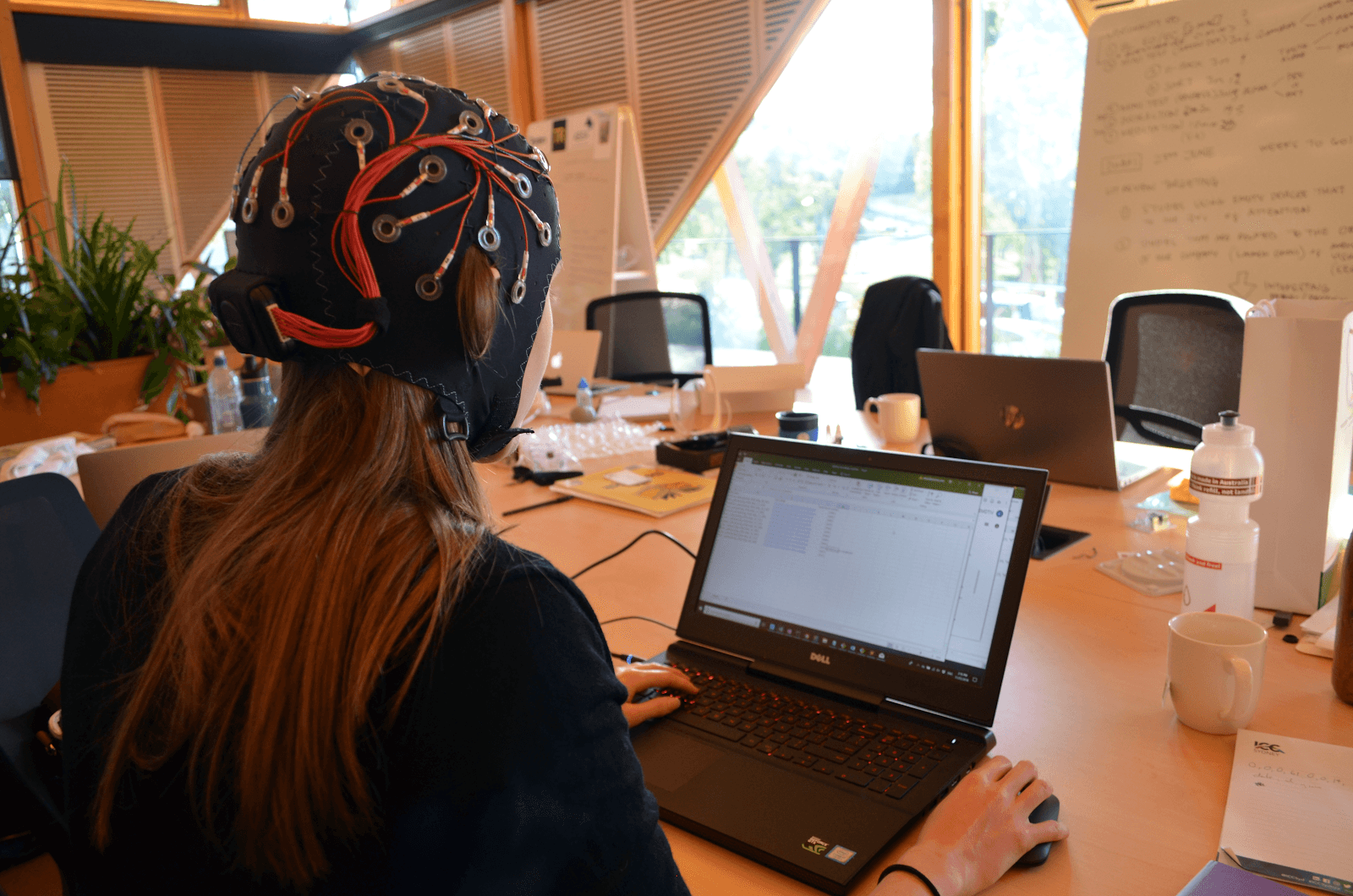
The Emotiv Flex Saline is a modular cap-based EEG system with up to 32 customizable electrode placements. It delivers research-grade data quality and detailed cortical mapping, making it ideal for laboratories and universities.
Its combination of signal clarity, portability, and flexible configuration makes Flex a cornerstone for studies in neuroscience, cognitive psychology, and neurotechnology design.
Emotiv Epoc X
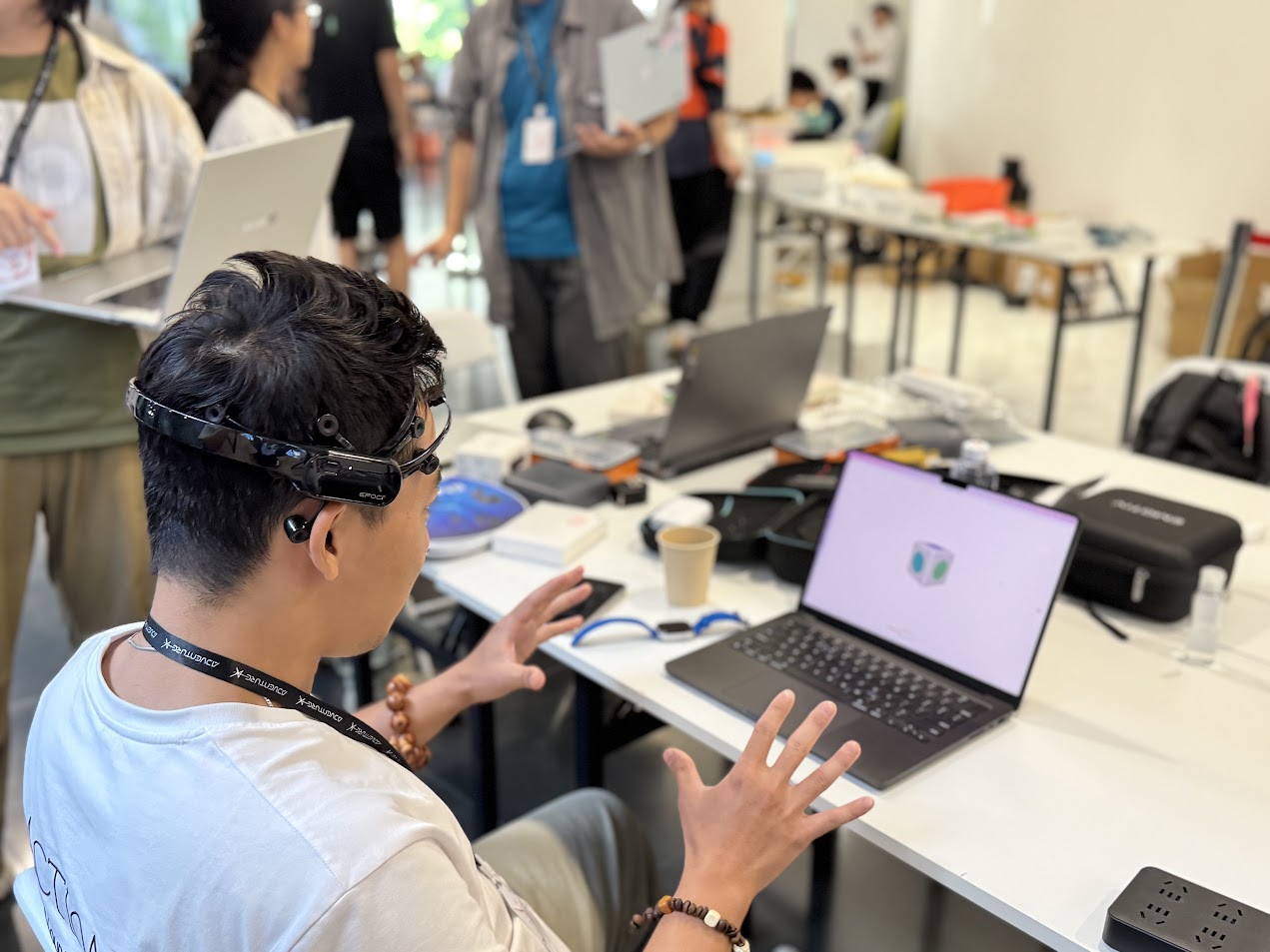
The Emotiv Epoc X offers 14 channels of high-resolution EEG in a lightweight, wireless format. Balancing data quality with portability, it supports applications from academic research to neuromarketing and UX testing.
Epoc X is optimized for mobility, allowing researchers to collect reliable EEG data in real-world settings outside traditional laboratories.
For Education and Development
BCIs make neuroscience accessible to students, educators, and developers. Classroom-friendly kits emphasize simplicity, visualization, and direct interaction with live data.
Emotiv Insight
The Emotiv Insight is a sleek, 5-channel wireless headset designed for education, innovation, and rapid experimentation. Its intuitive design and real-time visualization tools make abstract concepts tangible, helping learners connect theory to practice.
Insight empowers students and developers to explore cognitive states and design brain-responsive applications with ease.
Complementary Educational Tools
A complete learning experience extends beyond hardware. Emotiv’s education and research ecosystem includes tools for signal visualization, experiment design, and real-time analysis.
With EmotivPRO and related software, users can observe their own EEG signals, explore cognitive patterns, and interpret data—bridging the gap between neuroscience education and applied innovation.
Final Thoughts
Brain-computer interface technology represents a major shift in how humans interact with machines. With modern, non-invasive EEG systems, what once required expensive laboratory setups can now be achieved in classrooms, offices, and homes.
Whether you’re a researcher pushing scientific boundaries, a developer experimenting with new inputs, or a student taking your first steps into neurotechnology, today’s BCI kits make it possible to measure, analyze, and create using the most powerful signal source of all—the human brain.
Brain-Computer Interface Kits: The Complete Guide for Researchers, Developers, and Creators
The way we interact with technology is evolving. We’ve moved from punch cards to keyboards to touchscreens, and the next step is a more direct connection. A brain-computer interface (BCI) enables users to translate brain signals into actionable digital commands, opening new frontiers for researchers, developers, and creators.
Whether you’re building adaptive software, conducting studies on human cognition in real-world environments, or exploring your own brain activity, a brain-computer interface kit provides the foundation to begin.
This guide is designed for both innovators and explorers. It highlights the most capable and accessible BCI kits available today, helping you identify the right tools for your next project.
Key Takeaways
Choose for purpose, not just specs: The ideal BCI kit aligns with your goals—from channel count to software ecosystem—rather than focusing only on technical features.
Software is half the equation: Even the most powerful headset depends on intuitive, robust software for data visualization, analysis, and application development.
Reliable data starts with a reliable connection: Signal quality depends on proper headset fit and optimal sensor contact to ensure clean, reproducible results.
What Is a Brain-Computer Interface Kit?
A brain-computer interface kit is a complete system that establishes a communication pathway between the brain and an external device—such as a computer, robot, or app—using measurable electrical activity.
Rather than relying on a keyboard or mouse, BCIs use the brain’s natural electrical signals to issue commands, creating new ways to engage with the digital world. This makes the technology an invaluable tool for research, product development, and cognitive exploration.
How BCI Technology Works
At its core, BCI technology measures brain activity, processes the resulting signals, and translates them into meaningful outputs. While some systems require surgical implants, the most accessible options are non-invasive, wearable devices that use electroencephalography (EEG).
EEG sensors measure subtle voltage changes along the scalp, capturing brainwave patterns in real time. Software then analyzes these signals to identify patterns associated with focus, engagement, or intent—enabling safe, non-invasive brain-computer interface experimentation.
What’s Inside a BCI Kit
Most BCI kits include a headset with multiple EEG sensors, accessories such as saline or polymer-based contact materials, charging cables, and setup documentation.
Equally important is the accompanying software. Platforms like EmotivPRO allow users to visualize and analyze raw EEG data, while other tools translate brain signals into digital interactions for applications such as games, UX studies, or human-computer interface research.
What You Can Do With a BCI
BCI applications are rapidly expanding across education, research, and development. In academic and educational environments, they foster hands-on learning about neuroscience and artificial intelligence.
Developers use BCIs to create adaptive interfaces, immersive games, and responsive experiences. In accessibility and assistive contexts, they can help individuals interact with their environment in new ways. On a personal level, EEG-based BCIs can support cognitive-wellness tracking or simply provide a window into one’s own brain activity.
How to Choose the Right BCI Kit
Selecting a BCI kit depends on your objectives—whether academic, professional, or personal. The right choice balances data quality, usability, and budget. Below are five key considerations.
1. Channel Count and Signal Quality
Each EEG channel measures activity from a specific area of the scalp. A system with more channels, such as the Emotiv Flex Saline, captures higher-resolution spatial data for advanced research.
However, higher channel counts are not always necessary. For classroom learning or individual projects, fewer channels simplify setup and interpretation. The priority is always clean, reliable signal quality, achieved through stable contact and low electrical noise.
2. Sampling Rate and Resolution
Two technical parameters define signal fidelity:
Sampling rate: The number of times per second the device measures electrical activity. Higher sampling rates capture rapid signal changes—important for real-time BCI applications.
Resolution: The precision with which each data point is recorded, similar to the difference between standard and high-definition video.
Together, these determine how accurately you can measure and interpret brainwave dynamics.
3. Software Compatibility
A headset’s potential depends on its software. Confirm that the ecosystem supports your workflow—whether you need to export raw EEG data, visualize performance states, or build custom integrations through a software development kit (SDK).
EmotivPRO supports detailed data analysis and integration with tools like EmotivBCI, offering flexibility for both research and application design. Ensure the software enables your goals rather than limiting them.
4. Comfort and Ease of Use
Comfort affects both the user experience and the quality of collected data. Lightweight, ergonomic designs encourage longer sessions and reduce motion artifacts.
The Emotiv Insight uses semi-dry polymer sensors for a clean, rapid setup, allowing data collection within minutes. A comfortable, intuitive fit lets users focus on experimentation, not equipment adjustment.
5. Balancing Budget and Performance
BCI kits span a wide price range. The goal is to match essential features with your project’s scale. For large-scale research, investing in higher-density systems like the Emotiv Flex offers long-term flexibility. For personal or exploratory use, more accessible options such as the Emotiv MN8 EEG earbuds provide an affordable entry point into non-invasive BCI without sacrificing data integrity.
Our Guide to Leading BCI Kits
The best BCI depends on your intended use case. The following categories highlight devices suited for research, education and development, and personal exploration.
For Research and Professional Use
When accuracy and reproducibility are essential, choose a headset designed for advanced experimentation. These systems capture high-fidelity EEG data suitable for academic research, clinical studies, and professional development environments.
Emotiv Flex Series
The Emotiv Flex Saline is a modular cap-based EEG system with up to 32 customizable electrode placements. It delivers research-grade data quality and detailed cortical mapping, making it ideal for laboratories and universities.
Its combination of signal clarity, portability, and flexible configuration makes Flex a cornerstone for studies in neuroscience, cognitive psychology, and neurotechnology design.
Emotiv Epoc X
The Emotiv Epoc X offers 14 channels of high-resolution EEG in a lightweight, wireless format. Balancing data quality with portability, it supports applications from academic research to neuromarketing and UX testing.
Epoc X is optimized for mobility, allowing researchers to collect reliable EEG data in real-world settings outside traditional laboratories.
For Education and Development
BCIs make neuroscience accessible to students, educators, and developers. Classroom-friendly kits emphasize simplicity, visualization, and direct interaction with live data.
Emotiv Insight
The Emotiv Insight is a sleek, 5-channel wireless headset designed for education, innovation, and rapid experimentation. Its intuitive design and real-time visualization tools make abstract concepts tangible, helping learners connect theory to practice.
Insight empowers students and developers to explore cognitive states and design brain-responsive applications with ease.
Complementary Educational Tools
A complete learning experience extends beyond hardware. Emotiv’s education and research ecosystem includes tools for signal visualization, experiment design, and real-time analysis.
With EmotivPRO and related software, users can observe their own EEG signals, explore cognitive patterns, and interpret data—bridging the gap between neuroscience education and applied innovation.
Final Thoughts
Brain-computer interface technology represents a major shift in how humans interact with machines. With modern, non-invasive EEG systems, what once required expensive laboratory setups can now be achieved in classrooms, offices, and homes.
Whether you’re a researcher pushing scientific boundaries, a developer experimenting with new inputs, or a student taking your first steps into neurotechnology, today’s BCI kits make it possible to measure, analyze, and create using the most powerful signal source of all—the human brain.
Brain-Computer Interface Kits: The Complete Guide for Researchers, Developers, and Creators
The way we interact with technology is evolving. We’ve moved from punch cards to keyboards to touchscreens, and the next step is a more direct connection. A brain-computer interface (BCI) enables users to translate brain signals into actionable digital commands, opening new frontiers for researchers, developers, and creators.
Whether you’re building adaptive software, conducting studies on human cognition in real-world environments, or exploring your own brain activity, a brain-computer interface kit provides the foundation to begin.
This guide is designed for both innovators and explorers. It highlights the most capable and accessible BCI kits available today, helping you identify the right tools for your next project.
Key Takeaways
Choose for purpose, not just specs: The ideal BCI kit aligns with your goals—from channel count to software ecosystem—rather than focusing only on technical features.
Software is half the equation: Even the most powerful headset depends on intuitive, robust software for data visualization, analysis, and application development.
Reliable data starts with a reliable connection: Signal quality depends on proper headset fit and optimal sensor contact to ensure clean, reproducible results.
What Is a Brain-Computer Interface Kit?
A brain-computer interface kit is a complete system that establishes a communication pathway between the brain and an external device—such as a computer, robot, or app—using measurable electrical activity.
Rather than relying on a keyboard or mouse, BCIs use the brain’s natural electrical signals to issue commands, creating new ways to engage with the digital world. This makes the technology an invaluable tool for research, product development, and cognitive exploration.
How BCI Technology Works
At its core, BCI technology measures brain activity, processes the resulting signals, and translates them into meaningful outputs. While some systems require surgical implants, the most accessible options are non-invasive, wearable devices that use electroencephalography (EEG).
EEG sensors measure subtle voltage changes along the scalp, capturing brainwave patterns in real time. Software then analyzes these signals to identify patterns associated with focus, engagement, or intent—enabling safe, non-invasive brain-computer interface experimentation.
What’s Inside a BCI Kit
Most BCI kits include a headset with multiple EEG sensors, accessories such as saline or polymer-based contact materials, charging cables, and setup documentation.
Equally important is the accompanying software. Platforms like EmotivPRO allow users to visualize and analyze raw EEG data, while other tools translate brain signals into digital interactions for applications such as games, UX studies, or human-computer interface research.
What You Can Do With a BCI
BCI applications are rapidly expanding across education, research, and development. In academic and educational environments, they foster hands-on learning about neuroscience and artificial intelligence.
Developers use BCIs to create adaptive interfaces, immersive games, and responsive experiences. In accessibility and assistive contexts, they can help individuals interact with their environment in new ways. On a personal level, EEG-based BCIs can support cognitive-wellness tracking or simply provide a window into one’s own brain activity.
How to Choose the Right BCI Kit
Selecting a BCI kit depends on your objectives—whether academic, professional, or personal. The right choice balances data quality, usability, and budget. Below are five key considerations.
1. Channel Count and Signal Quality
Each EEG channel measures activity from a specific area of the scalp. A system with more channels, such as the Emotiv Flex Saline, captures higher-resolution spatial data for advanced research.
However, higher channel counts are not always necessary. For classroom learning or individual projects, fewer channels simplify setup and interpretation. The priority is always clean, reliable signal quality, achieved through stable contact and low electrical noise.
2. Sampling Rate and Resolution
Two technical parameters define signal fidelity:
Sampling rate: The number of times per second the device measures electrical activity. Higher sampling rates capture rapid signal changes—important for real-time BCI applications.
Resolution: The precision with which each data point is recorded, similar to the difference between standard and high-definition video.
Together, these determine how accurately you can measure and interpret brainwave dynamics.
3. Software Compatibility
A headset’s potential depends on its software. Confirm that the ecosystem supports your workflow—whether you need to export raw EEG data, visualize performance states, or build custom integrations through a software development kit (SDK).
EmotivPRO supports detailed data analysis and integration with tools like EmotivBCI, offering flexibility for both research and application design. Ensure the software enables your goals rather than limiting them.
4. Comfort and Ease of Use
Comfort affects both the user experience and the quality of collected data. Lightweight, ergonomic designs encourage longer sessions and reduce motion artifacts.
The Emotiv Insight uses semi-dry polymer sensors for a clean, rapid setup, allowing data collection within minutes. A comfortable, intuitive fit lets users focus on experimentation, not equipment adjustment.
5. Balancing Budget and Performance
BCI kits span a wide price range. The goal is to match essential features with your project’s scale. For large-scale research, investing in higher-density systems like the Emotiv Flex offers long-term flexibility. For personal or exploratory use, more accessible options such as the Emotiv MN8 EEG earbuds provide an affordable entry point into non-invasive BCI without sacrificing data integrity.
Our Guide to Leading BCI Kits
The best BCI depends on your intended use case. The following categories highlight devices suited for research, education and development, and personal exploration.
For Research and Professional Use
When accuracy and reproducibility are essential, choose a headset designed for advanced experimentation. These systems capture high-fidelity EEG data suitable for academic research, clinical studies, and professional development environments.
Emotiv Flex Series
The Emotiv Flex Saline is a modular cap-based EEG system with up to 32 customizable electrode placements. It delivers research-grade data quality and detailed cortical mapping, making it ideal for laboratories and universities.
Its combination of signal clarity, portability, and flexible configuration makes Flex a cornerstone for studies in neuroscience, cognitive psychology, and neurotechnology design.
Emotiv Epoc X
The Emotiv Epoc X offers 14 channels of high-resolution EEG in a lightweight, wireless format. Balancing data quality with portability, it supports applications from academic research to neuromarketing and UX testing.
Epoc X is optimized for mobility, allowing researchers to collect reliable EEG data in real-world settings outside traditional laboratories.
For Education and Development
BCIs make neuroscience accessible to students, educators, and developers. Classroom-friendly kits emphasize simplicity, visualization, and direct interaction with live data.
Emotiv Insight
The Emotiv Insight is a sleek, 5-channel wireless headset designed for education, innovation, and rapid experimentation. Its intuitive design and real-time visualization tools make abstract concepts tangible, helping learners connect theory to practice.
Insight empowers students and developers to explore cognitive states and design brain-responsive applications with ease.
Complementary Educational Tools
A complete learning experience extends beyond hardware. Emotiv’s education and research ecosystem includes tools for signal visualization, experiment design, and real-time analysis.
With EmotivPRO and related software, users can observe their own EEG signals, explore cognitive patterns, and interpret data—bridging the gap between neuroscience education and applied innovation.
Final Thoughts
Brain-computer interface technology represents a major shift in how humans interact with machines. With modern, non-invasive EEG systems, what once required expensive laboratory setups can now be achieved in classrooms, offices, and homes.
Whether you’re a researcher pushing scientific boundaries, a developer experimenting with new inputs, or a student taking your first steps into neurotechnology, today’s BCI kits make it possible to measure, analyze, and create using the most powerful signal source of all—the human brain.
Continue reading