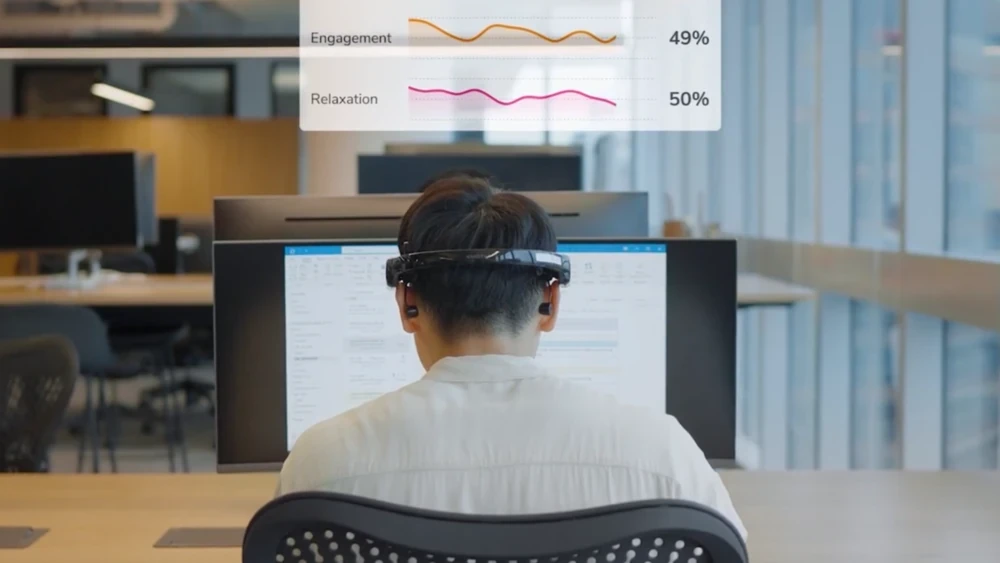
How Attention Shapes Learning: What Classroom Research Reveals
H.B. Duran
Updated on
Sep 22, 2026
How Attention Shapes Learning: What Classroom Research Reveals
H.B. Duran
Updated on
Sep 22, 2026
How Attention Shapes Learning: What Classroom Research Reveals
H.B. Duran
Updated on
Sep 22, 2026
Why Classroom Attention Matters
Every teacher has experienced it.
A lesson begins with focused faces and curious questions. As the class progresses, attention shifts. Some students remain engaged, others become distracted, and a few appear to disconnect altogether.
Traditional educational assessments capture the outcome of learning through quizzes, assignments, and examinations. They reveal what students remembered after instruction, but they provide only limited insight into how attention changed while learning was taking place.
For education researchers, that distinction has become increasingly important.
Understanding when attention changes and what influences those changes may help explain why some learning experiences succeed while others fall short.
Behavioral assessments remain essential for evaluating learning outcomes. Increasingly, researchers combine these measures with electroencephalography (EEG) to investigate how attention fluctuates throughout a lesson, providing continuous physiological data that complements traditional educational research [1], [2].
Looking Beyond Test Scores
Learning is a continuous process shaped by attention, cognitive effort, prior knowledge, motivation, and the learning environment itself.
Two students may earn identical scores on an assessment while experiencing the lesson very differently. One may remain engaged throughout the activity, while the other struggles to maintain focus as cognitive demands increase.
Behavioral assessments identify performance, while researchers increasingly seek to understand the cognitive processes that produce it.
Wireless EEG has become an important tool for this work because it allows researchers to study attention as lessons unfold rather than relying solely on post-lesson assessments. As wearable systems have become more practical, studies have expanded beyond tightly controlled laboratory experiments into classrooms and other authentic learning environments, allowing investigators to examine attention where education naturally occurs [1], [2].
What Is Classroom Attention?
Classroom attention refers to the ability to selectively focus on relevant information while filtering distractions during learning.
Rather than remaining constant, attention naturally fluctuates throughout a lesson. Changes in instructional pace, task complexity, classroom environment, and learner engagement all influence how attention is allocated over time.
Recognizing these fluctuations allows researchers to investigate learning as a dynamic cognitive process rather than a single outcome measured at the end of instruction.
What Research Tells Us
Attention changes throughout learning.
Recent reviews describe classroom attention as a dynamic process that shifts throughout instruction rather than remaining stable from beginning to end. These findings encourage researchers to examine how attention evolves as lessons become more or less cognitively demanding [1].
Authentic learning environments provide valuable insight.
Educational neuroscience is increasingly moving beyond laboratory experiments into classrooms and semi-naturalistic learning environments. Studying learners in authentic settings helps researchers investigate attention under conditions that more closely resemble everyday education [2].
Attention is closely connected to emotion and engagement.
Research has shown that emotional state and engagement influence how students interact with learning materials. Studies exploring blended learning environments suggest that combining behavioral observations with physiological data can provide a richer understanding of the learning experience than either approach alone [3].
Educational neuroscience continues to evolve.
Early EEG research in education focused primarily on laboratory investigations. More recent work reflects a broader movement toward understanding cognition in realistic educational settings, supporting questions about instructional design, classroom engagement, and personalized learning [4].
Together, these studies illustrate a broader shift in education research. Rather than asking only whether students learned, researchers are increasingly investigating how attention shapes learning as it unfolds.
From Laboratory Research to the Classroom
For many years, investigating attention required highly controlled experimental conditions.
Today, portable EEG systems allow researchers to explore cognition in environments that more closely reflect everyday education.
This shift makes it possible to investigate how lesson structure, classroom design, and instructional strategies influence attention without removing learners from the settings in which education normally takes place.
As a result, researchers can study learning with greater ecological validity while preserving many of the strengths of traditional cognitive neuroscience.
Selecting an EEG System for Education Research
Different research questions require different EEG systems. Selecting the appropriate system depends on the study design, participant population, recording environment, and research objectives.
Flex Gel and Flex Saline
Flex supports configurable electrode placement with up to 32 EEG channels, making it well suited for advanced educational neuroscience and classroom research.
Epoc X
Epoc X is a 14-channel wireless EEG headset designed for cognitive neuroscience and mobile education research. Its wireless design supports studies in both laboratory and natural educational environments.
Insight
Insight is a lightweight five-channel wireless EEG headset suitable for classroom studies, educational research, and rapid deployment where portability and ease of use are priorities.
The Future of Classroom Attention Research
Understanding attention has become one of the central challenges in education research.
As researchers continue investigating learning in authentic educational settings, attention will remain an essential window into how students interact with instruction, manage cognitive demands, and build new knowledge.
By combining behavioral outcomes with insights gathered throughout the learning process, educational neuroscience is helping researchers develop a more complete picture of how learning happens.
Key Takeaways
Classroom attention fluctuates continuously throughout learning.
EEG complements behavioral assessments by providing continuous physiological measurements during educational activities.
Researchers increasingly investigate attention in authentic classrooms rather than only controlled laboratory settings.
Attention is shaped by instructional design, task complexity, learner engagement, and the learning environment.
Selecting an EEG system begins with the research question and study design.
Put Your Framework Into Practice
You've explored how researchers investigate classroom attention by combining behavioral assessments with continuous physiological measurements. Compare Emotiv EEG systems to identify the channel configurations, mobility, and research capabilities that best support your education research objectives.
Suggested Reading
References
[1] H. Zeng, X. Huang, Y. Liu, and X. Gu, "Exploring Neural Evidence of Attention in Classroom Environments: A Scoping Review," Brain Sciences, 2025.
[2] A. García-Monge, H. Rodríguez-Navarro, D. Bores-García, and G. González-Calvo, "Electroencephalography in Naturalistic and Semi-Naturalistic Educational Contexts: A Systematic Review," 2024.
[3] S. Tikadar and S. Bhattacharya, "Detection of Affective States of the Students in a Blended Learning Environment Comprising of Smartphones," 2021.
[4] V. Mák, T. Szécsi, and L. Varga, "Overview of EEG Research in Early Childhood Education: An International Perspective," 2018.
Why Classroom Attention Matters
Every teacher has experienced it.
A lesson begins with focused faces and curious questions. As the class progresses, attention shifts. Some students remain engaged, others become distracted, and a few appear to disconnect altogether.
Traditional educational assessments capture the outcome of learning through quizzes, assignments, and examinations. They reveal what students remembered after instruction, but they provide only limited insight into how attention changed while learning was taking place.
For education researchers, that distinction has become increasingly important.
Understanding when attention changes and what influences those changes may help explain why some learning experiences succeed while others fall short.
Behavioral assessments remain essential for evaluating learning outcomes. Increasingly, researchers combine these measures with electroencephalography (EEG) to investigate how attention fluctuates throughout a lesson, providing continuous physiological data that complements traditional educational research [1], [2].
Looking Beyond Test Scores
Learning is a continuous process shaped by attention, cognitive effort, prior knowledge, motivation, and the learning environment itself.
Two students may earn identical scores on an assessment while experiencing the lesson very differently. One may remain engaged throughout the activity, while the other struggles to maintain focus as cognitive demands increase.
Behavioral assessments identify performance, while researchers increasingly seek to understand the cognitive processes that produce it.
Wireless EEG has become an important tool for this work because it allows researchers to study attention as lessons unfold rather than relying solely on post-lesson assessments. As wearable systems have become more practical, studies have expanded beyond tightly controlled laboratory experiments into classrooms and other authentic learning environments, allowing investigators to examine attention where education naturally occurs [1], [2].
What Is Classroom Attention?
Classroom attention refers to the ability to selectively focus on relevant information while filtering distractions during learning.
Rather than remaining constant, attention naturally fluctuates throughout a lesson. Changes in instructional pace, task complexity, classroom environment, and learner engagement all influence how attention is allocated over time.
Recognizing these fluctuations allows researchers to investigate learning as a dynamic cognitive process rather than a single outcome measured at the end of instruction.
What Research Tells Us
Attention changes throughout learning.
Recent reviews describe classroom attention as a dynamic process that shifts throughout instruction rather than remaining stable from beginning to end. These findings encourage researchers to examine how attention evolves as lessons become more or less cognitively demanding [1].
Authentic learning environments provide valuable insight.
Educational neuroscience is increasingly moving beyond laboratory experiments into classrooms and semi-naturalistic learning environments. Studying learners in authentic settings helps researchers investigate attention under conditions that more closely resemble everyday education [2].
Attention is closely connected to emotion and engagement.
Research has shown that emotional state and engagement influence how students interact with learning materials. Studies exploring blended learning environments suggest that combining behavioral observations with physiological data can provide a richer understanding of the learning experience than either approach alone [3].
Educational neuroscience continues to evolve.
Early EEG research in education focused primarily on laboratory investigations. More recent work reflects a broader movement toward understanding cognition in realistic educational settings, supporting questions about instructional design, classroom engagement, and personalized learning [4].
Together, these studies illustrate a broader shift in education research. Rather than asking only whether students learned, researchers are increasingly investigating how attention shapes learning as it unfolds.
From Laboratory Research to the Classroom
For many years, investigating attention required highly controlled experimental conditions.
Today, portable EEG systems allow researchers to explore cognition in environments that more closely reflect everyday education.
This shift makes it possible to investigate how lesson structure, classroom design, and instructional strategies influence attention without removing learners from the settings in which education normally takes place.
As a result, researchers can study learning with greater ecological validity while preserving many of the strengths of traditional cognitive neuroscience.
Selecting an EEG System for Education Research
Different research questions require different EEG systems. Selecting the appropriate system depends on the study design, participant population, recording environment, and research objectives.
Flex Gel and Flex Saline
Flex supports configurable electrode placement with up to 32 EEG channels, making it well suited for advanced educational neuroscience and classroom research.
Epoc X
Epoc X is a 14-channel wireless EEG headset designed for cognitive neuroscience and mobile education research. Its wireless design supports studies in both laboratory and natural educational environments.
Insight
Insight is a lightweight five-channel wireless EEG headset suitable for classroom studies, educational research, and rapid deployment where portability and ease of use are priorities.
The Future of Classroom Attention Research
Understanding attention has become one of the central challenges in education research.
As researchers continue investigating learning in authentic educational settings, attention will remain an essential window into how students interact with instruction, manage cognitive demands, and build new knowledge.
By combining behavioral outcomes with insights gathered throughout the learning process, educational neuroscience is helping researchers develop a more complete picture of how learning happens.
Key Takeaways
Classroom attention fluctuates continuously throughout learning.
EEG complements behavioral assessments by providing continuous physiological measurements during educational activities.
Researchers increasingly investigate attention in authentic classrooms rather than only controlled laboratory settings.
Attention is shaped by instructional design, task complexity, learner engagement, and the learning environment.
Selecting an EEG system begins with the research question and study design.
Put Your Framework Into Practice
You've explored how researchers investigate classroom attention by combining behavioral assessments with continuous physiological measurements. Compare Emotiv EEG systems to identify the channel configurations, mobility, and research capabilities that best support your education research objectives.
Suggested Reading
References
[1] H. Zeng, X. Huang, Y. Liu, and X. Gu, "Exploring Neural Evidence of Attention in Classroom Environments: A Scoping Review," Brain Sciences, 2025.
[2] A. García-Monge, H. Rodríguez-Navarro, D. Bores-García, and G. González-Calvo, "Electroencephalography in Naturalistic and Semi-Naturalistic Educational Contexts: A Systematic Review," 2024.
[3] S. Tikadar and S. Bhattacharya, "Detection of Affective States of the Students in a Blended Learning Environment Comprising of Smartphones," 2021.
[4] V. Mák, T. Szécsi, and L. Varga, "Overview of EEG Research in Early Childhood Education: An International Perspective," 2018.
Why Classroom Attention Matters
Every teacher has experienced it.
A lesson begins with focused faces and curious questions. As the class progresses, attention shifts. Some students remain engaged, others become distracted, and a few appear to disconnect altogether.
Traditional educational assessments capture the outcome of learning through quizzes, assignments, and examinations. They reveal what students remembered after instruction, but they provide only limited insight into how attention changed while learning was taking place.
For education researchers, that distinction has become increasingly important.
Understanding when attention changes and what influences those changes may help explain why some learning experiences succeed while others fall short.
Behavioral assessments remain essential for evaluating learning outcomes. Increasingly, researchers combine these measures with electroencephalography (EEG) to investigate how attention fluctuates throughout a lesson, providing continuous physiological data that complements traditional educational research [1], [2].
Looking Beyond Test Scores
Learning is a continuous process shaped by attention, cognitive effort, prior knowledge, motivation, and the learning environment itself.
Two students may earn identical scores on an assessment while experiencing the lesson very differently. One may remain engaged throughout the activity, while the other struggles to maintain focus as cognitive demands increase.
Behavioral assessments identify performance, while researchers increasingly seek to understand the cognitive processes that produce it.
Wireless EEG has become an important tool for this work because it allows researchers to study attention as lessons unfold rather than relying solely on post-lesson assessments. As wearable systems have become more practical, studies have expanded beyond tightly controlled laboratory experiments into classrooms and other authentic learning environments, allowing investigators to examine attention where education naturally occurs [1], [2].
What Is Classroom Attention?
Classroom attention refers to the ability to selectively focus on relevant information while filtering distractions during learning.
Rather than remaining constant, attention naturally fluctuates throughout a lesson. Changes in instructional pace, task complexity, classroom environment, and learner engagement all influence how attention is allocated over time.
Recognizing these fluctuations allows researchers to investigate learning as a dynamic cognitive process rather than a single outcome measured at the end of instruction.
What Research Tells Us
Attention changes throughout learning.
Recent reviews describe classroom attention as a dynamic process that shifts throughout instruction rather than remaining stable from beginning to end. These findings encourage researchers to examine how attention evolves as lessons become more or less cognitively demanding [1].
Authentic learning environments provide valuable insight.
Educational neuroscience is increasingly moving beyond laboratory experiments into classrooms and semi-naturalistic learning environments. Studying learners in authentic settings helps researchers investigate attention under conditions that more closely resemble everyday education [2].
Attention is closely connected to emotion and engagement.
Research has shown that emotional state and engagement influence how students interact with learning materials. Studies exploring blended learning environments suggest that combining behavioral observations with physiological data can provide a richer understanding of the learning experience than either approach alone [3].
Educational neuroscience continues to evolve.
Early EEG research in education focused primarily on laboratory investigations. More recent work reflects a broader movement toward understanding cognition in realistic educational settings, supporting questions about instructional design, classroom engagement, and personalized learning [4].
Together, these studies illustrate a broader shift in education research. Rather than asking only whether students learned, researchers are increasingly investigating how attention shapes learning as it unfolds.
From Laboratory Research to the Classroom
For many years, investigating attention required highly controlled experimental conditions.
Today, portable EEG systems allow researchers to explore cognition in environments that more closely reflect everyday education.
This shift makes it possible to investigate how lesson structure, classroom design, and instructional strategies influence attention without removing learners from the settings in which education normally takes place.
As a result, researchers can study learning with greater ecological validity while preserving many of the strengths of traditional cognitive neuroscience.
Selecting an EEG System for Education Research
Different research questions require different EEG systems. Selecting the appropriate system depends on the study design, participant population, recording environment, and research objectives.
Flex Gel and Flex Saline
Flex supports configurable electrode placement with up to 32 EEG channels, making it well suited for advanced educational neuroscience and classroom research.
Epoc X
Epoc X is a 14-channel wireless EEG headset designed for cognitive neuroscience and mobile education research. Its wireless design supports studies in both laboratory and natural educational environments.
Insight
Insight is a lightweight five-channel wireless EEG headset suitable for classroom studies, educational research, and rapid deployment where portability and ease of use are priorities.
The Future of Classroom Attention Research
Understanding attention has become one of the central challenges in education research.
As researchers continue investigating learning in authentic educational settings, attention will remain an essential window into how students interact with instruction, manage cognitive demands, and build new knowledge.
By combining behavioral outcomes with insights gathered throughout the learning process, educational neuroscience is helping researchers develop a more complete picture of how learning happens.
Key Takeaways
Classroom attention fluctuates continuously throughout learning.
EEG complements behavioral assessments by providing continuous physiological measurements during educational activities.
Researchers increasingly investigate attention in authentic classrooms rather than only controlled laboratory settings.
Attention is shaped by instructional design, task complexity, learner engagement, and the learning environment.
Selecting an EEG system begins with the research question and study design.
Put Your Framework Into Practice
You've explored how researchers investigate classroom attention by combining behavioral assessments with continuous physiological measurements. Compare Emotiv EEG systems to identify the channel configurations, mobility, and research capabilities that best support your education research objectives.
Suggested Reading
References
[1] H. Zeng, X. Huang, Y. Liu, and X. Gu, "Exploring Neural Evidence of Attention in Classroom Environments: A Scoping Review," Brain Sciences, 2025.
[2] A. García-Monge, H. Rodríguez-Navarro, D. Bores-García, and G. González-Calvo, "Electroencephalography in Naturalistic and Semi-Naturalistic Educational Contexts: A Systematic Review," 2024.
[3] S. Tikadar and S. Bhattacharya, "Detection of Affective States of the Students in a Blended Learning Environment Comprising of Smartphones," 2021.
[4] V. Mák, T. Szécsi, and L. Varga, "Overview of EEG Research in Early Childhood Education: An International Perspective," 2018.
Continue reading