Noticing changes in your baby's behavior can be worrying. While every child grows at their own pace, some early indicators might suggest a developmental difference.
This guide focuses on common signs of autism in babies, helping parents observe and understand potential patterns. Remember, this information is for awareness, not self-diagnosis. If you have concerns, talking to a healthcare professional is always the best step.
A Parent's Guide to Early Autism Markers in an Infant's First Year
Early autism markers in the first year involve noticing developmental patterns that differ significantly from general milestones in social interaction, movement, and communication. While many infants develop at their own pace, consistently missing milestones such as social smiling by two months or responding to their name by twelve months could be a sign worth discussing with a professional.
How Do Developmental Timelines Compare to Atypical Patterns?
Every baby grows and learns at their own pace. There are general timelines, or milestones, that most infants reach as they develop. These milestones cover things like how they interact with others, how they move, and how they communicate.
For example, many babies start to smile socially around two months and may begin babbling by six months. By twelve months, they might be responding to their name and using simple gestures.
However, sometimes a baby's brain health development might look different from these typical patterns. This doesn't automatically mean there's a problem, as many factors can influence a child's growth.
But if a baby consistently misses several milestones or shows patterns of development that are markedly different from peers of the same age, it could be a sign worth discussing with a healthcare professional. Noticing these differences early is key, as it can lead to timely support if needed.
Why Should Parents Observe Rather Than Diagnose Autism?
As a parent or caregiver, your observations are incredibly important. You know your baby best and are often the first to notice subtle changes or consistent differences in their behavior. It's natural to wonder about these observations, but it's vital to remember that only a qualified professional can make a diagnosis of autism spectrum disorder (ASD) or related brain disorders.
Tools like checklists and developmental guides can be helpful for parents to track progress and identify areas of concern. However, these are guides, not diagnostic instruments.
If you have concerns about your baby's development, the best course of action is to speak with your pediatrician or a developmental specialist. They can provide a professional evaluation and discuss any next steps, which might include further neuroscience-based assessment or early intervention services if appropriate.
What Are the Early Indicators of Autism From Birth to 6 Months?
Observing your baby's interactions and responses during their first six months is key to noticing early developmental patterns. While every baby develops at their own pace, certain behaviors or a lack thereof can be important to note. These early months are a time when social engagement and communication begin to take shape.
Is a Lack of Consistent Social Smiling a Sign of Autism?
Social smiling, a genuine smile directed at people, typically emerges around two months of age. It's a way for babies to connect and express happiness.
A noticeable absence or significant delay in social smiling, especially when a caregiver is interacting playfully, might be an early sign to discuss with a pediatrician. While a baby might smile spontaneously or when tickled, a lack of reciprocal smiling during social exchanges is a point of observation.
What Does Limited or Fleeting Eye Contact Mean in Infants?
Eye contact is a fundamental aspect of social interaction. From birth, babies begin to make eye contact, and by a few months old, they often seek it out.
If a baby consistently avoids eye contact, or their eye contact is very brief and fleeting, it can be an indicator. This isn't about a single instance, but rather a pattern of limited engagement when looking at faces.
Should I Be Concerned by Infrequent Imitation of Facial Expressions?
Around two to three months, babies often start to imitate simple facial expressions, like sticking out their tongue or opening their mouth when an adult does. This imitation shows an early form of social learning and connection.
Therefore, if a baby rarely or never imitates facial expressions shown to them, it's something to monitor.
What Are Atypical Responses to Cuddling or Physical Affection?
Babies generally respond to being held and cuddled. Some babies might show discomfort or stiffness when picked up, or they may not seem to relax into cuddles. Others might appear indifferent to physical closeness.
While some babies are naturally more independent, a consistent pattern of not seeking or responding positively to physical affection can be a sign that warrants further attention.
What Are the Social and Communication Signs From 6 to 12 Months?
As your baby moves through their first year, you'll likely notice more interactions and attempts at communication. For infants between six and twelve months, certain social and communication patterns can offer insights into their development.
Why Is My Baby Not Responding to Their Name?
Around nine months, many babies begin to show recognition of their name by turning their head or looking when it's called. A consistent lack of response, even when their attention is not otherwise captured, might be an early indicator.
This isn't about a single instance of not hearing; it's about a pattern where the child doesn't seem to register or acknowledge their name being spoken.
Is Limited Babbling or a Lack of Vocal Play an Autism Sign?
Babbling typically starts around six months and evolves into more complex sounds and "conversations" by the end of the first year. This vocal play is a key part of developing language.
If a baby has very little babbling, or if their vocalizations don't seem to change or increase in variety over time, it's something to note. This lack of varied vocal output can be a significant sign.
What if My Baby Shows an Absence of Gestures Like Pointing?
Gestures are an important precursor to spoken language. By twelve months, many babies use gestures to communicate needs or share experiences. This includes pointing to show interest, waving goodbye, or reaching for an object they want.
Therefore, you can look into a noticeable absence of these gestures, or a lack of understanding when gestures are used towards them.
Why Is Joint Attention and Sharing Focus Important?
Joint attention is the ability to share a focus on an object or event with another person. For example, looking at a toy and then looking back at a parent to share that interest. By twelve months, many babies will follow a parent's point or look where the parent is looking.
Difficulty in this back-and-forth sharing of attention, where the child doesn't seem to engage with or acknowledge what another person is looking at or pointing to, is a notable developmental difference. This skill is considered a building block for later social and communication abilities.
What Are the Emerging Autism Patterns From 12 to 18 Months?
Loss of Previously Acquired Skills (Regression)
Around this age, some children may start to lose skills they had previously developed. This can be a concerning sign for parents.
For instance, a child who had begun to use a few words might stop speaking them, or a child who had started to make eye contact might begin to avoid it. This loss of skills, sometimes called regression, can happen gradually or quite suddenly.
It's important to note that not all children who experience a temporary plateau or even a slight dip in skill development are on the autism spectrum.
Atypical Use of Toys and Objects (e.g., Lining Up, Spinning)
While many toddlers explore toys in various ways, children who may be on the autism spectrum might show a preference for specific, repetitive ways of playing. This can include lining up toys or other objects in a straight row, or repeatedly spinning objects.
Instead of engaging in imaginative play, like pretending a block is a car, the focus might be on the sensory aspect of the object itself, such as its movement or texture. This focused, repetitive interaction with objects can be a noticeable difference in play patterns.
Should I Be Worried About Repetitive Body Movements?
Repetitive motor movements, often referred to as stereotypies, can become more apparent in this age group. These might include actions like hand-flapping, rocking back and forth, or walking on tiptoes.
These movements are often done in a consistent, rhythmic way and may increase when a child is excited, stressed, or bored. While some children without autism may exhibit occasional repetitive movements, a consistent and pronounced display of these actions can be an indicator to discuss with a pediatrician.
Why Does My Child Have Intense Reactions to Sensory Input?
Children at this age are developing their awareness of the world through their senses. However, some children who may be on the autism spectrum can have very strong reactions to sensory experiences. This could mean being overly bothered by certain sounds (like a vacuum cleaner or a hand dryer), textures (like the seams in socks or certain food consistencies), or bright lights.
Conversely, some children might seem to seek out intense sensory input, like spinning themselves or touching rough surfaces repeatedly. These heightened or diminished responses to sensory information can significantly impact a child's daily experiences and interactions.
Moving Forward with Information
Spotting early signs of autism in babies is really about paying attention to how they interact with the world and people around them. It's not about finding every single possible sign, because kids develop differently. What's important is noticing patterns or differences that seem unusual for their age.
If you see things that make you wonder, like a lack of social smiling, not responding to their name, or limited gestures, it's okay to talk to a doctor. They are the ones who can properly check things out.
Remember, early observation is just the first step, and getting professional advice is key to understanding your child's development.
Frequently Asked Questions
What are the very first signs of autism I might notice in my baby?
In the first few months, look for signs like not smiling much when interacting with people, having very little eye contact, or not seeming to notice or react much when you try to get their attention. Sometimes, babies might also seem less interested in social games like peek-a-boo.
What does 'limited eye contact' mean in babies and autism?
It means the baby doesn't look at people's faces or eyes very often, especially during interactions. While babies look at things, a lack of looking at people's faces when they are trying to connect can be an early sign.
What is 'joint attention' and why is it important?
Joint attention is when a baby follows your gaze to look at something you're pointing at, or shares their focus on an object with you. It's like sharing an experience. A delay in this can be an early sign, as it's important for learning social and communication skills.
My baby seems to overreact or underreact to sounds, textures, or lights. What does this mean?
Babies can be sensitive to sensory input. If your baby seems unusually bothered by certain sounds, textures, or lights, or on the other hand, doesn't react much to things that should get their attention, it might be a sign of sensory differences often seen in autism.
What is skill regression, and is it a sign of autism?
Skill regression means a child loses skills they once had, like stopping babbling, losing words they knew, or stopping social interactions they used to do. This loss of abilities, especially between 12-18 months, can be a significant sign.
How do doctors diagnose autism in babies?
Doctors and specialists diagnose autism by observing a child's behavior and development. They look for patterns in social interaction, communication, and behavior. There isn't one single test; it's based on a professional evaluation of many signs.
If I notice these signs, does my baby definitely have autism?
Not necessarily. Many of these signs can be seen in typically developing children at times, or could be due to other reasons. However, if you notice several of these signs consistently, or if your baby loses skills, it's important to talk to your pediatrician or a developmental specialist for guidance.
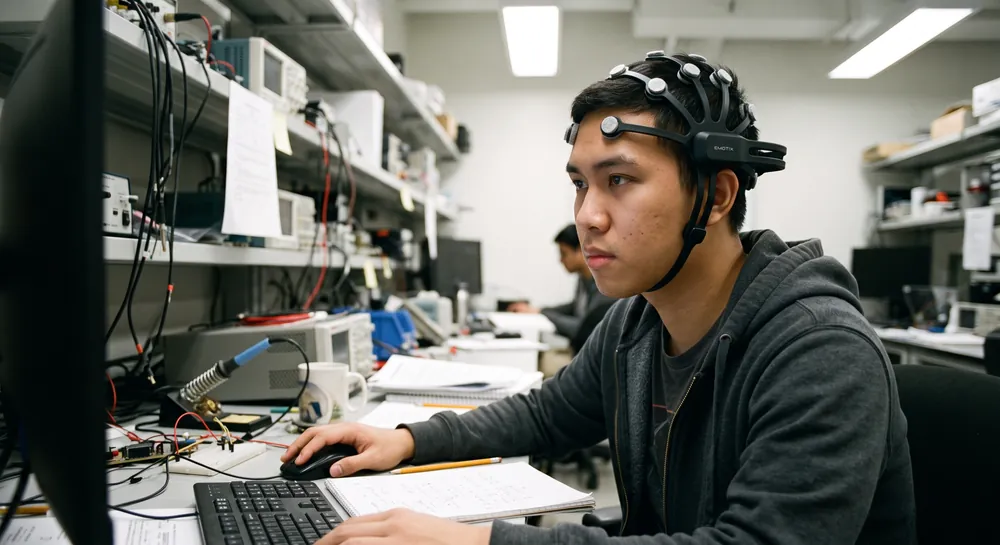
Emotiv is a neurotechnology leader helping advance neuroscience research through accessible EEG and brain data tools.
Medical Disclaimer: The information provided on this website is for educational and informational purposes only and is not intended as medical or health advice. This content may contain errors and should not be relied upon to make life-altering health, medical, or lifestyle choices. Always seek the advice of your physician or other qualified health provider with any questions you may have regarding a medical condition or treatment.
Christian Burgos