
Autism therapy is designed to support people on the spectrum by fostering better communication, social interaction, and independence. This article provides a grounded overview of established approaches, focusing on the fundamental strategies used to help people navigate the world more effectively. We will explore what autism therapy entails, examine common types used today, and discuss why early intervention remains a critical factor in long-term success.
Quick Brief
Autism therapy aims to help individuals develop skills in areas like communication, social interaction, and daily living.
Applied Behavior Analysis (ABA) is a well-known approach that focuses on changing behavior through learning principles.
Speech therapy, occupational therapy, and social skills training are other common types of autism therapy that target specific areas.
The DIR/Floortime model emphasizes building relationships and following a child's lead to encourage development.
Early intervention is often recommended because starting therapies sooner can lead to better outcomes.
What is Autism Therapy?
Autism therapy refers to a range of interventions and strategies designed to support a person with Autism Spectrum Disorder (ASD). These approaches aim to address the core characteristics of ASD, which can include challenges with social communication, interaction, and restricted or repetitive behaviors and interests.
The primary goal of autism therapy is to help individuals develop skills that promote independence, improve their quality of life and brain health, and enable them to participate more fully in their communities.
What Are the Goals of Autism Therapy?
The objectives of autism therapy are highly individualized, recognizing that ASD presents differently in each person. However, common goals often include:
Improving Communication: This involves developing verbal and non-verbal communication skills, such as understanding and using language, engaging in conversations, and interpreting social cues.
Enhancing Social Skills: Therapy often focuses on teaching people how to interact with others, understand social rules, build relationships, and navigate social situations.
Reducing Challenging Behaviors: Interventions may target behaviors that interfere with learning or daily living, such as aggression, self-injury, or extreme rigidity, replacing them with more adaptive behaviors.
Developing Daily Living Skills: This can include teaching practical skills needed for independence, like self-care, household tasks, and managing routines.
Supporting Sensory Needs: Many individuals with ASD have sensory sensitivities. Therapy can help them manage sensory input and develop coping strategies.
Promoting Cognitive and Academic Development: Interventions can support learning, problem-solving, and academic progress tailored to the person's abilities.
What Are the Most Common Types of Autism Therapy?
Applied Behavior Analysis (ABA) Therapy
Applied Behavior Analysis (ABA) is a widely used therapeutic approach that focuses on understanding and changing behavior. The core principle of ABA is that behaviors can be learned and modified through systematic teaching and reinforcement. This therapy breaks down complex skills into smaller, manageable steps.
Therapists use positive reinforcement to encourage desired behaviors, such as communication or social interaction, and to reduce behaviors that may interfere with learning or daily life. ABA can be delivered in various settings, including homes, schools, and clinics, and is often tailored to address specific goals like improving communication, social skills, academic performance, and self-care abilities.
Speech Therapy for Autism
Speech therapy addresses communication challenges often associated with autism. This can include difficulties with verbal language, understanding spoken language, and using non-verbal communication, such as gestures or facial expressions.
Speech-language pathologists (SLPs) work with patients to improve their ability to express themselves, understand others, and engage in social communication. Therapy might involve developing vocabulary, sentence structure, conversational skills, and the use of alternative communication methods like picture exchange systems (PECS) or Augmentative and Alternative Communication (AAC) devices.
Occupational Therapy (OT) for Autism
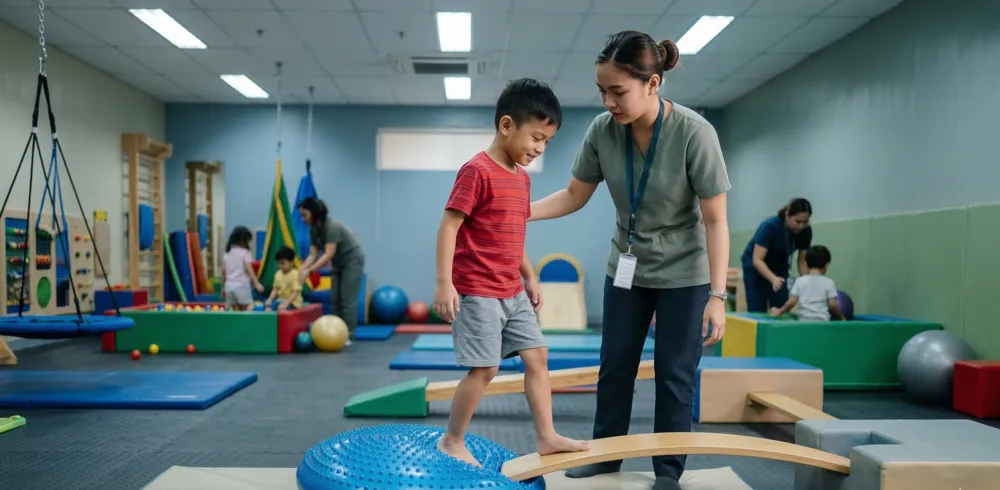
Occupational therapy helps individuals develop skills needed for daily living and participation in everyday activities.
For people with autism, OT often focuses on sensory processing differences, fine and gross motor skills, and self-care tasks. Sensory integration therapy, a common component of OT, aims to help a person respond more appropriately to sensory input (like sounds, textures, or lights) that might otherwise be overwhelming or under-stimulating.
OT also supports the development of skills for activities such as dressing, eating, handwriting, and playing.
Social Skills Training
Social skills training is designed to help individuals with autism improve their ability to interact with others. These programs often teach specific social rules and expectations that may not be intuitively understood. Training can cover a variety of skills, including:
Initiating and maintaining conversations
Understanding social cues and body language
Sharing and taking turns
Resolving conflicts
Making and keeping friends
These skills are often taught through direct instruction, role-playing, and practicing in real-world or simulated social situations.
Developmental, Individual Differences, Relationship-Based (DIR) / Floortime
The DIR model, often implemented through a method called Floortime, is a developmental and relationship-based approach. It focuses on the child's individual developmental profile, including their unique strengths, challenges, and learning style.
The approach emphasizes building emotional connections and engaging with the child through play and interaction. Therapists and parents follow the child's lead, entering their world to encourage engagement, communication, and social interaction.
The goal is to support the child's development across various areas, including emotional understanding, communication, and thinking skills, by building on their natural interests and motivations.
How Do You Choose the Right Autism Therapy?
Selecting the most appropriate therapy for an individual with autism involves a careful look at several key elements. This often means looking at a combination of approaches rather than a single therapy.
Several factors come into play when making these decisions:
Individual Needs and Goals: What specific skills does the person need to develop? Are the goals focused on communication, social interaction, daily living skills, or managing challenging behaviors? A thorough assessment by qualified professionals is the first step in identifying these needs.
Age and Developmental Stage: Therapies that are effective for very young children might need to be adapted or different approaches used for older children, adolescents, or adults. Early intervention services, for example, are designed for younger individuals, while social skills training might be more relevant for school-aged children or teens.
Evidence Base: It is important to consider therapies that have neuroscience research supporting their effectiveness for individuals with autism. While new approaches are always emerging, established interventions like ABA, speech therapy, and occupational therapy have a significant body of evidence behind them.
Family Involvement and Resources: The family's capacity to participate in therapy, the availability of services in the local area, and financial considerations are all practical aspects that influence therapy choices. Some therapies require more intensive family involvement than others.
Therapist Expertise and Fit: The qualifications and experience of the therapists are paramount. Building a trusting relationship with the therapy team is also important for successful outcomes.
Ultimately, the most effective treatment plans are highly individualized and may evolve over time. This means regular reassessment and adjustments to the therapy approach are often necessary to meet changing needs and ensure continued progress. Collaboration between parents, caregivers, educators, and the therapy team is key to developing and implementing a successful plan.
Why Is Early Intervention Critical for Children With Autism?
Starting interventions early can make a significant difference for people with this brain condition. When support begins in the preschool years, it can help children develop foundational skills that benefit them throughout their lives.
Research suggests that early, intensive programs can lead to better outcomes in areas like communication, social interaction, and cognitive abilities. The idea is to build on a child's natural development by providing structured learning experiences tailored to their specific needs.
Early intervention often involves a team of professionals working together. This team might include speech therapists, occupational therapists, and behavior specialists. They create a plan that addresses the individual's challenges and builds on their strengths.
Moreover, a key part of this process often involves the family. Parents and caregivers learn strategies they can use at home to support their child's progress, making the learning process more consistent and effective.
Some common approaches used in early intervention include:
Behavioral Therapies: These focus on teaching specific skills and reducing challenging behaviors through structured learning.
Developmental Therapies: These models, like the Early Start Denver Model (ESDM), focus on building relationships and using play-based activities to encourage development in communication and social skills.
Therapies for Daily Living: Occupational therapy helps with skills needed for everyday tasks, sensory processing, and motor coordination. Speech therapy works on improving communication, both verbal and non-verbal.
The sooner support begins, the more opportunity there is to positively influence a child's developmental trajectory. This proactive approach aims to help individuals with autism reach their full potential by providing them with the tools and skills needed to navigate their world.
Summary
The field of autism therapy is always changing, and that's a good thing. We're seeing more and more ways to help people on the spectrum, thanks to new ideas.
As research continues, we can expect even better tools and approaches. Staying informed about these developments helps families and professionals make the best choices for supporting people with autism.
References
Itzchak, E. B., & Zachor, D. A. (2011). Who benefits from early intervention in autism spectrum disorders?. Research in autism spectrum disorders, 5(1), 345-350. https://doi.org/10.1016/j.rasd.2010.04.018
Frequently Asked Questions
How does telehealth help with autism therapy?
Telehealth, or online therapy, is a game-changer for access. It allows people to receive therapy sessions, get training for parents, and have their progress monitored from home. This is especially helpful for families who live far from specialists or have busy schedules. It connects people with the support they need, no matter where they are.
How can I find these advanced therapies for my child?
To access these newer therapies, it's best to connect with specialized centers or clinics that focus on integrating modern approaches into their care plans. These centers often have teams that can create personalized programs using a mix of traditional and innovative strategies to best meet your child's unique needs.
Emotiv is a neurotechnology leader helping advance neuroscience research through accessible EEG and brain data tools.
Emotiv