
Predictive Audience Insights for Smarter Creative Decisions
Nick Franck
Updated on
May 22, 2026
Predictive Audience Insights for Smarter Creative Decisions
Nick Franck
Updated on
May 22, 2026
Predictive Audience Insights for Smarter Creative Decisions
Nick Franck
Updated on
May 22, 2026
The challenge: knowing what will resonate
Every marketing leader knows the moment when a campaign is almost ready to go live. The creative looks strong, the strategy feels right, and the team has aligned around the idea. But there is always one lingering question in the room: Will it actually work?
Surveys and focus groups reveal what audiences say they prefer, while analytics show how they behave. What they rarely capture is the immediate cognitive and emotional response that occurs the moment someone encounters a piece of creative. By that point, teams are no longer testing ideas. They are reacting to results.
What many enterprises increasingly want are signals earlier in the process. Signals that reveal what resonates before the stakes rise and decisions are locked in.
Where predictive insight begins
This is where neuroscience offers a different lens. Revealing signals of human response that traditional metrics often miss.
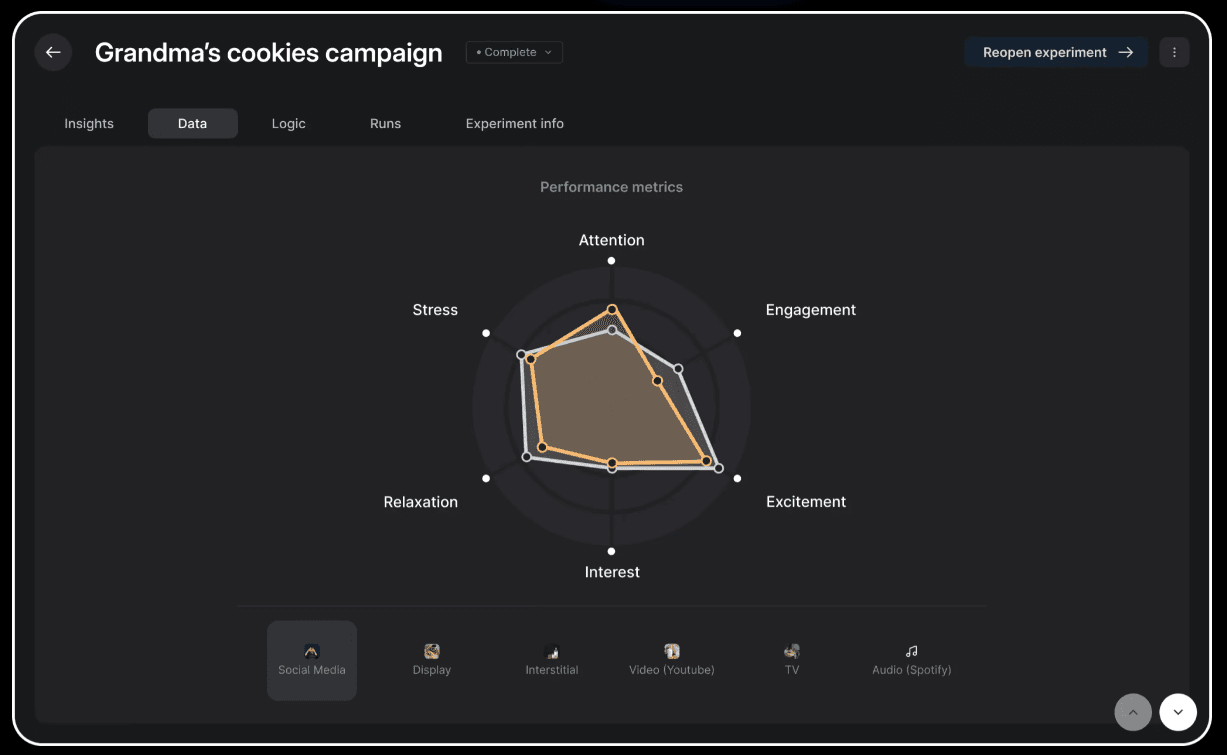
When people encounter a piece of creative — whether it’s a video, a product concept, or a digital experience — their brains respond immediately. Patterns of attention, engagement, and emotional activation appear long before someone clicks, shares, or fills out a survey.
Over the past decade, research in consumer neuroscience has shown that neural responses from relatively small study groups can predict large-scale outcomes such as advertising effectiveness, social engagement, and even box office performance (Faulk, 2012).
In many cases, the brain reveals patterns of interest or disengagement long before those signals appear in behavioral data.
Put simply, the brain often tells the story before the market does.
How Emotiv Studio makes this possible
Emotiv Studio brings this capability into enterprise workflows in a way that is practical for creative and research teams.
Participants interact with content while wearing Emotiv EEG devices, allowing the platform to capture moment-to-moment brain responses as they experience videos, advertisements, prototypes, or digital environments. These neural signals are translated into validated measures of cognitive and emotional states such as attention, engagement, stress, and focus.
Once collected, AI-powered analysis through EmotivIQ™ surfaces meaningful patterns within minutes. Teams can see where attention peaks, where engagement drops, and which moments create stronger cognitive responses.
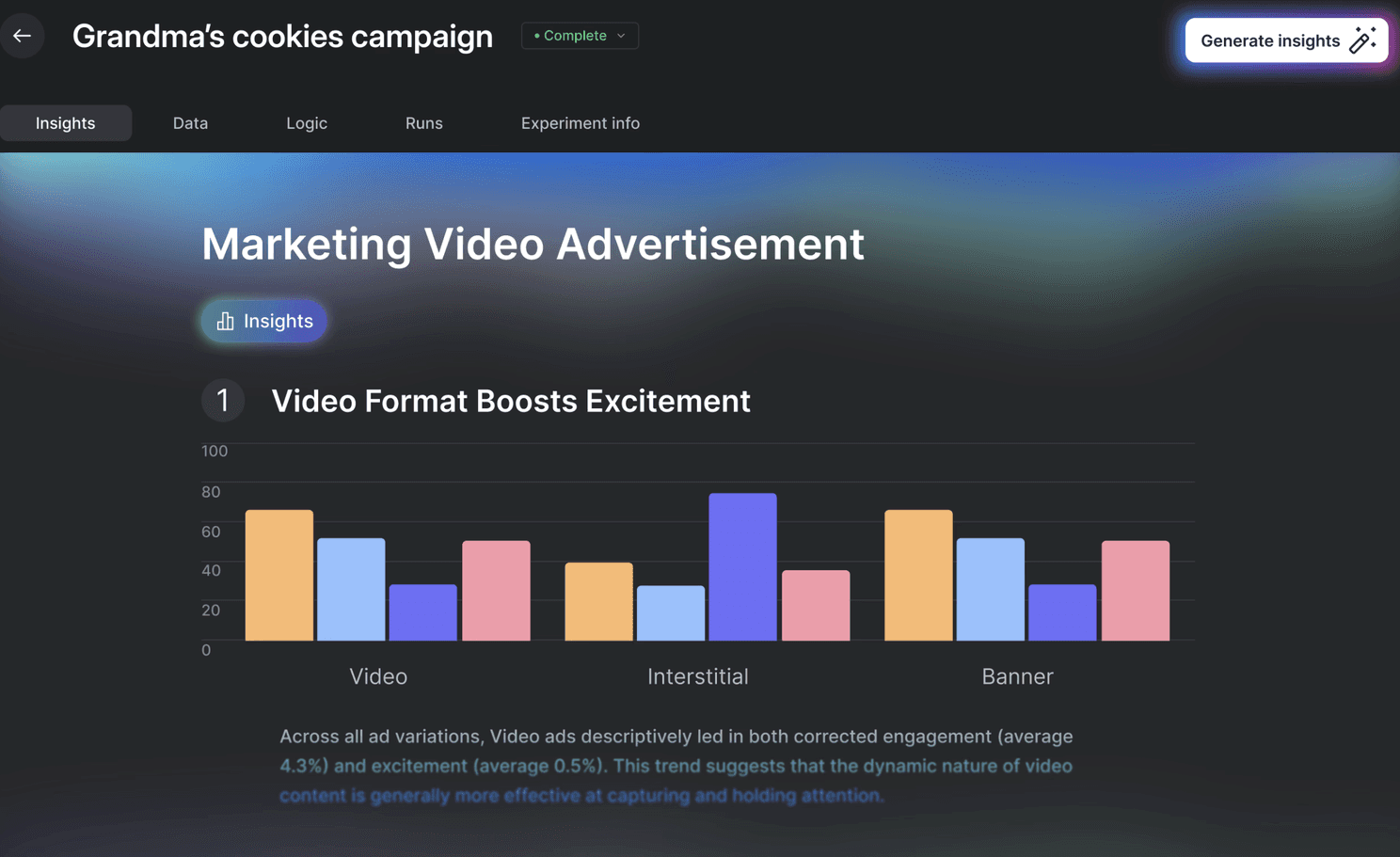
For example, a creative team evaluating two versions of a video campaign can observe exactly where viewers lose attention or where emotional engagement rises. Those signals can guide edits, pacing, or messaging before the campaign ever reaches a broader audience.
Instead of waiting weeks for post-campaign results, teams can understand audience response while ideas are still being developed and refined.
Built on EEG technology validated across thousands of research publications and used by universities and organizations worldwide, Emotiv’s platform helps bring neuroscience insights into practical creative and research workflows.
Why predictive insight matters for enterprise teams
For agencies and enterprise leaders, predictive insight ultimately reduces uncertainty.
When early signals reveal how audiences are responding, creative ideas become easier to refine and defend. Strategy conversations become grounded in evidence rather than speculation. And leadership teams gain greater confidence that the work moving forward reflects genuine audience engagement.
Neuroscience does not replace intuition or creativity. Instead, it strengthens them by providing a clearer understanding of how people actually experience ideas.
A final thought
The most valuable insights are often the ones that arrive early.
By revealing how audiences respond in the moment, neuroscience allows teams to move beyond assumptions and anticipate what may resonate at scale. Tools like Emotiv Studio bring that visibility into the decision process, helping teams understand how ideas are landing while they are still taking shape.
While no method predicts outcomes with complete certainty, early neural signals can give teams a powerful advantage in shaping what comes next.
And in an environment where creative work carries increasing financial weight, understanding how people experience ideas in real time can make the difference between guessing and knowing — and opens the door to technologies that respond more intelligently to human experience.
References
Falk, E. B., Berkman, E. T., & Lieberman, M. D. (2012). From neural responses to population behavior: Neural focus groups predict population-level media effects. Psychological Science, 23(5), 439–445. https://doi.org/10.1177/0956797611434964
The challenge: knowing what will resonate
Every marketing leader knows the moment when a campaign is almost ready to go live. The creative looks strong, the strategy feels right, and the team has aligned around the idea. But there is always one lingering question in the room: Will it actually work?
Surveys and focus groups reveal what audiences say they prefer, while analytics show how they behave. What they rarely capture is the immediate cognitive and emotional response that occurs the moment someone encounters a piece of creative. By that point, teams are no longer testing ideas. They are reacting to results.
What many enterprises increasingly want are signals earlier in the process. Signals that reveal what resonates before the stakes rise and decisions are locked in.
Where predictive insight begins
This is where neuroscience offers a different lens. Revealing signals of human response that traditional metrics often miss.
When people encounter a piece of creative — whether it’s a video, a product concept, or a digital experience — their brains respond immediately. Patterns of attention, engagement, and emotional activation appear long before someone clicks, shares, or fills out a survey.
Over the past decade, research in consumer neuroscience has shown that neural responses from relatively small study groups can predict large-scale outcomes such as advertising effectiveness, social engagement, and even box office performance (Faulk, 2012).
In many cases, the brain reveals patterns of interest or disengagement long before those signals appear in behavioral data.
Put simply, the brain often tells the story before the market does.
How Emotiv Studio makes this possible
Emotiv Studio brings this capability into enterprise workflows in a way that is practical for creative and research teams.
Participants interact with content while wearing Emotiv EEG devices, allowing the platform to capture moment-to-moment brain responses as they experience videos, advertisements, prototypes, or digital environments. These neural signals are translated into validated measures of cognitive and emotional states such as attention, engagement, stress, and focus.
Once collected, AI-powered analysis through EmotivIQ™ surfaces meaningful patterns within minutes. Teams can see where attention peaks, where engagement drops, and which moments create stronger cognitive responses.
For example, a creative team evaluating two versions of a video campaign can observe exactly where viewers lose attention or where emotional engagement rises. Those signals can guide edits, pacing, or messaging before the campaign ever reaches a broader audience.
Instead of waiting weeks for post-campaign results, teams can understand audience response while ideas are still being developed and refined.
Built on EEG technology validated across thousands of research publications and used by universities and organizations worldwide, Emotiv’s platform helps bring neuroscience insights into practical creative and research workflows.
Why predictive insight matters for enterprise teams
For agencies and enterprise leaders, predictive insight ultimately reduces uncertainty.
When early signals reveal how audiences are responding, creative ideas become easier to refine and defend. Strategy conversations become grounded in evidence rather than speculation. And leadership teams gain greater confidence that the work moving forward reflects genuine audience engagement.
Neuroscience does not replace intuition or creativity. Instead, it strengthens them by providing a clearer understanding of how people actually experience ideas.
A final thought
The most valuable insights are often the ones that arrive early.
By revealing how audiences respond in the moment, neuroscience allows teams to move beyond assumptions and anticipate what may resonate at scale. Tools like Emotiv Studio bring that visibility into the decision process, helping teams understand how ideas are landing while they are still taking shape.
While no method predicts outcomes with complete certainty, early neural signals can give teams a powerful advantage in shaping what comes next.
And in an environment where creative work carries increasing financial weight, understanding how people experience ideas in real time can make the difference between guessing and knowing — and opens the door to technologies that respond more intelligently to human experience.
References
Falk, E. B., Berkman, E. T., & Lieberman, M. D. (2012). From neural responses to population behavior: Neural focus groups predict population-level media effects. Psychological Science, 23(5), 439–445. https://doi.org/10.1177/0956797611434964
The challenge: knowing what will resonate
Every marketing leader knows the moment when a campaign is almost ready to go live. The creative looks strong, the strategy feels right, and the team has aligned around the idea. But there is always one lingering question in the room: Will it actually work?
Surveys and focus groups reveal what audiences say they prefer, while analytics show how they behave. What they rarely capture is the immediate cognitive and emotional response that occurs the moment someone encounters a piece of creative. By that point, teams are no longer testing ideas. They are reacting to results.
What many enterprises increasingly want are signals earlier in the process. Signals that reveal what resonates before the stakes rise and decisions are locked in.
Where predictive insight begins
This is where neuroscience offers a different lens. Revealing signals of human response that traditional metrics often miss.
When people encounter a piece of creative — whether it’s a video, a product concept, or a digital experience — their brains respond immediately. Patterns of attention, engagement, and emotional activation appear long before someone clicks, shares, or fills out a survey.
Over the past decade, research in consumer neuroscience has shown that neural responses from relatively small study groups can predict large-scale outcomes such as advertising effectiveness, social engagement, and even box office performance (Faulk, 2012).
In many cases, the brain reveals patterns of interest or disengagement long before those signals appear in behavioral data.
Put simply, the brain often tells the story before the market does.
How Emotiv Studio makes this possible
Emotiv Studio brings this capability into enterprise workflows in a way that is practical for creative and research teams.
Participants interact with content while wearing Emotiv EEG devices, allowing the platform to capture moment-to-moment brain responses as they experience videos, advertisements, prototypes, or digital environments. These neural signals are translated into validated measures of cognitive and emotional states such as attention, engagement, stress, and focus.
Once collected, AI-powered analysis through EmotivIQ™ surfaces meaningful patterns within minutes. Teams can see where attention peaks, where engagement drops, and which moments create stronger cognitive responses.
For example, a creative team evaluating two versions of a video campaign can observe exactly where viewers lose attention or where emotional engagement rises. Those signals can guide edits, pacing, or messaging before the campaign ever reaches a broader audience.
Instead of waiting weeks for post-campaign results, teams can understand audience response while ideas are still being developed and refined.
Built on EEG technology validated across thousands of research publications and used by universities and organizations worldwide, Emotiv’s platform helps bring neuroscience insights into practical creative and research workflows.
Why predictive insight matters for enterprise teams
For agencies and enterprise leaders, predictive insight ultimately reduces uncertainty.
When early signals reveal how audiences are responding, creative ideas become easier to refine and defend. Strategy conversations become grounded in evidence rather than speculation. And leadership teams gain greater confidence that the work moving forward reflects genuine audience engagement.
Neuroscience does not replace intuition or creativity. Instead, it strengthens them by providing a clearer understanding of how people actually experience ideas.
A final thought
The most valuable insights are often the ones that arrive early.
By revealing how audiences respond in the moment, neuroscience allows teams to move beyond assumptions and anticipate what may resonate at scale. Tools like Emotiv Studio bring that visibility into the decision process, helping teams understand how ideas are landing while they are still taking shape.
While no method predicts outcomes with complete certainty, early neural signals can give teams a powerful advantage in shaping what comes next.
And in an environment where creative work carries increasing financial weight, understanding how people experience ideas in real time can make the difference between guessing and knowing — and opens the door to technologies that respond more intelligently to human experience.
References
Falk, E. B., Berkman, E. T., & Lieberman, M. D. (2012). From neural responses to population behavior: Neural focus groups predict population-level media effects. Psychological Science, 23(5), 439–445. https://doi.org/10.1177/0956797611434964