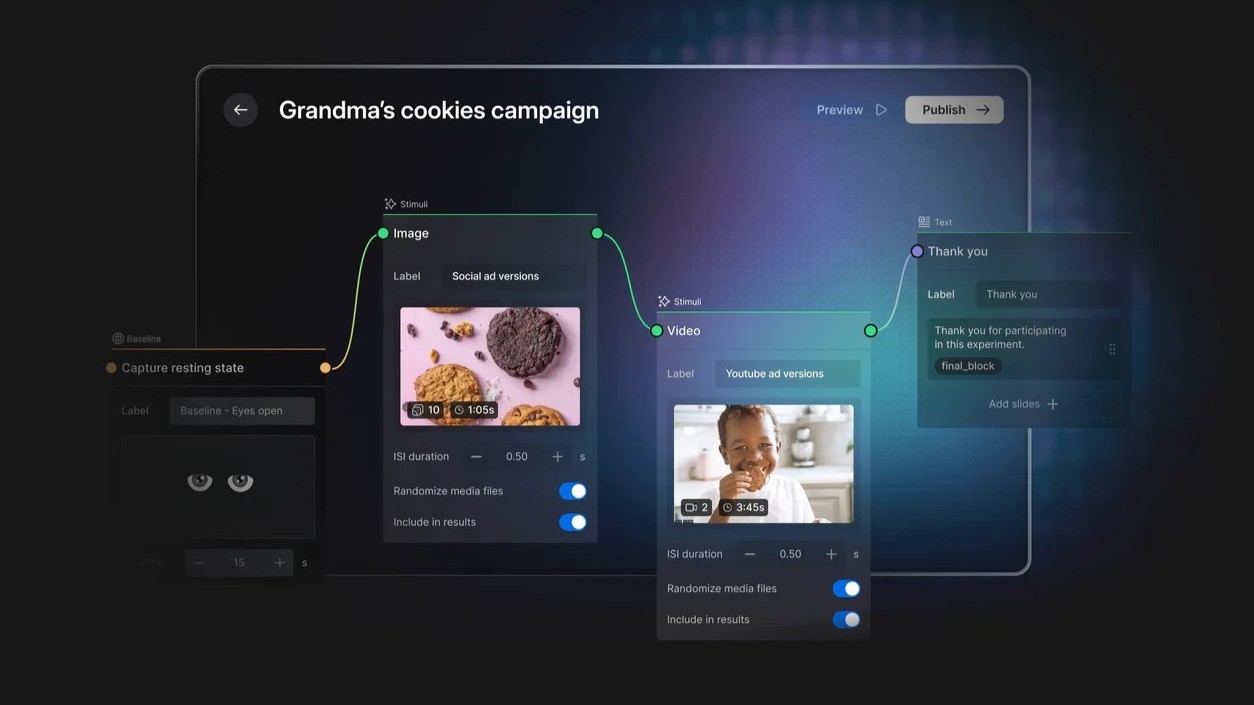
The Cost of Guessing
Nick Franck
Updated on
May 22, 2026
The Cost of Guessing
Nick Franck
Updated on
May 22, 2026
The Cost of Guessing
Nick Franck
Updated on
May 22, 2026
The challenge: intuition in a high-stakes environment
Creative work has always involved intuition. The best strategists and creative leaders rely on experience, instinct, and an understanding of culture to guide their decisions.
But the environment those decisions live in has changed.
Campaigns cost more. Production cycles move faster. And expectations from leadership and clients are higher than ever. A single campaign or product launch can represent months of work and millions in investment.
Whether teams are choosing between two versions of a campaign, deciding which concept moves into production, or preparing to commit significant media spend, those decisions often happen without a clear view of how audiences will actually respond.
The hidden cost of uncertainty
Traditional research methods help, but they rarely eliminate uncertainty.
Surveys capture opinions after an experience has already happened. Focus groups can be influenced by social bias or group dynamics. Analytics reveal what audiences did after something launches, but they rarely explain why.
As a result, many teams still rely heavily on internal debate and intuition when making major creative decisions.
Sometimes those instincts are right. But when they are not, the consequences are significant. Campaigns miss their mark. Product launches struggle to connect. Teams pivot after time and budget have already been spent.
Over time, the cost of guessing adds up.
Where neuroscience changes the equation
This is the gap neuroscience helps close by revealing signals of human response that traditional research methods often cannot see.
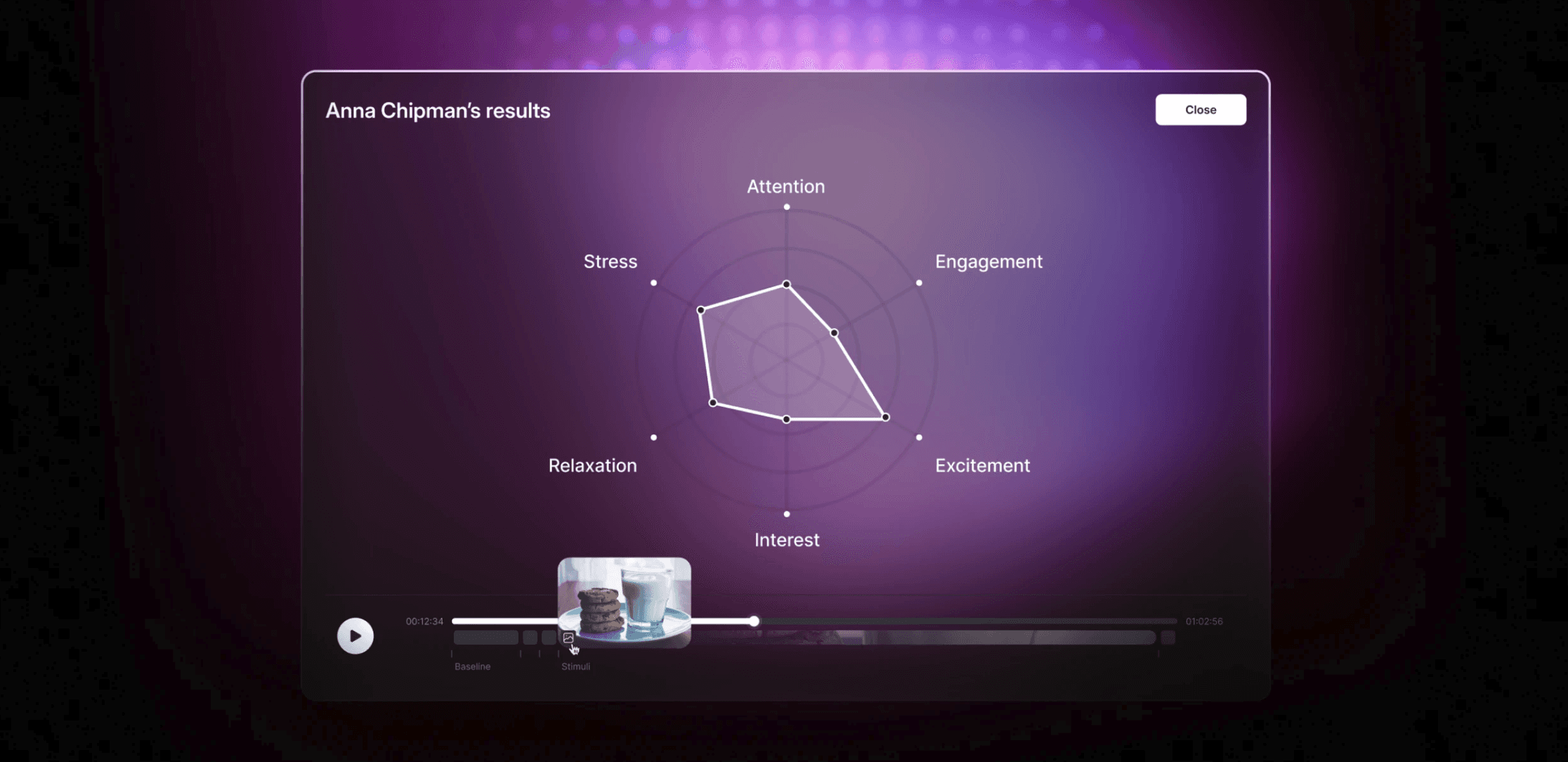
Instead of relying only on retrospective feedback, brain-based insights reveal how people are responding to creative in real time. Signals of attention, engagement, and emotional activation appear while someone is experiencing content, long before those reactions turn into measurable behavior.
These signals provide a deeper understanding of how audiences connect with ideas while those ideas are still evolving.
How Emotiv Studio supports smarter decisions
Emotiv Studio brings this capability into enterprise creative and research workflows.
Participants engage with creative concepts, digital experiences, or product prototypes while wearing Emotiv EEG devices. Emotiv Studio captures neural responses and translates them into validated measures of cognitive and emotional states such as attention, engagement, stress, and focus.
Through EmotivIQ™, AI-powered analysis reveals patterns in the data within minutes. Teams can see which moments hold attention, where engagement fades, and how audiences respond to different concepts or variations.
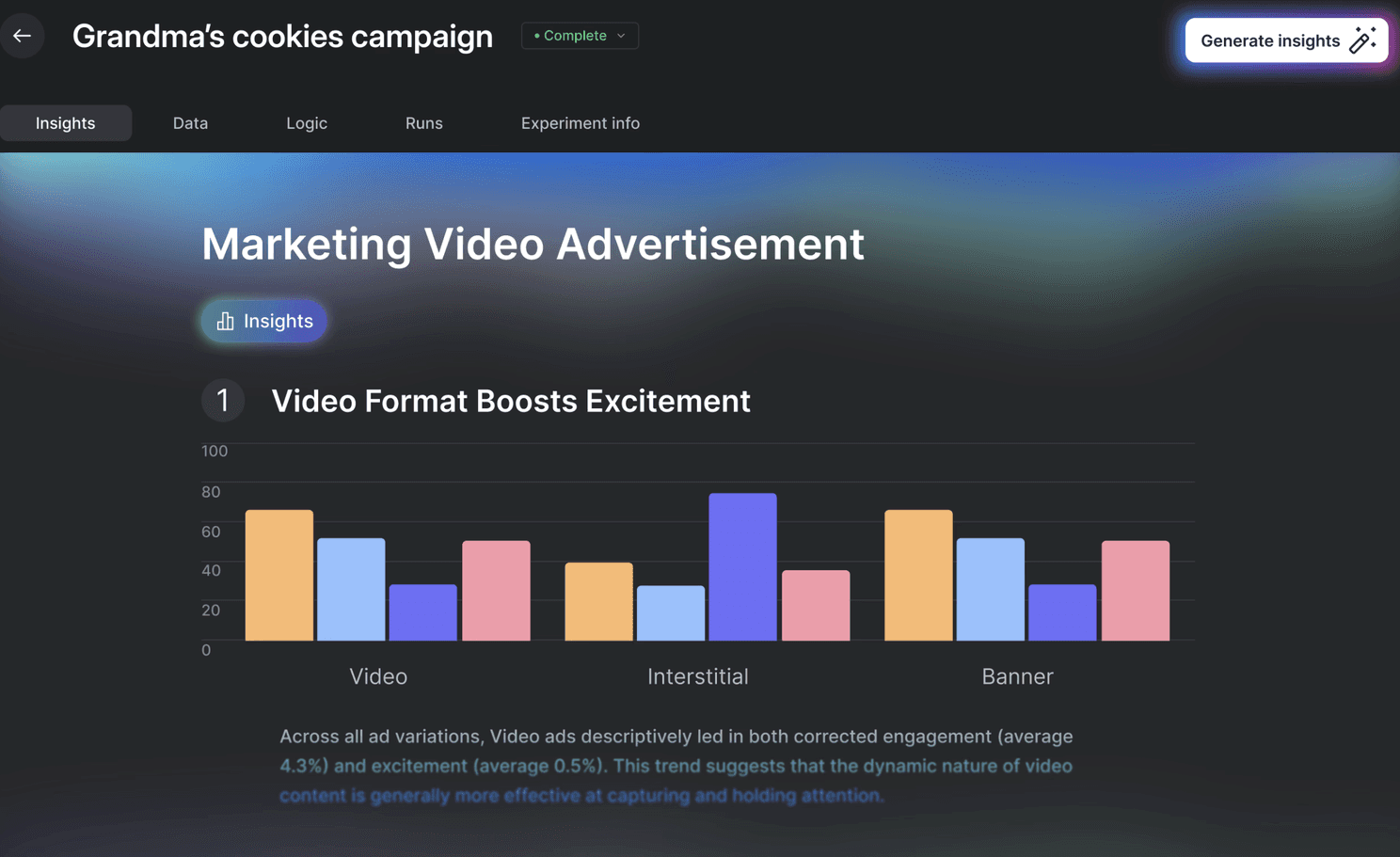
Instead of relying on guesswork, teams gain clearer signals about how their ideas are landing.
By bringing scalable neuroscience insights into real-world testing environments, teams can evaluate audience response while ideas are still flexible enough to be refined.
Why this matters for enterprise teams
This shift changes how decisions take shape.
When teams gain earlier visibility into audience response, creative discussions become less about internal debate and more about understanding how ideas are actually landing. Strategy conversations become easier to align around when insights appear earlier in the process, and leadership teams gain greater confidence in the work that ultimately moves forward.
Neuroscience doesn’t replace intuition. It strengthens it by revealing the human responses behind creative ideas, giving teams a clearer foundation for the decisions they make.
A final thought
In a world where creative investment continues to grow, the cost of uncertainty grows with it.
The organizations that succeed are not simply the ones with the boldest ideas. They are the ones with the clearest understanding of how their audiences respond.
By bringing real-time brain insights into the creative process, tools like Emotiv Studio help enterprises replace guesswork with clarity and move forward with greater confidence.
When organizations understand audience response earlier, they reduce costly pivots, refine ideas faster, and make creative investments with far greater confidence.
The challenge: intuition in a high-stakes environment
Creative work has always involved intuition. The best strategists and creative leaders rely on experience, instinct, and an understanding of culture to guide their decisions.
But the environment those decisions live in has changed.
Campaigns cost more. Production cycles move faster. And expectations from leadership and clients are higher than ever. A single campaign or product launch can represent months of work and millions in investment.
Whether teams are choosing between two versions of a campaign, deciding which concept moves into production, or preparing to commit significant media spend, those decisions often happen without a clear view of how audiences will actually respond.
The hidden cost of uncertainty
Traditional research methods help, but they rarely eliminate uncertainty.
Surveys capture opinions after an experience has already happened. Focus groups can be influenced by social bias or group dynamics. Analytics reveal what audiences did after something launches, but they rarely explain why.
As a result, many teams still rely heavily on internal debate and intuition when making major creative decisions.
Sometimes those instincts are right. But when they are not, the consequences are significant. Campaigns miss their mark. Product launches struggle to connect. Teams pivot after time and budget have already been spent.
Over time, the cost of guessing adds up.
Where neuroscience changes the equation
This is the gap neuroscience helps close by revealing signals of human response that traditional research methods often cannot see.
Instead of relying only on retrospective feedback, brain-based insights reveal how people are responding to creative in real time. Signals of attention, engagement, and emotional activation appear while someone is experiencing content, long before those reactions turn into measurable behavior.
These signals provide a deeper understanding of how audiences connect with ideas while those ideas are still evolving.
How Emotiv Studio supports smarter decisions
Emotiv Studio brings this capability into enterprise creative and research workflows.
Participants engage with creative concepts, digital experiences, or product prototypes while wearing Emotiv EEG devices. Emotiv Studio captures neural responses and translates them into validated measures of cognitive and emotional states such as attention, engagement, stress, and focus.
Through EmotivIQ™, AI-powered analysis reveals patterns in the data within minutes. Teams can see which moments hold attention, where engagement fades, and how audiences respond to different concepts or variations.
Instead of relying on guesswork, teams gain clearer signals about how their ideas are landing.
By bringing scalable neuroscience insights into real-world testing environments, teams can evaluate audience response while ideas are still flexible enough to be refined.
Why this matters for enterprise teams
This shift changes how decisions take shape.
When teams gain earlier visibility into audience response, creative discussions become less about internal debate and more about understanding how ideas are actually landing. Strategy conversations become easier to align around when insights appear earlier in the process, and leadership teams gain greater confidence in the work that ultimately moves forward.
Neuroscience doesn’t replace intuition. It strengthens it by revealing the human responses behind creative ideas, giving teams a clearer foundation for the decisions they make.
A final thought
In a world where creative investment continues to grow, the cost of uncertainty grows with it.
The organizations that succeed are not simply the ones with the boldest ideas. They are the ones with the clearest understanding of how their audiences respond.
By bringing real-time brain insights into the creative process, tools like Emotiv Studio help enterprises replace guesswork with clarity and move forward with greater confidence.
When organizations understand audience response earlier, they reduce costly pivots, refine ideas faster, and make creative investments with far greater confidence.
The challenge: intuition in a high-stakes environment
Creative work has always involved intuition. The best strategists and creative leaders rely on experience, instinct, and an understanding of culture to guide their decisions.
But the environment those decisions live in has changed.
Campaigns cost more. Production cycles move faster. And expectations from leadership and clients are higher than ever. A single campaign or product launch can represent months of work and millions in investment.
Whether teams are choosing between two versions of a campaign, deciding which concept moves into production, or preparing to commit significant media spend, those decisions often happen without a clear view of how audiences will actually respond.
The hidden cost of uncertainty
Traditional research methods help, but they rarely eliminate uncertainty.
Surveys capture opinions after an experience has already happened. Focus groups can be influenced by social bias or group dynamics. Analytics reveal what audiences did after something launches, but they rarely explain why.
As a result, many teams still rely heavily on internal debate and intuition when making major creative decisions.
Sometimes those instincts are right. But when they are not, the consequences are significant. Campaigns miss their mark. Product launches struggle to connect. Teams pivot after time and budget have already been spent.
Over time, the cost of guessing adds up.
Where neuroscience changes the equation
This is the gap neuroscience helps close by revealing signals of human response that traditional research methods often cannot see.
Instead of relying only on retrospective feedback, brain-based insights reveal how people are responding to creative in real time. Signals of attention, engagement, and emotional activation appear while someone is experiencing content, long before those reactions turn into measurable behavior.
These signals provide a deeper understanding of how audiences connect with ideas while those ideas are still evolving.
How Emotiv Studio supports smarter decisions
Emotiv Studio brings this capability into enterprise creative and research workflows.
Participants engage with creative concepts, digital experiences, or product prototypes while wearing Emotiv EEG devices. Emotiv Studio captures neural responses and translates them into validated measures of cognitive and emotional states such as attention, engagement, stress, and focus.
Through EmotivIQ™, AI-powered analysis reveals patterns in the data within minutes. Teams can see which moments hold attention, where engagement fades, and how audiences respond to different concepts or variations.
Instead of relying on guesswork, teams gain clearer signals about how their ideas are landing.
By bringing scalable neuroscience insights into real-world testing environments, teams can evaluate audience response while ideas are still flexible enough to be refined.
Why this matters for enterprise teams
This shift changes how decisions take shape.
When teams gain earlier visibility into audience response, creative discussions become less about internal debate and more about understanding how ideas are actually landing. Strategy conversations become easier to align around when insights appear earlier in the process, and leadership teams gain greater confidence in the work that ultimately moves forward.
Neuroscience doesn’t replace intuition. It strengthens it by revealing the human responses behind creative ideas, giving teams a clearer foundation for the decisions they make.
A final thought
In a world where creative investment continues to grow, the cost of uncertainty grows with it.
The organizations that succeed are not simply the ones with the boldest ideas. They are the ones with the clearest understanding of how their audiences respond.
By bringing real-time brain insights into the creative process, tools like Emotiv Studio help enterprises replace guesswork with clarity and move forward with greater confidence.
When organizations understand audience response earlier, they reduce costly pivots, refine ideas faster, and make creative investments with far greater confidence.