Challenge your memory! Play the new N-Back game in the Emotiv App
Challenge your memory! Play the new N-Back game in the Emotiv App
Challenge your memory! Play the new N-Back game in the Emotiv App
How to Choose the Best Portable EEG System
Share:



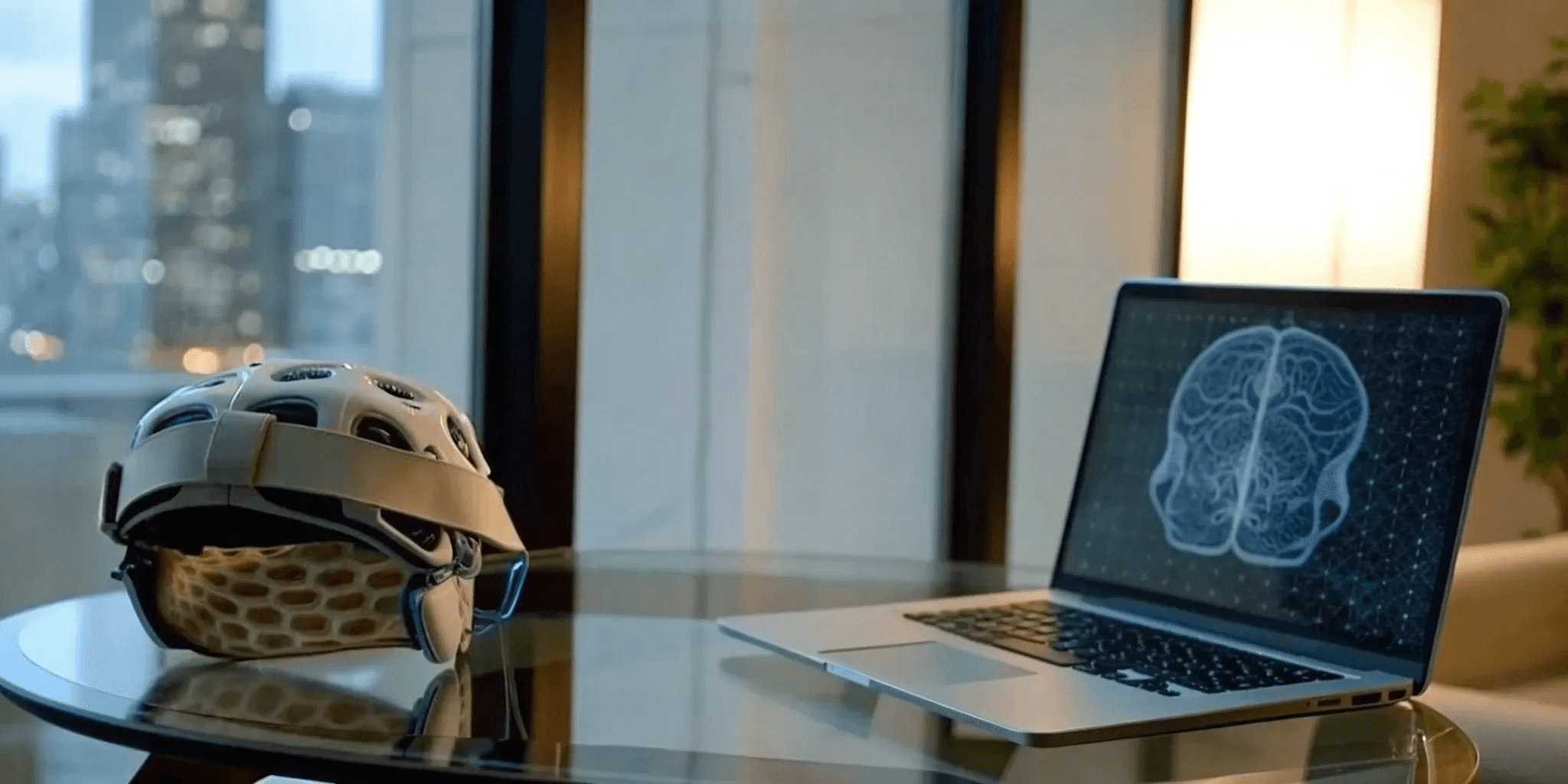
The idea of measuring brainwaves might sound like science fiction, but a portable EEG system makes it a practical reality for creators and researchers everywhere. This technology provides a direct, non-invasive window into the electrical conversations happening between neurons in your brain. It’s a safe and established method for understanding brain dynamics, forming the foundation of modern brain-computer interface technology. But how does it actually work, and is the data accurate? This article will demystify the technology behind these powerful devices. We’ll explain the basics, debunk common myths, and explore the key components that work together to deliver clean, reliable data for your projects.
Key Takeaways
Study brain activity in natural environments: Portable EEG lets you move beyond the traditional lab, allowing you to gather more authentic data by observing how people's brains function during everyday activities and interactions.
Choose your EEG based on your project's goals: The right system depends on your needs, so match the channel count and features to your application—whether it's a high-density headset for detailed academic research or a simpler device for BCI development.
Prioritize features that ensure clean data: To get reliable results outside of a controlled setting, focus on systems with excellent signal processing to reduce noise, a comfortable design for long sessions, and a stable wireless connection.
What Is a Portable EEG System and How Does It Work?
A portable electroencephalogram (EEG) system is a device that lets you measure the brain's electrical activity without being tethered to a lab full of computers. Think of it as a wearable sensor for your brain. These systems are designed to be lightweight, wireless, and easy to use, opening up possibilities for research and development outside of a traditional laboratory. Instead of a complex, intimidating setup, you get a user-friendly headset that connects to your computer or smartphone, allowing you to see and work with brain data in real time. This accessibility is what makes portable EEG so powerful for developers, researchers, and creators. It brings brain science out of the abstract and into your hands, letting you explore and build with data that was once out of reach for most people.
The Basics of EEG Technology
At its core, EEG technology is a non-invasive way to listen in on the electrical conversations happening between neurons in your brain. Your brain cells communicate using tiny electrical impulses, creating patterns of activity. A portable EEG headset uses small, sensitive sensors (electrodes) that rest gently on your scalp to detect these patterns. The headset then amplifies these faint signals and sends them wirelessly to an application for processing. This allows you to explore different brain states associated with focus, relaxation, and cognitive stress. It’s a safe and established method for understanding brain dynamics, forming the foundation of modern brain-computer interface technology.
Key Components of a Portable System
A great portable EEG system is more than just its sensors. Several key components work together to deliver clean, reliable data. First, you have the electrodes themselves, which need to make good contact with the scalp. Then there's the headset frame, which must be comfortable and secure enough for extended wear. Inside, a powerful battery and stable wireless connection are essential for untethered use without interruptions. Finally, all this hardware is powered by sophisticated software that processes the raw signal, filters out noise, and translates the data into meaningful metrics and visualizations. Our EmotivPRO software, for example, lets you view and record EEG data streams in real time.
How Portable EEG Compares to Traditional Lab Setups
If you picture a traditional EEG setup, you might imagine a person in a lab, sitting perfectly still, connected by a web of wires to a large machine. While effective, this environment is restrictive and unnatural. Portable EEG changes the game completely. By removing the wires and shrinking the hardware, you can conduct studies in real-world settings where participants can move and interact naturally. This is a massive advantage for academic research and education, as it allows for the study of brain activity during everyday tasks, from driving a car to learning a new skill. It makes EEG more accessible, affordable, and applicable to a wider range of questions.
Debunking Common Myths About Accuracy
A common question is whether portable EEG systems are as accurate as their clinical counterparts. It’s important to understand they are designed for different purposes. While a clinical EEG is a diagnostic tool used in hospitals, a high-quality portable EEG is a powerful scientific instrument for research and development. It's a myth that they are just toys; devices like our Epoc X headset provide research-grade data that is trusted by thousands of scientists and institutions worldwide. The key is choosing a system with excellent signal quality and robust software, allowing you to conduct serious research and build innovative applications with confidence in your data.
What Are the Pros and Cons of Portable EEG?
Portable EEG systems have opened up a world of possibilities, but like any technology, they come with their own set of advantages and challenges. Understanding these can help you decide if a portable system is the right fit for your project and which features to prioritize. The biggest benefit is the freedom to take your research out of the lab and into the real world, but that freedom comes with new variables to consider. Let's walk through the key pros and cons so you can make an informed choice.
Pro: Research in Natural Environments
One of the most exciting advantages of portable EEG is the ability to study the brain in real-world settings. Traditional EEG setups tether participants to bulky equipment in a controlled lab, which can feel artificial. With a wireless headset, you can gather more realistic data by observing people as they go about their daily activities. This shift allows researchers to explore new frontiers in fields like neuromarketing or human-computer interaction, capturing brain activity during authentic experiences rather than simulated ones. This move from the lab to life makes brain research more relevant and accessible than ever before.
Pro: Enjoy a Quick and Easy Setup
Getting started with a portable EEG headset is surprisingly straightforward. Forget the days of complicated, time-consuming preparations. Modern systems, like our Epoc X headset, are designed for comfort and ease of use. A good portable system should have a stable wireless connection, long battery life, and a setup process that takes minutes, not hours. This simplicity means you can spend less time troubleshooting equipment and more time focusing on your research or application. It removes a significant barrier, making advanced brain data accessible to a much broader audience, from seasoned scientists to curious developers.
Pro: Benefit from Cost-Effective Accessibility
High-quality EEG technology is no longer confined to institutions with massive budgets. While a traditional, high-density laboratory system can cost upwards of $100,000, portable EEG systems are available at a fraction of that price. Entry-level devices can be found for under $1,000, making them a viable option for independent researchers, small businesses, and educational programs. This accessibility democratizes brain research, empowering more people to explore and innovate. It allows you to get started with a powerful brain-computer interface without needing a major grant or institutional funding.
Con: Manage Motion and Environmental Noise
The freedom of portability introduces a key challenge: motion artifacts. Because EEG sensors are so sensitive, physical movements—like walking, talking, or even blinking—can create noise in the data that might be mistaken for brain activity. Similarly, electrical noise from nearby devices can interfere with the signal. While this is a factor to be aware of, it's manageable. Our EmotivPRO software, for example, includes tools to help you filter and clean your data. Planning your experiments to minimize excessive movement and being mindful of the environment are also crucial steps for gathering clean recordings.
Con: Consider Battery Life and Wearability
When you’re not plugged into a wall, power becomes a primary concern. The battery life of a portable EEG device will determine the length of the studies you can run. For long-term experiments or all-day use, you’ll need a device with a robust battery. Wearability is just as important; an uncomfortable headset can distract a participant and affect the quality of the data, especially during longer sessions. It’s a trade-off: a smaller, lighter device might be more comfortable but have a shorter battery life. It's important to match the device's specifications to the demands of your specific academic research project.
Con: Account for Data Quality Variations
It’s a common misconception that all EEG devices are created equal. While consumer-grade portable systems provide incredibly valuable data, they are not identical to the clinical systems used in medical diagnostics. The precision and resolution can differ, and it's important to understand the context of the data you're collecting. For many applications in research, wellness, and development, the data from a high-quality portable device is more than sufficient. The key is to choose a system from a reputable source and understand its capabilities and limitations, ensuring it aligns with the goals of your project.
How to Choose the Right Portable EEG System
Finding the perfect portable EEG system feels a lot like choosing a new creative tool. The best one for you depends entirely on what you plan to create with it. Are you conducting in-depth academic studies, developing a new brain-computer interface, or are you curious about exploring cognitive wellness tools for personal use? Each goal points to a different type of system. The sheer number of options can feel overwhelming, but breaking it down into a few key factors makes the decision much clearer.
Instead of searching for a single "best" device, I find it's more helpful to think about which features will best support your specific project. You’ll want to consider everything from the number of sensors and the comfort of the headset to the software that helps you make sense of the data. A system that’s perfect for a multi-hour academic research study in a lab might not be the right fit for gathering data in a real-world environment. By focusing on your primary application, you can confidently select a portable EEG system that has the right balance of power, usability, and flexibility for your needs.
Determine Your Ideal Channel Count
The number of channels, or sensors, on an EEG headset determines the amount of brain data you can collect and the level of detail you can achieve. Think of it like pixels in a camera—more channels provide a higher-resolution picture of brain activity. For detailed academic research requiring a comprehensive view of the brain, a high-channel-count system like our 32-channel Emotiv Flex is the way to go.
If you're developing brain-computer interfaces or conducting neuromarketing studies, a mid-range headset like the 14-channel Epoc X offers a great balance of data richness and ease of use. For personal applications, educational projects, or simpler studies, fewer channels are often sufficient. A device like the 5-channel Insight or the 2-channel MN8 provides focused data that’s perfect for getting started with EEG.
Prioritize Comfort and Wearability
If you or your participants are going to be wearing a headset for more than a few minutes, comfort is non-negotiable. An uncomfortable or heavy device can be distracting and may even affect the quality of the data you collect, especially during longer sessions. Look for a lightweight, ergonomic design that fits securely without being too tight.
The goal is to find a system that feels natural to wear, allowing for consistent and reliable data collection over time. Whether it’s a full headset or a more discreet earbud design, the right fit ensures that the user can remain focused on the task at hand, not on the technology they’re wearing. This is especially important for studies that involve movement or take place outside of a traditional lab.
Evaluate Wireless and Battery Performance
The freedom of a portable EEG system comes from its wireless capabilities, so you’ll want to make sure its performance is up to the task. Check the device’s battery life to ensure it can last for the full duration of your planned sessions without needing a recharge. Nothing interrupts the flow of a study more than a device powering down mid-session.
Equally important is the stability of the wireless connection. A strong, reliable Bluetooth connection is essential for preventing data loss and ensuring a smooth, uninterrupted stream of information from the headset to your computer. Before committing to a system, confirm that its battery and wireless specs align with the demands of your research or project.
Check Software and Analysis Capabilities
The headset is just the first step; the software is where your data comes to life. Raw EEG signals are complex, so you need intuitive and powerful software to help you process, analyze, and visualize what those signals mean. When choosing a system, look at the accompanying software suite. Does it offer real-time data streaming? Can you easily mark events, filter out noise, and export your data for further analysis?
Our EmotivPRO software, for example, is designed to help you manage everything from data recording to in-depth analysis. A system with robust software support saves you valuable time and gives you the tools you need to turn brainwave data into meaningful insights right out of the box.
Look for Signal Processing and Noise Reduction
One of the biggest challenges in mobile EEG is dealing with "noise," or artifacts—unwanted electrical signals from muscle movements, eye blinks, or even nearby electronic devices. These artifacts can contaminate your data, making it difficult to interpret. High-quality portable EEG systems have built-in signal processing capabilities to help filter out this noise.
When evaluating a device, ask about its noise reduction features. A system that effectively minimizes motion artifacts and environmental interference will provide you with cleaner, more reliable data. This is a critical feature for any study conducted in a real-world setting where you have less control over the environment and participant movement.
Explore Integration with Other Technologies
If you’re a developer or a researcher with a custom application in mind, you’ll want a system that plays well with others. The ability to integrate an EEG headset with your own software or other technologies opens up a world of possibilities. Look for systems that offer access to an API (Application Programming Interface) or an SDK (Software Development Kit).
These tools allow you to build custom applications, stream EEG data into other programs, and synchronize it with other data sources. Our resources for developers are designed to support this kind of innovation. Choosing a system with a flexible and open platform gives you the freedom to push the boundaries of what’s possible with brain-computer interface technology.
Find the Right Portable EEG for Your Application
Choosing the right portable EEG system really comes down to what you want to accomplish. A device that’s perfect for detailed academic research might be overkill for personal use, while a simpler system may not provide the data needed for complex brain-computer interface development. The key is to match the channel count, features, and software capabilities to your specific goals. Whether you're a researcher, developer, or just curious about your own brain activity, there’s a portable EEG system designed for your application. Let's walk through some common use cases to help you find the perfect fit.
For Comprehensive Research: High-Channel Systems
If you're conducting detailed academic or clinical research, you need a system that can capture brain activity with high spatial resolution. This is where high-channel count systems shine. Devices like our Flex headset offer up to 32 channels, allowing you to gather rich, nuanced data from across the entire scalp. This level of detail is essential for studies that require precise source localization or the examination of complex neural dynamics. With a high-density setup, you can explore brain activity with the granularity needed to publish robust, high-impact findings in your field.
For BCI Development: Mid-Range Systems
When you're building a brain-computer interface or conducting neuromarketing studies, you need a balance between data quality and practicality. Mid-range systems with 5 to 14 channels, like our Epoc X or Insight headsets, hit that sweet spot. These devices provide enough data to reliably detect key brain patterns and translate them into commands or insights without the extensive setup time of a high-density system. This makes them ideal for iterative development and real-world testing, allowing you to focus on creating responsive and intuitive applications for users.
For Cognitive Wellness Access: Consumer-Grade Systems
You don’t need to be a neuroscientist to explore your own brain activity. For those interested in personal insights, consumer-grade systems offer an accessible entry point. Devices like our MN8 EEG earbuds are designed for everyday use, integrating seamlessly into your routine. Paired with user-friendly software like our Emotiv App, these systems provide access to cognitive wellness tools that can help you understand your focus and attention patterns. They make it simple to engage with your own neural data in a meaningful way, without requiring any technical expertise.
For Neuromarketing: Specialized Solutions
Understanding genuine consumer reactions is the core of effective neuromarketing. Portable EEG provides a direct window into the subconscious responses that drive decision-making, capturing engagement and emotional reactions in real time. Systems like the Epoc X are well-suited for these applications, offering the mobility to test responses in realistic settings—from watching an ad to interacting with a product. By analyzing this neural data, brands can gain deep insights that go far beyond what traditional surveys and focus groups can reveal, helping them create more impactful campaigns and products.
For Education and Development: Focused Platforms
Portable EEG is also making waves in educational settings. Researchers and educators can use these tools to better understand student engagement and attention during different learning activities. For instance, a system like our Insight headset can provide real-time feedback on a student's focus levels during a lecture or while using an educational app. This information can help educators tailor their teaching methods and create more effective learning environments. It’s a powerful way to apply neuroscience principles directly to academic research and education.
For Emerging Fields: UX and Mental Health Support
The applications for portable EEG are constantly expanding. In user experience (UX) research, EEG can reveal a user's cognitive load and frustration levels, offering insights that aren't always apparent from behavior alone. For developers, this opens up new possibilities for creating adaptive interfaces and more intuitive products. Our software and hardware provide a flexible platform for innovation in these emerging fields. By using our developer tools, creators can build novel applications that leverage brain data for everything from personalized gaming to supportive mental wellness tools.
Related Articles
Frequently Asked Questions
Is portable EEG technology safe to use? Absolutely. EEG technology is a completely non-invasive and passive method for understanding brain activity. The sensors on the headset simply listen to the faint electrical signals your brain naturally produces. Nothing is being sent into your brain. It’s a well-established and safe technique that has been used in scientific and medical fields for decades.
What's the real difference between a headset with many channels and one with just a few? Think of it in terms of detail and purpose. A system with a high channel count, like our 32-channel Flex, gives you a very detailed, high-resolution map of brain activity across the entire head. This is ideal for in-depth academic research. A system with fewer channels, like the 2-channel MN8 or 5-channel Insight, provides more focused data from specific regions. This is perfect for developing BCI applications or exploring personal cognitive patterns, where you need reliable data without the complexity of a full-head array.
Do I need a technical background to use a portable EEG system? Not at all. While our systems are powerful enough for serious researchers and developers, they are also designed to be accessible to everyone. For personal use, our Emotiv App provides a straightforward interface that translates complex brain data into easy-to-understand insights about your focus or relaxation. You can get started and explore your own brain activity without needing any prior experience in neuroscience.
How do you get clean data if you're moving around? This is a great question, as movement can create noise in the data. High-quality systems are designed to minimize this. First, a well-fitting and stable headset is crucial. Second, our software includes sophisticated algorithms and filters that are specifically designed to identify and clean up artifacts caused by things like muscle tension or eye blinks. While it's always good practice to minimize excessive head movements during a recording, these built-in tools do a lot of the heavy lifting to ensure your data is reliable.
Can I use the EEG data with my own software or analysis tools? Yes, you can. We believe in giving creators the freedom to innovate, which is why we provide resources for developers, including APIs and software development kits. This allows you to stream real-time EEG data directly into your own custom applications. Whether you're building a unique BCI project, conducting specialized analysis, or integrating brain data with other technologies, our platform is flexible enough to support your work.
The idea of measuring brainwaves might sound like science fiction, but a portable EEG system makes it a practical reality for creators and researchers everywhere. This technology provides a direct, non-invasive window into the electrical conversations happening between neurons in your brain. It’s a safe and established method for understanding brain dynamics, forming the foundation of modern brain-computer interface technology. But how does it actually work, and is the data accurate? This article will demystify the technology behind these powerful devices. We’ll explain the basics, debunk common myths, and explore the key components that work together to deliver clean, reliable data for your projects.
Key Takeaways
Study brain activity in natural environments: Portable EEG lets you move beyond the traditional lab, allowing you to gather more authentic data by observing how people's brains function during everyday activities and interactions.
Choose your EEG based on your project's goals: The right system depends on your needs, so match the channel count and features to your application—whether it's a high-density headset for detailed academic research or a simpler device for BCI development.
Prioritize features that ensure clean data: To get reliable results outside of a controlled setting, focus on systems with excellent signal processing to reduce noise, a comfortable design for long sessions, and a stable wireless connection.
What Is a Portable EEG System and How Does It Work?
A portable electroencephalogram (EEG) system is a device that lets you measure the brain's electrical activity without being tethered to a lab full of computers. Think of it as a wearable sensor for your brain. These systems are designed to be lightweight, wireless, and easy to use, opening up possibilities for research and development outside of a traditional laboratory. Instead of a complex, intimidating setup, you get a user-friendly headset that connects to your computer or smartphone, allowing you to see and work with brain data in real time. This accessibility is what makes portable EEG so powerful for developers, researchers, and creators. It brings brain science out of the abstract and into your hands, letting you explore and build with data that was once out of reach for most people.
The Basics of EEG Technology
At its core, EEG technology is a non-invasive way to listen in on the electrical conversations happening between neurons in your brain. Your brain cells communicate using tiny electrical impulses, creating patterns of activity. A portable EEG headset uses small, sensitive sensors (electrodes) that rest gently on your scalp to detect these patterns. The headset then amplifies these faint signals and sends them wirelessly to an application for processing. This allows you to explore different brain states associated with focus, relaxation, and cognitive stress. It’s a safe and established method for understanding brain dynamics, forming the foundation of modern brain-computer interface technology.
Key Components of a Portable System
A great portable EEG system is more than just its sensors. Several key components work together to deliver clean, reliable data. First, you have the electrodes themselves, which need to make good contact with the scalp. Then there's the headset frame, which must be comfortable and secure enough for extended wear. Inside, a powerful battery and stable wireless connection are essential for untethered use without interruptions. Finally, all this hardware is powered by sophisticated software that processes the raw signal, filters out noise, and translates the data into meaningful metrics and visualizations. Our EmotivPRO software, for example, lets you view and record EEG data streams in real time.
How Portable EEG Compares to Traditional Lab Setups
If you picture a traditional EEG setup, you might imagine a person in a lab, sitting perfectly still, connected by a web of wires to a large machine. While effective, this environment is restrictive and unnatural. Portable EEG changes the game completely. By removing the wires and shrinking the hardware, you can conduct studies in real-world settings where participants can move and interact naturally. This is a massive advantage for academic research and education, as it allows for the study of brain activity during everyday tasks, from driving a car to learning a new skill. It makes EEG more accessible, affordable, and applicable to a wider range of questions.
Debunking Common Myths About Accuracy
A common question is whether portable EEG systems are as accurate as their clinical counterparts. It’s important to understand they are designed for different purposes. While a clinical EEG is a diagnostic tool used in hospitals, a high-quality portable EEG is a powerful scientific instrument for research and development. It's a myth that they are just toys; devices like our Epoc X headset provide research-grade data that is trusted by thousands of scientists and institutions worldwide. The key is choosing a system with excellent signal quality and robust software, allowing you to conduct serious research and build innovative applications with confidence in your data.
What Are the Pros and Cons of Portable EEG?
Portable EEG systems have opened up a world of possibilities, but like any technology, they come with their own set of advantages and challenges. Understanding these can help you decide if a portable system is the right fit for your project and which features to prioritize. The biggest benefit is the freedom to take your research out of the lab and into the real world, but that freedom comes with new variables to consider. Let's walk through the key pros and cons so you can make an informed choice.
Pro: Research in Natural Environments
One of the most exciting advantages of portable EEG is the ability to study the brain in real-world settings. Traditional EEG setups tether participants to bulky equipment in a controlled lab, which can feel artificial. With a wireless headset, you can gather more realistic data by observing people as they go about their daily activities. This shift allows researchers to explore new frontiers in fields like neuromarketing or human-computer interaction, capturing brain activity during authentic experiences rather than simulated ones. This move from the lab to life makes brain research more relevant and accessible than ever before.
Pro: Enjoy a Quick and Easy Setup
Getting started with a portable EEG headset is surprisingly straightforward. Forget the days of complicated, time-consuming preparations. Modern systems, like our Epoc X headset, are designed for comfort and ease of use. A good portable system should have a stable wireless connection, long battery life, and a setup process that takes minutes, not hours. This simplicity means you can spend less time troubleshooting equipment and more time focusing on your research or application. It removes a significant barrier, making advanced brain data accessible to a much broader audience, from seasoned scientists to curious developers.
Pro: Benefit from Cost-Effective Accessibility
High-quality EEG technology is no longer confined to institutions with massive budgets. While a traditional, high-density laboratory system can cost upwards of $100,000, portable EEG systems are available at a fraction of that price. Entry-level devices can be found for under $1,000, making them a viable option for independent researchers, small businesses, and educational programs. This accessibility democratizes brain research, empowering more people to explore and innovate. It allows you to get started with a powerful brain-computer interface without needing a major grant or institutional funding.
Con: Manage Motion and Environmental Noise
The freedom of portability introduces a key challenge: motion artifacts. Because EEG sensors are so sensitive, physical movements—like walking, talking, or even blinking—can create noise in the data that might be mistaken for brain activity. Similarly, electrical noise from nearby devices can interfere with the signal. While this is a factor to be aware of, it's manageable. Our EmotivPRO software, for example, includes tools to help you filter and clean your data. Planning your experiments to minimize excessive movement and being mindful of the environment are also crucial steps for gathering clean recordings.
Con: Consider Battery Life and Wearability
When you’re not plugged into a wall, power becomes a primary concern. The battery life of a portable EEG device will determine the length of the studies you can run. For long-term experiments or all-day use, you’ll need a device with a robust battery. Wearability is just as important; an uncomfortable headset can distract a participant and affect the quality of the data, especially during longer sessions. It’s a trade-off: a smaller, lighter device might be more comfortable but have a shorter battery life. It's important to match the device's specifications to the demands of your specific academic research project.
Con: Account for Data Quality Variations
It’s a common misconception that all EEG devices are created equal. While consumer-grade portable systems provide incredibly valuable data, they are not identical to the clinical systems used in medical diagnostics. The precision and resolution can differ, and it's important to understand the context of the data you're collecting. For many applications in research, wellness, and development, the data from a high-quality portable device is more than sufficient. The key is to choose a system from a reputable source and understand its capabilities and limitations, ensuring it aligns with the goals of your project.
How to Choose the Right Portable EEG System
Finding the perfect portable EEG system feels a lot like choosing a new creative tool. The best one for you depends entirely on what you plan to create with it. Are you conducting in-depth academic studies, developing a new brain-computer interface, or are you curious about exploring cognitive wellness tools for personal use? Each goal points to a different type of system. The sheer number of options can feel overwhelming, but breaking it down into a few key factors makes the decision much clearer.
Instead of searching for a single "best" device, I find it's more helpful to think about which features will best support your specific project. You’ll want to consider everything from the number of sensors and the comfort of the headset to the software that helps you make sense of the data. A system that’s perfect for a multi-hour academic research study in a lab might not be the right fit for gathering data in a real-world environment. By focusing on your primary application, you can confidently select a portable EEG system that has the right balance of power, usability, and flexibility for your needs.
Determine Your Ideal Channel Count
The number of channels, or sensors, on an EEG headset determines the amount of brain data you can collect and the level of detail you can achieve. Think of it like pixels in a camera—more channels provide a higher-resolution picture of brain activity. For detailed academic research requiring a comprehensive view of the brain, a high-channel-count system like our 32-channel Emotiv Flex is the way to go.
If you're developing brain-computer interfaces or conducting neuromarketing studies, a mid-range headset like the 14-channel Epoc X offers a great balance of data richness and ease of use. For personal applications, educational projects, or simpler studies, fewer channels are often sufficient. A device like the 5-channel Insight or the 2-channel MN8 provides focused data that’s perfect for getting started with EEG.
Prioritize Comfort and Wearability
If you or your participants are going to be wearing a headset for more than a few minutes, comfort is non-negotiable. An uncomfortable or heavy device can be distracting and may even affect the quality of the data you collect, especially during longer sessions. Look for a lightweight, ergonomic design that fits securely without being too tight.
The goal is to find a system that feels natural to wear, allowing for consistent and reliable data collection over time. Whether it’s a full headset or a more discreet earbud design, the right fit ensures that the user can remain focused on the task at hand, not on the technology they’re wearing. This is especially important for studies that involve movement or take place outside of a traditional lab.
Evaluate Wireless and Battery Performance
The freedom of a portable EEG system comes from its wireless capabilities, so you’ll want to make sure its performance is up to the task. Check the device’s battery life to ensure it can last for the full duration of your planned sessions without needing a recharge. Nothing interrupts the flow of a study more than a device powering down mid-session.
Equally important is the stability of the wireless connection. A strong, reliable Bluetooth connection is essential for preventing data loss and ensuring a smooth, uninterrupted stream of information from the headset to your computer. Before committing to a system, confirm that its battery and wireless specs align with the demands of your research or project.
Check Software and Analysis Capabilities
The headset is just the first step; the software is where your data comes to life. Raw EEG signals are complex, so you need intuitive and powerful software to help you process, analyze, and visualize what those signals mean. When choosing a system, look at the accompanying software suite. Does it offer real-time data streaming? Can you easily mark events, filter out noise, and export your data for further analysis?
Our EmotivPRO software, for example, is designed to help you manage everything from data recording to in-depth analysis. A system with robust software support saves you valuable time and gives you the tools you need to turn brainwave data into meaningful insights right out of the box.
Look for Signal Processing and Noise Reduction
One of the biggest challenges in mobile EEG is dealing with "noise," or artifacts—unwanted electrical signals from muscle movements, eye blinks, or even nearby electronic devices. These artifacts can contaminate your data, making it difficult to interpret. High-quality portable EEG systems have built-in signal processing capabilities to help filter out this noise.
When evaluating a device, ask about its noise reduction features. A system that effectively minimizes motion artifacts and environmental interference will provide you with cleaner, more reliable data. This is a critical feature for any study conducted in a real-world setting where you have less control over the environment and participant movement.
Explore Integration with Other Technologies
If you’re a developer or a researcher with a custom application in mind, you’ll want a system that plays well with others. The ability to integrate an EEG headset with your own software or other technologies opens up a world of possibilities. Look for systems that offer access to an API (Application Programming Interface) or an SDK (Software Development Kit).
These tools allow you to build custom applications, stream EEG data into other programs, and synchronize it with other data sources. Our resources for developers are designed to support this kind of innovation. Choosing a system with a flexible and open platform gives you the freedom to push the boundaries of what’s possible with brain-computer interface technology.
Find the Right Portable EEG for Your Application
Choosing the right portable EEG system really comes down to what you want to accomplish. A device that’s perfect for detailed academic research might be overkill for personal use, while a simpler system may not provide the data needed for complex brain-computer interface development. The key is to match the channel count, features, and software capabilities to your specific goals. Whether you're a researcher, developer, or just curious about your own brain activity, there’s a portable EEG system designed for your application. Let's walk through some common use cases to help you find the perfect fit.
For Comprehensive Research: High-Channel Systems
If you're conducting detailed academic or clinical research, you need a system that can capture brain activity with high spatial resolution. This is where high-channel count systems shine. Devices like our Flex headset offer up to 32 channels, allowing you to gather rich, nuanced data from across the entire scalp. This level of detail is essential for studies that require precise source localization or the examination of complex neural dynamics. With a high-density setup, you can explore brain activity with the granularity needed to publish robust, high-impact findings in your field.
For BCI Development: Mid-Range Systems
When you're building a brain-computer interface or conducting neuromarketing studies, you need a balance between data quality and practicality. Mid-range systems with 5 to 14 channels, like our Epoc X or Insight headsets, hit that sweet spot. These devices provide enough data to reliably detect key brain patterns and translate them into commands or insights without the extensive setup time of a high-density system. This makes them ideal for iterative development and real-world testing, allowing you to focus on creating responsive and intuitive applications for users.
For Cognitive Wellness Access: Consumer-Grade Systems
You don’t need to be a neuroscientist to explore your own brain activity. For those interested in personal insights, consumer-grade systems offer an accessible entry point. Devices like our MN8 EEG earbuds are designed for everyday use, integrating seamlessly into your routine. Paired with user-friendly software like our Emotiv App, these systems provide access to cognitive wellness tools that can help you understand your focus and attention patterns. They make it simple to engage with your own neural data in a meaningful way, without requiring any technical expertise.
For Neuromarketing: Specialized Solutions
Understanding genuine consumer reactions is the core of effective neuromarketing. Portable EEG provides a direct window into the subconscious responses that drive decision-making, capturing engagement and emotional reactions in real time. Systems like the Epoc X are well-suited for these applications, offering the mobility to test responses in realistic settings—from watching an ad to interacting with a product. By analyzing this neural data, brands can gain deep insights that go far beyond what traditional surveys and focus groups can reveal, helping them create more impactful campaigns and products.
For Education and Development: Focused Platforms
Portable EEG is also making waves in educational settings. Researchers and educators can use these tools to better understand student engagement and attention during different learning activities. For instance, a system like our Insight headset can provide real-time feedback on a student's focus levels during a lecture or while using an educational app. This information can help educators tailor their teaching methods and create more effective learning environments. It’s a powerful way to apply neuroscience principles directly to academic research and education.
For Emerging Fields: UX and Mental Health Support
The applications for portable EEG are constantly expanding. In user experience (UX) research, EEG can reveal a user's cognitive load and frustration levels, offering insights that aren't always apparent from behavior alone. For developers, this opens up new possibilities for creating adaptive interfaces and more intuitive products. Our software and hardware provide a flexible platform for innovation in these emerging fields. By using our developer tools, creators can build novel applications that leverage brain data for everything from personalized gaming to supportive mental wellness tools.
Related Articles
Frequently Asked Questions
Is portable EEG technology safe to use? Absolutely. EEG technology is a completely non-invasive and passive method for understanding brain activity. The sensors on the headset simply listen to the faint electrical signals your brain naturally produces. Nothing is being sent into your brain. It’s a well-established and safe technique that has been used in scientific and medical fields for decades.
What's the real difference between a headset with many channels and one with just a few? Think of it in terms of detail and purpose. A system with a high channel count, like our 32-channel Flex, gives you a very detailed, high-resolution map of brain activity across the entire head. This is ideal for in-depth academic research. A system with fewer channels, like the 2-channel MN8 or 5-channel Insight, provides more focused data from specific regions. This is perfect for developing BCI applications or exploring personal cognitive patterns, where you need reliable data without the complexity of a full-head array.
Do I need a technical background to use a portable EEG system? Not at all. While our systems are powerful enough for serious researchers and developers, they are also designed to be accessible to everyone. For personal use, our Emotiv App provides a straightforward interface that translates complex brain data into easy-to-understand insights about your focus or relaxation. You can get started and explore your own brain activity without needing any prior experience in neuroscience.
How do you get clean data if you're moving around? This is a great question, as movement can create noise in the data. High-quality systems are designed to minimize this. First, a well-fitting and stable headset is crucial. Second, our software includes sophisticated algorithms and filters that are specifically designed to identify and clean up artifacts caused by things like muscle tension or eye blinks. While it's always good practice to minimize excessive head movements during a recording, these built-in tools do a lot of the heavy lifting to ensure your data is reliable.
Can I use the EEG data with my own software or analysis tools? Yes, you can. We believe in giving creators the freedom to innovate, which is why we provide resources for developers, including APIs and software development kits. This allows you to stream real-time EEG data directly into your own custom applications. Whether you're building a unique BCI project, conducting specialized analysis, or integrating brain data with other technologies, our platform is flexible enough to support your work.
The idea of measuring brainwaves might sound like science fiction, but a portable EEG system makes it a practical reality for creators and researchers everywhere. This technology provides a direct, non-invasive window into the electrical conversations happening between neurons in your brain. It’s a safe and established method for understanding brain dynamics, forming the foundation of modern brain-computer interface technology. But how does it actually work, and is the data accurate? This article will demystify the technology behind these powerful devices. We’ll explain the basics, debunk common myths, and explore the key components that work together to deliver clean, reliable data for your projects.
Key Takeaways
Study brain activity in natural environments: Portable EEG lets you move beyond the traditional lab, allowing you to gather more authentic data by observing how people's brains function during everyday activities and interactions.
Choose your EEG based on your project's goals: The right system depends on your needs, so match the channel count and features to your application—whether it's a high-density headset for detailed academic research or a simpler device for BCI development.
Prioritize features that ensure clean data: To get reliable results outside of a controlled setting, focus on systems with excellent signal processing to reduce noise, a comfortable design for long sessions, and a stable wireless connection.
What Is a Portable EEG System and How Does It Work?
A portable electroencephalogram (EEG) system is a device that lets you measure the brain's electrical activity without being tethered to a lab full of computers. Think of it as a wearable sensor for your brain. These systems are designed to be lightweight, wireless, and easy to use, opening up possibilities for research and development outside of a traditional laboratory. Instead of a complex, intimidating setup, you get a user-friendly headset that connects to your computer or smartphone, allowing you to see and work with brain data in real time. This accessibility is what makes portable EEG so powerful for developers, researchers, and creators. It brings brain science out of the abstract and into your hands, letting you explore and build with data that was once out of reach for most people.
The Basics of EEG Technology
At its core, EEG technology is a non-invasive way to listen in on the electrical conversations happening between neurons in your brain. Your brain cells communicate using tiny electrical impulses, creating patterns of activity. A portable EEG headset uses small, sensitive sensors (electrodes) that rest gently on your scalp to detect these patterns. The headset then amplifies these faint signals and sends them wirelessly to an application for processing. This allows you to explore different brain states associated with focus, relaxation, and cognitive stress. It’s a safe and established method for understanding brain dynamics, forming the foundation of modern brain-computer interface technology.
Key Components of a Portable System
A great portable EEG system is more than just its sensors. Several key components work together to deliver clean, reliable data. First, you have the electrodes themselves, which need to make good contact with the scalp. Then there's the headset frame, which must be comfortable and secure enough for extended wear. Inside, a powerful battery and stable wireless connection are essential for untethered use without interruptions. Finally, all this hardware is powered by sophisticated software that processes the raw signal, filters out noise, and translates the data into meaningful metrics and visualizations. Our EmotivPRO software, for example, lets you view and record EEG data streams in real time.
How Portable EEG Compares to Traditional Lab Setups
If you picture a traditional EEG setup, you might imagine a person in a lab, sitting perfectly still, connected by a web of wires to a large machine. While effective, this environment is restrictive and unnatural. Portable EEG changes the game completely. By removing the wires and shrinking the hardware, you can conduct studies in real-world settings where participants can move and interact naturally. This is a massive advantage for academic research and education, as it allows for the study of brain activity during everyday tasks, from driving a car to learning a new skill. It makes EEG more accessible, affordable, and applicable to a wider range of questions.
Debunking Common Myths About Accuracy
A common question is whether portable EEG systems are as accurate as their clinical counterparts. It’s important to understand they are designed for different purposes. While a clinical EEG is a diagnostic tool used in hospitals, a high-quality portable EEG is a powerful scientific instrument for research and development. It's a myth that they are just toys; devices like our Epoc X headset provide research-grade data that is trusted by thousands of scientists and institutions worldwide. The key is choosing a system with excellent signal quality and robust software, allowing you to conduct serious research and build innovative applications with confidence in your data.
What Are the Pros and Cons of Portable EEG?
Portable EEG systems have opened up a world of possibilities, but like any technology, they come with their own set of advantages and challenges. Understanding these can help you decide if a portable system is the right fit for your project and which features to prioritize. The biggest benefit is the freedom to take your research out of the lab and into the real world, but that freedom comes with new variables to consider. Let's walk through the key pros and cons so you can make an informed choice.
Pro: Research in Natural Environments
One of the most exciting advantages of portable EEG is the ability to study the brain in real-world settings. Traditional EEG setups tether participants to bulky equipment in a controlled lab, which can feel artificial. With a wireless headset, you can gather more realistic data by observing people as they go about their daily activities. This shift allows researchers to explore new frontiers in fields like neuromarketing or human-computer interaction, capturing brain activity during authentic experiences rather than simulated ones. This move from the lab to life makes brain research more relevant and accessible than ever before.
Pro: Enjoy a Quick and Easy Setup
Getting started with a portable EEG headset is surprisingly straightforward. Forget the days of complicated, time-consuming preparations. Modern systems, like our Epoc X headset, are designed for comfort and ease of use. A good portable system should have a stable wireless connection, long battery life, and a setup process that takes minutes, not hours. This simplicity means you can spend less time troubleshooting equipment and more time focusing on your research or application. It removes a significant barrier, making advanced brain data accessible to a much broader audience, from seasoned scientists to curious developers.
Pro: Benefit from Cost-Effective Accessibility
High-quality EEG technology is no longer confined to institutions with massive budgets. While a traditional, high-density laboratory system can cost upwards of $100,000, portable EEG systems are available at a fraction of that price. Entry-level devices can be found for under $1,000, making them a viable option for independent researchers, small businesses, and educational programs. This accessibility democratizes brain research, empowering more people to explore and innovate. It allows you to get started with a powerful brain-computer interface without needing a major grant or institutional funding.
Con: Manage Motion and Environmental Noise
The freedom of portability introduces a key challenge: motion artifacts. Because EEG sensors are so sensitive, physical movements—like walking, talking, or even blinking—can create noise in the data that might be mistaken for brain activity. Similarly, electrical noise from nearby devices can interfere with the signal. While this is a factor to be aware of, it's manageable. Our EmotivPRO software, for example, includes tools to help you filter and clean your data. Planning your experiments to minimize excessive movement and being mindful of the environment are also crucial steps for gathering clean recordings.
Con: Consider Battery Life and Wearability
When you’re not plugged into a wall, power becomes a primary concern. The battery life of a portable EEG device will determine the length of the studies you can run. For long-term experiments or all-day use, you’ll need a device with a robust battery. Wearability is just as important; an uncomfortable headset can distract a participant and affect the quality of the data, especially during longer sessions. It’s a trade-off: a smaller, lighter device might be more comfortable but have a shorter battery life. It's important to match the device's specifications to the demands of your specific academic research project.
Con: Account for Data Quality Variations
It’s a common misconception that all EEG devices are created equal. While consumer-grade portable systems provide incredibly valuable data, they are not identical to the clinical systems used in medical diagnostics. The precision and resolution can differ, and it's important to understand the context of the data you're collecting. For many applications in research, wellness, and development, the data from a high-quality portable device is more than sufficient. The key is to choose a system from a reputable source and understand its capabilities and limitations, ensuring it aligns with the goals of your project.
How to Choose the Right Portable EEG System
Finding the perfect portable EEG system feels a lot like choosing a new creative tool. The best one for you depends entirely on what you plan to create with it. Are you conducting in-depth academic studies, developing a new brain-computer interface, or are you curious about exploring cognitive wellness tools for personal use? Each goal points to a different type of system. The sheer number of options can feel overwhelming, but breaking it down into a few key factors makes the decision much clearer.
Instead of searching for a single "best" device, I find it's more helpful to think about which features will best support your specific project. You’ll want to consider everything from the number of sensors and the comfort of the headset to the software that helps you make sense of the data. A system that’s perfect for a multi-hour academic research study in a lab might not be the right fit for gathering data in a real-world environment. By focusing on your primary application, you can confidently select a portable EEG system that has the right balance of power, usability, and flexibility for your needs.
Determine Your Ideal Channel Count
The number of channels, or sensors, on an EEG headset determines the amount of brain data you can collect and the level of detail you can achieve. Think of it like pixels in a camera—more channels provide a higher-resolution picture of brain activity. For detailed academic research requiring a comprehensive view of the brain, a high-channel-count system like our 32-channel Emotiv Flex is the way to go.
If you're developing brain-computer interfaces or conducting neuromarketing studies, a mid-range headset like the 14-channel Epoc X offers a great balance of data richness and ease of use. For personal applications, educational projects, or simpler studies, fewer channels are often sufficient. A device like the 5-channel Insight or the 2-channel MN8 provides focused data that’s perfect for getting started with EEG.
Prioritize Comfort and Wearability
If you or your participants are going to be wearing a headset for more than a few minutes, comfort is non-negotiable. An uncomfortable or heavy device can be distracting and may even affect the quality of the data you collect, especially during longer sessions. Look for a lightweight, ergonomic design that fits securely without being too tight.
The goal is to find a system that feels natural to wear, allowing for consistent and reliable data collection over time. Whether it’s a full headset or a more discreet earbud design, the right fit ensures that the user can remain focused on the task at hand, not on the technology they’re wearing. This is especially important for studies that involve movement or take place outside of a traditional lab.
Evaluate Wireless and Battery Performance
The freedom of a portable EEG system comes from its wireless capabilities, so you’ll want to make sure its performance is up to the task. Check the device’s battery life to ensure it can last for the full duration of your planned sessions without needing a recharge. Nothing interrupts the flow of a study more than a device powering down mid-session.
Equally important is the stability of the wireless connection. A strong, reliable Bluetooth connection is essential for preventing data loss and ensuring a smooth, uninterrupted stream of information from the headset to your computer. Before committing to a system, confirm that its battery and wireless specs align with the demands of your research or project.
Check Software and Analysis Capabilities
The headset is just the first step; the software is where your data comes to life. Raw EEG signals are complex, so you need intuitive and powerful software to help you process, analyze, and visualize what those signals mean. When choosing a system, look at the accompanying software suite. Does it offer real-time data streaming? Can you easily mark events, filter out noise, and export your data for further analysis?
Our EmotivPRO software, for example, is designed to help you manage everything from data recording to in-depth analysis. A system with robust software support saves you valuable time and gives you the tools you need to turn brainwave data into meaningful insights right out of the box.
Look for Signal Processing and Noise Reduction
One of the biggest challenges in mobile EEG is dealing with "noise," or artifacts—unwanted electrical signals from muscle movements, eye blinks, or even nearby electronic devices. These artifacts can contaminate your data, making it difficult to interpret. High-quality portable EEG systems have built-in signal processing capabilities to help filter out this noise.
When evaluating a device, ask about its noise reduction features. A system that effectively minimizes motion artifacts and environmental interference will provide you with cleaner, more reliable data. This is a critical feature for any study conducted in a real-world setting where you have less control over the environment and participant movement.
Explore Integration with Other Technologies
If you’re a developer or a researcher with a custom application in mind, you’ll want a system that plays well with others. The ability to integrate an EEG headset with your own software or other technologies opens up a world of possibilities. Look for systems that offer access to an API (Application Programming Interface) or an SDK (Software Development Kit).
These tools allow you to build custom applications, stream EEG data into other programs, and synchronize it with other data sources. Our resources for developers are designed to support this kind of innovation. Choosing a system with a flexible and open platform gives you the freedom to push the boundaries of what’s possible with brain-computer interface technology.
Find the Right Portable EEG for Your Application
Choosing the right portable EEG system really comes down to what you want to accomplish. A device that’s perfect for detailed academic research might be overkill for personal use, while a simpler system may not provide the data needed for complex brain-computer interface development. The key is to match the channel count, features, and software capabilities to your specific goals. Whether you're a researcher, developer, or just curious about your own brain activity, there’s a portable EEG system designed for your application. Let's walk through some common use cases to help you find the perfect fit.
For Comprehensive Research: High-Channel Systems
If you're conducting detailed academic or clinical research, you need a system that can capture brain activity with high spatial resolution. This is where high-channel count systems shine. Devices like our Flex headset offer up to 32 channels, allowing you to gather rich, nuanced data from across the entire scalp. This level of detail is essential for studies that require precise source localization or the examination of complex neural dynamics. With a high-density setup, you can explore brain activity with the granularity needed to publish robust, high-impact findings in your field.
For BCI Development: Mid-Range Systems
When you're building a brain-computer interface or conducting neuromarketing studies, you need a balance between data quality and practicality. Mid-range systems with 5 to 14 channels, like our Epoc X or Insight headsets, hit that sweet spot. These devices provide enough data to reliably detect key brain patterns and translate them into commands or insights without the extensive setup time of a high-density system. This makes them ideal for iterative development and real-world testing, allowing you to focus on creating responsive and intuitive applications for users.
For Cognitive Wellness Access: Consumer-Grade Systems
You don’t need to be a neuroscientist to explore your own brain activity. For those interested in personal insights, consumer-grade systems offer an accessible entry point. Devices like our MN8 EEG earbuds are designed for everyday use, integrating seamlessly into your routine. Paired with user-friendly software like our Emotiv App, these systems provide access to cognitive wellness tools that can help you understand your focus and attention patterns. They make it simple to engage with your own neural data in a meaningful way, without requiring any technical expertise.
For Neuromarketing: Specialized Solutions
Understanding genuine consumer reactions is the core of effective neuromarketing. Portable EEG provides a direct window into the subconscious responses that drive decision-making, capturing engagement and emotional reactions in real time. Systems like the Epoc X are well-suited for these applications, offering the mobility to test responses in realistic settings—from watching an ad to interacting with a product. By analyzing this neural data, brands can gain deep insights that go far beyond what traditional surveys and focus groups can reveal, helping them create more impactful campaigns and products.
For Education and Development: Focused Platforms
Portable EEG is also making waves in educational settings. Researchers and educators can use these tools to better understand student engagement and attention during different learning activities. For instance, a system like our Insight headset can provide real-time feedback on a student's focus levels during a lecture or while using an educational app. This information can help educators tailor their teaching methods and create more effective learning environments. It’s a powerful way to apply neuroscience principles directly to academic research and education.
For Emerging Fields: UX and Mental Health Support
The applications for portable EEG are constantly expanding. In user experience (UX) research, EEG can reveal a user's cognitive load and frustration levels, offering insights that aren't always apparent from behavior alone. For developers, this opens up new possibilities for creating adaptive interfaces and more intuitive products. Our software and hardware provide a flexible platform for innovation in these emerging fields. By using our developer tools, creators can build novel applications that leverage brain data for everything from personalized gaming to supportive mental wellness tools.
Related Articles
Frequently Asked Questions
Is portable EEG technology safe to use? Absolutely. EEG technology is a completely non-invasive and passive method for understanding brain activity. The sensors on the headset simply listen to the faint electrical signals your brain naturally produces. Nothing is being sent into your brain. It’s a well-established and safe technique that has been used in scientific and medical fields for decades.
What's the real difference between a headset with many channels and one with just a few? Think of it in terms of detail and purpose. A system with a high channel count, like our 32-channel Flex, gives you a very detailed, high-resolution map of brain activity across the entire head. This is ideal for in-depth academic research. A system with fewer channels, like the 2-channel MN8 or 5-channel Insight, provides more focused data from specific regions. This is perfect for developing BCI applications or exploring personal cognitive patterns, where you need reliable data without the complexity of a full-head array.
Do I need a technical background to use a portable EEG system? Not at all. While our systems are powerful enough for serious researchers and developers, they are also designed to be accessible to everyone. For personal use, our Emotiv App provides a straightforward interface that translates complex brain data into easy-to-understand insights about your focus or relaxation. You can get started and explore your own brain activity without needing any prior experience in neuroscience.
How do you get clean data if you're moving around? This is a great question, as movement can create noise in the data. High-quality systems are designed to minimize this. First, a well-fitting and stable headset is crucial. Second, our software includes sophisticated algorithms and filters that are specifically designed to identify and clean up artifacts caused by things like muscle tension or eye blinks. While it's always good practice to minimize excessive head movements during a recording, these built-in tools do a lot of the heavy lifting to ensure your data is reliable.
Can I use the EEG data with my own software or analysis tools? Yes, you can. We believe in giving creators the freedom to innovate, which is why we provide resources for developers, including APIs and software development kits. This allows you to stream real-time EEG data directly into your own custom applications. Whether you're building a unique BCI project, conducting specialized analysis, or integrating brain data with other technologies, our platform is flexible enough to support your work.
Continue reading