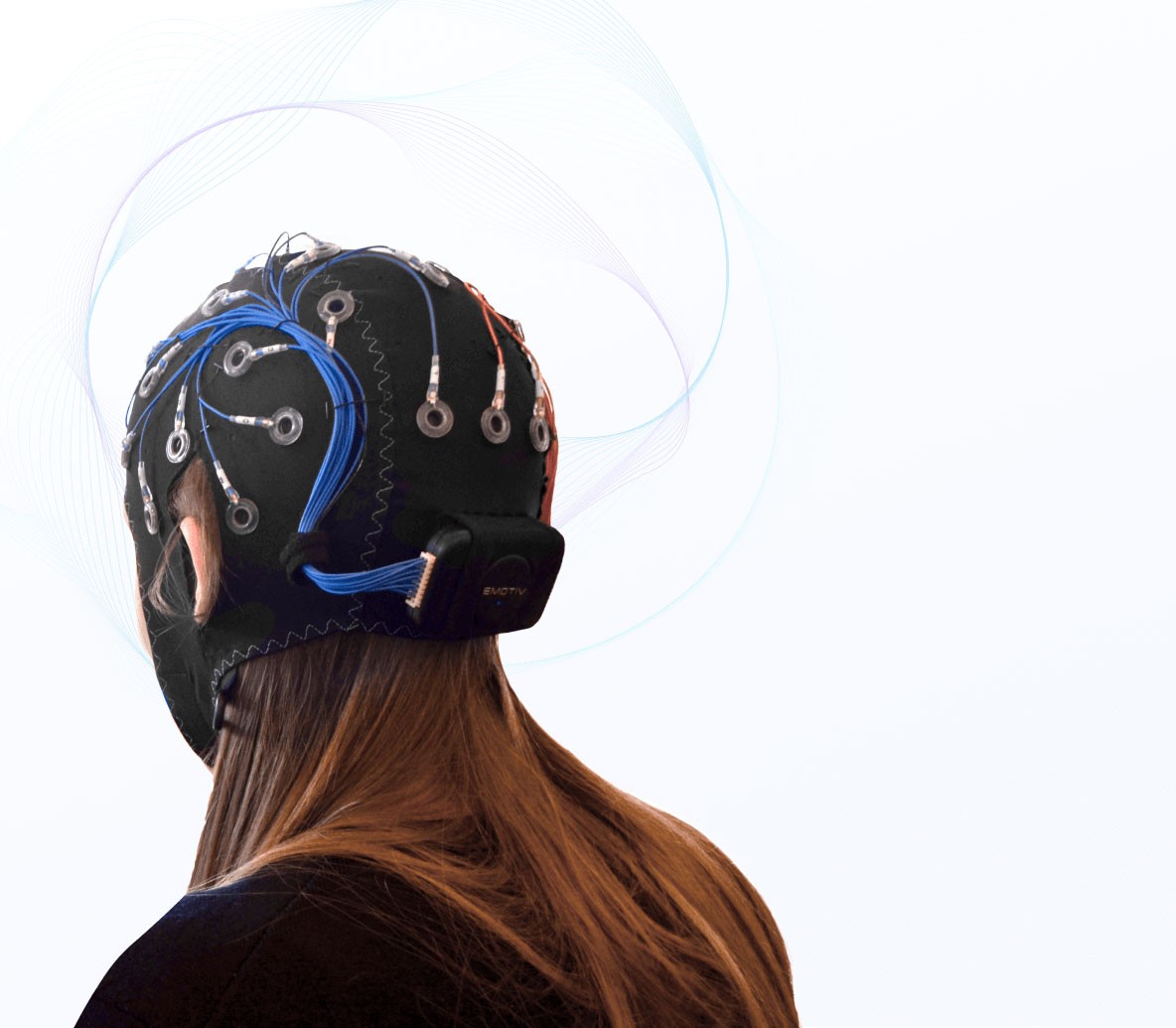
What is the Emotiv Flex? A Complete Overview
Emotiv
Updated on
Feb 1, 2026
What is the Emotiv Flex? A Complete Overview
Emotiv
Updated on
Feb 1, 2026
What is the Emotiv Flex? A Complete Overview
Emotiv
Updated on
Feb 1, 2026
Conducting high-density brain research used to mean being confined to a lab, tethered to bulky, expensive equipment. This limited the scope of experiments, making it difficult to study brain activity in natural, real-world settings. What if you could break free from those constraints and take the power of a 32-channel EEG system with you? That’s exactly what the Emotiv Flex was designed for. This wireless, portable headset gives researchers, developers, and educators access to detailed, reliable brain data without the traditional barriers. It’s a system built for modern science, enabling more dynamic and realistic studies in fields ranging from cognitive neuroscience to brain-computer interface development.
Key Takeaways
Capture high-density brain data anywhere: The Flex headset’s wireless, 32-channel system allows you to conduct detailed research in natural, real-world settings instead of being confined to a traditional lab.
Tailor the headset to your research needs: Choose between quick-setup saline sensors for efficiency or stable gel sensors for long-duration studies to match your specific experimental protocol and ensure high-quality data.
Power demanding applications: The headset's high-resolution data provides the detail needed for complex projects, including building nuanced brain-computer interfaces, conducting in-depth academic research, and gathering genuine consumer insights.
What is the Emotiv Flex EEG headset?
If you’re looking for a way to conduct high-density brain research outside of a traditional lab, the Emotiv Flex is the tool for you. This headset is designed to give researchers and developers access to detailed, 32-channel EEG data in a completely wireless and portable system. It’s all about providing the power of a complex research device with the ease and flexibility needed for modern studies.
The Flex system stands out because of its adaptable design. It features movable sensors and multiple cap sizes, so you can get a comfortable and precise fit for a wide range of participants. You also have the choice between two different types of sensors—saline or gel—allowing you to tailor the headset to your specific research protocol. Whether you're exploring nuanced brain activity for academic purposes, developing a new brain-computer interface, or gathering consumer insights, the Flex provides the high-resolution data you need to move your work forward. It’s a powerful system that adapts to your research, not the other way around.
Explore 32 channels of wireless EEG data
The Emotiv Flex changes the game for high-density EEG research with its 32 channels of data acquisition. This high channel count allows you to get a much more detailed and nuanced look at brain activity across the entire scalp. It’s ideal for studies that require a high spatial resolution to pinpoint the source of neural signals. Because the headset is wireless, your participants can move freely, enabling more naturalistic and dynamic experimental setups. This freedom is crucial for research involving movement, virtual reality, or real-world interactions, giving you cleaner data without the constraints of traditional wired systems.
Choose between saline and gel sensors
One of the most practical features of the Flex is the option to choose between two sensor types. The Flex Saline model uses saline-based sensors that are quick and easy to prepare, making it perfect for studies that require a fast setup or involve multiple participants throughout the day. For experiments that demand longer recording times, the Flex Gel model is an excellent choice. The gel-based sensors are designed to maintain a strong and stable connection for extended periods, ensuring you capture high-quality data from start to finish. This flexibility means you can select the right tool for your specific research needs without compromise.
Get real-time brain activity feedback
With the Flex headset, you don’t have to wait until after a session to see your data. When paired with EMOTIV PRO software, the system provides real-time visualization and feedback on brain activity as it happens. The system provides real-time feedback on brain activity, allowing for immediate analysis and insight. When paired with our EmotivPRO software, you can visualize brain activity as it happens, which is incredibly valuable for interactive applications. This capability allows you to make adjustments during an experiment and validate data quality on the spot. It transforms data collection from a passive process into a dynamic one, giving you the power to interact with your data as it unfolds.
Explore the Key Features of the Emotiv Flex
The Emotiv Flex is packed with features designed for serious, high-density brain research. It's built to be both powerful and practical, giving you the flexibility to conduct studies in a variety of settings. From its impressive channel count to its wireless design, every element is there to help you gather clean, reliable data. Let's look at some of the key features that make the Flex a go-to choice for researchers.
Capture high-density data with 32 channels
The Flex system captures high-density EEG data with its 32 channels, allowing you to gather incredibly detailed information about brain activity. This system uses innovative movable sensors and advanced saline-based electrodes, representing a significant step forward for EEG research. With this level of detail, you can explore complex neural dynamics and gain deeper insights into the brain's processes. This makes the Flex an ideal tool for anyone conducting advanced academic research and education projects that require comprehensive brain data from multiple points across the scalp.
Connect wirelessly via Bluetooth
One of the most practical features of the Emotiv Flex is its wireless connectivity. Using Bluetooth, the headset streams data directly to your computer, freeing you from the constraints of a traditional lab setup. This wireless freedom is a game-changer, allowing you to conduct brain research in more natural, real-world settings. Whether you're studying user experience or brain activity during a physical task, the wireless design enhances the flexibility of your data collection. You can move around and interact with your environment without being tethered to a machine, leading to more authentic findings.
Understand movement with a 9-axis motion sensor
To give you a complete picture, the Emotiv Flex includes a 9-axis motion sensor. This sensor records head movement data up to 64 times per second, capturing every tilt, turn, and nod. This is crucial for studies where movement might influence brain activity, as it allows you to correlate physical actions with neural responses. By understanding how head movements interact with brain signals, you can account for potential artifacts in your data or explore the brain-body connection more deeply. This feature provides a comprehensive view of a user's interactions, adding another valuable data layer to your research.
Find the perfect fit with moveable sensors and cap sizes
Comfort is key for any long EEG session, and the Emotiv Flex is designed with that in mind. The system features moveable sensors that you can position precisely according to the 10-20 system or any custom montage your research requires. This adaptability ensures you're recording from the exact locations you need. To accommodate different head shapes, the Flex cap is available in multiple sizes, ensuring a snug yet comfortable fit for every participant. This focus on a proper fit is essential for maintaining signal quality and ensuring participants remain comfortable throughout prolonged studies.
How Does the Emotiv Flex Compare to Other EEG Systems?
When you're looking for an EEG system, it's easy to get lost in the technical specs. The truth is, not all headsets are created equal. They vary widely in channel count, sensor type, and data quality, which ultimately determines what you can do with them. Some systems are built for simple, introductory applications, while others are complex, high-density machines designed for rigorous academic studies that can be restrictive and costly. The Emotiv Flex was designed to bridge this gap, offering a powerful and flexible solution that brings high-density research capabilities out of the lab and into more accessible environments. It's about giving you access to robust brain data without the traditional barriers. Whether you're a seasoned researcher, a developer building the next brain-computer interface, or an educator looking for hands-on tools, understanding where the Flex fits in is key. It’s not just about the number of channels; it’s about the quality of the data, the ease of use, and the flexibility to conduct studies in real-world settings. For example, entry-level systems like the EMOTIV Insight headset are excellent for introducing EEG concepts and lightweight applications, while the Flex is designed for projects that demand high-density, research-grade data.
Let's break down how the Flex compares to both traditional lab equipment and other consumer devices on the market.
Flex vs. traditional research-grade EEG
Traditional research-grade EEG systems are known for their high-density data, but they often come with a high price tag and a steep learning curve. The Emotiv Flex makes high-density research more accessible. In fact, one study found that the saline version of our Flex headset captures data similar to that of a research-grade system, making it reliable for measuring auditory and visual responses. With its movable sensors, multiple cap sizes, and advanced saline-based electrodes, the Flex system gives you the high-density capabilities you need for serious research without the constraints of conventional lab setups. It’s a modern approach to gathering robust brain data.
Flex vs. other consumer EEG devices
It’s a common misconception that all consumer EEG devices offer the same level of precision. In reality, they vary quite a bit in data quality and what they can be used for. Many consumer headsets have a lower channel count, which is great for certain applications but can be limiting for more complex research or BCI development. The Flex stands out with its 32 channels, placing it in a different category. As our guide to buying an EEG headset explains, the right device depends entirely on your project's goals. Flex is built for those who need detailed, high-resolution data for demanding applications.
Benefit from faster setup and portability
One of the biggest hurdles in EEG research can be the setup time and the restriction of being tethered to a lab. The Emotiv Flex is designed for a quick and easy setup so you can get your studies started faster. But the real game-changer is its portability. Being wireless means you aren't tied to a computer by cables. This freedom allows you to measure brain activity in more natural, real-world environments instead of just a controlled lab. This flexibility can make your research more realistic and open up new possibilities for what and where you can study.
Discover the Top Applications for the Emotiv Flex
The Emotiv Flex isn’t just a powerful piece of hardware; it’s a key that opens doors to a wide range of fields. Because it captures high-density, research-grade brain data in a portable and user-friendly package, it has become a go-to tool for innovators and researchers everywhere. The ability to gather 32 channels of EEG data outside of a traditional lab setting has transformed what’s possible in neuroscience, product development, and personal wellness. From university students conducting groundbreaking experiments to developers creating the next generation of assistive tech, the Flex provides the detailed brain activity data needed to fuel discovery.
Whether you're looking to understand the subtle emotional responses to a new advertisement or build a system that allows someone to interact with a computer using their brain activity, the Flex offers the flexibility and precision required for the job. Its applications span across academic, commercial, and personal use cases, making it one of the most versatile EEG systems available. The real power of the Flex lies in its ability to bring complex brain research into real-world environments. This means you can study brain activity during everyday tasks, not just in a sterile lab, leading to more authentic and applicable findings. Let’s explore some of the most common and exciting ways people are using the Emotiv Flex to push the boundaries of what we know about the human brain.
Advance academic research and education
The Flex headset is a powerful tool for both seasoned researchers and students just starting their journey into neuroscience. In the past, high-density EEG studies were often limited to specialized labs with bulky, expensive equipment. The Flex changes that. Its wireless design and quick setup make it practical for a wider range of academic research and education settings. As noted in our research, "Educators and students alike have used Emotiv's wireless EEG systems to build, conduct, and publish experiments that push the boundaries of neuroscience research." This accessibility empowers more people to ask complex questions about brain function, cognition, and behavior, fostering a new generation of scientific inquiry right from the classroom.
Develop brain-computer interfaces
A brain-computer interface (BCI) is a system that allows a person to interact with a computer or other device without physical movement. Developing a reliable BCI requires clean, high-resolution data, which is exactly what the Flex provides. With its 32 channels, developers can build more sophisticated and nuanced control systems. For example, one study highlights "the use of the Emotiv Epoc Flex kit in applications involving artificial intelligence... [including] the design of an EEG signal classification system for controlling a mobile robot while verifying pure mental commands." This level of detail is essential for creating practical applications, from assistive technologies for people with motor impairments to innovative new forms of human-computer interaction. You can learn more about how to develop a brain-computer interface with our tools.
Gain insights with neuromarketing
Neuromarketing uses neuroscience to understand how consumers really feel about products, brands, and advertisements. It’s not about finding a "buy button," but about gathering genuine, unfiltered feedback. As we've pointed out, "One of the biggest misconceptions is that neuromarketing will uncover a secret 'buy button' in the brain, allowing marketers to manipulate consumer behavior directly." Instead, the Flex helps researchers measure things like emotional engagement, cognitive load, and attention in real-time. These insights allow companies to create better user experiences, more effective advertising, and products that truly resonate with their audience. It’s about building a deeper, more authentic connection by understanding subconscious responses. Our neuromarketing solutions can help you get started.
Access cognitive wellness tools
The Emotiv Flex provides a window into your own brain activity, offering valuable feedback for personal development and wellness practices. The system's design "revolutionizes high-density EEG research with its movable sensors, multiple cap sizes, and advanced saline-based electrodes, making it suitable for cognitive wellness applications." By using the Flex with our software, you can see how your brain responds during different activities, such as meditation or focus-intensive tasks. This allows you to explore and understand your own cognitive patterns. It’s not about diagnosing or treating conditions, but about giving you access to data-driven cognitive wellness tools that can support your personal goals for mental performance and mindfulness.
Which Emotiv Flex Model is Right for You?
Choosing the right tool is the first step toward a successful research project. When it comes to our high-density EEG system, the Emotiv Flex, you have two excellent options: Flex Saline and Flex Gel. Both models offer the same powerful 32-channel recording capability, wireless connectivity, and flexible design that makes the Flex a game-changer in brain research. The primary difference between them lies in the sensor technology, which impacts setup time and the duration of your recording sessions.
Your decision will ultimately come down to the specific needs of your study. Are you working in a dynamic environment where you need to get set up quickly? Or are you conducting long-form experiments where signal stability over many hours is your top priority? Understanding these requirements will help you select the model that best aligns with your research goals and workflow. Let’s break down the key features of each to help you make an informed choice.
Choose Flex Saline for a quick setup
If your research involves quick sessions, multiple participants in a day, or studies outside of a traditional lab, the Flex Saline model is designed for you. This system uses special saline-based sensors that are incredibly easy to prepare. You simply rehydrate them with a saltwater solution, which minimizes preparation time and allows you to get started with your recordings much faster than with traditional gel-based systems. This efficiency is a huge advantage for portable use and short-term studies, ensuring you can maintain momentum in your work without lengthy interruptions between sessions.
Use Flex Gel for high-quality, long recordings
For researchers who need to capture brain data with exceptional clarity over extended periods, the Flex Gel model is the ideal choice. This system uses conductive gel-based sensors that create a very stable and reliable connection with the scalp. This results in a high-quality signal with minimal noise, which is crucial for long-duration recordings that can last for several hours. The stability provided by the gel makes this model perfect for experiments that require capturing detailed and nuanced brain activity over time, giving you confidence in the integrity of your data from start to finish.
Match the right model to your research needs
Ultimately, selecting the right Emotiv Flex comes down to balancing the demands of your specific project. Both models are powerful tools for high-density EEG research, featuring 32 movable sensors and multiple cap sizes for a customized fit. If your priority is speed, portability, and efficiency for shorter sessions, the Flex Saline is your best bet. If your work requires maximum signal stability for long, in-depth recording sessions, the Flex Gel will provide the performance you need. By carefully considering your research objectives, you can choose the model that will help you achieve the most effective results.
Get the Best Results: Tips for Using the Emotiv Flex
Getting started with new research equipment can feel like a big step, but the Emotiv Flex is designed to be intuitive. Once you have your headset, you can start collecting high-quality brain data. To help you get the most out of every session, I’ve put together a few tips for ensuring clean data and meaningful results. These practices will help you streamline your workflow, from setting up the cap to analyzing your findings.
Ensure participant comfort with proper sensor placement
A comfortable participant is key to collecting great data. When someone is relaxed, you’ll see fewer motion artifacts in your EEG recordings. The Flex system was designed with this in mind, offering movable sensors and multiple cap sizes to help you get a custom fit. Taking a few extra minutes to properly place the sensors and ensure the cap fits well makes a huge difference. This flexibility is central to how we advance high-density EEG research, as it helps you prioritize both participant comfort and data integrity from the start of your study.
Simplify your high-density EEG data analysis
The quality of your data directly impacts your analysis. When you start with a reliable signal, you spend less time filtering out noise and more time exploring results. The Flex Saline headset, for example, captures data that allows for the measurement of reliable auditory and visual responses. This means you can trust the data you’re collecting for various research applications. By focusing on a quality setup, you can simplify the data analysis process and move more quickly toward uncovering insights. It’s all about letting you focus on the science, not the setup.
Combine knowledge from different fields for better insights
EEG data is incredibly rich, and interpreting it often benefits from multiple perspectives. The most groundbreaking work happens at the intersection of different fields. If you’re a neuroscientist, consider collaborating with a programmer or an engineer. Their insights can open up new ways to process your data or design your experiment. This interdisciplinary approach is something we see a lot in academic research and education, where students combine skills from various disciplines. Bringing together diverse expertise fosters innovation and deepens the quality of your research findings. Don't be afraid to reach across the aisle.
How to Set Up Your Emotiv Flex
Getting your Emotiv Flex up and running is a straightforward process designed to get you from unboxing to data collection as smoothly as possible. Whether you're preparing for a detailed research study or a new BCI project, a proper setup is the first step toward gathering high-quality brain data. Let's walk through the key steps to prepare your hardware, connect to our software, and ensure you're collecting the best data possible.
Prepare your hardware and place the sensors
First things first, let's get your hardware ready. When you open your package, you’ll find the Flex Travel Case, the headset itself, a Flex Controller, a charging cable, and your sensors. Take a moment to get familiar with each component. Your next step is to insert the sensors into the Flex Cap. To do this, you’ll gently stretch the cap material and push the sensor body through the designated hole from the outside. The material will relax around the sensor, holding it securely in place. Repeat this for all the sensor locations you plan to use for your experiment.
Connect your headset to EmotivPRO
With your sensors in place, it's time to connect your headset to EmotivPRO, our powerful software for recording and analyzing EEG data. Start by plugging the included USB receiver dongle into your computer; you'll see one of its LEDs light up. Next, turn on the Flex controller. The LED next to the power button will turn blue, and the dongle's LED will begin to flash. This flashing light is your confirmation that the headset is connected and actively sending data to your computer. You're now ready to see real-time brain activity.
Follow best practices for collecting data
To get clean, reliable data, your main focus should be on maintaining good contact quality. Inside EmotivPRO, you’ll see a contact quality map where green indicates a great connection. This is key whether you’re using the Flex Saline or Gel model. For saline sensors, you’ll want to hydrate the felts by soaking them in a saline solution. Before fitting them into the cap, gently squeeze out any excess liquid. Taking a few extra minutes to ensure every sensor has a solid connection will make a huge difference in the quality of the data you collect for your research.
Understanding the Cost of the Emotiv Flex
Investing in a high-density EEG system is a significant step, and it’s important to understand the value you’re getting. The Emotiv Flex is designed to provide research-grade data in a portable, user-friendly package. Let’s break down the pricing and how the Flex compares to other systems on the market so you can make an informed decision for your project or lab.
Compare pricing for Flex Saline and Gel models
The Emotiv Flex comes in two models to suit different research needs. The Flex Saline model is available for $1,999.00 (plus shipping), offering a quick and convenient setup. For studies requiring longer recording times and the highest signal quality, the Flex Gel model is priced at $2,299.00 (plus shipping). This price point reflects the powerful, 32-channel technology packed into the Flex system, which is built for detailed and nuanced brain research. Both options give you access to a high-density EEG system without the cost of traditional, stationary lab equipment.
Learn about academic discounts and research packages
We believe in supporting the next wave of scientific discovery. That’s why we offer special pricing and packages for academic institutions and researchers. Our goal is to make advanced brain research technology more accessible for educational and research purposes. If you’re part of a university or research institution, you may be eligible for a discount that makes it easier to bring the Emotiv Flex into your lab or classroom. You can explore our academic research and education programs to see how we can support your work and help you get the tools you need at a reduced cost.
See how the Flex's value compares to other systems
When you’re looking for an EEG headset, it’s all about finding the right balance of features, performance, and cost. With its 32 channels, the Emotiv Flex is a robust tool for capturing high-resolution brain activity. While some traditional EEG systems may offer more sensors, they often come with a much higher price tag, longer setup times, and less portability. The Flex provides a compelling middle ground, delivering the detailed data you need for serious research while remaining accessible and easy to use. This makes it a practical choice for researchers who need reliable data without being tethered to a lab.
Where to Buy Your Emotiv Flex Headset
Find official Emotiv channels and distributors
Ready to get started with your own Emotiv Flex? The best place to purchase your headset is directly from our official Emotiv website. This ensures you're getting an authentic device and the most up-to-date information. On our site, you’ll find both models of our 32-channel wireless EEG system. The FLEX 2 Saline is a great option known for its affordability and effectiveness in capturing brain activity. If you prefer gel-based electrodes for your work, we also offer the FLEX 2 Gel, which provides the same high-quality data collection capabilities. Both are designed for a wide range of applications, from advanced academic research to personal projects.
Understand your support and warranty options
When you purchase your Flex headset through an official channel, you get more than just the hardware. Every purchase includes our EmotivPRO Lite software, giving you the essential tools to manage and analyze the data you collect. We want to make sure you have everything you need to succeed, which is why we also provide comprehensive support. You can find detailed user manuals, like the Flex 2 Quick Start Guide, on our website, and our customer service team is here to help with any questions. Buying directly also ensures your device is covered by the Emotiv warranty, which is crucial for any troubleshooting or maintenance you might need down the road.
Related Articles
Frequently Asked Questions
What's the real difference between the Flex Saline and Flex Gel models? The main difference comes down to your specific research needs and workflow. The Flex Saline model is designed for speed and convenience, using saline-hydrated sensors that are very quick to prepare. This makes it perfect for studies with multiple participants or when you're working in the field. The Flex Gel model uses traditional conductive gel, which takes a bit more time to apply but provides an incredibly stable connection for long recording sessions that can last for hours.
Is the Emotiv Flex difficult to set up if I'm new to EEG? Not at all. We designed the Flex to be as user-friendly as possible, even for those who are new to EEG research. The process involves placing the sensors in the cap, connecting the headset to our EmotivPRO software via a simple USB dongle, and checking the sensor connections on screen. We provide clear guides to walk you through every step, so you can feel confident moving from unboxing to collecting quality data without a steep learning curve.
What kind of software do I need to use the Flex headset? The Flex headset is designed to work seamlessly with our EmotivPRO software. This platform allows you to see brain activity in real-time, record your data, and perform analysis. When you purchase a Flex headset, it includes our EmotivPRO Lite software to get you started right away. For more advanced analysis and data exporting capabilities, you can use the full version of EmotivPRO.
Can I really conduct serious research with a portable headset like this? Absolutely. The Flex was created to bring high-density research out of the traditional lab without sacrificing data quality. Studies have shown that the Flex system captures reliable data comparable to some stationary lab systems for measuring brain responses. The added benefit is its portability, which allows you to gather data in more natural, real-world settings. This can lead to more authentic findings than you might get in a controlled lab environment.
Who is the Flex headset for? Is it only for academic researchers? While it's a powerful tool for academic research and education, the Flex is for anyone who needs high-resolution brain data. Developers use it to build sophisticated brain-computer interfaces, and neuromarketing professionals use it to gain genuine insights into consumer behavior. It's also used by individuals who want access to data-driven cognitive wellness tools to explore their own brain activity. Its versatility makes it a great fit for a wide range of innovative projects.
Conducting high-density brain research used to mean being confined to a lab, tethered to bulky, expensive equipment. This limited the scope of experiments, making it difficult to study brain activity in natural, real-world settings. What if you could break free from those constraints and take the power of a 32-channel EEG system with you? That’s exactly what the Emotiv Flex was designed for. This wireless, portable headset gives researchers, developers, and educators access to detailed, reliable brain data without the traditional barriers. It’s a system built for modern science, enabling more dynamic and realistic studies in fields ranging from cognitive neuroscience to brain-computer interface development.
Key Takeaways
Capture high-density brain data anywhere: The Flex headset’s wireless, 32-channel system allows you to conduct detailed research in natural, real-world settings instead of being confined to a traditional lab.
Tailor the headset to your research needs: Choose between quick-setup saline sensors for efficiency or stable gel sensors for long-duration studies to match your specific experimental protocol and ensure high-quality data.
Power demanding applications: The headset's high-resolution data provides the detail needed for complex projects, including building nuanced brain-computer interfaces, conducting in-depth academic research, and gathering genuine consumer insights.
What is the Emotiv Flex EEG headset?
If you’re looking for a way to conduct high-density brain research outside of a traditional lab, the Emotiv Flex is the tool for you. This headset is designed to give researchers and developers access to detailed, 32-channel EEG data in a completely wireless and portable system. It’s all about providing the power of a complex research device with the ease and flexibility needed for modern studies.
The Flex system stands out because of its adaptable design. It features movable sensors and multiple cap sizes, so you can get a comfortable and precise fit for a wide range of participants. You also have the choice between two different types of sensors—saline or gel—allowing you to tailor the headset to your specific research protocol. Whether you're exploring nuanced brain activity for academic purposes, developing a new brain-computer interface, or gathering consumer insights, the Flex provides the high-resolution data you need to move your work forward. It’s a powerful system that adapts to your research, not the other way around.
Explore 32 channels of wireless EEG data
The Emotiv Flex changes the game for high-density EEG research with its 32 channels of data acquisition. This high channel count allows you to get a much more detailed and nuanced look at brain activity across the entire scalp. It’s ideal for studies that require a high spatial resolution to pinpoint the source of neural signals. Because the headset is wireless, your participants can move freely, enabling more naturalistic and dynamic experimental setups. This freedom is crucial for research involving movement, virtual reality, or real-world interactions, giving you cleaner data without the constraints of traditional wired systems.
Choose between saline and gel sensors
One of the most practical features of the Flex is the option to choose between two sensor types. The Flex Saline model uses saline-based sensors that are quick and easy to prepare, making it perfect for studies that require a fast setup or involve multiple participants throughout the day. For experiments that demand longer recording times, the Flex Gel model is an excellent choice. The gel-based sensors are designed to maintain a strong and stable connection for extended periods, ensuring you capture high-quality data from start to finish. This flexibility means you can select the right tool for your specific research needs without compromise.
Get real-time brain activity feedback
With the Flex headset, you don’t have to wait until after a session to see your data. When paired with EMOTIV PRO software, the system provides real-time visualization and feedback on brain activity as it happens. The system provides real-time feedback on brain activity, allowing for immediate analysis and insight. When paired with our EmotivPRO software, you can visualize brain activity as it happens, which is incredibly valuable for interactive applications. This capability allows you to make adjustments during an experiment and validate data quality on the spot. It transforms data collection from a passive process into a dynamic one, giving you the power to interact with your data as it unfolds.
Explore the Key Features of the Emotiv Flex
The Emotiv Flex is packed with features designed for serious, high-density brain research. It's built to be both powerful and practical, giving you the flexibility to conduct studies in a variety of settings. From its impressive channel count to its wireless design, every element is there to help you gather clean, reliable data. Let's look at some of the key features that make the Flex a go-to choice for researchers.
Capture high-density data with 32 channels
The Flex system captures high-density EEG data with its 32 channels, allowing you to gather incredibly detailed information about brain activity. This system uses innovative movable sensors and advanced saline-based electrodes, representing a significant step forward for EEG research. With this level of detail, you can explore complex neural dynamics and gain deeper insights into the brain's processes. This makes the Flex an ideal tool for anyone conducting advanced academic research and education projects that require comprehensive brain data from multiple points across the scalp.
Connect wirelessly via Bluetooth
One of the most practical features of the Emotiv Flex is its wireless connectivity. Using Bluetooth, the headset streams data directly to your computer, freeing you from the constraints of a traditional lab setup. This wireless freedom is a game-changer, allowing you to conduct brain research in more natural, real-world settings. Whether you're studying user experience or brain activity during a physical task, the wireless design enhances the flexibility of your data collection. You can move around and interact with your environment without being tethered to a machine, leading to more authentic findings.
Understand movement with a 9-axis motion sensor
To give you a complete picture, the Emotiv Flex includes a 9-axis motion sensor. This sensor records head movement data up to 64 times per second, capturing every tilt, turn, and nod. This is crucial for studies where movement might influence brain activity, as it allows you to correlate physical actions with neural responses. By understanding how head movements interact with brain signals, you can account for potential artifacts in your data or explore the brain-body connection more deeply. This feature provides a comprehensive view of a user's interactions, adding another valuable data layer to your research.
Find the perfect fit with moveable sensors and cap sizes
Comfort is key for any long EEG session, and the Emotiv Flex is designed with that in mind. The system features moveable sensors that you can position precisely according to the 10-20 system or any custom montage your research requires. This adaptability ensures you're recording from the exact locations you need. To accommodate different head shapes, the Flex cap is available in multiple sizes, ensuring a snug yet comfortable fit for every participant. This focus on a proper fit is essential for maintaining signal quality and ensuring participants remain comfortable throughout prolonged studies.
How Does the Emotiv Flex Compare to Other EEG Systems?
When you're looking for an EEG system, it's easy to get lost in the technical specs. The truth is, not all headsets are created equal. They vary widely in channel count, sensor type, and data quality, which ultimately determines what you can do with them. Some systems are built for simple, introductory applications, while others are complex, high-density machines designed for rigorous academic studies that can be restrictive and costly. The Emotiv Flex was designed to bridge this gap, offering a powerful and flexible solution that brings high-density research capabilities out of the lab and into more accessible environments. It's about giving you access to robust brain data without the traditional barriers. Whether you're a seasoned researcher, a developer building the next brain-computer interface, or an educator looking for hands-on tools, understanding where the Flex fits in is key. It’s not just about the number of channels; it’s about the quality of the data, the ease of use, and the flexibility to conduct studies in real-world settings. For example, entry-level systems like the EMOTIV Insight headset are excellent for introducing EEG concepts and lightweight applications, while the Flex is designed for projects that demand high-density, research-grade data.
Let's break down how the Flex compares to both traditional lab equipment and other consumer devices on the market.
Flex vs. traditional research-grade EEG
Traditional research-grade EEG systems are known for their high-density data, but they often come with a high price tag and a steep learning curve. The Emotiv Flex makes high-density research more accessible. In fact, one study found that the saline version of our Flex headset captures data similar to that of a research-grade system, making it reliable for measuring auditory and visual responses. With its movable sensors, multiple cap sizes, and advanced saline-based electrodes, the Flex system gives you the high-density capabilities you need for serious research without the constraints of conventional lab setups. It’s a modern approach to gathering robust brain data.
Flex vs. other consumer EEG devices
It’s a common misconception that all consumer EEG devices offer the same level of precision. In reality, they vary quite a bit in data quality and what they can be used for. Many consumer headsets have a lower channel count, which is great for certain applications but can be limiting for more complex research or BCI development. The Flex stands out with its 32 channels, placing it in a different category. As our guide to buying an EEG headset explains, the right device depends entirely on your project's goals. Flex is built for those who need detailed, high-resolution data for demanding applications.
Benefit from faster setup and portability
One of the biggest hurdles in EEG research can be the setup time and the restriction of being tethered to a lab. The Emotiv Flex is designed for a quick and easy setup so you can get your studies started faster. But the real game-changer is its portability. Being wireless means you aren't tied to a computer by cables. This freedom allows you to measure brain activity in more natural, real-world environments instead of just a controlled lab. This flexibility can make your research more realistic and open up new possibilities for what and where you can study.
Discover the Top Applications for the Emotiv Flex
The Emotiv Flex isn’t just a powerful piece of hardware; it’s a key that opens doors to a wide range of fields. Because it captures high-density, research-grade brain data in a portable and user-friendly package, it has become a go-to tool for innovators and researchers everywhere. The ability to gather 32 channels of EEG data outside of a traditional lab setting has transformed what’s possible in neuroscience, product development, and personal wellness. From university students conducting groundbreaking experiments to developers creating the next generation of assistive tech, the Flex provides the detailed brain activity data needed to fuel discovery.
Whether you're looking to understand the subtle emotional responses to a new advertisement or build a system that allows someone to interact with a computer using their brain activity, the Flex offers the flexibility and precision required for the job. Its applications span across academic, commercial, and personal use cases, making it one of the most versatile EEG systems available. The real power of the Flex lies in its ability to bring complex brain research into real-world environments. This means you can study brain activity during everyday tasks, not just in a sterile lab, leading to more authentic and applicable findings. Let’s explore some of the most common and exciting ways people are using the Emotiv Flex to push the boundaries of what we know about the human brain.
Advance academic research and education
The Flex headset is a powerful tool for both seasoned researchers and students just starting their journey into neuroscience. In the past, high-density EEG studies were often limited to specialized labs with bulky, expensive equipment. The Flex changes that. Its wireless design and quick setup make it practical for a wider range of academic research and education settings. As noted in our research, "Educators and students alike have used Emotiv's wireless EEG systems to build, conduct, and publish experiments that push the boundaries of neuroscience research." This accessibility empowers more people to ask complex questions about brain function, cognition, and behavior, fostering a new generation of scientific inquiry right from the classroom.
Develop brain-computer interfaces
A brain-computer interface (BCI) is a system that allows a person to interact with a computer or other device without physical movement. Developing a reliable BCI requires clean, high-resolution data, which is exactly what the Flex provides. With its 32 channels, developers can build more sophisticated and nuanced control systems. For example, one study highlights "the use of the Emotiv Epoc Flex kit in applications involving artificial intelligence... [including] the design of an EEG signal classification system for controlling a mobile robot while verifying pure mental commands." This level of detail is essential for creating practical applications, from assistive technologies for people with motor impairments to innovative new forms of human-computer interaction. You can learn more about how to develop a brain-computer interface with our tools.
Gain insights with neuromarketing
Neuromarketing uses neuroscience to understand how consumers really feel about products, brands, and advertisements. It’s not about finding a "buy button," but about gathering genuine, unfiltered feedback. As we've pointed out, "One of the biggest misconceptions is that neuromarketing will uncover a secret 'buy button' in the brain, allowing marketers to manipulate consumer behavior directly." Instead, the Flex helps researchers measure things like emotional engagement, cognitive load, and attention in real-time. These insights allow companies to create better user experiences, more effective advertising, and products that truly resonate with their audience. It’s about building a deeper, more authentic connection by understanding subconscious responses. Our neuromarketing solutions can help you get started.
Access cognitive wellness tools
The Emotiv Flex provides a window into your own brain activity, offering valuable feedback for personal development and wellness practices. The system's design "revolutionizes high-density EEG research with its movable sensors, multiple cap sizes, and advanced saline-based electrodes, making it suitable for cognitive wellness applications." By using the Flex with our software, you can see how your brain responds during different activities, such as meditation or focus-intensive tasks. This allows you to explore and understand your own cognitive patterns. It’s not about diagnosing or treating conditions, but about giving you access to data-driven cognitive wellness tools that can support your personal goals for mental performance and mindfulness.
Which Emotiv Flex Model is Right for You?
Choosing the right tool is the first step toward a successful research project. When it comes to our high-density EEG system, the Emotiv Flex, you have two excellent options: Flex Saline and Flex Gel. Both models offer the same powerful 32-channel recording capability, wireless connectivity, and flexible design that makes the Flex a game-changer in brain research. The primary difference between them lies in the sensor technology, which impacts setup time and the duration of your recording sessions.
Your decision will ultimately come down to the specific needs of your study. Are you working in a dynamic environment where you need to get set up quickly? Or are you conducting long-form experiments where signal stability over many hours is your top priority? Understanding these requirements will help you select the model that best aligns with your research goals and workflow. Let’s break down the key features of each to help you make an informed choice.
Choose Flex Saline for a quick setup
If your research involves quick sessions, multiple participants in a day, or studies outside of a traditional lab, the Flex Saline model is designed for you. This system uses special saline-based sensors that are incredibly easy to prepare. You simply rehydrate them with a saltwater solution, which minimizes preparation time and allows you to get started with your recordings much faster than with traditional gel-based systems. This efficiency is a huge advantage for portable use and short-term studies, ensuring you can maintain momentum in your work without lengthy interruptions between sessions.
Use Flex Gel for high-quality, long recordings
For researchers who need to capture brain data with exceptional clarity over extended periods, the Flex Gel model is the ideal choice. This system uses conductive gel-based sensors that create a very stable and reliable connection with the scalp. This results in a high-quality signal with minimal noise, which is crucial for long-duration recordings that can last for several hours. The stability provided by the gel makes this model perfect for experiments that require capturing detailed and nuanced brain activity over time, giving you confidence in the integrity of your data from start to finish.
Match the right model to your research needs
Ultimately, selecting the right Emotiv Flex comes down to balancing the demands of your specific project. Both models are powerful tools for high-density EEG research, featuring 32 movable sensors and multiple cap sizes for a customized fit. If your priority is speed, portability, and efficiency for shorter sessions, the Flex Saline is your best bet. If your work requires maximum signal stability for long, in-depth recording sessions, the Flex Gel will provide the performance you need. By carefully considering your research objectives, you can choose the model that will help you achieve the most effective results.
Get the Best Results: Tips for Using the Emotiv Flex
Getting started with new research equipment can feel like a big step, but the Emotiv Flex is designed to be intuitive. Once you have your headset, you can start collecting high-quality brain data. To help you get the most out of every session, I’ve put together a few tips for ensuring clean data and meaningful results. These practices will help you streamline your workflow, from setting up the cap to analyzing your findings.
Ensure participant comfort with proper sensor placement
A comfortable participant is key to collecting great data. When someone is relaxed, you’ll see fewer motion artifacts in your EEG recordings. The Flex system was designed with this in mind, offering movable sensors and multiple cap sizes to help you get a custom fit. Taking a few extra minutes to properly place the sensors and ensure the cap fits well makes a huge difference. This flexibility is central to how we advance high-density EEG research, as it helps you prioritize both participant comfort and data integrity from the start of your study.
Simplify your high-density EEG data analysis
The quality of your data directly impacts your analysis. When you start with a reliable signal, you spend less time filtering out noise and more time exploring results. The Flex Saline headset, for example, captures data that allows for the measurement of reliable auditory and visual responses. This means you can trust the data you’re collecting for various research applications. By focusing on a quality setup, you can simplify the data analysis process and move more quickly toward uncovering insights. It’s all about letting you focus on the science, not the setup.
Combine knowledge from different fields for better insights
EEG data is incredibly rich, and interpreting it often benefits from multiple perspectives. The most groundbreaking work happens at the intersection of different fields. If you’re a neuroscientist, consider collaborating with a programmer or an engineer. Their insights can open up new ways to process your data or design your experiment. This interdisciplinary approach is something we see a lot in academic research and education, where students combine skills from various disciplines. Bringing together diverse expertise fosters innovation and deepens the quality of your research findings. Don't be afraid to reach across the aisle.
How to Set Up Your Emotiv Flex
Getting your Emotiv Flex up and running is a straightforward process designed to get you from unboxing to data collection as smoothly as possible. Whether you're preparing for a detailed research study or a new BCI project, a proper setup is the first step toward gathering high-quality brain data. Let's walk through the key steps to prepare your hardware, connect to our software, and ensure you're collecting the best data possible.
Prepare your hardware and place the sensors
First things first, let's get your hardware ready. When you open your package, you’ll find the Flex Travel Case, the headset itself, a Flex Controller, a charging cable, and your sensors. Take a moment to get familiar with each component. Your next step is to insert the sensors into the Flex Cap. To do this, you’ll gently stretch the cap material and push the sensor body through the designated hole from the outside. The material will relax around the sensor, holding it securely in place. Repeat this for all the sensor locations you plan to use for your experiment.
Connect your headset to EmotivPRO
With your sensors in place, it's time to connect your headset to EmotivPRO, our powerful software for recording and analyzing EEG data. Start by plugging the included USB receiver dongle into your computer; you'll see one of its LEDs light up. Next, turn on the Flex controller. The LED next to the power button will turn blue, and the dongle's LED will begin to flash. This flashing light is your confirmation that the headset is connected and actively sending data to your computer. You're now ready to see real-time brain activity.
Follow best practices for collecting data
To get clean, reliable data, your main focus should be on maintaining good contact quality. Inside EmotivPRO, you’ll see a contact quality map where green indicates a great connection. This is key whether you’re using the Flex Saline or Gel model. For saline sensors, you’ll want to hydrate the felts by soaking them in a saline solution. Before fitting them into the cap, gently squeeze out any excess liquid. Taking a few extra minutes to ensure every sensor has a solid connection will make a huge difference in the quality of the data you collect for your research.
Understanding the Cost of the Emotiv Flex
Investing in a high-density EEG system is a significant step, and it’s important to understand the value you’re getting. The Emotiv Flex is designed to provide research-grade data in a portable, user-friendly package. Let’s break down the pricing and how the Flex compares to other systems on the market so you can make an informed decision for your project or lab.
Compare pricing for Flex Saline and Gel models
The Emotiv Flex comes in two models to suit different research needs. The Flex Saline model is available for $1,999.00 (plus shipping), offering a quick and convenient setup. For studies requiring longer recording times and the highest signal quality, the Flex Gel model is priced at $2,299.00 (plus shipping). This price point reflects the powerful, 32-channel technology packed into the Flex system, which is built for detailed and nuanced brain research. Both options give you access to a high-density EEG system without the cost of traditional, stationary lab equipment.
Learn about academic discounts and research packages
We believe in supporting the next wave of scientific discovery. That’s why we offer special pricing and packages for academic institutions and researchers. Our goal is to make advanced brain research technology more accessible for educational and research purposes. If you’re part of a university or research institution, you may be eligible for a discount that makes it easier to bring the Emotiv Flex into your lab or classroom. You can explore our academic research and education programs to see how we can support your work and help you get the tools you need at a reduced cost.
See how the Flex's value compares to other systems
When you’re looking for an EEG headset, it’s all about finding the right balance of features, performance, and cost. With its 32 channels, the Emotiv Flex is a robust tool for capturing high-resolution brain activity. While some traditional EEG systems may offer more sensors, they often come with a much higher price tag, longer setup times, and less portability. The Flex provides a compelling middle ground, delivering the detailed data you need for serious research while remaining accessible and easy to use. This makes it a practical choice for researchers who need reliable data without being tethered to a lab.
Where to Buy Your Emotiv Flex Headset
Find official Emotiv channels and distributors
Ready to get started with your own Emotiv Flex? The best place to purchase your headset is directly from our official Emotiv website. This ensures you're getting an authentic device and the most up-to-date information. On our site, you’ll find both models of our 32-channel wireless EEG system. The FLEX 2 Saline is a great option known for its affordability and effectiveness in capturing brain activity. If you prefer gel-based electrodes for your work, we also offer the FLEX 2 Gel, which provides the same high-quality data collection capabilities. Both are designed for a wide range of applications, from advanced academic research to personal projects.
Understand your support and warranty options
When you purchase your Flex headset through an official channel, you get more than just the hardware. Every purchase includes our EmotivPRO Lite software, giving you the essential tools to manage and analyze the data you collect. We want to make sure you have everything you need to succeed, which is why we also provide comprehensive support. You can find detailed user manuals, like the Flex 2 Quick Start Guide, on our website, and our customer service team is here to help with any questions. Buying directly also ensures your device is covered by the Emotiv warranty, which is crucial for any troubleshooting or maintenance you might need down the road.
Related Articles
Frequently Asked Questions
What's the real difference between the Flex Saline and Flex Gel models? The main difference comes down to your specific research needs and workflow. The Flex Saline model is designed for speed and convenience, using saline-hydrated sensors that are very quick to prepare. This makes it perfect for studies with multiple participants or when you're working in the field. The Flex Gel model uses traditional conductive gel, which takes a bit more time to apply but provides an incredibly stable connection for long recording sessions that can last for hours.
Is the Emotiv Flex difficult to set up if I'm new to EEG? Not at all. We designed the Flex to be as user-friendly as possible, even for those who are new to EEG research. The process involves placing the sensors in the cap, connecting the headset to our EmotivPRO software via a simple USB dongle, and checking the sensor connections on screen. We provide clear guides to walk you through every step, so you can feel confident moving from unboxing to collecting quality data without a steep learning curve.
What kind of software do I need to use the Flex headset? The Flex headset is designed to work seamlessly with our EmotivPRO software. This platform allows you to see brain activity in real-time, record your data, and perform analysis. When you purchase a Flex headset, it includes our EmotivPRO Lite software to get you started right away. For more advanced analysis and data exporting capabilities, you can use the full version of EmotivPRO.
Can I really conduct serious research with a portable headset like this? Absolutely. The Flex was created to bring high-density research out of the traditional lab without sacrificing data quality. Studies have shown that the Flex system captures reliable data comparable to some stationary lab systems for measuring brain responses. The added benefit is its portability, which allows you to gather data in more natural, real-world settings. This can lead to more authentic findings than you might get in a controlled lab environment.
Who is the Flex headset for? Is it only for academic researchers? While it's a powerful tool for academic research and education, the Flex is for anyone who needs high-resolution brain data. Developers use it to build sophisticated brain-computer interfaces, and neuromarketing professionals use it to gain genuine insights into consumer behavior. It's also used by individuals who want access to data-driven cognitive wellness tools to explore their own brain activity. Its versatility makes it a great fit for a wide range of innovative projects.
Conducting high-density brain research used to mean being confined to a lab, tethered to bulky, expensive equipment. This limited the scope of experiments, making it difficult to study brain activity in natural, real-world settings. What if you could break free from those constraints and take the power of a 32-channel EEG system with you? That’s exactly what the Emotiv Flex was designed for. This wireless, portable headset gives researchers, developers, and educators access to detailed, reliable brain data without the traditional barriers. It’s a system built for modern science, enabling more dynamic and realistic studies in fields ranging from cognitive neuroscience to brain-computer interface development.
Key Takeaways
Capture high-density brain data anywhere: The Flex headset’s wireless, 32-channel system allows you to conduct detailed research in natural, real-world settings instead of being confined to a traditional lab.
Tailor the headset to your research needs: Choose between quick-setup saline sensors for efficiency or stable gel sensors for long-duration studies to match your specific experimental protocol and ensure high-quality data.
Power demanding applications: The headset's high-resolution data provides the detail needed for complex projects, including building nuanced brain-computer interfaces, conducting in-depth academic research, and gathering genuine consumer insights.
What is the Emotiv Flex EEG headset?
If you’re looking for a way to conduct high-density brain research outside of a traditional lab, the Emotiv Flex is the tool for you. This headset is designed to give researchers and developers access to detailed, 32-channel EEG data in a completely wireless and portable system. It’s all about providing the power of a complex research device with the ease and flexibility needed for modern studies.
The Flex system stands out because of its adaptable design. It features movable sensors and multiple cap sizes, so you can get a comfortable and precise fit for a wide range of participants. You also have the choice between two different types of sensors—saline or gel—allowing you to tailor the headset to your specific research protocol. Whether you're exploring nuanced brain activity for academic purposes, developing a new brain-computer interface, or gathering consumer insights, the Flex provides the high-resolution data you need to move your work forward. It’s a powerful system that adapts to your research, not the other way around.
Explore 32 channels of wireless EEG data
The Emotiv Flex changes the game for high-density EEG research with its 32 channels of data acquisition. This high channel count allows you to get a much more detailed and nuanced look at brain activity across the entire scalp. It’s ideal for studies that require a high spatial resolution to pinpoint the source of neural signals. Because the headset is wireless, your participants can move freely, enabling more naturalistic and dynamic experimental setups. This freedom is crucial for research involving movement, virtual reality, or real-world interactions, giving you cleaner data without the constraints of traditional wired systems.
Choose between saline and gel sensors
One of the most practical features of the Flex is the option to choose between two sensor types. The Flex Saline model uses saline-based sensors that are quick and easy to prepare, making it perfect for studies that require a fast setup or involve multiple participants throughout the day. For experiments that demand longer recording times, the Flex Gel model is an excellent choice. The gel-based sensors are designed to maintain a strong and stable connection for extended periods, ensuring you capture high-quality data from start to finish. This flexibility means you can select the right tool for your specific research needs without compromise.
Get real-time brain activity feedback
With the Flex headset, you don’t have to wait until after a session to see your data. When paired with EMOTIV PRO software, the system provides real-time visualization and feedback on brain activity as it happens. The system provides real-time feedback on brain activity, allowing for immediate analysis and insight. When paired with our EmotivPRO software, you can visualize brain activity as it happens, which is incredibly valuable for interactive applications. This capability allows you to make adjustments during an experiment and validate data quality on the spot. It transforms data collection from a passive process into a dynamic one, giving you the power to interact with your data as it unfolds.
Explore the Key Features of the Emotiv Flex
The Emotiv Flex is packed with features designed for serious, high-density brain research. It's built to be both powerful and practical, giving you the flexibility to conduct studies in a variety of settings. From its impressive channel count to its wireless design, every element is there to help you gather clean, reliable data. Let's look at some of the key features that make the Flex a go-to choice for researchers.
Capture high-density data with 32 channels
The Flex system captures high-density EEG data with its 32 channels, allowing you to gather incredibly detailed information about brain activity. This system uses innovative movable sensors and advanced saline-based electrodes, representing a significant step forward for EEG research. With this level of detail, you can explore complex neural dynamics and gain deeper insights into the brain's processes. This makes the Flex an ideal tool for anyone conducting advanced academic research and education projects that require comprehensive brain data from multiple points across the scalp.
Connect wirelessly via Bluetooth
One of the most practical features of the Emotiv Flex is its wireless connectivity. Using Bluetooth, the headset streams data directly to your computer, freeing you from the constraints of a traditional lab setup. This wireless freedom is a game-changer, allowing you to conduct brain research in more natural, real-world settings. Whether you're studying user experience or brain activity during a physical task, the wireless design enhances the flexibility of your data collection. You can move around and interact with your environment without being tethered to a machine, leading to more authentic findings.
Understand movement with a 9-axis motion sensor
To give you a complete picture, the Emotiv Flex includes a 9-axis motion sensor. This sensor records head movement data up to 64 times per second, capturing every tilt, turn, and nod. This is crucial for studies where movement might influence brain activity, as it allows you to correlate physical actions with neural responses. By understanding how head movements interact with brain signals, you can account for potential artifacts in your data or explore the brain-body connection more deeply. This feature provides a comprehensive view of a user's interactions, adding another valuable data layer to your research.
Find the perfect fit with moveable sensors and cap sizes
Comfort is key for any long EEG session, and the Emotiv Flex is designed with that in mind. The system features moveable sensors that you can position precisely according to the 10-20 system or any custom montage your research requires. This adaptability ensures you're recording from the exact locations you need. To accommodate different head shapes, the Flex cap is available in multiple sizes, ensuring a snug yet comfortable fit for every participant. This focus on a proper fit is essential for maintaining signal quality and ensuring participants remain comfortable throughout prolonged studies.
How Does the Emotiv Flex Compare to Other EEG Systems?
When you're looking for an EEG system, it's easy to get lost in the technical specs. The truth is, not all headsets are created equal. They vary widely in channel count, sensor type, and data quality, which ultimately determines what you can do with them. Some systems are built for simple, introductory applications, while others are complex, high-density machines designed for rigorous academic studies that can be restrictive and costly. The Emotiv Flex was designed to bridge this gap, offering a powerful and flexible solution that brings high-density research capabilities out of the lab and into more accessible environments. It's about giving you access to robust brain data without the traditional barriers. Whether you're a seasoned researcher, a developer building the next brain-computer interface, or an educator looking for hands-on tools, understanding where the Flex fits in is key. It’s not just about the number of channels; it’s about the quality of the data, the ease of use, and the flexibility to conduct studies in real-world settings. For example, entry-level systems like the EMOTIV Insight headset are excellent for introducing EEG concepts and lightweight applications, while the Flex is designed for projects that demand high-density, research-grade data.
Let's break down how the Flex compares to both traditional lab equipment and other consumer devices on the market.
Flex vs. traditional research-grade EEG
Traditional research-grade EEG systems are known for their high-density data, but they often come with a high price tag and a steep learning curve. The Emotiv Flex makes high-density research more accessible. In fact, one study found that the saline version of our Flex headset captures data similar to that of a research-grade system, making it reliable for measuring auditory and visual responses. With its movable sensors, multiple cap sizes, and advanced saline-based electrodes, the Flex system gives you the high-density capabilities you need for serious research without the constraints of conventional lab setups. It’s a modern approach to gathering robust brain data.
Flex vs. other consumer EEG devices
It’s a common misconception that all consumer EEG devices offer the same level of precision. In reality, they vary quite a bit in data quality and what they can be used for. Many consumer headsets have a lower channel count, which is great for certain applications but can be limiting for more complex research or BCI development. The Flex stands out with its 32 channels, placing it in a different category. As our guide to buying an EEG headset explains, the right device depends entirely on your project's goals. Flex is built for those who need detailed, high-resolution data for demanding applications.
Benefit from faster setup and portability
One of the biggest hurdles in EEG research can be the setup time and the restriction of being tethered to a lab. The Emotiv Flex is designed for a quick and easy setup so you can get your studies started faster. But the real game-changer is its portability. Being wireless means you aren't tied to a computer by cables. This freedom allows you to measure brain activity in more natural, real-world environments instead of just a controlled lab. This flexibility can make your research more realistic and open up new possibilities for what and where you can study.
Discover the Top Applications for the Emotiv Flex
The Emotiv Flex isn’t just a powerful piece of hardware; it’s a key that opens doors to a wide range of fields. Because it captures high-density, research-grade brain data in a portable and user-friendly package, it has become a go-to tool for innovators and researchers everywhere. The ability to gather 32 channels of EEG data outside of a traditional lab setting has transformed what’s possible in neuroscience, product development, and personal wellness. From university students conducting groundbreaking experiments to developers creating the next generation of assistive tech, the Flex provides the detailed brain activity data needed to fuel discovery.
Whether you're looking to understand the subtle emotional responses to a new advertisement or build a system that allows someone to interact with a computer using their brain activity, the Flex offers the flexibility and precision required for the job. Its applications span across academic, commercial, and personal use cases, making it one of the most versatile EEG systems available. The real power of the Flex lies in its ability to bring complex brain research into real-world environments. This means you can study brain activity during everyday tasks, not just in a sterile lab, leading to more authentic and applicable findings. Let’s explore some of the most common and exciting ways people are using the Emotiv Flex to push the boundaries of what we know about the human brain.
Advance academic research and education
The Flex headset is a powerful tool for both seasoned researchers and students just starting their journey into neuroscience. In the past, high-density EEG studies were often limited to specialized labs with bulky, expensive equipment. The Flex changes that. Its wireless design and quick setup make it practical for a wider range of academic research and education settings. As noted in our research, "Educators and students alike have used Emotiv's wireless EEG systems to build, conduct, and publish experiments that push the boundaries of neuroscience research." This accessibility empowers more people to ask complex questions about brain function, cognition, and behavior, fostering a new generation of scientific inquiry right from the classroom.
Develop brain-computer interfaces
A brain-computer interface (BCI) is a system that allows a person to interact with a computer or other device without physical movement. Developing a reliable BCI requires clean, high-resolution data, which is exactly what the Flex provides. With its 32 channels, developers can build more sophisticated and nuanced control systems. For example, one study highlights "the use of the Emotiv Epoc Flex kit in applications involving artificial intelligence... [including] the design of an EEG signal classification system for controlling a mobile robot while verifying pure mental commands." This level of detail is essential for creating practical applications, from assistive technologies for people with motor impairments to innovative new forms of human-computer interaction. You can learn more about how to develop a brain-computer interface with our tools.
Gain insights with neuromarketing
Neuromarketing uses neuroscience to understand how consumers really feel about products, brands, and advertisements. It’s not about finding a "buy button," but about gathering genuine, unfiltered feedback. As we've pointed out, "One of the biggest misconceptions is that neuromarketing will uncover a secret 'buy button' in the brain, allowing marketers to manipulate consumer behavior directly." Instead, the Flex helps researchers measure things like emotional engagement, cognitive load, and attention in real-time. These insights allow companies to create better user experiences, more effective advertising, and products that truly resonate with their audience. It’s about building a deeper, more authentic connection by understanding subconscious responses. Our neuromarketing solutions can help you get started.
Access cognitive wellness tools
The Emotiv Flex provides a window into your own brain activity, offering valuable feedback for personal development and wellness practices. The system's design "revolutionizes high-density EEG research with its movable sensors, multiple cap sizes, and advanced saline-based electrodes, making it suitable for cognitive wellness applications." By using the Flex with our software, you can see how your brain responds during different activities, such as meditation or focus-intensive tasks. This allows you to explore and understand your own cognitive patterns. It’s not about diagnosing or treating conditions, but about giving you access to data-driven cognitive wellness tools that can support your personal goals for mental performance and mindfulness.
Which Emotiv Flex Model is Right for You?
Choosing the right tool is the first step toward a successful research project. When it comes to our high-density EEG system, the Emotiv Flex, you have two excellent options: Flex Saline and Flex Gel. Both models offer the same powerful 32-channel recording capability, wireless connectivity, and flexible design that makes the Flex a game-changer in brain research. The primary difference between them lies in the sensor technology, which impacts setup time and the duration of your recording sessions.
Your decision will ultimately come down to the specific needs of your study. Are you working in a dynamic environment where you need to get set up quickly? Or are you conducting long-form experiments where signal stability over many hours is your top priority? Understanding these requirements will help you select the model that best aligns with your research goals and workflow. Let’s break down the key features of each to help you make an informed choice.
Choose Flex Saline for a quick setup
If your research involves quick sessions, multiple participants in a day, or studies outside of a traditional lab, the Flex Saline model is designed for you. This system uses special saline-based sensors that are incredibly easy to prepare. You simply rehydrate them with a saltwater solution, which minimizes preparation time and allows you to get started with your recordings much faster than with traditional gel-based systems. This efficiency is a huge advantage for portable use and short-term studies, ensuring you can maintain momentum in your work without lengthy interruptions between sessions.
Use Flex Gel for high-quality, long recordings
For researchers who need to capture brain data with exceptional clarity over extended periods, the Flex Gel model is the ideal choice. This system uses conductive gel-based sensors that create a very stable and reliable connection with the scalp. This results in a high-quality signal with minimal noise, which is crucial for long-duration recordings that can last for several hours. The stability provided by the gel makes this model perfect for experiments that require capturing detailed and nuanced brain activity over time, giving you confidence in the integrity of your data from start to finish.
Match the right model to your research needs
Ultimately, selecting the right Emotiv Flex comes down to balancing the demands of your specific project. Both models are powerful tools for high-density EEG research, featuring 32 movable sensors and multiple cap sizes for a customized fit. If your priority is speed, portability, and efficiency for shorter sessions, the Flex Saline is your best bet. If your work requires maximum signal stability for long, in-depth recording sessions, the Flex Gel will provide the performance you need. By carefully considering your research objectives, you can choose the model that will help you achieve the most effective results.
Get the Best Results: Tips for Using the Emotiv Flex
Getting started with new research equipment can feel like a big step, but the Emotiv Flex is designed to be intuitive. Once you have your headset, you can start collecting high-quality brain data. To help you get the most out of every session, I’ve put together a few tips for ensuring clean data and meaningful results. These practices will help you streamline your workflow, from setting up the cap to analyzing your findings.
Ensure participant comfort with proper sensor placement
A comfortable participant is key to collecting great data. When someone is relaxed, you’ll see fewer motion artifacts in your EEG recordings. The Flex system was designed with this in mind, offering movable sensors and multiple cap sizes to help you get a custom fit. Taking a few extra minutes to properly place the sensors and ensure the cap fits well makes a huge difference. This flexibility is central to how we advance high-density EEG research, as it helps you prioritize both participant comfort and data integrity from the start of your study.
Simplify your high-density EEG data analysis
The quality of your data directly impacts your analysis. When you start with a reliable signal, you spend less time filtering out noise and more time exploring results. The Flex Saline headset, for example, captures data that allows for the measurement of reliable auditory and visual responses. This means you can trust the data you’re collecting for various research applications. By focusing on a quality setup, you can simplify the data analysis process and move more quickly toward uncovering insights. It’s all about letting you focus on the science, not the setup.
Combine knowledge from different fields for better insights
EEG data is incredibly rich, and interpreting it often benefits from multiple perspectives. The most groundbreaking work happens at the intersection of different fields. If you’re a neuroscientist, consider collaborating with a programmer or an engineer. Their insights can open up new ways to process your data or design your experiment. This interdisciplinary approach is something we see a lot in academic research and education, where students combine skills from various disciplines. Bringing together diverse expertise fosters innovation and deepens the quality of your research findings. Don't be afraid to reach across the aisle.
How to Set Up Your Emotiv Flex
Getting your Emotiv Flex up and running is a straightforward process designed to get you from unboxing to data collection as smoothly as possible. Whether you're preparing for a detailed research study or a new BCI project, a proper setup is the first step toward gathering high-quality brain data. Let's walk through the key steps to prepare your hardware, connect to our software, and ensure you're collecting the best data possible.
Prepare your hardware and place the sensors
First things first, let's get your hardware ready. When you open your package, you’ll find the Flex Travel Case, the headset itself, a Flex Controller, a charging cable, and your sensors. Take a moment to get familiar with each component. Your next step is to insert the sensors into the Flex Cap. To do this, you’ll gently stretch the cap material and push the sensor body through the designated hole from the outside. The material will relax around the sensor, holding it securely in place. Repeat this for all the sensor locations you plan to use for your experiment.
Connect your headset to EmotivPRO
With your sensors in place, it's time to connect your headset to EmotivPRO, our powerful software for recording and analyzing EEG data. Start by plugging the included USB receiver dongle into your computer; you'll see one of its LEDs light up. Next, turn on the Flex controller. The LED next to the power button will turn blue, and the dongle's LED will begin to flash. This flashing light is your confirmation that the headset is connected and actively sending data to your computer. You're now ready to see real-time brain activity.
Follow best practices for collecting data
To get clean, reliable data, your main focus should be on maintaining good contact quality. Inside EmotivPRO, you’ll see a contact quality map where green indicates a great connection. This is key whether you’re using the Flex Saline or Gel model. For saline sensors, you’ll want to hydrate the felts by soaking them in a saline solution. Before fitting them into the cap, gently squeeze out any excess liquid. Taking a few extra minutes to ensure every sensor has a solid connection will make a huge difference in the quality of the data you collect for your research.
Understanding the Cost of the Emotiv Flex
Investing in a high-density EEG system is a significant step, and it’s important to understand the value you’re getting. The Emotiv Flex is designed to provide research-grade data in a portable, user-friendly package. Let’s break down the pricing and how the Flex compares to other systems on the market so you can make an informed decision for your project or lab.
Compare pricing for Flex Saline and Gel models
The Emotiv Flex comes in two models to suit different research needs. The Flex Saline model is available for $1,999.00 (plus shipping), offering a quick and convenient setup. For studies requiring longer recording times and the highest signal quality, the Flex Gel model is priced at $2,299.00 (plus shipping). This price point reflects the powerful, 32-channel technology packed into the Flex system, which is built for detailed and nuanced brain research. Both options give you access to a high-density EEG system without the cost of traditional, stationary lab equipment.
Learn about academic discounts and research packages
We believe in supporting the next wave of scientific discovery. That’s why we offer special pricing and packages for academic institutions and researchers. Our goal is to make advanced brain research technology more accessible for educational and research purposes. If you’re part of a university or research institution, you may be eligible for a discount that makes it easier to bring the Emotiv Flex into your lab or classroom. You can explore our academic research and education programs to see how we can support your work and help you get the tools you need at a reduced cost.
See how the Flex's value compares to other systems
When you’re looking for an EEG headset, it’s all about finding the right balance of features, performance, and cost. With its 32 channels, the Emotiv Flex is a robust tool for capturing high-resolution brain activity. While some traditional EEG systems may offer more sensors, they often come with a much higher price tag, longer setup times, and less portability. The Flex provides a compelling middle ground, delivering the detailed data you need for serious research while remaining accessible and easy to use. This makes it a practical choice for researchers who need reliable data without being tethered to a lab.
Where to Buy Your Emotiv Flex Headset
Find official Emotiv channels and distributors
Ready to get started with your own Emotiv Flex? The best place to purchase your headset is directly from our official Emotiv website. This ensures you're getting an authentic device and the most up-to-date information. On our site, you’ll find both models of our 32-channel wireless EEG system. The FLEX 2 Saline is a great option known for its affordability and effectiveness in capturing brain activity. If you prefer gel-based electrodes for your work, we also offer the FLEX 2 Gel, which provides the same high-quality data collection capabilities. Both are designed for a wide range of applications, from advanced academic research to personal projects.
Understand your support and warranty options
When you purchase your Flex headset through an official channel, you get more than just the hardware. Every purchase includes our EmotivPRO Lite software, giving you the essential tools to manage and analyze the data you collect. We want to make sure you have everything you need to succeed, which is why we also provide comprehensive support. You can find detailed user manuals, like the Flex 2 Quick Start Guide, on our website, and our customer service team is here to help with any questions. Buying directly also ensures your device is covered by the Emotiv warranty, which is crucial for any troubleshooting or maintenance you might need down the road.
Related Articles
Frequently Asked Questions
What's the real difference between the Flex Saline and Flex Gel models? The main difference comes down to your specific research needs and workflow. The Flex Saline model is designed for speed and convenience, using saline-hydrated sensors that are very quick to prepare. This makes it perfect for studies with multiple participants or when you're working in the field. The Flex Gel model uses traditional conductive gel, which takes a bit more time to apply but provides an incredibly stable connection for long recording sessions that can last for hours.
Is the Emotiv Flex difficult to set up if I'm new to EEG? Not at all. We designed the Flex to be as user-friendly as possible, even for those who are new to EEG research. The process involves placing the sensors in the cap, connecting the headset to our EmotivPRO software via a simple USB dongle, and checking the sensor connections on screen. We provide clear guides to walk you through every step, so you can feel confident moving from unboxing to collecting quality data without a steep learning curve.
What kind of software do I need to use the Flex headset? The Flex headset is designed to work seamlessly with our EmotivPRO software. This platform allows you to see brain activity in real-time, record your data, and perform analysis. When you purchase a Flex headset, it includes our EmotivPRO Lite software to get you started right away. For more advanced analysis and data exporting capabilities, you can use the full version of EmotivPRO.
Can I really conduct serious research with a portable headset like this? Absolutely. The Flex was created to bring high-density research out of the traditional lab without sacrificing data quality. Studies have shown that the Flex system captures reliable data comparable to some stationary lab systems for measuring brain responses. The added benefit is its portability, which allows you to gather data in more natural, real-world settings. This can lead to more authentic findings than you might get in a controlled lab environment.
Who is the Flex headset for? Is it only for academic researchers? While it's a powerful tool for academic research and education, the Flex is for anyone who needs high-resolution brain data. Developers use it to build sophisticated brain-computer interfaces, and neuromarketing professionals use it to gain genuine insights into consumer behavior. It's also used by individuals who want access to data-driven cognitive wellness tools to explore their own brain activity. Its versatility makes it a great fit for a wide range of innovative projects.