Brainwave Monitoring Devices: How to Measure Brain Activity With EEG
H.B. Duran
Updated on
Oct 16, 2025
Brainwave Monitoring Devices: How to Measure Brain Activity With EEG
H.B. Duran
Updated on
Oct 16, 2025
Brainwave Monitoring Devices: How to Measure Brain Activity With EEG
H.B. Duran
Updated on
Oct 16, 2025
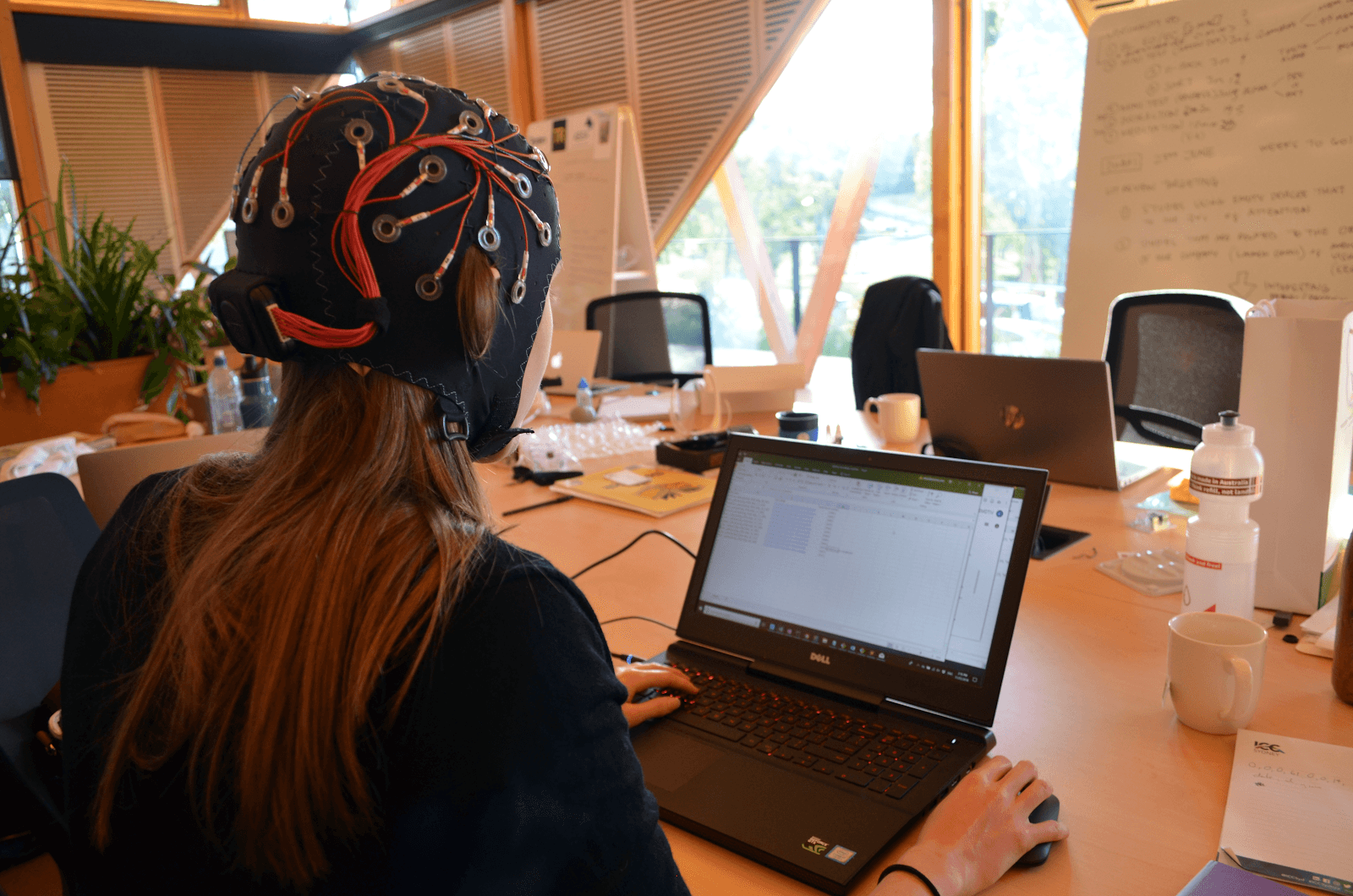
A brainwave monitoring device uses electroencephalography (EEG) to measure patterns of electrical activity produced by the brain. In this context, "monitoring" simply refers to measuring and observing EEG signals for scientific research, development, or personal use.
EEG sensors placed on or near the scalp detect these signals, which can then be recorded, visualized, or processed by software. Today's wireless EEG devices support applications ranging from neuroscience research and brain-computer interface (BCI) development to personal exploration of cognitive patterns.
The right device depends on what you want to measure, how much EEG coverage you need, and what you plan to do with the data. Understanding those requirements first can help you choose an EEG system without assuming that more sensors or more features are always better.
Key Takeaways
Brainwave monitoring devices use EEG sensors to measure electrical activity produced by the brain.
In this context, "monitoring" means measuring and observing EEG signals for a specific scientific, development, or personal purpose.
EEG is passive and non-invasive. Sensors measure electrical signals rather than sending electricity into the brain.
EEG does not read thoughts or reveal specific memories, words, or ideas.
Channel count determines how many locations are measured, but more channels are not automatically better for every application.
Sensor type, signal quality, software access, portability, and experimental requirements should all factor into your decision.
Emotiv EEG systems range from 2-channel ear-EEG to configurable 32-channel research systems.
What Is a Brainwave Monitoring Device?
A brainwave monitoring device is another term for a system that measures electrical brain activity, typically using EEG. The term does not imply continuous surveillance; it describes measuring and observing brain signals for a specific purpose or activity.
EEG sensors detect small voltage changes associated with the activity of populations of neurons, creating continuous signals that researchers, developers, and individuals can record and analyze. EEG does not interpret what someone is thinking or reveal specific thoughts, memories, words, or ideas.
Instead, EEG provides data about patterns of brain activity that can be studied during specific tasks, across recording sessions, or over time.
How Does EEG Brainwave Monitoring Work?
EEG sensors are positioned at specific locations on or near the scalp, where they passively measure voltage differences associated with electrical brain activity. These measurements create EEG signals that can be recorded and analyzed using specialized software.
Because EEG signals are small, recordings can also contain electrical activity from sources other than the brain. Eye blinks, facial muscles, movement, poor sensor contact, and environmental electrical noise can all affect signal quality.
EEG software can help researchers visualize recorded signals and support processing and analysis based on the needs of the application. For research, EEG may be analyzed using methods including frequency-domain analysis and event-related potentials (ERPs), while compatible Emotiv software can also provide derived cognitive metrics.
What Can Brainwave Monitoring Devices Measure?
EEG measures electrical brain activity, and the information researchers can derive from it depends on the hardware, software, experimental design, and analysis methods. EEG data can be used to study:
Attention and cognitive processes
Responses to stimuli and events
Changes in neural activity during tasks
EEG frequency activity
Event-related potentials
Brain-computer interface inputs
Patterns associated with cognitive metrics
Some Emotiv applications also provide derived metrics such as attention, engagement, interest, excitement, relaxation, and cognitive stress. These metrics provide additional context for patterns in EEG data and should not be interpreted as diagnoses or direct measurements of thoughts or emotions.
Are Brainwave Monitoring Devices the Same as BCIs?
Technically, yes, because a brain and computer are connected, albeit indirectly. However, an EEG device measures brain activity, whereas a brain-computer interface uses brain signals as input to interact with software or other systems.
EEG is commonly used as the sensing technology within non-invasive BCIs, but an EEG recording does not automatically constitute a brain-computer interface. A researcher might use EEG to record responses during an attention task without creating any BCI interaction, while a developer could use EEG data to build an application that responds to specific neural patterns.
What Should You Look for in an EEG Device?
Choosing an EEG system starts with your application. Channel count, sensor technology, signal quality, software, and form factor should all reflect what you need to measure and how you plan to use the data.
EEG Channel Count
Each EEG channel provides a measurement associated with a sensor location. Additional channels provide measurements from more locations across the head, which can be important when a study requires broader spatial coverage.
However, more channels also increase setup and data complexity, while a lower-channel device can be appropriate when an application only requires measurements from particular locations. The goal is not to find the EEG headset with the most channels, but to choose enough coverage for the signals you need to measure.
Sensor Type
Different EEG systems use different methods to establish electrical contact, including saline, gel, dry, semi-dry, and other electrode technologies. Each approach has different considerations for preparation, recording duration, participant experience, signal quality, and experimental design.
Signal Quality
Good EEG begins with good sensor contact and careful data collection. Movement, muscle activity, eye movements, environmental interference, and poor electrode contact can introduce artifacts into EEG recordings, so signal quality should be considered alongside other hardware specifications.
Software and Data Access
Hardware determines what you can measure, while software determines what you can do with those measurements. Depending on your project, you may need:
Raw EEG
Frequency-band data
Cognitive metrics
Real-time visualization
Recording and playback
Data export
Event marking
API or SDK access
Integration with analysis software
Researchers and developers should evaluate hardware and software requirements together rather than choosing a headset based on specifications alone. This helps ensure the complete EEG system supports the intended workflow.
Portability and Setup
A configurable 32-channel system may be appropriate for a controlled neuroscience study, while a lightweight headset may be better suited to rapid participant setup or research conducted outside the laboratory. Consider how frequently the system will be used, who will set it up, how much participants will move, and what level of spatial coverage your application requires.
Which Emotiv EEG Headset Should You Choose?
Emotiv offers several EEG systems designed around different levels of coverage, portability, and configurability. Choosing between them starts with the requirements of your application rather than simply selecting the highest channel count.
Device | EEG Channels | Sensor Type | Best Suited For |
|---|---|---|---|
2 | Ear-EEG | Wearable EEG, development, and personal brain insights | |
5 | Semi-dry | Education, lightweight research, and BCI development | |
14 | Saline | Academic research, BCI, and real-world EEG | |
Up to 32 | Saline or gel | Configurable, high-density EEG research |
MN8
MN8 provides 2-channel ear-EEG in a familiar headphone form factor. Its portability makes it suited to wearable EEG applications, development, and intentional sessions with Brainwear.
MN8 includes Brainwear, which provides guided experiences for observing cognitive metrics and Mental States across activities such as focus sessions and cognitive challenges. This provides an accessible way to explore personal brain data without requiring a traditional research setup.
Insight
Insight provides 5-channel wireless EEG using semi-dry polymer sensors. Its lightweight form factor and relatively simple setup make it suitable for education, BCI development, interactive applications, and research that does not require extensive scalp coverage.
Epoc X
Epoc X provides 14-channel wireless EEG using saline sensors. Its broader scalp coverage supports cognitive neuroscience, academic and commercial research, BCI development, human factors, and studies conducted beyond traditional laboratory environments.
Flex 2
Flex 2 provides up to 32 configurable EEG channels with saline or gel sensor options. Researchers can configure electrode placement around their experimental protocol, making Flex 2 suited to advanced neuroscience and ERP research requiring greater spatial coverage.
What Software Do You Need?
Every Emotiv hardware purchase includes EmotivPRO Lite, providing a way to start exploring EEG data and become familiar with Emotiv's research software before committing to a paid EmotivPRO license. Additional Emotiv software supports different research and development workflows.
EmotivPRO supports EEG recording, visualization, event marking, data export, and research workflows, while EmotivBCI provides tools for developing and testing brain-computer interface applications. Cortex API provides programmatic access to Emotiv data streams for custom applications and integrations.
Brainwear, included with MN8, provides guided experiences for exploring personal brain data and observing changes in cognitive metrics across intentional sessions. The right software depends on the data and functionality your application requires.
How Do You Get Better EEG Signal Quality?
Reliable EEG starts before analysis, and consistent preparation can help reduce avoidable artifacts during recording. Good practices include:
Position the headset according to the device instructions.
Check sensor contact before recording.
Prepare saline or gel sensors correctly when required.
Minimize unnecessary facial and body movement.
Identify and manage environmental sources of electrical interference.
Monitor signal quality throughout data collection.
Follow a consistent recording protocol across participants when conducting research.
Researchers should also document their acquisition and preprocessing procedures to support reproducibility. Consistent procedures make it easier to evaluate data quality across participants and recording sessions.
Are Brainwave Monitoring Devices Safe?
EEG is a passive, non-invasive measurement method in which electrodes detect electrical activity rather than sending electrical current into the brain. EEG recording and brain stimulation are different technologies, so an EEG headset measures signals without electrically stimulating the brain.
Consumer and research EEG devices should also not be confused with clinical EEG systems used by healthcare professionals for medical diagnosis. The appropriate EEG system depends on its intended application and regulatory status.
Frequently Asked Questions
What Is a Brainwave Monitoring Device?
A brainwave monitoring device uses sensors to measure electrical activity produced by the brain. In this context, "monitoring" refers to measuring and observing EEG signals for a defined purpose, with most non-invasive systems using EEG sensors positioned on or near the scalp.
Can EEG Read Your Thoughts?
No. EEG measures patterns of electrical brain activity, but it cannot determine specific thoughts, memories, words, or images.
Does an EEG Headset Send Electricity Into Your Brain?
No. EEG sensors are passive and measure electrical signals produced by brain activity rather than electrically stimulating the brain.
How Many EEG Channels Do I Need?
It depends on what you want to measure. Lower-channel systems can be appropriate for applications targeting specific locations, while research requiring broader spatial coverage may benefit from 14, 32, or more channels.
Are More EEG Channels Always Better?
No. More channels provide measurements from more locations, but they can also increase setup time and data complexity, so channel count should reflect your research question or application.
Can I Access Raw EEG Data?
Yes. Emotiv provides raw EEG access with compatible hardware, software, and licensing, with the appropriate software depending on whether you need recording, visualization, export, analysis, or real-time data access.
Can EEG Be Used Outside a Laboratory?
Yes. Wireless and portable EEG systems can support brain data collection in classrooms, workplaces, homes, field environments, and other real-world settings when the experimental design allows.
Find the Right EEG System
The best brainwave monitoring device is the one that provides the EEG coverage, signal quality, software access, and form factor your application requires. Emotiv offers systems ranging from portable 2-channel ear-EEG to configurable 32-channel research EEG, giving researchers, developers, and individuals options for measuring brain activity across different environments and applications.
A brainwave monitoring device uses electroencephalography (EEG) to measure patterns of electrical activity produced by the brain. In this context, "monitoring" simply refers to measuring and observing EEG signals for scientific research, development, or personal use.
EEG sensors placed on or near the scalp detect these signals, which can then be recorded, visualized, or processed by software. Today's wireless EEG devices support applications ranging from neuroscience research and brain-computer interface (BCI) development to personal exploration of cognitive patterns.
The right device depends on what you want to measure, how much EEG coverage you need, and what you plan to do with the data. Understanding those requirements first can help you choose an EEG system without assuming that more sensors or more features are always better.
Key Takeaways
Brainwave monitoring devices use EEG sensors to measure electrical activity produced by the brain.
In this context, "monitoring" means measuring and observing EEG signals for a specific scientific, development, or personal purpose.
EEG is passive and non-invasive. Sensors measure electrical signals rather than sending electricity into the brain.
EEG does not read thoughts or reveal specific memories, words, or ideas.
Channel count determines how many locations are measured, but more channels are not automatically better for every application.
Sensor type, signal quality, software access, portability, and experimental requirements should all factor into your decision.
Emotiv EEG systems range from 2-channel ear-EEG to configurable 32-channel research systems.
What Is a Brainwave Monitoring Device?
A brainwave monitoring device is another term for a system that measures electrical brain activity, typically using EEG. The term does not imply continuous surveillance; it describes measuring and observing brain signals for a specific purpose or activity.
EEG sensors detect small voltage changes associated with the activity of populations of neurons, creating continuous signals that researchers, developers, and individuals can record and analyze. EEG does not interpret what someone is thinking or reveal specific thoughts, memories, words, or ideas.
Instead, EEG provides data about patterns of brain activity that can be studied during specific tasks, across recording sessions, or over time.
How Does EEG Brainwave Monitoring Work?
EEG sensors are positioned at specific locations on or near the scalp, where they passively measure voltage differences associated with electrical brain activity. These measurements create EEG signals that can be recorded and analyzed using specialized software.
Because EEG signals are small, recordings can also contain electrical activity from sources other than the brain. Eye blinks, facial muscles, movement, poor sensor contact, and environmental electrical noise can all affect signal quality.
EEG software can help researchers visualize recorded signals and support processing and analysis based on the needs of the application. For research, EEG may be analyzed using methods including frequency-domain analysis and event-related potentials (ERPs), while compatible Emotiv software can also provide derived cognitive metrics.
What Can Brainwave Monitoring Devices Measure?
EEG measures electrical brain activity, and the information researchers can derive from it depends on the hardware, software, experimental design, and analysis methods. EEG data can be used to study:
Attention and cognitive processes
Responses to stimuli and events
Changes in neural activity during tasks
EEG frequency activity
Event-related potentials
Brain-computer interface inputs
Patterns associated with cognitive metrics
Some Emotiv applications also provide derived metrics such as attention, engagement, interest, excitement, relaxation, and cognitive stress. These metrics provide additional context for patterns in EEG data and should not be interpreted as diagnoses or direct measurements of thoughts or emotions.
Are Brainwave Monitoring Devices the Same as BCIs?
Technically, yes, because a brain and computer are connected, albeit indirectly. However, an EEG device measures brain activity, whereas a brain-computer interface uses brain signals as input to interact with software or other systems.
EEG is commonly used as the sensing technology within non-invasive BCIs, but an EEG recording does not automatically constitute a brain-computer interface. A researcher might use EEG to record responses during an attention task without creating any BCI interaction, while a developer could use EEG data to build an application that responds to specific neural patterns.
What Should You Look for in an EEG Device?
Choosing an EEG system starts with your application. Channel count, sensor technology, signal quality, software, and form factor should all reflect what you need to measure and how you plan to use the data.
EEG Channel Count
Each EEG channel provides a measurement associated with a sensor location. Additional channels provide measurements from more locations across the head, which can be important when a study requires broader spatial coverage.
However, more channels also increase setup and data complexity, while a lower-channel device can be appropriate when an application only requires measurements from particular locations. The goal is not to find the EEG headset with the most channels, but to choose enough coverage for the signals you need to measure.
Sensor Type
Different EEG systems use different methods to establish electrical contact, including saline, gel, dry, semi-dry, and other electrode technologies. Each approach has different considerations for preparation, recording duration, participant experience, signal quality, and experimental design.
Signal Quality
Good EEG begins with good sensor contact and careful data collection. Movement, muscle activity, eye movements, environmental interference, and poor electrode contact can introduce artifacts into EEG recordings, so signal quality should be considered alongside other hardware specifications.
Software and Data Access
Hardware determines what you can measure, while software determines what you can do with those measurements. Depending on your project, you may need:
Raw EEG
Frequency-band data
Cognitive metrics
Real-time visualization
Recording and playback
Data export
Event marking
API or SDK access
Integration with analysis software
Researchers and developers should evaluate hardware and software requirements together rather than choosing a headset based on specifications alone. This helps ensure the complete EEG system supports the intended workflow.
Portability and Setup
A configurable 32-channel system may be appropriate for a controlled neuroscience study, while a lightweight headset may be better suited to rapid participant setup or research conducted outside the laboratory. Consider how frequently the system will be used, who will set it up, how much participants will move, and what level of spatial coverage your application requires.
Which Emotiv EEG Headset Should You Choose?
Emotiv offers several EEG systems designed around different levels of coverage, portability, and configurability. Choosing between them starts with the requirements of your application rather than simply selecting the highest channel count.
Device | EEG Channels | Sensor Type | Best Suited For |
|---|---|---|---|
2 | Ear-EEG | Wearable EEG, development, and personal brain insights | |
5 | Semi-dry | Education, lightweight research, and BCI development | |
14 | Saline | Academic research, BCI, and real-world EEG | |
Up to 32 | Saline or gel | Configurable, high-density EEG research |
MN8
MN8 provides 2-channel ear-EEG in a familiar headphone form factor. Its portability makes it suited to wearable EEG applications, development, and intentional sessions with Brainwear.
MN8 includes Brainwear, which provides guided experiences for observing cognitive metrics and Mental States across activities such as focus sessions and cognitive challenges. This provides an accessible way to explore personal brain data without requiring a traditional research setup.
Insight
Insight provides 5-channel wireless EEG using semi-dry polymer sensors. Its lightweight form factor and relatively simple setup make it suitable for education, BCI development, interactive applications, and research that does not require extensive scalp coverage.
Epoc X
Epoc X provides 14-channel wireless EEG using saline sensors. Its broader scalp coverage supports cognitive neuroscience, academic and commercial research, BCI development, human factors, and studies conducted beyond traditional laboratory environments.
Flex 2
Flex 2 provides up to 32 configurable EEG channels with saline or gel sensor options. Researchers can configure electrode placement around their experimental protocol, making Flex 2 suited to advanced neuroscience and ERP research requiring greater spatial coverage.
What Software Do You Need?
Every Emotiv hardware purchase includes EmotivPRO Lite, providing a way to start exploring EEG data and become familiar with Emotiv's research software before committing to a paid EmotivPRO license. Additional Emotiv software supports different research and development workflows.
EmotivPRO supports EEG recording, visualization, event marking, data export, and research workflows, while EmotivBCI provides tools for developing and testing brain-computer interface applications. Cortex API provides programmatic access to Emotiv data streams for custom applications and integrations.
Brainwear, included with MN8, provides guided experiences for exploring personal brain data and observing changes in cognitive metrics across intentional sessions. The right software depends on the data and functionality your application requires.
How Do You Get Better EEG Signal Quality?
Reliable EEG starts before analysis, and consistent preparation can help reduce avoidable artifacts during recording. Good practices include:
Position the headset according to the device instructions.
Check sensor contact before recording.
Prepare saline or gel sensors correctly when required.
Minimize unnecessary facial and body movement.
Identify and manage environmental sources of electrical interference.
Monitor signal quality throughout data collection.
Follow a consistent recording protocol across participants when conducting research.
Researchers should also document their acquisition and preprocessing procedures to support reproducibility. Consistent procedures make it easier to evaluate data quality across participants and recording sessions.
Are Brainwave Monitoring Devices Safe?
EEG is a passive, non-invasive measurement method in which electrodes detect electrical activity rather than sending electrical current into the brain. EEG recording and brain stimulation are different technologies, so an EEG headset measures signals without electrically stimulating the brain.
Consumer and research EEG devices should also not be confused with clinical EEG systems used by healthcare professionals for medical diagnosis. The appropriate EEG system depends on its intended application and regulatory status.
Frequently Asked Questions
What Is a Brainwave Monitoring Device?
A brainwave monitoring device uses sensors to measure electrical activity produced by the brain. In this context, "monitoring" refers to measuring and observing EEG signals for a defined purpose, with most non-invasive systems using EEG sensors positioned on or near the scalp.
Can EEG Read Your Thoughts?
No. EEG measures patterns of electrical brain activity, but it cannot determine specific thoughts, memories, words, or images.
Does an EEG Headset Send Electricity Into Your Brain?
No. EEG sensors are passive and measure electrical signals produced by brain activity rather than electrically stimulating the brain.
How Many EEG Channels Do I Need?
It depends on what you want to measure. Lower-channel systems can be appropriate for applications targeting specific locations, while research requiring broader spatial coverage may benefit from 14, 32, or more channels.
Are More EEG Channels Always Better?
No. More channels provide measurements from more locations, but they can also increase setup time and data complexity, so channel count should reflect your research question or application.
Can I Access Raw EEG Data?
Yes. Emotiv provides raw EEG access with compatible hardware, software, and licensing, with the appropriate software depending on whether you need recording, visualization, export, analysis, or real-time data access.
Can EEG Be Used Outside a Laboratory?
Yes. Wireless and portable EEG systems can support brain data collection in classrooms, workplaces, homes, field environments, and other real-world settings when the experimental design allows.
Find the Right EEG System
The best brainwave monitoring device is the one that provides the EEG coverage, signal quality, software access, and form factor your application requires. Emotiv offers systems ranging from portable 2-channel ear-EEG to configurable 32-channel research EEG, giving researchers, developers, and individuals options for measuring brain activity across different environments and applications.
A brainwave monitoring device uses electroencephalography (EEG) to measure patterns of electrical activity produced by the brain. In this context, "monitoring" simply refers to measuring and observing EEG signals for scientific research, development, or personal use.
EEG sensors placed on or near the scalp detect these signals, which can then be recorded, visualized, or processed by software. Today's wireless EEG devices support applications ranging from neuroscience research and brain-computer interface (BCI) development to personal exploration of cognitive patterns.
The right device depends on what you want to measure, how much EEG coverage you need, and what you plan to do with the data. Understanding those requirements first can help you choose an EEG system without assuming that more sensors or more features are always better.
Key Takeaways
Brainwave monitoring devices use EEG sensors to measure electrical activity produced by the brain.
In this context, "monitoring" means measuring and observing EEG signals for a specific scientific, development, or personal purpose.
EEG is passive and non-invasive. Sensors measure electrical signals rather than sending electricity into the brain.
EEG does not read thoughts or reveal specific memories, words, or ideas.
Channel count determines how many locations are measured, but more channels are not automatically better for every application.
Sensor type, signal quality, software access, portability, and experimental requirements should all factor into your decision.
Emotiv EEG systems range from 2-channel ear-EEG to configurable 32-channel research systems.
What Is a Brainwave Monitoring Device?
A brainwave monitoring device is another term for a system that measures electrical brain activity, typically using EEG. The term does not imply continuous surveillance; it describes measuring and observing brain signals for a specific purpose or activity.
EEG sensors detect small voltage changes associated with the activity of populations of neurons, creating continuous signals that researchers, developers, and individuals can record and analyze. EEG does not interpret what someone is thinking or reveal specific thoughts, memories, words, or ideas.
Instead, EEG provides data about patterns of brain activity that can be studied during specific tasks, across recording sessions, or over time.
How Does EEG Brainwave Monitoring Work?
EEG sensors are positioned at specific locations on or near the scalp, where they passively measure voltage differences associated with electrical brain activity. These measurements create EEG signals that can be recorded and analyzed using specialized software.
Because EEG signals are small, recordings can also contain electrical activity from sources other than the brain. Eye blinks, facial muscles, movement, poor sensor contact, and environmental electrical noise can all affect signal quality.
EEG software can help researchers visualize recorded signals and support processing and analysis based on the needs of the application. For research, EEG may be analyzed using methods including frequency-domain analysis and event-related potentials (ERPs), while compatible Emotiv software can also provide derived cognitive metrics.
What Can Brainwave Monitoring Devices Measure?
EEG measures electrical brain activity, and the information researchers can derive from it depends on the hardware, software, experimental design, and analysis methods. EEG data can be used to study:
Attention and cognitive processes
Responses to stimuli and events
Changes in neural activity during tasks
EEG frequency activity
Event-related potentials
Brain-computer interface inputs
Patterns associated with cognitive metrics
Some Emotiv applications also provide derived metrics such as attention, engagement, interest, excitement, relaxation, and cognitive stress. These metrics provide additional context for patterns in EEG data and should not be interpreted as diagnoses or direct measurements of thoughts or emotions.
Are Brainwave Monitoring Devices the Same as BCIs?
Technically, yes, because a brain and computer are connected, albeit indirectly. However, an EEG device measures brain activity, whereas a brain-computer interface uses brain signals as input to interact with software or other systems.
EEG is commonly used as the sensing technology within non-invasive BCIs, but an EEG recording does not automatically constitute a brain-computer interface. A researcher might use EEG to record responses during an attention task without creating any BCI interaction, while a developer could use EEG data to build an application that responds to specific neural patterns.
What Should You Look for in an EEG Device?
Choosing an EEG system starts with your application. Channel count, sensor technology, signal quality, software, and form factor should all reflect what you need to measure and how you plan to use the data.
EEG Channel Count
Each EEG channel provides a measurement associated with a sensor location. Additional channels provide measurements from more locations across the head, which can be important when a study requires broader spatial coverage.
However, more channels also increase setup and data complexity, while a lower-channel device can be appropriate when an application only requires measurements from particular locations. The goal is not to find the EEG headset with the most channels, but to choose enough coverage for the signals you need to measure.
Sensor Type
Different EEG systems use different methods to establish electrical contact, including saline, gel, dry, semi-dry, and other electrode technologies. Each approach has different considerations for preparation, recording duration, participant experience, signal quality, and experimental design.
Signal Quality
Good EEG begins with good sensor contact and careful data collection. Movement, muscle activity, eye movements, environmental interference, and poor electrode contact can introduce artifacts into EEG recordings, so signal quality should be considered alongside other hardware specifications.
Software and Data Access
Hardware determines what you can measure, while software determines what you can do with those measurements. Depending on your project, you may need:
Raw EEG
Frequency-band data
Cognitive metrics
Real-time visualization
Recording and playback
Data export
Event marking
API or SDK access
Integration with analysis software
Researchers and developers should evaluate hardware and software requirements together rather than choosing a headset based on specifications alone. This helps ensure the complete EEG system supports the intended workflow.
Portability and Setup
A configurable 32-channel system may be appropriate for a controlled neuroscience study, while a lightweight headset may be better suited to rapid participant setup or research conducted outside the laboratory. Consider how frequently the system will be used, who will set it up, how much participants will move, and what level of spatial coverage your application requires.
Which Emotiv EEG Headset Should You Choose?
Emotiv offers several EEG systems designed around different levels of coverage, portability, and configurability. Choosing between them starts with the requirements of your application rather than simply selecting the highest channel count.
Device | EEG Channels | Sensor Type | Best Suited For |
|---|---|---|---|
2 | Ear-EEG | Wearable EEG, development, and personal brain insights | |
5 | Semi-dry | Education, lightweight research, and BCI development | |
14 | Saline | Academic research, BCI, and real-world EEG | |
Up to 32 | Saline or gel | Configurable, high-density EEG research |
MN8
MN8 provides 2-channel ear-EEG in a familiar headphone form factor. Its portability makes it suited to wearable EEG applications, development, and intentional sessions with Brainwear.
MN8 includes Brainwear, which provides guided experiences for observing cognitive metrics and Mental States across activities such as focus sessions and cognitive challenges. This provides an accessible way to explore personal brain data without requiring a traditional research setup.
Insight
Insight provides 5-channel wireless EEG using semi-dry polymer sensors. Its lightweight form factor and relatively simple setup make it suitable for education, BCI development, interactive applications, and research that does not require extensive scalp coverage.
Epoc X
Epoc X provides 14-channel wireless EEG using saline sensors. Its broader scalp coverage supports cognitive neuroscience, academic and commercial research, BCI development, human factors, and studies conducted beyond traditional laboratory environments.
Flex 2
Flex 2 provides up to 32 configurable EEG channels with saline or gel sensor options. Researchers can configure electrode placement around their experimental protocol, making Flex 2 suited to advanced neuroscience and ERP research requiring greater spatial coverage.
What Software Do You Need?
Every Emotiv hardware purchase includes EmotivPRO Lite, providing a way to start exploring EEG data and become familiar with Emotiv's research software before committing to a paid EmotivPRO license. Additional Emotiv software supports different research and development workflows.
EmotivPRO supports EEG recording, visualization, event marking, data export, and research workflows, while EmotivBCI provides tools for developing and testing brain-computer interface applications. Cortex API provides programmatic access to Emotiv data streams for custom applications and integrations.
Brainwear, included with MN8, provides guided experiences for exploring personal brain data and observing changes in cognitive metrics across intentional sessions. The right software depends on the data and functionality your application requires.
How Do You Get Better EEG Signal Quality?
Reliable EEG starts before analysis, and consistent preparation can help reduce avoidable artifacts during recording. Good practices include:
Position the headset according to the device instructions.
Check sensor contact before recording.
Prepare saline or gel sensors correctly when required.
Minimize unnecessary facial and body movement.
Identify and manage environmental sources of electrical interference.
Monitor signal quality throughout data collection.
Follow a consistent recording protocol across participants when conducting research.
Researchers should also document their acquisition and preprocessing procedures to support reproducibility. Consistent procedures make it easier to evaluate data quality across participants and recording sessions.
Are Brainwave Monitoring Devices Safe?
EEG is a passive, non-invasive measurement method in which electrodes detect electrical activity rather than sending electrical current into the brain. EEG recording and brain stimulation are different technologies, so an EEG headset measures signals without electrically stimulating the brain.
Consumer and research EEG devices should also not be confused with clinical EEG systems used by healthcare professionals for medical diagnosis. The appropriate EEG system depends on its intended application and regulatory status.
Frequently Asked Questions
What Is a Brainwave Monitoring Device?
A brainwave monitoring device uses sensors to measure electrical activity produced by the brain. In this context, "monitoring" refers to measuring and observing EEG signals for a defined purpose, with most non-invasive systems using EEG sensors positioned on or near the scalp.
Can EEG Read Your Thoughts?
No. EEG measures patterns of electrical brain activity, but it cannot determine specific thoughts, memories, words, or images.
Does an EEG Headset Send Electricity Into Your Brain?
No. EEG sensors are passive and measure electrical signals produced by brain activity rather than electrically stimulating the brain.
How Many EEG Channels Do I Need?
It depends on what you want to measure. Lower-channel systems can be appropriate for applications targeting specific locations, while research requiring broader spatial coverage may benefit from 14, 32, or more channels.
Are More EEG Channels Always Better?
No. More channels provide measurements from more locations, but they can also increase setup time and data complexity, so channel count should reflect your research question or application.
Can I Access Raw EEG Data?
Yes. Emotiv provides raw EEG access with compatible hardware, software, and licensing, with the appropriate software depending on whether you need recording, visualization, export, analysis, or real-time data access.
Can EEG Be Used Outside a Laboratory?
Yes. Wireless and portable EEG systems can support brain data collection in classrooms, workplaces, homes, field environments, and other real-world settings when the experimental design allows.
Find the Right EEG System
The best brainwave monitoring device is the one that provides the EEG coverage, signal quality, software access, and form factor your application requires. Emotiv offers systems ranging from portable 2-channel ear-EEG to configurable 32-channel research EEG, giving researchers, developers, and individuals options for measuring brain activity across different environments and applications.
Continue reading