How to Choose the Right Emotiv EEG Headset for Research, BCI, and Personal Use
Emotiv
Updated on
Jan 26, 2026
How to Choose the Right Emotiv EEG Headset for Research, BCI, and Personal Use
Emotiv
Updated on
Jan 26, 2026
How to Choose the Right Emotiv EEG Headset for Research, BCI, and Personal Use
Emotiv
Updated on
Jan 26, 2026
Choosing an EEG headset involves more than comparing channel counts or hardware specifications. The right system depends on your research goals, participant population, experimental design, and software requirements.
Whether you're conducting neuroscience research, developing a brain-computer interface (BCI), teaching in the classroom, or exploring personal brain insights, selecting the right EEG hardware can improve both your workflow and the quality of your results.

Some research projects require configurable electrode placement and high channel counts. Others prioritize portability, rapid setup, or lightweight wearable designs for mobile data collection.
Understanding these differences helps researchers choose an EEG system that supports both current projects and future research opportunities without paying for capabilities they don't need.
Start with Your Research Goals
The best EEG system is the one that supports your specific workflow.
Before choosing a headset, consider:
How many EEG channels do you need?
Do you need configurable electrode placement?
Will research take place in a laboratory or real-world environment?
Will participants complete repeated sessions?
Do you need raw EEG data?
Are you building a BCI?
Is the system intended for research or personal use?
These questions provide a better starting point than simply comparing hardware specifications.
Compare Emotiv EEG Systems
Product | Channels | Best For |
|---|---|---|
Flex Gel | Up to 32 | Advanced neuroscience and configurable EEG research |
Flex Saline | Up to 32 | Research requiring faster setup and streamlined workflows |
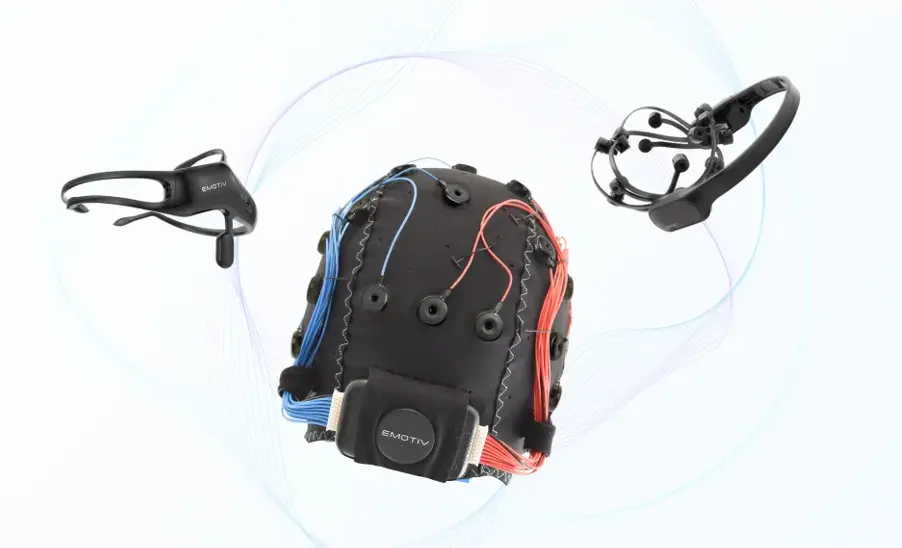
Epoc X | 14 | Cognitive research, BCI development, mobile EEG |
Insight | 5 | Lightweight research and rapid deployment |
MN8 + Brainwear | 2 | Personal brain insights and cognitive awareness |
Flex Gel and Flex Saline
Flex is designed for researchers who need flexibility rather than a fixed sensor layout.
Both Flex systems support configurable electrode placement with up to 32 EEG channels, allowing researchers to position as many or as few sensors as needed for their study. Wireless EEG acquisition enables participants to move naturally without being tethered to a computer, supporting research in laboratories, classrooms, educational settings, and other real-world environments.
Researchers can choose between two workflows:
Flex Gel
Best suited for researchers who prefer traditional gel-based EEG acquisition.
Highlights include:
Up to 32 configurable channels
Wireless EEG acquisition
Three cap sizes (54 cm, 56 cm, and 58 cm)
Integrated refill openings for replenishing conductive gel during longer recording sessions
Configurable electrode placement for a wide range of research paradigms
Ideal for:
Cognitive neuroscience
Academic research
Human factors
Developmental research
Brain-computer interfaces
Explore Flex Gel
Flex Saline
Designed for researchers who want faster setup and simplified cleanup without sacrificing flexibility.
Highlights include:
Up to 32 configurable channels
Wireless EEG acquisition
Three cap sizes (54 cm, 56 cm, and 58 cm)
Integrated refill openings for rehydrating saline sensors during recording sessions
Faster preparation than traditional gel workflows
Ideal for:
Academic research
Education research
Repeated participant testing
Mobile and real-world EEG studies
Explore Flex Saline
Epoc X
Epoc X is a 14-channel wireless EEG headset designed for researchers who want a balance between portability and research-grade EEG acquisition.
Highlights include:
14-channel wireless headset
Rapid deployment
Mobile data collection
Brain-computer interface development
Cognitive neuroscience research
Ideal for researchers who need a fixed sensor configuration with minimal setup.
Insight
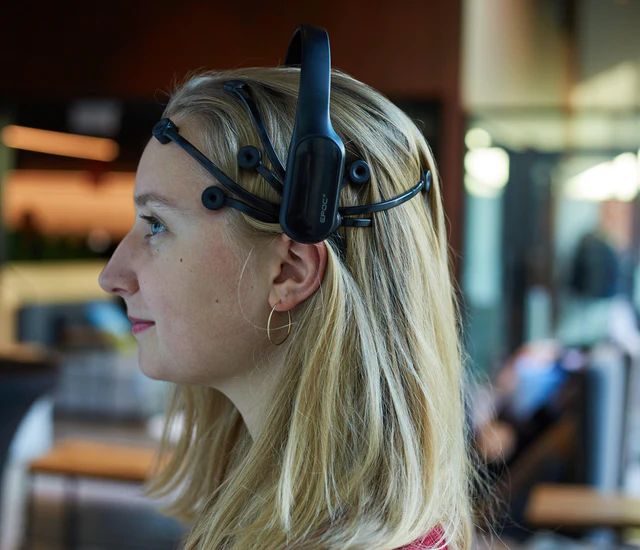
Insight is a lightweight 5-channel wireless EEG headband that prioritizes portability and ease of use.
Highlights include:
5-channel wireless EEG
Lightweight design
Rapid setup
Mobile research
Educational demonstrations
Ideal for projects where simplicity and portability are more important than high channel counts.
MN8
Emotiv MN8 is a discreet, 2-channel in-ear EEG system designed to measure cognitive states such as relaxation and excitement in real time. The first of its kind, these EEG headphones are a popular, versatile tool for research, app development, and personal wellness.
Paired with Emotiv Studio, MN8 is a no-mess, easy-to-use platform for measuring real-time consumer interactions with marketing creative. So you can see the exact moment your product delivers the emotional response you're hoping for, or misses the mark before deployment.
For developers, MN8 opens the door to brain-informed experiences such as games, smart homes, and app favorites, such as pausing Spotify with your thoughts.
Individuals dedicated to their long-term cognitive health pair MN8 EEG earbuds with Brainwear for everyday awareness, training, and long-term measurement. Brainwear provides visualizations of attention and cognitive load that help users better understand how focus and mental effort change throughout daily activities.
Important Disclaimer
Emotiv products are intended for research applications and personal use only.
Our products are not sold as Medical Devices as defined in EU Directive 93/42/EEC and are not designed or intended to diagnose, treat, cure, or prevent any disease or medical condition.
Brainwear insights are intended for personal exploration and should not be used for medical decision-making.
Hardware Is Only Part of the Workflow
Selecting the right EEG hardware is only one step in building an effective research workflow.
Depending on your goals, Emotiv systems integrate with software that supports:
Raw EEG acquisition
EEG visualization
Brain-computer interface development
Research data collection
Personal cognitive insights
Choosing compatible hardware and software together helps create a streamlined research experience from data collection through analysis.
Which Emotiv EEG System Is Right for You?
Choose Flex if you need:
Configurable electrode placement
Up to 32 channels
Flexible research workflows
Choose Epoc X if you need:
A fixed 14-channel headset
Mobile research
BCI development
Choose Insight if you need:
Lightweight hardware
Rapid deployment
Easy setup
Choose MN8 + Brainwear if you want:
Personal cognitive insights for ongoing wellness support
Attention, cognitive load, and other performance metric visualizations
Developing brain-powered app features
Frequently Asked Questions
Which Emotiv headset is best for research?
The answer depends on your study design. Flex supports configurable electrode placement with up to 32 channels, while Epoc X provides a fixed 14-channel configuration for mobile EEG research.
Which Emotiv headset is best for BCI development?
All Emotiv systems support brain-computer interface research. The best choice depends on your channel requirements and experimental design. However, most BCI researchers and developers choose Insight or MN8 for their low barrier to entry and Flex or Epoc X for more intensive research.
Are all Emotiv EEG systems wireless?
Yes. All current Emotiv EEG systems support wireless data acquisition, allowing participants to move naturally during data collection.
Which Emotiv system is easiest to set up?
With its dry EEG sensor technology, Emotiv MN8 provides the fastest setup for lightweight EEG studies, followed by Insight, which requires just a few drops of conductive fluid. Epoc X requires minimal saline preparation, while Flex Saline streamlines preparation for cap-based research. Flex Gel requires the longest setup time, but remains less intensive than traditional, wired laboratory EEG systems.
Which Emotiv product is designed for personal use?
MN8 paired with Brainwear provides attention and cognitive stress insights for personal exploration and is not intended for medical diagnosis or treatment.
Choosing an EEG headset involves more than comparing channel counts or hardware specifications. The right system depends on your research goals, participant population, experimental design, and software requirements.
Whether you're conducting neuroscience research, developing a brain-computer interface (BCI), teaching in the classroom, or exploring personal brain insights, selecting the right EEG hardware can improve both your workflow and the quality of your results.
Some research projects require configurable electrode placement and high channel counts. Others prioritize portability, rapid setup, or lightweight wearable designs for mobile data collection.
Understanding these differences helps researchers choose an EEG system that supports both current projects and future research opportunities without paying for capabilities they don't need.
Start with Your Research Goals
The best EEG system is the one that supports your specific workflow.
Before choosing a headset, consider:
How many EEG channels do you need?
Do you need configurable electrode placement?
Will research take place in a laboratory or real-world environment?
Will participants complete repeated sessions?
Do you need raw EEG data?
Are you building a BCI?
Is the system intended for research or personal use?
These questions provide a better starting point than simply comparing hardware specifications.
Compare Emotiv EEG Systems
Product | Channels | Best For |
|---|---|---|
Flex Gel | Up to 32 | Advanced neuroscience and configurable EEG research |
Flex Saline | Up to 32 | Research requiring faster setup and streamlined workflows |
Epoc X | 14 | Cognitive research, BCI development, mobile EEG |
Insight | 5 | Lightweight research and rapid deployment |
MN8 + Brainwear | 2 | Personal brain insights and cognitive awareness |
Flex Gel and Flex Saline
Flex is designed for researchers who need flexibility rather than a fixed sensor layout.
Both Flex systems support configurable electrode placement with up to 32 EEG channels, allowing researchers to position as many or as few sensors as needed for their study. Wireless EEG acquisition enables participants to move naturally without being tethered to a computer, supporting research in laboratories, classrooms, educational settings, and other real-world environments.
Researchers can choose between two workflows:
Flex Gel
Best suited for researchers who prefer traditional gel-based EEG acquisition.
Highlights include:
Up to 32 configurable channels
Wireless EEG acquisition
Three cap sizes (54 cm, 56 cm, and 58 cm)
Integrated refill openings for replenishing conductive gel during longer recording sessions
Configurable electrode placement for a wide range of research paradigms
Ideal for:
Cognitive neuroscience
Academic research
Human factors
Developmental research
Brain-computer interfaces
Explore Flex Gel
Flex Saline
Designed for researchers who want faster setup and simplified cleanup without sacrificing flexibility.
Highlights include:
Up to 32 configurable channels
Wireless EEG acquisition
Three cap sizes (54 cm, 56 cm, and 58 cm)
Integrated refill openings for rehydrating saline sensors during recording sessions
Faster preparation than traditional gel workflows
Ideal for:
Academic research
Education research
Repeated participant testing
Mobile and real-world EEG studies
Explore Flex Saline
Epoc X
Epoc X is a 14-channel wireless EEG headset designed for researchers who want a balance between portability and research-grade EEG acquisition.
Highlights include:
14-channel wireless headset
Rapid deployment
Mobile data collection
Brain-computer interface development
Cognitive neuroscience research
Ideal for researchers who need a fixed sensor configuration with minimal setup.
Insight
Insight is a lightweight 5-channel wireless EEG headband that prioritizes portability and ease of use.
Highlights include:
5-channel wireless EEG
Lightweight design
Rapid setup
Mobile research
Educational demonstrations
Ideal for projects where simplicity and portability are more important than high channel counts.
MN8
Emotiv MN8 is a discreet, 2-channel in-ear EEG system designed to measure cognitive states such as relaxation and excitement in real time. The first of its kind, these EEG headphones are a popular, versatile tool for research, app development, and personal wellness.
Paired with Emotiv Studio, MN8 is a no-mess, easy-to-use platform for measuring real-time consumer interactions with marketing creative. So you can see the exact moment your product delivers the emotional response you're hoping for, or misses the mark before deployment.
For developers, MN8 opens the door to brain-informed experiences such as games, smart homes, and app favorites, such as pausing Spotify with your thoughts.
Individuals dedicated to their long-term cognitive health pair MN8 EEG earbuds with Brainwear for everyday awareness, training, and long-term measurement. Brainwear provides visualizations of attention and cognitive load that help users better understand how focus and mental effort change throughout daily activities.
Important Disclaimer
Emotiv products are intended for research applications and personal use only.
Our products are not sold as Medical Devices as defined in EU Directive 93/42/EEC and are not designed or intended to diagnose, treat, cure, or prevent any disease or medical condition.
Brainwear insights are intended for personal exploration and should not be used for medical decision-making.
Hardware Is Only Part of the Workflow
Selecting the right EEG hardware is only one step in building an effective research workflow.
Depending on your goals, Emotiv systems integrate with software that supports:
Raw EEG acquisition
EEG visualization
Brain-computer interface development
Research data collection
Personal cognitive insights
Choosing compatible hardware and software together helps create a streamlined research experience from data collection through analysis.
Which Emotiv EEG System Is Right for You?
Choose Flex if you need:
Configurable electrode placement
Up to 32 channels
Flexible research workflows
Choose Epoc X if you need:
A fixed 14-channel headset
Mobile research
BCI development
Choose Insight if you need:
Lightweight hardware
Rapid deployment
Easy setup
Choose MN8 + Brainwear if you want:
Personal cognitive insights for ongoing wellness support
Attention, cognitive load, and other performance metric visualizations
Developing brain-powered app features
Frequently Asked Questions
Which Emotiv headset is best for research?
The answer depends on your study design. Flex supports configurable electrode placement with up to 32 channels, while Epoc X provides a fixed 14-channel configuration for mobile EEG research.
Which Emotiv headset is best for BCI development?
All Emotiv systems support brain-computer interface research. The best choice depends on your channel requirements and experimental design. However, most BCI researchers and developers choose Insight or MN8 for their low barrier to entry and Flex or Epoc X for more intensive research.
Are all Emotiv EEG systems wireless?
Yes. All current Emotiv EEG systems support wireless data acquisition, allowing participants to move naturally during data collection.
Which Emotiv system is easiest to set up?
With its dry EEG sensor technology, Emotiv MN8 provides the fastest setup for lightweight EEG studies, followed by Insight, which requires just a few drops of conductive fluid. Epoc X requires minimal saline preparation, while Flex Saline streamlines preparation for cap-based research. Flex Gel requires the longest setup time, but remains less intensive than traditional, wired laboratory EEG systems.
Which Emotiv product is designed for personal use?
MN8 paired with Brainwear provides attention and cognitive stress insights for personal exploration and is not intended for medical diagnosis or treatment.
Choosing an EEG headset involves more than comparing channel counts or hardware specifications. The right system depends on your research goals, participant population, experimental design, and software requirements.
Whether you're conducting neuroscience research, developing a brain-computer interface (BCI), teaching in the classroom, or exploring personal brain insights, selecting the right EEG hardware can improve both your workflow and the quality of your results.
Some research projects require configurable electrode placement and high channel counts. Others prioritize portability, rapid setup, or lightweight wearable designs for mobile data collection.
Understanding these differences helps researchers choose an EEG system that supports both current projects and future research opportunities without paying for capabilities they don't need.
Start with Your Research Goals
The best EEG system is the one that supports your specific workflow.
Before choosing a headset, consider:
How many EEG channels do you need?
Do you need configurable electrode placement?
Will research take place in a laboratory or real-world environment?
Will participants complete repeated sessions?
Do you need raw EEG data?
Are you building a BCI?
Is the system intended for research or personal use?
These questions provide a better starting point than simply comparing hardware specifications.
Compare Emotiv EEG Systems
Product | Channels | Best For |
|---|---|---|
Flex Gel | Up to 32 | Advanced neuroscience and configurable EEG research |
Flex Saline | Up to 32 | Research requiring faster setup and streamlined workflows |
Epoc X | 14 | Cognitive research, BCI development, mobile EEG |
Insight | 5 | Lightweight research and rapid deployment |
MN8 + Brainwear | 2 | Personal brain insights and cognitive awareness |
Flex Gel and Flex Saline
Flex is designed for researchers who need flexibility rather than a fixed sensor layout.
Both Flex systems support configurable electrode placement with up to 32 EEG channels, allowing researchers to position as many or as few sensors as needed for their study. Wireless EEG acquisition enables participants to move naturally without being tethered to a computer, supporting research in laboratories, classrooms, educational settings, and other real-world environments.
Researchers can choose between two workflows:
Flex Gel
Best suited for researchers who prefer traditional gel-based EEG acquisition.
Highlights include:
Up to 32 configurable channels
Wireless EEG acquisition
Three cap sizes (54 cm, 56 cm, and 58 cm)
Integrated refill openings for replenishing conductive gel during longer recording sessions
Configurable electrode placement for a wide range of research paradigms
Ideal for:
Cognitive neuroscience
Academic research
Human factors
Developmental research
Brain-computer interfaces
Explore Flex Gel
Flex Saline
Designed for researchers who want faster setup and simplified cleanup without sacrificing flexibility.
Highlights include:
Up to 32 configurable channels
Wireless EEG acquisition
Three cap sizes (54 cm, 56 cm, and 58 cm)
Integrated refill openings for rehydrating saline sensors during recording sessions
Faster preparation than traditional gel workflows
Ideal for:
Academic research
Education research
Repeated participant testing
Mobile and real-world EEG studies
Explore Flex Saline
Epoc X
Epoc X is a 14-channel wireless EEG headset designed for researchers who want a balance between portability and research-grade EEG acquisition.
Highlights include:
14-channel wireless headset
Rapid deployment
Mobile data collection
Brain-computer interface development
Cognitive neuroscience research
Ideal for researchers who need a fixed sensor configuration with minimal setup.
Insight
Insight is a lightweight 5-channel wireless EEG headband that prioritizes portability and ease of use.
Highlights include:
5-channel wireless EEG
Lightweight design
Rapid setup
Mobile research
Educational demonstrations
Ideal for projects where simplicity and portability are more important than high channel counts.
MN8
Emotiv MN8 is a discreet, 2-channel in-ear EEG system designed to measure cognitive states such as relaxation and excitement in real time. The first of its kind, these EEG headphones are a popular, versatile tool for research, app development, and personal wellness.
Paired with Emotiv Studio, MN8 is a no-mess, easy-to-use platform for measuring real-time consumer interactions with marketing creative. So you can see the exact moment your product delivers the emotional response you're hoping for, or misses the mark before deployment.
For developers, MN8 opens the door to brain-informed experiences such as games, smart homes, and app favorites, such as pausing Spotify with your thoughts.
Individuals dedicated to their long-term cognitive health pair MN8 EEG earbuds with Brainwear for everyday awareness, training, and long-term measurement. Brainwear provides visualizations of attention and cognitive load that help users better understand how focus and mental effort change throughout daily activities.
Important Disclaimer
Emotiv products are intended for research applications and personal use only.
Our products are not sold as Medical Devices as defined in EU Directive 93/42/EEC and are not designed or intended to diagnose, treat, cure, or prevent any disease or medical condition.
Brainwear insights are intended for personal exploration and should not be used for medical decision-making.
Hardware Is Only Part of the Workflow
Selecting the right EEG hardware is only one step in building an effective research workflow.
Depending on your goals, Emotiv systems integrate with software that supports:
Raw EEG acquisition
EEG visualization
Brain-computer interface development
Research data collection
Personal cognitive insights
Choosing compatible hardware and software together helps create a streamlined research experience from data collection through analysis.
Which Emotiv EEG System Is Right for You?
Choose Flex if you need:
Configurable electrode placement
Up to 32 channels
Flexible research workflows
Choose Epoc X if you need:
A fixed 14-channel headset
Mobile research
BCI development
Choose Insight if you need:
Lightweight hardware
Rapid deployment
Easy setup
Choose MN8 + Brainwear if you want:
Personal cognitive insights for ongoing wellness support
Attention, cognitive load, and other performance metric visualizations
Developing brain-powered app features
Frequently Asked Questions
Which Emotiv headset is best for research?
The answer depends on your study design. Flex supports configurable electrode placement with up to 32 channels, while Epoc X provides a fixed 14-channel configuration for mobile EEG research.
Which Emotiv headset is best for BCI development?
All Emotiv systems support brain-computer interface research. The best choice depends on your channel requirements and experimental design. However, most BCI researchers and developers choose Insight or MN8 for their low barrier to entry and Flex or Epoc X for more intensive research.
Are all Emotiv EEG systems wireless?
Yes. All current Emotiv EEG systems support wireless data acquisition, allowing participants to move naturally during data collection.
Which Emotiv system is easiest to set up?
With its dry EEG sensor technology, Emotiv MN8 provides the fastest setup for lightweight EEG studies, followed by Insight, which requires just a few drops of conductive fluid. Epoc X requires minimal saline preparation, while Flex Saline streamlines preparation for cap-based research. Flex Gel requires the longest setup time, but remains less intensive than traditional, wired laboratory EEG systems.
Which Emotiv product is designed for personal use?
MN8 paired with Brainwear provides attention and cognitive stress insights for personal exploration and is not intended for medical diagnosis or treatment.
Continue reading