Measuring Emotional Engagement in Skincare Marketing
H.B. Duran
Updated on
May 19, 2026
Measuring Emotional Engagement in Skincare Marketing
H.B. Duran
Updated on
May 19, 2026
Measuring Emotional Engagement in Skincare Marketing
H.B. Duran
Updated on
May 19, 2026
Measuring Emotional Engagement in Skincare Marketing
Skincare marketing depends on trust, confidence, identity, and emotional relevance. Consumers are not only evaluating ingredients or price. They are evaluating whether a product feels credible, safe, effective, and aligned with their personal goals.
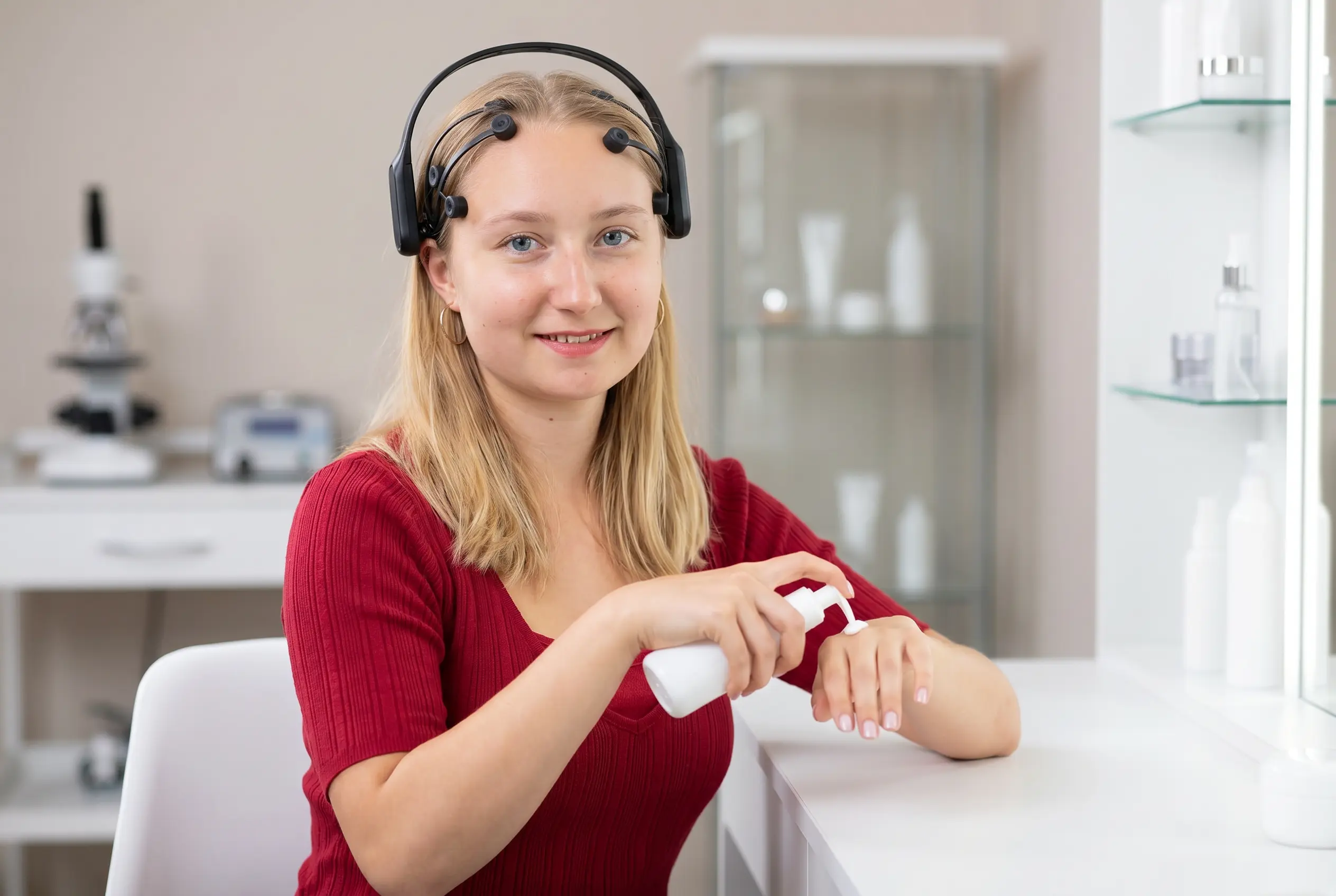
For skincare brands, emotional engagement measurement helps reveal how audiences respond to campaigns, product launches, influencer content, ingredient storytelling, and ecommerce experiences. By combining behavioral analytics, UX research, and EEG-based neuroanalytics, beauty teams can better understand which moments create trust, which create friction, and which support deeper audience engagement.
Why Emotional Engagement Matters in Skincare
Skincare is a high-consideration beauty category. Consumers often evaluate products in relation to personal concerns such as acne, aging, dryness, sensitivity, hyperpigmentation, texture, irritation, or routine compatibility.
This makes emotional engagement especially important because skincare marketing must do more than inform. It must build confidence.
Audiences may respond emotionally to ingredient claims, before-and-after imagery, founder storytelling, clinical language, packaging design, routine education, and social proof. These elements shape whether consumers feel reassured, skeptical, overwhelmed, inspired, or ready to take action.
For skincare brands, emotional response directly influences trust and purchase confidence.
Why Behavioral Metrics Miss Emotional Response
Beauty marketers often track clicks, views, watch time, conversions, add-to-cart behavior, and email performance. These metrics are useful, but they do not fully explain emotional engagement.
A campaign may generate clicks because of curiosity while failing to build trust. A product page may convert one audience segment while creating hesitation in another. A video may sustain completion rates without creating meaningful recall or emotional connection.
Emotional engagement research helps brands answer more nuanced questions:
Did the message create confidence?
Did the creative feel credible?
Did the audience emotionally connect with the product story?
Where did trust weaken?
Which moments increased hesitation?
These questions matter because skincare purchases are shaped by both rational evaluation and emotional reassurance.
Trust as a Core Emotional Signal
Trust is one of the strongest emotional drivers in skincare marketing.
Consumers want to believe that a product is safe, effective, transparent, and appropriate for their needs. This becomes especially important for products involving active ingredients, sensitive skin concerns, or routine changes.
Trust can be strengthened through clear ingredient communication, evidence-based claims, transparent education, consistent brand voice, expert input, and accessible usage guidance.
However, trust can also weaken quickly when campaigns rely on excessive hype, vague claims, unrealistic imagery, inconsistent branding, or confusing instructions.
Measuring emotional engagement helps skincare brands understand whether creative assets are building confidence or unintentionally creating resistance.
Using Neuroanalytics to Measure Emotional Engagement
EEG-based neuroanalytics can help skincare brands evaluate cognitive and emotional response during exposure to marketing assets.
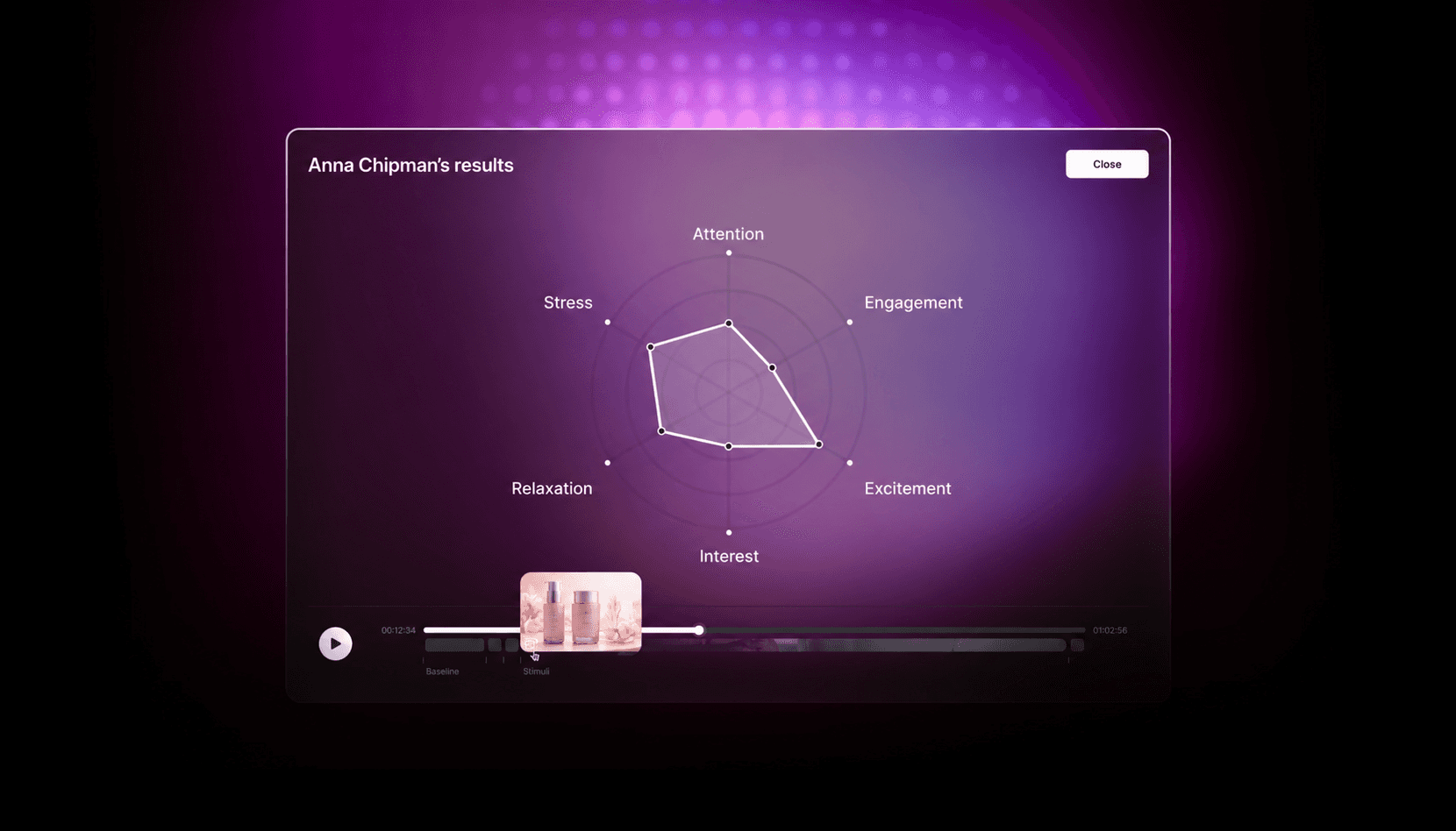
Researchers may analyze attention, engagement, emotional intensity, cognitive stress, interest patterns, and mental fatigue to better understand how audiences experience campaigns in real time.
This can help identify whether a campaign creates meaningful emotional connection or simply generates surface-level visibility.
For example, a product launch video may sustain attention initially but lose engagement during overly technical ingredient explanations. A landing page may attract attention to product visuals while creating cognitive friction around usage instructions or routines.
Neuroanalytics gives teams a way to evaluate these moments while they happen rather than relying entirely on post-exposure feedback.
Emotional Engagement in Ingredient Storytelling
Ingredient storytelling is central to skincare marketing, but it can easily become either too technical or too vague.
Consumers increasingly want scientific credibility without feeling overwhelmed. They want transparency and evidence-based communication, but they also want clarity and emotional reassurance.
Emotional engagement testing can help brands evaluate whether ingredient communication feels:
Credible
Clear
Relevant
Reassuring
Emotionally motivating
Overly technical or overwhelming
This is especially valuable for products involving retinoids, exfoliating acids, peptides, pigmentation treatments, barrier-support systems, and sensitive-skin positioning.
Finding the balance between education and simplicity is critical for maintaining trust and engagement.
Testing Emotional Response Across Campaign Formats
Skincare brands distribute messaging across multiple touchpoints including paid advertising, ecommerce pages, influencer campaigns, social content, educational articles, and email experiences.
Each format creates a different emotional environment.
Teams may evaluate emotional engagement across:
Short-form video
Landing pages
Product detail pages
Influencer content
Social advertising
Educational content
Email campaigns
This helps brands determine whether emotional response remains consistent throughout the customer journey or weakens between channels.
Consistency matters because emotional trust can erode quickly when messaging tone or clarity changes across touchpoints.
Influencer Content and Audience Trust
Influencer marketing plays a major role in beauty and skincare, but emotional engagement varies significantly depending on tone, pacing, authenticity, and educational clarity.
Consumers often respond positively to influencer content that feels routine-based, transparent, and personally relevant. They may disengage from content that feels scripted, overly polished, or disconnected from realistic product use.
Testing influencer content can help brands evaluate:
Attention retention
Trust signals
Emotional connection
Message clarity
Product recall
Audience response to demonstrations or claims
These insights help teams refine creative strategy before scaling influencer content through paid media amplification.
Emotional Engagement in Ecommerce UX
Skincare ecommerce is not purely transactional. Product pages, quizzes, routine builders, educational modules, and checkout flows all influence emotional confidence during decision-making.
A page may contain accurate information while still feeling emotionally overwhelming. A recommendation quiz may be helpful but mentally exhausting. A product recommendation may be technically correct while failing to explain why the product fits the consumer’s goals.
Emotional engagement research helps brands evaluate whether ecommerce experiences create:
Confidence
Clarity
Trust
Reduced uncertainty
Motivation to continue
This becomes especially important for skincare brands with large product ecosystems or ingredient-forward positioning.
Reducing Emotional Friction in Product Education
Education builds trust, but too much information can create fatigue.
Consumers may need guidance on ingredient layering, irritation prevention, product sequencing, concentrations, or expected timelines. If educational content becomes too dense or intimidating, emotional engagement may decline even when the information itself is valuable.
Testing can help identify where education supports confidence and where it creates hesitation.
Common friction points include overly technical explanations, conflicting claims, unclear instructions, weak routine context, and excessive product recommendations.
Optimizing emotional engagement means helping consumers feel informed without feeling overloaded.
Applying Neuroanalytics to Skincare Marketing
Modern skincare brands need to understand more than surface-level engagement. They need to know whether audiences trust the message, emotionally connect with the product, and feel confident enough to continue toward purchase.
By combining behavioral analytics, UX research, and EEG-based neuroanalytics, teams can evaluate emotional engagement across campaigns, ecommerce experiences, product education, influencer content, and digital shopping flows.
This approach supports:
Campaign optimization
Product launch testing
Ecommerce UX research
Audience engagement measurement
Influencer content analysis
Beauty customer experience optimization
As skincare marketing becomes increasingly crowded and ingredient-focused, emotional engagement measurement helps brands create experiences that feel credible, clear, and emotionally relevant.
Conclusion
Emotional engagement is one of the most important performance signals in skincare marketing. Consumers need information, but they also need confidence, trust, and reassurance.
Behavioral analytics can show what audiences clicked or watched, but neuroanalytics helps explain how audiences experienced the message emotionally and cognitively.
By combining UX research, behavioral analytics, and EEG-based audience research, skincare brands can improve campaign performance, product education, ecommerce UX, and customer confidence throughout the skincare journey.
Teams looking to better understand emotional engagement, attention, cognitive stress, and audience response across skincare campaigns can explore the features available through Emotiv Studio:
Measuring Emotional Engagement in Skincare Marketing
Skincare marketing depends on trust, confidence, identity, and emotional relevance. Consumers are not only evaluating ingredients or price. They are evaluating whether a product feels credible, safe, effective, and aligned with their personal goals.
For skincare brands, emotional engagement measurement helps reveal how audiences respond to campaigns, product launches, influencer content, ingredient storytelling, and ecommerce experiences. By combining behavioral analytics, UX research, and EEG-based neuroanalytics, beauty teams can better understand which moments create trust, which create friction, and which support deeper audience engagement.
Why Emotional Engagement Matters in Skincare
Skincare is a high-consideration beauty category. Consumers often evaluate products in relation to personal concerns such as acne, aging, dryness, sensitivity, hyperpigmentation, texture, irritation, or routine compatibility.
This makes emotional engagement especially important because skincare marketing must do more than inform. It must build confidence.
Audiences may respond emotionally to ingredient claims, before-and-after imagery, founder storytelling, clinical language, packaging design, routine education, and social proof. These elements shape whether consumers feel reassured, skeptical, overwhelmed, inspired, or ready to take action.
For skincare brands, emotional response directly influences trust and purchase confidence.
Why Behavioral Metrics Miss Emotional Response
Beauty marketers often track clicks, views, watch time, conversions, add-to-cart behavior, and email performance. These metrics are useful, but they do not fully explain emotional engagement.
A campaign may generate clicks because of curiosity while failing to build trust. A product page may convert one audience segment while creating hesitation in another. A video may sustain completion rates without creating meaningful recall or emotional connection.
Emotional engagement research helps brands answer more nuanced questions:
Did the message create confidence?
Did the creative feel credible?
Did the audience emotionally connect with the product story?
Where did trust weaken?
Which moments increased hesitation?
These questions matter because skincare purchases are shaped by both rational evaluation and emotional reassurance.
Trust as a Core Emotional Signal
Trust is one of the strongest emotional drivers in skincare marketing.
Consumers want to believe that a product is safe, effective, transparent, and appropriate for their needs. This becomes especially important for products involving active ingredients, sensitive skin concerns, or routine changes.
Trust can be strengthened through clear ingredient communication, evidence-based claims, transparent education, consistent brand voice, expert input, and accessible usage guidance.
However, trust can also weaken quickly when campaigns rely on excessive hype, vague claims, unrealistic imagery, inconsistent branding, or confusing instructions.
Measuring emotional engagement helps skincare brands understand whether creative assets are building confidence or unintentionally creating resistance.
Using Neuroanalytics to Measure Emotional Engagement
EEG-based neuroanalytics can help skincare brands evaluate cognitive and emotional response during exposure to marketing assets.
Researchers may analyze attention, engagement, emotional intensity, cognitive stress, interest patterns, and mental fatigue to better understand how audiences experience campaigns in real time.
This can help identify whether a campaign creates meaningful emotional connection or simply generates surface-level visibility.
For example, a product launch video may sustain attention initially but lose engagement during overly technical ingredient explanations. A landing page may attract attention to product visuals while creating cognitive friction around usage instructions or routines.
Neuroanalytics gives teams a way to evaluate these moments while they happen rather than relying entirely on post-exposure feedback.
Emotional Engagement in Ingredient Storytelling
Ingredient storytelling is central to skincare marketing, but it can easily become either too technical or too vague.
Consumers increasingly want scientific credibility without feeling overwhelmed. They want transparency and evidence-based communication, but they also want clarity and emotional reassurance.
Emotional engagement testing can help brands evaluate whether ingredient communication feels:
Credible
Clear
Relevant
Reassuring
Emotionally motivating
Overly technical or overwhelming
This is especially valuable for products involving retinoids, exfoliating acids, peptides, pigmentation treatments, barrier-support systems, and sensitive-skin positioning.
Finding the balance between education and simplicity is critical for maintaining trust and engagement.
Testing Emotional Response Across Campaign Formats
Skincare brands distribute messaging across multiple touchpoints including paid advertising, ecommerce pages, influencer campaigns, social content, educational articles, and email experiences.
Each format creates a different emotional environment.
Teams may evaluate emotional engagement across:
Short-form video
Landing pages
Product detail pages
Influencer content
Social advertising
Educational content
Email campaigns
This helps brands determine whether emotional response remains consistent throughout the customer journey or weakens between channels.
Consistency matters because emotional trust can erode quickly when messaging tone or clarity changes across touchpoints.
Influencer Content and Audience Trust
Influencer marketing plays a major role in beauty and skincare, but emotional engagement varies significantly depending on tone, pacing, authenticity, and educational clarity.
Consumers often respond positively to influencer content that feels routine-based, transparent, and personally relevant. They may disengage from content that feels scripted, overly polished, or disconnected from realistic product use.
Testing influencer content can help brands evaluate:
Attention retention
Trust signals
Emotional connection
Message clarity
Product recall
Audience response to demonstrations or claims
These insights help teams refine creative strategy before scaling influencer content through paid media amplification.
Emotional Engagement in Ecommerce UX
Skincare ecommerce is not purely transactional. Product pages, quizzes, routine builders, educational modules, and checkout flows all influence emotional confidence during decision-making.
A page may contain accurate information while still feeling emotionally overwhelming. A recommendation quiz may be helpful but mentally exhausting. A product recommendation may be technically correct while failing to explain why the product fits the consumer’s goals.
Emotional engagement research helps brands evaluate whether ecommerce experiences create:
Confidence
Clarity
Trust
Reduced uncertainty
Motivation to continue
This becomes especially important for skincare brands with large product ecosystems or ingredient-forward positioning.
Reducing Emotional Friction in Product Education
Education builds trust, but too much information can create fatigue.
Consumers may need guidance on ingredient layering, irritation prevention, product sequencing, concentrations, or expected timelines. If educational content becomes too dense or intimidating, emotional engagement may decline even when the information itself is valuable.
Testing can help identify where education supports confidence and where it creates hesitation.
Common friction points include overly technical explanations, conflicting claims, unclear instructions, weak routine context, and excessive product recommendations.
Optimizing emotional engagement means helping consumers feel informed without feeling overloaded.
Applying Neuroanalytics to Skincare Marketing
Modern skincare brands need to understand more than surface-level engagement. They need to know whether audiences trust the message, emotionally connect with the product, and feel confident enough to continue toward purchase.
By combining behavioral analytics, UX research, and EEG-based neuroanalytics, teams can evaluate emotional engagement across campaigns, ecommerce experiences, product education, influencer content, and digital shopping flows.
This approach supports:
Campaign optimization
Product launch testing
Ecommerce UX research
Audience engagement measurement
Influencer content analysis
Beauty customer experience optimization
As skincare marketing becomes increasingly crowded and ingredient-focused, emotional engagement measurement helps brands create experiences that feel credible, clear, and emotionally relevant.
Conclusion
Emotional engagement is one of the most important performance signals in skincare marketing. Consumers need information, but they also need confidence, trust, and reassurance.
Behavioral analytics can show what audiences clicked or watched, but neuroanalytics helps explain how audiences experienced the message emotionally and cognitively.
By combining UX research, behavioral analytics, and EEG-based audience research, skincare brands can improve campaign performance, product education, ecommerce UX, and customer confidence throughout the skincare journey.
Teams looking to better understand emotional engagement, attention, cognitive stress, and audience response across skincare campaigns can explore the features available through Emotiv Studio:
Measuring Emotional Engagement in Skincare Marketing
Skincare marketing depends on trust, confidence, identity, and emotional relevance. Consumers are not only evaluating ingredients or price. They are evaluating whether a product feels credible, safe, effective, and aligned with their personal goals.
For skincare brands, emotional engagement measurement helps reveal how audiences respond to campaigns, product launches, influencer content, ingredient storytelling, and ecommerce experiences. By combining behavioral analytics, UX research, and EEG-based neuroanalytics, beauty teams can better understand which moments create trust, which create friction, and which support deeper audience engagement.
Why Emotional Engagement Matters in Skincare
Skincare is a high-consideration beauty category. Consumers often evaluate products in relation to personal concerns such as acne, aging, dryness, sensitivity, hyperpigmentation, texture, irritation, or routine compatibility.
This makes emotional engagement especially important because skincare marketing must do more than inform. It must build confidence.
Audiences may respond emotionally to ingredient claims, before-and-after imagery, founder storytelling, clinical language, packaging design, routine education, and social proof. These elements shape whether consumers feel reassured, skeptical, overwhelmed, inspired, or ready to take action.
For skincare brands, emotional response directly influences trust and purchase confidence.
Why Behavioral Metrics Miss Emotional Response
Beauty marketers often track clicks, views, watch time, conversions, add-to-cart behavior, and email performance. These metrics are useful, but they do not fully explain emotional engagement.
A campaign may generate clicks because of curiosity while failing to build trust. A product page may convert one audience segment while creating hesitation in another. A video may sustain completion rates without creating meaningful recall or emotional connection.
Emotional engagement research helps brands answer more nuanced questions:
Did the message create confidence?
Did the creative feel credible?
Did the audience emotionally connect with the product story?
Where did trust weaken?
Which moments increased hesitation?
These questions matter because skincare purchases are shaped by both rational evaluation and emotional reassurance.
Trust as a Core Emotional Signal
Trust is one of the strongest emotional drivers in skincare marketing.
Consumers want to believe that a product is safe, effective, transparent, and appropriate for their needs. This becomes especially important for products involving active ingredients, sensitive skin concerns, or routine changes.
Trust can be strengthened through clear ingredient communication, evidence-based claims, transparent education, consistent brand voice, expert input, and accessible usage guidance.
However, trust can also weaken quickly when campaigns rely on excessive hype, vague claims, unrealistic imagery, inconsistent branding, or confusing instructions.
Measuring emotional engagement helps skincare brands understand whether creative assets are building confidence or unintentionally creating resistance.
Using Neuroanalytics to Measure Emotional Engagement
EEG-based neuroanalytics can help skincare brands evaluate cognitive and emotional response during exposure to marketing assets.
Researchers may analyze attention, engagement, emotional intensity, cognitive stress, interest patterns, and mental fatigue to better understand how audiences experience campaigns in real time.
This can help identify whether a campaign creates meaningful emotional connection or simply generates surface-level visibility.
For example, a product launch video may sustain attention initially but lose engagement during overly technical ingredient explanations. A landing page may attract attention to product visuals while creating cognitive friction around usage instructions or routines.
Neuroanalytics gives teams a way to evaluate these moments while they happen rather than relying entirely on post-exposure feedback.
Emotional Engagement in Ingredient Storytelling
Ingredient storytelling is central to skincare marketing, but it can easily become either too technical or too vague.
Consumers increasingly want scientific credibility without feeling overwhelmed. They want transparency and evidence-based communication, but they also want clarity and emotional reassurance.
Emotional engagement testing can help brands evaluate whether ingredient communication feels:
Credible
Clear
Relevant
Reassuring
Emotionally motivating
Overly technical or overwhelming
This is especially valuable for products involving retinoids, exfoliating acids, peptides, pigmentation treatments, barrier-support systems, and sensitive-skin positioning.
Finding the balance between education and simplicity is critical for maintaining trust and engagement.
Testing Emotional Response Across Campaign Formats
Skincare brands distribute messaging across multiple touchpoints including paid advertising, ecommerce pages, influencer campaigns, social content, educational articles, and email experiences.
Each format creates a different emotional environment.
Teams may evaluate emotional engagement across:
Short-form video
Landing pages
Product detail pages
Influencer content
Social advertising
Educational content
Email campaigns
This helps brands determine whether emotional response remains consistent throughout the customer journey or weakens between channels.
Consistency matters because emotional trust can erode quickly when messaging tone or clarity changes across touchpoints.
Influencer Content and Audience Trust
Influencer marketing plays a major role in beauty and skincare, but emotional engagement varies significantly depending on tone, pacing, authenticity, and educational clarity.
Consumers often respond positively to influencer content that feels routine-based, transparent, and personally relevant. They may disengage from content that feels scripted, overly polished, or disconnected from realistic product use.
Testing influencer content can help brands evaluate:
Attention retention
Trust signals
Emotional connection
Message clarity
Product recall
Audience response to demonstrations or claims
These insights help teams refine creative strategy before scaling influencer content through paid media amplification.
Emotional Engagement in Ecommerce UX
Skincare ecommerce is not purely transactional. Product pages, quizzes, routine builders, educational modules, and checkout flows all influence emotional confidence during decision-making.
A page may contain accurate information while still feeling emotionally overwhelming. A recommendation quiz may be helpful but mentally exhausting. A product recommendation may be technically correct while failing to explain why the product fits the consumer’s goals.
Emotional engagement research helps brands evaluate whether ecommerce experiences create:
Confidence
Clarity
Trust
Reduced uncertainty
Motivation to continue
This becomes especially important for skincare brands with large product ecosystems or ingredient-forward positioning.
Reducing Emotional Friction in Product Education
Education builds trust, but too much information can create fatigue.
Consumers may need guidance on ingredient layering, irritation prevention, product sequencing, concentrations, or expected timelines. If educational content becomes too dense or intimidating, emotional engagement may decline even when the information itself is valuable.
Testing can help identify where education supports confidence and where it creates hesitation.
Common friction points include overly technical explanations, conflicting claims, unclear instructions, weak routine context, and excessive product recommendations.
Optimizing emotional engagement means helping consumers feel informed without feeling overloaded.
Applying Neuroanalytics to Skincare Marketing
Modern skincare brands need to understand more than surface-level engagement. They need to know whether audiences trust the message, emotionally connect with the product, and feel confident enough to continue toward purchase.
By combining behavioral analytics, UX research, and EEG-based neuroanalytics, teams can evaluate emotional engagement across campaigns, ecommerce experiences, product education, influencer content, and digital shopping flows.
This approach supports:
Campaign optimization
Product launch testing
Ecommerce UX research
Audience engagement measurement
Influencer content analysis
Beauty customer experience optimization
As skincare marketing becomes increasingly crowded and ingredient-focused, emotional engagement measurement helps brands create experiences that feel credible, clear, and emotionally relevant.
Conclusion
Emotional engagement is one of the most important performance signals in skincare marketing. Consumers need information, but they also need confidence, trust, and reassurance.
Behavioral analytics can show what audiences clicked or watched, but neuroanalytics helps explain how audiences experienced the message emotionally and cognitively.
By combining UX research, behavioral analytics, and EEG-based audience research, skincare brands can improve campaign performance, product education, ecommerce UX, and customer confidence throughout the skincare journey.
Teams looking to better understand emotional engagement, attention, cognitive stress, and audience response across skincare campaigns can explore the features available through Emotiv Studio: