How to Avoid Cognitive Bias in Marketing Research
H.B. Duran
Updated on
Jun 10, 2026
How to Avoid Cognitive Bias in Marketing Research
H.B. Duran
Updated on
Jun 10, 2026
How to Avoid Cognitive Bias in Marketing Research
H.B. Duran
Updated on
Jun 10, 2026
Marketing research is intended to reduce uncertainty, yet many studies inadvertently introduce new sources of error through cognitive bias. For user and product researchers working within agencies or in-house marketing teams, the challenge is rarely a lack of data. Instead, the problem is determining whether that data accurately reflects audience behavior, preferences, and decision-making.
The impact of cognitive bias becomes particularly significant when organizations rely heavily on self-reported feedback, surveys, interviews, or focus groups to guide product launches, creative development, and campaign optimization. Respondents may unintentionally provide answers influenced by social desirability, memory limitations, framing effects, or unconscious preferences. As a result, marketing teams can end up optimizing for what people say rather than what actually drives engagement and behavior.
Reducing cognitive bias requires a combination of better research design, stronger validation processes, and complementary measurement approaches. Increasingly, organizations are incorporating neuroscience-informed methodologies to better understand attention, engagement, and emotional response alongside traditional research metrics.
Key Takeaways
Cognitive bias can significantly influence survey responses, interviews, and focus group findings.
Traditional marketing research often captures stated preferences rather than actual audience responses.
Combining behavioral and neuroscience-informed measures can improve research validity.
EEG-based testing provides additional context around attention, engagement, and cognitive workload.
Reducing bias leads to more reliable decisions across product, creative, and campaign development.
Why Cognitive Bias Remains a Persistent Research Challenge
Even experienced researchers can struggle to eliminate cognitive bias entirely. Human decision-making is influenced by countless mental shortcuts that help people process information quickly but can also distort responses during research activities.
Confirmation bias, anchoring bias, recency effects, and social desirability bias are among the most common challenges in marketing research. When participants are asked why they prefer a particular advertisement or product experience, their explanations often reflect post-rationalization rather than the underlying factors that influenced their reactions.
For marketing teams, this creates a critical risk. Campaign concepts may test well verbally while generating lower-than-expected engagement in market. Likewise, product features that receive positive survey feedback may fail to influence actual user behavior.
Research published by Berkman and colleagues (2019) highlights how conscious self-report measures frequently capture only a portion of the processes that drive decision-making, reinforcing the importance of using multiple measurement approaches when evaluating consumer responses.
Where Traditional Marketing Metrics Fall Short
Surveys and interviews remain valuable tools, but they are vulnerable to several forms of bias that can affect research quality.
Consider a creative testing study in which participants are asked to evaluate multiple advertisements. The order in which concepts are presented can influence ratings. The wording of questions can shape responses. Participants may also attempt to provide answers they believe researchers want to hear.
These challenges become even more pronounced when evaluating emotional responses. Consumers often struggle to accurately describe levels of attention, interest, cognitive effort, or engagement experienced during an advertisement, digital experience, or product interaction.
According to research published in Frontiers in Human Neuroscience by Vecchiato et al. (2014), neurophysiological measures can reveal meaningful differences in audience response that may not be fully captured through self-report methods alone.
The goal is not to replace traditional research. Rather, it is to identify where blind spots may exist and supplement existing methods with additional evidence.
Research Design Strategies to Reduce Bias
One of the most effective ways to reduce cognitive bias is through thoughtful study design. Small improvements in methodology can significantly improve data quality.
Researchers should prioritize:
Randomizing stimulus presentation order.
Using neutral question wording.
Avoiding leading questions.
Separating evaluation tasks from explanation tasks.
Combining qualitative and quantitative methods.
Validating findings across multiple data sources.
Another valuable practice is measuring actual behavior whenever possible. Click-through rates, navigation patterns, dwell time, task completion, and purchase behavior often provide stronger indicators of performance than stated intentions alone.
However, even behavioral metrics may not fully explain why a particular experience succeeds or fails. This is where neuroscience-informed measurement can add context.
How EEG-Based Research Adds Additional Context
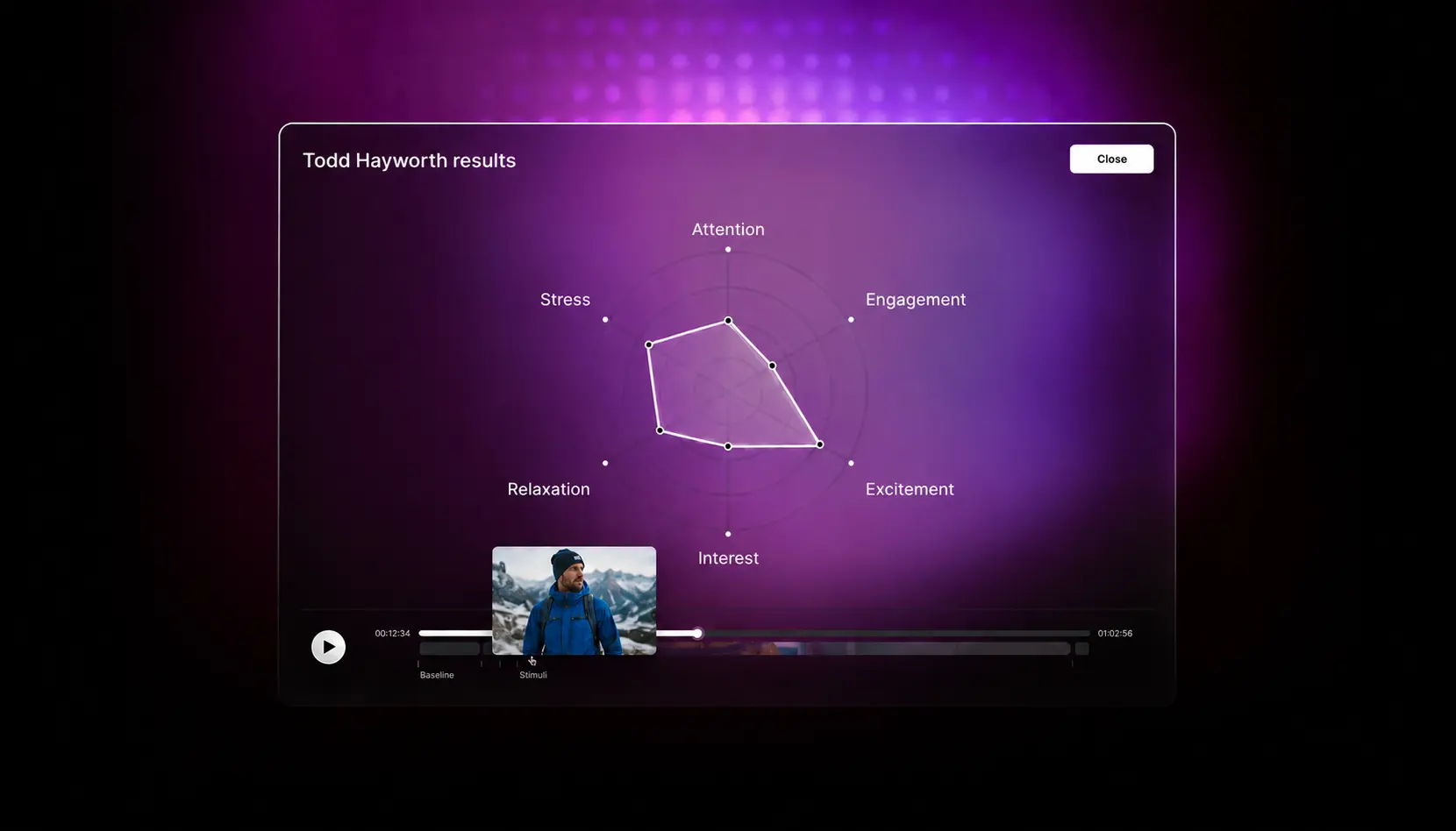
EEG-based audience testing provides researchers with objective signals related to attention, engagement, cognitive workload, and emotional response during exposure to marketing stimuli. Rather than relying exclusively on participant recall after an experience, researchers can evaluate responses as they occur.
This additional layer of insight can help identify moments where audiences disengage, become cognitively overloaded, or demonstrate stronger levels of interest.
For example, organizations conducting advertising, UX, or product testing through Emotiv's neuroscience research solutions can combine EEG-derived metrics with surveys and behavioral measures to gain a more complete understanding of audience reactions. This multi-method approach helps researchers evaluate findings from several perspectives rather than relying on a single source of truth.
Importantly, neuroscience-informed testing does not eliminate cognitive bias entirely. Instead, it provides independent data streams that can help validate or challenge conclusions drawn from traditional methods.
Real-World Examples of Bias Reduction Through Multi-Method Research
One example comes from advertising research, where brands frequently encounter discrepancies between stated preferences and campaign performance. In multiple neuromarketing studies, advertisements that generated stronger attention and engagement signals have often outperformed concepts that received similar survey ratings, suggesting that self-report data alone may overlook important differences in audience response (Vecchiato et al., 2014).
A second example can be seen in digital user experience research. Studies utilizing EEG alongside usability testing have demonstrated that moments of cognitive stress and increased workload can be identified even when participants report that an experience was straightforward. Research published by Leeuwis et al. (2021) showed how neurophysiological measures can provide additional context regarding user experience evaluation and cognitive demands during task performance.
For product and marketing researchers, these findings reinforce a consistent lesson: participant feedback remains valuable, but it is often most powerful when validated against behavioral and physiological evidence.
Building a More Reliable Research Framework
Organizations that consistently reduce cognitive bias tend to adopt a layered research strategy rather than depending on a single methodology.
This framework often includes:
Carefully designed surveys and interviews.
Behavioral analytics and performance metrics.
Qualitative observation.
Experimental testing methodologies.
Neuroscience-informed measures where appropriate.
By triangulating findings across multiple sources, researchers can identify inconsistencies earlier and make decisions with greater confidence.
This approach is particularly valuable in high-stakes environments where marketing investments, product decisions, and customer experiences can have substantial business impact.
Conclusion
Cognitive bias is not simply a participant problem—it is a research challenge that affects data collection, interpretation, and decision-making across the entire marketing process. While traditional methods remain essential, relying exclusively on self-reported data can leave critical gaps in understanding audience behavior.
Combining strong research design with behavioral analytics and neuroscience-informed measurement provides a more comprehensive view of attention, engagement, and user response. For marketing researchers seeking greater confidence in their findings, reducing cognitive bias is less about eliminating human subjectivity and more about balancing it with objective evidence.
Teams looking to evaluate attention, engagement, and audience response before launch can explore the capabilities of Emotiv Studio as part of a neuroscience-informed research workflow.
Sources
Berkman, E. T., Hutcherson, C. A., Livingston, J. L., Kahn, L. E., & Inzlicht, M. (2019). Self-control as value-based choice. Nature Human Behaviour. https://www.nature.com/articles/s41562-019-0618-8
Leeuwis, N., Paas, F., & van Merriënboer, J. (2021). Cognitive load and neurophysiological measures in learning and usability research. Frontiers in Human Neuroscience. https://www.frontiersin.org/articles/10.3389/fnhum.2021.651401/full
Vecchiato, G., Astolfi, L., De Vico Fallani, F., et al. (2014). On the use of EEG or MEG brain imaging tools in neuromarketing research. Frontiers in Human Neuroscience. https://www.frontiersin.org/articles/10.3389/fnhum.2014.00853/full
Emotiv. Neuromarketing and audience research applications. https://www.emotiv.com/neuromarketing
Marketing research is intended to reduce uncertainty, yet many studies inadvertently introduce new sources of error through cognitive bias. For user and product researchers working within agencies or in-house marketing teams, the challenge is rarely a lack of data. Instead, the problem is determining whether that data accurately reflects audience behavior, preferences, and decision-making.
The impact of cognitive bias becomes particularly significant when organizations rely heavily on self-reported feedback, surveys, interviews, or focus groups to guide product launches, creative development, and campaign optimization. Respondents may unintentionally provide answers influenced by social desirability, memory limitations, framing effects, or unconscious preferences. As a result, marketing teams can end up optimizing for what people say rather than what actually drives engagement and behavior.
Reducing cognitive bias requires a combination of better research design, stronger validation processes, and complementary measurement approaches. Increasingly, organizations are incorporating neuroscience-informed methodologies to better understand attention, engagement, and emotional response alongside traditional research metrics.
Key Takeaways
Cognitive bias can significantly influence survey responses, interviews, and focus group findings.
Traditional marketing research often captures stated preferences rather than actual audience responses.
Combining behavioral and neuroscience-informed measures can improve research validity.
EEG-based testing provides additional context around attention, engagement, and cognitive workload.
Reducing bias leads to more reliable decisions across product, creative, and campaign development.
Why Cognitive Bias Remains a Persistent Research Challenge
Even experienced researchers can struggle to eliminate cognitive bias entirely. Human decision-making is influenced by countless mental shortcuts that help people process information quickly but can also distort responses during research activities.
Confirmation bias, anchoring bias, recency effects, and social desirability bias are among the most common challenges in marketing research. When participants are asked why they prefer a particular advertisement or product experience, their explanations often reflect post-rationalization rather than the underlying factors that influenced their reactions.
For marketing teams, this creates a critical risk. Campaign concepts may test well verbally while generating lower-than-expected engagement in market. Likewise, product features that receive positive survey feedback may fail to influence actual user behavior.
Research published by Berkman and colleagues (2019) highlights how conscious self-report measures frequently capture only a portion of the processes that drive decision-making, reinforcing the importance of using multiple measurement approaches when evaluating consumer responses.
Where Traditional Marketing Metrics Fall Short
Surveys and interviews remain valuable tools, but they are vulnerable to several forms of bias that can affect research quality.
Consider a creative testing study in which participants are asked to evaluate multiple advertisements. The order in which concepts are presented can influence ratings. The wording of questions can shape responses. Participants may also attempt to provide answers they believe researchers want to hear.
These challenges become even more pronounced when evaluating emotional responses. Consumers often struggle to accurately describe levels of attention, interest, cognitive effort, or engagement experienced during an advertisement, digital experience, or product interaction.
According to research published in Frontiers in Human Neuroscience by Vecchiato et al. (2014), neurophysiological measures can reveal meaningful differences in audience response that may not be fully captured through self-report methods alone.
The goal is not to replace traditional research. Rather, it is to identify where blind spots may exist and supplement existing methods with additional evidence.
Research Design Strategies to Reduce Bias
One of the most effective ways to reduce cognitive bias is through thoughtful study design. Small improvements in methodology can significantly improve data quality.
Researchers should prioritize:
Randomizing stimulus presentation order.
Using neutral question wording.
Avoiding leading questions.
Separating evaluation tasks from explanation tasks.
Combining qualitative and quantitative methods.
Validating findings across multiple data sources.
Another valuable practice is measuring actual behavior whenever possible. Click-through rates, navigation patterns, dwell time, task completion, and purchase behavior often provide stronger indicators of performance than stated intentions alone.
However, even behavioral metrics may not fully explain why a particular experience succeeds or fails. This is where neuroscience-informed measurement can add context.
How EEG-Based Research Adds Additional Context
EEG-based audience testing provides researchers with objective signals related to attention, engagement, cognitive workload, and emotional response during exposure to marketing stimuli. Rather than relying exclusively on participant recall after an experience, researchers can evaluate responses as they occur.
This additional layer of insight can help identify moments where audiences disengage, become cognitively overloaded, or demonstrate stronger levels of interest.
For example, organizations conducting advertising, UX, or product testing through Emotiv's neuroscience research solutions can combine EEG-derived metrics with surveys and behavioral measures to gain a more complete understanding of audience reactions. This multi-method approach helps researchers evaluate findings from several perspectives rather than relying on a single source of truth.
Importantly, neuroscience-informed testing does not eliminate cognitive bias entirely. Instead, it provides independent data streams that can help validate or challenge conclusions drawn from traditional methods.
Real-World Examples of Bias Reduction Through Multi-Method Research
One example comes from advertising research, where brands frequently encounter discrepancies between stated preferences and campaign performance. In multiple neuromarketing studies, advertisements that generated stronger attention and engagement signals have often outperformed concepts that received similar survey ratings, suggesting that self-report data alone may overlook important differences in audience response (Vecchiato et al., 2014).
A second example can be seen in digital user experience research. Studies utilizing EEG alongside usability testing have demonstrated that moments of cognitive stress and increased workload can be identified even when participants report that an experience was straightforward. Research published by Leeuwis et al. (2021) showed how neurophysiological measures can provide additional context regarding user experience evaluation and cognitive demands during task performance.
For product and marketing researchers, these findings reinforce a consistent lesson: participant feedback remains valuable, but it is often most powerful when validated against behavioral and physiological evidence.
Building a More Reliable Research Framework
Organizations that consistently reduce cognitive bias tend to adopt a layered research strategy rather than depending on a single methodology.
This framework often includes:
Carefully designed surveys and interviews.
Behavioral analytics and performance metrics.
Qualitative observation.
Experimental testing methodologies.
Neuroscience-informed measures where appropriate.
By triangulating findings across multiple sources, researchers can identify inconsistencies earlier and make decisions with greater confidence.
This approach is particularly valuable in high-stakes environments where marketing investments, product decisions, and customer experiences can have substantial business impact.
Conclusion
Cognitive bias is not simply a participant problem—it is a research challenge that affects data collection, interpretation, and decision-making across the entire marketing process. While traditional methods remain essential, relying exclusively on self-reported data can leave critical gaps in understanding audience behavior.
Combining strong research design with behavioral analytics and neuroscience-informed measurement provides a more comprehensive view of attention, engagement, and user response. For marketing researchers seeking greater confidence in their findings, reducing cognitive bias is less about eliminating human subjectivity and more about balancing it with objective evidence.
Teams looking to evaluate attention, engagement, and audience response before launch can explore the capabilities of Emotiv Studio as part of a neuroscience-informed research workflow.
Sources
Berkman, E. T., Hutcherson, C. A., Livingston, J. L., Kahn, L. E., & Inzlicht, M. (2019). Self-control as value-based choice. Nature Human Behaviour. https://www.nature.com/articles/s41562-019-0618-8
Leeuwis, N., Paas, F., & van Merriënboer, J. (2021). Cognitive load and neurophysiological measures in learning and usability research. Frontiers in Human Neuroscience. https://www.frontiersin.org/articles/10.3389/fnhum.2021.651401/full
Vecchiato, G., Astolfi, L., De Vico Fallani, F., et al. (2014). On the use of EEG or MEG brain imaging tools in neuromarketing research. Frontiers in Human Neuroscience. https://www.frontiersin.org/articles/10.3389/fnhum.2014.00853/full
Emotiv. Neuromarketing and audience research applications. https://www.emotiv.com/neuromarketing
Marketing research is intended to reduce uncertainty, yet many studies inadvertently introduce new sources of error through cognitive bias. For user and product researchers working within agencies or in-house marketing teams, the challenge is rarely a lack of data. Instead, the problem is determining whether that data accurately reflects audience behavior, preferences, and decision-making.
The impact of cognitive bias becomes particularly significant when organizations rely heavily on self-reported feedback, surveys, interviews, or focus groups to guide product launches, creative development, and campaign optimization. Respondents may unintentionally provide answers influenced by social desirability, memory limitations, framing effects, or unconscious preferences. As a result, marketing teams can end up optimizing for what people say rather than what actually drives engagement and behavior.
Reducing cognitive bias requires a combination of better research design, stronger validation processes, and complementary measurement approaches. Increasingly, organizations are incorporating neuroscience-informed methodologies to better understand attention, engagement, and emotional response alongside traditional research metrics.
Key Takeaways
Cognitive bias can significantly influence survey responses, interviews, and focus group findings.
Traditional marketing research often captures stated preferences rather than actual audience responses.
Combining behavioral and neuroscience-informed measures can improve research validity.
EEG-based testing provides additional context around attention, engagement, and cognitive workload.
Reducing bias leads to more reliable decisions across product, creative, and campaign development.
Why Cognitive Bias Remains a Persistent Research Challenge
Even experienced researchers can struggle to eliminate cognitive bias entirely. Human decision-making is influenced by countless mental shortcuts that help people process information quickly but can also distort responses during research activities.
Confirmation bias, anchoring bias, recency effects, and social desirability bias are among the most common challenges in marketing research. When participants are asked why they prefer a particular advertisement or product experience, their explanations often reflect post-rationalization rather than the underlying factors that influenced their reactions.
For marketing teams, this creates a critical risk. Campaign concepts may test well verbally while generating lower-than-expected engagement in market. Likewise, product features that receive positive survey feedback may fail to influence actual user behavior.
Research published by Berkman and colleagues (2019) highlights how conscious self-report measures frequently capture only a portion of the processes that drive decision-making, reinforcing the importance of using multiple measurement approaches when evaluating consumer responses.
Where Traditional Marketing Metrics Fall Short
Surveys and interviews remain valuable tools, but they are vulnerable to several forms of bias that can affect research quality.
Consider a creative testing study in which participants are asked to evaluate multiple advertisements. The order in which concepts are presented can influence ratings. The wording of questions can shape responses. Participants may also attempt to provide answers they believe researchers want to hear.
These challenges become even more pronounced when evaluating emotional responses. Consumers often struggle to accurately describe levels of attention, interest, cognitive effort, or engagement experienced during an advertisement, digital experience, or product interaction.
According to research published in Frontiers in Human Neuroscience by Vecchiato et al. (2014), neurophysiological measures can reveal meaningful differences in audience response that may not be fully captured through self-report methods alone.
The goal is not to replace traditional research. Rather, it is to identify where blind spots may exist and supplement existing methods with additional evidence.
Research Design Strategies to Reduce Bias
One of the most effective ways to reduce cognitive bias is through thoughtful study design. Small improvements in methodology can significantly improve data quality.
Researchers should prioritize:
Randomizing stimulus presentation order.
Using neutral question wording.
Avoiding leading questions.
Separating evaluation tasks from explanation tasks.
Combining qualitative and quantitative methods.
Validating findings across multiple data sources.
Another valuable practice is measuring actual behavior whenever possible. Click-through rates, navigation patterns, dwell time, task completion, and purchase behavior often provide stronger indicators of performance than stated intentions alone.
However, even behavioral metrics may not fully explain why a particular experience succeeds or fails. This is where neuroscience-informed measurement can add context.
How EEG-Based Research Adds Additional Context
EEG-based audience testing provides researchers with objective signals related to attention, engagement, cognitive workload, and emotional response during exposure to marketing stimuli. Rather than relying exclusively on participant recall after an experience, researchers can evaluate responses as they occur.
This additional layer of insight can help identify moments where audiences disengage, become cognitively overloaded, or demonstrate stronger levels of interest.
For example, organizations conducting advertising, UX, or product testing through Emotiv's neuroscience research solutions can combine EEG-derived metrics with surveys and behavioral measures to gain a more complete understanding of audience reactions. This multi-method approach helps researchers evaluate findings from several perspectives rather than relying on a single source of truth.
Importantly, neuroscience-informed testing does not eliminate cognitive bias entirely. Instead, it provides independent data streams that can help validate or challenge conclusions drawn from traditional methods.
Real-World Examples of Bias Reduction Through Multi-Method Research
One example comes from advertising research, where brands frequently encounter discrepancies between stated preferences and campaign performance. In multiple neuromarketing studies, advertisements that generated stronger attention and engagement signals have often outperformed concepts that received similar survey ratings, suggesting that self-report data alone may overlook important differences in audience response (Vecchiato et al., 2014).
A second example can be seen in digital user experience research. Studies utilizing EEG alongside usability testing have demonstrated that moments of cognitive stress and increased workload can be identified even when participants report that an experience was straightforward. Research published by Leeuwis et al. (2021) showed how neurophysiological measures can provide additional context regarding user experience evaluation and cognitive demands during task performance.
For product and marketing researchers, these findings reinforce a consistent lesson: participant feedback remains valuable, but it is often most powerful when validated against behavioral and physiological evidence.
Building a More Reliable Research Framework
Organizations that consistently reduce cognitive bias tend to adopt a layered research strategy rather than depending on a single methodology.
This framework often includes:
Carefully designed surveys and interviews.
Behavioral analytics and performance metrics.
Qualitative observation.
Experimental testing methodologies.
Neuroscience-informed measures where appropriate.
By triangulating findings across multiple sources, researchers can identify inconsistencies earlier and make decisions with greater confidence.
This approach is particularly valuable in high-stakes environments where marketing investments, product decisions, and customer experiences can have substantial business impact.
Conclusion
Cognitive bias is not simply a participant problem—it is a research challenge that affects data collection, interpretation, and decision-making across the entire marketing process. While traditional methods remain essential, relying exclusively on self-reported data can leave critical gaps in understanding audience behavior.
Combining strong research design with behavioral analytics and neuroscience-informed measurement provides a more comprehensive view of attention, engagement, and user response. For marketing researchers seeking greater confidence in their findings, reducing cognitive bias is less about eliminating human subjectivity and more about balancing it with objective evidence.
Teams looking to evaluate attention, engagement, and audience response before launch can explore the capabilities of Emotiv Studio as part of a neuroscience-informed research workflow.
Sources
Berkman, E. T., Hutcherson, C. A., Livingston, J. L., Kahn, L. E., & Inzlicht, M. (2019). Self-control as value-based choice. Nature Human Behaviour. https://www.nature.com/articles/s41562-019-0618-8
Leeuwis, N., Paas, F., & van Merriënboer, J. (2021). Cognitive load and neurophysiological measures in learning and usability research. Frontiers in Human Neuroscience. https://www.frontiersin.org/articles/10.3389/fnhum.2021.651401/full
Vecchiato, G., Astolfi, L., De Vico Fallani, F., et al. (2014). On the use of EEG or MEG brain imaging tools in neuromarketing research. Frontiers in Human Neuroscience. https://www.frontiersin.org/articles/10.3389/fnhum.2014.00853/full
Emotiv. Neuromarketing and audience research applications. https://www.emotiv.com/neuromarketing