Fashion Marketing: Measuring What Audiences Feel Before Campaigns Launch
H.B. Duran
Updated on
May 22, 2026
Fashion Marketing: Measuring What Audiences Feel Before Campaigns Launch
H.B. Duran
Updated on
May 22, 2026
Fashion Marketing: Measuring What Audiences Feel Before Campaigns Launch
H.B. Duran
Updated on
May 22, 2026
Fashion marketing has always relied on emotion, identity, aspiration, and visual storytelling. A campaign can look beautiful, feel culturally relevant, and still fail to create the audience response a brand expected. For fashion marketers, the challenge is not simply producing striking creative. It is understanding which moments capture attention, create emotional engagement, and support brand desire before media spend scales.
Why Fashion Marketing Is Hard to Measure
Fashion is highly visual, but attention alone does not guarantee impact. A campaign may attract views without building recall, emotional resonance, or purchase intent.
Traditional performance metrics such as impressions, clicks, engagement rate, and conversions can show what happened after launch. They rarely explain how audiences experienced the campaign in the moment.
For fashion brands, this creates uncertainty across campaign concept selection, editorial imagery, runway films, influencer content, product storytelling, and digital lookbooks. When creative decisions depend heavily on emotional response, brands need stronger ways to measure how audiences actually connect with the work rather than relying solely on post-launch analytics.
Attention, Emotion, and Brand Desire
Fashion campaigns often work by creating a feeling before they communicate a product detail. Audiences respond to tone, pacing, styling, movement, music, models, textures, and cultural cues.
That response can be subtle. A viewer may feel curiosity, aspiration, trust, excitement, or emotional distance before they can consciously explain why.
Neuroscience-based research helps fashion teams evaluate signals related to attention, engagement, emotional activation, cognitive stress, and moment-by-moment drop-off. These insights help brands understand which creative moments strengthen emotional connection and which weaken it before campaigns scale into larger media investment.
Testing Fashion Campaigns Before Launch
Pre-launch testing can help fashion brands compare campaign variations before committing to production, paid media, or seasonal rollouts.
Teams may evaluate:
Hero campaign videos
Product photography
Lookbook sequences
Social advertising
Influencer edits
Landing page experiences
Brand films
By measuring audience response earlier, brands can identify which concepts create stronger engagement, which edits lose attention, and which visual narratives best support the intended positioning.
This is especially important in fashion because subtle creative differences can dramatically affect perception around exclusivity, identity, aspiration, or trust.
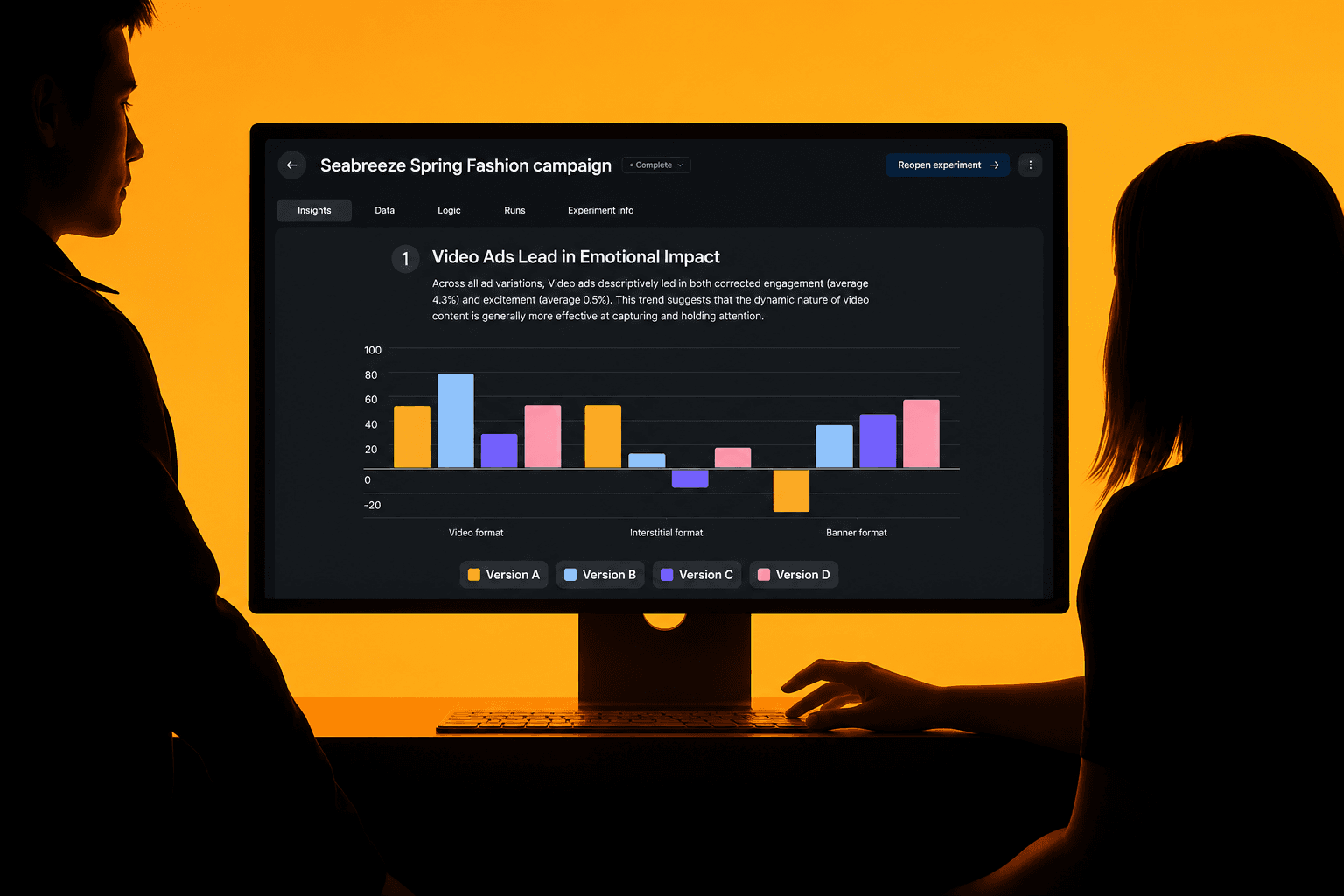
Above: a marketing team reviews qualitative consumer data inside Emotiv Studio in response to fashion campaign testing.
Using EEG Insights in Fashion Marketing
EEG-based audience testing can help fashion marketers understand how people respond while experiencing creative content.
Instead of relying only on stated preference, teams can evaluate cognitive and emotional response in real time. This is particularly valuable for fashion campaigns where audience reactions are often shaped by subconscious perception, identity alignment, emotional tone, and sensory storytelling.
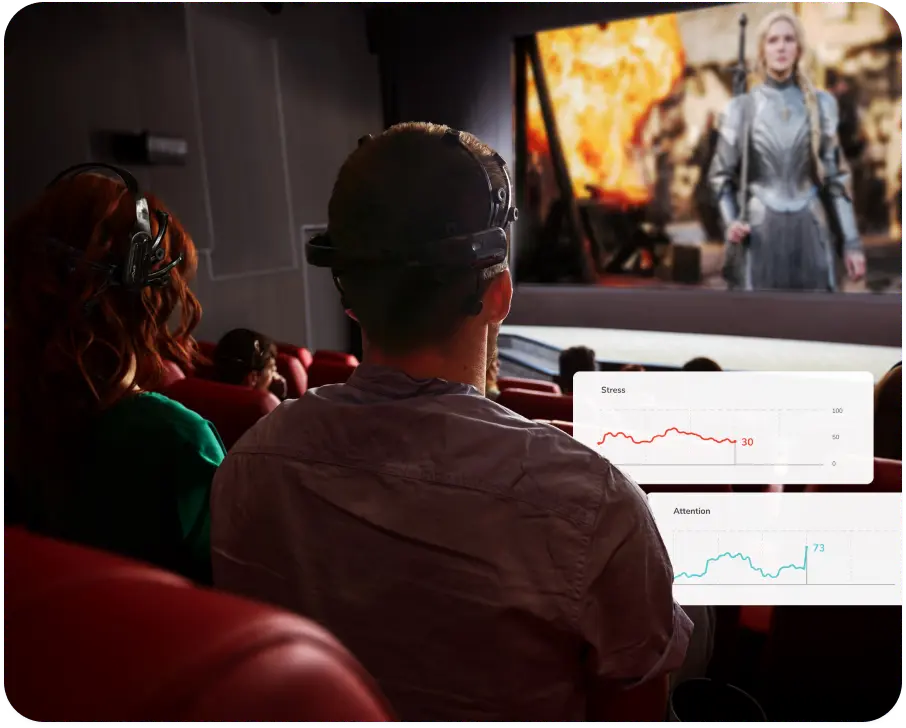
For example, EEG insights can help identify where viewers lose attention during a brand film, which product visuals create stronger engagement, whether campaign pacing supports emotional buildup, and which creative version generates stronger sustained interest.
Rather than replacing creative instinct, these insights help teams validate whether intended emotional responses are actually occurring during audience exposure.
Fashion Ecommerce and Attention Flow
Fashion marketing does not stop at campaign creative. Product pages, collection pages, mobile shopping experiences, and digital merchandising all shape audience response and purchase consideration.
Brands can use attention testing to understand whether shoppers notice critical elements such as product details, fit information, styling suggestions, material descriptions, sustainability messaging, and calls to action.
When shoppers experience friction or cognitive stress, they may abandon even if they like the product itself. Measuring attention and engagement across ecommerce experiences can help brands improve the transition from campaign interest to product consideration.
This becomes increasingly important as fashion discovery shifts toward mobile-first and social-first environments where attention windows are shorter and visual competition is constant.
Applying Neuroscience to Fashion Creative Strategy
For fashion marketers, neuroscience does not replace taste, intuition, or creative direction. It adds another layer of evidence that helps teams understand whether the intended emotional response is actually happening.
This can support stronger decision-making across:
Campaign development
Ecommerce optimization
Seasonal launches
Audience segmentation
Influencer creative
Brand storytelling
As fashion campaigns become more digitally driven and visually competitive, understanding emotional engagement earlier in the process can help reduce uncertainty and strengthen creative performance.
Conclusion
Fashion marketing succeeds when creative work is noticed, felt, remembered, and acted on. Traditional analytics can show campaign outcomes, but neuroscience-based research can help reveal how audiences experience fashion creative before launch.
By combining behavioral analysis, attention testing, and EEG-based audience insights, fashion brands can better understand emotional engagement, cognitive response, and creative effectiveness across campaigns and ecommerce experiences.
Teams looking to measure attention, emotional engagement, and audience response across fashion campaigns can visit the Emotiv Studio page to see how EEG-based insights support creative testing workflows:
Fashion marketing has always relied on emotion, identity, aspiration, and visual storytelling. A campaign can look beautiful, feel culturally relevant, and still fail to create the audience response a brand expected. For fashion marketers, the challenge is not simply producing striking creative. It is understanding which moments capture attention, create emotional engagement, and support brand desire before media spend scales.
Why Fashion Marketing Is Hard to Measure
Fashion is highly visual, but attention alone does not guarantee impact. A campaign may attract views without building recall, emotional resonance, or purchase intent.
Traditional performance metrics such as impressions, clicks, engagement rate, and conversions can show what happened after launch. They rarely explain how audiences experienced the campaign in the moment.
For fashion brands, this creates uncertainty across campaign concept selection, editorial imagery, runway films, influencer content, product storytelling, and digital lookbooks. When creative decisions depend heavily on emotional response, brands need stronger ways to measure how audiences actually connect with the work rather than relying solely on post-launch analytics.
Attention, Emotion, and Brand Desire
Fashion campaigns often work by creating a feeling before they communicate a product detail. Audiences respond to tone, pacing, styling, movement, music, models, textures, and cultural cues.
That response can be subtle. A viewer may feel curiosity, aspiration, trust, excitement, or emotional distance before they can consciously explain why.
Neuroscience-based research helps fashion teams evaluate signals related to attention, engagement, emotional activation, cognitive stress, and moment-by-moment drop-off. These insights help brands understand which creative moments strengthen emotional connection and which weaken it before campaigns scale into larger media investment.
Testing Fashion Campaigns Before Launch
Pre-launch testing can help fashion brands compare campaign variations before committing to production, paid media, or seasonal rollouts.
Teams may evaluate:
Hero campaign videos
Product photography
Lookbook sequences
Social advertising
Influencer edits
Landing page experiences
Brand films
By measuring audience response earlier, brands can identify which concepts create stronger engagement, which edits lose attention, and which visual narratives best support the intended positioning.
This is especially important in fashion because subtle creative differences can dramatically affect perception around exclusivity, identity, aspiration, or trust.
Above: a marketing team reviews qualitative consumer data inside Emotiv Studio in response to fashion campaign testing.
Using EEG Insights in Fashion Marketing
EEG-based audience testing can help fashion marketers understand how people respond while experiencing creative content.
Instead of relying only on stated preference, teams can evaluate cognitive and emotional response in real time. This is particularly valuable for fashion campaigns where audience reactions are often shaped by subconscious perception, identity alignment, emotional tone, and sensory storytelling.
For example, EEG insights can help identify where viewers lose attention during a brand film, which product visuals create stronger engagement, whether campaign pacing supports emotional buildup, and which creative version generates stronger sustained interest.
Rather than replacing creative instinct, these insights help teams validate whether intended emotional responses are actually occurring during audience exposure.
Fashion Ecommerce and Attention Flow
Fashion marketing does not stop at campaign creative. Product pages, collection pages, mobile shopping experiences, and digital merchandising all shape audience response and purchase consideration.
Brands can use attention testing to understand whether shoppers notice critical elements such as product details, fit information, styling suggestions, material descriptions, sustainability messaging, and calls to action.
When shoppers experience friction or cognitive stress, they may abandon even if they like the product itself. Measuring attention and engagement across ecommerce experiences can help brands improve the transition from campaign interest to product consideration.
This becomes increasingly important as fashion discovery shifts toward mobile-first and social-first environments where attention windows are shorter and visual competition is constant.
Applying Neuroscience to Fashion Creative Strategy
For fashion marketers, neuroscience does not replace taste, intuition, or creative direction. It adds another layer of evidence that helps teams understand whether the intended emotional response is actually happening.
This can support stronger decision-making across:
Campaign development
Ecommerce optimization
Seasonal launches
Audience segmentation
Influencer creative
Brand storytelling
As fashion campaigns become more digitally driven and visually competitive, understanding emotional engagement earlier in the process can help reduce uncertainty and strengthen creative performance.
Conclusion
Fashion marketing succeeds when creative work is noticed, felt, remembered, and acted on. Traditional analytics can show campaign outcomes, but neuroscience-based research can help reveal how audiences experience fashion creative before launch.
By combining behavioral analysis, attention testing, and EEG-based audience insights, fashion brands can better understand emotional engagement, cognitive response, and creative effectiveness across campaigns and ecommerce experiences.
Teams looking to measure attention, emotional engagement, and audience response across fashion campaigns can visit the Emotiv Studio page to see how EEG-based insights support creative testing workflows:
Fashion marketing has always relied on emotion, identity, aspiration, and visual storytelling. A campaign can look beautiful, feel culturally relevant, and still fail to create the audience response a brand expected. For fashion marketers, the challenge is not simply producing striking creative. It is understanding which moments capture attention, create emotional engagement, and support brand desire before media spend scales.
Why Fashion Marketing Is Hard to Measure
Fashion is highly visual, but attention alone does not guarantee impact. A campaign may attract views without building recall, emotional resonance, or purchase intent.
Traditional performance metrics such as impressions, clicks, engagement rate, and conversions can show what happened after launch. They rarely explain how audiences experienced the campaign in the moment.
For fashion brands, this creates uncertainty across campaign concept selection, editorial imagery, runway films, influencer content, product storytelling, and digital lookbooks. When creative decisions depend heavily on emotional response, brands need stronger ways to measure how audiences actually connect with the work rather than relying solely on post-launch analytics.
Attention, Emotion, and Brand Desire
Fashion campaigns often work by creating a feeling before they communicate a product detail. Audiences respond to tone, pacing, styling, movement, music, models, textures, and cultural cues.
That response can be subtle. A viewer may feel curiosity, aspiration, trust, excitement, or emotional distance before they can consciously explain why.
Neuroscience-based research helps fashion teams evaluate signals related to attention, engagement, emotional activation, cognitive stress, and moment-by-moment drop-off. These insights help brands understand which creative moments strengthen emotional connection and which weaken it before campaigns scale into larger media investment.
Testing Fashion Campaigns Before Launch
Pre-launch testing can help fashion brands compare campaign variations before committing to production, paid media, or seasonal rollouts.
Teams may evaluate:
Hero campaign videos
Product photography
Lookbook sequences
Social advertising
Influencer edits
Landing page experiences
Brand films
By measuring audience response earlier, brands can identify which concepts create stronger engagement, which edits lose attention, and which visual narratives best support the intended positioning.
This is especially important in fashion because subtle creative differences can dramatically affect perception around exclusivity, identity, aspiration, or trust.
Above: a marketing team reviews qualitative consumer data inside Emotiv Studio in response to fashion campaign testing.
Using EEG Insights in Fashion Marketing
EEG-based audience testing can help fashion marketers understand how people respond while experiencing creative content.
Instead of relying only on stated preference, teams can evaluate cognitive and emotional response in real time. This is particularly valuable for fashion campaigns where audience reactions are often shaped by subconscious perception, identity alignment, emotional tone, and sensory storytelling.
For example, EEG insights can help identify where viewers lose attention during a brand film, which product visuals create stronger engagement, whether campaign pacing supports emotional buildup, and which creative version generates stronger sustained interest.
Rather than replacing creative instinct, these insights help teams validate whether intended emotional responses are actually occurring during audience exposure.
Fashion Ecommerce and Attention Flow
Fashion marketing does not stop at campaign creative. Product pages, collection pages, mobile shopping experiences, and digital merchandising all shape audience response and purchase consideration.
Brands can use attention testing to understand whether shoppers notice critical elements such as product details, fit information, styling suggestions, material descriptions, sustainability messaging, and calls to action.
When shoppers experience friction or cognitive stress, they may abandon even if they like the product itself. Measuring attention and engagement across ecommerce experiences can help brands improve the transition from campaign interest to product consideration.
This becomes increasingly important as fashion discovery shifts toward mobile-first and social-first environments where attention windows are shorter and visual competition is constant.
Applying Neuroscience to Fashion Creative Strategy
For fashion marketers, neuroscience does not replace taste, intuition, or creative direction. It adds another layer of evidence that helps teams understand whether the intended emotional response is actually happening.
This can support stronger decision-making across:
Campaign development
Ecommerce optimization
Seasonal launches
Audience segmentation
Influencer creative
Brand storytelling
As fashion campaigns become more digitally driven and visually competitive, understanding emotional engagement earlier in the process can help reduce uncertainty and strengthen creative performance.
Conclusion
Fashion marketing succeeds when creative work is noticed, felt, remembered, and acted on. Traditional analytics can show campaign outcomes, but neuroscience-based research can help reveal how audiences experience fashion creative before launch.
By combining behavioral analysis, attention testing, and EEG-based audience insights, fashion brands can better understand emotional engagement, cognitive response, and creative effectiveness across campaigns and ecommerce experiences.
Teams looking to measure attention, emotional engagement, and audience response across fashion campaigns can visit the Emotiv Studio page to see how EEG-based insights support creative testing workflows: