Neurofeedback Game Explores New Approaches to Managing Multiple Sclerosis Fatigue
H.B. Duran
Updated on
Jul 23, 2026
Neurofeedback Game Explores New Approaches to Managing Multiple Sclerosis Fatigue
H.B. Duran
Updated on
Jul 23, 2026
Neurofeedback Game Explores New Approaches to Managing Multiple Sclerosis Fatigue
H.B. Duran
Updated on
Jul 23, 2026
Editor's Note
This article highlights AlphaRise, an academic research project inspired by reporting from Healio Neurology. While the project shows encouraging potential, additional clinical research is needed to evaluate long-term outcomes.
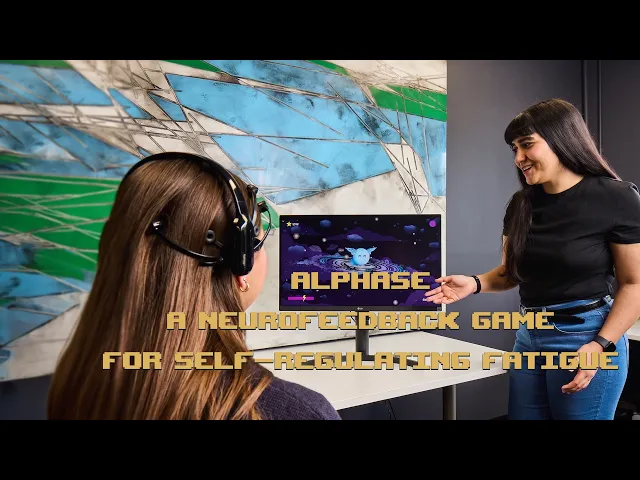
AlphaRise is an EEG-powered neurofeedback game created by student game designer Ned Shoaei as part of her MFA thesis.
Living with multiple sclerosis (MS) herself, Shoaei explored how narrative design, game systems, and neurofeedback could create therapeutic experiences.
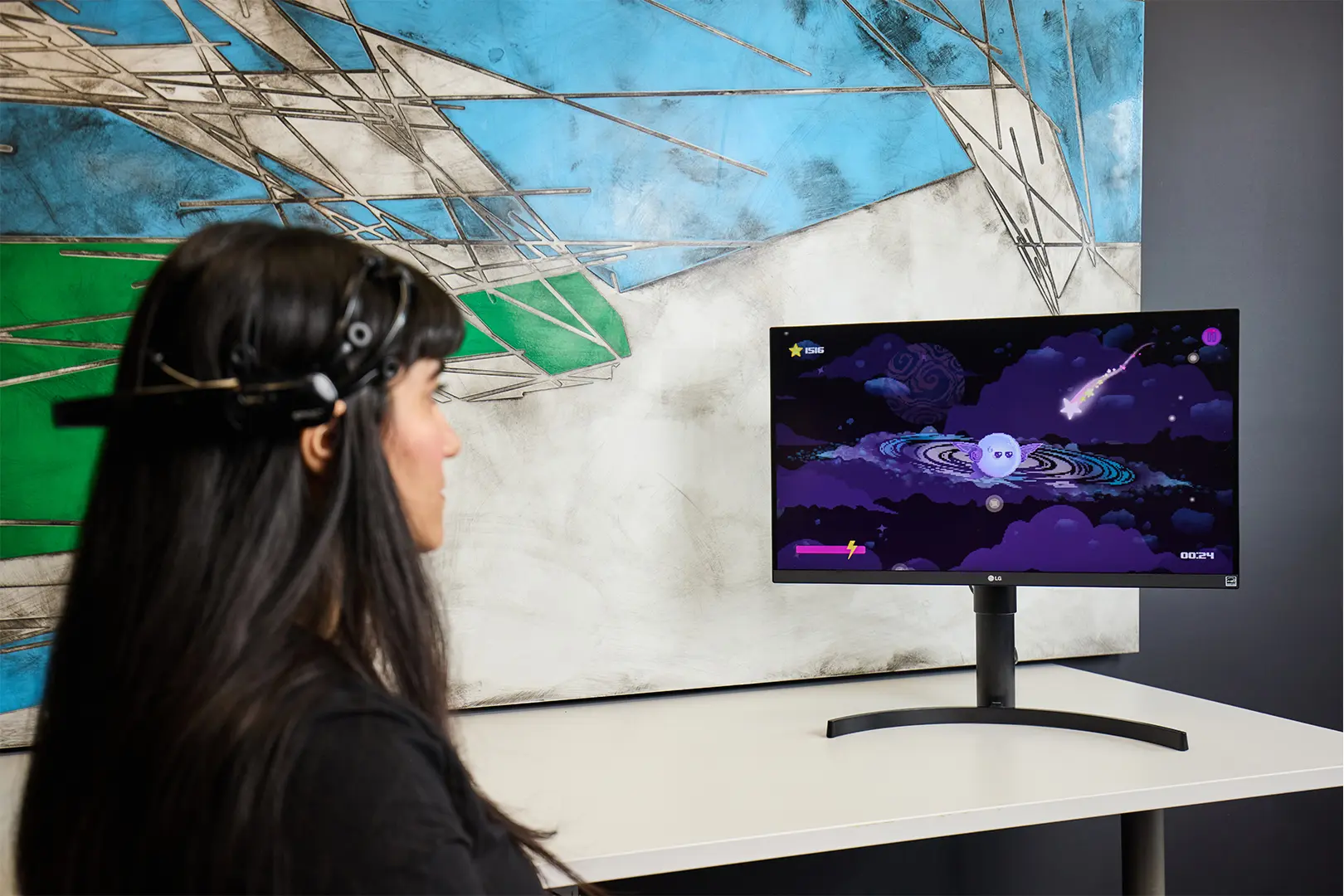
Built using the Emotiv Epoc X, AlphaRise investigates how real-time EEG can adapt gameplay based on fatigue-related brain activity.
The project demonstrates how accessible, research-grade EEG technology can support interdisciplinary innovation in healthcare and game design.
While additional clinical research is needed, AlphaRise highlights the growing role of neurotechnology in exploring new approaches to cognitive health.
Great Ideas Often Begin with Personal Experience
Innovation in neurotechnology often begins with a simple question: How can we improve people's lives?
For student game designer Ned Shoaei, that question was deeply personal. Living with multiple sclerosis (MS) herself, Shoaei explored how game design, neuroscience, and brain-computer interface technology could come together to create new therapeutic experiences. The result was AlphaRise, an EEG-powered neurofeedback game developed as part of her Master of Fine Arts thesis.
Built using the Emotiv Epoc X wireless EEG headset, AlphaRise explores how real-time brain activity can be incorporated into an adaptive gameplay experience designed to help people living with MS better manage fatigue.
Where Game Design Meets Neuroscience
Shoaei's background in game design shaped the project's direction.
Rather than approaching fatigue solely as a clinical challenge, her thesis explored how narrative design, game systems, and closed-loop neurofeedback could work together to create engaging therapeutic simulations. Drawing on principles of neuroplasticity and flow, AlphaRise responds dynamically to the player's brain activity, encouraging active participation rather than passive observation.
The project illustrates how creative disciplines such as game design can contribute meaningfully to healthcare innovation by making complex neuroscience concepts interactive and accessible.
Using EEG to Create Adaptive Experiences
AlphaRise uses the Emotiv Epoc X to measure EEG activity during gameplay, allowing the system to classify different fatigue-related cognitive states in real time.
As participants interact with the game, neurofeedback helps adapt the experience based on changes in brain activity. This closed-loop approach allows researchers to investigate how EEG-driven feedback may support cognitive engagement while creating an experience that is both scientifically informative and engaging for participants.
Presented at the Cedars-Sinai Virtual Medicine Conference (vMed 2026), AlphaRise demonstrates how research-grade wireless EEG can enable innovative applications that extend beyond traditional laboratory settings.
Empowering the Next Generation of Researchers
Projects like AlphaRise highlight another important trend in neurotechnology: accessible research tools are enabling students and emerging researchers to pursue ambitious interdisciplinary ideas.
By combining lived experience, creative design, and EEG technology, Shoaei's work demonstrates how today's students are helping shape tomorrow's research questions. As wireless neurotechnology becomes increasingly accessible, researchers from diverse backgrounds are finding new ways to investigate cognitive health, human-computer interaction, and therapeutic applications.
Looking Ahead
Although larger clinical studies will be important for evaluating long-term effectiveness, AlphaRise represents an encouraging example of how neuroscience, game design, and personal experience can come together to inspire new research directions.
We congratulate Ned Shoaei on this innovative work and look forward to following AlphaRise as the research continues. Learn more about AlphaRise.
Editor's Note
This article highlights AlphaRise, an academic research project inspired by reporting from Healio Neurology. While the project shows encouraging potential, additional clinical research is needed to evaluate long-term outcomes.
AlphaRise is an EEG-powered neurofeedback game created by student game designer Ned Shoaei as part of her MFA thesis.
Living with multiple sclerosis (MS) herself, Shoaei explored how narrative design, game systems, and neurofeedback could create therapeutic experiences.
Built using the Emotiv Epoc X, AlphaRise investigates how real-time EEG can adapt gameplay based on fatigue-related brain activity.
The project demonstrates how accessible, research-grade EEG technology can support interdisciplinary innovation in healthcare and game design.
While additional clinical research is needed, AlphaRise highlights the growing role of neurotechnology in exploring new approaches to cognitive health.
Great Ideas Often Begin with Personal Experience
Innovation in neurotechnology often begins with a simple question: How can we improve people's lives?
For student game designer Ned Shoaei, that question was deeply personal. Living with multiple sclerosis (MS) herself, Shoaei explored how game design, neuroscience, and brain-computer interface technology could come together to create new therapeutic experiences. The result was AlphaRise, an EEG-powered neurofeedback game developed as part of her Master of Fine Arts thesis.
Built using the Emotiv Epoc X wireless EEG headset, AlphaRise explores how real-time brain activity can be incorporated into an adaptive gameplay experience designed to help people living with MS better manage fatigue.
Where Game Design Meets Neuroscience
Shoaei's background in game design shaped the project's direction.
Rather than approaching fatigue solely as a clinical challenge, her thesis explored how narrative design, game systems, and closed-loop neurofeedback could work together to create engaging therapeutic simulations. Drawing on principles of neuroplasticity and flow, AlphaRise responds dynamically to the player's brain activity, encouraging active participation rather than passive observation.
The project illustrates how creative disciplines such as game design can contribute meaningfully to healthcare innovation by making complex neuroscience concepts interactive and accessible.
Using EEG to Create Adaptive Experiences
AlphaRise uses the Emotiv Epoc X to measure EEG activity during gameplay, allowing the system to classify different fatigue-related cognitive states in real time.
As participants interact with the game, neurofeedback helps adapt the experience based on changes in brain activity. This closed-loop approach allows researchers to investigate how EEG-driven feedback may support cognitive engagement while creating an experience that is both scientifically informative and engaging for participants.
Presented at the Cedars-Sinai Virtual Medicine Conference (vMed 2026), AlphaRise demonstrates how research-grade wireless EEG can enable innovative applications that extend beyond traditional laboratory settings.
Empowering the Next Generation of Researchers
Projects like AlphaRise highlight another important trend in neurotechnology: accessible research tools are enabling students and emerging researchers to pursue ambitious interdisciplinary ideas.
By combining lived experience, creative design, and EEG technology, Shoaei's work demonstrates how today's students are helping shape tomorrow's research questions. As wireless neurotechnology becomes increasingly accessible, researchers from diverse backgrounds are finding new ways to investigate cognitive health, human-computer interaction, and therapeutic applications.
Looking Ahead
Although larger clinical studies will be important for evaluating long-term effectiveness, AlphaRise represents an encouraging example of how neuroscience, game design, and personal experience can come together to inspire new research directions.
We congratulate Ned Shoaei on this innovative work and look forward to following AlphaRise as the research continues. Learn more about AlphaRise.
Editor's Note
This article highlights AlphaRise, an academic research project inspired by reporting from Healio Neurology. While the project shows encouraging potential, additional clinical research is needed to evaluate long-term outcomes.
AlphaRise is an EEG-powered neurofeedback game created by student game designer Ned Shoaei as part of her MFA thesis.
Living with multiple sclerosis (MS) herself, Shoaei explored how narrative design, game systems, and neurofeedback could create therapeutic experiences.
Built using the Emotiv Epoc X, AlphaRise investigates how real-time EEG can adapt gameplay based on fatigue-related brain activity.
The project demonstrates how accessible, research-grade EEG technology can support interdisciplinary innovation in healthcare and game design.
While additional clinical research is needed, AlphaRise highlights the growing role of neurotechnology in exploring new approaches to cognitive health.
Great Ideas Often Begin with Personal Experience
Innovation in neurotechnology often begins with a simple question: How can we improve people's lives?
For student game designer Ned Shoaei, that question was deeply personal. Living with multiple sclerosis (MS) herself, Shoaei explored how game design, neuroscience, and brain-computer interface technology could come together to create new therapeutic experiences. The result was AlphaRise, an EEG-powered neurofeedback game developed as part of her Master of Fine Arts thesis.
Built using the Emotiv Epoc X wireless EEG headset, AlphaRise explores how real-time brain activity can be incorporated into an adaptive gameplay experience designed to help people living with MS better manage fatigue.
Where Game Design Meets Neuroscience
Shoaei's background in game design shaped the project's direction.
Rather than approaching fatigue solely as a clinical challenge, her thesis explored how narrative design, game systems, and closed-loop neurofeedback could work together to create engaging therapeutic simulations. Drawing on principles of neuroplasticity and flow, AlphaRise responds dynamically to the player's brain activity, encouraging active participation rather than passive observation.
The project illustrates how creative disciplines such as game design can contribute meaningfully to healthcare innovation by making complex neuroscience concepts interactive and accessible.
Using EEG to Create Adaptive Experiences
AlphaRise uses the Emotiv Epoc X to measure EEG activity during gameplay, allowing the system to classify different fatigue-related cognitive states in real time.
As participants interact with the game, neurofeedback helps adapt the experience based on changes in brain activity. This closed-loop approach allows researchers to investigate how EEG-driven feedback may support cognitive engagement while creating an experience that is both scientifically informative and engaging for participants.
Presented at the Cedars-Sinai Virtual Medicine Conference (vMed 2026), AlphaRise demonstrates how research-grade wireless EEG can enable innovative applications that extend beyond traditional laboratory settings.
Empowering the Next Generation of Researchers
Projects like AlphaRise highlight another important trend in neurotechnology: accessible research tools are enabling students and emerging researchers to pursue ambitious interdisciplinary ideas.
By combining lived experience, creative design, and EEG technology, Shoaei's work demonstrates how today's students are helping shape tomorrow's research questions. As wireless neurotechnology becomes increasingly accessible, researchers from diverse backgrounds are finding new ways to investigate cognitive health, human-computer interaction, and therapeutic applications.
Looking Ahead
Although larger clinical studies will be important for evaluating long-term effectiveness, AlphaRise represents an encouraging example of how neuroscience, game design, and personal experience can come together to inspire new research directions.
We congratulate Ned Shoaei on this innovative work and look forward to following AlphaRise as the research continues. Learn more about AlphaRise.

Continue reading