UX Research Tools vs Neuromarketing: Improve UX Testing with Real-Time Insight
H.B. Duran
Updated on
Apr 1, 2026
UX Research Tools vs Neuromarketing: Improve UX Testing with Real-Time Insight
H.B. Duran
Updated on
Apr 1, 2026
UX Research Tools vs Neuromarketing: Improve UX Testing with Real-Time Insight
H.B. Duran
Updated on
Apr 1, 2026
UX research tools help teams understand user behavior—but they rarely explain it.
Most platforms show what users do or what they say. Fewer reveal how users actually experience content in the moment.
That gap becomes critical when you’re optimizing conversion, engagement, or usability at scale.
This guide breaks down where traditional UX research tools fall short—and how adding real-time experience data can improve UX testing outcomes.
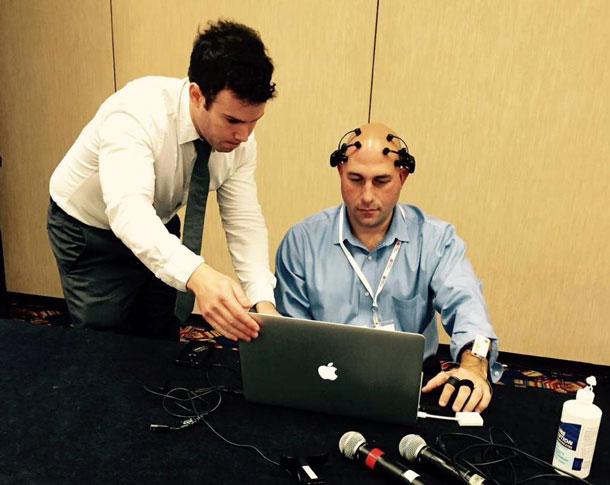
Featured image: A man wears an Emotiv Epoc X EEG headset in preparation of a UX testing session (User Experience Magazine, 2015).
What UX Research Tools Measure (and Miss)
UX research tools typically fall into three categories, each offering a partial view of user experience:
Behavioral UX Tools
Session recordings
Analytics platforms
A/B testing tools
What they show: User actions and outcomes
Best for: Identifying drop-offs, flows, and performance differences
Limitation: No visibility into why behavior happens
Self-Reported UX Tools
Surveys
User interviews
Remote usability testing
What they show: User opinions and perceptions
Best for: Understanding stated preferences
Limitation: Bias, memory gaps, and rationalization
Attention-Based Tools
Heatmaps
Eye tracking
Facial coding
What they show: Visual attention and engagement signals
Best for: Identifying focus areas
Limitation: Indirect measurement of internal experience
The Core Gap in UX Testing
Even when combined, these tools leave a blind spot:
Behavioral tools show what happened
Feedback tools show what users think happened
Attention tools show where users looked
None of them fully explain how users experienced the interaction in real time.
That missing layer often leads to inconclusive or misleading results.
Example:
A user focuses on a section (attention)
Says it was clear (feedback)
Still fails to complete a task (behavior)
Without understanding cognitive load or engagement at that moment, optimization decisions rely on guesswork.

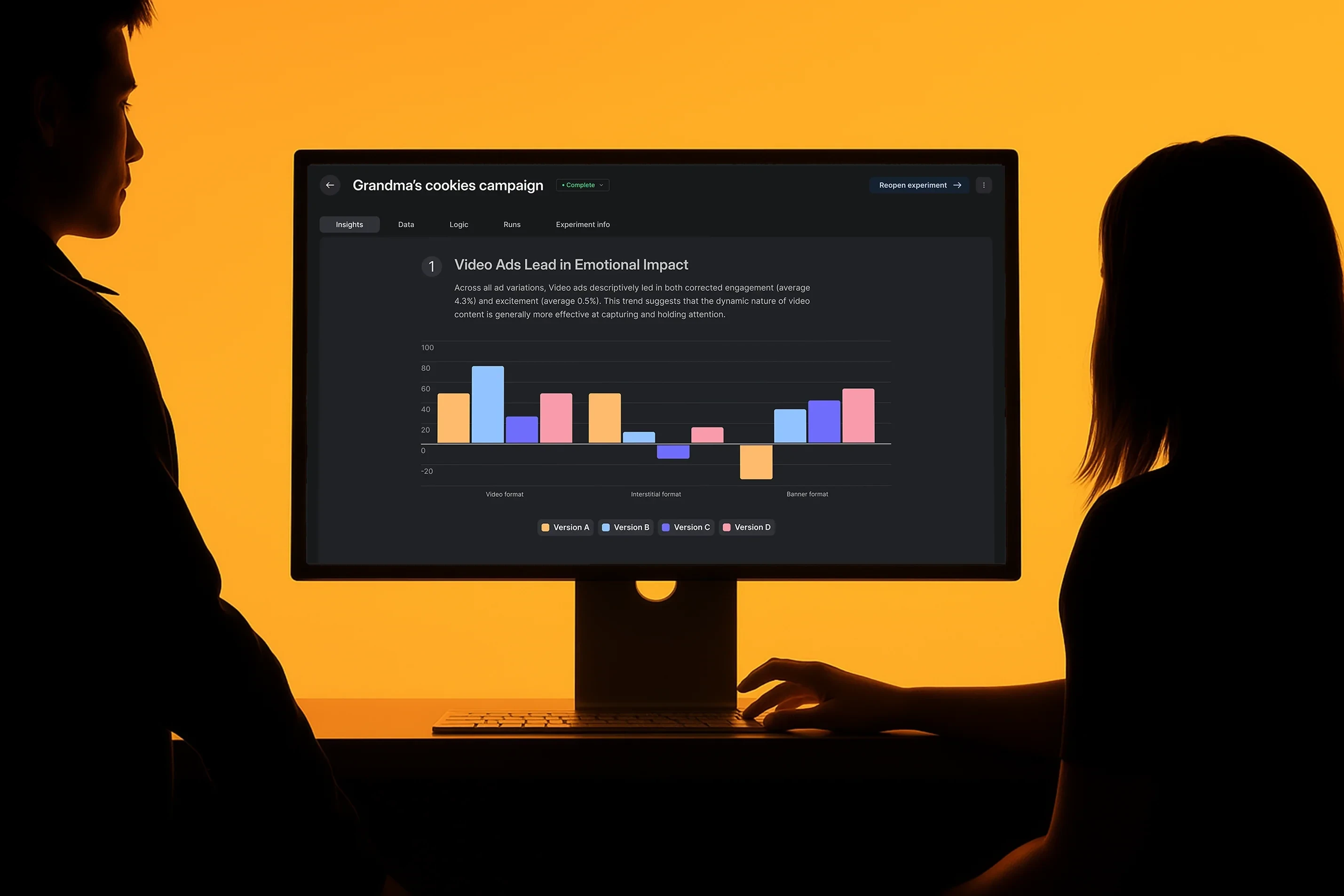
Above: Emotiv Studio interface displays the cognitive results of UX testing, revealing a hidden behavioral layer early in the development process.
Why Real-Time Experience Data Matters
To improve UX testing, teams need visibility into the drivers behind user behavior:
Cognitive load: How difficult content is to process
Engagement: Strength and consistency of attention
Emotional response: Positive or negative reactions
Focus: Stability of attention over time
These factors directly influence comprehension, usability, and conversion—but are largely invisible to traditional tools.
Where Neuromarketing Tools Add Value
Neuromarketing tools aim to capture subconscious responses using:
Facial expression analysis
Eye tracking
Behavioral proxies
While useful, these approaches often rely on inference—estimating internal states from external signals.
This introduces variability and limits precision, especially in high-stakes UX decisions.
Business executives are typically reluctant to support the incorporation of UX into system development processes because of its intangible nature. The ability to evaluate UX objectively has the potential to change the status quo. Future research will involve UX evaluation of interactive systems using traditional UX evaluation techniques and the Emotiv EPOC+ headset and compare their results. - Holman et al., 2024
A More Direct Approach: EEG-Based UX Insight
EEG (electroencephalography) provides a more direct way to measure user experience.
Instead of inferring reactions, EEG captures brain activity associated with:
Attention
Cognitive load
Emotional engagement
Emotiv Studio is the only all-in-one platform that translates this data into actionable metrics for UX testing without any neuroscience experience required.
This allows teams to understand not just outcomes—but the experience driving them.
Comparing UX Research Methods
Method | What It Measures | Strength | Limitation |
|---|---|---|---|
Behavioral tools | Actions | Clear outcomes | No context |
Feedback tools | Opinions | Direct input | Bias |
Attention tools | Focus | Subconscious signals | Indirect |
EEG-based insights | Real-time experience | Direct measurement | Previously complex, now accessible |
How to Improve UX Testing
High-performing teams combine multiple layers of insight:
Behavioral data to track outcomes
Feedback to understand perception
Experience data to explain real-time response
This approach reduces ambiguity and enables more confident optimization decisions.
From Surface Metrics to Real Insight
As UX testing matures, the limitation isn’t data volume—it’s data depth.
Relying on a single method leaves critical gaps in understanding.
Adding real-time experience data helps teams move beyond surface-level metrics and uncover what actually drives user behavior.
Unlock a More Complete UX Testing Approach
If you're evaluating UX research tools or refining your UX testing strategy, consider what each method measures—and what it misses.
Unlock real-time UX insight with Emotiv Studio
References
Holman, M., Alqahtani, F., & Alzahrani, A. (2024). Evaluation of intelligent and immersive digital applications using Emotiv Insight. Informatics in Medicine Unlocked, 48, 101531. https://doi.org/10.1016/j.imu.2024.101531
User Experience Magazine. (2015, April 9). The future of UX Research: Uncovering the true emotions of our users - user experience. User Experience - The Magazine of the UXPA. https://uxpamagazine.org/the-future-of-ux-research/
UX research tools help teams understand user behavior—but they rarely explain it.
Most platforms show what users do or what they say. Fewer reveal how users actually experience content in the moment.
That gap becomes critical when you’re optimizing conversion, engagement, or usability at scale.
This guide breaks down where traditional UX research tools fall short—and how adding real-time experience data can improve UX testing outcomes.
Featured image: A man wears an Emotiv Epoc X EEG headset in preparation of a UX testing session (User Experience Magazine, 2015).
What UX Research Tools Measure (and Miss)
UX research tools typically fall into three categories, each offering a partial view of user experience:
Behavioral UX Tools
Session recordings
Analytics platforms
A/B testing tools
What they show: User actions and outcomes
Best for: Identifying drop-offs, flows, and performance differences
Limitation: No visibility into why behavior happens
Self-Reported UX Tools
Surveys
User interviews
Remote usability testing
What they show: User opinions and perceptions
Best for: Understanding stated preferences
Limitation: Bias, memory gaps, and rationalization
Attention-Based Tools
Heatmaps
Eye tracking
Facial coding
What they show: Visual attention and engagement signals
Best for: Identifying focus areas
Limitation: Indirect measurement of internal experience
The Core Gap in UX Testing
Even when combined, these tools leave a blind spot:
Behavioral tools show what happened
Feedback tools show what users think happened
Attention tools show where users looked
None of them fully explain how users experienced the interaction in real time.
That missing layer often leads to inconclusive or misleading results.
Example:
A user focuses on a section (attention)
Says it was clear (feedback)
Still fails to complete a task (behavior)
Without understanding cognitive load or engagement at that moment, optimization decisions rely on guesswork.
Above: Emotiv Studio interface displays the cognitive results of UX testing, revealing a hidden behavioral layer early in the development process.
Why Real-Time Experience Data Matters
To improve UX testing, teams need visibility into the drivers behind user behavior:
Cognitive load: How difficult content is to process
Engagement: Strength and consistency of attention
Emotional response: Positive or negative reactions
Focus: Stability of attention over time
These factors directly influence comprehension, usability, and conversion—but are largely invisible to traditional tools.
Where Neuromarketing Tools Add Value
Neuromarketing tools aim to capture subconscious responses using:
Facial expression analysis
Eye tracking
Behavioral proxies
While useful, these approaches often rely on inference—estimating internal states from external signals.
This introduces variability and limits precision, especially in high-stakes UX decisions.
Business executives are typically reluctant to support the incorporation of UX into system development processes because of its intangible nature. The ability to evaluate UX objectively has the potential to change the status quo. Future research will involve UX evaluation of interactive systems using traditional UX evaluation techniques and the Emotiv EPOC+ headset and compare their results. - Holman et al., 2024
A More Direct Approach: EEG-Based UX Insight
EEG (electroencephalography) provides a more direct way to measure user experience.
Instead of inferring reactions, EEG captures brain activity associated with:
Attention
Cognitive load
Emotional engagement
Emotiv Studio is the only all-in-one platform that translates this data into actionable metrics for UX testing without any neuroscience experience required.
This allows teams to understand not just outcomes—but the experience driving them.
Comparing UX Research Methods
Method | What It Measures | Strength | Limitation |
|---|---|---|---|
Behavioral tools | Actions | Clear outcomes | No context |
Feedback tools | Opinions | Direct input | Bias |
Attention tools | Focus | Subconscious signals | Indirect |
EEG-based insights | Real-time experience | Direct measurement | Previously complex, now accessible |
How to Improve UX Testing
High-performing teams combine multiple layers of insight:
Behavioral data to track outcomes
Feedback to understand perception
Experience data to explain real-time response
This approach reduces ambiguity and enables more confident optimization decisions.
From Surface Metrics to Real Insight
As UX testing matures, the limitation isn’t data volume—it’s data depth.
Relying on a single method leaves critical gaps in understanding.
Adding real-time experience data helps teams move beyond surface-level metrics and uncover what actually drives user behavior.
Unlock a More Complete UX Testing Approach
If you're evaluating UX research tools or refining your UX testing strategy, consider what each method measures—and what it misses.
Unlock real-time UX insight with Emotiv Studio
References
Holman, M., Alqahtani, F., & Alzahrani, A. (2024). Evaluation of intelligent and immersive digital applications using Emotiv Insight. Informatics in Medicine Unlocked, 48, 101531. https://doi.org/10.1016/j.imu.2024.101531
User Experience Magazine. (2015, April 9). The future of UX Research: Uncovering the true emotions of our users - user experience. User Experience - The Magazine of the UXPA. https://uxpamagazine.org/the-future-of-ux-research/
UX research tools help teams understand user behavior—but they rarely explain it.
Most platforms show what users do or what they say. Fewer reveal how users actually experience content in the moment.
That gap becomes critical when you’re optimizing conversion, engagement, or usability at scale.
This guide breaks down where traditional UX research tools fall short—and how adding real-time experience data can improve UX testing outcomes.
Featured image: A man wears an Emotiv Epoc X EEG headset in preparation of a UX testing session (User Experience Magazine, 2015).
What UX Research Tools Measure (and Miss)
UX research tools typically fall into three categories, each offering a partial view of user experience:
Behavioral UX Tools
Session recordings
Analytics platforms
A/B testing tools
What they show: User actions and outcomes
Best for: Identifying drop-offs, flows, and performance differences
Limitation: No visibility into why behavior happens
Self-Reported UX Tools
Surveys
User interviews
Remote usability testing
What they show: User opinions and perceptions
Best for: Understanding stated preferences
Limitation: Bias, memory gaps, and rationalization
Attention-Based Tools
Heatmaps
Eye tracking
Facial coding
What they show: Visual attention and engagement signals
Best for: Identifying focus areas
Limitation: Indirect measurement of internal experience
The Core Gap in UX Testing
Even when combined, these tools leave a blind spot:
Behavioral tools show what happened
Feedback tools show what users think happened
Attention tools show where users looked
None of them fully explain how users experienced the interaction in real time.
That missing layer often leads to inconclusive or misleading results.
Example:
A user focuses on a section (attention)
Says it was clear (feedback)
Still fails to complete a task (behavior)
Without understanding cognitive load or engagement at that moment, optimization decisions rely on guesswork.
Above: Emotiv Studio interface displays the cognitive results of UX testing, revealing a hidden behavioral layer early in the development process.
Why Real-Time Experience Data Matters
To improve UX testing, teams need visibility into the drivers behind user behavior:
Cognitive load: How difficult content is to process
Engagement: Strength and consistency of attention
Emotional response: Positive or negative reactions
Focus: Stability of attention over time
These factors directly influence comprehension, usability, and conversion—but are largely invisible to traditional tools.
Where Neuromarketing Tools Add Value
Neuromarketing tools aim to capture subconscious responses using:
Facial expression analysis
Eye tracking
Behavioral proxies
While useful, these approaches often rely on inference—estimating internal states from external signals.
This introduces variability and limits precision, especially in high-stakes UX decisions.
Business executives are typically reluctant to support the incorporation of UX into system development processes because of its intangible nature. The ability to evaluate UX objectively has the potential to change the status quo. Future research will involve UX evaluation of interactive systems using traditional UX evaluation techniques and the Emotiv EPOC+ headset and compare their results. - Holman et al., 2024
A More Direct Approach: EEG-Based UX Insight
EEG (electroencephalography) provides a more direct way to measure user experience.
Instead of inferring reactions, EEG captures brain activity associated with:
Attention
Cognitive load
Emotional engagement
Emotiv Studio is the only all-in-one platform that translates this data into actionable metrics for UX testing without any neuroscience experience required.
This allows teams to understand not just outcomes—but the experience driving them.
Comparing UX Research Methods
Method | What It Measures | Strength | Limitation |
|---|---|---|---|
Behavioral tools | Actions | Clear outcomes | No context |
Feedback tools | Opinions | Direct input | Bias |
Attention tools | Focus | Subconscious signals | Indirect |
EEG-based insights | Real-time experience | Direct measurement | Previously complex, now accessible |
How to Improve UX Testing
High-performing teams combine multiple layers of insight:
Behavioral data to track outcomes
Feedback to understand perception
Experience data to explain real-time response
This approach reduces ambiguity and enables more confident optimization decisions.
From Surface Metrics to Real Insight
As UX testing matures, the limitation isn’t data volume—it’s data depth.
Relying on a single method leaves critical gaps in understanding.
Adding real-time experience data helps teams move beyond surface-level metrics and uncover what actually drives user behavior.
Unlock a More Complete UX Testing Approach
If you're evaluating UX research tools or refining your UX testing strategy, consider what each method measures—and what it misses.
Unlock real-time UX insight with Emotiv Studio
References
Holman, M., Alqahtani, F., & Alzahrani, A. (2024). Evaluation of intelligent and immersive digital applications using Emotiv Insight. Informatics in Medicine Unlocked, 48, 101531. https://doi.org/10.1016/j.imu.2024.101531
User Experience Magazine. (2015, April 9). The future of UX Research: Uncovering the true emotions of our users - user experience. User Experience - The Magazine of the UXPA. https://uxpamagazine.org/the-future-of-ux-research/