
The Ultimate Guide to User Engagement Measurement
H.B. Duran
Updated on
May 8, 2026
The Ultimate Guide to User Engagement Measurement
H.B. Duran
Updated on
May 8, 2026
The Ultimate Guide to User Engagement Measurement
H.B. Duran
Updated on
May 8, 2026
User engagement metrics are everywhere. Marketing dashboards track clicks and conversions. UX teams monitor scroll depth and heatmaps. Product teams analyze retention and feature adoption. But as digital experiences become more competitive, many organizations are discovering that traditional analytics only explain part of the customer journey.
A landing page may generate traffic but fail to hold attention. A video may achieve strong completion rates without improving recall. A product interface may appear visually polished while quietly increasing cognitive fatigue. In many cases, standard engagement metrics reveal what users did without explaining how they experienced the interaction.
That gap is driving growing interest in more advanced user engagement measurement strategies. Enterprise teams are increasingly combining behavioral analytics, UX research, eye tracking, and EEG-based neuroanalytics to better understand attention, cognitive load, emotional response, and decision-making across digital experiences.
This shift is changing how organizations evaluate UX design, landing pages, advertising performance, creative assets, and customer journeys.
Why Traditional User Engagement Metrics Are No Longer Enough
Most organizations already collect engagement data through platforms like Google Analytics, CRM systems, advertising dashboards, session replay tools, and heatmapping software. These tools provide valuable signals, including:
Click-through rate
Time on page
Scroll depth
Conversion rate
Bounce rate
Session duration
Video watch time
Return visits
These metrics are useful for identifying patterns, but they have important limitations.
For example:
High time on page may indicate engagement, or it may indicate confusion.
Frequent clicks may suggest curiosity, or they may reveal navigation friction.
Strong video completion rates may not translate into emotional impact or recall.
Low bounce rates may still coexist with weak conversion intent.
As customer experiences become more complex, organizations need ways to measure not just activity, but cognitive and emotional response.
That is especially important in environments where attention is limited and digital competition is intense.
The Shift Toward Attention-Based Analytics
Modern engagement research is increasingly focused on attention quality rather than interaction volume.
Instead of asking:
“Did the user click?”
Teams are now asking:
“What captured attention?”
“Where did cognitive overload occur?”
“Which moments created emotional engagement?”
“Where did attention drop off?”
This is particularly important in:
UX optimization
Landing page testing
Advertising performance analysis
Product design research
Packaging evaluation
Creative testing
Streaming and media experiences
E-commerce optimization
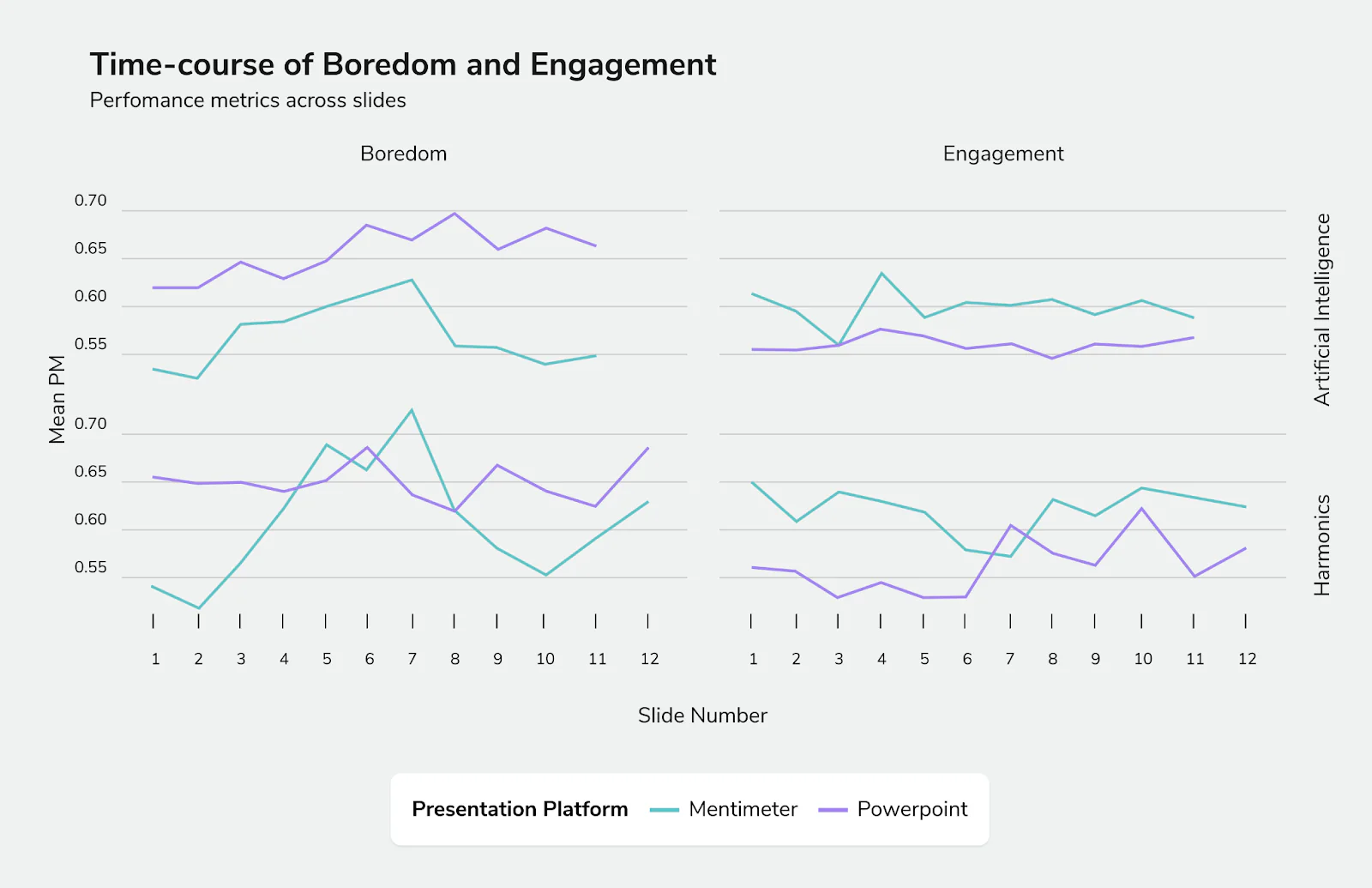
As a result, organizations are expanding beyond traditional analytics into multimodal research workflows.
Measuring User Engagement Across the Customer Journey
Different stages of the customer journey require different engagement measurement strategies.
Awareness Stage
At the awareness stage, organizations often focus on visibility and initial attention. Common goals include:
Capturing visual attention
Improving ad recall
Increasing message clarity
Reducing banner blindness
Enhancing creative impact
Metrics and methods may include:
Impressions
Scroll behavior
Eye-tracking heatmaps
Attention mapping
Video completion analysis
Brand recall testing
This is where visual saliency and first-impression neuroscience become especially important.
Consideration Stage
During the consideration stage, engagement becomes more cognitive. Users are evaluating information, comparing options, and processing decision-making factors.
Key questions include:
Is the interface easy to navigate?
Does the landing page reduce cognitive friction?
Are users overwhelmed by too many choices?
Which design elements hold attention?
Where does engagement decline?
This stage often benefits from combining:
UX testing
Session replay tools
Scroll depth analysis
Eye tracking
Cognitive load evaluation
Neuroanalytics research
Decision Stage
At the decision stage, organizations often need to understand what influences action and conversion.
This includes evaluating:
Trust signals
CTA visibility
Pricing clarity
Emotional engagement
Purchase hesitation
Decision fatigue
Behavioral analytics can identify where users abandon the process, but cognitive measurement can help explain why.
How Eye Tracking Improves User Engagement Research
Eye tracking has become one of the most widely used tools for evaluating visual engagement.
By measuring gaze behavior and fixation patterns, researchers can better understand:
Which elements attract attention
Which sections are ignored
Whether users notice calls to action
How users scan landing pages
Whether visual hierarchy supports usability
Eye-tracking heatmaps are especially useful for evaluating:
Landing pages
Advertising creative
Product packaging
Retail displays
Mobile interfaces
Navigation systems
For example, if users consistently ignore a CTA button or pricing section, teams can redesign the layout before investing additional advertising spend.
However, eye tracking primarily measures visual attention. It does not fully explain emotional response or cognitive effort.
That is why many organizations combine eye tracking with EEG-based engagement measurement.
Using EEG to Measure Cognitive Engagement
EEG-based research adds another layer to user engagement analysis by measuring electrical brain activity during digital interactions.
This allows researchers to study patterns associated with:
Attention
Cognitive load
Emotional engagement
Mental fatigue
Frustration
Information processing
For enterprise teams, EEG can help identify moments where users become mentally overloaded, disengaged, or emotionally responsive.
This is especially useful in environments where subtle design changes influence user behavior.
Examples include:
Landing page optimization
Ad testing
Streaming content analysis
Product interface research
Packaging evaluation
Digital onboarding flows
Interactive experiences
Because many user reactions occur subconsciously, EEG research can provide insights that traditional surveys or interviews may miss.
Measuring Cognitive Load in UX Research
Cognitive load has become a major focus in user engagement optimization.
Many digital experiences unintentionally create mental fatigue through:
Dense layouts
Poor navigation
Excessive options
Competing visual elements
Unclear messaging
Complex checkout flows
These issues may not always appear in standard analytics dashboards, but they can significantly impact conversion and retention.
For example:
A user may continue scrolling because they cannot find the answer they need.
A customer may hesitate during checkout because pricing information is unclear.
A landing page may attract clicks while creating decision fatigue.
Measuring cognitive load helps teams identify friction points before they affect revenue outcomes.
User Engagement Measurement for Landing Page Optimization
Landing page optimization is one of the clearest applications of advanced engagement measurement.
Traditional A/B testing often focuses on conversion rates alone, but conversion data does not explain how users experienced the page.
Modern engagement analysis can help answer questions such as:
Which sections attract attention first?
Where does visual engagement decline?
Which elements create cognitive friction?
Does the CTA stand out clearly?
Is the messaging emotionally engaging?
Which layout reduces decision fatigue?
By combining behavioral analytics with neuroanalytics and visual attention testing, organizations can optimize landing pages more strategically.
User Engagement Measurement for Advertising and Creative Testing
Creative teams are increasingly using engagement measurement to evaluate advertising performance before large-scale media deployment.
This includes testing:
Video ads
Social creative
Display banners
Product visuals
Brand messaging
Motion graphics
Rather than relying entirely on self-reported feedback, organizations can analyze:
Attention retention
Emotional response
Cognitive engagement
Visual focus
Brand recall indicators
This helps teams refine creative assets before launch, reducing wasted ad spend and improving campaign effectiveness.
User Engagement Measurement for Product and Packaging Design
In retail and e-commerce environments, attention is limited and competition is intense.
Packaging and product presentation often influence decisions within seconds.
Engagement measurement can help brands evaluate:
Shelf impact
Visual hierarchy
Packaging readability
Brand recognition
Product discoverability
Emotional response
Purchase intent signals
By studying both behavioral and cognitive engagement, teams can better understand how consumers interact with packaging in real-world environments.
Why Enterprise Teams Are Expanding Beyond Surveys
Traditional surveys and interviews remain useful, but they have limitations.
Users may:
forget details,
rationalize decisions after the fact,
struggle to describe subconscious reactions,
or provide socially desirable responses.
As a result, many organizations are moving toward passive engagement measurement methods that capture response signals in real time.
This includes:
eye tracking,
behavioral analytics,
EEG,
biometric measurement,
and neuroanalytics platforms.
These methods provide additional context that helps organizations interpret user behavior more accurately.
Building a Modern User Engagement Measurement Strategy
Organizations that want deeper engagement insights are increasingly adopting layered research models.
These workflows often combine:
Behavioral analytics
UX testing
Heatmaps
Session replay
Eye tracking
EEG-based neuroanalytics
Conversion analysis
Customer journey research
This creates a more complete understanding of how users experience digital interactions across awareness, consideration, and conversion stages.
The goal is no longer just to measure clicks.
The goal is to understand:
attention,
cognitive effort,
emotional response,
and decision-making behavior.
Applying Neuroanalytics to User Engagement Research
As organizations compete for limited attention across digital channels, many teams are expanding beyond traditional analytics to better understand how users actually experience content, interfaces, and marketing campaigns.
Modern neuromarketing research combines behavioral analytics, UX testing, eye tracking, and EEG-based neuroanalytics to evaluate attention, cognitive load, emotional response, and decision-making throughout the customer journey.
This approach can support a wide range of enterprise use cases, including:
Landing page optimization
Advertising and creative testing
Packaging evaluation
UX and interface research
Audience engagement analysis
Media and entertainment testing
Consumer attention measurement
Rather than relying entirely on self-reported feedback, neuroanalytics helps organizations measure engagement signals in real time, providing additional insight into how audiences respond to digital and physical experiences.
Teams exploring advanced engagement measurement strategies can learn more about enterprise neuromarketing research and applied neuroscience workflows through Emotiv Neuromarketing Solutions.
The Future of User Engagement Measurement
User engagement measurement is evolving from simple interaction tracking into a broader analysis of human attention and cognition.
As organizations compete for increasingly fragmented attention, understanding how users experience digital environments is becoming a strategic advantage.
The future of engagement research will likely combine:
Behavioral analytics
AI-assisted analysis
Eye tracking
EEG-based neuroanalytics
Cognitive load measurement
Emotional response analysis
Real-time engagement modeling
For marketers, UX researchers, designers, and enterprise teams, the challenge is no longer collecting data.
It is interpreting the human experience behind the data.
Conclusion
User engagement measurement is evolving beyond clicks, scroll depth, and conversion tracking. As digital experiences become more competitive, organizations increasingly need to understand not only what users do, but how they experience interactions cognitively and emotionally.
By combining behavioral analytics with methods such as eye tracking, UX research, and neuroanalytics, teams can gain deeper insight into attention, cognitive load, emotional engagement, and decision-making across the customer journey.
This shift is helping marketers, UX researchers, and enterprise teams move from surface-level reporting toward more advanced engagement optimization strategies grounded in real audience response.
For organizations exploring applied neuroscience and audience measurement, neuromarketing research provides a growing framework for understanding engagement in real time across digital experiences, advertising, interfaces, and media environments.
User engagement metrics are everywhere. Marketing dashboards track clicks and conversions. UX teams monitor scroll depth and heatmaps. Product teams analyze retention and feature adoption. But as digital experiences become more competitive, many organizations are discovering that traditional analytics only explain part of the customer journey.
A landing page may generate traffic but fail to hold attention. A video may achieve strong completion rates without improving recall. A product interface may appear visually polished while quietly increasing cognitive fatigue. In many cases, standard engagement metrics reveal what users did without explaining how they experienced the interaction.
That gap is driving growing interest in more advanced user engagement measurement strategies. Enterprise teams are increasingly combining behavioral analytics, UX research, eye tracking, and EEG-based neuroanalytics to better understand attention, cognitive load, emotional response, and decision-making across digital experiences.
This shift is changing how organizations evaluate UX design, landing pages, advertising performance, creative assets, and customer journeys.
Why Traditional User Engagement Metrics Are No Longer Enough
Most organizations already collect engagement data through platforms like Google Analytics, CRM systems, advertising dashboards, session replay tools, and heatmapping software. These tools provide valuable signals, including:
Click-through rate
Time on page
Scroll depth
Conversion rate
Bounce rate
Session duration
Video watch time
Return visits
These metrics are useful for identifying patterns, but they have important limitations.
For example:
High time on page may indicate engagement, or it may indicate confusion.
Frequent clicks may suggest curiosity, or they may reveal navigation friction.
Strong video completion rates may not translate into emotional impact or recall.
Low bounce rates may still coexist with weak conversion intent.
As customer experiences become more complex, organizations need ways to measure not just activity, but cognitive and emotional response.
That is especially important in environments where attention is limited and digital competition is intense.
The Shift Toward Attention-Based Analytics
Modern engagement research is increasingly focused on attention quality rather than interaction volume.
Instead of asking:
“Did the user click?”
Teams are now asking:
“What captured attention?”
“Where did cognitive overload occur?”
“Which moments created emotional engagement?”
“Where did attention drop off?”
This is particularly important in:
UX optimization
Landing page testing
Advertising performance analysis
Product design research
Packaging evaluation
Creative testing
Streaming and media experiences
E-commerce optimization
As a result, organizations are expanding beyond traditional analytics into multimodal research workflows.
Measuring User Engagement Across the Customer Journey
Different stages of the customer journey require different engagement measurement strategies.
Awareness Stage
At the awareness stage, organizations often focus on visibility and initial attention. Common goals include:
Capturing visual attention
Improving ad recall
Increasing message clarity
Reducing banner blindness
Enhancing creative impact
Metrics and methods may include:
Impressions
Scroll behavior
Eye-tracking heatmaps
Attention mapping
Video completion analysis
Brand recall testing
This is where visual saliency and first-impression neuroscience become especially important.
Consideration Stage
During the consideration stage, engagement becomes more cognitive. Users are evaluating information, comparing options, and processing decision-making factors.
Key questions include:
Is the interface easy to navigate?
Does the landing page reduce cognitive friction?
Are users overwhelmed by too many choices?
Which design elements hold attention?
Where does engagement decline?
This stage often benefits from combining:
UX testing
Session replay tools
Scroll depth analysis
Eye tracking
Cognitive load evaluation
Neuroanalytics research
Decision Stage
At the decision stage, organizations often need to understand what influences action and conversion.
This includes evaluating:
Trust signals
CTA visibility
Pricing clarity
Emotional engagement
Purchase hesitation
Decision fatigue
Behavioral analytics can identify where users abandon the process, but cognitive measurement can help explain why.
How Eye Tracking Improves User Engagement Research
Eye tracking has become one of the most widely used tools for evaluating visual engagement.
By measuring gaze behavior and fixation patterns, researchers can better understand:
Which elements attract attention
Which sections are ignored
Whether users notice calls to action
How users scan landing pages
Whether visual hierarchy supports usability
Eye-tracking heatmaps are especially useful for evaluating:
Landing pages
Advertising creative
Product packaging
Retail displays
Mobile interfaces
Navigation systems
For example, if users consistently ignore a CTA button or pricing section, teams can redesign the layout before investing additional advertising spend.
However, eye tracking primarily measures visual attention. It does not fully explain emotional response or cognitive effort.
That is why many organizations combine eye tracking with EEG-based engagement measurement.
Using EEG to Measure Cognitive Engagement
EEG-based research adds another layer to user engagement analysis by measuring electrical brain activity during digital interactions.
This allows researchers to study patterns associated with:
Attention
Cognitive load
Emotional engagement
Mental fatigue
Frustration
Information processing
For enterprise teams, EEG can help identify moments where users become mentally overloaded, disengaged, or emotionally responsive.
This is especially useful in environments where subtle design changes influence user behavior.
Examples include:
Landing page optimization
Ad testing
Streaming content analysis
Product interface research
Packaging evaluation
Digital onboarding flows
Interactive experiences
Because many user reactions occur subconsciously, EEG research can provide insights that traditional surveys or interviews may miss.
Measuring Cognitive Load in UX Research
Cognitive load has become a major focus in user engagement optimization.
Many digital experiences unintentionally create mental fatigue through:
Dense layouts
Poor navigation
Excessive options
Competing visual elements
Unclear messaging
Complex checkout flows
These issues may not always appear in standard analytics dashboards, but they can significantly impact conversion and retention.
For example:
A user may continue scrolling because they cannot find the answer they need.
A customer may hesitate during checkout because pricing information is unclear.
A landing page may attract clicks while creating decision fatigue.
Measuring cognitive load helps teams identify friction points before they affect revenue outcomes.
User Engagement Measurement for Landing Page Optimization
Landing page optimization is one of the clearest applications of advanced engagement measurement.
Traditional A/B testing often focuses on conversion rates alone, but conversion data does not explain how users experienced the page.
Modern engagement analysis can help answer questions such as:
Which sections attract attention first?
Where does visual engagement decline?
Which elements create cognitive friction?
Does the CTA stand out clearly?
Is the messaging emotionally engaging?
Which layout reduces decision fatigue?
By combining behavioral analytics with neuroanalytics and visual attention testing, organizations can optimize landing pages more strategically.
User Engagement Measurement for Advertising and Creative Testing
Creative teams are increasingly using engagement measurement to evaluate advertising performance before large-scale media deployment.
This includes testing:
Video ads
Social creative
Display banners
Product visuals
Brand messaging
Motion graphics
Rather than relying entirely on self-reported feedback, organizations can analyze:
Attention retention
Emotional response
Cognitive engagement
Visual focus
Brand recall indicators
This helps teams refine creative assets before launch, reducing wasted ad spend and improving campaign effectiveness.
User Engagement Measurement for Product and Packaging Design
In retail and e-commerce environments, attention is limited and competition is intense.
Packaging and product presentation often influence decisions within seconds.
Engagement measurement can help brands evaluate:
Shelf impact
Visual hierarchy
Packaging readability
Brand recognition
Product discoverability
Emotional response
Purchase intent signals
By studying both behavioral and cognitive engagement, teams can better understand how consumers interact with packaging in real-world environments.
Why Enterprise Teams Are Expanding Beyond Surveys
Traditional surveys and interviews remain useful, but they have limitations.
Users may:
forget details,
rationalize decisions after the fact,
struggle to describe subconscious reactions,
or provide socially desirable responses.
As a result, many organizations are moving toward passive engagement measurement methods that capture response signals in real time.
This includes:
eye tracking,
behavioral analytics,
EEG,
biometric measurement,
and neuroanalytics platforms.
These methods provide additional context that helps organizations interpret user behavior more accurately.
Building a Modern User Engagement Measurement Strategy
Organizations that want deeper engagement insights are increasingly adopting layered research models.
These workflows often combine:
Behavioral analytics
UX testing
Heatmaps
Session replay
Eye tracking
EEG-based neuroanalytics
Conversion analysis
Customer journey research
This creates a more complete understanding of how users experience digital interactions across awareness, consideration, and conversion stages.
The goal is no longer just to measure clicks.
The goal is to understand:
attention,
cognitive effort,
emotional response,
and decision-making behavior.
Applying Neuroanalytics to User Engagement Research
As organizations compete for limited attention across digital channels, many teams are expanding beyond traditional analytics to better understand how users actually experience content, interfaces, and marketing campaigns.
Modern neuromarketing research combines behavioral analytics, UX testing, eye tracking, and EEG-based neuroanalytics to evaluate attention, cognitive load, emotional response, and decision-making throughout the customer journey.
This approach can support a wide range of enterprise use cases, including:
Landing page optimization
Advertising and creative testing
Packaging evaluation
UX and interface research
Audience engagement analysis
Media and entertainment testing
Consumer attention measurement
Rather than relying entirely on self-reported feedback, neuroanalytics helps organizations measure engagement signals in real time, providing additional insight into how audiences respond to digital and physical experiences.
Teams exploring advanced engagement measurement strategies can learn more about enterprise neuromarketing research and applied neuroscience workflows through Emotiv Neuromarketing Solutions.
The Future of User Engagement Measurement
User engagement measurement is evolving from simple interaction tracking into a broader analysis of human attention and cognition.
As organizations compete for increasingly fragmented attention, understanding how users experience digital environments is becoming a strategic advantage.
The future of engagement research will likely combine:
Behavioral analytics
AI-assisted analysis
Eye tracking
EEG-based neuroanalytics
Cognitive load measurement
Emotional response analysis
Real-time engagement modeling
For marketers, UX researchers, designers, and enterprise teams, the challenge is no longer collecting data.
It is interpreting the human experience behind the data.
Conclusion
User engagement measurement is evolving beyond clicks, scroll depth, and conversion tracking. As digital experiences become more competitive, organizations increasingly need to understand not only what users do, but how they experience interactions cognitively and emotionally.
By combining behavioral analytics with methods such as eye tracking, UX research, and neuroanalytics, teams can gain deeper insight into attention, cognitive load, emotional engagement, and decision-making across the customer journey.
This shift is helping marketers, UX researchers, and enterprise teams move from surface-level reporting toward more advanced engagement optimization strategies grounded in real audience response.
For organizations exploring applied neuroscience and audience measurement, neuromarketing research provides a growing framework for understanding engagement in real time across digital experiences, advertising, interfaces, and media environments.
User engagement metrics are everywhere. Marketing dashboards track clicks and conversions. UX teams monitor scroll depth and heatmaps. Product teams analyze retention and feature adoption. But as digital experiences become more competitive, many organizations are discovering that traditional analytics only explain part of the customer journey.
A landing page may generate traffic but fail to hold attention. A video may achieve strong completion rates without improving recall. A product interface may appear visually polished while quietly increasing cognitive fatigue. In many cases, standard engagement metrics reveal what users did without explaining how they experienced the interaction.
That gap is driving growing interest in more advanced user engagement measurement strategies. Enterprise teams are increasingly combining behavioral analytics, UX research, eye tracking, and EEG-based neuroanalytics to better understand attention, cognitive load, emotional response, and decision-making across digital experiences.
This shift is changing how organizations evaluate UX design, landing pages, advertising performance, creative assets, and customer journeys.
Why Traditional User Engagement Metrics Are No Longer Enough
Most organizations already collect engagement data through platforms like Google Analytics, CRM systems, advertising dashboards, session replay tools, and heatmapping software. These tools provide valuable signals, including:
Click-through rate
Time on page
Scroll depth
Conversion rate
Bounce rate
Session duration
Video watch time
Return visits
These metrics are useful for identifying patterns, but they have important limitations.
For example:
High time on page may indicate engagement, or it may indicate confusion.
Frequent clicks may suggest curiosity, or they may reveal navigation friction.
Strong video completion rates may not translate into emotional impact or recall.
Low bounce rates may still coexist with weak conversion intent.
As customer experiences become more complex, organizations need ways to measure not just activity, but cognitive and emotional response.
That is especially important in environments where attention is limited and digital competition is intense.
The Shift Toward Attention-Based Analytics
Modern engagement research is increasingly focused on attention quality rather than interaction volume.
Instead of asking:
“Did the user click?”
Teams are now asking:
“What captured attention?”
“Where did cognitive overload occur?”
“Which moments created emotional engagement?”
“Where did attention drop off?”
This is particularly important in:
UX optimization
Landing page testing
Advertising performance analysis
Product design research
Packaging evaluation
Creative testing
Streaming and media experiences
E-commerce optimization
As a result, organizations are expanding beyond traditional analytics into multimodal research workflows.
Measuring User Engagement Across the Customer Journey
Different stages of the customer journey require different engagement measurement strategies.
Awareness Stage
At the awareness stage, organizations often focus on visibility and initial attention. Common goals include:
Capturing visual attention
Improving ad recall
Increasing message clarity
Reducing banner blindness
Enhancing creative impact
Metrics and methods may include:
Impressions
Scroll behavior
Eye-tracking heatmaps
Attention mapping
Video completion analysis
Brand recall testing
This is where visual saliency and first-impression neuroscience become especially important.
Consideration Stage
During the consideration stage, engagement becomes more cognitive. Users are evaluating information, comparing options, and processing decision-making factors.
Key questions include:
Is the interface easy to navigate?
Does the landing page reduce cognitive friction?
Are users overwhelmed by too many choices?
Which design elements hold attention?
Where does engagement decline?
This stage often benefits from combining:
UX testing
Session replay tools
Scroll depth analysis
Eye tracking
Cognitive load evaluation
Neuroanalytics research
Decision Stage
At the decision stage, organizations often need to understand what influences action and conversion.
This includes evaluating:
Trust signals
CTA visibility
Pricing clarity
Emotional engagement
Purchase hesitation
Decision fatigue
Behavioral analytics can identify where users abandon the process, but cognitive measurement can help explain why.
How Eye Tracking Improves User Engagement Research
Eye tracking has become one of the most widely used tools for evaluating visual engagement.
By measuring gaze behavior and fixation patterns, researchers can better understand:
Which elements attract attention
Which sections are ignored
Whether users notice calls to action
How users scan landing pages
Whether visual hierarchy supports usability
Eye-tracking heatmaps are especially useful for evaluating:
Landing pages
Advertising creative
Product packaging
Retail displays
Mobile interfaces
Navigation systems
For example, if users consistently ignore a CTA button or pricing section, teams can redesign the layout before investing additional advertising spend.
However, eye tracking primarily measures visual attention. It does not fully explain emotional response or cognitive effort.
That is why many organizations combine eye tracking with EEG-based engagement measurement.
Using EEG to Measure Cognitive Engagement
EEG-based research adds another layer to user engagement analysis by measuring electrical brain activity during digital interactions.
This allows researchers to study patterns associated with:
Attention
Cognitive load
Emotional engagement
Mental fatigue
Frustration
Information processing
For enterprise teams, EEG can help identify moments where users become mentally overloaded, disengaged, or emotionally responsive.
This is especially useful in environments where subtle design changes influence user behavior.
Examples include:
Landing page optimization
Ad testing
Streaming content analysis
Product interface research
Packaging evaluation
Digital onboarding flows
Interactive experiences
Because many user reactions occur subconsciously, EEG research can provide insights that traditional surveys or interviews may miss.
Measuring Cognitive Load in UX Research
Cognitive load has become a major focus in user engagement optimization.
Many digital experiences unintentionally create mental fatigue through:
Dense layouts
Poor navigation
Excessive options
Competing visual elements
Unclear messaging
Complex checkout flows
These issues may not always appear in standard analytics dashboards, but they can significantly impact conversion and retention.
For example:
A user may continue scrolling because they cannot find the answer they need.
A customer may hesitate during checkout because pricing information is unclear.
A landing page may attract clicks while creating decision fatigue.
Measuring cognitive load helps teams identify friction points before they affect revenue outcomes.
User Engagement Measurement for Landing Page Optimization
Landing page optimization is one of the clearest applications of advanced engagement measurement.
Traditional A/B testing often focuses on conversion rates alone, but conversion data does not explain how users experienced the page.
Modern engagement analysis can help answer questions such as:
Which sections attract attention first?
Where does visual engagement decline?
Which elements create cognitive friction?
Does the CTA stand out clearly?
Is the messaging emotionally engaging?
Which layout reduces decision fatigue?
By combining behavioral analytics with neuroanalytics and visual attention testing, organizations can optimize landing pages more strategically.
User Engagement Measurement for Advertising and Creative Testing
Creative teams are increasingly using engagement measurement to evaluate advertising performance before large-scale media deployment.
This includes testing:
Video ads
Social creative
Display banners
Product visuals
Brand messaging
Motion graphics
Rather than relying entirely on self-reported feedback, organizations can analyze:
Attention retention
Emotional response
Cognitive engagement
Visual focus
Brand recall indicators
This helps teams refine creative assets before launch, reducing wasted ad spend and improving campaign effectiveness.
User Engagement Measurement for Product and Packaging Design
In retail and e-commerce environments, attention is limited and competition is intense.
Packaging and product presentation often influence decisions within seconds.
Engagement measurement can help brands evaluate:
Shelf impact
Visual hierarchy
Packaging readability
Brand recognition
Product discoverability
Emotional response
Purchase intent signals
By studying both behavioral and cognitive engagement, teams can better understand how consumers interact with packaging in real-world environments.
Why Enterprise Teams Are Expanding Beyond Surveys
Traditional surveys and interviews remain useful, but they have limitations.
Users may:
forget details,
rationalize decisions after the fact,
struggle to describe subconscious reactions,
or provide socially desirable responses.
As a result, many organizations are moving toward passive engagement measurement methods that capture response signals in real time.
This includes:
eye tracking,
behavioral analytics,
EEG,
biometric measurement,
and neuroanalytics platforms.
These methods provide additional context that helps organizations interpret user behavior more accurately.
Building a Modern User Engagement Measurement Strategy
Organizations that want deeper engagement insights are increasingly adopting layered research models.
These workflows often combine:
Behavioral analytics
UX testing
Heatmaps
Session replay
Eye tracking
EEG-based neuroanalytics
Conversion analysis
Customer journey research
This creates a more complete understanding of how users experience digital interactions across awareness, consideration, and conversion stages.
The goal is no longer just to measure clicks.
The goal is to understand:
attention,
cognitive effort,
emotional response,
and decision-making behavior.
Applying Neuroanalytics to User Engagement Research
As organizations compete for limited attention across digital channels, many teams are expanding beyond traditional analytics to better understand how users actually experience content, interfaces, and marketing campaigns.
Modern neuromarketing research combines behavioral analytics, UX testing, eye tracking, and EEG-based neuroanalytics to evaluate attention, cognitive load, emotional response, and decision-making throughout the customer journey.
This approach can support a wide range of enterprise use cases, including:
Landing page optimization
Advertising and creative testing
Packaging evaluation
UX and interface research
Audience engagement analysis
Media and entertainment testing
Consumer attention measurement
Rather than relying entirely on self-reported feedback, neuroanalytics helps organizations measure engagement signals in real time, providing additional insight into how audiences respond to digital and physical experiences.
Teams exploring advanced engagement measurement strategies can learn more about enterprise neuromarketing research and applied neuroscience workflows through Emotiv Neuromarketing Solutions.
The Future of User Engagement Measurement
User engagement measurement is evolving from simple interaction tracking into a broader analysis of human attention and cognition.
As organizations compete for increasingly fragmented attention, understanding how users experience digital environments is becoming a strategic advantage.
The future of engagement research will likely combine:
Behavioral analytics
AI-assisted analysis
Eye tracking
EEG-based neuroanalytics
Cognitive load measurement
Emotional response analysis
Real-time engagement modeling
For marketers, UX researchers, designers, and enterprise teams, the challenge is no longer collecting data.
It is interpreting the human experience behind the data.
Conclusion
User engagement measurement is evolving beyond clicks, scroll depth, and conversion tracking. As digital experiences become more competitive, organizations increasingly need to understand not only what users do, but how they experience interactions cognitively and emotionally.
By combining behavioral analytics with methods such as eye tracking, UX research, and neuroanalytics, teams can gain deeper insight into attention, cognitive load, emotional engagement, and decision-making across the customer journey.
This shift is helping marketers, UX researchers, and enterprise teams move from surface-level reporting toward more advanced engagement optimization strategies grounded in real audience response.
For organizations exploring applied neuroscience and audience measurement, neuromarketing research provides a growing framework for understanding engagement in real time across digital experiences, advertising, interfaces, and media environments.