
How EEG Measures Consumer Reactions to Print Advertising
H.B. Duran
Updated on
Jun 11, 2026
How EEG Measures Consumer Reactions to Print Advertising
H.B. Duran
Updated on
Jun 11, 2026
How EEG Measures Consumer Reactions to Print Advertising
H.B. Duran
Updated on
Jun 11, 2026
Print advertising remains a valuable channel for brands seeking to build awareness, influence perception, and drive consideration across magazines, newspapers, direct mail, out-of-home placements, and premium publications. Yet for marketing agencies and media publishers, one challenge persists: understanding how consumers actually react while viewing a print advertisement.
Most print advertising evaluation relies on post-exposure surveys, recall studies, readership metrics, or campaign performance data. While these methods help assess outcomes, they provide limited visibility into the moment-by-moment cognitive processes that occur during ad exposure. As competition for consumer attention intensifies, marketers increasingly need tools that reveal not only whether an advertisement worked, but why it worked.
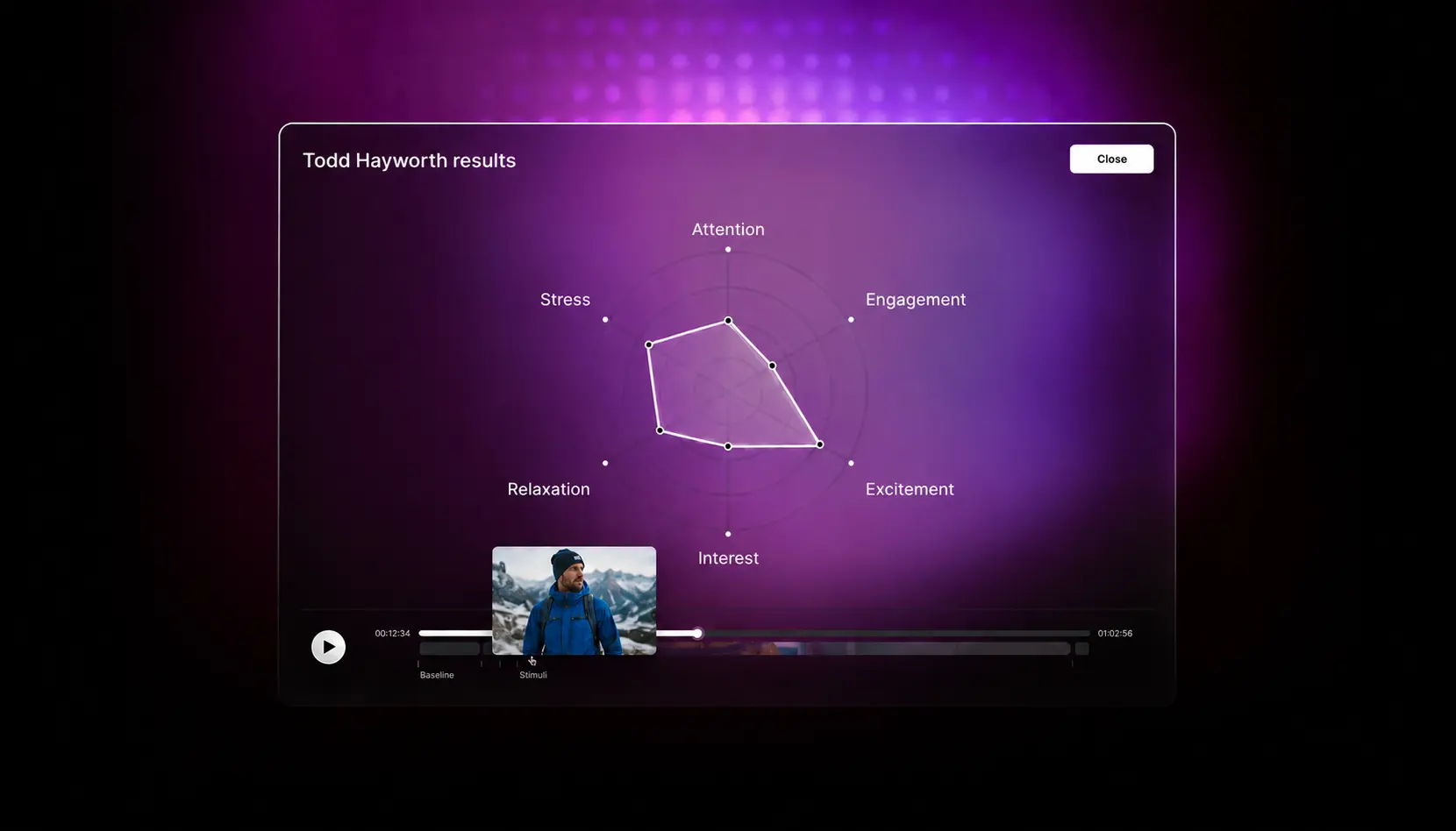
EEG-based testing offers a way to measure real-time consumer reactions as individuals engage with print advertising. By capturing continuous neural responses associated with attention, engagement, cognitive workload, and emotional response, marketers can gain deeper insights into creative effectiveness and make more informed optimization decisions before committing to large-scale media investments.
Key Takeaways
EEG provides real-time measurement of consumer responses during print advertising exposure.
Attention and engagement data help identify which creative elements capture interest.
Neuroscience-informed testing complements traditional readership and recall metrics.
Agencies can optimize layouts, messaging, imagery, and branding before launch.
Publishers can use attention insights to demonstrate advertising effectiveness more effectively.
The Measurement Challenge in Print Advertising
Unlike digital media, print advertising often lacks direct behavioral signals that reveal how audiences interact with creative assets. Marketers may know how many readers viewed a publication or how many consumers recalled a campaign afterward, but they rarely know which specific design elements attracted attention or where engagement declined.
This creates challenges when evaluating creative variations, sponsorship opportunities, publication placements, and campaign effectiveness. Two print advertisements may generate similar recall scores while producing very different viewing experiences.
Understanding those differences can help agencies refine creative execution and help publishers demonstrate the value of premium advertising environments. Many organizations are increasingly incorporating neuroscience-informed methodologies such as those discussed in Emotiv's neuromarketing research to better understand audience response across advertising channels.
Why Traditional Research Methods Have Limitations
Traditional print advertising research provides valuable information, but each method comes with limitations when the goal is understanding real-time consumer behavior.
Surveys rely on memory and self-reporting. Recall studies measure what consumers remember after exposure. Focus groups can reveal opinions but often cannot capture unconscious shifts in attention or engagement that occur during viewing.
As a result, marketers may learn that consumers liked an advertisement without understanding which visual components drove that response. Likewise, they may discover that a campaign underperformed without knowing which creative elements contributed to audience disengagement.
For agencies testing multiple creative concepts, these gaps can make optimization more difficult. Combining traditional research with approaches explored through EEG-based audience testing provides additional context that can support stronger decision-making.
How EEG Measures Real-Time Reactions to Print Advertising
EEG measures electrical activity generated by the brain through non-invasive sensors positioned on the scalp. Within advertising research environments, EEG can provide continuous measurements associated with attention, engagement, cognitive effort, and emotional response while consumers view creative materials.
Unlike post-exposure surveys, EEG captures reactions as they occur. Researchers can evaluate how viewers respond to specific elements of a print advertisement, including imagery, headlines, product placement, branding, typography, and calls to action.
This enables marketers to identify:
Which visual elements capture attention first.
Whether engagement remains consistent throughout ad viewing.
Moments where cognitive load increases.
Areas that may create confusion or friction.
Whether key brand messages appear during high-attention periods.
The result is a more detailed understanding of how consumers experience print advertising beyond what traditional performance metrics can provide.
Organizations using Emotiv Studio can integrate EEG data into structured advertising research workflows that support creative testing and audience response evaluation.
Real-World Examples of EEG in Advertising Research
Research continues to demonstrate the value of EEG in evaluating media and advertising effectiveness. For example, Leeuwis et al. (2021) showed how neural measures can provide meaningful insights into audience engagement and attention during media consumption, helping researchers uncover patterns that traditional self-report methods may overlook.
Similarly, advertising-focused research by Vecchiato et al. (2015) demonstrated how neurophysiological measurements can help evaluate consumer responses to advertising stimuli and distinguish between creative executions that generate different levels of audience engagement.
Commercial organizations have also applied EEG-based methodologies to optimize advertising performance. Through initiatives similar to those highlighted within Emotiv's consumer research applications, brands and agencies have used neural data to compare creative concepts, evaluate visual communication strategies, and improve campaign effectiveness before deployment.
Using EEG Insights to Optimize Print Advertising Creative
The greatest value of EEG emerges when attention and engagement data are translated into actionable creative decisions.
For print advertising, marketers can evaluate:
Headline effectiveness.
Image selection and placement.
Brand visibility and logo positioning.
Call-to-action prominence.
Product imagery performance.
Layout and visual hierarchy.
For example, if EEG data reveals strong initial attention but rapid disengagement, teams may choose to simplify layouts or strengthen message clarity. If attention remains high around imagery but drops before brand exposure, creative adjustments can improve visibility of critical campaign elements.
Because EEG provides continuous measurement, marketers can move beyond assumptions and identify evidence-based opportunities for optimization.
Benefits for Marketing Agencies and Media Publishers
Marketing agencies increasingly face demands for accountability, optimization, and measurable campaign improvement. EEG-based testing can strengthen creative recommendations by providing objective data about audience response.
Media publishers can also benefit by demonstrating how premium print environments support consumer attention and engagement. Insights generated through neuroscience-informed testing can help publishers differentiate advertising opportunities and support conversations with brand partners using evidence beyond circulation or readership figures.
As advertisers seek more sophisticated performance indicators, attention measurement can become a valuable component of campaign planning and evaluation.
Building a More Complete Advertising Measurement Strategy
EEG should be viewed as a complement to existing research methodologies rather than a replacement. The most effective measurement frameworks combine multiple sources of insight.
A comprehensive print advertising evaluation approach may include:
Readership and circulation metrics.
Brand recall studies.
Consumer surveys.
Creative diagnostics.
EEG-based attention and engagement measurement.
Together, these methods provide a richer understanding of both consumer outcomes and the cognitive processes that influence those outcomes.
Conclusion
Print advertising remains an influential medium, but understanding consumer response requires more than post-campaign metrics alone. Real-time measurement of attention and engagement can help agencies and publishers identify which creative elements resonate, which create friction, and where optimization opportunities exist.
By adding EEG-based insights to traditional research frameworks, marketers can make more informed decisions about creative development, media placement, and campaign execution. This deeper understanding of audience response helps reduce uncertainty and supports stronger advertising performance across print environments.
Teams looking to evaluate attention, engagement, and consumer response during advertising exposure can explore how Emotiv Studio supports neuroscience-informed testing workflows.
Sources
Print advertising remains a valuable channel for brands seeking to build awareness, influence perception, and drive consideration across magazines, newspapers, direct mail, out-of-home placements, and premium publications. Yet for marketing agencies and media publishers, one challenge persists: understanding how consumers actually react while viewing a print advertisement.
Most print advertising evaluation relies on post-exposure surveys, recall studies, readership metrics, or campaign performance data. While these methods help assess outcomes, they provide limited visibility into the moment-by-moment cognitive processes that occur during ad exposure. As competition for consumer attention intensifies, marketers increasingly need tools that reveal not only whether an advertisement worked, but why it worked.
EEG-based testing offers a way to measure real-time consumer reactions as individuals engage with print advertising. By capturing continuous neural responses associated with attention, engagement, cognitive workload, and emotional response, marketers can gain deeper insights into creative effectiveness and make more informed optimization decisions before committing to large-scale media investments.
Key Takeaways
EEG provides real-time measurement of consumer responses during print advertising exposure.
Attention and engagement data help identify which creative elements capture interest.
Neuroscience-informed testing complements traditional readership and recall metrics.
Agencies can optimize layouts, messaging, imagery, and branding before launch.
Publishers can use attention insights to demonstrate advertising effectiveness more effectively.
The Measurement Challenge in Print Advertising
Unlike digital media, print advertising often lacks direct behavioral signals that reveal how audiences interact with creative assets. Marketers may know how many readers viewed a publication or how many consumers recalled a campaign afterward, but they rarely know which specific design elements attracted attention or where engagement declined.
This creates challenges when evaluating creative variations, sponsorship opportunities, publication placements, and campaign effectiveness. Two print advertisements may generate similar recall scores while producing very different viewing experiences.
Understanding those differences can help agencies refine creative execution and help publishers demonstrate the value of premium advertising environments. Many organizations are increasingly incorporating neuroscience-informed methodologies such as those discussed in Emotiv's neuromarketing research to better understand audience response across advertising channels.
Why Traditional Research Methods Have Limitations
Traditional print advertising research provides valuable information, but each method comes with limitations when the goal is understanding real-time consumer behavior.
Surveys rely on memory and self-reporting. Recall studies measure what consumers remember after exposure. Focus groups can reveal opinions but often cannot capture unconscious shifts in attention or engagement that occur during viewing.
As a result, marketers may learn that consumers liked an advertisement without understanding which visual components drove that response. Likewise, they may discover that a campaign underperformed without knowing which creative elements contributed to audience disengagement.
For agencies testing multiple creative concepts, these gaps can make optimization more difficult. Combining traditional research with approaches explored through EEG-based audience testing provides additional context that can support stronger decision-making.
How EEG Measures Real-Time Reactions to Print Advertising
EEG measures electrical activity generated by the brain through non-invasive sensors positioned on the scalp. Within advertising research environments, EEG can provide continuous measurements associated with attention, engagement, cognitive effort, and emotional response while consumers view creative materials.
Unlike post-exposure surveys, EEG captures reactions as they occur. Researchers can evaluate how viewers respond to specific elements of a print advertisement, including imagery, headlines, product placement, branding, typography, and calls to action.
This enables marketers to identify:
Which visual elements capture attention first.
Whether engagement remains consistent throughout ad viewing.
Moments where cognitive load increases.
Areas that may create confusion or friction.
Whether key brand messages appear during high-attention periods.
The result is a more detailed understanding of how consumers experience print advertising beyond what traditional performance metrics can provide.
Organizations using Emotiv Studio can integrate EEG data into structured advertising research workflows that support creative testing and audience response evaluation.
Real-World Examples of EEG in Advertising Research
Research continues to demonstrate the value of EEG in evaluating media and advertising effectiveness. For example, Leeuwis et al. (2021) showed how neural measures can provide meaningful insights into audience engagement and attention during media consumption, helping researchers uncover patterns that traditional self-report methods may overlook.
Similarly, advertising-focused research by Vecchiato et al. (2015) demonstrated how neurophysiological measurements can help evaluate consumer responses to advertising stimuli and distinguish between creative executions that generate different levels of audience engagement.
Commercial organizations have also applied EEG-based methodologies to optimize advertising performance. Through initiatives similar to those highlighted within Emotiv's consumer research applications, brands and agencies have used neural data to compare creative concepts, evaluate visual communication strategies, and improve campaign effectiveness before deployment.
Using EEG Insights to Optimize Print Advertising Creative
The greatest value of EEG emerges when attention and engagement data are translated into actionable creative decisions.
For print advertising, marketers can evaluate:
Headline effectiveness.
Image selection and placement.
Brand visibility and logo positioning.
Call-to-action prominence.
Product imagery performance.
Layout and visual hierarchy.
For example, if EEG data reveals strong initial attention but rapid disengagement, teams may choose to simplify layouts or strengthen message clarity. If attention remains high around imagery but drops before brand exposure, creative adjustments can improve visibility of critical campaign elements.
Because EEG provides continuous measurement, marketers can move beyond assumptions and identify evidence-based opportunities for optimization.
Benefits for Marketing Agencies and Media Publishers
Marketing agencies increasingly face demands for accountability, optimization, and measurable campaign improvement. EEG-based testing can strengthen creative recommendations by providing objective data about audience response.
Media publishers can also benefit by demonstrating how premium print environments support consumer attention and engagement. Insights generated through neuroscience-informed testing can help publishers differentiate advertising opportunities and support conversations with brand partners using evidence beyond circulation or readership figures.
As advertisers seek more sophisticated performance indicators, attention measurement can become a valuable component of campaign planning and evaluation.
Building a More Complete Advertising Measurement Strategy
EEG should be viewed as a complement to existing research methodologies rather than a replacement. The most effective measurement frameworks combine multiple sources of insight.
A comprehensive print advertising evaluation approach may include:
Readership and circulation metrics.
Brand recall studies.
Consumer surveys.
Creative diagnostics.
EEG-based attention and engagement measurement.
Together, these methods provide a richer understanding of both consumer outcomes and the cognitive processes that influence those outcomes.
Conclusion
Print advertising remains an influential medium, but understanding consumer response requires more than post-campaign metrics alone. Real-time measurement of attention and engagement can help agencies and publishers identify which creative elements resonate, which create friction, and where optimization opportunities exist.
By adding EEG-based insights to traditional research frameworks, marketers can make more informed decisions about creative development, media placement, and campaign execution. This deeper understanding of audience response helps reduce uncertainty and supports stronger advertising performance across print environments.
Teams looking to evaluate attention, engagement, and consumer response during advertising exposure can explore how Emotiv Studio supports neuroscience-informed testing workflows.
Sources
Print advertising remains a valuable channel for brands seeking to build awareness, influence perception, and drive consideration across magazines, newspapers, direct mail, out-of-home placements, and premium publications. Yet for marketing agencies and media publishers, one challenge persists: understanding how consumers actually react while viewing a print advertisement.
Most print advertising evaluation relies on post-exposure surveys, recall studies, readership metrics, or campaign performance data. While these methods help assess outcomes, they provide limited visibility into the moment-by-moment cognitive processes that occur during ad exposure. As competition for consumer attention intensifies, marketers increasingly need tools that reveal not only whether an advertisement worked, but why it worked.
EEG-based testing offers a way to measure real-time consumer reactions as individuals engage with print advertising. By capturing continuous neural responses associated with attention, engagement, cognitive workload, and emotional response, marketers can gain deeper insights into creative effectiveness and make more informed optimization decisions before committing to large-scale media investments.
Key Takeaways
EEG provides real-time measurement of consumer responses during print advertising exposure.
Attention and engagement data help identify which creative elements capture interest.
Neuroscience-informed testing complements traditional readership and recall metrics.
Agencies can optimize layouts, messaging, imagery, and branding before launch.
Publishers can use attention insights to demonstrate advertising effectiveness more effectively.
The Measurement Challenge in Print Advertising
Unlike digital media, print advertising often lacks direct behavioral signals that reveal how audiences interact with creative assets. Marketers may know how many readers viewed a publication or how many consumers recalled a campaign afterward, but they rarely know which specific design elements attracted attention or where engagement declined.
This creates challenges when evaluating creative variations, sponsorship opportunities, publication placements, and campaign effectiveness. Two print advertisements may generate similar recall scores while producing very different viewing experiences.
Understanding those differences can help agencies refine creative execution and help publishers demonstrate the value of premium advertising environments. Many organizations are increasingly incorporating neuroscience-informed methodologies such as those discussed in Emotiv's neuromarketing research to better understand audience response across advertising channels.
Why Traditional Research Methods Have Limitations
Traditional print advertising research provides valuable information, but each method comes with limitations when the goal is understanding real-time consumer behavior.
Surveys rely on memory and self-reporting. Recall studies measure what consumers remember after exposure. Focus groups can reveal opinions but often cannot capture unconscious shifts in attention or engagement that occur during viewing.
As a result, marketers may learn that consumers liked an advertisement without understanding which visual components drove that response. Likewise, they may discover that a campaign underperformed without knowing which creative elements contributed to audience disengagement.
For agencies testing multiple creative concepts, these gaps can make optimization more difficult. Combining traditional research with approaches explored through EEG-based audience testing provides additional context that can support stronger decision-making.
How EEG Measures Real-Time Reactions to Print Advertising
EEG measures electrical activity generated by the brain through non-invasive sensors positioned on the scalp. Within advertising research environments, EEG can provide continuous measurements associated with attention, engagement, cognitive effort, and emotional response while consumers view creative materials.
Unlike post-exposure surveys, EEG captures reactions as they occur. Researchers can evaluate how viewers respond to specific elements of a print advertisement, including imagery, headlines, product placement, branding, typography, and calls to action.
This enables marketers to identify:
Which visual elements capture attention first.
Whether engagement remains consistent throughout ad viewing.
Moments where cognitive load increases.
Areas that may create confusion or friction.
Whether key brand messages appear during high-attention periods.
The result is a more detailed understanding of how consumers experience print advertising beyond what traditional performance metrics can provide.
Organizations using Emotiv Studio can integrate EEG data into structured advertising research workflows that support creative testing and audience response evaluation.
Real-World Examples of EEG in Advertising Research
Research continues to demonstrate the value of EEG in evaluating media and advertising effectiveness. For example, Leeuwis et al. (2021) showed how neural measures can provide meaningful insights into audience engagement and attention during media consumption, helping researchers uncover patterns that traditional self-report methods may overlook.
Similarly, advertising-focused research by Vecchiato et al. (2015) demonstrated how neurophysiological measurements can help evaluate consumer responses to advertising stimuli and distinguish between creative executions that generate different levels of audience engagement.
Commercial organizations have also applied EEG-based methodologies to optimize advertising performance. Through initiatives similar to those highlighted within Emotiv's consumer research applications, brands and agencies have used neural data to compare creative concepts, evaluate visual communication strategies, and improve campaign effectiveness before deployment.
Using EEG Insights to Optimize Print Advertising Creative
The greatest value of EEG emerges when attention and engagement data are translated into actionable creative decisions.
For print advertising, marketers can evaluate:
Headline effectiveness.
Image selection and placement.
Brand visibility and logo positioning.
Call-to-action prominence.
Product imagery performance.
Layout and visual hierarchy.
For example, if EEG data reveals strong initial attention but rapid disengagement, teams may choose to simplify layouts or strengthen message clarity. If attention remains high around imagery but drops before brand exposure, creative adjustments can improve visibility of critical campaign elements.
Because EEG provides continuous measurement, marketers can move beyond assumptions and identify evidence-based opportunities for optimization.
Benefits for Marketing Agencies and Media Publishers
Marketing agencies increasingly face demands for accountability, optimization, and measurable campaign improvement. EEG-based testing can strengthen creative recommendations by providing objective data about audience response.
Media publishers can also benefit by demonstrating how premium print environments support consumer attention and engagement. Insights generated through neuroscience-informed testing can help publishers differentiate advertising opportunities and support conversations with brand partners using evidence beyond circulation or readership figures.
As advertisers seek more sophisticated performance indicators, attention measurement can become a valuable component of campaign planning and evaluation.
Building a More Complete Advertising Measurement Strategy
EEG should be viewed as a complement to existing research methodologies rather than a replacement. The most effective measurement frameworks combine multiple sources of insight.
A comprehensive print advertising evaluation approach may include:
Readership and circulation metrics.
Brand recall studies.
Consumer surveys.
Creative diagnostics.
EEG-based attention and engagement measurement.
Together, these methods provide a richer understanding of both consumer outcomes and the cognitive processes that influence those outcomes.
Conclusion
Print advertising remains an influential medium, but understanding consumer response requires more than post-campaign metrics alone. Real-time measurement of attention and engagement can help agencies and publishers identify which creative elements resonate, which create friction, and where optimization opportunities exist.
By adding EEG-based insights to traditional research frameworks, marketers can make more informed decisions about creative development, media placement, and campaign execution. This deeper understanding of audience response helps reduce uncertainty and supports stronger advertising performance across print environments.
Teams looking to evaluate attention, engagement, and consumer response during advertising exposure can explore how Emotiv Studio supports neuroscience-informed testing workflows.