
Emotiv Studio Use Cases for Advertising Agencies
H.B. Duran
Updated on
Jun 3, 2026
Emotiv Studio Use Cases for Advertising Agencies
H.B. Duran
Updated on
Jun 3, 2026
Emotiv Studio Use Cases for Advertising Agencies
H.B. Duran
Updated on
Jun 3, 2026
Advertising agencies face growing pressure to justify creative decisions with measurable evidence. Emotiv Studio helps agencies evaluate audience attention, engagement, and emotional response before campaigns launch, providing clients with deeper insight than traditional market research alone.
Clients Want More Than Opinions
Creative reviews often involve strong opinions.
Clients, stakeholders, and creative teams may disagree about:
Campaign concepts
Visual direction
Messaging approaches
Video edits
CTA placement
Historically, these decisions relied on surveys, focus groups, or stakeholder preference.
Today, many clients expect stronger evidence.
They want to know not only which concept audiences prefer, but how audiences respond during exposure.
Supporting Concept Testing Before Production
One of the most valuable agency use cases involves evaluating creative concepts before significant production investment.
For example, an agency developing three campaign directions for a consumer brand may want to understand:
Which concept captures attention fastest
Which narrative maintains engagement
Which creative generates emotional response
Which messaging approach creates friction
Rather than relying entirely on subjective feedback, teams can collect audience-response data during concept evaluation.
This often reduces stakeholder debate and increases confidence in creative decisions.
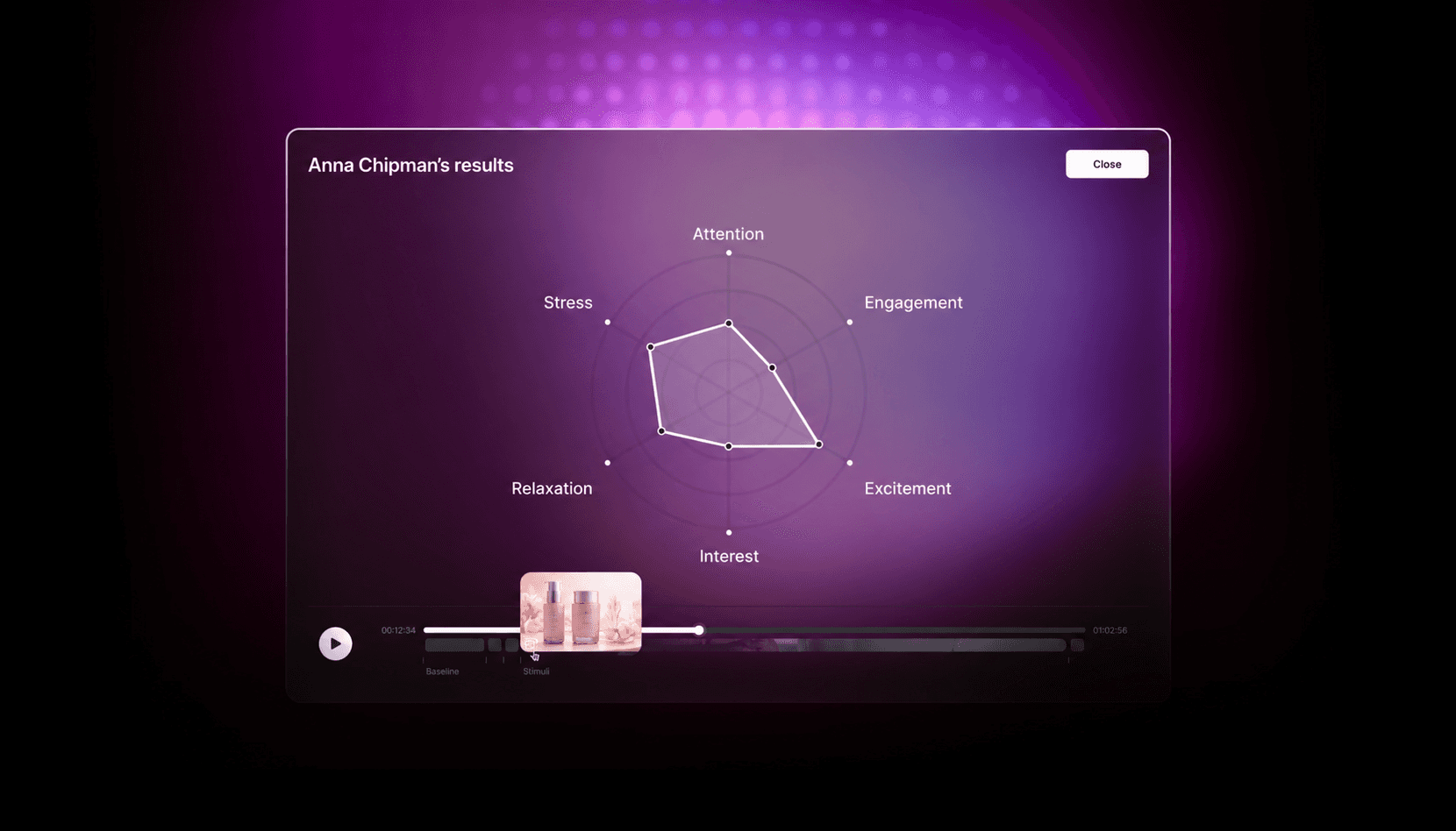
Above: A results screen in Emotiv Studio displays moment-by-moment cognitive reactions to marketing creative during concept evaluations.
Strengthening Client Presentations
Google's advertising research has consistently shown that creative quality remains one of the strongest drivers of campaign performance.
For agencies, this creates an opportunity to move beyond recommendations based solely on experience.
Instead of saying:
"We believe this concept will perform best."
Teams can present audience-response findings showing that one concept sustained stronger engagement, generated greater attention, or maintained interest longer than alternatives.
This changes the conversation from opinion to evidence.
Optimizing Video and Social Campaigns
Agencies frequently produce:
Paid social campaigns
Brand awareness initiatives
Product launches
Video advertising
Digital experiences
Emotiv Studio helps identify:
Attention peaks
Engagement drop-offs
Cognitive friction
Emotional response patterns
These insights allow teams to refine creative before launch rather than reacting after campaign performance begins to decline.
Creating a Competitive Differentiator
Many agencies compete on creative execution.
Fewer compete on audience insight.
Offering neuroscience-based testing can help agencies position themselves as strategic partners capable of validating creative decisions with measurable data.
For clients, that often translates into greater confidence before significant media investments are made.
Conclusion
Advertising agencies are increasingly expected to support creative decisions with evidence. Emotiv Studio helps teams understand how audiences respond to campaigns before launch, enabling stronger recommendations and more informed creative decisions.
CTA
Explore how agencies use Emotiv Studio to test campaign concepts, validate creative decisions, and better understand audience response before media spend begins.
Advertising agencies face growing pressure to justify creative decisions with measurable evidence. Emotiv Studio helps agencies evaluate audience attention, engagement, and emotional response before campaigns launch, providing clients with deeper insight than traditional market research alone.
Clients Want More Than Opinions
Creative reviews often involve strong opinions.
Clients, stakeholders, and creative teams may disagree about:
Campaign concepts
Visual direction
Messaging approaches
Video edits
CTA placement
Historically, these decisions relied on surveys, focus groups, or stakeholder preference.
Today, many clients expect stronger evidence.
They want to know not only which concept audiences prefer, but how audiences respond during exposure.
Supporting Concept Testing Before Production
One of the most valuable agency use cases involves evaluating creative concepts before significant production investment.
For example, an agency developing three campaign directions for a consumer brand may want to understand:
Which concept captures attention fastest
Which narrative maintains engagement
Which creative generates emotional response
Which messaging approach creates friction
Rather than relying entirely on subjective feedback, teams can collect audience-response data during concept evaluation.
This often reduces stakeholder debate and increases confidence in creative decisions.
Above: A results screen in Emotiv Studio displays moment-by-moment cognitive reactions to marketing creative during concept evaluations.
Strengthening Client Presentations
Google's advertising research has consistently shown that creative quality remains one of the strongest drivers of campaign performance.
For agencies, this creates an opportunity to move beyond recommendations based solely on experience.
Instead of saying:
"We believe this concept will perform best."
Teams can present audience-response findings showing that one concept sustained stronger engagement, generated greater attention, or maintained interest longer than alternatives.
This changes the conversation from opinion to evidence.
Optimizing Video and Social Campaigns
Agencies frequently produce:
Paid social campaigns
Brand awareness initiatives
Product launches
Video advertising
Digital experiences
Emotiv Studio helps identify:
Attention peaks
Engagement drop-offs
Cognitive friction
Emotional response patterns
These insights allow teams to refine creative before launch rather than reacting after campaign performance begins to decline.
Creating a Competitive Differentiator
Many agencies compete on creative execution.
Fewer compete on audience insight.
Offering neuroscience-based testing can help agencies position themselves as strategic partners capable of validating creative decisions with measurable data.
For clients, that often translates into greater confidence before significant media investments are made.
Conclusion
Advertising agencies are increasingly expected to support creative decisions with evidence. Emotiv Studio helps teams understand how audiences respond to campaigns before launch, enabling stronger recommendations and more informed creative decisions.
CTA
Explore how agencies use Emotiv Studio to test campaign concepts, validate creative decisions, and better understand audience response before media spend begins.
Advertising agencies face growing pressure to justify creative decisions with measurable evidence. Emotiv Studio helps agencies evaluate audience attention, engagement, and emotional response before campaigns launch, providing clients with deeper insight than traditional market research alone.
Clients Want More Than Opinions
Creative reviews often involve strong opinions.
Clients, stakeholders, and creative teams may disagree about:
Campaign concepts
Visual direction
Messaging approaches
Video edits
CTA placement
Historically, these decisions relied on surveys, focus groups, or stakeholder preference.
Today, many clients expect stronger evidence.
They want to know not only which concept audiences prefer, but how audiences respond during exposure.
Supporting Concept Testing Before Production
One of the most valuable agency use cases involves evaluating creative concepts before significant production investment.
For example, an agency developing three campaign directions for a consumer brand may want to understand:
Which concept captures attention fastest
Which narrative maintains engagement
Which creative generates emotional response
Which messaging approach creates friction
Rather than relying entirely on subjective feedback, teams can collect audience-response data during concept evaluation.
This often reduces stakeholder debate and increases confidence in creative decisions.
Above: A results screen in Emotiv Studio displays moment-by-moment cognitive reactions to marketing creative during concept evaluations.
Strengthening Client Presentations
Google's advertising research has consistently shown that creative quality remains one of the strongest drivers of campaign performance.
For agencies, this creates an opportunity to move beyond recommendations based solely on experience.
Instead of saying:
"We believe this concept will perform best."
Teams can present audience-response findings showing that one concept sustained stronger engagement, generated greater attention, or maintained interest longer than alternatives.
This changes the conversation from opinion to evidence.
Optimizing Video and Social Campaigns
Agencies frequently produce:
Paid social campaigns
Brand awareness initiatives
Product launches
Video advertising
Digital experiences
Emotiv Studio helps identify:
Attention peaks
Engagement drop-offs
Cognitive friction
Emotional response patterns
These insights allow teams to refine creative before launch rather than reacting after campaign performance begins to decline.
Creating a Competitive Differentiator
Many agencies compete on creative execution.
Fewer compete on audience insight.
Offering neuroscience-based testing can help agencies position themselves as strategic partners capable of validating creative decisions with measurable data.
For clients, that often translates into greater confidence before significant media investments are made.
Conclusion
Advertising agencies are increasingly expected to support creative decisions with evidence. Emotiv Studio helps teams understand how audiences respond to campaigns before launch, enabling stronger recommendations and more informed creative decisions.
CTA
Explore how agencies use Emotiv Studio to test campaign concepts, validate creative decisions, and better understand audience response before media spend begins.