
Color Psychology for Ecommerce and UX Design
H.B. Duran
Updated on
May 27, 2026
Color Psychology for Ecommerce and UX Design
H.B. Duran
Updated on
May 27, 2026
Color Psychology for Ecommerce and UX Design
H.B. Duran
Updated on
May 27, 2026
Color psychology plays a major role in how consumers experience ecommerce environments and digital interfaces. Every product page, CTA, navigation system, checkout flow, and landing page creates emotional and cognitive signals that influence trust, attention, confidence, and decision-making.
For ecommerce and UX teams, the challenge is no longer simply creating visually attractive experiences. It is understanding how audiences subconsciously process digital environments in real time and how color systems affect emotional engagement, cognitive stress, and conversion behavior.
A beautifully designed experience may still overwhelm users. A visually bold CTA may attract attention while reducing trust. A premium color palette may strengthen brand identity while unintentionally weakening usability on mobile devices.
This is why modern organizations increasingly combine behavioral analytics, UX research, and EEG-based neuroanalytics to better understand how consumers cognitively and emotionally respond to digital experiences before optimization decisions scale across campaigns and platforms.
Why Color Psychology Matters in Ecommerce UX
Ecommerce environments require consumers to process large amounts of information quickly. Shoppers simultaneously evaluate products, pricing, promotions, navigation systems, reviews, recommendations, shipping information, and checkout options, often within a matter of seconds.
Color influences how efficiently consumers process this information and whether the experience feels intuitive or mentally taxing. Trust, attention, decision confidence, perceived usability, cognitive clarity, and purchase motivation are all influenced by visual design systems.
This is one reason many of the world's largest digital brands invest heavily in color consistency. Apple's ecommerce experience, for example, relies on a restrained palette of whites, grays, and muted accents that reinforce premium positioning while minimizing distractions. Rather than competing for attention, the interface directs users toward products, specifications, and purchase decisions through carefully controlled visual hierarchy.
Similarly, Airbnb uses a warm, approachable visual system that supports feelings of trust and belonging. The company's distinctive coral accent color appears consistently across booking experiences, helping create familiarity while guiding attention toward key actions.
These examples highlight an important reality: color is not simply decorative. It functions as part of the decision-making architecture of digital experiences.
The Difference Between Visibility and Usability
Many UX teams prioritize visibility without fully evaluating emotional and cognitive response.
Bright CTAs, high-contrast interfaces, promotional overlays, and aggressive urgency systems may increase immediate attention while simultaneously increasing cognitive stress. This creates an important distinction between visibility and usability.
Amazon provides a useful example. The company's familiar orange "Add to Cart" and "Buy Now" buttons stand out clearly against surrounding page elements. Their effectiveness comes not from being the loudest element on the page, but from occupying a predictable and consistent place within the visual hierarchy.
By contrast, many ecommerce experiences overload users with competing promotional colors, flashing urgency messages, multiple CTA styles, and excessive visual emphasis. While these elements may initially attract attention, they often create confusion about where users should focus next.
Consumers may not consciously recognize why an experience feels exhausting. They may simply hesitate, disengage, or abandon the session altogether.
This is one of the biggest challenges in ecommerce optimization. Traditional metrics often reveal what users clicked, but not how they emotionally experienced the environment while making decisions.
Color Psychology and Consumer Trust
Trust is one of the most important emotional outcomes in ecommerce UX.
Consumers constantly evaluate whether a digital experience feels credible, safe, professional, modern, intuitive, premium, and transparent. Color plays a major role in shaping these perceptions.
Financial technology companies frequently rely on blues because audiences often associate them with reliability and stability. Healthcare brands commonly use blue and green combinations to communicate reassurance and safety. Luxury retailers often use minimal color palettes because restraint itself can signal exclusivity and sophistication.
Apple is again a strong example. The company's ecommerce experience uses subtle visual design rather than aggressive promotional colors, helping reinforce perceptions of confidence and quality.
However, trust is highly contextual. A color palette that feels premium in a luxury fashion environment may feel emotionally distant in a wellness experience. Likewise, a highly energetic retail color scheme may feel inappropriate for a healthcare product.
This is why organizations increasingly test audience response directly rather than relying solely on generalized color psychology assumptions.
Color Hierarchy and Attention Flow
Digital experiences guide consumers through visual hierarchy, and color is one of the most powerful tools available for directing attention.
Effective color systems help users understand where to focus first, what information matters most, and what action should happen next.
Research from Nielsen Norman Group demonstrates that strong visual hierarchy significantly improves how users process information and allocate attention within digital experiences. Their work on visual hierarchy and cognitive processing highlights how poorly structured interfaces can increase mental effort and reduce comprehension.
When hierarchy becomes visually inconsistent, consumers may experience confusion or cognitive stress. Too many competing CTA colors can reduce clarity. Excessive promotional highlighting can weaken prioritization. Aggressive urgency palettes may create anxiety rather than motivation.
Color hierarchy should support intuitive processing rather than compete for attention.
Organizations increasingly measure attention sustainability and cognitive stress to better understand whether UX systems support smooth decision-making or create unnecessary friction.
Why Traditional UX Metrics Miss Emotional Response
Most ecommerce dashboards measure behavioral outcomes such as click-through rate, conversion rate, bounce rate, session duration, cart abandonment, scroll depth, and revenue per session.
These metrics provide important visibility, but they do not fully explain emotional engagement.
A product page may convert despite creating high cognitive stress. A landing page may sustain session duration while weakening emotional confidence. A checkout flow may technically function well while still feeling mentally exhausting.
Color psychology often shapes these experiences indirectly through subconscious emotional processing.
This is where neuroscience-informed audience research becomes increasingly valuable.
Traditional analytics reveal what users did. They rarely reveal how users felt while doing it.
Using Neuroanalytics to Measure UX Response
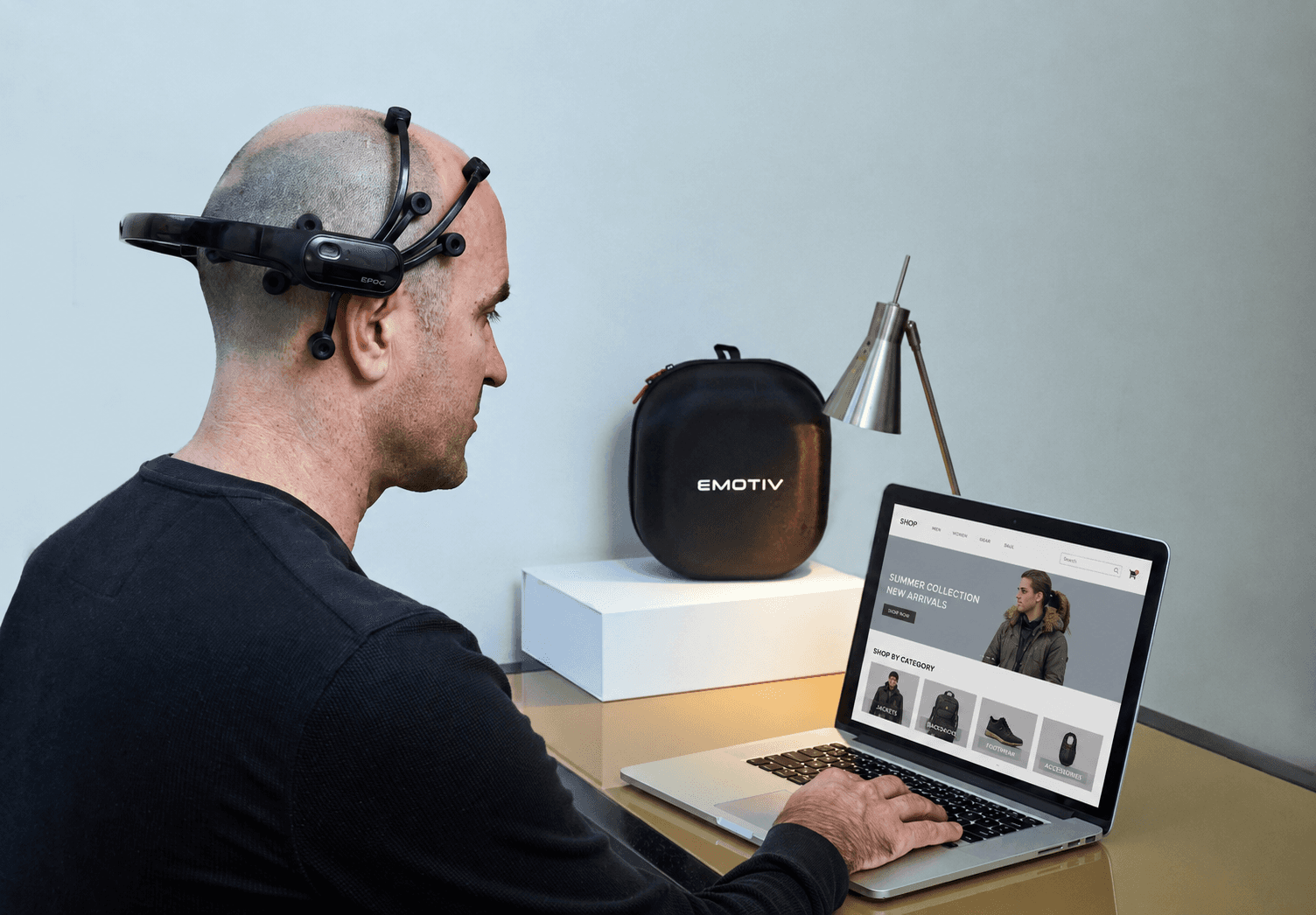
EEG-based neuroanalytics allows organizations to evaluate how audiences cognitively and emotionally process ecommerce experiences during interaction itself.
Researchers can analyze attention sustainability, emotional engagement, cognitive stress, mental fatigue, interest patterns, and engagement decline across digital experiences.
This helps teams identify which interface elements create friction, where attention weakens, whether CTA systems create stress, and how visual environments influence confidence.
For example, a landing page may initially attract attention while causing emotional fatigue due to excessive visual competition. A checkout system may appear streamlined internally while creating subconscious hesitation during final decision moments.
Mapping cognitive states to ecommerce interactions gives UX teams deeper visibility into how consumers actually experience digital systems in real time.
Rather than relying exclusively on conversion outcomes, organizations can understand the emotional journey leading to those outcomes.
Color Psychology in Mobile Ecommerce
Mobile environments create additional complexity for color psychology and UX design.
Consumers process information more quickly on smaller screens while navigating distracted environments filled with notifications, multitasking, and fragmented attention.
This means color systems must support rapid comprehension, clear hierarchy, reduced cognitive effort, touch-friendly interaction, and emotional clarity.
Research from Baymard Institute consistently shows that unnecessary friction in mobile ecommerce experiences contributes significantly to abandonment rates. Small visual decisions become magnified on mobile screens because users have less space, less patience, and fewer opportunities to recover from confusion.
Overly dense visual environments become even more problematic on mobile devices. Excessive promotional overlays, conflicting color emphasis, poor CTA differentiation, and cluttered interfaces can rapidly increase cognitive stress and abandonment risk.
As mobile commerce continues dominating ecommerce behavior, understanding subconscious audience response across smaller-screen experiences becomes increasingly important.
Color Psychology and Emotional Decision-Making
Consumers rarely make purchase decisions through logic alone.
Color influences emotional states tied to confidence, urgency, reassurance, excitement, familiarity, trust, exclusivity, and comfort. These emotional cues shape how consumers process pricing, promotions, recommendations, and purchase decisions.
Consider the difference between a luxury retailer and a discount retailer. Both may sell similar products, yet their visual systems often evoke entirely different emotional responses. One may emphasize exclusivity and aspiration, while the other focuses on urgency and value.
Neither approach is inherently better. The effectiveness depends on whether the emotional response aligns with the brand's goals.
Behavioral analytics alone cannot fully explain these emotional reactions because much of the processing occurs subconsciously during exposure.

Reducing Cognitive Stress Through UX Design
One of the most important goals in ecommerce UX is reducing unnecessary cognitive stress.
Consumers already navigate complex digital environments with limited attention capacity. Interfaces that demand excessive mental effort often reduce engagement and purchase confidence.
Common sources of cognitive stress include overloaded visual hierarchy, competing CTA systems, excessive promotional messaging, poor readability, inconsistent navigation, aggressive urgency design, and cluttered layouts.
Research on cognitive load from Nielsen Norman Group shows that users perform better when interfaces reduce unnecessary mental effort and make information easier to process. The same principle applies to ecommerce environments.
Color psychology can either amplify or reduce these challenges depending on how visual systems are structured.
Measuring audience response during interaction helps organizations identify whether UX environments feel intuitive or mentally exhausting before major redesigns scale across platforms.
Why Neuromarketing Techniques Are Becoming Essential for UX Teams
Modern UX optimization increasingly requires more than surface-level performance metrics.
Organizations need to understand how consumers emotionally process digital environments, which moments create cognitive friction, whether interfaces support confidence, how visual systems influence attention sustainability, and which experiences strengthen emotional trust.
Neuromarketing techniques provide deeper visibility into these questions.
Rather than relying solely on post-session interpretation, organizations can evaluate subconscious audience response during interaction itself.
This helps teams refine ecommerce experiences using evidence-based emotional and cognitive analysis rather than assumption alone.
Leading organizations increasingly recognize that consumer behavior is not driven exclusively by what people consciously report. It is also shaped by subconscious emotional responses that traditional analytics often fail to capture.
Applying Color Psychology to Next-Generation Ecommerce Research
Color psychology remains one of the most influential components of ecommerce UX because it shapes emotional perception, cognitive clarity, and decision-making simultaneously.
By combining behavioral analytics, UX research, and EEG-based neuroanalytics, organizations can map cognitive states to product pages, landing pages, checkout systems, mobile experiences, and conversion journeys to better understand how consumers subconsciously process digital environments.
This supports ecommerce optimization, UX refinement, audience engagement analysis, emotional-response measurement, conversion strategy development, and digital experience testing.
As ecommerce competition intensifies and attention becomes harder to sustain, organizations that understand emotional response earlier in the optimization process gain a significant strategic advantage.
Conclusion
Color psychology influences trust, attention, emotional engagement, cognitive clarity, and purchase confidence across ecommerce and UX environments.
However, modern digital experiences require more than visually attractive design systems. Organizations increasingly need measurable insight into how audiences cognitively and emotionally process interfaces before optimization decisions scale across campaigns and platforms.
Brands such as Apple, Airbnb, and Amazon have demonstrated how thoughtful color systems can influence trust, attention, and decision-making. The next challenge is measuring those effects rather than assuming they exist.
By combining behavioral analytics, UX research, and EEG-based neuroanalytics, teams can better understand subconscious audience response and map cognitive states to real-world ecommerce interactions, digital journeys, and conversion environments.
Learn more about the power of neuroscience in marketing research.
Color psychology plays a major role in how consumers experience ecommerce environments and digital interfaces. Every product page, CTA, navigation system, checkout flow, and landing page creates emotional and cognitive signals that influence trust, attention, confidence, and decision-making.
For ecommerce and UX teams, the challenge is no longer simply creating visually attractive experiences. It is understanding how audiences subconsciously process digital environments in real time and how color systems affect emotional engagement, cognitive stress, and conversion behavior.
A beautifully designed experience may still overwhelm users. A visually bold CTA may attract attention while reducing trust. A premium color palette may strengthen brand identity while unintentionally weakening usability on mobile devices.
This is why modern organizations increasingly combine behavioral analytics, UX research, and EEG-based neuroanalytics to better understand how consumers cognitively and emotionally respond to digital experiences before optimization decisions scale across campaigns and platforms.
Why Color Psychology Matters in Ecommerce UX
Ecommerce environments require consumers to process large amounts of information quickly. Shoppers simultaneously evaluate products, pricing, promotions, navigation systems, reviews, recommendations, shipping information, and checkout options, often within a matter of seconds.
Color influences how efficiently consumers process this information and whether the experience feels intuitive or mentally taxing. Trust, attention, decision confidence, perceived usability, cognitive clarity, and purchase motivation are all influenced by visual design systems.
This is one reason many of the world's largest digital brands invest heavily in color consistency. Apple's ecommerce experience, for example, relies on a restrained palette of whites, grays, and muted accents that reinforce premium positioning while minimizing distractions. Rather than competing for attention, the interface directs users toward products, specifications, and purchase decisions through carefully controlled visual hierarchy.
Similarly, Airbnb uses a warm, approachable visual system that supports feelings of trust and belonging. The company's distinctive coral accent color appears consistently across booking experiences, helping create familiarity while guiding attention toward key actions.
These examples highlight an important reality: color is not simply decorative. It functions as part of the decision-making architecture of digital experiences.
The Difference Between Visibility and Usability
Many UX teams prioritize visibility without fully evaluating emotional and cognitive response.
Bright CTAs, high-contrast interfaces, promotional overlays, and aggressive urgency systems may increase immediate attention while simultaneously increasing cognitive stress. This creates an important distinction between visibility and usability.
Amazon provides a useful example. The company's familiar orange "Add to Cart" and "Buy Now" buttons stand out clearly against surrounding page elements. Their effectiveness comes not from being the loudest element on the page, but from occupying a predictable and consistent place within the visual hierarchy.
By contrast, many ecommerce experiences overload users with competing promotional colors, flashing urgency messages, multiple CTA styles, and excessive visual emphasis. While these elements may initially attract attention, they often create confusion about where users should focus next.
Consumers may not consciously recognize why an experience feels exhausting. They may simply hesitate, disengage, or abandon the session altogether.
This is one of the biggest challenges in ecommerce optimization. Traditional metrics often reveal what users clicked, but not how they emotionally experienced the environment while making decisions.
Color Psychology and Consumer Trust
Trust is one of the most important emotional outcomes in ecommerce UX.
Consumers constantly evaluate whether a digital experience feels credible, safe, professional, modern, intuitive, premium, and transparent. Color plays a major role in shaping these perceptions.
Financial technology companies frequently rely on blues because audiences often associate them with reliability and stability. Healthcare brands commonly use blue and green combinations to communicate reassurance and safety. Luxury retailers often use minimal color palettes because restraint itself can signal exclusivity and sophistication.
Apple is again a strong example. The company's ecommerce experience uses subtle visual design rather than aggressive promotional colors, helping reinforce perceptions of confidence and quality.
However, trust is highly contextual. A color palette that feels premium in a luxury fashion environment may feel emotionally distant in a wellness experience. Likewise, a highly energetic retail color scheme may feel inappropriate for a healthcare product.
This is why organizations increasingly test audience response directly rather than relying solely on generalized color psychology assumptions.
Color Hierarchy and Attention Flow
Digital experiences guide consumers through visual hierarchy, and color is one of the most powerful tools available for directing attention.
Effective color systems help users understand where to focus first, what information matters most, and what action should happen next.
Research from Nielsen Norman Group demonstrates that strong visual hierarchy significantly improves how users process information and allocate attention within digital experiences. Their work on visual hierarchy and cognitive processing highlights how poorly structured interfaces can increase mental effort and reduce comprehension.
When hierarchy becomes visually inconsistent, consumers may experience confusion or cognitive stress. Too many competing CTA colors can reduce clarity. Excessive promotional highlighting can weaken prioritization. Aggressive urgency palettes may create anxiety rather than motivation.
Color hierarchy should support intuitive processing rather than compete for attention.
Organizations increasingly measure attention sustainability and cognitive stress to better understand whether UX systems support smooth decision-making or create unnecessary friction.
Why Traditional UX Metrics Miss Emotional Response
Most ecommerce dashboards measure behavioral outcomes such as click-through rate, conversion rate, bounce rate, session duration, cart abandonment, scroll depth, and revenue per session.
These metrics provide important visibility, but they do not fully explain emotional engagement.
A product page may convert despite creating high cognitive stress. A landing page may sustain session duration while weakening emotional confidence. A checkout flow may technically function well while still feeling mentally exhausting.
Color psychology often shapes these experiences indirectly through subconscious emotional processing.
This is where neuroscience-informed audience research becomes increasingly valuable.
Traditional analytics reveal what users did. They rarely reveal how users felt while doing it.
Using Neuroanalytics to Measure UX Response
EEG-based neuroanalytics allows organizations to evaluate how audiences cognitively and emotionally process ecommerce experiences during interaction itself.
Researchers can analyze attention sustainability, emotional engagement, cognitive stress, mental fatigue, interest patterns, and engagement decline across digital experiences.
This helps teams identify which interface elements create friction, where attention weakens, whether CTA systems create stress, and how visual environments influence confidence.
For example, a landing page may initially attract attention while causing emotional fatigue due to excessive visual competition. A checkout system may appear streamlined internally while creating subconscious hesitation during final decision moments.
Mapping cognitive states to ecommerce interactions gives UX teams deeper visibility into how consumers actually experience digital systems in real time.
Rather than relying exclusively on conversion outcomes, organizations can understand the emotional journey leading to those outcomes.
Color Psychology in Mobile Ecommerce
Mobile environments create additional complexity for color psychology and UX design.
Consumers process information more quickly on smaller screens while navigating distracted environments filled with notifications, multitasking, and fragmented attention.
This means color systems must support rapid comprehension, clear hierarchy, reduced cognitive effort, touch-friendly interaction, and emotional clarity.
Research from Baymard Institute consistently shows that unnecessary friction in mobile ecommerce experiences contributes significantly to abandonment rates. Small visual decisions become magnified on mobile screens because users have less space, less patience, and fewer opportunities to recover from confusion.
Overly dense visual environments become even more problematic on mobile devices. Excessive promotional overlays, conflicting color emphasis, poor CTA differentiation, and cluttered interfaces can rapidly increase cognitive stress and abandonment risk.
As mobile commerce continues dominating ecommerce behavior, understanding subconscious audience response across smaller-screen experiences becomes increasingly important.
Color Psychology and Emotional Decision-Making
Consumers rarely make purchase decisions through logic alone.
Color influences emotional states tied to confidence, urgency, reassurance, excitement, familiarity, trust, exclusivity, and comfort. These emotional cues shape how consumers process pricing, promotions, recommendations, and purchase decisions.
Consider the difference between a luxury retailer and a discount retailer. Both may sell similar products, yet their visual systems often evoke entirely different emotional responses. One may emphasize exclusivity and aspiration, while the other focuses on urgency and value.
Neither approach is inherently better. The effectiveness depends on whether the emotional response aligns with the brand's goals.
Behavioral analytics alone cannot fully explain these emotional reactions because much of the processing occurs subconsciously during exposure.
Reducing Cognitive Stress Through UX Design
One of the most important goals in ecommerce UX is reducing unnecessary cognitive stress.
Consumers already navigate complex digital environments with limited attention capacity. Interfaces that demand excessive mental effort often reduce engagement and purchase confidence.
Common sources of cognitive stress include overloaded visual hierarchy, competing CTA systems, excessive promotional messaging, poor readability, inconsistent navigation, aggressive urgency design, and cluttered layouts.
Research on cognitive load from Nielsen Norman Group shows that users perform better when interfaces reduce unnecessary mental effort and make information easier to process. The same principle applies to ecommerce environments.
Color psychology can either amplify or reduce these challenges depending on how visual systems are structured.
Measuring audience response during interaction helps organizations identify whether UX environments feel intuitive or mentally exhausting before major redesigns scale across platforms.
Why Neuromarketing Techniques Are Becoming Essential for UX Teams
Modern UX optimization increasingly requires more than surface-level performance metrics.
Organizations need to understand how consumers emotionally process digital environments, which moments create cognitive friction, whether interfaces support confidence, how visual systems influence attention sustainability, and which experiences strengthen emotional trust.
Neuromarketing techniques provide deeper visibility into these questions.
Rather than relying solely on post-session interpretation, organizations can evaluate subconscious audience response during interaction itself.
This helps teams refine ecommerce experiences using evidence-based emotional and cognitive analysis rather than assumption alone.
Leading organizations increasingly recognize that consumer behavior is not driven exclusively by what people consciously report. It is also shaped by subconscious emotional responses that traditional analytics often fail to capture.
Applying Color Psychology to Next-Generation Ecommerce Research
Color psychology remains one of the most influential components of ecommerce UX because it shapes emotional perception, cognitive clarity, and decision-making simultaneously.
By combining behavioral analytics, UX research, and EEG-based neuroanalytics, organizations can map cognitive states to product pages, landing pages, checkout systems, mobile experiences, and conversion journeys to better understand how consumers subconsciously process digital environments.
This supports ecommerce optimization, UX refinement, audience engagement analysis, emotional-response measurement, conversion strategy development, and digital experience testing.
As ecommerce competition intensifies and attention becomes harder to sustain, organizations that understand emotional response earlier in the optimization process gain a significant strategic advantage.
Conclusion
Color psychology influences trust, attention, emotional engagement, cognitive clarity, and purchase confidence across ecommerce and UX environments.
However, modern digital experiences require more than visually attractive design systems. Organizations increasingly need measurable insight into how audiences cognitively and emotionally process interfaces before optimization decisions scale across campaigns and platforms.
Brands such as Apple, Airbnb, and Amazon have demonstrated how thoughtful color systems can influence trust, attention, and decision-making. The next challenge is measuring those effects rather than assuming they exist.
By combining behavioral analytics, UX research, and EEG-based neuroanalytics, teams can better understand subconscious audience response and map cognitive states to real-world ecommerce interactions, digital journeys, and conversion environments.
Learn more about the power of neuroscience in marketing research.
Color psychology plays a major role in how consumers experience ecommerce environments and digital interfaces. Every product page, CTA, navigation system, checkout flow, and landing page creates emotional and cognitive signals that influence trust, attention, confidence, and decision-making.
For ecommerce and UX teams, the challenge is no longer simply creating visually attractive experiences. It is understanding how audiences subconsciously process digital environments in real time and how color systems affect emotional engagement, cognitive stress, and conversion behavior.
A beautifully designed experience may still overwhelm users. A visually bold CTA may attract attention while reducing trust. A premium color palette may strengthen brand identity while unintentionally weakening usability on mobile devices.
This is why modern organizations increasingly combine behavioral analytics, UX research, and EEG-based neuroanalytics to better understand how consumers cognitively and emotionally respond to digital experiences before optimization decisions scale across campaigns and platforms.
Why Color Psychology Matters in Ecommerce UX
Ecommerce environments require consumers to process large amounts of information quickly. Shoppers simultaneously evaluate products, pricing, promotions, navigation systems, reviews, recommendations, shipping information, and checkout options, often within a matter of seconds.
Color influences how efficiently consumers process this information and whether the experience feels intuitive or mentally taxing. Trust, attention, decision confidence, perceived usability, cognitive clarity, and purchase motivation are all influenced by visual design systems.
This is one reason many of the world's largest digital brands invest heavily in color consistency. Apple's ecommerce experience, for example, relies on a restrained palette of whites, grays, and muted accents that reinforce premium positioning while minimizing distractions. Rather than competing for attention, the interface directs users toward products, specifications, and purchase decisions through carefully controlled visual hierarchy.
Similarly, Airbnb uses a warm, approachable visual system that supports feelings of trust and belonging. The company's distinctive coral accent color appears consistently across booking experiences, helping create familiarity while guiding attention toward key actions.
These examples highlight an important reality: color is not simply decorative. It functions as part of the decision-making architecture of digital experiences.
The Difference Between Visibility and Usability
Many UX teams prioritize visibility without fully evaluating emotional and cognitive response.
Bright CTAs, high-contrast interfaces, promotional overlays, and aggressive urgency systems may increase immediate attention while simultaneously increasing cognitive stress. This creates an important distinction between visibility and usability.
Amazon provides a useful example. The company's familiar orange "Add to Cart" and "Buy Now" buttons stand out clearly against surrounding page elements. Their effectiveness comes not from being the loudest element on the page, but from occupying a predictable and consistent place within the visual hierarchy.
By contrast, many ecommerce experiences overload users with competing promotional colors, flashing urgency messages, multiple CTA styles, and excessive visual emphasis. While these elements may initially attract attention, they often create confusion about where users should focus next.
Consumers may not consciously recognize why an experience feels exhausting. They may simply hesitate, disengage, or abandon the session altogether.
This is one of the biggest challenges in ecommerce optimization. Traditional metrics often reveal what users clicked, but not how they emotionally experienced the environment while making decisions.
Color Psychology and Consumer Trust
Trust is one of the most important emotional outcomes in ecommerce UX.
Consumers constantly evaluate whether a digital experience feels credible, safe, professional, modern, intuitive, premium, and transparent. Color plays a major role in shaping these perceptions.
Financial technology companies frequently rely on blues because audiences often associate them with reliability and stability. Healthcare brands commonly use blue and green combinations to communicate reassurance and safety. Luxury retailers often use minimal color palettes because restraint itself can signal exclusivity and sophistication.
Apple is again a strong example. The company's ecommerce experience uses subtle visual design rather than aggressive promotional colors, helping reinforce perceptions of confidence and quality.
However, trust is highly contextual. A color palette that feels premium in a luxury fashion environment may feel emotionally distant in a wellness experience. Likewise, a highly energetic retail color scheme may feel inappropriate for a healthcare product.
This is why organizations increasingly test audience response directly rather than relying solely on generalized color psychology assumptions.
Color Hierarchy and Attention Flow
Digital experiences guide consumers through visual hierarchy, and color is one of the most powerful tools available for directing attention.
Effective color systems help users understand where to focus first, what information matters most, and what action should happen next.
Research from Nielsen Norman Group demonstrates that strong visual hierarchy significantly improves how users process information and allocate attention within digital experiences. Their work on visual hierarchy and cognitive processing highlights how poorly structured interfaces can increase mental effort and reduce comprehension.
When hierarchy becomes visually inconsistent, consumers may experience confusion or cognitive stress. Too many competing CTA colors can reduce clarity. Excessive promotional highlighting can weaken prioritization. Aggressive urgency palettes may create anxiety rather than motivation.
Color hierarchy should support intuitive processing rather than compete for attention.
Organizations increasingly measure attention sustainability and cognitive stress to better understand whether UX systems support smooth decision-making or create unnecessary friction.
Why Traditional UX Metrics Miss Emotional Response
Most ecommerce dashboards measure behavioral outcomes such as click-through rate, conversion rate, bounce rate, session duration, cart abandonment, scroll depth, and revenue per session.
These metrics provide important visibility, but they do not fully explain emotional engagement.
A product page may convert despite creating high cognitive stress. A landing page may sustain session duration while weakening emotional confidence. A checkout flow may technically function well while still feeling mentally exhausting.
Color psychology often shapes these experiences indirectly through subconscious emotional processing.
This is where neuroscience-informed audience research becomes increasingly valuable.
Traditional analytics reveal what users did. They rarely reveal how users felt while doing it.
Using Neuroanalytics to Measure UX Response
EEG-based neuroanalytics allows organizations to evaluate how audiences cognitively and emotionally process ecommerce experiences during interaction itself.
Researchers can analyze attention sustainability, emotional engagement, cognitive stress, mental fatigue, interest patterns, and engagement decline across digital experiences.
This helps teams identify which interface elements create friction, where attention weakens, whether CTA systems create stress, and how visual environments influence confidence.
For example, a landing page may initially attract attention while causing emotional fatigue due to excessive visual competition. A checkout system may appear streamlined internally while creating subconscious hesitation during final decision moments.
Mapping cognitive states to ecommerce interactions gives UX teams deeper visibility into how consumers actually experience digital systems in real time.
Rather than relying exclusively on conversion outcomes, organizations can understand the emotional journey leading to those outcomes.
Color Psychology in Mobile Ecommerce
Mobile environments create additional complexity for color psychology and UX design.
Consumers process information more quickly on smaller screens while navigating distracted environments filled with notifications, multitasking, and fragmented attention.
This means color systems must support rapid comprehension, clear hierarchy, reduced cognitive effort, touch-friendly interaction, and emotional clarity.
Research from Baymard Institute consistently shows that unnecessary friction in mobile ecommerce experiences contributes significantly to abandonment rates. Small visual decisions become magnified on mobile screens because users have less space, less patience, and fewer opportunities to recover from confusion.
Overly dense visual environments become even more problematic on mobile devices. Excessive promotional overlays, conflicting color emphasis, poor CTA differentiation, and cluttered interfaces can rapidly increase cognitive stress and abandonment risk.
As mobile commerce continues dominating ecommerce behavior, understanding subconscious audience response across smaller-screen experiences becomes increasingly important.
Color Psychology and Emotional Decision-Making
Consumers rarely make purchase decisions through logic alone.
Color influences emotional states tied to confidence, urgency, reassurance, excitement, familiarity, trust, exclusivity, and comfort. These emotional cues shape how consumers process pricing, promotions, recommendations, and purchase decisions.
Consider the difference between a luxury retailer and a discount retailer. Both may sell similar products, yet their visual systems often evoke entirely different emotional responses. One may emphasize exclusivity and aspiration, while the other focuses on urgency and value.
Neither approach is inherently better. The effectiveness depends on whether the emotional response aligns with the brand's goals.
Behavioral analytics alone cannot fully explain these emotional reactions because much of the processing occurs subconsciously during exposure.
Reducing Cognitive Stress Through UX Design
One of the most important goals in ecommerce UX is reducing unnecessary cognitive stress.
Consumers already navigate complex digital environments with limited attention capacity. Interfaces that demand excessive mental effort often reduce engagement and purchase confidence.
Common sources of cognitive stress include overloaded visual hierarchy, competing CTA systems, excessive promotional messaging, poor readability, inconsistent navigation, aggressive urgency design, and cluttered layouts.
Research on cognitive load from Nielsen Norman Group shows that users perform better when interfaces reduce unnecessary mental effort and make information easier to process. The same principle applies to ecommerce environments.
Color psychology can either amplify or reduce these challenges depending on how visual systems are structured.
Measuring audience response during interaction helps organizations identify whether UX environments feel intuitive or mentally exhausting before major redesigns scale across platforms.
Why Neuromarketing Techniques Are Becoming Essential for UX Teams
Modern UX optimization increasingly requires more than surface-level performance metrics.
Organizations need to understand how consumers emotionally process digital environments, which moments create cognitive friction, whether interfaces support confidence, how visual systems influence attention sustainability, and which experiences strengthen emotional trust.
Neuromarketing techniques provide deeper visibility into these questions.
Rather than relying solely on post-session interpretation, organizations can evaluate subconscious audience response during interaction itself.
This helps teams refine ecommerce experiences using evidence-based emotional and cognitive analysis rather than assumption alone.
Leading organizations increasingly recognize that consumer behavior is not driven exclusively by what people consciously report. It is also shaped by subconscious emotional responses that traditional analytics often fail to capture.
Applying Color Psychology to Next-Generation Ecommerce Research
Color psychology remains one of the most influential components of ecommerce UX because it shapes emotional perception, cognitive clarity, and decision-making simultaneously.
By combining behavioral analytics, UX research, and EEG-based neuroanalytics, organizations can map cognitive states to product pages, landing pages, checkout systems, mobile experiences, and conversion journeys to better understand how consumers subconsciously process digital environments.
This supports ecommerce optimization, UX refinement, audience engagement analysis, emotional-response measurement, conversion strategy development, and digital experience testing.
As ecommerce competition intensifies and attention becomes harder to sustain, organizations that understand emotional response earlier in the optimization process gain a significant strategic advantage.
Conclusion
Color psychology influences trust, attention, emotional engagement, cognitive clarity, and purchase confidence across ecommerce and UX environments.
However, modern digital experiences require more than visually attractive design systems. Organizations increasingly need measurable insight into how audiences cognitively and emotionally process interfaces before optimization decisions scale across campaigns and platforms.
Brands such as Apple, Airbnb, and Amazon have demonstrated how thoughtful color systems can influence trust, attention, and decision-making. The next challenge is measuring those effects rather than assuming they exist.
By combining behavioral analytics, UX research, and EEG-based neuroanalytics, teams can better understand subconscious audience response and map cognitive states to real-world ecommerce interactions, digital journeys, and conversion environments.
Learn more about the power of neuroscience in marketing research.
