Clorox Turns “Clean” into a Feel-Good Experience with Neuroscience
H.B. Duran
Updated on
Mar 30, 2026
Clorox Turns “Clean” into a Feel-Good Experience with Neuroscience
H.B. Duran
Updated on
Mar 30, 2026
Clorox Turns “Clean” into a Feel-Good Experience with Neuroscience
H.B. Duran
Updated on
Mar 30, 2026
Rethinking the Emotional Story of Cleaning
For decades, cleaning has lived in the cultural imagination as a chore—necessary, but rarely enjoyable. The Clorox Company set out to challenge that assumption with a deceptively simple question:
What if cleaning doesn’t just look good… but actually feels good?
To answer it, Clorox partnered with Emotiv to move beyond self-reported sentiment and measure emotional response directly from the brain.
The result became the foundation for the “Good vs. Good / Clean Feels Good” campaign—a bold fusion of neuroscience, storytelling, and brand strategy.
The Challenge
Clorox faced a classic brand tension:
Cleaning is associated with utility, not emotion
Traditional research (surveys, focus groups) captures what people say, not how they truly feel
Emotional positioning in the category remained largely untapped
To shift perception, Clorox needed objective, physiological proof that cleaning could compete with everyday “feel-good” moments.
The Approach: Measuring Emotion with EEG
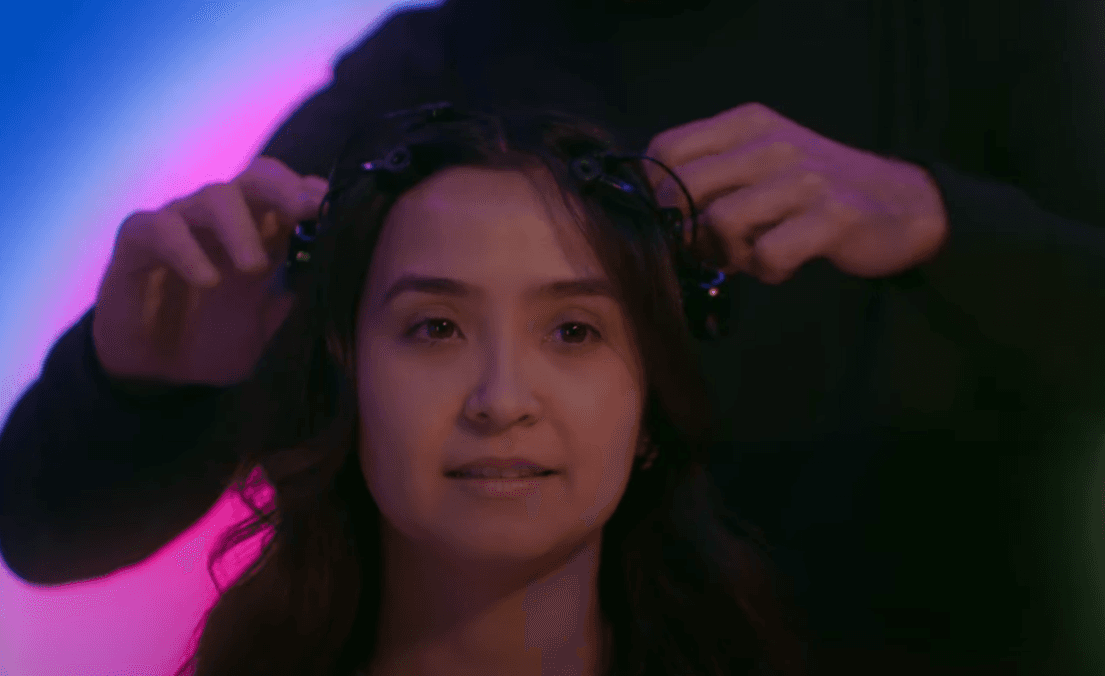
Using Emotiv’s EEG technology, researchers designed an experiment to compare cleaning activities against commonly enjoyed experiences.
Participants wore EEG headsets while engaging in:
Cleaning tasks (e.g., wiping counters, scrubbing sinks, cleaning toilets)
Feel-good activities (e.g., petting puppies, drinking coffee, getting a massage)
Rather than relying on opinions, Emotiv measured brain activity linked to:
Positive emotion
Engagement
Approach motivation (the brain’s “this feels good, do more of it” signal)
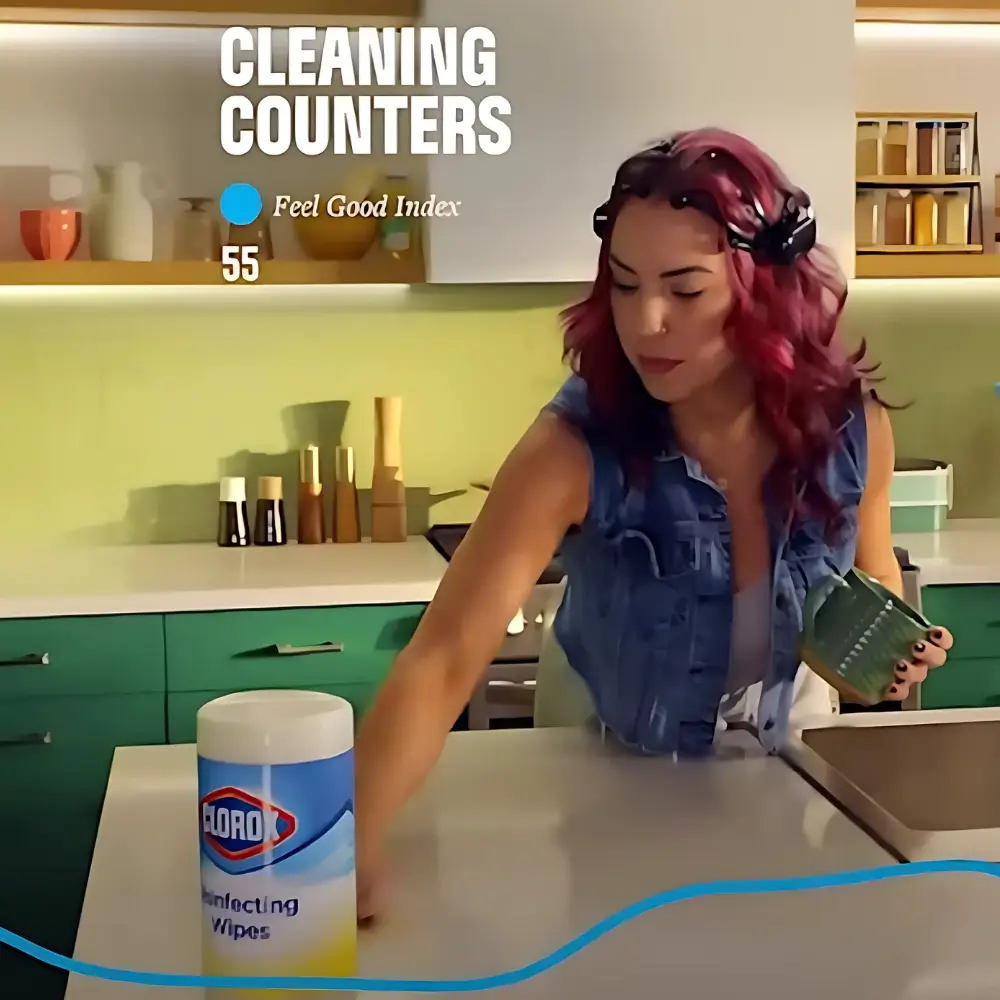
This allowed the team to quantify a new metric: a neural “Feel-Good Index” grounded in real-time brain data [1], [3].
The Insight: Clean Competes with Joy
The results flipped expectations on their head:
37% of participants felt better cleaning a toilet than petting a puppy [1]
Cleaning generated emotional responses comparable to music, beverages, and entertainment [2], [3]
Some cleaning tasks produced stronger positive responses than traditionally relaxing experiences [1]
Even brief cleaning moments triggered measurable positive brain activity.
In other words, the act itself—not just the result—felt good.
From Insight to Campaign
Instead of burying the science in a white paper, Clorox turned the findings into the creative engine of the campaign.
Key Activations
“Good vs. Good” storytelling
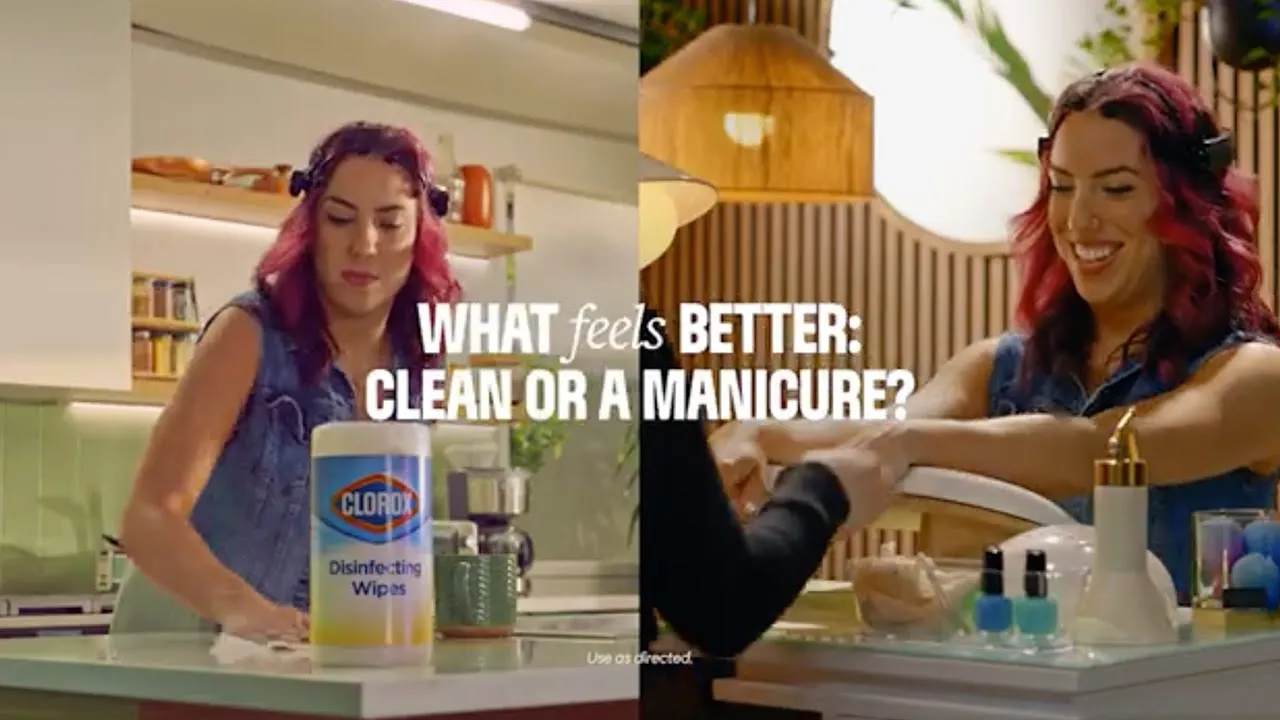
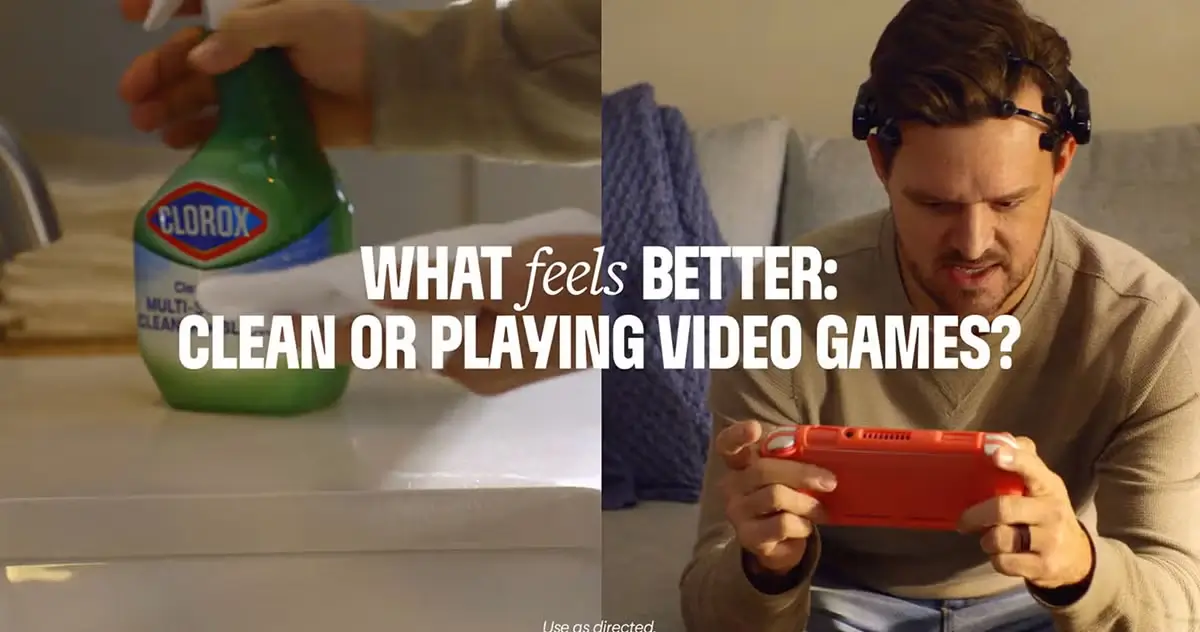
Real participants reacted on camera as their brain data revealed surprising truths about what felt better.Integrated media rollout
TV, social, and influencer content brought the experiment to life across platforms. [3]Experiential neuroscience events
Live activations allowed media and creators to wear Emotiv headsets and experience the experiment firsthand, turning abstract data into tangible moments.Interactive and social extensions
AR filters and influencer collaborations invited consumers to join the debate:
What actually feels better?
The Results: Emotion That Drives Action
By grounding creative in neuroscience, the campaign didn’t just shift perception—it changed behavior.
Brand Impact
85% brand favorability and 93% purchase intent among exposed audiences [4]
1 in 10 consumers reported cleaning more often [4]
Behavioral Shift
1 in 10 consumers reported cleaning more frequently
Reach & Engagement
271M+ earned media impressions [4]
Strong influencer engagement, outperforming benchmarks
Industry Recognition
Winner: 2025 Ragan PR Daily Awards - Original Research
Winner: 2025 Ragan PR Daily Awards - Experiential Event
Nominated: 2026 Shorty Awards - Data & Insights
Finalist: 2026 Shorty Awards - Brand Awareness Campaigns

Why It Worked
This campaign succeeded because it bridged three critical gaps:
1. From Opinion to Evidence
EEG replaced guesswork with objective emotional measurement, revealing what consumers couldn’t articulate.
2. From Data to Story
Instead of presenting neuroscience as proof points, Clorox turned it into entertainment and debate.
3. From Insight to Behavior
By reframing cleaning as a source of everyday reward, the campaign influenced real-world habits—not just perceptions.
The Bigger Picture: A New Model for Brand Building
The Clorox campaign demonstrates a powerful shift:
When brands understand emotion at the neurological level, they can design experiences that don’t just resonate—they rewire perception.
With Emotiv’s technology, Clorox transformed cleaning from a reluctant task into a micro-moment of joy—and proved it with data.
Measure the moment. Prove the impact. Start exploring real-time emotional insights with Emotiv Studio.
[1] The Clorox Company, “Can Cleaning Feel as Good as Petting Puppies? New Neuroscience Research from Clorox Says It Can,” PR Newswire, Mar. 11, 2025.
[2] L. Dominguez, “Clorox Neuroscience Experiment Says Cleaning Brings Joy,” Consumer Goods Technology, Mar. 11, 2025.
[3] J. Hammers, “Clorox tests emotional response to cleaning for new brand platform,” Marketing Dive, Mar. 11, 2025.
[4] A. Baar, “Clorox’s new campaign aims for all the feels,” Brand Innovators, Mar. 13, 2025.
[5] The Clorox Company, “Clean Feels Good,” Clorox.com, 2025.
[6] Clorox Arabia, “Cleaning Beats Karak: Clorox Brain Study Reveals Unexpected Mood Booster,” PR Newswire, Oct. 20, 2025.
Rethinking the Emotional Story of Cleaning
For decades, cleaning has lived in the cultural imagination as a chore—necessary, but rarely enjoyable. The Clorox Company set out to challenge that assumption with a deceptively simple question:
What if cleaning doesn’t just look good… but actually feels good?
To answer it, Clorox partnered with Emotiv to move beyond self-reported sentiment and measure emotional response directly from the brain.
The result became the foundation for the “Good vs. Good / Clean Feels Good” campaign—a bold fusion of neuroscience, storytelling, and brand strategy.
The Challenge
Clorox faced a classic brand tension:
Cleaning is associated with utility, not emotion
Traditional research (surveys, focus groups) captures what people say, not how they truly feel
Emotional positioning in the category remained largely untapped
To shift perception, Clorox needed objective, physiological proof that cleaning could compete with everyday “feel-good” moments.
The Approach: Measuring Emotion with EEG
Using Emotiv’s EEG technology, researchers designed an experiment to compare cleaning activities against commonly enjoyed experiences.
Participants wore EEG headsets while engaging in:
Cleaning tasks (e.g., wiping counters, scrubbing sinks, cleaning toilets)
Feel-good activities (e.g., petting puppies, drinking coffee, getting a massage)
Rather than relying on opinions, Emotiv measured brain activity linked to:
Positive emotion
Engagement
Approach motivation (the brain’s “this feels good, do more of it” signal)
This allowed the team to quantify a new metric: a neural “Feel-Good Index” grounded in real-time brain data [1], [3].
The Insight: Clean Competes with Joy
The results flipped expectations on their head:
37% of participants felt better cleaning a toilet than petting a puppy [1]
Cleaning generated emotional responses comparable to music, beverages, and entertainment [2], [3]
Some cleaning tasks produced stronger positive responses than traditionally relaxing experiences [1]
Even brief cleaning moments triggered measurable positive brain activity.
In other words, the act itself—not just the result—felt good.
From Insight to Campaign
Instead of burying the science in a white paper, Clorox turned the findings into the creative engine of the campaign.
Key Activations
“Good vs. Good” storytelling
Real participants reacted on camera as their brain data revealed surprising truths about what felt better.Integrated media rollout
TV, social, and influencer content brought the experiment to life across platforms. [3]Experiential neuroscience events
Live activations allowed media and creators to wear Emotiv headsets and experience the experiment firsthand, turning abstract data into tangible moments.Interactive and social extensions
AR filters and influencer collaborations invited consumers to join the debate:
What actually feels better?
The Results: Emotion That Drives Action
By grounding creative in neuroscience, the campaign didn’t just shift perception—it changed behavior.
Brand Impact
85% brand favorability and 93% purchase intent among exposed audiences [4]
1 in 10 consumers reported cleaning more often [4]
Behavioral Shift
1 in 10 consumers reported cleaning more frequently
Reach & Engagement
271M+ earned media impressions [4]
Strong influencer engagement, outperforming benchmarks
Industry Recognition
Winner: 2025 Ragan PR Daily Awards - Original Research
Winner: 2025 Ragan PR Daily Awards - Experiential Event
Nominated: 2026 Shorty Awards - Data & Insights
Finalist: 2026 Shorty Awards - Brand Awareness Campaigns
Why It Worked
This campaign succeeded because it bridged three critical gaps:
1. From Opinion to Evidence
EEG replaced guesswork with objective emotional measurement, revealing what consumers couldn’t articulate.
2. From Data to Story
Instead of presenting neuroscience as proof points, Clorox turned it into entertainment and debate.
3. From Insight to Behavior
By reframing cleaning as a source of everyday reward, the campaign influenced real-world habits—not just perceptions.
The Bigger Picture: A New Model for Brand Building
The Clorox campaign demonstrates a powerful shift:
When brands understand emotion at the neurological level, they can design experiences that don’t just resonate—they rewire perception.
With Emotiv’s technology, Clorox transformed cleaning from a reluctant task into a micro-moment of joy—and proved it with data.
Measure the moment. Prove the impact. Start exploring real-time emotional insights with Emotiv Studio.
[1] The Clorox Company, “Can Cleaning Feel as Good as Petting Puppies? New Neuroscience Research from Clorox Says It Can,” PR Newswire, Mar. 11, 2025.
[2] L. Dominguez, “Clorox Neuroscience Experiment Says Cleaning Brings Joy,” Consumer Goods Technology, Mar. 11, 2025.
[3] J. Hammers, “Clorox tests emotional response to cleaning for new brand platform,” Marketing Dive, Mar. 11, 2025.
[4] A. Baar, “Clorox’s new campaign aims for all the feels,” Brand Innovators, Mar. 13, 2025.
[5] The Clorox Company, “Clean Feels Good,” Clorox.com, 2025.
[6] Clorox Arabia, “Cleaning Beats Karak: Clorox Brain Study Reveals Unexpected Mood Booster,” PR Newswire, Oct. 20, 2025.
Rethinking the Emotional Story of Cleaning
For decades, cleaning has lived in the cultural imagination as a chore—necessary, but rarely enjoyable. The Clorox Company set out to challenge that assumption with a deceptively simple question:
What if cleaning doesn’t just look good… but actually feels good?
To answer it, Clorox partnered with Emotiv to move beyond self-reported sentiment and measure emotional response directly from the brain.
The result became the foundation for the “Good vs. Good / Clean Feels Good” campaign—a bold fusion of neuroscience, storytelling, and brand strategy.
The Challenge
Clorox faced a classic brand tension:
Cleaning is associated with utility, not emotion
Traditional research (surveys, focus groups) captures what people say, not how they truly feel
Emotional positioning in the category remained largely untapped
To shift perception, Clorox needed objective, physiological proof that cleaning could compete with everyday “feel-good” moments.
The Approach: Measuring Emotion with EEG
Using Emotiv’s EEG technology, researchers designed an experiment to compare cleaning activities against commonly enjoyed experiences.
Participants wore EEG headsets while engaging in:
Cleaning tasks (e.g., wiping counters, scrubbing sinks, cleaning toilets)
Feel-good activities (e.g., petting puppies, drinking coffee, getting a massage)
Rather than relying on opinions, Emotiv measured brain activity linked to:
Positive emotion
Engagement
Approach motivation (the brain’s “this feels good, do more of it” signal)
This allowed the team to quantify a new metric: a neural “Feel-Good Index” grounded in real-time brain data [1], [3].
The Insight: Clean Competes with Joy
The results flipped expectations on their head:
37% of participants felt better cleaning a toilet than petting a puppy [1]
Cleaning generated emotional responses comparable to music, beverages, and entertainment [2], [3]
Some cleaning tasks produced stronger positive responses than traditionally relaxing experiences [1]
Even brief cleaning moments triggered measurable positive brain activity.
In other words, the act itself—not just the result—felt good.
From Insight to Campaign
Instead of burying the science in a white paper, Clorox turned the findings into the creative engine of the campaign.
Key Activations
“Good vs. Good” storytelling
Real participants reacted on camera as their brain data revealed surprising truths about what felt better.Integrated media rollout
TV, social, and influencer content brought the experiment to life across platforms. [3]Experiential neuroscience events
Live activations allowed media and creators to wear Emotiv headsets and experience the experiment firsthand, turning abstract data into tangible moments.Interactive and social extensions
AR filters and influencer collaborations invited consumers to join the debate:
What actually feels better?
The Results: Emotion That Drives Action
By grounding creative in neuroscience, the campaign didn’t just shift perception—it changed behavior.
Brand Impact
85% brand favorability and 93% purchase intent among exposed audiences [4]
1 in 10 consumers reported cleaning more often [4]
Behavioral Shift
1 in 10 consumers reported cleaning more frequently
Reach & Engagement
271M+ earned media impressions [4]
Strong influencer engagement, outperforming benchmarks
Industry Recognition
Winner: 2025 Ragan PR Daily Awards - Original Research
Winner: 2025 Ragan PR Daily Awards - Experiential Event
Nominated: 2026 Shorty Awards - Data & Insights
Finalist: 2026 Shorty Awards - Brand Awareness Campaigns
Why It Worked
This campaign succeeded because it bridged three critical gaps:
1. From Opinion to Evidence
EEG replaced guesswork with objective emotional measurement, revealing what consumers couldn’t articulate.
2. From Data to Story
Instead of presenting neuroscience as proof points, Clorox turned it into entertainment and debate.
3. From Insight to Behavior
By reframing cleaning as a source of everyday reward, the campaign influenced real-world habits—not just perceptions.
The Bigger Picture: A New Model for Brand Building
The Clorox campaign demonstrates a powerful shift:
When brands understand emotion at the neurological level, they can design experiences that don’t just resonate—they rewire perception.
With Emotiv’s technology, Clorox transformed cleaning from a reluctant task into a micro-moment of joy—and proved it with data.
Measure the moment. Prove the impact. Start exploring real-time emotional insights with Emotiv Studio.
[1] The Clorox Company, “Can Cleaning Feel as Good as Petting Puppies? New Neuroscience Research from Clorox Says It Can,” PR Newswire, Mar. 11, 2025.
[2] L. Dominguez, “Clorox Neuroscience Experiment Says Cleaning Brings Joy,” Consumer Goods Technology, Mar. 11, 2025.
[3] J. Hammers, “Clorox tests emotional response to cleaning for new brand platform,” Marketing Dive, Mar. 11, 2025.
[4] A. Baar, “Clorox’s new campaign aims for all the feels,” Brand Innovators, Mar. 13, 2025.
[5] The Clorox Company, “Clean Feels Good,” Clorox.com, 2025.
[6] Clorox Arabia, “Cleaning Beats Karak: Clorox Brain Study Reveals Unexpected Mood Booster,” PR Newswire, Oct. 20, 2025.