
Echo Chamber Effect in Marketing Research: Focus Group Alternatives
H.B. Duran
Updated on
Jun 16, 2026
Echo Chamber Effect in Marketing Research: Focus Group Alternatives
H.B. Duran
Updated on
Jun 16, 2026
Echo Chamber Effect in Marketing Research: Focus Group Alternatives
H.B. Duran
Updated on
Jun 16, 2026
Marketing teams have never had more ways to gather consumer feedback, yet many organizations still struggle with a familiar problem: distinguishing genuine audience response from group-driven consensus. The echo chamber effect can emerge when participants influence one another’s opinions, dominant voices shape discussion outcomes, or respondents unconsciously align with perceived group norms. As a result, focus groups may sometimes reveal what participants are willing to say publicly rather than how they actually responded during an experience.
For marketing agencies and in-house marketing teams, this creates a significant challenge. Advertising concepts, product messaging, packaging, video content, and campaign strategies are often refined based on qualitative feedback. When that feedback is influenced by social dynamics, teams may optimize creative assets around group narratives instead of authentic audience reactions.
This is one reason many organizations are expanding beyond traditional focus groups and incorporating neuroscience-based research methods into their decision-making processes. By collecting objective measures of audience response during exposure to marketing stimuli, researchers can gain additional context that is independent of social influence, group discussion, or retrospective recall. The result is a more complete understanding of what audiences actually notice, engage with, and respond to before critical marketing decisions are finalized.
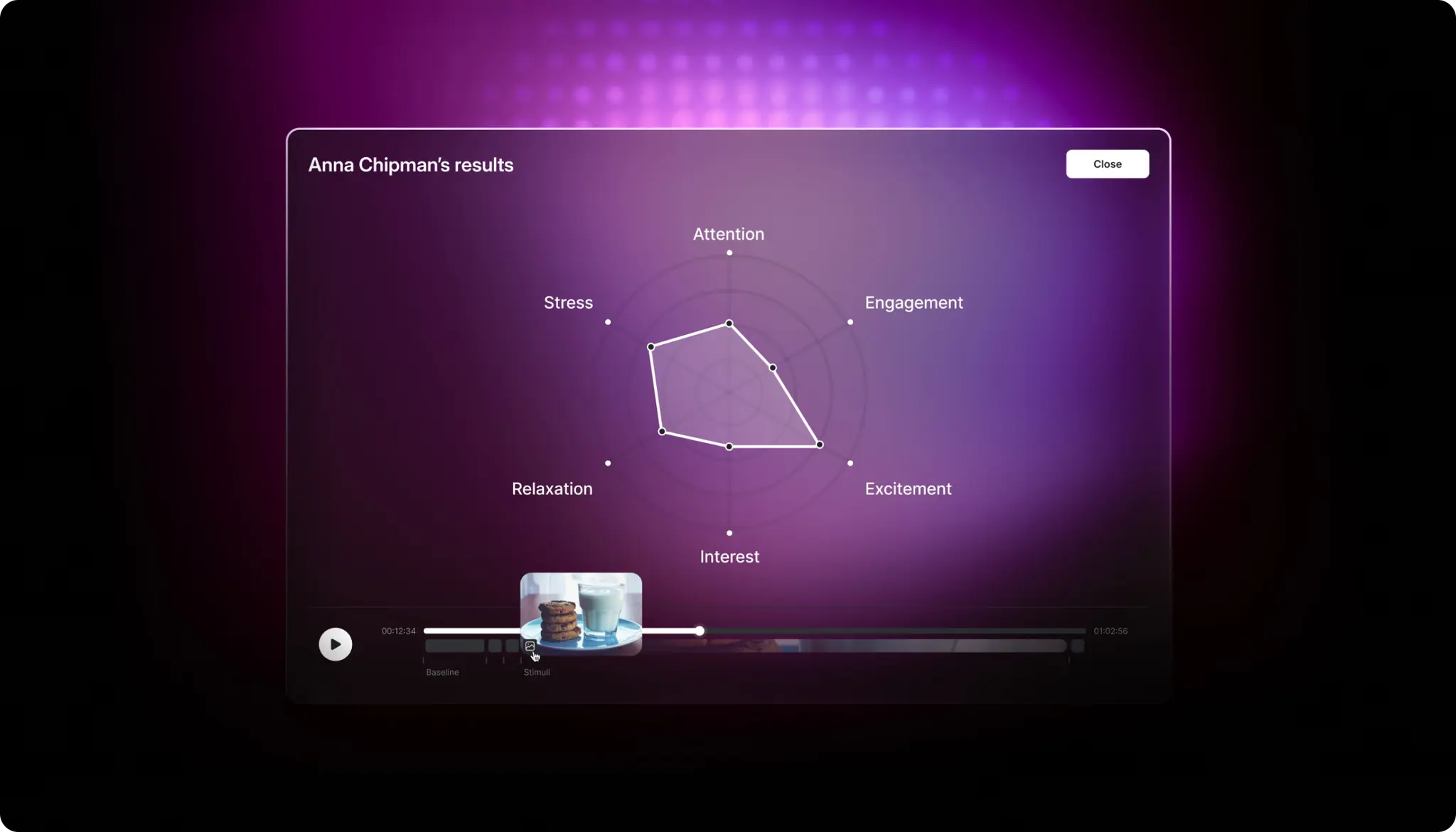
Objective audience measurements can complement qualitative feedback and help reduce group-influenced research bias.
Key Takeaways
The echo chamber effect can influence focus group outcomes through social conformity and group dynamics.
Neuroscience-based research adds objective audience response data alongside self-reported feedback.
EEG-informed testing helps marketers evaluate reactions during exposure rather than after discussion.
Combining qualitative and neuroscience-based methods can improve confidence in creative decisions.
Marketing teams can identify insights that may not emerge through traditional focus groups alone.
Why Focus Groups Sometimes Create Consensus Instead of Insight
Focus groups remain a valuable tool for exploring perceptions, language, motivations, and consumer attitudes. However, they also introduce social variables that can influence outcomes. Participants may adjust their opinions based on comments from others, seek agreement with dominant personalities, or hesitate to express conflicting viewpoints.
For marketing teams evaluating new creative concepts, this can create an unintended feedback loop. Early opinions expressed within a group setting can become reinforced as discussion progresses, leading researchers to observe consensus where substantial variation may actually exist.
This challenge becomes especially relevant when evaluating advertising, branding, packaging, and product concepts. In many cases, audiences form impressions within seconds of exposure. Those immediate reactions may be difficult to accurately reconstruct later during a moderated group discussion.
The Limitations of Self-Reported Feedback
Traditional research methods often depend on participants explaining why they liked or disliked a particular experience. While these responses provide valuable context, they do not always capture the full picture.
Research by Plassmann et al. (2015) suggests that neuroscience methods can provide information about implicit processes that are often difficult to access using conventional research techniques. This makes neuroscience-informed approaches particularly valuable when marketers want to understand audience responses that may not be fully reflected in surveys or discussion groups.
Participants frequently reconstruct their reactions after the fact. During that process, memory, social influence, and rationalization can shape the explanations they provide. As a result, what consumers report may differ from how they responded in the moment.
How Neuroscience-Based Research Provides Additional Context
Neuroscience-based marketing research is not designed to replace focus groups. Instead, it serves as a complementary method that provides objective measures of audience response during exposure to marketing content.
Using platforms such as Emotiv Studio, researchers can evaluate patterns associated with attention, engagement, interest, and cognitive workload while participants interact with advertising, video content, websites, product concepts, or branded experiences. These measures provide additional context that is independent of group discussion and social influence. :contentReference[oaicite:0]{index=0}
Because data is collected during the experience itself, marketers can better understand how responses evolve moment by moment rather than relying exclusively on retrospective explanations.
Reducing the Echo Chamber Effect Through Objective Measurement
The primary advantage of incorporating neuroscience-based research into marketing studies is the ability to capture individual responses before group dynamics influence interpretation.
For example, a participant may later agree with the prevailing sentiment expressed during a focus group discussion, but objective audience measurements collected during the initial exposure may reveal a different pattern of engagement. By comparing these data sources, researchers can identify where group consensus aligns with audience response and where it may obscure meaningful differences.
Research by Smidts et al. (2014) argues that consumer neuroscience contributes to a deeper understanding of consumer behavior and supports improved decision-making. For marketers, this means gaining access to additional evidence that can help validate, challenge, or refine conclusions derived from traditional qualitative research.
Real-World Examples of Objective Audience Testing
Multiple studies demonstrate how neuroscience-based methods can provide insights that support marketing and media decisions before launch.
In advertising and consumer research environments, Byrne et al. (2022) observed that neuromarketing approaches can capture implicit cognitive and emotional responses during audience engagement with marketing content. The authors note that these methods can help reduce some of the subjectivity associated with traditional marketing research.
A second example comes from media evaluation. Research by Christoforou et al. (2017) found that neural responses collected while audiences viewed movie trailers were associated with future performance outcomes. Importantly, these insights were available while creative and promotional decisions could still be adjusted.
Organizations conducting neuromarketing research increasingly apply similar methodologies to evaluate advertising concepts, campaign creative, and audience experiences before launch, helping teams complement traditional qualitative findings with objective measures of audience response. :contentReference[oaicite:1]{index=1}
A More Balanced Marketing Research Framework
The most effective research programs typically combine multiple methodologies rather than relying exclusively on a single source of insight. Focus groups remain valuable for understanding language, motivations, and consumer perceptions. Neuroscience-based research contributes a different perspective by measuring audience response directly during exposure.
Together, these approaches allow marketers to compare what consumers say with how they respond. When both sources align, confidence in decision-making often increases. When discrepancies emerge, researchers gain an opportunity to investigate further before making strategic investments.
For agencies and in-house teams tasked with optimizing campaigns, product launches, and brand experiences, reducing the influence of the echo chamber effect can lead to more accurate audience understanding and stronger creative outcomes.
Conclusion
The echo chamber effect is not a flaw unique to focus groups. It is a natural outcome of human social interaction. However, when marketing decisions rely heavily on group-driven feedback, important audience insights can be overlooked.
By incorporating neuroscience-based research alongside traditional methodologies, marketers can gain access to objective measures of audience response that are independent of group discussion and social influence. This additional layer of evidence helps teams better understand what audiences actually notice, engage with, and respond to throughout the customer experience.
Teams seeking a more comprehensive approach to audience testing can explore how Emotiv Studio supports neuroscience-informed marketing research workflows.
Sources
Byrne, M., et al. (2022). A Systematic Review of the Prediction of Consumer Preference Using EEG Measures and Machine-Learning in Neuromarketing Research. Brain Informatics. https://doi.org/10.1186/s40708-022-00175-3
Christoforou, C., Constantinidou, F., Shoshilou, P., et al. (2017). Your Brain on the Movies: A Computational Approach for Predicting Box-office Performance from Viewer’s Brain Responses to Movie Trailers. Frontiers in Neuroinformatics. https://doi.org/10.3389/fninf.2017.00072
Plassmann, H., Venkatraman, V., Huettel, S., & Yoon, C. (2015). Consumer Neuroscience: Applications, Challenges, and Possible Solutions. Journal of Marketing Research. https://doi.org/10.1509/jmr.14.0048
Smidts, A., Hsu, M., & Sanfey, A. (2014). Advancing Consumer Neuroscience. Marketing Letters. https://doi.org/10.1007/s11002-014-9306-1
Marketing teams have never had more ways to gather consumer feedback, yet many organizations still struggle with a familiar problem: distinguishing genuine audience response from group-driven consensus. The echo chamber effect can emerge when participants influence one another’s opinions, dominant voices shape discussion outcomes, or respondents unconsciously align with perceived group norms. As a result, focus groups may sometimes reveal what participants are willing to say publicly rather than how they actually responded during an experience.
For marketing agencies and in-house marketing teams, this creates a significant challenge. Advertising concepts, product messaging, packaging, video content, and campaign strategies are often refined based on qualitative feedback. When that feedback is influenced by social dynamics, teams may optimize creative assets around group narratives instead of authentic audience reactions.
This is one reason many organizations are expanding beyond traditional focus groups and incorporating neuroscience-based research methods into their decision-making processes. By collecting objective measures of audience response during exposure to marketing stimuli, researchers can gain additional context that is independent of social influence, group discussion, or retrospective recall. The result is a more complete understanding of what audiences actually notice, engage with, and respond to before critical marketing decisions are finalized.
Objective audience measurements can complement qualitative feedback and help reduce group-influenced research bias.
Key Takeaways
The echo chamber effect can influence focus group outcomes through social conformity and group dynamics.
Neuroscience-based research adds objective audience response data alongside self-reported feedback.
EEG-informed testing helps marketers evaluate reactions during exposure rather than after discussion.
Combining qualitative and neuroscience-based methods can improve confidence in creative decisions.
Marketing teams can identify insights that may not emerge through traditional focus groups alone.
Why Focus Groups Sometimes Create Consensus Instead of Insight
Focus groups remain a valuable tool for exploring perceptions, language, motivations, and consumer attitudes. However, they also introduce social variables that can influence outcomes. Participants may adjust their opinions based on comments from others, seek agreement with dominant personalities, or hesitate to express conflicting viewpoints.
For marketing teams evaluating new creative concepts, this can create an unintended feedback loop. Early opinions expressed within a group setting can become reinforced as discussion progresses, leading researchers to observe consensus where substantial variation may actually exist.
This challenge becomes especially relevant when evaluating advertising, branding, packaging, and product concepts. In many cases, audiences form impressions within seconds of exposure. Those immediate reactions may be difficult to accurately reconstruct later during a moderated group discussion.
The Limitations of Self-Reported Feedback
Traditional research methods often depend on participants explaining why they liked or disliked a particular experience. While these responses provide valuable context, they do not always capture the full picture.
Research by Plassmann et al. (2015) suggests that neuroscience methods can provide information about implicit processes that are often difficult to access using conventional research techniques. This makes neuroscience-informed approaches particularly valuable when marketers want to understand audience responses that may not be fully reflected in surveys or discussion groups.
Participants frequently reconstruct their reactions after the fact. During that process, memory, social influence, and rationalization can shape the explanations they provide. As a result, what consumers report may differ from how they responded in the moment.
How Neuroscience-Based Research Provides Additional Context
Neuroscience-based marketing research is not designed to replace focus groups. Instead, it serves as a complementary method that provides objective measures of audience response during exposure to marketing content.
Using platforms such as Emotiv Studio, researchers can evaluate patterns associated with attention, engagement, interest, and cognitive workload while participants interact with advertising, video content, websites, product concepts, or branded experiences. These measures provide additional context that is independent of group discussion and social influence. :contentReference[oaicite:0]{index=0}
Because data is collected during the experience itself, marketers can better understand how responses evolve moment by moment rather than relying exclusively on retrospective explanations.
Reducing the Echo Chamber Effect Through Objective Measurement
The primary advantage of incorporating neuroscience-based research into marketing studies is the ability to capture individual responses before group dynamics influence interpretation.
For example, a participant may later agree with the prevailing sentiment expressed during a focus group discussion, but objective audience measurements collected during the initial exposure may reveal a different pattern of engagement. By comparing these data sources, researchers can identify where group consensus aligns with audience response and where it may obscure meaningful differences.
Research by Smidts et al. (2014) argues that consumer neuroscience contributes to a deeper understanding of consumer behavior and supports improved decision-making. For marketers, this means gaining access to additional evidence that can help validate, challenge, or refine conclusions derived from traditional qualitative research.
Real-World Examples of Objective Audience Testing
Multiple studies demonstrate how neuroscience-based methods can provide insights that support marketing and media decisions before launch.
In advertising and consumer research environments, Byrne et al. (2022) observed that neuromarketing approaches can capture implicit cognitive and emotional responses during audience engagement with marketing content. The authors note that these methods can help reduce some of the subjectivity associated with traditional marketing research.
A second example comes from media evaluation. Research by Christoforou et al. (2017) found that neural responses collected while audiences viewed movie trailers were associated with future performance outcomes. Importantly, these insights were available while creative and promotional decisions could still be adjusted.
Organizations conducting neuromarketing research increasingly apply similar methodologies to evaluate advertising concepts, campaign creative, and audience experiences before launch, helping teams complement traditional qualitative findings with objective measures of audience response. :contentReference[oaicite:1]{index=1}
A More Balanced Marketing Research Framework
The most effective research programs typically combine multiple methodologies rather than relying exclusively on a single source of insight. Focus groups remain valuable for understanding language, motivations, and consumer perceptions. Neuroscience-based research contributes a different perspective by measuring audience response directly during exposure.
Together, these approaches allow marketers to compare what consumers say with how they respond. When both sources align, confidence in decision-making often increases. When discrepancies emerge, researchers gain an opportunity to investigate further before making strategic investments.
For agencies and in-house teams tasked with optimizing campaigns, product launches, and brand experiences, reducing the influence of the echo chamber effect can lead to more accurate audience understanding and stronger creative outcomes.
Conclusion
The echo chamber effect is not a flaw unique to focus groups. It is a natural outcome of human social interaction. However, when marketing decisions rely heavily on group-driven feedback, important audience insights can be overlooked.
By incorporating neuroscience-based research alongside traditional methodologies, marketers can gain access to objective measures of audience response that are independent of group discussion and social influence. This additional layer of evidence helps teams better understand what audiences actually notice, engage with, and respond to throughout the customer experience.
Teams seeking a more comprehensive approach to audience testing can explore how Emotiv Studio supports neuroscience-informed marketing research workflows.
Sources
Byrne, M., et al. (2022). A Systematic Review of the Prediction of Consumer Preference Using EEG Measures and Machine-Learning in Neuromarketing Research. Brain Informatics. https://doi.org/10.1186/s40708-022-00175-3
Christoforou, C., Constantinidou, F., Shoshilou, P., et al. (2017). Your Brain on the Movies: A Computational Approach for Predicting Box-office Performance from Viewer’s Brain Responses to Movie Trailers. Frontiers in Neuroinformatics. https://doi.org/10.3389/fninf.2017.00072
Plassmann, H., Venkatraman, V., Huettel, S., & Yoon, C. (2015). Consumer Neuroscience: Applications, Challenges, and Possible Solutions. Journal of Marketing Research. https://doi.org/10.1509/jmr.14.0048
Smidts, A., Hsu, M., & Sanfey, A. (2014). Advancing Consumer Neuroscience. Marketing Letters. https://doi.org/10.1007/s11002-014-9306-1
Marketing teams have never had more ways to gather consumer feedback, yet many organizations still struggle with a familiar problem: distinguishing genuine audience response from group-driven consensus. The echo chamber effect can emerge when participants influence one another’s opinions, dominant voices shape discussion outcomes, or respondents unconsciously align with perceived group norms. As a result, focus groups may sometimes reveal what participants are willing to say publicly rather than how they actually responded during an experience.
For marketing agencies and in-house marketing teams, this creates a significant challenge. Advertising concepts, product messaging, packaging, video content, and campaign strategies are often refined based on qualitative feedback. When that feedback is influenced by social dynamics, teams may optimize creative assets around group narratives instead of authentic audience reactions.
This is one reason many organizations are expanding beyond traditional focus groups and incorporating neuroscience-based research methods into their decision-making processes. By collecting objective measures of audience response during exposure to marketing stimuli, researchers can gain additional context that is independent of social influence, group discussion, or retrospective recall. The result is a more complete understanding of what audiences actually notice, engage with, and respond to before critical marketing decisions are finalized.
Objective audience measurements can complement qualitative feedback and help reduce group-influenced research bias.
Key Takeaways
The echo chamber effect can influence focus group outcomes through social conformity and group dynamics.
Neuroscience-based research adds objective audience response data alongside self-reported feedback.
EEG-informed testing helps marketers evaluate reactions during exposure rather than after discussion.
Combining qualitative and neuroscience-based methods can improve confidence in creative decisions.
Marketing teams can identify insights that may not emerge through traditional focus groups alone.
Why Focus Groups Sometimes Create Consensus Instead of Insight
Focus groups remain a valuable tool for exploring perceptions, language, motivations, and consumer attitudes. However, they also introduce social variables that can influence outcomes. Participants may adjust their opinions based on comments from others, seek agreement with dominant personalities, or hesitate to express conflicting viewpoints.
For marketing teams evaluating new creative concepts, this can create an unintended feedback loop. Early opinions expressed within a group setting can become reinforced as discussion progresses, leading researchers to observe consensus where substantial variation may actually exist.
This challenge becomes especially relevant when evaluating advertising, branding, packaging, and product concepts. In many cases, audiences form impressions within seconds of exposure. Those immediate reactions may be difficult to accurately reconstruct later during a moderated group discussion.
The Limitations of Self-Reported Feedback
Traditional research methods often depend on participants explaining why they liked or disliked a particular experience. While these responses provide valuable context, they do not always capture the full picture.
Research by Plassmann et al. (2015) suggests that neuroscience methods can provide information about implicit processes that are often difficult to access using conventional research techniques. This makes neuroscience-informed approaches particularly valuable when marketers want to understand audience responses that may not be fully reflected in surveys or discussion groups.
Participants frequently reconstruct their reactions after the fact. During that process, memory, social influence, and rationalization can shape the explanations they provide. As a result, what consumers report may differ from how they responded in the moment.
How Neuroscience-Based Research Provides Additional Context
Neuroscience-based marketing research is not designed to replace focus groups. Instead, it serves as a complementary method that provides objective measures of audience response during exposure to marketing content.
Using platforms such as Emotiv Studio, researchers can evaluate patterns associated with attention, engagement, interest, and cognitive workload while participants interact with advertising, video content, websites, product concepts, or branded experiences. These measures provide additional context that is independent of group discussion and social influence. :contentReference[oaicite:0]{index=0}
Because data is collected during the experience itself, marketers can better understand how responses evolve moment by moment rather than relying exclusively on retrospective explanations.
Reducing the Echo Chamber Effect Through Objective Measurement
The primary advantage of incorporating neuroscience-based research into marketing studies is the ability to capture individual responses before group dynamics influence interpretation.
For example, a participant may later agree with the prevailing sentiment expressed during a focus group discussion, but objective audience measurements collected during the initial exposure may reveal a different pattern of engagement. By comparing these data sources, researchers can identify where group consensus aligns with audience response and where it may obscure meaningful differences.
Research by Smidts et al. (2014) argues that consumer neuroscience contributes to a deeper understanding of consumer behavior and supports improved decision-making. For marketers, this means gaining access to additional evidence that can help validate, challenge, or refine conclusions derived from traditional qualitative research.
Real-World Examples of Objective Audience Testing
Multiple studies demonstrate how neuroscience-based methods can provide insights that support marketing and media decisions before launch.
In advertising and consumer research environments, Byrne et al. (2022) observed that neuromarketing approaches can capture implicit cognitive and emotional responses during audience engagement with marketing content. The authors note that these methods can help reduce some of the subjectivity associated with traditional marketing research.
A second example comes from media evaluation. Research by Christoforou et al. (2017) found that neural responses collected while audiences viewed movie trailers were associated with future performance outcomes. Importantly, these insights were available while creative and promotional decisions could still be adjusted.
Organizations conducting neuromarketing research increasingly apply similar methodologies to evaluate advertising concepts, campaign creative, and audience experiences before launch, helping teams complement traditional qualitative findings with objective measures of audience response. :contentReference[oaicite:1]{index=1}
A More Balanced Marketing Research Framework
The most effective research programs typically combine multiple methodologies rather than relying exclusively on a single source of insight. Focus groups remain valuable for understanding language, motivations, and consumer perceptions. Neuroscience-based research contributes a different perspective by measuring audience response directly during exposure.
Together, these approaches allow marketers to compare what consumers say with how they respond. When both sources align, confidence in decision-making often increases. When discrepancies emerge, researchers gain an opportunity to investigate further before making strategic investments.
For agencies and in-house teams tasked with optimizing campaigns, product launches, and brand experiences, reducing the influence of the echo chamber effect can lead to more accurate audience understanding and stronger creative outcomes.
Conclusion
The echo chamber effect is not a flaw unique to focus groups. It is a natural outcome of human social interaction. However, when marketing decisions rely heavily on group-driven feedback, important audience insights can be overlooked.
By incorporating neuroscience-based research alongside traditional methodologies, marketers can gain access to objective measures of audience response that are independent of group discussion and social influence. This additional layer of evidence helps teams better understand what audiences actually notice, engage with, and respond to throughout the customer experience.
Teams seeking a more comprehensive approach to audience testing can explore how Emotiv Studio supports neuroscience-informed marketing research workflows.
Sources
Byrne, M., et al. (2022). A Systematic Review of the Prediction of Consumer Preference Using EEG Measures and Machine-Learning in Neuromarketing Research. Brain Informatics. https://doi.org/10.1186/s40708-022-00175-3
Christoforou, C., Constantinidou, F., Shoshilou, P., et al. (2017). Your Brain on the Movies: A Computational Approach for Predicting Box-office Performance from Viewer’s Brain Responses to Movie Trailers. Frontiers in Neuroinformatics. https://doi.org/10.3389/fninf.2017.00072
Plassmann, H., Venkatraman, V., Huettel, S., & Yoon, C. (2015). Consumer Neuroscience: Applications, Challenges, and Possible Solutions. Journal of Marketing Research. https://doi.org/10.1509/jmr.14.0048
Smidts, A., Hsu, M., & Sanfey, A. (2014). Advancing Consumer Neuroscience. Marketing Letters. https://doi.org/10.1007/s11002-014-9306-1
Continue reading