Earbud Buyer's Guide: Sound, Fit, and Features
H.B. Duran
Updated on
Feb 12, 2026
Earbud Buyer's Guide: Sound, Fit, and Features
H.B. Duran
Updated on
Feb 12, 2026
Earbud Buyer's Guide: Sound, Fit, and Features
H.B. Duran
Updated on
Feb 12, 2026
Earbuds have evolved far beyond simple audio accessories.
Whether you're listening to music during a workout, taking calls throughout the workday, joining virtual meetings, or creating a moment of focus in a busy environment, today's earbuds are designed to do much more than play sound. Features like active noise cancellation, voice assistants, fitness integration, and personalized audio have transformed earbuds into everyday productivity and wellness tools.
But audio is only part of the story.
A new generation of wearable technology is expanding what earbuds can do. Alongside traditional listening experiences, some earbuds now incorporate advanced sensors that provide access to physical and cognitive insights, opening the door to entirely new applications in wellness, research, and human-computer interaction.
This guide explores the different types of earbuds available today, the features that matter most, how much you should expect to spend, and why emerging technologies like EEG earbuds are helping shape the future of wearable devices.
Key Takeaways
Choose earbuds based on how you actually use them, whether that's work, fitness, travel, entertainment, or cognitive wellness.
A secure fit affects comfort, sound quality, and overall performance more than almost any other feature.
Wireless earbuds continue to dominate the market thanks to improvements in battery life, connectivity, and convenience.
Modern earbuds are expanding beyond audio, with some devices incorporating sensors that provide access to wellness and cognitive insights.
Emerging EEG earbuds combine audio experiences with brain-sensing technology, creating entirely new possibilities for personal insight, research, and innovation.

Earbuds 101: What You Need to Know
Earbuds have become one of the most widely used consumer technologies in the world. From streaming music and podcasts to handling work calls and virtual meetings, they play an increasingly important role in how we communicate, work, and relax.
The market has expanded dramatically over the past decade, driven by improvements in wireless connectivity, battery technology, and miniaturized electronics. As a result, today's earbuds offer capabilities that would have seemed impossible just a few years ago.
While sound quality remains important, many buyers now prioritize convenience, comfort, noise cancellation, battery life, and integration with the devices they use every day.
Understanding the different categories of earbuds and the features available can help you make a more informed purchase decision.
The Evolution of Earbuds
The biggest transformation in the earbud industry has been the rise of true wireless earbuds.
Unlike traditional wired earbuds, true wireless models eliminate cables entirely, allowing each earbud to operate independently while maintaining a wireless connection to your phone, computer, or tablet.
This shift has dramatically increased portability and convenience. Consumers can move freely without worrying about tangled cables, damaged connectors, or compatibility with headphone jacks that are increasingly disappearing from modern devices.
As demand has grown, manufacturers have continued improving audio performance, battery life, connectivity, and comfort, making wireless earbuds the preferred choice for most users.
Why Everyone's Going Wireless
Wireless earbuds offer a level of flexibility that wired devices simply cannot match.
Bluetooth connectivity allows users to move throughout their homes, offices, gyms, and workplaces without remaining physically connected to their devices. Modern Bluetooth standards also provide more stable connections, reduced latency, and improved audio quality.
Many wireless earbuds now include:
Active noise cancellation
Transparency modes
Voice assistant integration
Touch controls
Multi-device pairing
Wireless charging
These features have helped transform earbuds from simple listening devices into powerful everyday companions.
You might also enjoy:
Key Features to Look for in Earbuds
Sound Quality
Sound quality remains one of the most important considerations when purchasing earbuds.
Look for earbuds that deliver balanced audio with clear vocals, detailed highs, and controlled bass. Some models also offer customizable equalizer settings that allow users to tailor audio profiles to personal preferences.
The best earbuds create an immersive listening experience regardless of whether you're enjoying music, podcasts, audiobooks, or video content.
Battery Life
Battery performance varies significantly across models.
Most wireless earbuds offer between four and ten hours of listening time on a single charge, while charging cases can extend total usage to twenty or more hours.
If you frequently travel or spend long periods away from charging opportunities, battery life should be a major factor in your purchasing decision.
Comfort and Fit
Even the most advanced earbuds become frustrating if they don't fit properly.
A secure fit improves comfort, stability, sound quality, and passive noise isolation. Most manufacturers provide multiple ear tip sizes to help users achieve the best seal.
Because every ear shape is different, comfort should always be considered alongside technical specifications.
Noise Cancellation
Active Noise Cancellation (ANC) uses microphones and advanced processing algorithms to reduce environmental noise.
This technology can be particularly valuable in:
Airplanes
Public transportation
Open offices
Coffee shops
Shared workspaces
ANC is now available across a wide range of price points, although premium models typically provide the most effective performance.
Smart Features
Modern earbuds increasingly include intelligent features that extend beyond audio playback.
Examples include:
Voice assistants
Fitness tracking
Spatial audio
Adaptive sound modes
AI-powered enhancements
Health and wellness sensors
As wearable technology continues to evolve, smart features are becoming one of the biggest differentiators between devices.
Wired vs. Wireless: Which Type Is Right for You?
Wired Earbuds
Wired earbuds remain a reliable option for users who prioritize simplicity and consistency.
Benefits include:
No battery requirements
Zero wireless pairing
Consistent audio performance
Lower cost
For stationary use, wired earbuds continue to provide excellent value.
Wireless Earbuds
Wireless earbuds offer greater mobility and convenience.
By removing the physical connection between the device and earbuds, users gain the freedom to move naturally throughout daily activities.
Wireless earbuds have become the preferred choice for work, travel, exercise, and general everyday use.
True Wireless Earbuds
True wireless earbuds eliminate all cables entirely.
Their compact size, portable charging cases, and expanding feature sets have made them the fastest-growing segment of the earbud market.
For many users, true wireless earbuds represent the ideal balance of convenience, portability, and performance.
Beyond Audio: The Rise of Smart and Cognitive Earbuds
Wearable technology continues to move closer to the body.
Smartwatches transformed the wrist into a source of health and activity insights. Fitness trackers helped people better understand movement, sleep, and recovery. Increasingly, earbuds are following a similar path.
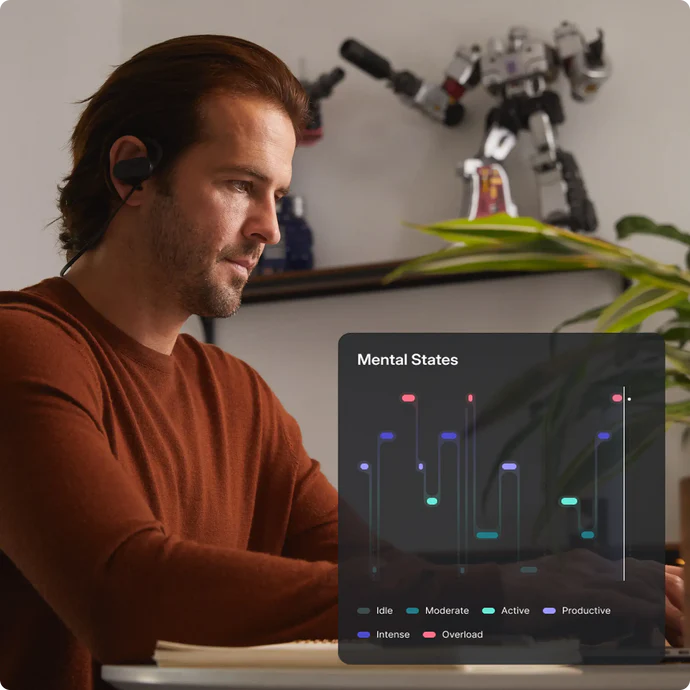
Many modern earbuds already include sensors for voice detection, motion tracking, and adaptive listening experiences. The next generation of devices is beginning to incorporate even more advanced sensing technologies designed to help users understand how they interact with the world around them.
One of the most exciting developments is the emergence of EEG-enabled earbuds.
Unlike traditional earbuds that only deliver audio, EEG earbuds can also measure electrical activity generated by the brain. This creates opportunities for new applications in cognitive wellness, attention awareness, meditation practices, neuroscience research, and brain-computer interface development.
Potential applications include:
Cognitive wellness
Focus and attention awareness
Meditation and mindfulness
Human-computer interaction
Brain-computer interface development
Academic research
Neurotechnology innovation
As wearable technology continues to evolve, earbuds are becoming more than listening devices. They're becoming platforms for understanding human experience.
Top Earbud Brands to Watch
Emotiv: Putting Neuroscience in Your Pocket
Most earbud manufacturers focus on improving sound quality, battery life, or noise cancellation.
Emotiv is exploring a different question:
What if earbuds could help people better understand their brains?
The Emotiv MN8 brainwear earbuds combine audio functionality with integrated EEG sensing technology in a familiar earbud form factor. Designed for comfort and everyday use, MN8 creates new opportunities to access brain data outside of traditional laboratory environments.
For Everyday Cognitive Wellness
As part of the Brainwear platform, Emotiv MN8 supports a growing consumer interest in understanding cognitive wellbeing.
Users can explore personalized insights related to focus, mental effort, relaxation, and cognitive performance, then follow guided exercises and reinforce what they learned through thought-powered games. Rather than requiring expertise in neuroscience, Brainwear is designed to make brain data more accessible and meaningful for everyday life.
People increasingly track steps, heart rate, sleep, and recovery. Brainwear extends that same curiosity to the reason behind all these symptoms: the brain. This helps users better understand how work, exercise, mindfulness practices, rest, and daily routines influence how they think and feel.
For Developers and Researchers
For researchers, developers, and innovators, Emotiv MN8 also serves as a powerful neurotechnology platform.
When paired with Emotiv Studio and the Cortex API, MN8 supports applications involving:
Brain-computer interfaces
Cognitive workload research
Human-computer interaction
Neurotechnology development
Real-world neuroscience studies
AI-enabled experiences
By moving brain sensing into a familiar wearable format, Emotiv MN8 expands where and how brain data can be measured.
The Future of Earbuds
For most people, earbuds today are still primarily audio devices.
But as wearable technology continues to advance, the distinction between audio devices, wellness technology, and cognitive technology is becoming less defined.
EEG-enabled earbuds represent one example of how wearable technology is evolving beyond entertainment toward deeper insight into human experience.
Apple: Seamless Ecosystem Integration
Apple's AirPods remain one of the most popular earbud families thanks to their tight integration with the Apple ecosystem. Features like automatic device switching, spatial audio, and hands-free Siri access make them a natural choice for iPhone, iPad, and Mac users.
Sony: Premium Audio Performance
Sony has built a reputation for delivering exceptional sound quality and industry-leading noise cancellation. Their premium earbuds are frequently recommended for users seeking immersive listening experiences and advanced audio controls.
Samsung: Built for Android Users
Samsung's Galaxy Buds provide strong performance, comfortable designs, and seamless integration with Android devices, particularly within the Samsung ecosystem.
Bose: Noise Cancellation Leaders
Bose continues to be recognized for its noise-cancellation technology. Frequent travelers and professionals often choose Bose earbuds for their ability to reduce distractions in noisy environments.
Google: AI-Powered Convenience
Google Pixel Buds integrate closely with Google Assistant and offer intelligent features such as voice controls, real-time translation, and smart notifications.
How Much Should You Spend on Earbuds?
Under $50
Budget earbuds provide basic functionality for casual listening, podcasts, and phone calls.
While advanced features may be limited, many affordable models deliver surprisingly strong performance for everyday use.
$50 to $150
This range offers the median value for most consumers.
Users can expect improved sound quality, better battery life, stronger connectivity, and features like water resistance and noise isolation.
$150 and Up
Premium earbuds deliver advanced noise cancellation, superior audio quality, enhanced comfort, and a wider range of intelligent features.
For users who spend significant time listening throughout the day, premium earbuds can be a worthwhile investment.
Specialized Technology
Some earbuds are designed for purposes beyond entertainment.
Research-grade devices, neurotechnology platforms, and EEG-enabled earbuds represent a growing category focused on understanding human cognition, supporting scientific research, and enabling entirely new forms of human-computer interaction.
Find the Right Earbuds for Your Lifestyle
The best earbuds depend on how you plan to use them.
For Fitness
Look for secure fit, water resistance, long battery life, and lightweight designs.
For Work
Prioritize microphone quality, comfort, call performance, and noise cancellation.
For Travel
Focus on active noise cancellation, portability, and battery life.
For Entertainment
Look for excellent sound quality, immersive audio, and low-latency performance.
For Cognitive Wellness and Neurotechnology
If you're interested in understanding focus, relaxation, mental effort, or exploring brain-computer interface technology, EEG-enabled earbuds represent an emerging category worth exploring. Emotiv pioneered the space, introducing the world's first EEG earbuds — a feat until that moment considered impossible.
Discover Brainwear
Much as phones have evolved beyond phone calls, earbuds have evolved beyond audio.
Brainwear combines EEG-enabled earbuds with personalized cognitive insights, helping users better understand focus, relaxation, and everyday mental performance through a familiar wearable experience.
Whether you're curious about cognitive wellness or interested in the future of wearable technology, Brainwear offers a new way to engage with your brain throughout the day.
Earbuds have evolved far beyond simple audio accessories.
Whether you're listening to music during a workout, taking calls throughout the workday, joining virtual meetings, or creating a moment of focus in a busy environment, today's earbuds are designed to do much more than play sound. Features like active noise cancellation, voice assistants, fitness integration, and personalized audio have transformed earbuds into everyday productivity and wellness tools.
But audio is only part of the story.
A new generation of wearable technology is expanding what earbuds can do. Alongside traditional listening experiences, some earbuds now incorporate advanced sensors that provide access to physical and cognitive insights, opening the door to entirely new applications in wellness, research, and human-computer interaction.
This guide explores the different types of earbuds available today, the features that matter most, how much you should expect to spend, and why emerging technologies like EEG earbuds are helping shape the future of wearable devices.
Key Takeaways
Choose earbuds based on how you actually use them, whether that's work, fitness, travel, entertainment, or cognitive wellness.
A secure fit affects comfort, sound quality, and overall performance more than almost any other feature.
Wireless earbuds continue to dominate the market thanks to improvements in battery life, connectivity, and convenience.
Modern earbuds are expanding beyond audio, with some devices incorporating sensors that provide access to wellness and cognitive insights.
Emerging EEG earbuds combine audio experiences with brain-sensing technology, creating entirely new possibilities for personal insight, research, and innovation.
Earbuds 101: What You Need to Know
Earbuds have become one of the most widely used consumer technologies in the world. From streaming music and podcasts to handling work calls and virtual meetings, they play an increasingly important role in how we communicate, work, and relax.
The market has expanded dramatically over the past decade, driven by improvements in wireless connectivity, battery technology, and miniaturized electronics. As a result, today's earbuds offer capabilities that would have seemed impossible just a few years ago.
While sound quality remains important, many buyers now prioritize convenience, comfort, noise cancellation, battery life, and integration with the devices they use every day.
Understanding the different categories of earbuds and the features available can help you make a more informed purchase decision.
The Evolution of Earbuds
The biggest transformation in the earbud industry has been the rise of true wireless earbuds.
Unlike traditional wired earbuds, true wireless models eliminate cables entirely, allowing each earbud to operate independently while maintaining a wireless connection to your phone, computer, or tablet.
This shift has dramatically increased portability and convenience. Consumers can move freely without worrying about tangled cables, damaged connectors, or compatibility with headphone jacks that are increasingly disappearing from modern devices.
As demand has grown, manufacturers have continued improving audio performance, battery life, connectivity, and comfort, making wireless earbuds the preferred choice for most users.
Why Everyone's Going Wireless
Wireless earbuds offer a level of flexibility that wired devices simply cannot match.
Bluetooth connectivity allows users to move throughout their homes, offices, gyms, and workplaces without remaining physically connected to their devices. Modern Bluetooth standards also provide more stable connections, reduced latency, and improved audio quality.
Many wireless earbuds now include:
Active noise cancellation
Transparency modes
Voice assistant integration
Touch controls
Multi-device pairing
Wireless charging
These features have helped transform earbuds from simple listening devices into powerful everyday companions.
You might also enjoy:
Key Features to Look for in Earbuds
Sound Quality
Sound quality remains one of the most important considerations when purchasing earbuds.
Look for earbuds that deliver balanced audio with clear vocals, detailed highs, and controlled bass. Some models also offer customizable equalizer settings that allow users to tailor audio profiles to personal preferences.
The best earbuds create an immersive listening experience regardless of whether you're enjoying music, podcasts, audiobooks, or video content.
Battery Life
Battery performance varies significantly across models.
Most wireless earbuds offer between four and ten hours of listening time on a single charge, while charging cases can extend total usage to twenty or more hours.
If you frequently travel or spend long periods away from charging opportunities, battery life should be a major factor in your purchasing decision.
Comfort and Fit
Even the most advanced earbuds become frustrating if they don't fit properly.
A secure fit improves comfort, stability, sound quality, and passive noise isolation. Most manufacturers provide multiple ear tip sizes to help users achieve the best seal.
Because every ear shape is different, comfort should always be considered alongside technical specifications.
Noise Cancellation
Active Noise Cancellation (ANC) uses microphones and advanced processing algorithms to reduce environmental noise.
This technology can be particularly valuable in:
Airplanes
Public transportation
Open offices
Coffee shops
Shared workspaces
ANC is now available across a wide range of price points, although premium models typically provide the most effective performance.
Smart Features
Modern earbuds increasingly include intelligent features that extend beyond audio playback.
Examples include:
Voice assistants
Fitness tracking
Spatial audio
Adaptive sound modes
AI-powered enhancements
Health and wellness sensors
As wearable technology continues to evolve, smart features are becoming one of the biggest differentiators between devices.
Wired vs. Wireless: Which Type Is Right for You?
Wired Earbuds
Wired earbuds remain a reliable option for users who prioritize simplicity and consistency.
Benefits include:
No battery requirements
Zero wireless pairing
Consistent audio performance
Lower cost
For stationary use, wired earbuds continue to provide excellent value.
Wireless Earbuds
Wireless earbuds offer greater mobility and convenience.
By removing the physical connection between the device and earbuds, users gain the freedom to move naturally throughout daily activities.
Wireless earbuds have become the preferred choice for work, travel, exercise, and general everyday use.
True Wireless Earbuds
True wireless earbuds eliminate all cables entirely.
Their compact size, portable charging cases, and expanding feature sets have made them the fastest-growing segment of the earbud market.
For many users, true wireless earbuds represent the ideal balance of convenience, portability, and performance.
Beyond Audio: The Rise of Smart and Cognitive Earbuds
Wearable technology continues to move closer to the body.
Smartwatches transformed the wrist into a source of health and activity insights. Fitness trackers helped people better understand movement, sleep, and recovery. Increasingly, earbuds are following a similar path.
Many modern earbuds already include sensors for voice detection, motion tracking, and adaptive listening experiences. The next generation of devices is beginning to incorporate even more advanced sensing technologies designed to help users understand how they interact with the world around them.
One of the most exciting developments is the emergence of EEG-enabled earbuds.
Unlike traditional earbuds that only deliver audio, EEG earbuds can also measure electrical activity generated by the brain. This creates opportunities for new applications in cognitive wellness, attention awareness, meditation practices, neuroscience research, and brain-computer interface development.
Potential applications include:
Cognitive wellness
Focus and attention awareness
Meditation and mindfulness
Human-computer interaction
Brain-computer interface development
Academic research
Neurotechnology innovation
As wearable technology continues to evolve, earbuds are becoming more than listening devices. They're becoming platforms for understanding human experience.
Top Earbud Brands to Watch
Emotiv: Putting Neuroscience in Your Pocket
Most earbud manufacturers focus on improving sound quality, battery life, or noise cancellation.
Emotiv is exploring a different question:
What if earbuds could help people better understand their brains?
The Emotiv MN8 brainwear earbuds combine audio functionality with integrated EEG sensing technology in a familiar earbud form factor. Designed for comfort and everyday use, MN8 creates new opportunities to access brain data outside of traditional laboratory environments.
For Everyday Cognitive Wellness
As part of the Brainwear platform, Emotiv MN8 supports a growing consumer interest in understanding cognitive wellbeing.
Users can explore personalized insights related to focus, mental effort, relaxation, and cognitive performance, then follow guided exercises and reinforce what they learned through thought-powered games. Rather than requiring expertise in neuroscience, Brainwear is designed to make brain data more accessible and meaningful for everyday life.
People increasingly track steps, heart rate, sleep, and recovery. Brainwear extends that same curiosity to the reason behind all these symptoms: the brain. This helps users better understand how work, exercise, mindfulness practices, rest, and daily routines influence how they think and feel.
For Developers and Researchers
For researchers, developers, and innovators, Emotiv MN8 also serves as a powerful neurotechnology platform.
When paired with Emotiv Studio and the Cortex API, MN8 supports applications involving:
Brain-computer interfaces
Cognitive workload research
Human-computer interaction
Neurotechnology development
Real-world neuroscience studies
AI-enabled experiences
By moving brain sensing into a familiar wearable format, Emotiv MN8 expands where and how brain data can be measured.
The Future of Earbuds
For most people, earbuds today are still primarily audio devices.
But as wearable technology continues to advance, the distinction between audio devices, wellness technology, and cognitive technology is becoming less defined.
EEG-enabled earbuds represent one example of how wearable technology is evolving beyond entertainment toward deeper insight into human experience.
Apple: Seamless Ecosystem Integration
Apple's AirPods remain one of the most popular earbud families thanks to their tight integration with the Apple ecosystem. Features like automatic device switching, spatial audio, and hands-free Siri access make them a natural choice for iPhone, iPad, and Mac users.
Sony: Premium Audio Performance
Sony has built a reputation for delivering exceptional sound quality and industry-leading noise cancellation. Their premium earbuds are frequently recommended for users seeking immersive listening experiences and advanced audio controls.
Samsung: Built for Android Users
Samsung's Galaxy Buds provide strong performance, comfortable designs, and seamless integration with Android devices, particularly within the Samsung ecosystem.
Bose: Noise Cancellation Leaders
Bose continues to be recognized for its noise-cancellation technology. Frequent travelers and professionals often choose Bose earbuds for their ability to reduce distractions in noisy environments.
Google: AI-Powered Convenience
Google Pixel Buds integrate closely with Google Assistant and offer intelligent features such as voice controls, real-time translation, and smart notifications.
How Much Should You Spend on Earbuds?
Under $50
Budget earbuds provide basic functionality for casual listening, podcasts, and phone calls.
While advanced features may be limited, many affordable models deliver surprisingly strong performance for everyday use.
$50 to $150
This range offers the median value for most consumers.
Users can expect improved sound quality, better battery life, stronger connectivity, and features like water resistance and noise isolation.
$150 and Up
Premium earbuds deliver advanced noise cancellation, superior audio quality, enhanced comfort, and a wider range of intelligent features.
For users who spend significant time listening throughout the day, premium earbuds can be a worthwhile investment.
Specialized Technology
Some earbuds are designed for purposes beyond entertainment.
Research-grade devices, neurotechnology platforms, and EEG-enabled earbuds represent a growing category focused on understanding human cognition, supporting scientific research, and enabling entirely new forms of human-computer interaction.
Find the Right Earbuds for Your Lifestyle
The best earbuds depend on how you plan to use them.
For Fitness
Look for secure fit, water resistance, long battery life, and lightweight designs.
For Work
Prioritize microphone quality, comfort, call performance, and noise cancellation.
For Travel
Focus on active noise cancellation, portability, and battery life.
For Entertainment
Look for excellent sound quality, immersive audio, and low-latency performance.
For Cognitive Wellness and Neurotechnology
If you're interested in understanding focus, relaxation, mental effort, or exploring brain-computer interface technology, EEG-enabled earbuds represent an emerging category worth exploring. Emotiv pioneered the space, introducing the world's first EEG earbuds — a feat until that moment considered impossible.
Discover Brainwear
Much as phones have evolved beyond phone calls, earbuds have evolved beyond audio.
Brainwear combines EEG-enabled earbuds with personalized cognitive insights, helping users better understand focus, relaxation, and everyday mental performance through a familiar wearable experience.
Whether you're curious about cognitive wellness or interested in the future of wearable technology, Brainwear offers a new way to engage with your brain throughout the day.
Earbuds have evolved far beyond simple audio accessories.
Whether you're listening to music during a workout, taking calls throughout the workday, joining virtual meetings, or creating a moment of focus in a busy environment, today's earbuds are designed to do much more than play sound. Features like active noise cancellation, voice assistants, fitness integration, and personalized audio have transformed earbuds into everyday productivity and wellness tools.
But audio is only part of the story.
A new generation of wearable technology is expanding what earbuds can do. Alongside traditional listening experiences, some earbuds now incorporate advanced sensors that provide access to physical and cognitive insights, opening the door to entirely new applications in wellness, research, and human-computer interaction.
This guide explores the different types of earbuds available today, the features that matter most, how much you should expect to spend, and why emerging technologies like EEG earbuds are helping shape the future of wearable devices.
Key Takeaways
Choose earbuds based on how you actually use them, whether that's work, fitness, travel, entertainment, or cognitive wellness.
A secure fit affects comfort, sound quality, and overall performance more than almost any other feature.
Wireless earbuds continue to dominate the market thanks to improvements in battery life, connectivity, and convenience.
Modern earbuds are expanding beyond audio, with some devices incorporating sensors that provide access to wellness and cognitive insights.
Emerging EEG earbuds combine audio experiences with brain-sensing technology, creating entirely new possibilities for personal insight, research, and innovation.
Earbuds 101: What You Need to Know
Earbuds have become one of the most widely used consumer technologies in the world. From streaming music and podcasts to handling work calls and virtual meetings, they play an increasingly important role in how we communicate, work, and relax.
The market has expanded dramatically over the past decade, driven by improvements in wireless connectivity, battery technology, and miniaturized electronics. As a result, today's earbuds offer capabilities that would have seemed impossible just a few years ago.
While sound quality remains important, many buyers now prioritize convenience, comfort, noise cancellation, battery life, and integration with the devices they use every day.
Understanding the different categories of earbuds and the features available can help you make a more informed purchase decision.
The Evolution of Earbuds
The biggest transformation in the earbud industry has been the rise of true wireless earbuds.
Unlike traditional wired earbuds, true wireless models eliminate cables entirely, allowing each earbud to operate independently while maintaining a wireless connection to your phone, computer, or tablet.
This shift has dramatically increased portability and convenience. Consumers can move freely without worrying about tangled cables, damaged connectors, or compatibility with headphone jacks that are increasingly disappearing from modern devices.
As demand has grown, manufacturers have continued improving audio performance, battery life, connectivity, and comfort, making wireless earbuds the preferred choice for most users.
Why Everyone's Going Wireless
Wireless earbuds offer a level of flexibility that wired devices simply cannot match.
Bluetooth connectivity allows users to move throughout their homes, offices, gyms, and workplaces without remaining physically connected to their devices. Modern Bluetooth standards also provide more stable connections, reduced latency, and improved audio quality.
Many wireless earbuds now include:
Active noise cancellation
Transparency modes
Voice assistant integration
Touch controls
Multi-device pairing
Wireless charging
These features have helped transform earbuds from simple listening devices into powerful everyday companions.
You might also enjoy:
Key Features to Look for in Earbuds
Sound Quality
Sound quality remains one of the most important considerations when purchasing earbuds.
Look for earbuds that deliver balanced audio with clear vocals, detailed highs, and controlled bass. Some models also offer customizable equalizer settings that allow users to tailor audio profiles to personal preferences.
The best earbuds create an immersive listening experience regardless of whether you're enjoying music, podcasts, audiobooks, or video content.
Battery Life
Battery performance varies significantly across models.
Most wireless earbuds offer between four and ten hours of listening time on a single charge, while charging cases can extend total usage to twenty or more hours.
If you frequently travel or spend long periods away from charging opportunities, battery life should be a major factor in your purchasing decision.
Comfort and Fit
Even the most advanced earbuds become frustrating if they don't fit properly.
A secure fit improves comfort, stability, sound quality, and passive noise isolation. Most manufacturers provide multiple ear tip sizes to help users achieve the best seal.
Because every ear shape is different, comfort should always be considered alongside technical specifications.
Noise Cancellation
Active Noise Cancellation (ANC) uses microphones and advanced processing algorithms to reduce environmental noise.
This technology can be particularly valuable in:
Airplanes
Public transportation
Open offices
Coffee shops
Shared workspaces
ANC is now available across a wide range of price points, although premium models typically provide the most effective performance.
Smart Features
Modern earbuds increasingly include intelligent features that extend beyond audio playback.
Examples include:
Voice assistants
Fitness tracking
Spatial audio
Adaptive sound modes
AI-powered enhancements
Health and wellness sensors
As wearable technology continues to evolve, smart features are becoming one of the biggest differentiators between devices.
Wired vs. Wireless: Which Type Is Right for You?
Wired Earbuds
Wired earbuds remain a reliable option for users who prioritize simplicity and consistency.
Benefits include:
No battery requirements
Zero wireless pairing
Consistent audio performance
Lower cost
For stationary use, wired earbuds continue to provide excellent value.
Wireless Earbuds
Wireless earbuds offer greater mobility and convenience.
By removing the physical connection between the device and earbuds, users gain the freedom to move naturally throughout daily activities.
Wireless earbuds have become the preferred choice for work, travel, exercise, and general everyday use.
True Wireless Earbuds
True wireless earbuds eliminate all cables entirely.
Their compact size, portable charging cases, and expanding feature sets have made them the fastest-growing segment of the earbud market.
For many users, true wireless earbuds represent the ideal balance of convenience, portability, and performance.
Beyond Audio: The Rise of Smart and Cognitive Earbuds
Wearable technology continues to move closer to the body.
Smartwatches transformed the wrist into a source of health and activity insights. Fitness trackers helped people better understand movement, sleep, and recovery. Increasingly, earbuds are following a similar path.
Many modern earbuds already include sensors for voice detection, motion tracking, and adaptive listening experiences. The next generation of devices is beginning to incorporate even more advanced sensing technologies designed to help users understand how they interact with the world around them.
One of the most exciting developments is the emergence of EEG-enabled earbuds.
Unlike traditional earbuds that only deliver audio, EEG earbuds can also measure electrical activity generated by the brain. This creates opportunities for new applications in cognitive wellness, attention awareness, meditation practices, neuroscience research, and brain-computer interface development.
Potential applications include:
Cognitive wellness
Focus and attention awareness
Meditation and mindfulness
Human-computer interaction
Brain-computer interface development
Academic research
Neurotechnology innovation
As wearable technology continues to evolve, earbuds are becoming more than listening devices. They're becoming platforms for understanding human experience.
Top Earbud Brands to Watch
Emotiv: Putting Neuroscience in Your Pocket
Most earbud manufacturers focus on improving sound quality, battery life, or noise cancellation.
Emotiv is exploring a different question:
What if earbuds could help people better understand their brains?
The Emotiv MN8 brainwear earbuds combine audio functionality with integrated EEG sensing technology in a familiar earbud form factor. Designed for comfort and everyday use, MN8 creates new opportunities to access brain data outside of traditional laboratory environments.
For Everyday Cognitive Wellness
As part of the Brainwear platform, Emotiv MN8 supports a growing consumer interest in understanding cognitive wellbeing.
Users can explore personalized insights related to focus, mental effort, relaxation, and cognitive performance, then follow guided exercises and reinforce what they learned through thought-powered games. Rather than requiring expertise in neuroscience, Brainwear is designed to make brain data more accessible and meaningful for everyday life.
People increasingly track steps, heart rate, sleep, and recovery. Brainwear extends that same curiosity to the reason behind all these symptoms: the brain. This helps users better understand how work, exercise, mindfulness practices, rest, and daily routines influence how they think and feel.
For Developers and Researchers
For researchers, developers, and innovators, Emotiv MN8 also serves as a powerful neurotechnology platform.
When paired with Emotiv Studio and the Cortex API, MN8 supports applications involving:
Brain-computer interfaces
Cognitive workload research
Human-computer interaction
Neurotechnology development
Real-world neuroscience studies
AI-enabled experiences
By moving brain sensing into a familiar wearable format, Emotiv MN8 expands where and how brain data can be measured.
The Future of Earbuds
For most people, earbuds today are still primarily audio devices.
But as wearable technology continues to advance, the distinction between audio devices, wellness technology, and cognitive technology is becoming less defined.
EEG-enabled earbuds represent one example of how wearable technology is evolving beyond entertainment toward deeper insight into human experience.
Apple: Seamless Ecosystem Integration
Apple's AirPods remain one of the most popular earbud families thanks to their tight integration with the Apple ecosystem. Features like automatic device switching, spatial audio, and hands-free Siri access make them a natural choice for iPhone, iPad, and Mac users.
Sony: Premium Audio Performance
Sony has built a reputation for delivering exceptional sound quality and industry-leading noise cancellation. Their premium earbuds are frequently recommended for users seeking immersive listening experiences and advanced audio controls.
Samsung: Built for Android Users
Samsung's Galaxy Buds provide strong performance, comfortable designs, and seamless integration with Android devices, particularly within the Samsung ecosystem.
Bose: Noise Cancellation Leaders
Bose continues to be recognized for its noise-cancellation technology. Frequent travelers and professionals often choose Bose earbuds for their ability to reduce distractions in noisy environments.
Google: AI-Powered Convenience
Google Pixel Buds integrate closely with Google Assistant and offer intelligent features such as voice controls, real-time translation, and smart notifications.
How Much Should You Spend on Earbuds?
Under $50
Budget earbuds provide basic functionality for casual listening, podcasts, and phone calls.
While advanced features may be limited, many affordable models deliver surprisingly strong performance for everyday use.
$50 to $150
This range offers the median value for most consumers.
Users can expect improved sound quality, better battery life, stronger connectivity, and features like water resistance and noise isolation.
$150 and Up
Premium earbuds deliver advanced noise cancellation, superior audio quality, enhanced comfort, and a wider range of intelligent features.
For users who spend significant time listening throughout the day, premium earbuds can be a worthwhile investment.
Specialized Technology
Some earbuds are designed for purposes beyond entertainment.
Research-grade devices, neurotechnology platforms, and EEG-enabled earbuds represent a growing category focused on understanding human cognition, supporting scientific research, and enabling entirely new forms of human-computer interaction.
Find the Right Earbuds for Your Lifestyle
The best earbuds depend on how you plan to use them.
For Fitness
Look for secure fit, water resistance, long battery life, and lightweight designs.
For Work
Prioritize microphone quality, comfort, call performance, and noise cancellation.
For Travel
Focus on active noise cancellation, portability, and battery life.
For Entertainment
Look for excellent sound quality, immersive audio, and low-latency performance.
For Cognitive Wellness and Neurotechnology
If you're interested in understanding focus, relaxation, mental effort, or exploring brain-computer interface technology, EEG-enabled earbuds represent an emerging category worth exploring. Emotiv pioneered the space, introducing the world's first EEG earbuds — a feat until that moment considered impossible.
Discover Brainwear
Much as phones have evolved beyond phone calls, earbuds have evolved beyond audio.
Brainwear combines EEG-enabled earbuds with personalized cognitive insights, helping users better understand focus, relaxation, and everyday mental performance through a familiar wearable experience.
Whether you're curious about cognitive wellness or interested in the future of wearable technology, Brainwear offers a new way to engage with your brain throughout the day.

Continue reading