How to Detect UI Friction Using Neurotechnology
H.B. Duran
Updated on
May 13, 2026
How to Detect UI Friction Using Neurotechnology
H.B. Duran
Updated on
May 13, 2026
How to Detect UI Friction Using Neurotechnology
H.B. Duran
Updated on
May 13, 2026
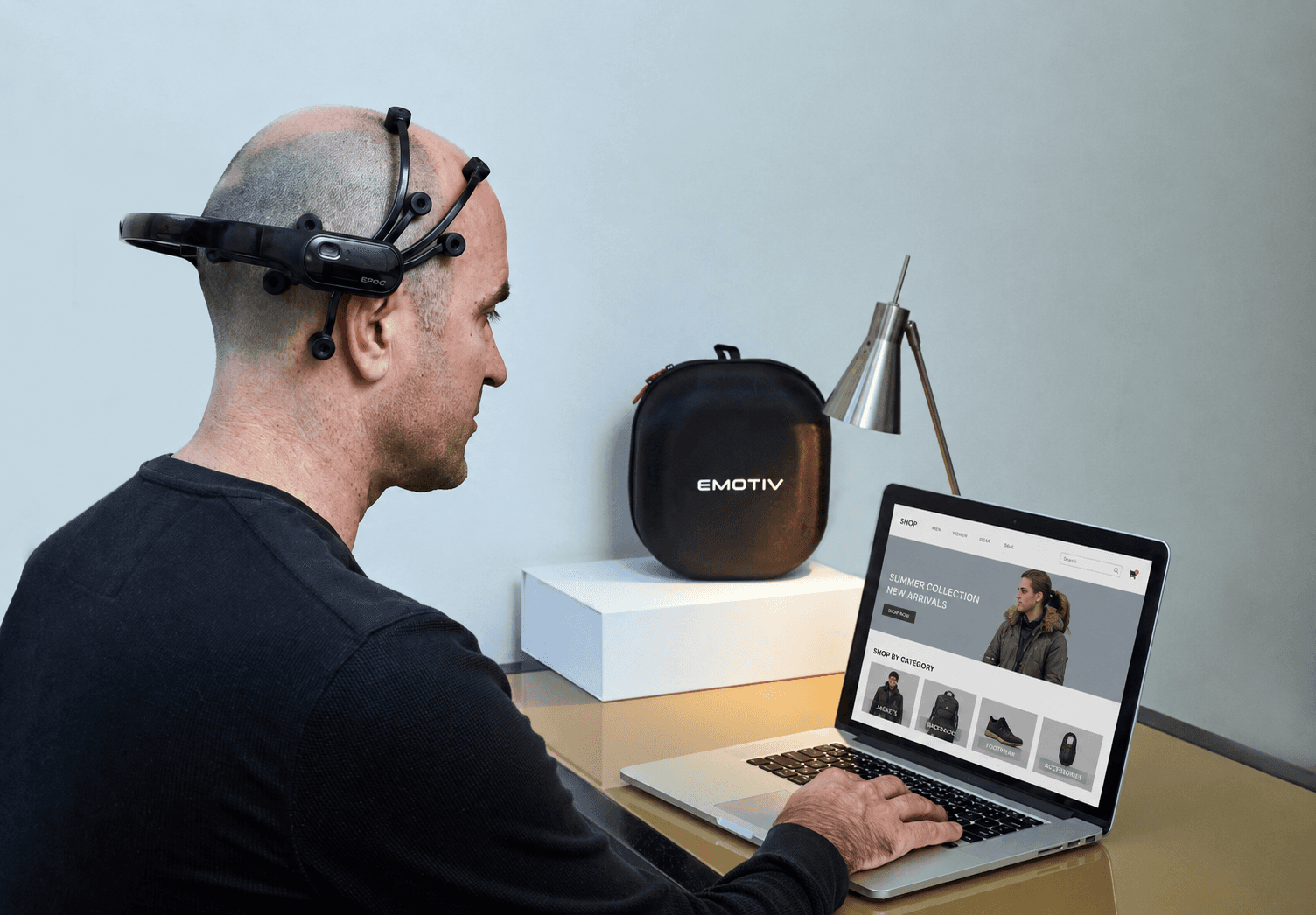
Neurotechnology is changing how organizations approach UX research methods by revealing cognitive strain, attention loss, and engagement patterns that traditional usability testing often misses. While conventional UX research tools can identify where users click or abandon a workflow, EEG-based analysis helps researchers understand how users mentally experience an interface in real time. For teams exploring UX research alternative methods and tools, neurotechnology offers a deeper layer of insight into cognitive workload, decision fatigue, and user engagement across digital experiences.
Why Traditional UX Research Methods Have Limits
Most UX research methods focus on observable behavior.
Researchers analyze heatmaps, session recordings, click-through rates, scroll depth, interviews, surveys, usability testing sessions, and A/B testing results. These approaches remain valuable because they help organizations understand what users are doing and where friction may exist within an experience.
The challenge is that users are not always consciously aware of their own cognitive response. A participant may successfully complete a task while still experiencing elevated mental workload, confusion, frustration, attention fatigue, or decision overload.
Traditional UX research tools can reveal behavioral outcomes, but they often struggle to explain the hidden cognitive processes driving those outcomes. This is why many organizations are beginning to explore UX research alternative methods and tools that move beyond self-reported feedback.
The Problem with Self-Reported User Feedback
One of the biggest limitations in traditional UX research is the reliance on conscious explanation. Users frequently rationalize experiences after they occur.
A participant may say the page felt confusing, the workflow was overwhelming, they lost interest, or the process took too long. These statements are useful, but they rarely pinpoint the precise moment where cognitive friction occurred.
In many cases, users cannot accurately describe when attention dropped, which element caused overload, why a decision felt difficult, or what created hesitation. This creates a gap between observed behavior and actual cognitive experience.
Modern UX research methods increasingly attempt to bridge this gap through biometric and neurophysiological analysis.
What Is UI Friction?
UI friction refers to any interface element or interaction pattern that increases unnecessary cognitive effort during a user experience. Friction does not always prevent task completion. Often, it simply makes the experience mentally exhausting.
Examples of UI friction include poor navigation structures, weak visual hierarchy, excessive form fields, cluttered interfaces, competing calls-to-action, unclear onboarding flows, inconsistent interaction patterns, and information overload.
Users may continue interacting with an experience despite elevated cognitive strain. However, sustained friction often reduces conversion rates, engagement quality, information retention, customer satisfaction, and long-term usability perception.
In enterprise environments, even minor friction can compound into measurable business impact.
Why UX Research Methods Are Evolving
The UX industry has shifted significantly over the past decade. Organizations now manage increasingly complex digital ecosystems, including SaaS platforms, enterprise dashboards, e-commerce systems, mobile applications, AI-powered interfaces, and multi-device workflows.
As interfaces become more demanding, traditional UX research methods alone are no longer sufficient for understanding cognitive experience.
This has accelerated interest in UX research alternative methods and tools that measure cognitive workload, attention levels, mental fatigue, emotional engagement, stress response, and decision processing.
Neurotechnology has emerged as one of the most promising additions to modern UX research workflows.
How Neurotechnology Works in UX Research
Neurotechnology uses physiological and neurological measurements to evaluate how users respond during interaction with digital experiences.
One of the most widely discussed approaches involves EEG-based analysis. Electroencephalography, or EEG, measures electrical activity associated with cognitive states such as attention, focus, engagement, mental workload, and fatigue.
Rather than relying entirely on post-session interviews, researchers can observe cognitive response patterns as users navigate an interface. This provides deeper insight into how users process information moment by moment.
For example, EEG-based UX research may reveal attention decline during onboarding, increased cognitive effort during checkout, mental overload caused by visual clutter, fatigue accumulation across long workflows, or confusion triggered by navigation changes.
These insights help researchers identify friction that traditional UX research tools may overlook.
UX Research Alternative Methods and Tools
Organizations exploring deeper behavioral insight often combine traditional UX research methods with newer technologies.
Some of the most common UX research alternative methods and tools include eye tracking, biometric analysis, EEG-based cognitive analysis, and behavioral analytics.
Eye Tracking
Eye tracking measures where users focus visual attention. Researchers can analyze scan paths, fixation points, attention flow, and visual hierarchy effectiveness.
This helps teams understand whether users naturally notice important interface elements.
Biometric Analysis
Biometric tools measure physiological responses associated with stress and emotional activation. These signals can help researchers identify moments of frustration or cognitive overload.
EEG-Based Cognitive Analysis
EEG analysis measures patterns associated with attention, engagement, and workload during interaction. This allows organizations to evaluate how mentally demanding an experience becomes over time.
Behavioral Analytics
Behavioral analytics remain an essential component of UX research. These methods include heatmaps, session recordings, funnel analysis, click tracking, and scroll analysis.
When combined with neurotechnology, behavioral analytics become significantly more powerful.
The Difference Between Behavioral Data and Cognitive Data
Behavioral analytics tells researchers what users did. Cognitive analytics helps explain why they did it.
This distinction matters because users do not always abandon experiences immediately after encountering friction. Instead, they may continue interacting while mentally disengaging.
For example, a user may complete a form despite experiencing elevated cognitive strain. A shopper may browse a product page while gradually losing attention. A SaaS user may finish onboarding while becoming increasingly fatigued.
Traditional UX research methods might interpret these sessions as successful. Neurotechnology reveals the hidden cost of the interaction.
Common Sources of Cognitive Friction in UX
Information Overload
Excessive information density forces users to process more content than necessary. This frequently occurs in enterprise dashboards, pricing pages, landing pages, and product comparison interfaces.
Weak Visual Hierarchy
When interfaces fail to clearly prioritize actions or information, users expend additional mental effort determining what matters most.
Navigation Complexity
Confusing menu structures increase cognitive workload and reduce confidence during exploration.
Decision Fatigue
Too many options can reduce engagement and delay action.
Inconsistent Interaction Patterns
Unexpected behaviors force users to constantly re-learn interface logic.
Detecting UI Friction During Onboarding
Onboarding experiences are one of the most common sources of cognitive overload. Many onboarding systems attempt to communicate too much information too quickly.
Users are often required to learn new terminology, process unfamiliar workflows, make setup decisions, and navigate multiple screens simultaneously.
Traditional UX research tools may identify abandonment points, but neurotechnology helps researchers understand where cognitive strain begins before abandonment occurs.
This distinction is important because cognitive fatigue often accumulates gradually. By the time users exit a workflow, disengagement may have started much earlier.
Landing Page Optimization and Cognitive Load
Landing page optimization is another area where neurotechnology provides valuable insight.
Most landing page analysis focuses on conversion rates, click-through performance, scroll behavior, and CTA placement. These metrics explain outcomes, but not cognitive experience.
Neurotechnology helps researchers evaluate whether users immediately understand messaging, how efficiently attention reaches primary CTAs, whether visual hierarchy supports decision-making, and which sections increase mental effort unnecessarily.
This creates a more complete understanding of user response during conversion-focused interactions.
Cognitive Fatigue and Long-Term UX Performance
Cognitive fatigue is often overlooked because its effects are not always immediate. Users may continue interacting despite elevated mental effort.
Over time, however, fatigue can reduce product satisfaction, workflow efficiency, user retention, decision confidence, and brand perception.
This becomes especially important in enterprise software environments where users spend extended periods interacting with complex systems.
Reducing cognitive friction is not simply about aesthetics. It directly affects performance and usability sustainability.
Enterprise UX Research Is Becoming More Cognitive
Enterprise UX research has traditionally emphasized functionality and task completion. Today, organizations increasingly recognize that cognitive efficiency matters just as much as operational capability.
Modern enterprise systems often contain dense information environments, high-frequency decision-making, continuous context switching, and layered navigation structures.
These conditions can create persistent mental workload. As a result, enterprise teams are investing more heavily in UX research alternative methods and tools capable of measuring cognitive strain directly.
Combining Traditional UX Research Methods with Neurotechnology
Neurotechnology is not replacing traditional UX research methods. Instead, it is expanding them.
The most effective UX research workflows combine multiple approaches, including usability testing, interviews, surveys, behavioral analytics, eye tracking, EEG analysis, and biometric measurement.
This layered approach creates a more complete understanding of user behavior and cognitive response.
For example, behavioral analytics may identify where users abandon a workflow. Eye tracking may reveal visual confusion. EEG analysis may show elevated cognitive workload before abandonment occurs.
Together, these insights provide significantly stronger optimization guidance.
Why UX Teams Are Exploring Alternative Research Methods
As digital competition intensifies, organizations are under increasing pressure to improve conversion performance, engagement quality, retention, workflow efficiency, and user satisfaction.
Traditional UX research methods remain foundational, but many organizations now recognize the value of integrating cognitive analysis into their workflows.
UX research alternative methods and tools provide additional visibility into how users mentally process digital experiences. This allows teams to optimize not only for usability, but also for cognitive sustainability.
The Future of UX Research
The future of UX research will likely combine behavioral analytics, AI-driven analysis, and neurophysiological measurement into unified research environments.
Organizations increasingly want to understand what users do, why they do it, and how they cognitively experience the interaction.
As interfaces become more personalized, adaptive, and information-dense, understanding cognitive response will become increasingly important for UX optimization.
Neurotechnology represents one of the most promising developments in this evolution because it allows researchers to evaluate hidden friction that traditional analytics alone cannot fully capture.
Neurotechnology for UX and Neuromarketing Research
Organizations exploring advanced UX research methods are increasingly incorporating neurotechnology into digital experience evaluation, usability analysis, and conversion optimization workflows.
For teams interested in EEG-based UX research alternative methods and tools, Emotiv Studio supports cognitive analysis workflows focused on attention measurement, engagement evaluation, mental workload assessment, and neuromarketing research.
Neurotechnology is changing how organizations approach UX research methods by revealing cognitive strain, attention loss, and engagement patterns that traditional usability testing often misses. While conventional UX research tools can identify where users click or abandon a workflow, EEG-based analysis helps researchers understand how users mentally experience an interface in real time. For teams exploring UX research alternative methods and tools, neurotechnology offers a deeper layer of insight into cognitive workload, decision fatigue, and user engagement across digital experiences.
Why Traditional UX Research Methods Have Limits
Most UX research methods focus on observable behavior.
Researchers analyze heatmaps, session recordings, click-through rates, scroll depth, interviews, surveys, usability testing sessions, and A/B testing results. These approaches remain valuable because they help organizations understand what users are doing and where friction may exist within an experience.
The challenge is that users are not always consciously aware of their own cognitive response. A participant may successfully complete a task while still experiencing elevated mental workload, confusion, frustration, attention fatigue, or decision overload.
Traditional UX research tools can reveal behavioral outcomes, but they often struggle to explain the hidden cognitive processes driving those outcomes. This is why many organizations are beginning to explore UX research alternative methods and tools that move beyond self-reported feedback.
The Problem with Self-Reported User Feedback
One of the biggest limitations in traditional UX research is the reliance on conscious explanation. Users frequently rationalize experiences after they occur.
A participant may say the page felt confusing, the workflow was overwhelming, they lost interest, or the process took too long. These statements are useful, but they rarely pinpoint the precise moment where cognitive friction occurred.
In many cases, users cannot accurately describe when attention dropped, which element caused overload, why a decision felt difficult, or what created hesitation. This creates a gap between observed behavior and actual cognitive experience.
Modern UX research methods increasingly attempt to bridge this gap through biometric and neurophysiological analysis.
What Is UI Friction?
UI friction refers to any interface element or interaction pattern that increases unnecessary cognitive effort during a user experience. Friction does not always prevent task completion. Often, it simply makes the experience mentally exhausting.
Examples of UI friction include poor navigation structures, weak visual hierarchy, excessive form fields, cluttered interfaces, competing calls-to-action, unclear onboarding flows, inconsistent interaction patterns, and information overload.
Users may continue interacting with an experience despite elevated cognitive strain. However, sustained friction often reduces conversion rates, engagement quality, information retention, customer satisfaction, and long-term usability perception.
In enterprise environments, even minor friction can compound into measurable business impact.
Why UX Research Methods Are Evolving
The UX industry has shifted significantly over the past decade. Organizations now manage increasingly complex digital ecosystems, including SaaS platforms, enterprise dashboards, e-commerce systems, mobile applications, AI-powered interfaces, and multi-device workflows.
As interfaces become more demanding, traditional UX research methods alone are no longer sufficient for understanding cognitive experience.
This has accelerated interest in UX research alternative methods and tools that measure cognitive workload, attention levels, mental fatigue, emotional engagement, stress response, and decision processing.
Neurotechnology has emerged as one of the most promising additions to modern UX research workflows.
How Neurotechnology Works in UX Research
Neurotechnology uses physiological and neurological measurements to evaluate how users respond during interaction with digital experiences.
One of the most widely discussed approaches involves EEG-based analysis. Electroencephalography, or EEG, measures electrical activity associated with cognitive states such as attention, focus, engagement, mental workload, and fatigue.
Rather than relying entirely on post-session interviews, researchers can observe cognitive response patterns as users navigate an interface. This provides deeper insight into how users process information moment by moment.
For example, EEG-based UX research may reveal attention decline during onboarding, increased cognitive effort during checkout, mental overload caused by visual clutter, fatigue accumulation across long workflows, or confusion triggered by navigation changes.
These insights help researchers identify friction that traditional UX research tools may overlook.
UX Research Alternative Methods and Tools
Organizations exploring deeper behavioral insight often combine traditional UX research methods with newer technologies.
Some of the most common UX research alternative methods and tools include eye tracking, biometric analysis, EEG-based cognitive analysis, and behavioral analytics.
Eye Tracking
Eye tracking measures where users focus visual attention. Researchers can analyze scan paths, fixation points, attention flow, and visual hierarchy effectiveness.
This helps teams understand whether users naturally notice important interface elements.
Biometric Analysis
Biometric tools measure physiological responses associated with stress and emotional activation. These signals can help researchers identify moments of frustration or cognitive overload.
EEG-Based Cognitive Analysis
EEG analysis measures patterns associated with attention, engagement, and workload during interaction. This allows organizations to evaluate how mentally demanding an experience becomes over time.
Behavioral Analytics
Behavioral analytics remain an essential component of UX research. These methods include heatmaps, session recordings, funnel analysis, click tracking, and scroll analysis.
When combined with neurotechnology, behavioral analytics become significantly more powerful.
The Difference Between Behavioral Data and Cognitive Data
Behavioral analytics tells researchers what users did. Cognitive analytics helps explain why they did it.
This distinction matters because users do not always abandon experiences immediately after encountering friction. Instead, they may continue interacting while mentally disengaging.
For example, a user may complete a form despite experiencing elevated cognitive strain. A shopper may browse a product page while gradually losing attention. A SaaS user may finish onboarding while becoming increasingly fatigued.
Traditional UX research methods might interpret these sessions as successful. Neurotechnology reveals the hidden cost of the interaction.
Common Sources of Cognitive Friction in UX
Information Overload
Excessive information density forces users to process more content than necessary. This frequently occurs in enterprise dashboards, pricing pages, landing pages, and product comparison interfaces.
Weak Visual Hierarchy
When interfaces fail to clearly prioritize actions or information, users expend additional mental effort determining what matters most.
Navigation Complexity
Confusing menu structures increase cognitive workload and reduce confidence during exploration.
Decision Fatigue
Too many options can reduce engagement and delay action.
Inconsistent Interaction Patterns
Unexpected behaviors force users to constantly re-learn interface logic.
Detecting UI Friction During Onboarding
Onboarding experiences are one of the most common sources of cognitive overload. Many onboarding systems attempt to communicate too much information too quickly.
Users are often required to learn new terminology, process unfamiliar workflows, make setup decisions, and navigate multiple screens simultaneously.
Traditional UX research tools may identify abandonment points, but neurotechnology helps researchers understand where cognitive strain begins before abandonment occurs.
This distinction is important because cognitive fatigue often accumulates gradually. By the time users exit a workflow, disengagement may have started much earlier.
Landing Page Optimization and Cognitive Load
Landing page optimization is another area where neurotechnology provides valuable insight.
Most landing page analysis focuses on conversion rates, click-through performance, scroll behavior, and CTA placement. These metrics explain outcomes, but not cognitive experience.
Neurotechnology helps researchers evaluate whether users immediately understand messaging, how efficiently attention reaches primary CTAs, whether visual hierarchy supports decision-making, and which sections increase mental effort unnecessarily.
This creates a more complete understanding of user response during conversion-focused interactions.
Cognitive Fatigue and Long-Term UX Performance
Cognitive fatigue is often overlooked because its effects are not always immediate. Users may continue interacting despite elevated mental effort.
Over time, however, fatigue can reduce product satisfaction, workflow efficiency, user retention, decision confidence, and brand perception.
This becomes especially important in enterprise software environments where users spend extended periods interacting with complex systems.
Reducing cognitive friction is not simply about aesthetics. It directly affects performance and usability sustainability.
Enterprise UX Research Is Becoming More Cognitive
Enterprise UX research has traditionally emphasized functionality and task completion. Today, organizations increasingly recognize that cognitive efficiency matters just as much as operational capability.
Modern enterprise systems often contain dense information environments, high-frequency decision-making, continuous context switching, and layered navigation structures.
These conditions can create persistent mental workload. As a result, enterprise teams are investing more heavily in UX research alternative methods and tools capable of measuring cognitive strain directly.
Combining Traditional UX Research Methods with Neurotechnology
Neurotechnology is not replacing traditional UX research methods. Instead, it is expanding them.
The most effective UX research workflows combine multiple approaches, including usability testing, interviews, surveys, behavioral analytics, eye tracking, EEG analysis, and biometric measurement.
This layered approach creates a more complete understanding of user behavior and cognitive response.
For example, behavioral analytics may identify where users abandon a workflow. Eye tracking may reveal visual confusion. EEG analysis may show elevated cognitive workload before abandonment occurs.
Together, these insights provide significantly stronger optimization guidance.
Why UX Teams Are Exploring Alternative Research Methods
As digital competition intensifies, organizations are under increasing pressure to improve conversion performance, engagement quality, retention, workflow efficiency, and user satisfaction.
Traditional UX research methods remain foundational, but many organizations now recognize the value of integrating cognitive analysis into their workflows.
UX research alternative methods and tools provide additional visibility into how users mentally process digital experiences. This allows teams to optimize not only for usability, but also for cognitive sustainability.
The Future of UX Research
The future of UX research will likely combine behavioral analytics, AI-driven analysis, and neurophysiological measurement into unified research environments.
Organizations increasingly want to understand what users do, why they do it, and how they cognitively experience the interaction.
As interfaces become more personalized, adaptive, and information-dense, understanding cognitive response will become increasingly important for UX optimization.
Neurotechnology represents one of the most promising developments in this evolution because it allows researchers to evaluate hidden friction that traditional analytics alone cannot fully capture.
Neurotechnology for UX and Neuromarketing Research
Organizations exploring advanced UX research methods are increasingly incorporating neurotechnology into digital experience evaluation, usability analysis, and conversion optimization workflows.
For teams interested in EEG-based UX research alternative methods and tools, Emotiv Studio supports cognitive analysis workflows focused on attention measurement, engagement evaluation, mental workload assessment, and neuromarketing research.
Neurotechnology is changing how organizations approach UX research methods by revealing cognitive strain, attention loss, and engagement patterns that traditional usability testing often misses. While conventional UX research tools can identify where users click or abandon a workflow, EEG-based analysis helps researchers understand how users mentally experience an interface in real time. For teams exploring UX research alternative methods and tools, neurotechnology offers a deeper layer of insight into cognitive workload, decision fatigue, and user engagement across digital experiences.
Why Traditional UX Research Methods Have Limits
Most UX research methods focus on observable behavior.
Researchers analyze heatmaps, session recordings, click-through rates, scroll depth, interviews, surveys, usability testing sessions, and A/B testing results. These approaches remain valuable because they help organizations understand what users are doing and where friction may exist within an experience.
The challenge is that users are not always consciously aware of their own cognitive response. A participant may successfully complete a task while still experiencing elevated mental workload, confusion, frustration, attention fatigue, or decision overload.
Traditional UX research tools can reveal behavioral outcomes, but they often struggle to explain the hidden cognitive processes driving those outcomes. This is why many organizations are beginning to explore UX research alternative methods and tools that move beyond self-reported feedback.
The Problem with Self-Reported User Feedback
One of the biggest limitations in traditional UX research is the reliance on conscious explanation. Users frequently rationalize experiences after they occur.
A participant may say the page felt confusing, the workflow was overwhelming, they lost interest, or the process took too long. These statements are useful, but they rarely pinpoint the precise moment where cognitive friction occurred.
In many cases, users cannot accurately describe when attention dropped, which element caused overload, why a decision felt difficult, or what created hesitation. This creates a gap between observed behavior and actual cognitive experience.
Modern UX research methods increasingly attempt to bridge this gap through biometric and neurophysiological analysis.
What Is UI Friction?
UI friction refers to any interface element or interaction pattern that increases unnecessary cognitive effort during a user experience. Friction does not always prevent task completion. Often, it simply makes the experience mentally exhausting.
Examples of UI friction include poor navigation structures, weak visual hierarchy, excessive form fields, cluttered interfaces, competing calls-to-action, unclear onboarding flows, inconsistent interaction patterns, and information overload.
Users may continue interacting with an experience despite elevated cognitive strain. However, sustained friction often reduces conversion rates, engagement quality, information retention, customer satisfaction, and long-term usability perception.
In enterprise environments, even minor friction can compound into measurable business impact.
Why UX Research Methods Are Evolving
The UX industry has shifted significantly over the past decade. Organizations now manage increasingly complex digital ecosystems, including SaaS platforms, enterprise dashboards, e-commerce systems, mobile applications, AI-powered interfaces, and multi-device workflows.
As interfaces become more demanding, traditional UX research methods alone are no longer sufficient for understanding cognitive experience.
This has accelerated interest in UX research alternative methods and tools that measure cognitive workload, attention levels, mental fatigue, emotional engagement, stress response, and decision processing.
Neurotechnology has emerged as one of the most promising additions to modern UX research workflows.
How Neurotechnology Works in UX Research
Neurotechnology uses physiological and neurological measurements to evaluate how users respond during interaction with digital experiences.
One of the most widely discussed approaches involves EEG-based analysis. Electroencephalography, or EEG, measures electrical activity associated with cognitive states such as attention, focus, engagement, mental workload, and fatigue.
Rather than relying entirely on post-session interviews, researchers can observe cognitive response patterns as users navigate an interface. This provides deeper insight into how users process information moment by moment.
For example, EEG-based UX research may reveal attention decline during onboarding, increased cognitive effort during checkout, mental overload caused by visual clutter, fatigue accumulation across long workflows, or confusion triggered by navigation changes.
These insights help researchers identify friction that traditional UX research tools may overlook.
UX Research Alternative Methods and Tools
Organizations exploring deeper behavioral insight often combine traditional UX research methods with newer technologies.
Some of the most common UX research alternative methods and tools include eye tracking, biometric analysis, EEG-based cognitive analysis, and behavioral analytics.
Eye Tracking
Eye tracking measures where users focus visual attention. Researchers can analyze scan paths, fixation points, attention flow, and visual hierarchy effectiveness.
This helps teams understand whether users naturally notice important interface elements.
Biometric Analysis
Biometric tools measure physiological responses associated with stress and emotional activation. These signals can help researchers identify moments of frustration or cognitive overload.
EEG-Based Cognitive Analysis
EEG analysis measures patterns associated with attention, engagement, and workload during interaction. This allows organizations to evaluate how mentally demanding an experience becomes over time.
Behavioral Analytics
Behavioral analytics remain an essential component of UX research. These methods include heatmaps, session recordings, funnel analysis, click tracking, and scroll analysis.
When combined with neurotechnology, behavioral analytics become significantly more powerful.
The Difference Between Behavioral Data and Cognitive Data
Behavioral analytics tells researchers what users did. Cognitive analytics helps explain why they did it.
This distinction matters because users do not always abandon experiences immediately after encountering friction. Instead, they may continue interacting while mentally disengaging.
For example, a user may complete a form despite experiencing elevated cognitive strain. A shopper may browse a product page while gradually losing attention. A SaaS user may finish onboarding while becoming increasingly fatigued.
Traditional UX research methods might interpret these sessions as successful. Neurotechnology reveals the hidden cost of the interaction.
Common Sources of Cognitive Friction in UX
Information Overload
Excessive information density forces users to process more content than necessary. This frequently occurs in enterprise dashboards, pricing pages, landing pages, and product comparison interfaces.
Weak Visual Hierarchy
When interfaces fail to clearly prioritize actions or information, users expend additional mental effort determining what matters most.
Navigation Complexity
Confusing menu structures increase cognitive workload and reduce confidence during exploration.
Decision Fatigue
Too many options can reduce engagement and delay action.
Inconsistent Interaction Patterns
Unexpected behaviors force users to constantly re-learn interface logic.
Detecting UI Friction During Onboarding
Onboarding experiences are one of the most common sources of cognitive overload. Many onboarding systems attempt to communicate too much information too quickly.
Users are often required to learn new terminology, process unfamiliar workflows, make setup decisions, and navigate multiple screens simultaneously.
Traditional UX research tools may identify abandonment points, but neurotechnology helps researchers understand where cognitive strain begins before abandonment occurs.
This distinction is important because cognitive fatigue often accumulates gradually. By the time users exit a workflow, disengagement may have started much earlier.
Landing Page Optimization and Cognitive Load
Landing page optimization is another area where neurotechnology provides valuable insight.
Most landing page analysis focuses on conversion rates, click-through performance, scroll behavior, and CTA placement. These metrics explain outcomes, but not cognitive experience.
Neurotechnology helps researchers evaluate whether users immediately understand messaging, how efficiently attention reaches primary CTAs, whether visual hierarchy supports decision-making, and which sections increase mental effort unnecessarily.
This creates a more complete understanding of user response during conversion-focused interactions.
Cognitive Fatigue and Long-Term UX Performance
Cognitive fatigue is often overlooked because its effects are not always immediate. Users may continue interacting despite elevated mental effort.
Over time, however, fatigue can reduce product satisfaction, workflow efficiency, user retention, decision confidence, and brand perception.
This becomes especially important in enterprise software environments where users spend extended periods interacting with complex systems.
Reducing cognitive friction is not simply about aesthetics. It directly affects performance and usability sustainability.
Enterprise UX Research Is Becoming More Cognitive
Enterprise UX research has traditionally emphasized functionality and task completion. Today, organizations increasingly recognize that cognitive efficiency matters just as much as operational capability.
Modern enterprise systems often contain dense information environments, high-frequency decision-making, continuous context switching, and layered navigation structures.
These conditions can create persistent mental workload. As a result, enterprise teams are investing more heavily in UX research alternative methods and tools capable of measuring cognitive strain directly.
Combining Traditional UX Research Methods with Neurotechnology
Neurotechnology is not replacing traditional UX research methods. Instead, it is expanding them.
The most effective UX research workflows combine multiple approaches, including usability testing, interviews, surveys, behavioral analytics, eye tracking, EEG analysis, and biometric measurement.
This layered approach creates a more complete understanding of user behavior and cognitive response.
For example, behavioral analytics may identify where users abandon a workflow. Eye tracking may reveal visual confusion. EEG analysis may show elevated cognitive workload before abandonment occurs.
Together, these insights provide significantly stronger optimization guidance.
Why UX Teams Are Exploring Alternative Research Methods
As digital competition intensifies, organizations are under increasing pressure to improve conversion performance, engagement quality, retention, workflow efficiency, and user satisfaction.
Traditional UX research methods remain foundational, but many organizations now recognize the value of integrating cognitive analysis into their workflows.
UX research alternative methods and tools provide additional visibility into how users mentally process digital experiences. This allows teams to optimize not only for usability, but also for cognitive sustainability.
The Future of UX Research
The future of UX research will likely combine behavioral analytics, AI-driven analysis, and neurophysiological measurement into unified research environments.
Organizations increasingly want to understand what users do, why they do it, and how they cognitively experience the interaction.
As interfaces become more personalized, adaptive, and information-dense, understanding cognitive response will become increasingly important for UX optimization.
Neurotechnology represents one of the most promising developments in this evolution because it allows researchers to evaluate hidden friction that traditional analytics alone cannot fully capture.
Neurotechnology for UX and Neuromarketing Research
Organizations exploring advanced UX research methods are increasingly incorporating neurotechnology into digital experience evaluation, usability analysis, and conversion optimization workflows.
For teams interested in EEG-based UX research alternative methods and tools, Emotiv Studio supports cognitive analysis workflows focused on attention measurement, engagement evaluation, mental workload assessment, and neuromarketing research.

Continue reading