Cognitive Assessment Tools: Measuring Attention and Cognitive Load Beyond Task Performance
H.B. Duran
Updated on
Jan 30, 2026
Cognitive Assessment Tools: Measuring Attention and Cognitive Load Beyond Task Performance
H.B. Duran
Updated on
Jan 30, 2026
Cognitive Assessment Tools: Measuring Attention and Cognitive Load Beyond Task Performance
H.B. Duran
Updated on
Jan 30, 2026
The Limits of Task-Based Assessments
Traditional cognitive assessments are often designed to measure task performance. While these results can be useful, they may not fully capture fluctuations in attention, mental effort, or cognitive workload that occur throughout an experience.
For example:
Two participants may achieve similar scores while using different levels of mental effort.
Performance may remain stable while attention fluctuates significantly.
Cognitive workload may increase long before performance begins to decline.
These factors can be difficult to observe through task outcomes alone.
As a result, many researchers combine behavioral measures with physiological data to gain a more complete understanding of cognitive processes.
Measuring Attention and Cognitive Load with EEG
EEG records electrical activity generated by the brain, allowing researchers to observe changes in neural activity while participants engage with tasks, experiences, or environments.
Unlike traditional assessments that focus primarily on outcomes, EEG provides continuous physiological data throughout the experience.
Researchers use EEG to investigate:
Sustained attention
Cognitive load
Mental effort
Learning and training processes
Decision-making
Human factors and usability
Brain-computer interface development
Because EEG data is collected continuously, researchers can examine how cognitive processes change over time rather than relying solely on final performance scores.
Why Attention and Cognitive Load Matter
Attention and cognitive load influence how people learn, process information, solve problems, and interact with their environment.
Researchers studying these processes often want to understand questions such as:
When does attention begin to decline?
Which tasks require the greatest mental effort?
How does cognitive workload change during complex activities?
How do participants respond to different learning environments?
What cognitive demands are associated with a specific task or experience?
EEG provides an objective way to investigate these questions while participants actively engage with the task being studied.
Combining Behavioral and Physiological Measures
Many research programs combine traditional cognitive assessments with physiological measures to build a more complete picture of participant experiences.
Behavioral measures help researchers evaluate outcomes and performance. EEG provides additional insight into the cognitive processes that occur throughout the experience.
Together, these approaches can help researchers better understand:
Attention allocation
Cognitive workload
Mental effort
Learning processes
Human performance
This combination is commonly used across cognitive neuroscience, psychology, education research, human factors, and brain-computer interface development.
EEG Systems for Cognitive Research
Researchers studying attention and cognitive load often require tools that support a variety of experimental designs and research environments.
Emotiv EEG systems support cognitive research across both laboratory and real-world settings.
Flex Gel and Flex Saline
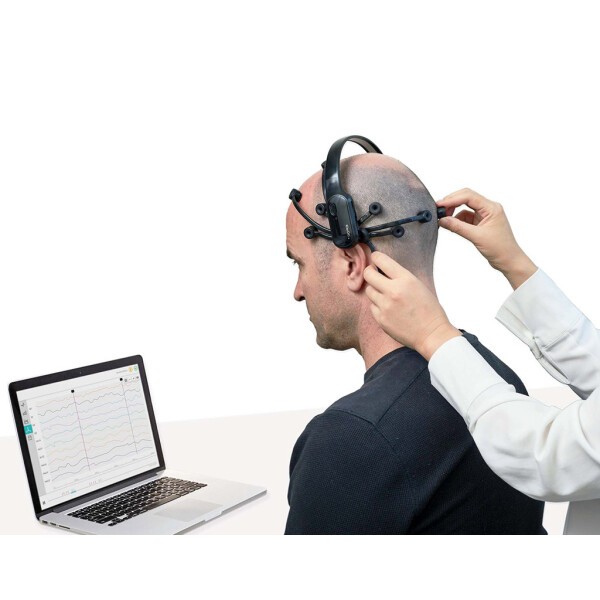
Flex Gel and Flex Saline support configurable electrode placement with up to 32 EEG channels, allowing researchers to tailor sensor coverage to specific research questions.
Wireless EEG acquisition enables data collection without tethering participants to a computer, supporting research in classrooms, laboratories, educational environments, and other naturalistic settings.
Researchers can choose between traditional gel-based workflows or saline-based sensors that support faster setup and cleanup.
Epoc X
Epoc X is a 14-channel wireless EEG headset designed for cognitive research, mobile data collection, and brain-computer interface development.
Its streamlined setup and portability make it well suited for a variety of cognitive research applications.
Insight
Insight is a lightweight 5-channel wireless EEG headband designed for rapid deployment and ease of use.
Researchers frequently use Insight when portability and simplified setup are priorities.
Attention and Cognitive Load for Personal Use
While EEG is widely used in research environments, some individuals are also interested in understanding their own patterns of attention and mental effort during everyday activities.
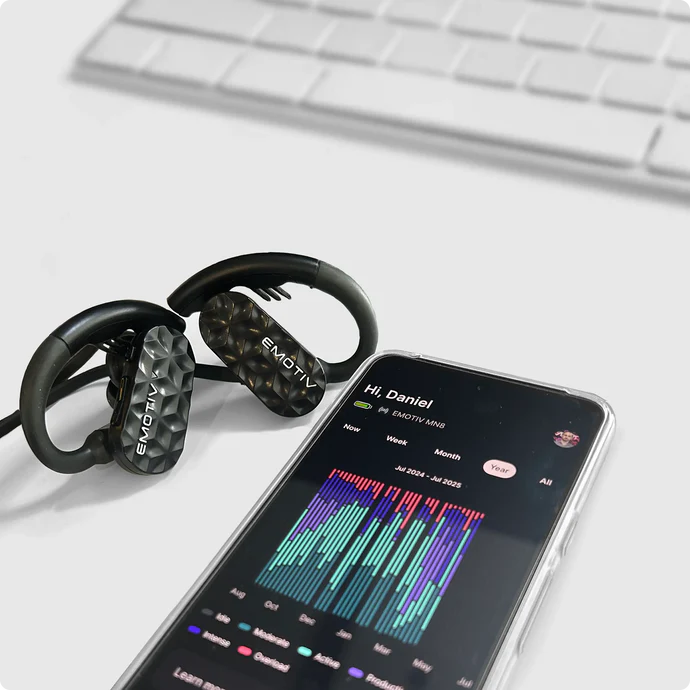
Brainwear provides visualizations of attention and cognitive load metrics that can help users explore how focus, workload, and mental effort change throughout the day. These insights can support personal reflection, productivity practices, and greater awareness of individual cognitive patterns over time.
By combining lightweight EEG hardware with intuitive software, Brainwear makes it easier for users to connect daily experiences with objective brain activity data.
Important Disclaimer
Emotiv products are intended for research applications and personal use only.
Our products are not sold as Medical Devices as defined in EU Directive 93/42/EEC. Emotiv products are not designed or intended to diagnose, treat, cure, or prevent any disease, medical condition, or cognitive impairment.
Brainwear metrics are intended to provide informational insights for personal exploration and should not be used for medical decision-making, diagnosis, or treatment.
Frequently Asked Questions
What are cognitive assessment tools?
Cognitive assessment tools are methods used to evaluate performance on tasks involving attention, memory, executive function, processing speed, and other cognitive processes.
What is cognitive load?
Cognitive load refers to the mental effort required to complete a task or process information.
Can EEG measure attention and cognitive load?
Researchers commonly use EEG to investigate attention, cognitive load, mental effort, and other cognitive processes during task performance.
Why combine EEG with cognitive assessments?
Combining behavioral outcomes with physiological data can help researchers better understand both task performance and the cognitive processes that occur throughout an experience.
Can Brainwear diagnose cognitive conditions?
No. Brainwear is intended for personal use and informational insights only. It is not designed or intended to diagnose, treat, cure, or prevent any disease or medical condition.
The Limits of Task-Based Assessments
Traditional cognitive assessments are often designed to measure task performance. While these results can be useful, they may not fully capture fluctuations in attention, mental effort, or cognitive workload that occur throughout an experience.
For example:
Two participants may achieve similar scores while using different levels of mental effort.
Performance may remain stable while attention fluctuates significantly.
Cognitive workload may increase long before performance begins to decline.
These factors can be difficult to observe through task outcomes alone.
As a result, many researchers combine behavioral measures with physiological data to gain a more complete understanding of cognitive processes.
Measuring Attention and Cognitive Load with EEG
EEG records electrical activity generated by the brain, allowing researchers to observe changes in neural activity while participants engage with tasks, experiences, or environments.
Unlike traditional assessments that focus primarily on outcomes, EEG provides continuous physiological data throughout the experience.
Researchers use EEG to investigate:
Sustained attention
Cognitive load
Mental effort
Learning and training processes
Decision-making
Human factors and usability
Brain-computer interface development
Because EEG data is collected continuously, researchers can examine how cognitive processes change over time rather than relying solely on final performance scores.
Why Attention and Cognitive Load Matter
Attention and cognitive load influence how people learn, process information, solve problems, and interact with their environment.
Researchers studying these processes often want to understand questions such as:
When does attention begin to decline?
Which tasks require the greatest mental effort?
How does cognitive workload change during complex activities?
How do participants respond to different learning environments?
What cognitive demands are associated with a specific task or experience?
EEG provides an objective way to investigate these questions while participants actively engage with the task being studied.
Combining Behavioral and Physiological Measures
Many research programs combine traditional cognitive assessments with physiological measures to build a more complete picture of participant experiences.
Behavioral measures help researchers evaluate outcomes and performance. EEG provides additional insight into the cognitive processes that occur throughout the experience.
Together, these approaches can help researchers better understand:
Attention allocation
Cognitive workload
Mental effort
Learning processes
Human performance
This combination is commonly used across cognitive neuroscience, psychology, education research, human factors, and brain-computer interface development.
EEG Systems for Cognitive Research
Researchers studying attention and cognitive load often require tools that support a variety of experimental designs and research environments.
Emotiv EEG systems support cognitive research across both laboratory and real-world settings.
Flex Gel and Flex Saline
Flex Gel and Flex Saline support configurable electrode placement with up to 32 EEG channels, allowing researchers to tailor sensor coverage to specific research questions.
Wireless EEG acquisition enables data collection without tethering participants to a computer, supporting research in classrooms, laboratories, educational environments, and other naturalistic settings.
Researchers can choose between traditional gel-based workflows or saline-based sensors that support faster setup and cleanup.
Epoc X
Epoc X is a 14-channel wireless EEG headset designed for cognitive research, mobile data collection, and brain-computer interface development.
Its streamlined setup and portability make it well suited for a variety of cognitive research applications.
Insight
Insight is a lightweight 5-channel wireless EEG headband designed for rapid deployment and ease of use.
Researchers frequently use Insight when portability and simplified setup are priorities.
Attention and Cognitive Load for Personal Use
While EEG is widely used in research environments, some individuals are also interested in understanding their own patterns of attention and mental effort during everyday activities.
Brainwear provides visualizations of attention and cognitive load metrics that can help users explore how focus, workload, and mental effort change throughout the day. These insights can support personal reflection, productivity practices, and greater awareness of individual cognitive patterns over time.
By combining lightweight EEG hardware with intuitive software, Brainwear makes it easier for users to connect daily experiences with objective brain activity data.
Important Disclaimer
Emotiv products are intended for research applications and personal use only.
Our products are not sold as Medical Devices as defined in EU Directive 93/42/EEC. Emotiv products are not designed or intended to diagnose, treat, cure, or prevent any disease, medical condition, or cognitive impairment.
Brainwear metrics are intended to provide informational insights for personal exploration and should not be used for medical decision-making, diagnosis, or treatment.
Frequently Asked Questions
What are cognitive assessment tools?
Cognitive assessment tools are methods used to evaluate performance on tasks involving attention, memory, executive function, processing speed, and other cognitive processes.
What is cognitive load?
Cognitive load refers to the mental effort required to complete a task or process information.
Can EEG measure attention and cognitive load?
Researchers commonly use EEG to investigate attention, cognitive load, mental effort, and other cognitive processes during task performance.
Why combine EEG with cognitive assessments?
Combining behavioral outcomes with physiological data can help researchers better understand both task performance and the cognitive processes that occur throughout an experience.
Can Brainwear diagnose cognitive conditions?
No. Brainwear is intended for personal use and informational insights only. It is not designed or intended to diagnose, treat, cure, or prevent any disease or medical condition.
The Limits of Task-Based Assessments
Traditional cognitive assessments are often designed to measure task performance. While these results can be useful, they may not fully capture fluctuations in attention, mental effort, or cognitive workload that occur throughout an experience.
For example:
Two participants may achieve similar scores while using different levels of mental effort.
Performance may remain stable while attention fluctuates significantly.
Cognitive workload may increase long before performance begins to decline.
These factors can be difficult to observe through task outcomes alone.
As a result, many researchers combine behavioral measures with physiological data to gain a more complete understanding of cognitive processes.
Measuring Attention and Cognitive Load with EEG
EEG records electrical activity generated by the brain, allowing researchers to observe changes in neural activity while participants engage with tasks, experiences, or environments.
Unlike traditional assessments that focus primarily on outcomes, EEG provides continuous physiological data throughout the experience.
Researchers use EEG to investigate:
Sustained attention
Cognitive load
Mental effort
Learning and training processes
Decision-making
Human factors and usability
Brain-computer interface development
Because EEG data is collected continuously, researchers can examine how cognitive processes change over time rather than relying solely on final performance scores.
Why Attention and Cognitive Load Matter
Attention and cognitive load influence how people learn, process information, solve problems, and interact with their environment.
Researchers studying these processes often want to understand questions such as:
When does attention begin to decline?
Which tasks require the greatest mental effort?
How does cognitive workload change during complex activities?
How do participants respond to different learning environments?
What cognitive demands are associated with a specific task or experience?
EEG provides an objective way to investigate these questions while participants actively engage with the task being studied.
Combining Behavioral and Physiological Measures
Many research programs combine traditional cognitive assessments with physiological measures to build a more complete picture of participant experiences.
Behavioral measures help researchers evaluate outcomes and performance. EEG provides additional insight into the cognitive processes that occur throughout the experience.
Together, these approaches can help researchers better understand:
Attention allocation
Cognitive workload
Mental effort
Learning processes
Human performance
This combination is commonly used across cognitive neuroscience, psychology, education research, human factors, and brain-computer interface development.
EEG Systems for Cognitive Research
Researchers studying attention and cognitive load often require tools that support a variety of experimental designs and research environments.
Emotiv EEG systems support cognitive research across both laboratory and real-world settings.
Flex Gel and Flex Saline
Flex Gel and Flex Saline support configurable electrode placement with up to 32 EEG channels, allowing researchers to tailor sensor coverage to specific research questions.
Wireless EEG acquisition enables data collection without tethering participants to a computer, supporting research in classrooms, laboratories, educational environments, and other naturalistic settings.
Researchers can choose between traditional gel-based workflows or saline-based sensors that support faster setup and cleanup.
Epoc X
Epoc X is a 14-channel wireless EEG headset designed for cognitive research, mobile data collection, and brain-computer interface development.
Its streamlined setup and portability make it well suited for a variety of cognitive research applications.
Insight
Insight is a lightweight 5-channel wireless EEG headband designed for rapid deployment and ease of use.
Researchers frequently use Insight when portability and simplified setup are priorities.
Attention and Cognitive Load for Personal Use
While EEG is widely used in research environments, some individuals are also interested in understanding their own patterns of attention and mental effort during everyday activities.
Brainwear provides visualizations of attention and cognitive load metrics that can help users explore how focus, workload, and mental effort change throughout the day. These insights can support personal reflection, productivity practices, and greater awareness of individual cognitive patterns over time.
By combining lightweight EEG hardware with intuitive software, Brainwear makes it easier for users to connect daily experiences with objective brain activity data.
Important Disclaimer
Emotiv products are intended for research applications and personal use only.
Our products are not sold as Medical Devices as defined in EU Directive 93/42/EEC. Emotiv products are not designed or intended to diagnose, treat, cure, or prevent any disease, medical condition, or cognitive impairment.
Brainwear metrics are intended to provide informational insights for personal exploration and should not be used for medical decision-making, diagnosis, or treatment.
Frequently Asked Questions
What are cognitive assessment tools?
Cognitive assessment tools are methods used to evaluate performance on tasks involving attention, memory, executive function, processing speed, and other cognitive processes.
What is cognitive load?
Cognitive load refers to the mental effort required to complete a task or process information.
Can EEG measure attention and cognitive load?
Researchers commonly use EEG to investigate attention, cognitive load, mental effort, and other cognitive processes during task performance.
Why combine EEG with cognitive assessments?
Combining behavioral outcomes with physiological data can help researchers better understand both task performance and the cognitive processes that occur throughout an experience.
Can Brainwear diagnose cognitive conditions?
No. Brainwear is intended for personal use and informational insights only. It is not designed or intended to diagnose, treat, cure, or prevent any disease or medical condition.
Continue reading