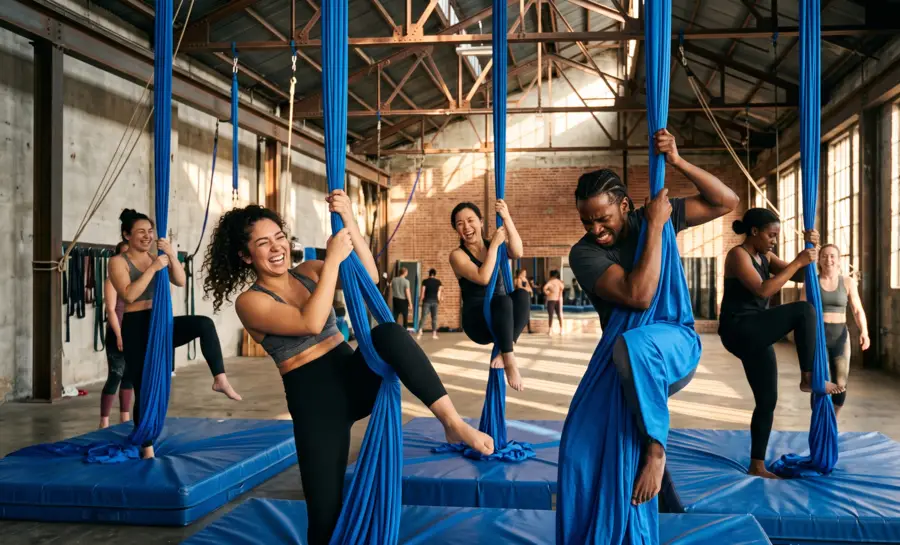
فضائی یوگا روایتی حرکت اور معطلی کا ایک امتزاج پیش کرتا ہے، جو جسمانی اور ذہنی تندرستی کے لیے ایک منفرد انداز فراہم کرتا ہے۔ یہ مشق پیچیدہ حالتوں کے لیے مدد فراہم کرتے ہوئے حرکت کو آسان بنانے کے لیے مخصوص آلات کا استعمال کرتی ہے۔
فضائی یوگا (Aerial Yoga) کیا ہے؟
فضائی یوگا روایتی یوگا کے آسنوں کو فضائی جھولے (ہیمک) کے ساتھ مربوط کرتا ہے تاکہ ورزش کا ایک منفرد طریقہ تخلیق کیا جا سکے۔ لٹکے ہوئے کپڑے کا استعمال کرتے ہوئے، مشق کرنے والوں کو ایسی مدد حاصل ہوتی ہے جو گہری لچک پیدا کرنے اور الٹی پوزیشنز (انورژن) کو آسان بناتی ہے جنہیں بصورت دیگر چٹائی پر کرنا مشکل ہو سکتا ہے۔
یہ طریقہ کار گزشتہ چند دہائیوں کے دوران تیار ہوا ہے، جس نے جدید پرفارمنس آرٹس اور تاریخی جسمانی حرکات کی روایات، دونوں سے تحریک حاصل کی ہے۔
فضائی یوگا کی تاریخ اور آغاز
اس مشق کا آغاز 2000 کی دہائی کے وسط سے ملتا ہے، جو فضائی کارکردگی اور جسمانی کنڈیشنگ کی بنیادوں پر استوار ہے۔
نمایاں خدمات میں کرسٹوفر ہیریسن کی طرف سے اینٹی گریویٹی فٹنس (AntiGravity Fitness) کی ترقی شامل ہے، جس نے یوگا اسٹوڈیو کے ماحول کے لیے کرتب بازی کی تکنیکوں کو ایک نیا رخ دیا۔ اس کے ساتھ ہی، فرانس میں فلائی یوگا (Fly Yoga) کے پیچھے موجود دیگر موجدوں اور ایرو یوگا (AeroYoga) کے معماروں نے جسم کی سیدھ کو بہتر بنانے اور اسے قابل رسائی بنانے کے لیے ان فضائی حرکات کو ڈھالنا شروع کیا۔
ان سسٹمز نے توجہ کو محض خوبصورتی پر مبنی کارکردگی سے ہٹا کر اندرونی تندرستی اور بائیو مکینیکل ایڈجسٹمنٹ کی طرف مبذول کر دیا۔
فضائی یوگا کیسے کام کرتا ہے؟
فضائی سیٹ اپ کا بنیادی حصہ ایک انتہائی مضبوط ریشمی جھولا ہے، جو آرام دہ اور فعال دونوں طرح کے آسنوں کے لیے ایک مددگار آلے کے طور پر کام کرتا ہے۔
یہ کپڑا چھت کے کڑوں سے لٹکایا جاتا ہے، جس کی وجہ سے یہ وزن برداشت کرنے والے گہوارے کے طور پر کام کرتا ہے جو الٹی پوزیشنز سمیت مختلف سمتوں میں جسم کو سنبھالتا ہے۔ یہ لٹکانے والا آلہ جسم کا وزن مساوی طور پر تقسیم کرنے میں مدد دیتا ہے، بجائے اس کے کہ سارا وزن کلائیوں یا گھٹنوں جیسے جوڑوں پر مرکوز ہو۔
کپڑے اور کشش ثقل کا یہ منفرد ملاپ ان لوگوں کے لیے ایک واقعی منفرد تربیتی تجربہ فراہم کرتا ہے جو اپنی جسمانی حرکت کے دائرہ کار کو بڑھانا چاہتے ہیں۔
فضائی یوگا کی مشق کے فوائد
ہوا میں لٹکی ہوئی حالت میں مشق کرنا ایسے واضح فوائد پیش کرتا ہے جو اسے زمین پر کی جانے والی ورزشوں سے ممتاز کرتے ہیں۔ مشق کرنے والوں کو اکثر معلوم ہوتا ہے کہ جھولے کے سہارے سے عضلاتی ٹشوز کو زیادہ گہرائی سے آرام ملتا ہے، جس سے بحالی اور جسمانی ڈھانچے کی سیدھ میں مدد ملتی ہے۔
ہتھا یوگا جیسے بنیادی طریقوں کے عناصر کو شامل کر کے، فضائی نقطہ نظر سانس اور بامقصد حرکت پر توجہ برقرار رکھتا ہے۔
فضائی یوگا کے جسمانی فوائد
فضائی یوگا بنیادی استحکام (core stability) اور عضلاتی برداشت بڑھانے میں مدد کرتا ہے جبکہ ساتھ ہی ریڑھ کی ہڈی کو بھی دباؤ سے نجات دلاتا ہے۔ درج ذیل جدول عام فضائی پوزیشنز کے جسمانی اثرات اور ان سے جسم کو حاصل ہونے والے متعلقہ فوائد کو واضح کرتا ہے۔
پوزیشن کی قسم | بنیادی فائدہ | مطلوبہ حصہ |
|---|---|---|
الٹا لٹکنا | ریڑھ کی ہڈی کا دباؤ سے آزاد ہونا | کمر اور سینے کے مہرے |
کپڑے کے لپیٹ | بڑھی ہوئی لچک | کولہے اور ہیمسٹرنگز |
معاون چڑھائی | کور مسلز کا متحرک ہونا | پیٹ اور چوڑے کمر کے پٹھے |
یہ آسن عضلاتی ریشوں کو لمبا کرنے اور جوڑوں کے درمیان جگہ بڑھانے کی ترغیب دیتے ہیں، جس سے جسمانی لچک اور لچک پذیری میں بہتری آتی ہے۔ صارفین کو عام طور پر ریڑھ کی ہڈی پر پڑنے والے دباؤ میں کمی کا تجربہ ہوتا ہے جو عام طور پر سیدھے کھڑے ہو کر کی جانے والی ورزشوں کے دوران ہوتا ہے۔
فضائی یوگا کے ذہنی اور جذباتی فوائد
ہوا میں لٹکنے کے دوران زاویہ نگاہ میں آنے والی تبدیلی گہرے احساسِ ذہن سازی اور ذہنی سکون کی حوصلہ افزائی کرتی ہے۔
زمین سے اوپر ہونے کے لیے توجہ کی ضرورت ہوتی ہے، جو انسان کو مؤثر طریقے سے حال کے لمحے میں جوڑے رکھتی ہے، بالکل اسی طرح جیسے روایتی گہرے سانس لینے کی تکنیکیں۔ یہ بڑھی ہوئی اندرونی بیداری روایتی تناؤ سے نجات پانے اور جذباتی توازن کی مہارتیں تیار کرنے میں مدد دیتی ہے جو روزمرہ کی زندگی میں فائدہ مند ہوتی ہیں۔
کیا فضائی یوگا آپ کے لیے ٹھیک ہے؟
اس مشق کی موزونیت کا تعین کرنے کے لیے اپنی موجودہ جسمانی راحت کی سطح کو سمجھنا اور ایک محفوظ ماحول کو یقینی بنانا شامل ہے۔ اگرچہ جھولا کافی حد تک مدد فراہم کرتا ہے، لیکن لوگوں کے لیے یہ ضروری ہے کہ وہ الٹے لٹکنے کے آسنوں اور ہوا میں لٹکنے کی حرکات کے لیے اپنی تیاری کا خود جائزہ لیں۔
ایک پیشہ ورانہ ماحول ہمیشہ سب سے بڑھ کر شرکاء کی حفاظت کو ترجیح دے گا۔
فضائی یوگا کون کر سکتا ہے؟
جھولے کی اونچائی اور مدد کو حسب ضرورت بنانے کی صلاحیت کی وجہ سے مختلف فٹنس لیول کے حامل صحت مند بالغ افراد کے لیے یہ مشق کافی حد تک قابل رسائی سمجھی جاتی ہے۔ یہ اکثر ان لوگوں کو راغب کرتی ہے جو اپنی موجودہ ٹریننگ میں ایک کم اثر والی چیلنجنگ سرگرمی شامل کرنا چاہتے ہیں، اور ساتھ ہی ان افراد کو بھی جو جسمانی حرکت کے غیر روایتی طریقوں میں دلچسپی رکھتے ہیں۔
محفوظ تجربے کو یقینی بنانے کے لیے، مشق کرنے والوں کو درج ذیل باتوں کا دھیان رکھنا چاہیے:
بلڈ پریشر یا جسمانی توازن سے متعلق کسی بھی طبی حالت کے بارے میں ٹرینر کو پہلے سے مطلع کریں۔
یقینی بنائیں کہ حادثات سے بچنے کے لیے تمام آلات ماہر پیشہ ور افراد کے ذریعے نصب کیے گئے ہوں۔
ایسی بنیادی حرکات سے آغاز کریں جو مرکز ثقل کو نیچا رکھتی ہیں۔
شروع کرنے سے پہلے اپنی کسی بھی جسمانی کمزوری یا حد کے بارے میں ٹرینر سے کھل کر بات کریں۔
ان ہدایات پر عمل کرنے سے تمام شرکاء کے لیے ایک محفوظ اور فائدہ مند سیشن بنانے میں مدد ملتی ہے۔
حفاظتی احتیاطی تدابیر اور انتباہات
حفاظت کسی بھی فضائی سیشن کا بنیادی عنصر ہے، خاص طور پر وزن کی حدود، لٹکانے کے ہک کی مضبوطی اور درست تکنیک کے حوالے سے۔ مشق کرنے والوں کو یہ یقینی بنانا چاہیے کہ آلات ان کے جسمانی وزن کے مطابق ہوں اور انہوں نے جھولے سے محفوظ طریقے سے باہر نکلنے کا طریقہ سیکھ لیا ہو۔
الٹا لٹکنے کے دوران اچانک حرکات سے گریز کرنا کنٹرول برقرار رکھنے اور کھچاؤ سے بچنے کے لیے ضروری ہے، جس سے آلات کو عدم توازن کا ذریعہ بنانے کے بجائے جسم کے ایک حصے کے طور پر مؤثر طریقے سے استعمال کیا جا سکے۔
فضائی یوگا کے ساتھ شروعات کرنا
ایک نئی فضائی مشق شروع کرنے کے لیے غیر مانوس احساسات سے ہم آہنگ ہونے کی آمادگی اور مہارت سیکھنے کے لیے صبر آزما نقطہ نظر کی ضرورت ہوتی ہے۔
زیادہ تر ابتدائی سیشنز اونچائی پر حرکت کرنے سے پہلے فرش کے قریب کپڑے کا استعمال کرتے ہوئے جھولے کے ساتھ اعتماد قائم کرنے پر توجہ مرکوز کرتے ہیں۔
اپنی پہلی فضائی یوگا کلاس میں کیا توقع رکھیں؟
ایک عام ابتدائی سیشن کا آغاز آلات کی وضاحت اور بنیادی حفاظتی اصولوں سے ہوتا ہے تاکہ اعتماد پیدا کیا جا سکے۔ کلاس اکثر طالبعلموں کو ایسی حرکات کے سلسلے کے ذریعے لے جائے گی جو استحکام پیدا کرتی ہیں، جس کے بعد جھولے کا استعمال کرتے ہوئے جسم کے حصوں کو نرمی سے کھینچنے کی مشق کروائی جاتی ہے۔
جیسے جیسے کلاس آگے بڑھتی ہے، شرکاء ہلکے الٹے آسن کر سکتے ہیں، جو گردن اور سر پر دباؤ کو کم کرنے کے لیے جھولے کی مدد لیتے ہیں۔ اس تجربے کو جان بوجھ کر اس طرح ڈیزائن کیا گیا ہے تاکہ لٹکی ہوئی حالت میں بتدریج اور معاون طریقے سے منتقلی کو ممکن بنایا جا سکے۔
فضائی یوگا پروپریوسیپٹیو اور ویسٹیبولر سسٹمز کو کیسے چیلنج کرتا ہے؟
فضائی حرکت توازن اور فضائی بیداری کے ذمہ دار نظاموں کو متحرک کرتی ہے، جس سے اندرونی توازن کی بہترین ورزش ہوتی ہے۔ نیورو سائنس کا یہ پہلو اس بات کو واضح کرنے میں مدد کرتا ہے کہ مسلسل مشق کس طرح کسی شخص کے توازن اور جسمانی ہم آہنگی کے احساس کو بہتر بنا سکتی ہے۔
لٹکی ہوئی حالت میں دماغ فضائی توازن کو کیسے پروسیس کرتا ہے؟
دماغ بصری، حسی اور ویسٹیبولر حصوں سے حاصل ہونے والی معلومات کو یکجا کر کے خلا میں پوزیشن کے بارے میں توازن قائم کرتا ہے۔ لٹکنے کی حالت میں، دماغ کو ان معلومات کو دوبارہ ترتیب دینا پڑتا ہے کیونکہ عام طریقے (جیسے فرش کے ساتھ ایک مقررہ رشتہ) بدل جاتے ہیں۔
اس فعال عمل کے لیے دماغی صحت پر خاصی توجہ دینے کی ضرورت ہوتی ہے، کیونکہ ان تبدیلیوں کا انتظام کرنا متحرک اور غیر معمولی ماحول میں توازن برقرار رکھنے کی دماغی صلاحیت کو بہتر بناتا ہے۔
ویسٹیبولر ان پٹ اور چکر آنے جیسے احساسات کے درمیان کیا تعلق ہے؟
فضائی تناظر میں چکر آنے یا سر گھومنے کے احساسات اکثر اس وقت ہوتے ہیں جب ویسٹیبولر سسٹم کے ذریعے دماغ کو بھیجے گئے سگنلز بصری معلومات سے ٹکراتے ہیں۔
جب جسم گھومتا ہے یا الٹا ہوتا ہے، تو اندرونی کان کی نالیوں کے اندر موجود مائع حرکت کرتا ہے، جو پوزیشن میں تبدیلی کا اشارہ ہے؛ اگر یہ بیرونی بصری معلومات کے ساتھ ہم آہنگ نہ ہو، تو دماغ اسے ایک ہلکے حسی عدم توازن کے طور پر لے سکتا ہے۔
آہستہ آہستہ مشق کرنے سے یہ سسٹمز اس نئی حرکت کے عادی ہو جاتے ہیں، جس سے وقت کے ساتھ توازن بگڑنے کا امکان کم ہو جاتا ہے۔
کیا EEG فضائی یوگا کے حسی چیلنجز کے دوران دماغی سرگرمی کا معروضی پیمانہ فراہم کر سکتا ہے؟
فی الحال، کوئی ایسا سائنسی لٹریچر شائع نہیں ہوا ہے جس میں فضائی یوگا کی فعال مشق کے دوران براہ راست دماغی سرگرمی کی پیمائش کے لیے الیکٹرو اینسفالوگرافی (EEG) کا استعمال کیا گیا ہو۔
حقیقی ریسرچ ڈیٹا حاصل کرنے کی راہ میں بنیادی رکاوٹ شدید تکنیکی اور نقل و حرکت کی حدود ہیں۔ معیاری EEG آلات، اور یہاں تک کہ جدید وائرلیس موبائل سسٹمز بھی، جسمانی حرکات کی رکاوٹوں اور عضلاتی سرگرمی (EMG) کے بگاڑ سے بری طرح متاثر ہوتے ہیں جو ہوا میں لٹکنے اور توازن برقرار رکھنے کے لیے ضروری ہوتی ہے۔
مزید برآں، الٹا لٹکنے کے انداز اور ریشمی جھولے کے ساتھ جسمانی رابطے کی وجہ سے برقی سگنلز کے مقامات بدل جاتے ہیں، جس کی وجہ سے مشق کے دوران دماغی سگنلز کو الگ کرنا انتہائی مشکل ہو جاتا ہے۔ ان رکاوٹوں کی وجہ سے، موجودہ تحقیقی پیرامیٹرز کے اندر متحرک فضائی منتقلی کے دوران ہر ملی سیکنڈ کے دماغی سگنل کا نقشہ بنانا ایک ناقابل عمل کام ہے۔
فضائی یوگا کے شدید توازن اور اعصابی مطالبات کے اثرات کی جانچ کرنے کے لیے، ایک حقیقت پسندانہ تجرباتی ڈیزائن کو سیشن سے عین پہلے اور فوری بعد حاصل کردہ بنیادی ڈیٹا پر توجہ مرکوز کرنی چاہیے۔
حرکت کے دوران پیدا ہونے والے مسائل کو ختم کر کے، محققین اس بات کا جائزہ لینے کے لیے ورزش کے بعد اعصابی بایومارکرز کا معائنہ کر سکتے ہیں کہ اعصابی نظام ہوا میں لٹکنے کے بعد خود کو کیسے ڈھالتا ہے۔ تحقیق کے لیے ممکنہ میٹرکس میں آنکھیں بند کر کے آرام کرنے کے دوران الفا پاور (8-12 ہرٹز) اور تھیٹا پاور (4-8 ہرٹز) میں تبدیلیاں شامل ہیں، جو حسی ادراک، توازن کے عمل، اور اعصابی نظام میں ہونے والی تبدیلیوں کے قائم شدہ اشارے ہیں۔
مشق سے پہلے اور بعد میں ان فریکوئنسیز میں تبدیلیوں کا تجزیہ کرنا اس بات کا ایک نیا اشارہ فراہم کر سکتا ہے کہ دماغ کس طرح اپنے فضائی توازن کو دوبارہ ترتیب دیتا ہے اور شدید حسی چیلنجز کے بعد خود کو پرسکون کرتا ہے۔
نتیجہ
فضائی یوگا ریشمی جھولے کے سہارے سے جسمانی طاقت، لچک اور توازن کو بہتر بنانے کا ایک تخلیقی اور مؤثر طریقہ فراہم کرتا ہے۔ حفاظت اور اپنی ذاتی رفتار کو برقرار رکھتے ہوئے، مشق کرنے والے ایک ایسی سرگرمی میں مشغول ہوتے ہیں جو جسمانی کنڈیشنگ کو اندرونی راحت اور دھیان کے ساتھ ملا کر مجموعی بہبود کے لیے ایک متوازن نقطہ نظر پیش کرتی ہے۔
اکثر پوچھے گئے سوالات
مجھے فضائی یوگا کلاس کے لیے کیا پہننا چاہیے؟
مشورہ دیا جاتا ہے کہ جسم کے ساتھ فٹ آنے والے کپڑے پہنیں تاکہ وہ جھولے میں نہ پھنسیں، اور ایسی قمیضیں پہنیں جو بغلوں کو ڈھانپتی ہوں۔
کیا فضائی یوگا ریڑھ کی ہڈی کے لیے خطرناک ہے؟
جب اسے درست تکنیک اور نگرانی میں کیا جائے، تو یہ اکثر نقصان پہنچانے کے بجائے ریڑھ کی ہڈی کو دباؤ سے آزاد کرنے اور اسے لمبا کرنے کا کام کرتا ہے۔
کیا فضائی یوگا چکر آنے کی بیماری (ورٹیگو) میں مدد کر سکتا ہے؟
اگرچہ یہ توازن کے نظام کو چیلنج کرتا ہے، لیکن توازن یا دیگر طبی مسائل کے حوالے سے ڈاکٹر سے مشورہ کرنا ضروری ہے۔
ایک فضائی یوگا سیشن کتنی کیلوریز جلاتا ہے؟
صرف ہونے والی توانائی کی مقدار کلاس کی شدت اور سیشن کے دوران کی جانے والی مخصوص حرکات کی بنیاد پر مختلف ہوتی ہے۔
Emotiv ایک نیوروٹیکنالوجی لیڈر ہے جو قابلِ رسائی EEG اور دماغی ڈیٹا ٹولز کے ذریعے نیورو سائنس کی تحقیق کو آگے بڑھانے میں مدد کرتا ہے۔
طبی دستبرداری: اس ویب سائٹ پر فراہم کردہ معلومات صرف تعلیمی اور معلوماتی مقاصد کے لیے ہیں اور یہ کسی طبی یا صحت کی مشورے کے طور پر نہیں ہیں۔ اس مواد میں غلطیاں ہو سکتی ہیں اور زندگی کو تبدیل کرنے والے صحت، طبی، یا طرز زندگی کے فیصلے کرنے کے لیے اس پر انحصار نہیں کیا جانا چاہیے۔ طبی حالت یا علاج کے بارے میں آپ کے کسی بھی سوال کے لیے ہمیشہ اپنے معالج یا دیگر اہل صحت فراہم کنندہ سے مشورہ کریں۔
کرسچن برگوس