Onze hersenen zijn een complex orgaan. Ze zijn verantwoordelijk voor alles wat we doen, denken en voelen. Maar soms gaat er iets mis, en dan hebben we het over hersenaandoeningen.
In dit artikel bekijken we wat deze hersenaandoeningen zijn, waardoor ze worden veroorzaakt en hoe artsen mensen proberen te helpen ermee om te gaan.
Wat zijn hersenaandoeningen?
De hersenen zijn het commandocentrum van het lichaam, een complex orgaan dat alles regisseert, van onze gedachten en emoties tot onze fysieke bewegingen. Wanneer dit ingewikkelde systeem wordt verstoord, kan dit leiden tot een breed scala aan aandoeningen die bekendstaan als hersenaandoeningen.
Deze aandoeningen kunnen invloed hebben op hoe een persoon denkt, voelt, zich gedraagt en functioneert in het dagelijks leven. Gezondheid van de hersenen is een hoeksteen van het algehele welzijn, en het begrijpen van aandoeningen die hier invloed op hebben is van vitaal belang.
De complexiteit van de hersenen begrijpen
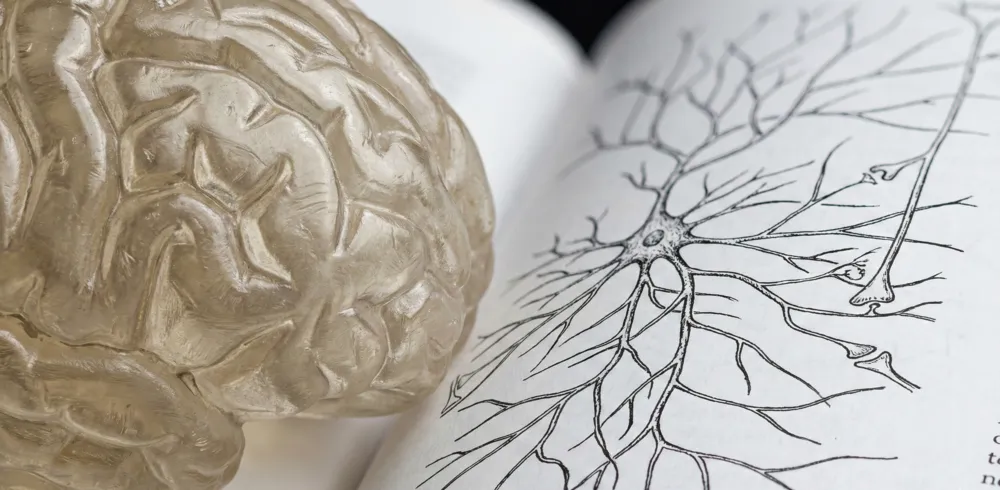
De complexiteit van de hersenen ligt in de miljarden zenuwcellen, of neuronen, die communiceren via elektrische en chemische signalen. Dit netwerk maakt een snelle verwerking van informatie en coördinatie van lichaamsfuncties mogelijk.
Aandoeningen kunnen ontstaan door problemen met de structuur van de hersenen, de chemische balans of de manier waarop de verschillende delen communiceren. Zo zijn aandoeningen zoals autisme en ADHD neurodevelopmentaal, wat betekent dat ze invloed hebben op hoe de hersenen vanaf het begin groeien en zich ontwikkelen.
Andere aandoeningen, zoals dementie of amyotrofische laterale sclerose (ALS), zijn neurodegeneratief, gekenmerkt door het progressieve verlies van hersencellen in de loop van de tijd. Zelfs veelvoorkomende problemen zoals slaapapneu of insomnia kunnen een aanzienlijke impact hebben op de hersenfunctie en de algehele gezondheid.
Hoe hersenaandoeningen de functie veranderen
Hersenaandoeningen uiten zich op verschillende manieren, waarbij de capaciteiten en ervaringen van een persoon veranderen. Sommige aandoeningen beïnvloeden voornamelijk cognitieve functies, wat leidt tot geheugenverlies, moeite met concentreren of problemen met redeneren, zoals te zien is bij verschillende vormen van dementie. Andere hebben invloed op de stemming en emoties, zoals angststoornissen of bipolaire stoornis, en beïnvloeden de emotionele toestand en het gedrag van een persoon.
De motoriek kan ernstig worden aangetast door aandoeningen zoals de ziekte van Huntington, wat onwillekeurige bewegingen en coördinatieproblemen veroorzaakt. Leerverschillen, zoals dyslexie, zorgen voor uitdagingen op specifieke academische gebieden.
Zelfs ogenschijnlijk eenvoudige problemen zoals chronische migraine kunnen het dagelijks leven en de cognitieve prestaties diepgaand verstoren. De impact van deze aandoeningen onderstreept de cruciale rol van de hersenen in elk aspect van de menselijke ervaring.
Hoofdcategorieën van hersenaandoeningen
De hersenen, een opmerkelijk ingewikkeld orgaan, kunnen worden beïnvloed door een breed scala aan aandoeningen die hun normale functioneren verstoren. Deze verstoringen kunnen zich op diverse manieren uiten en hebben invloed op alles, van denkprocessen en emoties tot fysieke beweging en zintuiglijke waarneming.
Neurodevelopmentale en leerverschillen
Deze aandoeningen hebben invloed op hoe de hersenen groeien en zich ontwikkelen, wat vaak in de vroege kindertijd merkbaar wordt. Ze kunnen van invloed zijn op het leren, sociale interactie en gedrag.
Aandoeningen zoals ADHD kunnen de focus en impulsbeheersing beïnvloeden, terwijl autismespectrumstoornis invloed heeft op sociale communicatie en interactie. Dyslexie, een leerverschil, heeft specifiek invloed op het lezen en de taalverwerking.
Stemmings- en angststoornissen
Deze aandoeningen beïnvloeden voornamelijk de emotionele toestand en het vermogen om gevoelens te reguleren. Ze kunnen variëren van aanhoudende somberheid en verlies van interesse bij depressie tot overmatige bezorgdheid en angst die kenmerkend zijn voor angststoornissen.
Een bipolaire stoornis brengt schommelingen in stemming, energie en activiteitsniveaus met zich mee. Deze stoornissen worden vaak behandeld met een combinatie van psychotherapie en medicatie, met als doel de emotionele balans te herstellen en het dagelijks functioneren te verbeteren.
Neurodegeneratieve en cognitieve stoornissen
Neurodegeneratieve aandoeningen houden het progressieve verlies van structuur of functie van neuronen in, wat vaak leidt tot een achteruitgang van cognitieve vermogens, geheugen en motorische vaardigheden.
De ziekte van Alzheimer, de ziekte van Parkinson en amyotrofische laterale sclerose (ALS) vallen in deze categorie. Deze aandoeningen komen doorgaans vaker voor bij oudere volwassenen en kunnen de onafhankelijkheid van een persoon aanzienlijk beïnvloeden.
Er wordt voortdurend onderzoek gedaan naar de onderliggende mechanismen en om effectieve behandelingen te ontwikkelen, waarbij sommige onderzoeken een hoge overeenstemming laten zien tussen klinische diagnoses en biologische markers.
Motorische en bewegingsstoornissen
Aandoeningen in deze categorie beïnvloeden de controle van de hersenen over bewuste en onbewuste bewegingen. Dit kan leiden tot problemen zoals tremoren, stijfheid, traagheid van beweging of problemen met de coördinatie en het evenwicht.
Aandoeningen zoals ALS, dat de zenuwcellen aantast die de spieren aansturen, en de ziekte van Huntington, een genetische aandoening die een progressieve afbraak van zenuwcellen in de hersenen veroorzaakt, tasten de motorische functie ernstig aan. Cerebrale parese is een ander voorbeeld, dat beweging en houding vanaf jonge leeftijd beïnvloedt.
Slaap- en waakstoornissen
Deze aandoeningen verstoren het normale slaappatroon, wat leidt tot problemen met in slaap vallen, doorslapen of overmatige slaperigheid overdag. Insomnia, narcolepsie en slaapapneu zijn veelvoorkomende voorbeelden. Chronische slaapstoornissen kunnen verstrekkende gevolgen hebben voor de algehele gezondheid, stemming en cognitieve functie.
De behandeling bestaat vaak uit veranderingen in levensstijl, therapie en soms medicatie.
Hoofdpijn en pijnstillende stoornissen
Hoewel hoofdpijn veelvoorkomend is, kunnen bepaalde soorten slopend zijn en wijzen op onderliggende neurologische problemen. Migraines, clusterhoofdpijn en chronische dagelijkse hoofdpijn kunnen de kwaliteit van leven aanzienlijk verminderen.
De oorzaken kunnen variëren en de diagnose omvat vaak gedetailleerde tracking van symptomen en de medische geschiedenis. Behandelstrategieën richten zich op pijnverlichting en het voorkomen van toekomstige episodes.
Epileptische stoornissen
Epilepsie is de meest bekende epileptische stoornis, gekenmerkt door terugkerende, onverklaarbare aanvallen. Aanvallen zijn plotselinge golven van elektrische activiteit in de hersenen die een breed scala aan symptomen kunnen veroorzaken, van korte concentratiestoornissen tot stuipen over het hele lichaam.
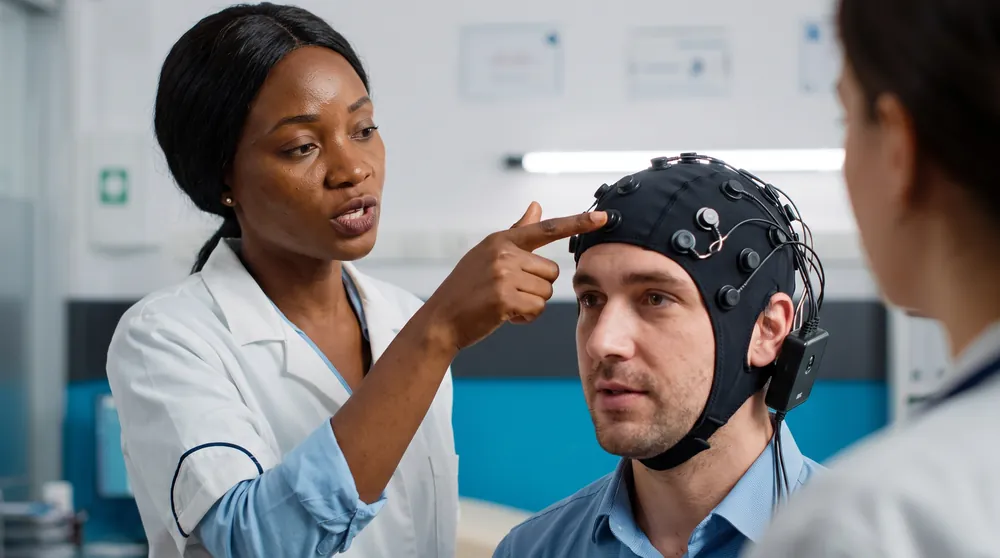
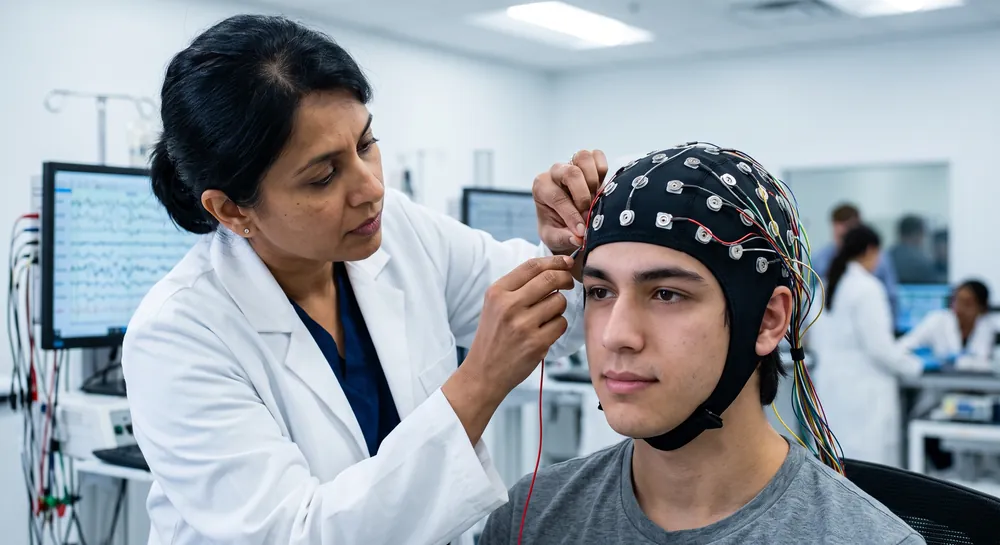
De diagnose omvat doorgaans neurologisch onderzoek, een EEG (elektro-encefalogram) om de hersenactiviteit te registreren en soms beeldvorming van de hersenen. De behandeling is gericht op het onder controle houden van aanvallen via medicatie, en in sommige gevallen kunnen chirurgische ingrepen of dieetwijzigingen worden overwogen.
Oorzaken en risicofactoren
Hersenaandoeningen kunnen ontstaan door een complex samenspel van factoren, en het begrijpen van deze invloeden is de sleutel tot preventie en behandeling. Hoewel sommige aandoeningen duidelijke oorzaken hebben, is er bij veel aandoeningen sprake van een combinatie van genetische aanleg en omgevingsfactoren.
Genetica en familiegeschiedenis
Genetica speelt een belangrijke rol bij de ontwikkeling van veel hersenaandoeningen. Een familiegeschiedenis met aandoeningen zoals de ziekte van Alzheimer, de ziekte van Parkinson of bepaalde psychische aandoeningen kan het risico van een individu verhogen.
Er zijn specifieke genmutaties geïdentificeerd die rechtstreeks aandoeningen zoals de ziekte van Huntington of sommige vormen van epilepsie veroorzaken of mensen hier sterk voor predisponeren. Het hebben van een genetische aanleg garandeert echter niet de ontwikkeling van een aandoening; het betekent simpelweg dat het risico hoger is dan bij de algemene bevolking.
Onderzoek blijft specifieke genen en hun rol bij verschillende neurologische en psychiatrische aandoeningen identificeren, wat inzicht biedt in de biologische basis van deze ziekten. Zo hebben onderzoeken bijvoorbeeld een duidelijk verband aangetoond tussen ernstige chronische traumatische encefalopathie (CTE) en een verhoogd risico op dementie, wat aantoont hoe genetische factoren kunnen interageren met externe gebeurtenissen.
Leeftijd en neurobiologie
Leeftijd is een prominente risicofactor voor veel hersenaandoeningen. Naarmate mensen ouder worden, treden er natuurlijke veranderingen op in de structuur en functie van de hersenen.
Neurodegeneratieve ziekten, zoals de ziekte van Alzheimer en Parkinson, komen veel vaker voor bij oudere volwassenen. Dit is deels te wijten aan de cumulatieve effecten van cellulaire schade in de loop der tijd en veranderingen in het vermogen van de hersenen om zichzelf te herstellen.
De ouder wordende hersenen kunnen ook kwetsbaarder zijn voor andere schade, zoals beroertes of infecties, die kunnen leiden tot cognitieve achteruitgang of andere neurologische tekorten. Omgekeerd ontstaan sommige aandoeningen, zoals bepaalde neurodevelopmentale aandoeningen, vroeg in het leven, vaak tijdens de foetale ontwikkeling of de vroege kindertijd, als gevolg van problemen met de hersenvorming of letsel op jonge leeftijd.
Levensstijl en gezondheidsfactoren
De levensstijl en de algehele gezondheidstoestand van een individu kunnen de gezondheid van de hersenen aanzienlijk beïnvloeden. Factoren zoals voeding, lichaamsbeweging, slaappatronen en stressniveaus dragen hier allemaal aan bij.
Een dieet dat essentiële voedingsstoffen mist, kan bijvoorbeeld de hersenfunctie beïnvloeden, terwijl van regelmatige lichaamsbeweging bekend is dat het de gezondheid van de hersenen bevordert en het risico op cognitieve achteruitgang kan verminderen. Chronische stress kan nadelige effecten hebben op de hersenen en mogelijk bijdragen aan stemmingsstoornissen en cognitieve problemen.
Middelengebruik, waaronder alcohol- en drugsmisbruik, is een andere belangrijke risicofactor die kan leiden tot een reeks hersenaandoeningen, van verslaving tot onherstelbare hersenschade. Het beheersen van chronische gezondheidsproblemen zoals diabetes, hypertensie en hart- en vaatziekten is ook belangrijk, omdat deze de bloedtoevoer naar de hersenen kunnen beïnvloeden en het risico op een beroerte en vasculaire dementie verhogen.
Letsel, infectie en omgevingsinvloeden
Externe factoren kunnen ook hersenaandoeningen veroorzaken of ertoe bijdragen. Traumatisch hersenletsel (TBI), als gevolg van vallen, ongelukken of geweld, kan onmiddellijke schade veroorzaken en leiden tot neurologische problemen op de lange termijn, waaronder cognitieve stoornissen, stemmingswisselingen en een verhoogd risico op aandoeningen zoals CTE.
Infecties die de hersenen aantasten, zoals meningitis of encefalitis, kunnen ontstekingen en schade aan hersenweefsel veroorzaken, wat leidt tot een verscheidenheid aan neurologische tekorten. Omgevingsinvloeden, waaronder bepaalde gifstoffen, zware metalen of langdurige blootstelling aan straling, zijn ook in verband gebracht met een verhoogd risico op hersentumoren and andere neurologische problemen.
Diagnose en behandelingsopties
Uitzoeken wat er aan de hand is met de hersenen omvat vaak een paar verschillende stappen.
Artsen beginnen met een gesprek over uw symptomen en uw medische geschiedenis. Ze kunnen ook een lichamelijk onderzoek doen, inclusief een neurologisch onderzoek om zaken als uw reflexen, evenwicht and coördinatie te controleren.
Soms zijn beeldvormende tests nodig om een kijkje in de hersenen te nemen. Dit kunnen CT-scans, MRI's of PET-scans zijn, die helpen om afwijkingen of veranderingen op te sporen. In sommige gevallen kan een lumbaalpunctie worden uitgevoerd om vocht uit de hersenen en het ruggenmerg te onderzoeken op tekenen van infectie of bloeding. Voor psychische aandoeningen is de diagnose meestal sterk afhankelijk van de evaluatie van uw symptomen en persoonlijke geschiedenis.
De behandelingsmethoden variëren sterk, afhankelijk van de specifieke hersenaandoening. Veel aandoeningen kunnen worden behandeld met een combinatie van therapieën.
Voor sommige is medicatie de primaire behandeling, die helpt om symptomen onder controle te houden of chemische onevenwichtigheden te corrigeren. Voor andere speelt psychotherapie, ook wel bekend als gesprekstherapie, een belangrijke rol. Dit kan verschillende technieken omvatten die gericht zijn op het veranderen van denkpatronen of gedrag.
Voor veel hersenaandoeningen, vooral die met een genetische component, is het begrijpen van de onderliggende mechanismen de sleutel tot het ontwikkelen van nieuwe behandelingen. Het doel van de behandeling is vaak om symptomen te beheersen, de kwaliteit van leven te verbeteren en mensen te helpen zo onafhankelijk mogelijk te blijven. Het is belangrijk om nauw samen te werken met zorgprofessionals om een persoonlijk behandelplan op te stellen.
Hersenaandoeningen begrijpen
Het landschap van hersenaandoeningen is enorm en complex, en raakt aan alles van de ontwikkeling in de kindertijd tot het verouderingsproces. Hoewel aandoeningen zoals neurodegeneratieve ziekten aanzienlijke uitdagingen met zich meebrengen zonder huidige genezing, bieden vorderingen in begrip en behandeling hoop.
Voortdurend onderzoek naar de oorzaken, mechanismen en mogelijke behandelingen voor het brede scala aan hersenaandoeningen blijft een prioriteit. Vroegtijdige diagnose, toegang tot de juiste zorg en voortdurende ondersteuning zijn essentieel voor het verbeteren van de resultaten voor mensen die door deze aandoeningen worden getroffen.
Referenties
Sporns, O. (2022). The complex brain: connectivity, dynamics, information. Trends in cognitive sciences, 26(12), 1066-1067. https://doi.org/10.1016/j.tics.2022.08.002
Gadhave, D. G., Sugandhi, V. V., Jha, S. K., Nangare, S. N., Gupta, G., Singh, S. K., ... & Paudel, K. R. (2024). Neurodegenerative disorders: Mechanisms of degeneration and therapeutic approaches with their clinical relevance. Ageing research reviews, 99, 102357. https://doi.org/10.1016/j.arr.2024.102357
National Library of Medicine. (2022, April 1). Genetic brain disorders. MedlinePlus. https://medlineplus.gov/geneticbraindisorders.html
Hou, Y., Dan, X., Babbar, M., Wei, Y., Hasselbalch, S. G., Croteau, D. L., & Bohr, V. A. (2019). Ageing as a risk factor for neurodegenerative disease. Nature reviews neurology, 15(10), 565-581. https://doi.org/10.1038/s41582-019-0244-7
Veelgestelde vragen
Wat is een hersenaandoening precies?
Een hersenaandoening is elke aandoening die invloed heeft op hoe uw hersenen werken. Zie uw hersenen als de hoofdcomputer van uw lichaam. Wanneer er iets misgaat met deze computer, kan dit veranderen hoe u denkt, voelt, beweegt of dingen herinnert. Deze problemen kunnen ontstaan door ziekte, genen of verwondingen.
Worden psychische problemen beschouwd als hersenaandoeningen?
Ja, absoluut. Psychische aandoeningen, zoals depressie, angst of een bipolaire stoornis, zijn een type hersenaandoening. Ze beïnvloeden uw stemming, gedachten en gedrag vanwege de manier waarop uw hersenen functioneren. Veel mensen hebben veel baat bij een behandeling.
Wat veroorzaakt hersenaandoeningen?
De oorzaken zijn gevarieerd. Sommige hersenaandoeningen zijn erfelijk, wat betekent dat ze in de familie zitten. Andere kunnen worden veroorzaakt door verwondingen, infecties of simpelweg door het ouder worden. Soms is de exacte oorzaak niet bekend, maar er is vaak sprake van veranderingen in de structuur van de hersenen of hoe deze signalen verzenden.
Hoe stellen artsen vast of iemand een hersenaandoening heeft?
Artsen gebruiken verschillende methoden. Ze praten met u over uw symptomen en uw gezondheidsgeschiedenis. Ze kunnen ook een lichamelijk onderzoek doen om uw zintuigen, evenwicht en reflexen te controleren. Soms gebruiken ze beeldvormende tests zoals MRI- of CT-scans om een beeld van uw hersenen te krijgen.
Kunnen hersenaandoeningen worden genezen?
Dat hangt echt af van de specifieke aandoening. Sommige hersenaandoeningen kunnen goed worden behandeld met medicijnen en therapie, waardoor mensen een volwaardig leven kunnen leiden. Voor andere aandoeningen, zoals sommige ziekten die in de loop van de tijd verergeren of ernstige verwondingen, is er echter wellicht geen genezing mogelijk. In die gevallen richt de behandeling zich op het beheersen van symptomen en het verbeteren van de kwaliteit van leven.
Wat zijn enkele veelvoorkomende soorten hersenaandoeningen?
Er zijn veel soorten, waaronder aandoeningen zoals ADHD en autisme die de ontwikkeling beïnvloeden, stemmings- en angststoornissen, problemen die de beweging beïnvloeden zoals de ziekte van Parkinson, en ziekten die het geheugen en het denken beïnvloeden naarmate mensen ouder worden, zoals Alzheimer.
Komen hersenaandoeningen vaker voor bij bepaalde leeftijdsgroepen?
Sommige hersenaandoeningen komen vaker voor bij specifieke leeftijdsgroepen. Zo worden neurodevelopmentale stoornissen vaak in de kindertijd vastgesteld, terwijl neurodegeneratieve ziekten zoals Alzheimer de neiging hebben om oudere volwassenen te treffen. Hersenletsel kan echter op elke leeftijd voorkomen.
Emotiv is een leider in neurotechnologie die helpt om neurowetenschappelijk onderzoek vooruit te helpen met toegankelijke EEG- en hersendatatools.
Medische disclaimer: De informatie op deze website is uitsluitend bedoeld voor educatieve en informatieve doeleinden en is niet bedoeld als medisch of gezondheidsadvies. Deze inhoud kan fouten bevatten en er mag niet op worden vertrouwd om levensveranderende keuzes te maken op het gebied van gezondheid, medische zaken of levensstijl. Vraag altijd advies aan uw arts of een andere gekwalificeerde zorgverlener met eventuele vragen over een medische aandoening of behandeling.
Christian Burgos