Challenge your memory! Play the new N-Back game in the Emotiv App
10+ Real Brain-Computer Interface Applications
Heidi Duran
Feb 27, 2026
Share:

For years, brain-computer interfaces felt like a futuristic concept confined to research labs with bulky, expensive equipment. That's no longer the case. The technology has evolved, and today’s portable, non-invasive EEG headsets are making it more accessible than ever. This shift is fueling a wave of innovation, allowing developers, researchers, and creators to explore what’s possible when technology can respond directly to our cognitive states. This guide is your introduction to this exciting field. We'll cover the fundamentals of how BCIs work and dive into the most promising brain-computer interface applications that are shaping the future of human-computer interaction.
Key Takeaways
BCI translates brain signals into commands: This technology creates a direct communication link between your brain and an external device, allowing you to control software or hardware by focusing on specific intentions.
Its applications are creating powerful new tools: From healthcare solutions that help restore communication to immersive entertainment that adapts to your cognitive state, BCI is moving from theory into real-world practice.
Matching your tools to your goals is essential: The right BCI system depends on your project; multi-channel headsets are ideal for detailed research, while portable devices are great for developing accessible applications and providing access to wellness tools.
What is a brain-computer interface?
A brain-computer interface, or BCI, is a system that creates a direct communication pathway between your brain and an external device, like a computer or a machine. Think of it as a bridge. Instead of using your hands to type on a keyboard or move a mouse, a BCI can interpret specific electrical signals from your brain and translate them into commands. This process bypasses the body's typical pathways for movement and communication.
It’s important to understand that BCIs don’t "read your mind" or interpret complex thoughts. Instead, they are trained to recognize patterns in your brain activity that correspond to specific intentions, like focusing on moving a cursor to the left or imagining a particular action. This technology opens up incredible possibilities, from helping people with paralysis communicate to creating new, immersive ways to interact with video games and virtual reality.
The core of a brain-computer interface is its ability to acquire brain signals, analyze them for patterns, and convert those patterns into actionable commands. This allows for direct control over software and devices, creating a seamless link between human intention and digital action. As the technology becomes more accessible, its applications are expanding into fields like academic research, neuromarketing, and providing access to cognitive wellness tools.
How BCIs detect and interpret brain signals
A BCI system works through a four-step process to turn brain activity into a command. First is signal acquisition, where sensors in an EEG headset detect the electrical signals produced by your brain. Next, the system performs feature extraction, using algorithms to find meaningful patterns in the brainwave data that indicate your intent.
The third step is feature translation, where the system converts those patterns into a command a device can understand. Our EmotivBCI software handles this by translating brainwave patterns into commands for computers. Finally, the device executes the command as the device output. You see the result in real-time, which provides feedback and helps you learn to control the BCI more effectively.
The different types of BCI systems
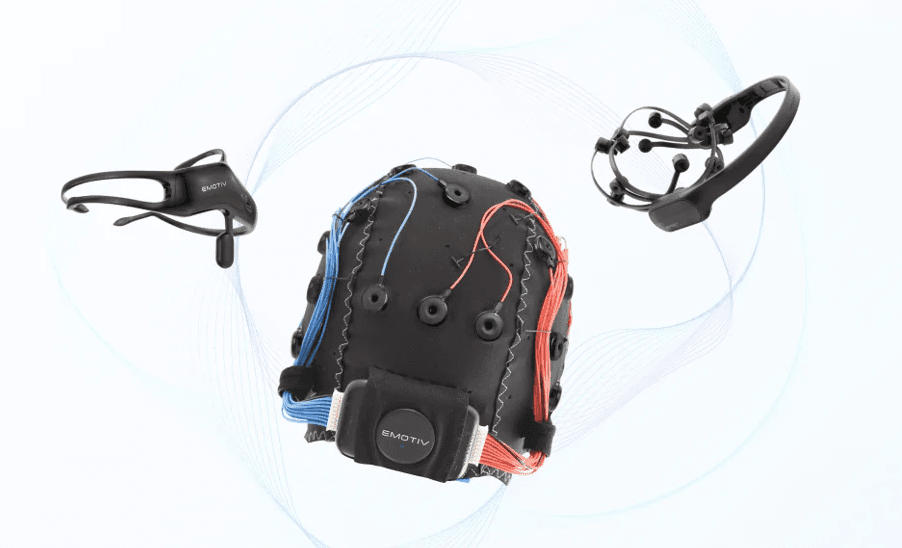
BCI systems are grouped into three categories based on how they connect with the brain. The most common type is the non-invasive BCI, which uses an external headset with sensors on the scalp to detect brain signals. Devices like our Epoc X headset are safe, portable, and easy to use, making them great for research and development. The main trade-off is that the skull slightly dampens the signals.
On the other end are invasive BCIs, which require surgery to implant electrodes directly into the brain. This provides very high-quality signals and is used in clinical settings for severe motor disabilities. A third category, partially invasive BCIs, offers a middle ground. These devices are placed inside the skull but on the brain's surface, balancing signal quality with a lower surgical risk.
How are BCIs changing healthcare?
Brain-computer interfaces are opening up incredible new possibilities in medicine and personal health. By creating a direct pathway between the brain and an external device, BCI technology offers new ways to restore function, aid in rehabilitation, and provide tools for training the brain. These systems work by detecting brain signals, interpreting the user's intent, and translating it into a command for a computer or machine. This is a fundamental shift in how we interact with technology, and its applications in healthcare are particularly profound, offering hope and new solutions for complex medical challenges.
From helping people with severe paralysis communicate with their loved ones to enabling individuals to control advanced prosthetics, these applications are changing lives and pushing the boundaries of what we thought was possible. The technology is also being explored as a powerful tool in neurorehabilitation for conditions like stroke, helping to rebuild connections in the brain. Beyond restoring lost function, BCIs are also used for brain training through neurofeedback, creating interactive ways to work on cognitive skills. These advancements are not just theoretical; they are actively being developed and refined in labs and clinics around the world. Let's look at some of the most impactful ways BCIs are being used in healthcare today.
Communication tools for people with paralysis
For individuals with severe motor disabilities from conditions like ALS, stroke, or spinal cord injury, communication can be a significant challenge. A brain-computer interface can translate brain signals into commands, allowing a person to type on a screen, control a speech-generating device, or interact with their environment. This technology provides a vital link to the outside world, restoring a sense of autonomy and connection for people who have lost the ability to speak or move. It’s a powerful example of how BCI can directly address a critical human need.
Controlling prosthetics and restoring mobility
One of the most exciting areas of BCI research is in restoring movement. Scientists are developing systems that allow people to control prosthetic limbs, robotic arms, and wheelchairs with their brain activity. Studies have shown that individuals with paralysis can learn to operate these complex devices, performing tasks that would otherwise be impossible. While much of this work is still in the research phase, these advances in medicine show a clear path toward a future where BCI can help people regain a significant degree of physical independence and mobility after an injury or illness.
Aiding stroke recovery and motor skills
BCIs are also becoming valuable tools in neurorehabilitation. After a stroke, a BCI system can be used to detect the intention to move a limb and provide feedback, even if the person can't physically perform the action. This process helps encourage brain activity in the damaged areas, which can support recovery and help rebuild neural pathways. By creating a feedback loop between intention and outcome, BCIs provide a unique way to engage the brain during physical therapy, potentially helping patients regain motor skills more effectively.
Using neurofeedback for brain training
Neurofeedback is a technique that uses a BCI to show you your brain activity in real time, allowing you to learn how to regulate it. This has applications across many areas, including healthcare. For example, research has explored using neurofeedback games to help children with neurodevelopmental disorders practice skills related to communication and social interaction. These BCI-based applications create an engaging way to train specific cognitive functions, turning what could be a difficult process into an interactive and rewarding experience.
How are BCIs revolutionizing gaming and entertainment?
Brain-computer interfaces are creating exciting new possibilities in gaming and entertainment. By translating brain signals into commands, this technology is paving the way for more immersive, personalized, and adaptive experiences. Instead of relying solely on traditional controllers, keyboards, or touchscreens, players can interact with digital worlds in a more intuitive way. This opens up a new frontier for game developers and creators to design experiences that respond directly to a player's cognitive or emotional state, transforming entertainment from a passive activity into a dynamic, two-way conversation.
This isn't just about replacing a joystick with your mind. It’s about adding a new layer of interaction that can make virtual worlds feel more alive and responsive. Imagine a game that adjusts its difficulty based on your focus levels or a horror experience that reacts to your genuine emotional responses. Our brain-computer interface technology provides the tools for developers to build these next-generation applications, changing how we play, interact, and experience digital content. This shift is not just an incremental update; it’s a fundamental change in how we connect with technology, putting the user's internal state at the center of the experience.
Creating games controlled by mental commands
The idea of controlling a game with your mind is becoming a reality. BCI technology allows developers to create games that respond to specific mental commands or facial expressions detected by an EEG headset. For example, you could push an object in a game by focusing on it or trigger a specific action by smiling or blinking. This creates a hands-free control system that can make gaming more accessible and deeply engaging. It’s not about reading complex thoughts, but rather about training the system to recognize patterns in your brain activity associated with clear, intentional commands.
Integrating BCIs with VR and AR
When you combine BCIs with virtual and augmented reality, you get an incredibly powerful combination. VR and AR are all about immersion, and BCI technology can make those virtual worlds feel even more real. A BCI can provide a game with data about your emotional state, allowing the virtual environment to change in response. For instance, the music in a game could become more intense as you feel more excited, or the weather in a virtual world could shift to reflect a calm, focused state. This creates a dynamic feedback loop where the digital world adapts to you, creating a truly personalized and adaptive experience for every user.
Developing new ways to interact and play
BCI technology is inspiring entirely new forms of gameplay that go beyond simple control schemes. Developers are exploring games that use neurofeedback to help players train their attention and focus. In these games, your success is directly tied to your ability to maintain a certain mental state. This introduces a unique challenge that is both entertaining and provides access to cognitive wellness tools. By giving creators access to brain data, we empower them to build novel interactions and explore what’s possible when technology can respond to the player on a deeper level. You can learn more about building these applications on our developer page.
How are BCIs used in research and education?
Brain-computer interfaces are moving from science fiction into labs and classrooms. For researchers and educators, BCI technology offers a direct window into brain activity, creating opportunities to study how we think and learn. This isn't about reading minds; it's about understanding the neural signatures of cognitive states like focus and engagement. By harnessing this data, we can build more effective tools for scientific discovery and create more personalized, responsive learning experiences for students of all ages.
Expanding the possibilities of academic research
For a long time, brain research was confined to expensive, immobile equipment in controlled lab settings. BCI is changing that. Portable EEG headsets give researchers the freedom to study brain function in more natural environments, which is key for understanding how the brain works in the real world. This opens up new avenues for academic research and education, allowing scientists to explore everything from human-machine interaction to the neural basis of emotion. With devices like our multi-channel Epoc X headset, researchers can gather high-quality brain data to develop and test new neurotechnologies.
Applying BCI to cognitive training
One of the most exciting applications of BCI is in cognitive training. Imagine playing a game where your success depends on your ability to stay focused. Using neurofeedback, a BCI system can provide you with real-time information about your brain activity, helping you learn to regulate your own cognitive states. These BCI-based applications, often delivered through games or virtual reality, offer an interactive way to practice skills like attention and working memory. It’s a powerful shift from passively learning about these concepts to actively engaging with them, giving you a hands-on tool to understand your own mind.
Creating new tools for educational neuroscience
BCI technology is also paving the way for smarter, more adaptive learning environments. Educational programs could one day use BCI to understand a student's level of engagement or cognitive workload and adjust the lesson accordingly. For example, if a student is feeling overwhelmed, the system could offer a brief pause or present the material differently. This creates a more personalized educational path for every learner. BCI can also be used to develop new neurofeedback tools that help students practice their focus, offering supportive resources for those with different learning styles or needs.
What are the everyday applications for BCIs?
While BCI technology is making huge strides in specialized fields like healthcare and research, its potential is also expanding into our daily lives. From the way we interact with our homes to how we secure our personal data, BCIs are opening up new possibilities for convenience, communication, and personal insight. These everyday applications show how brain-sensing technology is becoming more integrated and accessible for a wider audience, moving from the lab into practical, real-world scenarios.
Controlling your smart home
Imagine adjusting the lights, changing the music, or turning up the heat with a simple mental command. This is becoming a reality as BCIs integrate with the Internet of Things (IoT) and smart home devices. By translating brain signals into commands, a BCI can act as a universal remote for your connected environment. This not only offers a new level of convenience but also provides a powerful accessibility tool for individuals with mobility challenges. Developers are already exploring how to create seamless interactions between our minds and the spaces we live in, making our homes more responsive and intuitive.
Building better communication systems
For individuals with severe motor disabilities, such as those resulting from ALS or a stroke, BCIs offer a vital connection to the world. These systems can translate brain activity into text or speech, allowing users to communicate with family, friends, and caregivers. Beyond basic communication, this technology can also restore a sense of autonomy by enabling control over computers, wheelchairs, and other essential devices. Our EmotivBCI software, for example, is designed to help create applications that turn brain signals into actionable commands, opening up new avenues for expression and interaction for those who need it most.
Accessing tools for cognitive wellness
BCIs are also providing new ways for us to understand and engage with our own cognitive processes. Through applications like neurofeedback, you can get real-time information about your brain activity, helping you practice focus or manage stress. When combined with technologies like virtual reality (VR), these experiences become even more immersive and engaging. These tools don't aim to treat conditions; instead, they provide access to cognitive wellness resources that can help you learn more about your own mental states. It’s about giving you the data and the platform to explore your own brain in a structured, insightful way.
Using brainwaves for security and authentication
Passwords and fingerprints might one day be replaced by a more personal form of identification: your brainwaves. Every person’s brain activity has unique patterns, much like a fingerprint. Researchers are exploring how to use these "brainprints" for authentication, creating a highly secure method for verifying identity. This approach, known as passthoughts, could be used to unlock devices or access sensitive information. While still an emerging area of academic research, it highlights the potential for BCI to create security systems that are not only stronger but also seamlessly integrated with the user.
What trends are shaping the future of BCI?
The world of brain-computer interfaces is moving incredibly fast. What once seemed like science fiction is now becoming a practical tool for researchers, developers, and innovators. This progress is driven by a few key trends that are making BCI technology more powerful, accessible, and easier to use than ever before. From smarter software to more comfortable hardware, these advancements are paving the way for new applications in everything from academic research to personal wellness. Let's look at the four biggest trends shaping the future of BCI.
Advancements in non-invasive EEG
For a long time, BCI technology was associated with invasive surgery. Thankfully, that’s changing. Newer BCIs don't always need surgical implants. Instead, wearable headsets using electroencephalography (EEG) can detect brain signals from the scalp, making the technology much easier for more people to use. This shift toward non-invasive methods is a huge deal, as it opens the door for everyday BCI applications outside of clinical settings. Our own headsets, like the Epoc X and Flex, are designed to be non-invasive, allowing researchers and developers to gather high-quality brain data comfortably and ethically. This accessibility is key to expanding what’s possible with BCI.
Using AI to better interpret brain signals
Gathering brain data is one thing, but making sense of it is another challenge entirely. This is where artificial intelligence comes in. Thanks to AI and machine learning, modern BCI systems can now interpret complex brain signals almost instantly. This allows for incredibly precise control of external devices, turning a subtle thought into a direct command. This leap in processing power means that BCI applications are becoming more responsive and intuitive. Our EmotivPRO software, for example, helps researchers analyze complex EEG data, making it easier to find meaningful patterns in brain activity and accelerate their work.
The rise of portable and wireless devices
BCI technology is no longer confined to the lab. As devices become smaller, lighter, and wireless, they are becoming a part of our daily lives. This trend toward portability is making it possible to explore new uses for BCI, from providing access to cognitive wellness tools to creating entirely new ways to interact with technology. Think of EEG earbuds like our MN8 or streamlined headsets like the Insight. These designs make it easy to gather brain data in real-world environments, not just in a controlled setting. This freedom allows for more natural and dynamic research and development.
Improving real-time data processing
For a BCI to be truly useful, it needs to work in real time. Lag between a thought and an action can make an application feel clunky or unusable. That’s why a major focus in the field is on improving real-time data processing. This capability is essential for advancing BCI applications, allowing for the immediate feedback needed for effective neurofeedback or seamless control of a device. For developers and researchers studying human-machine interaction, this is a game-changer. Our EmotivBCI software is built for this, providing a direct line from brain signals to computer commands, enabling the creation of responsive, real-time BCI systems.
How to choose the right BCI hardware
Picking the right hardware is the first step in getting started with BCI. The best device for you really depends on what you want to accomplish. Are you conducting detailed academic research, developing a new application, or exploring cognitive wellness tools for personal use? Answering that question will help you decide between systems with more data channels versus those designed for portability and everyday use. Let's walk through the key factors to consider so you can find the perfect fit for your project.
Multi-channel vs. simplified EEG: What's the difference?
One of the first decisions you'll face is choosing between a multi-channel or a simplified EEG system. Multi-channel systems, like our Epoc X and Flex headsets, use many sensors to gather data from different areas of the brain. This provides a more detailed and comprehensive view of neural activity, which is ideal for complex research and advanced BCI applications. In contrast, simplified EEG systems use fewer sensors. Devices like our two-channel MN8 earbuds prioritize ease of use and accessibility, making them a great starting point for developers or for personal wellness applications where convenience is key.
Considering portability and wearable designs
Think about where and how you plan to use your BCI device. If you’re working in a controlled lab environment, a more involved setup might be perfectly fine. However, if you want to gather data in real-world settings or use BCI on the go, portability is essential. Modern wearable EEG headsets are designed for exactly this purpose. They focus on comfort and convenience, allowing you to engage with BCI technology in various settings without needing a lengthy or complicated setup. Our Insight headset, for example, is built to be lightweight and wireless, making it suitable for use both in and out of the lab.
Matching hardware to your specific application
Ultimately, the best BCI hardware is the one that aligns with your specific goals. It’s crucial to consider your application's requirements before making a choice. For instance, researchers doing in-depth academic studies or neuromarketers analyzing consumer responses will benefit from the high-resolution data provided by a multi-channel system. On the other hand, if you’re a developer creating a simple hands-free command for an app or a game, a portable, simplified EEG device may provide everything you need. Matching the hardware to your project ensures you have the right tool for the job.
What software powers brain-computer interfaces?
While EEG hardware gathers the raw brainwave data, it’s the software that truly brings a brain-computer interface to life. Think of the software as the translator, taking the complex electrical signals from your brain and converting them into commands or insights a computer can understand. Without sophisticated software, the data from even the most advanced headset is just noise. The right platform is essential for cleaning, interpreting, and applying this data in meaningful ways.
A complete BCI software ecosystem typically handles three critical jobs. First, it processes data in real time, filtering out interference and identifying important patterns as they happen. Second, it provides developers with the tools they need to build new and exciting BCI applications. Finally, it allows for easy integration with other programs and systems, making it a flexible tool for research and innovation. Our software suite, including EmotivPRO and EmotivBCI, is designed to provide a seamless experience across all these areas, giving you a powerful and accessible platform for working with brain data.
Platforms for real-time data processing
For a BCI to work effectively, especially for interactive applications, its software must process brain signals almost instantly. This real-time data processing is what allows you to see your focus levels change on screen or control a virtual object with your thoughts. The software acts as a high-speed filter, cleaning the raw EEG data to remove "artifacts," which are signals caused by muscle movements like blinking or clenching your jaw.
Once the data is clean, the software extracts key features and patterns. This is the core of BCI, where electrical brain activity is translated into a specific output. Platforms like EmotivPRO are built to handle this complex job, giving you a clear, real-time view of brain activity that you can use for research or neurofeedback applications.
Developer tools and APIs for BCI
The real magic of BCI comes from the custom applications people create. This is where developer tools, like software development kits (SDKs) and application programming interfaces (APIs), come in. These tools give programmers the building blocks to create their own BCI-powered software without needing to become neuroscience experts overnight. They provide access to the processed brain data, allowing developers to use it as an input for games, wellness apps, or creative projects.
With a robust set of developer tools, you can integrate brain data into applications built with common programming languages. This opens up a world of possibilities, letting you experiment with new forms of interaction and build unique experiences that respond directly to a user's cognitive state.
Integrating BCI software with your existing systems
BCI technology rarely works in isolation. Researchers often need to combine EEG data with other measurements, while developers might want to connect a BCI to a smart home system or a virtual reality environment. That’s why the ability to integrate BCI software with your existing systems is so important. Good BCI software allows you to stream data to other applications for deeper analysis or combined use.
For example, you might send real-time performance metrics from an EEG headset into a data analysis program like MATLAB. Software like EmotivBCI is designed for this purpose, making it straightforward to send brain data to other platforms. This flexibility ensures that you can incorporate BCI into larger projects and workflows, whether you're conducting a complex scientific study or building a multi-faceted interactive experience.
What are the ethical considerations of BCI?
As brain-computer interface technology becomes more integrated into our lives, it’s essential to have an open conversation about the ethical questions it raises. Like any powerful tool, BCI comes with a responsibility to think carefully about its impact. The goal is to innovate in a way that respects individuals and benefits society as a whole. This means creating standards and practices that protect users, ensure fairness, and build trust in these emerging systems. It's a proactive approach, ensuring that the technology develops with human values at its core.
The conversation around BCI ethics isn't about slowing down progress. Instead, it's about guiding it in a positive direction. By addressing these topics head-on, developers, researchers, and users can work together to shape a future where BCI technology is used safely and responsibly. Key areas of focus include data privacy, user autonomy, equitable access, and clear lines of accountability. Thinking through these challenges now helps us build a solid foundation for the incredible possibilities that lie ahead, making sure that as BCI becomes more common, it does so in a way that is thoughtful and beneficial for everyone.
Protecting privacy and neurodata
Brain-computer interfaces work with some of the most personal information imaginable: your neural signals, or neurodata. This isn't just any data; it can offer insights into your cognitive and emotional states. As the Future of Privacy Forum notes, this creates new and heightened risks associated with the privacy of thought. Protecting this information is a top priority. It means establishing strong security measures to prevent unauthorized access and being transparent about how data is collected, stored, and used. The core principle is that your neurodata belongs to you, and it deserves the highest level of protection.
Ensuring user consent and autonomy
Your ability to control your own data and make informed decisions is fundamental. With BCIs, this means consent can't be a simple checkbox. Users need to clearly understand what data is being collected and for what purpose before they agree to anything. This has led to discussions around new concepts like "neuroprivacy," which advocates for the right to keep your neural data private. True autonomy means you have the power to decide if, when, and how your brain activity is used by a BCI system. It’s about putting the user in the driver’s seat, with full control over their personal cognitive information.
Addressing equity and accessibility
For BCI technology to make a positive impact, it needs to be accessible to everyone who can benefit from it. As researchers point out, there are important questions to address around social justice and access. We need to consider who can afford this technology and how we can prevent it from creating a new digital divide. It’s also important to design systems that are inclusive and avoid creating stigma for users. The goal is to ensure that BCI applications, from assistive devices to wellness tools, are developed and distributed fairly, so they empower as many people as possible without creating new forms of inequality.
Defining responsibility and accountability
When a BCI system is involved in making decisions, who is responsible for the outcome? Is it the user, the developer, or the manufacturer of the device? These are complex questions without easy answers. As BCI applications become more advanced, from controlling complex machinery to interacting with AI, establishing clear lines of responsibility is crucial. Some experts are already considering the unique new challenges this technology could pose to our legal and social norms. Creating clear policies and standards now will help ensure that as BCI technology evolves, it does so in a way that is safe, reliable, and accountable.
The future of BCI: Challenges and possibilities
The world of brain-computer interfaces is moving incredibly fast, but like any pioneering field, it has its share of challenges to solve before it becomes a part of our daily lives. From refining the hardware to making the technology more intuitive for everyone, the BCI community is working hard to build a future where interacting with technology is more seamless and accessible than ever before. The road ahead is focused on three key areas: overcoming technical barriers, reimagining human-computer interaction, and ensuring this powerful technology is available to all.
Overcoming today's technical barriers
For BCI to reach its full potential, the technology needs to be reliable, consistent, and easy to use. A major focus is on improving signal-acquisition hardware. The goal is to create sensors that are not only accurate but also comfortable, portable, and durable enough for everyday life. We need equipment that works well in any environment, not just in a controlled lab setting. This means continuing to develop wireless, long-lasting devices that are simple to set up. Solving these hardware and reliability challenges is the foundational step toward bringing BCI out of the research sphere and into the hands of more people.
The future of human-computer interaction
BCIs are set to completely change how we interact with the digital world. Imagine controlling your smart home, creating digital art, or communicating just by using your brain activity. This technology is also being integrated with virtual and augmented reality to create truly immersive and adaptive experiences that respond to your cognitive state in real time. Beyond entertainment and convenience, BCIs are also being explored for their potential in personal development, providing access to cognitive wellness tools that can help you understand your own mental processes. This is about creating a more natural and intuitive connection between humans and computers.
Making BCI technology more accessible
Ultimately, the success of BCI depends on how accessible it is. Non-invasive systems, particularly those based on EEG, are leading the way because they are safe and relatively easy to use. For this technology to have a widespread impact, applications need to be designed with the user in mind. This means creating intuitive interfaces, providing clear instructions, and building a positive relationship between the user and the technology. By empowering developers and creators to build user-friendly BCI applications, we can ensure that more people can benefit from these incredible advancements, regardless of their technical background.
Related Articles
Frequently Asked Questions
Does a BCI read my thoughts? No, a brain-computer interface doesn't interpret your complex thoughts or internal monologue. Instead, the system is trained to recognize specific patterns in your brain's electrical activity that correspond to a clear intention, like focusing on a command or making a distinct facial expression. It’s more like a pattern-recognition tool that translates your intent into a digital action, not a mind-reading device.
Is using a non-invasive BCI headset safe? Yes, non-invasive BCI systems are designed to be safe. Headsets like our Epoc X use passive sensors that rest on your scalp to detect the faint electrical signals your brain naturally produces. The process is similar to how a fitness band detects your heart rate; the device only receives information and does not send any signals into your brain.
What kind of BCI device should I start with? The best device really depends on your goals. If you're conducting detailed academic research, a multi-channel headset like our Flex or Epoc X will provide the comprehensive data you need. If you're a developer building a simple BCI application or are just starting to explore cognitive wellness tools, a more streamlined device like our MN8 earbuds is a great and accessible entry point.
Do I need to be a developer or a scientist to use BCI? Not at all. While researchers and developers use our more advanced software, many BCI applications are designed for everyone. Our software, like the Emotiv App, provides a user-friendly way to interact with your brain data without needing a technical background. The goal is to make this technology accessible, whether you're building a complex system or are simply curious about your own cognitive processes.
How is my personal brain data protected? Protecting your neurodata is a top priority. We believe your brain data belongs to you, and we are committed to strong security and transparency. This means using robust measures to safeguard the information and providing you with clear policies on how your data is handled. You should always have full control and understanding of how your personal cognitive information is being used.
For years, brain-computer interfaces felt like a futuristic concept confined to research labs with bulky, expensive equipment. That's no longer the case. The technology has evolved, and today’s portable, non-invasive EEG headsets are making it more accessible than ever. This shift is fueling a wave of innovation, allowing developers, researchers, and creators to explore what’s possible when technology can respond directly to our cognitive states. This guide is your introduction to this exciting field. We'll cover the fundamentals of how BCIs work and dive into the most promising brain-computer interface applications that are shaping the future of human-computer interaction.
Key Takeaways
BCI translates brain signals into commands: This technology creates a direct communication link between your brain and an external device, allowing you to control software or hardware by focusing on specific intentions.
Its applications are creating powerful new tools: From healthcare solutions that help restore communication to immersive entertainment that adapts to your cognitive state, BCI is moving from theory into real-world practice.
Matching your tools to your goals is essential: The right BCI system depends on your project; multi-channel headsets are ideal for detailed research, while portable devices are great for developing accessible applications and providing access to wellness tools.
What is a brain-computer interface?
A brain-computer interface, or BCI, is a system that creates a direct communication pathway between your brain and an external device, like a computer or a machine. Think of it as a bridge. Instead of using your hands to type on a keyboard or move a mouse, a BCI can interpret specific electrical signals from your brain and translate them into commands. This process bypasses the body's typical pathways for movement and communication.
It’s important to understand that BCIs don’t "read your mind" or interpret complex thoughts. Instead, they are trained to recognize patterns in your brain activity that correspond to specific intentions, like focusing on moving a cursor to the left or imagining a particular action. This technology opens up incredible possibilities, from helping people with paralysis communicate to creating new, immersive ways to interact with video games and virtual reality.
The core of a brain-computer interface is its ability to acquire brain signals, analyze them for patterns, and convert those patterns into actionable commands. This allows for direct control over software and devices, creating a seamless link between human intention and digital action. As the technology becomes more accessible, its applications are expanding into fields like academic research, neuromarketing, and providing access to cognitive wellness tools.
How BCIs detect and interpret brain signals
A BCI system works through a four-step process to turn brain activity into a command. First is signal acquisition, where sensors in an EEG headset detect the electrical signals produced by your brain. Next, the system performs feature extraction, using algorithms to find meaningful patterns in the brainwave data that indicate your intent.
The third step is feature translation, where the system converts those patterns into a command a device can understand. Our EmotivBCI software handles this by translating brainwave patterns into commands for computers. Finally, the device executes the command as the device output. You see the result in real-time, which provides feedback and helps you learn to control the BCI more effectively.
The different types of BCI systems
BCI systems are grouped into three categories based on how they connect with the brain. The most common type is the non-invasive BCI, which uses an external headset with sensors on the scalp to detect brain signals. Devices like our Epoc X headset are safe, portable, and easy to use, making them great for research and development. The main trade-off is that the skull slightly dampens the signals.
On the other end are invasive BCIs, which require surgery to implant electrodes directly into the brain. This provides very high-quality signals and is used in clinical settings for severe motor disabilities. A third category, partially invasive BCIs, offers a middle ground. These devices are placed inside the skull but on the brain's surface, balancing signal quality with a lower surgical risk.
How are BCIs changing healthcare?
Brain-computer interfaces are opening up incredible new possibilities in medicine and personal health. By creating a direct pathway between the brain and an external device, BCI technology offers new ways to restore function, aid in rehabilitation, and provide tools for training the brain. These systems work by detecting brain signals, interpreting the user's intent, and translating it into a command for a computer or machine. This is a fundamental shift in how we interact with technology, and its applications in healthcare are particularly profound, offering hope and new solutions for complex medical challenges.
From helping people with severe paralysis communicate with their loved ones to enabling individuals to control advanced prosthetics, these applications are changing lives and pushing the boundaries of what we thought was possible. The technology is also being explored as a powerful tool in neurorehabilitation for conditions like stroke, helping to rebuild connections in the brain. Beyond restoring lost function, BCIs are also used for brain training through neurofeedback, creating interactive ways to work on cognitive skills. These advancements are not just theoretical; they are actively being developed and refined in labs and clinics around the world. Let's look at some of the most impactful ways BCIs are being used in healthcare today.
Communication tools for people with paralysis
For individuals with severe motor disabilities from conditions like ALS, stroke, or spinal cord injury, communication can be a significant challenge. A brain-computer interface can translate brain signals into commands, allowing a person to type on a screen, control a speech-generating device, or interact with their environment. This technology provides a vital link to the outside world, restoring a sense of autonomy and connection for people who have lost the ability to speak or move. It’s a powerful example of how BCI can directly address a critical human need.
Controlling prosthetics and restoring mobility
One of the most exciting areas of BCI research is in restoring movement. Scientists are developing systems that allow people to control prosthetic limbs, robotic arms, and wheelchairs with their brain activity. Studies have shown that individuals with paralysis can learn to operate these complex devices, performing tasks that would otherwise be impossible. While much of this work is still in the research phase, these advances in medicine show a clear path toward a future where BCI can help people regain a significant degree of physical independence and mobility after an injury or illness.
Aiding stroke recovery and motor skills
BCIs are also becoming valuable tools in neurorehabilitation. After a stroke, a BCI system can be used to detect the intention to move a limb and provide feedback, even if the person can't physically perform the action. This process helps encourage brain activity in the damaged areas, which can support recovery and help rebuild neural pathways. By creating a feedback loop between intention and outcome, BCIs provide a unique way to engage the brain during physical therapy, potentially helping patients regain motor skills more effectively.
Using neurofeedback for brain training
Neurofeedback is a technique that uses a BCI to show you your brain activity in real time, allowing you to learn how to regulate it. This has applications across many areas, including healthcare. For example, research has explored using neurofeedback games to help children with neurodevelopmental disorders practice skills related to communication and social interaction. These BCI-based applications create an engaging way to train specific cognitive functions, turning what could be a difficult process into an interactive and rewarding experience.
How are BCIs revolutionizing gaming and entertainment?
Brain-computer interfaces are creating exciting new possibilities in gaming and entertainment. By translating brain signals into commands, this technology is paving the way for more immersive, personalized, and adaptive experiences. Instead of relying solely on traditional controllers, keyboards, or touchscreens, players can interact with digital worlds in a more intuitive way. This opens up a new frontier for game developers and creators to design experiences that respond directly to a player's cognitive or emotional state, transforming entertainment from a passive activity into a dynamic, two-way conversation.
This isn't just about replacing a joystick with your mind. It’s about adding a new layer of interaction that can make virtual worlds feel more alive and responsive. Imagine a game that adjusts its difficulty based on your focus levels or a horror experience that reacts to your genuine emotional responses. Our brain-computer interface technology provides the tools for developers to build these next-generation applications, changing how we play, interact, and experience digital content. This shift is not just an incremental update; it’s a fundamental change in how we connect with technology, putting the user's internal state at the center of the experience.
Creating games controlled by mental commands
The idea of controlling a game with your mind is becoming a reality. BCI technology allows developers to create games that respond to specific mental commands or facial expressions detected by an EEG headset. For example, you could push an object in a game by focusing on it or trigger a specific action by smiling or blinking. This creates a hands-free control system that can make gaming more accessible and deeply engaging. It’s not about reading complex thoughts, but rather about training the system to recognize patterns in your brain activity associated with clear, intentional commands.
Integrating BCIs with VR and AR
When you combine BCIs with virtual and augmented reality, you get an incredibly powerful combination. VR and AR are all about immersion, and BCI technology can make those virtual worlds feel even more real. A BCI can provide a game with data about your emotional state, allowing the virtual environment to change in response. For instance, the music in a game could become more intense as you feel more excited, or the weather in a virtual world could shift to reflect a calm, focused state. This creates a dynamic feedback loop where the digital world adapts to you, creating a truly personalized and adaptive experience for every user.
Developing new ways to interact and play
BCI technology is inspiring entirely new forms of gameplay that go beyond simple control schemes. Developers are exploring games that use neurofeedback to help players train their attention and focus. In these games, your success is directly tied to your ability to maintain a certain mental state. This introduces a unique challenge that is both entertaining and provides access to cognitive wellness tools. By giving creators access to brain data, we empower them to build novel interactions and explore what’s possible when technology can respond to the player on a deeper level. You can learn more about building these applications on our developer page.
How are BCIs used in research and education?
Brain-computer interfaces are moving from science fiction into labs and classrooms. For researchers and educators, BCI technology offers a direct window into brain activity, creating opportunities to study how we think and learn. This isn't about reading minds; it's about understanding the neural signatures of cognitive states like focus and engagement. By harnessing this data, we can build more effective tools for scientific discovery and create more personalized, responsive learning experiences for students of all ages.
Expanding the possibilities of academic research
For a long time, brain research was confined to expensive, immobile equipment in controlled lab settings. BCI is changing that. Portable EEG headsets give researchers the freedom to study brain function in more natural environments, which is key for understanding how the brain works in the real world. This opens up new avenues for academic research and education, allowing scientists to explore everything from human-machine interaction to the neural basis of emotion. With devices like our multi-channel Epoc X headset, researchers can gather high-quality brain data to develop and test new neurotechnologies.
Applying BCI to cognitive training
One of the most exciting applications of BCI is in cognitive training. Imagine playing a game where your success depends on your ability to stay focused. Using neurofeedback, a BCI system can provide you with real-time information about your brain activity, helping you learn to regulate your own cognitive states. These BCI-based applications, often delivered through games or virtual reality, offer an interactive way to practice skills like attention and working memory. It’s a powerful shift from passively learning about these concepts to actively engaging with them, giving you a hands-on tool to understand your own mind.
Creating new tools for educational neuroscience
BCI technology is also paving the way for smarter, more adaptive learning environments. Educational programs could one day use BCI to understand a student's level of engagement or cognitive workload and adjust the lesson accordingly. For example, if a student is feeling overwhelmed, the system could offer a brief pause or present the material differently. This creates a more personalized educational path for every learner. BCI can also be used to develop new neurofeedback tools that help students practice their focus, offering supportive resources for those with different learning styles or needs.
What are the everyday applications for BCIs?
While BCI technology is making huge strides in specialized fields like healthcare and research, its potential is also expanding into our daily lives. From the way we interact with our homes to how we secure our personal data, BCIs are opening up new possibilities for convenience, communication, and personal insight. These everyday applications show how brain-sensing technology is becoming more integrated and accessible for a wider audience, moving from the lab into practical, real-world scenarios.
Controlling your smart home
Imagine adjusting the lights, changing the music, or turning up the heat with a simple mental command. This is becoming a reality as BCIs integrate with the Internet of Things (IoT) and smart home devices. By translating brain signals into commands, a BCI can act as a universal remote for your connected environment. This not only offers a new level of convenience but also provides a powerful accessibility tool for individuals with mobility challenges. Developers are already exploring how to create seamless interactions between our minds and the spaces we live in, making our homes more responsive and intuitive.
Building better communication systems
For individuals with severe motor disabilities, such as those resulting from ALS or a stroke, BCIs offer a vital connection to the world. These systems can translate brain activity into text or speech, allowing users to communicate with family, friends, and caregivers. Beyond basic communication, this technology can also restore a sense of autonomy by enabling control over computers, wheelchairs, and other essential devices. Our EmotivBCI software, for example, is designed to help create applications that turn brain signals into actionable commands, opening up new avenues for expression and interaction for those who need it most.
Accessing tools for cognitive wellness
BCIs are also providing new ways for us to understand and engage with our own cognitive processes. Through applications like neurofeedback, you can get real-time information about your brain activity, helping you practice focus or manage stress. When combined with technologies like virtual reality (VR), these experiences become even more immersive and engaging. These tools don't aim to treat conditions; instead, they provide access to cognitive wellness resources that can help you learn more about your own mental states. It’s about giving you the data and the platform to explore your own brain in a structured, insightful way.
Using brainwaves for security and authentication
Passwords and fingerprints might one day be replaced by a more personal form of identification: your brainwaves. Every person’s brain activity has unique patterns, much like a fingerprint. Researchers are exploring how to use these "brainprints" for authentication, creating a highly secure method for verifying identity. This approach, known as passthoughts, could be used to unlock devices or access sensitive information. While still an emerging area of academic research, it highlights the potential for BCI to create security systems that are not only stronger but also seamlessly integrated with the user.
What trends are shaping the future of BCI?
The world of brain-computer interfaces is moving incredibly fast. What once seemed like science fiction is now becoming a practical tool for researchers, developers, and innovators. This progress is driven by a few key trends that are making BCI technology more powerful, accessible, and easier to use than ever before. From smarter software to more comfortable hardware, these advancements are paving the way for new applications in everything from academic research to personal wellness. Let's look at the four biggest trends shaping the future of BCI.
Advancements in non-invasive EEG
For a long time, BCI technology was associated with invasive surgery. Thankfully, that’s changing. Newer BCIs don't always need surgical implants. Instead, wearable headsets using electroencephalography (EEG) can detect brain signals from the scalp, making the technology much easier for more people to use. This shift toward non-invasive methods is a huge deal, as it opens the door for everyday BCI applications outside of clinical settings. Our own headsets, like the Epoc X and Flex, are designed to be non-invasive, allowing researchers and developers to gather high-quality brain data comfortably and ethically. This accessibility is key to expanding what’s possible with BCI.
Using AI to better interpret brain signals
Gathering brain data is one thing, but making sense of it is another challenge entirely. This is where artificial intelligence comes in. Thanks to AI and machine learning, modern BCI systems can now interpret complex brain signals almost instantly. This allows for incredibly precise control of external devices, turning a subtle thought into a direct command. This leap in processing power means that BCI applications are becoming more responsive and intuitive. Our EmotivPRO software, for example, helps researchers analyze complex EEG data, making it easier to find meaningful patterns in brain activity and accelerate their work.
The rise of portable and wireless devices
BCI technology is no longer confined to the lab. As devices become smaller, lighter, and wireless, they are becoming a part of our daily lives. This trend toward portability is making it possible to explore new uses for BCI, from providing access to cognitive wellness tools to creating entirely new ways to interact with technology. Think of EEG earbuds like our MN8 or streamlined headsets like the Insight. These designs make it easy to gather brain data in real-world environments, not just in a controlled setting. This freedom allows for more natural and dynamic research and development.
Improving real-time data processing
For a BCI to be truly useful, it needs to work in real time. Lag between a thought and an action can make an application feel clunky or unusable. That’s why a major focus in the field is on improving real-time data processing. This capability is essential for advancing BCI applications, allowing for the immediate feedback needed for effective neurofeedback or seamless control of a device. For developers and researchers studying human-machine interaction, this is a game-changer. Our EmotivBCI software is built for this, providing a direct line from brain signals to computer commands, enabling the creation of responsive, real-time BCI systems.
How to choose the right BCI hardware
Picking the right hardware is the first step in getting started with BCI. The best device for you really depends on what you want to accomplish. Are you conducting detailed academic research, developing a new application, or exploring cognitive wellness tools for personal use? Answering that question will help you decide between systems with more data channels versus those designed for portability and everyday use. Let's walk through the key factors to consider so you can find the perfect fit for your project.
Multi-channel vs. simplified EEG: What's the difference?
One of the first decisions you'll face is choosing between a multi-channel or a simplified EEG system. Multi-channel systems, like our Epoc X and Flex headsets, use many sensors to gather data from different areas of the brain. This provides a more detailed and comprehensive view of neural activity, which is ideal for complex research and advanced BCI applications. In contrast, simplified EEG systems use fewer sensors. Devices like our two-channel MN8 earbuds prioritize ease of use and accessibility, making them a great starting point for developers or for personal wellness applications where convenience is key.
Considering portability and wearable designs
Think about where and how you plan to use your BCI device. If you’re working in a controlled lab environment, a more involved setup might be perfectly fine. However, if you want to gather data in real-world settings or use BCI on the go, portability is essential. Modern wearable EEG headsets are designed for exactly this purpose. They focus on comfort and convenience, allowing you to engage with BCI technology in various settings without needing a lengthy or complicated setup. Our Insight headset, for example, is built to be lightweight and wireless, making it suitable for use both in and out of the lab.
Matching hardware to your specific application
Ultimately, the best BCI hardware is the one that aligns with your specific goals. It’s crucial to consider your application's requirements before making a choice. For instance, researchers doing in-depth academic studies or neuromarketers analyzing consumer responses will benefit from the high-resolution data provided by a multi-channel system. On the other hand, if you’re a developer creating a simple hands-free command for an app or a game, a portable, simplified EEG device may provide everything you need. Matching the hardware to your project ensures you have the right tool for the job.
What software powers brain-computer interfaces?
While EEG hardware gathers the raw brainwave data, it’s the software that truly brings a brain-computer interface to life. Think of the software as the translator, taking the complex electrical signals from your brain and converting them into commands or insights a computer can understand. Without sophisticated software, the data from even the most advanced headset is just noise. The right platform is essential for cleaning, interpreting, and applying this data in meaningful ways.
A complete BCI software ecosystem typically handles three critical jobs. First, it processes data in real time, filtering out interference and identifying important patterns as they happen. Second, it provides developers with the tools they need to build new and exciting BCI applications. Finally, it allows for easy integration with other programs and systems, making it a flexible tool for research and innovation. Our software suite, including EmotivPRO and EmotivBCI, is designed to provide a seamless experience across all these areas, giving you a powerful and accessible platform for working with brain data.
Platforms for real-time data processing
For a BCI to work effectively, especially for interactive applications, its software must process brain signals almost instantly. This real-time data processing is what allows you to see your focus levels change on screen or control a virtual object with your thoughts. The software acts as a high-speed filter, cleaning the raw EEG data to remove "artifacts," which are signals caused by muscle movements like blinking or clenching your jaw.
Once the data is clean, the software extracts key features and patterns. This is the core of BCI, where electrical brain activity is translated into a specific output. Platforms like EmotivPRO are built to handle this complex job, giving you a clear, real-time view of brain activity that you can use for research or neurofeedback applications.
Developer tools and APIs for BCI
The real magic of BCI comes from the custom applications people create. This is where developer tools, like software development kits (SDKs) and application programming interfaces (APIs), come in. These tools give programmers the building blocks to create their own BCI-powered software without needing to become neuroscience experts overnight. They provide access to the processed brain data, allowing developers to use it as an input for games, wellness apps, or creative projects.
With a robust set of developer tools, you can integrate brain data into applications built with common programming languages. This opens up a world of possibilities, letting you experiment with new forms of interaction and build unique experiences that respond directly to a user's cognitive state.
Integrating BCI software with your existing systems
BCI technology rarely works in isolation. Researchers often need to combine EEG data with other measurements, while developers might want to connect a BCI to a smart home system or a virtual reality environment. That’s why the ability to integrate BCI software with your existing systems is so important. Good BCI software allows you to stream data to other applications for deeper analysis or combined use.
For example, you might send real-time performance metrics from an EEG headset into a data analysis program like MATLAB. Software like EmotivBCI is designed for this purpose, making it straightforward to send brain data to other platforms. This flexibility ensures that you can incorporate BCI into larger projects and workflows, whether you're conducting a complex scientific study or building a multi-faceted interactive experience.
What are the ethical considerations of BCI?
As brain-computer interface technology becomes more integrated into our lives, it’s essential to have an open conversation about the ethical questions it raises. Like any powerful tool, BCI comes with a responsibility to think carefully about its impact. The goal is to innovate in a way that respects individuals and benefits society as a whole. This means creating standards and practices that protect users, ensure fairness, and build trust in these emerging systems. It's a proactive approach, ensuring that the technology develops with human values at its core.
The conversation around BCI ethics isn't about slowing down progress. Instead, it's about guiding it in a positive direction. By addressing these topics head-on, developers, researchers, and users can work together to shape a future where BCI technology is used safely and responsibly. Key areas of focus include data privacy, user autonomy, equitable access, and clear lines of accountability. Thinking through these challenges now helps us build a solid foundation for the incredible possibilities that lie ahead, making sure that as BCI becomes more common, it does so in a way that is thoughtful and beneficial for everyone.
Protecting privacy and neurodata
Brain-computer interfaces work with some of the most personal information imaginable: your neural signals, or neurodata. This isn't just any data; it can offer insights into your cognitive and emotional states. As the Future of Privacy Forum notes, this creates new and heightened risks associated with the privacy of thought. Protecting this information is a top priority. It means establishing strong security measures to prevent unauthorized access and being transparent about how data is collected, stored, and used. The core principle is that your neurodata belongs to you, and it deserves the highest level of protection.
Ensuring user consent and autonomy
Your ability to control your own data and make informed decisions is fundamental. With BCIs, this means consent can't be a simple checkbox. Users need to clearly understand what data is being collected and for what purpose before they agree to anything. This has led to discussions around new concepts like "neuroprivacy," which advocates for the right to keep your neural data private. True autonomy means you have the power to decide if, when, and how your brain activity is used by a BCI system. It’s about putting the user in the driver’s seat, with full control over their personal cognitive information.
Addressing equity and accessibility
For BCI technology to make a positive impact, it needs to be accessible to everyone who can benefit from it. As researchers point out, there are important questions to address around social justice and access. We need to consider who can afford this technology and how we can prevent it from creating a new digital divide. It’s also important to design systems that are inclusive and avoid creating stigma for users. The goal is to ensure that BCI applications, from assistive devices to wellness tools, are developed and distributed fairly, so they empower as many people as possible without creating new forms of inequality.
Defining responsibility and accountability
When a BCI system is involved in making decisions, who is responsible for the outcome? Is it the user, the developer, or the manufacturer of the device? These are complex questions without easy answers. As BCI applications become more advanced, from controlling complex machinery to interacting with AI, establishing clear lines of responsibility is crucial. Some experts are already considering the unique new challenges this technology could pose to our legal and social norms. Creating clear policies and standards now will help ensure that as BCI technology evolves, it does so in a way that is safe, reliable, and accountable.
The future of BCI: Challenges and possibilities
The world of brain-computer interfaces is moving incredibly fast, but like any pioneering field, it has its share of challenges to solve before it becomes a part of our daily lives. From refining the hardware to making the technology more intuitive for everyone, the BCI community is working hard to build a future where interacting with technology is more seamless and accessible than ever before. The road ahead is focused on three key areas: overcoming technical barriers, reimagining human-computer interaction, and ensuring this powerful technology is available to all.
Overcoming today's technical barriers
For BCI to reach its full potential, the technology needs to be reliable, consistent, and easy to use. A major focus is on improving signal-acquisition hardware. The goal is to create sensors that are not only accurate but also comfortable, portable, and durable enough for everyday life. We need equipment that works well in any environment, not just in a controlled lab setting. This means continuing to develop wireless, long-lasting devices that are simple to set up. Solving these hardware and reliability challenges is the foundational step toward bringing BCI out of the research sphere and into the hands of more people.
The future of human-computer interaction
BCIs are set to completely change how we interact with the digital world. Imagine controlling your smart home, creating digital art, or communicating just by using your brain activity. This technology is also being integrated with virtual and augmented reality to create truly immersive and adaptive experiences that respond to your cognitive state in real time. Beyond entertainment and convenience, BCIs are also being explored for their potential in personal development, providing access to cognitive wellness tools that can help you understand your own mental processes. This is about creating a more natural and intuitive connection between humans and computers.
Making BCI technology more accessible
Ultimately, the success of BCI depends on how accessible it is. Non-invasive systems, particularly those based on EEG, are leading the way because they are safe and relatively easy to use. For this technology to have a widespread impact, applications need to be designed with the user in mind. This means creating intuitive interfaces, providing clear instructions, and building a positive relationship between the user and the technology. By empowering developers and creators to build user-friendly BCI applications, we can ensure that more people can benefit from these incredible advancements, regardless of their technical background.
Related Articles
Frequently Asked Questions
Does a BCI read my thoughts? No, a brain-computer interface doesn't interpret your complex thoughts or internal monologue. Instead, the system is trained to recognize specific patterns in your brain's electrical activity that correspond to a clear intention, like focusing on a command or making a distinct facial expression. It’s more like a pattern-recognition tool that translates your intent into a digital action, not a mind-reading device.
Is using a non-invasive BCI headset safe? Yes, non-invasive BCI systems are designed to be safe. Headsets like our Epoc X use passive sensors that rest on your scalp to detect the faint electrical signals your brain naturally produces. The process is similar to how a fitness band detects your heart rate; the device only receives information and does not send any signals into your brain.
What kind of BCI device should I start with? The best device really depends on your goals. If you're conducting detailed academic research, a multi-channel headset like our Flex or Epoc X will provide the comprehensive data you need. If you're a developer building a simple BCI application or are just starting to explore cognitive wellness tools, a more streamlined device like our MN8 earbuds is a great and accessible entry point.
Do I need to be a developer or a scientist to use BCI? Not at all. While researchers and developers use our more advanced software, many BCI applications are designed for everyone. Our software, like the Emotiv App, provides a user-friendly way to interact with your brain data without needing a technical background. The goal is to make this technology accessible, whether you're building a complex system or are simply curious about your own cognitive processes.
How is my personal brain data protected? Protecting your neurodata is a top priority. We believe your brain data belongs to you, and we are committed to strong security and transparency. This means using robust measures to safeguard the information and providing you with clear policies on how your data is handled. You should always have full control and understanding of how your personal cognitive information is being used.
For years, brain-computer interfaces felt like a futuristic concept confined to research labs with bulky, expensive equipment. That's no longer the case. The technology has evolved, and today’s portable, non-invasive EEG headsets are making it more accessible than ever. This shift is fueling a wave of innovation, allowing developers, researchers, and creators to explore what’s possible when technology can respond directly to our cognitive states. This guide is your introduction to this exciting field. We'll cover the fundamentals of how BCIs work and dive into the most promising brain-computer interface applications that are shaping the future of human-computer interaction.
Key Takeaways
BCI translates brain signals into commands: This technology creates a direct communication link between your brain and an external device, allowing you to control software or hardware by focusing on specific intentions.
Its applications are creating powerful new tools: From healthcare solutions that help restore communication to immersive entertainment that adapts to your cognitive state, BCI is moving from theory into real-world practice.
Matching your tools to your goals is essential: The right BCI system depends on your project; multi-channel headsets are ideal for detailed research, while portable devices are great for developing accessible applications and providing access to wellness tools.
What is a brain-computer interface?
A brain-computer interface, or BCI, is a system that creates a direct communication pathway between your brain and an external device, like a computer or a machine. Think of it as a bridge. Instead of using your hands to type on a keyboard or move a mouse, a BCI can interpret specific electrical signals from your brain and translate them into commands. This process bypasses the body's typical pathways for movement and communication.
It’s important to understand that BCIs don’t "read your mind" or interpret complex thoughts. Instead, they are trained to recognize patterns in your brain activity that correspond to specific intentions, like focusing on moving a cursor to the left or imagining a particular action. This technology opens up incredible possibilities, from helping people with paralysis communicate to creating new, immersive ways to interact with video games and virtual reality.
The core of a brain-computer interface is its ability to acquire brain signals, analyze them for patterns, and convert those patterns into actionable commands. This allows for direct control over software and devices, creating a seamless link between human intention and digital action. As the technology becomes more accessible, its applications are expanding into fields like academic research, neuromarketing, and providing access to cognitive wellness tools.
How BCIs detect and interpret brain signals
A BCI system works through a four-step process to turn brain activity into a command. First is signal acquisition, where sensors in an EEG headset detect the electrical signals produced by your brain. Next, the system performs feature extraction, using algorithms to find meaningful patterns in the brainwave data that indicate your intent.
The third step is feature translation, where the system converts those patterns into a command a device can understand. Our EmotivBCI software handles this by translating brainwave patterns into commands for computers. Finally, the device executes the command as the device output. You see the result in real-time, which provides feedback and helps you learn to control the BCI more effectively.
The different types of BCI systems
BCI systems are grouped into three categories based on how they connect with the brain. The most common type is the non-invasive BCI, which uses an external headset with sensors on the scalp to detect brain signals. Devices like our Epoc X headset are safe, portable, and easy to use, making them great for research and development. The main trade-off is that the skull slightly dampens the signals.
On the other end are invasive BCIs, which require surgery to implant electrodes directly into the brain. This provides very high-quality signals and is used in clinical settings for severe motor disabilities. A third category, partially invasive BCIs, offers a middle ground. These devices are placed inside the skull but on the brain's surface, balancing signal quality with a lower surgical risk.
How are BCIs changing healthcare?
Brain-computer interfaces are opening up incredible new possibilities in medicine and personal health. By creating a direct pathway between the brain and an external device, BCI technology offers new ways to restore function, aid in rehabilitation, and provide tools for training the brain. These systems work by detecting brain signals, interpreting the user's intent, and translating it into a command for a computer or machine. This is a fundamental shift in how we interact with technology, and its applications in healthcare are particularly profound, offering hope and new solutions for complex medical challenges.
From helping people with severe paralysis communicate with their loved ones to enabling individuals to control advanced prosthetics, these applications are changing lives and pushing the boundaries of what we thought was possible. The technology is also being explored as a powerful tool in neurorehabilitation for conditions like stroke, helping to rebuild connections in the brain. Beyond restoring lost function, BCIs are also used for brain training through neurofeedback, creating interactive ways to work on cognitive skills. These advancements are not just theoretical; they are actively being developed and refined in labs and clinics around the world. Let's look at some of the most impactful ways BCIs are being used in healthcare today.
Communication tools for people with paralysis
For individuals with severe motor disabilities from conditions like ALS, stroke, or spinal cord injury, communication can be a significant challenge. A brain-computer interface can translate brain signals into commands, allowing a person to type on a screen, control a speech-generating device, or interact with their environment. This technology provides a vital link to the outside world, restoring a sense of autonomy and connection for people who have lost the ability to speak or move. It’s a powerful example of how BCI can directly address a critical human need.
Controlling prosthetics and restoring mobility
One of the most exciting areas of BCI research is in restoring movement. Scientists are developing systems that allow people to control prosthetic limbs, robotic arms, and wheelchairs with their brain activity. Studies have shown that individuals with paralysis can learn to operate these complex devices, performing tasks that would otherwise be impossible. While much of this work is still in the research phase, these advances in medicine show a clear path toward a future where BCI can help people regain a significant degree of physical independence and mobility after an injury or illness.
Aiding stroke recovery and motor skills
BCIs are also becoming valuable tools in neurorehabilitation. After a stroke, a BCI system can be used to detect the intention to move a limb and provide feedback, even if the person can't physically perform the action. This process helps encourage brain activity in the damaged areas, which can support recovery and help rebuild neural pathways. By creating a feedback loop between intention and outcome, BCIs provide a unique way to engage the brain during physical therapy, potentially helping patients regain motor skills more effectively.
Using neurofeedback for brain training
Neurofeedback is a technique that uses a BCI to show you your brain activity in real time, allowing you to learn how to regulate it. This has applications across many areas, including healthcare. For example, research has explored using neurofeedback games to help children with neurodevelopmental disorders practice skills related to communication and social interaction. These BCI-based applications create an engaging way to train specific cognitive functions, turning what could be a difficult process into an interactive and rewarding experience.
How are BCIs revolutionizing gaming and entertainment?
Brain-computer interfaces are creating exciting new possibilities in gaming and entertainment. By translating brain signals into commands, this technology is paving the way for more immersive, personalized, and adaptive experiences. Instead of relying solely on traditional controllers, keyboards, or touchscreens, players can interact with digital worlds in a more intuitive way. This opens up a new frontier for game developers and creators to design experiences that respond directly to a player's cognitive or emotional state, transforming entertainment from a passive activity into a dynamic, two-way conversation.
This isn't just about replacing a joystick with your mind. It’s about adding a new layer of interaction that can make virtual worlds feel more alive and responsive. Imagine a game that adjusts its difficulty based on your focus levels or a horror experience that reacts to your genuine emotional responses. Our brain-computer interface technology provides the tools for developers to build these next-generation applications, changing how we play, interact, and experience digital content. This shift is not just an incremental update; it’s a fundamental change in how we connect with technology, putting the user's internal state at the center of the experience.
Creating games controlled by mental commands
The idea of controlling a game with your mind is becoming a reality. BCI technology allows developers to create games that respond to specific mental commands or facial expressions detected by an EEG headset. For example, you could push an object in a game by focusing on it or trigger a specific action by smiling or blinking. This creates a hands-free control system that can make gaming more accessible and deeply engaging. It’s not about reading complex thoughts, but rather about training the system to recognize patterns in your brain activity associated with clear, intentional commands.
Integrating BCIs with VR and AR
When you combine BCIs with virtual and augmented reality, you get an incredibly powerful combination. VR and AR are all about immersion, and BCI technology can make those virtual worlds feel even more real. A BCI can provide a game with data about your emotional state, allowing the virtual environment to change in response. For instance, the music in a game could become more intense as you feel more excited, or the weather in a virtual world could shift to reflect a calm, focused state. This creates a dynamic feedback loop where the digital world adapts to you, creating a truly personalized and adaptive experience for every user.
Developing new ways to interact and play
BCI technology is inspiring entirely new forms of gameplay that go beyond simple control schemes. Developers are exploring games that use neurofeedback to help players train their attention and focus. In these games, your success is directly tied to your ability to maintain a certain mental state. This introduces a unique challenge that is both entertaining and provides access to cognitive wellness tools. By giving creators access to brain data, we empower them to build novel interactions and explore what’s possible when technology can respond to the player on a deeper level. You can learn more about building these applications on our developer page.
How are BCIs used in research and education?
Brain-computer interfaces are moving from science fiction into labs and classrooms. For researchers and educators, BCI technology offers a direct window into brain activity, creating opportunities to study how we think and learn. This isn't about reading minds; it's about understanding the neural signatures of cognitive states like focus and engagement. By harnessing this data, we can build more effective tools for scientific discovery and create more personalized, responsive learning experiences for students of all ages.
Expanding the possibilities of academic research
For a long time, brain research was confined to expensive, immobile equipment in controlled lab settings. BCI is changing that. Portable EEG headsets give researchers the freedom to study brain function in more natural environments, which is key for understanding how the brain works in the real world. This opens up new avenues for academic research and education, allowing scientists to explore everything from human-machine interaction to the neural basis of emotion. With devices like our multi-channel Epoc X headset, researchers can gather high-quality brain data to develop and test new neurotechnologies.
Applying BCI to cognitive training
One of the most exciting applications of BCI is in cognitive training. Imagine playing a game where your success depends on your ability to stay focused. Using neurofeedback, a BCI system can provide you with real-time information about your brain activity, helping you learn to regulate your own cognitive states. These BCI-based applications, often delivered through games or virtual reality, offer an interactive way to practice skills like attention and working memory. It’s a powerful shift from passively learning about these concepts to actively engaging with them, giving you a hands-on tool to understand your own mind.
Creating new tools for educational neuroscience
BCI technology is also paving the way for smarter, more adaptive learning environments. Educational programs could one day use BCI to understand a student's level of engagement or cognitive workload and adjust the lesson accordingly. For example, if a student is feeling overwhelmed, the system could offer a brief pause or present the material differently. This creates a more personalized educational path for every learner. BCI can also be used to develop new neurofeedback tools that help students practice their focus, offering supportive resources for those with different learning styles or needs.
What are the everyday applications for BCIs?
While BCI technology is making huge strides in specialized fields like healthcare and research, its potential is also expanding into our daily lives. From the way we interact with our homes to how we secure our personal data, BCIs are opening up new possibilities for convenience, communication, and personal insight. These everyday applications show how brain-sensing technology is becoming more integrated and accessible for a wider audience, moving from the lab into practical, real-world scenarios.
Controlling your smart home
Imagine adjusting the lights, changing the music, or turning up the heat with a simple mental command. This is becoming a reality as BCIs integrate with the Internet of Things (IoT) and smart home devices. By translating brain signals into commands, a BCI can act as a universal remote for your connected environment. This not only offers a new level of convenience but also provides a powerful accessibility tool for individuals with mobility challenges. Developers are already exploring how to create seamless interactions between our minds and the spaces we live in, making our homes more responsive and intuitive.
Building better communication systems
For individuals with severe motor disabilities, such as those resulting from ALS or a stroke, BCIs offer a vital connection to the world. These systems can translate brain activity into text or speech, allowing users to communicate with family, friends, and caregivers. Beyond basic communication, this technology can also restore a sense of autonomy by enabling control over computers, wheelchairs, and other essential devices. Our EmotivBCI software, for example, is designed to help create applications that turn brain signals into actionable commands, opening up new avenues for expression and interaction for those who need it most.
Accessing tools for cognitive wellness
BCIs are also providing new ways for us to understand and engage with our own cognitive processes. Through applications like neurofeedback, you can get real-time information about your brain activity, helping you practice focus or manage stress. When combined with technologies like virtual reality (VR), these experiences become even more immersive and engaging. These tools don't aim to treat conditions; instead, they provide access to cognitive wellness resources that can help you learn more about your own mental states. It’s about giving you the data and the platform to explore your own brain in a structured, insightful way.
Using brainwaves for security and authentication
Passwords and fingerprints might one day be replaced by a more personal form of identification: your brainwaves. Every person’s brain activity has unique patterns, much like a fingerprint. Researchers are exploring how to use these "brainprints" for authentication, creating a highly secure method for verifying identity. This approach, known as passthoughts, could be used to unlock devices or access sensitive information. While still an emerging area of academic research, it highlights the potential for BCI to create security systems that are not only stronger but also seamlessly integrated with the user.
What trends are shaping the future of BCI?
The world of brain-computer interfaces is moving incredibly fast. What once seemed like science fiction is now becoming a practical tool for researchers, developers, and innovators. This progress is driven by a few key trends that are making BCI technology more powerful, accessible, and easier to use than ever before. From smarter software to more comfortable hardware, these advancements are paving the way for new applications in everything from academic research to personal wellness. Let's look at the four biggest trends shaping the future of BCI.
Advancements in non-invasive EEG
For a long time, BCI technology was associated with invasive surgery. Thankfully, that’s changing. Newer BCIs don't always need surgical implants. Instead, wearable headsets using electroencephalography (EEG) can detect brain signals from the scalp, making the technology much easier for more people to use. This shift toward non-invasive methods is a huge deal, as it opens the door for everyday BCI applications outside of clinical settings. Our own headsets, like the Epoc X and Flex, are designed to be non-invasive, allowing researchers and developers to gather high-quality brain data comfortably and ethically. This accessibility is key to expanding what’s possible with BCI.
Using AI to better interpret brain signals
Gathering brain data is one thing, but making sense of it is another challenge entirely. This is where artificial intelligence comes in. Thanks to AI and machine learning, modern BCI systems can now interpret complex brain signals almost instantly. This allows for incredibly precise control of external devices, turning a subtle thought into a direct command. This leap in processing power means that BCI applications are becoming more responsive and intuitive. Our EmotivPRO software, for example, helps researchers analyze complex EEG data, making it easier to find meaningful patterns in brain activity and accelerate their work.
The rise of portable and wireless devices
BCI technology is no longer confined to the lab. As devices become smaller, lighter, and wireless, they are becoming a part of our daily lives. This trend toward portability is making it possible to explore new uses for BCI, from providing access to cognitive wellness tools to creating entirely new ways to interact with technology. Think of EEG earbuds like our MN8 or streamlined headsets like the Insight. These designs make it easy to gather brain data in real-world environments, not just in a controlled setting. This freedom allows for more natural and dynamic research and development.
Improving real-time data processing
For a BCI to be truly useful, it needs to work in real time. Lag between a thought and an action can make an application feel clunky or unusable. That’s why a major focus in the field is on improving real-time data processing. This capability is essential for advancing BCI applications, allowing for the immediate feedback needed for effective neurofeedback or seamless control of a device. For developers and researchers studying human-machine interaction, this is a game-changer. Our EmotivBCI software is built for this, providing a direct line from brain signals to computer commands, enabling the creation of responsive, real-time BCI systems.
How to choose the right BCI hardware
Picking the right hardware is the first step in getting started with BCI. The best device for you really depends on what you want to accomplish. Are you conducting detailed academic research, developing a new application, or exploring cognitive wellness tools for personal use? Answering that question will help you decide between systems with more data channels versus those designed for portability and everyday use. Let's walk through the key factors to consider so you can find the perfect fit for your project.
Multi-channel vs. simplified EEG: What's the difference?
One of the first decisions you'll face is choosing between a multi-channel or a simplified EEG system. Multi-channel systems, like our Epoc X and Flex headsets, use many sensors to gather data from different areas of the brain. This provides a more detailed and comprehensive view of neural activity, which is ideal for complex research and advanced BCI applications. In contrast, simplified EEG systems use fewer sensors. Devices like our two-channel MN8 earbuds prioritize ease of use and accessibility, making them a great starting point for developers or for personal wellness applications where convenience is key.
Considering portability and wearable designs
Think about where and how you plan to use your BCI device. If you’re working in a controlled lab environment, a more involved setup might be perfectly fine. However, if you want to gather data in real-world settings or use BCI on the go, portability is essential. Modern wearable EEG headsets are designed for exactly this purpose. They focus on comfort and convenience, allowing you to engage with BCI technology in various settings without needing a lengthy or complicated setup. Our Insight headset, for example, is built to be lightweight and wireless, making it suitable for use both in and out of the lab.
Matching hardware to your specific application
Ultimately, the best BCI hardware is the one that aligns with your specific goals. It’s crucial to consider your application's requirements before making a choice. For instance, researchers doing in-depth academic studies or neuromarketers analyzing consumer responses will benefit from the high-resolution data provided by a multi-channel system. On the other hand, if you’re a developer creating a simple hands-free command for an app or a game, a portable, simplified EEG device may provide everything you need. Matching the hardware to your project ensures you have the right tool for the job.
What software powers brain-computer interfaces?
While EEG hardware gathers the raw brainwave data, it’s the software that truly brings a brain-computer interface to life. Think of the software as the translator, taking the complex electrical signals from your brain and converting them into commands or insights a computer can understand. Without sophisticated software, the data from even the most advanced headset is just noise. The right platform is essential for cleaning, interpreting, and applying this data in meaningful ways.
A complete BCI software ecosystem typically handles three critical jobs. First, it processes data in real time, filtering out interference and identifying important patterns as they happen. Second, it provides developers with the tools they need to build new and exciting BCI applications. Finally, it allows for easy integration with other programs and systems, making it a flexible tool for research and innovation. Our software suite, including EmotivPRO and EmotivBCI, is designed to provide a seamless experience across all these areas, giving you a powerful and accessible platform for working with brain data.
Platforms for real-time data processing
For a BCI to work effectively, especially for interactive applications, its software must process brain signals almost instantly. This real-time data processing is what allows you to see your focus levels change on screen or control a virtual object with your thoughts. The software acts as a high-speed filter, cleaning the raw EEG data to remove "artifacts," which are signals caused by muscle movements like blinking or clenching your jaw.
Once the data is clean, the software extracts key features and patterns. This is the core of BCI, where electrical brain activity is translated into a specific output. Platforms like EmotivPRO are built to handle this complex job, giving you a clear, real-time view of brain activity that you can use for research or neurofeedback applications.
Developer tools and APIs for BCI
The real magic of BCI comes from the custom applications people create. This is where developer tools, like software development kits (SDKs) and application programming interfaces (APIs), come in. These tools give programmers the building blocks to create their own BCI-powered software without needing to become neuroscience experts overnight. They provide access to the processed brain data, allowing developers to use it as an input for games, wellness apps, or creative projects.
With a robust set of developer tools, you can integrate brain data into applications built with common programming languages. This opens up a world of possibilities, letting you experiment with new forms of interaction and build unique experiences that respond directly to a user's cognitive state.
Integrating BCI software with your existing systems
BCI technology rarely works in isolation. Researchers often need to combine EEG data with other measurements, while developers might want to connect a BCI to a smart home system or a virtual reality environment. That’s why the ability to integrate BCI software with your existing systems is so important. Good BCI software allows you to stream data to other applications for deeper analysis or combined use.
For example, you might send real-time performance metrics from an EEG headset into a data analysis program like MATLAB. Software like EmotivBCI is designed for this purpose, making it straightforward to send brain data to other platforms. This flexibility ensures that you can incorporate BCI into larger projects and workflows, whether you're conducting a complex scientific study or building a multi-faceted interactive experience.
What are the ethical considerations of BCI?
As brain-computer interface technology becomes more integrated into our lives, it’s essential to have an open conversation about the ethical questions it raises. Like any powerful tool, BCI comes with a responsibility to think carefully about its impact. The goal is to innovate in a way that respects individuals and benefits society as a whole. This means creating standards and practices that protect users, ensure fairness, and build trust in these emerging systems. It's a proactive approach, ensuring that the technology develops with human values at its core.
The conversation around BCI ethics isn't about slowing down progress. Instead, it's about guiding it in a positive direction. By addressing these topics head-on, developers, researchers, and users can work together to shape a future where BCI technology is used safely and responsibly. Key areas of focus include data privacy, user autonomy, equitable access, and clear lines of accountability. Thinking through these challenges now helps us build a solid foundation for the incredible possibilities that lie ahead, making sure that as BCI becomes more common, it does so in a way that is thoughtful and beneficial for everyone.
Protecting privacy and neurodata
Brain-computer interfaces work with some of the most personal information imaginable: your neural signals, or neurodata. This isn't just any data; it can offer insights into your cognitive and emotional states. As the Future of Privacy Forum notes, this creates new and heightened risks associated with the privacy of thought. Protecting this information is a top priority. It means establishing strong security measures to prevent unauthorized access and being transparent about how data is collected, stored, and used. The core principle is that your neurodata belongs to you, and it deserves the highest level of protection.
Ensuring user consent and autonomy
Your ability to control your own data and make informed decisions is fundamental. With BCIs, this means consent can't be a simple checkbox. Users need to clearly understand what data is being collected and for what purpose before they agree to anything. This has led to discussions around new concepts like "neuroprivacy," which advocates for the right to keep your neural data private. True autonomy means you have the power to decide if, when, and how your brain activity is used by a BCI system. It’s about putting the user in the driver’s seat, with full control over their personal cognitive information.
Addressing equity and accessibility
For BCI technology to make a positive impact, it needs to be accessible to everyone who can benefit from it. As researchers point out, there are important questions to address around social justice and access. We need to consider who can afford this technology and how we can prevent it from creating a new digital divide. It’s also important to design systems that are inclusive and avoid creating stigma for users. The goal is to ensure that BCI applications, from assistive devices to wellness tools, are developed and distributed fairly, so they empower as many people as possible without creating new forms of inequality.
Defining responsibility and accountability
When a BCI system is involved in making decisions, who is responsible for the outcome? Is it the user, the developer, or the manufacturer of the device? These are complex questions without easy answers. As BCI applications become more advanced, from controlling complex machinery to interacting with AI, establishing clear lines of responsibility is crucial. Some experts are already considering the unique new challenges this technology could pose to our legal and social norms. Creating clear policies and standards now will help ensure that as BCI technology evolves, it does so in a way that is safe, reliable, and accountable.
The future of BCI: Challenges and possibilities
The world of brain-computer interfaces is moving incredibly fast, but like any pioneering field, it has its share of challenges to solve before it becomes a part of our daily lives. From refining the hardware to making the technology more intuitive for everyone, the BCI community is working hard to build a future where interacting with technology is more seamless and accessible than ever before. The road ahead is focused on three key areas: overcoming technical barriers, reimagining human-computer interaction, and ensuring this powerful technology is available to all.
Overcoming today's technical barriers
For BCI to reach its full potential, the technology needs to be reliable, consistent, and easy to use. A major focus is on improving signal-acquisition hardware. The goal is to create sensors that are not only accurate but also comfortable, portable, and durable enough for everyday life. We need equipment that works well in any environment, not just in a controlled lab setting. This means continuing to develop wireless, long-lasting devices that are simple to set up. Solving these hardware and reliability challenges is the foundational step toward bringing BCI out of the research sphere and into the hands of more people.
The future of human-computer interaction
BCIs are set to completely change how we interact with the digital world. Imagine controlling your smart home, creating digital art, or communicating just by using your brain activity. This technology is also being integrated with virtual and augmented reality to create truly immersive and adaptive experiences that respond to your cognitive state in real time. Beyond entertainment and convenience, BCIs are also being explored for their potential in personal development, providing access to cognitive wellness tools that can help you understand your own mental processes. This is about creating a more natural and intuitive connection between humans and computers.
Making BCI technology more accessible
Ultimately, the success of BCI depends on how accessible it is. Non-invasive systems, particularly those based on EEG, are leading the way because they are safe and relatively easy to use. For this technology to have a widespread impact, applications need to be designed with the user in mind. This means creating intuitive interfaces, providing clear instructions, and building a positive relationship between the user and the technology. By empowering developers and creators to build user-friendly BCI applications, we can ensure that more people can benefit from these incredible advancements, regardless of their technical background.
Related Articles
Frequently Asked Questions
Does a BCI read my thoughts? No, a brain-computer interface doesn't interpret your complex thoughts or internal monologue. Instead, the system is trained to recognize specific patterns in your brain's electrical activity that correspond to a clear intention, like focusing on a command or making a distinct facial expression. It’s more like a pattern-recognition tool that translates your intent into a digital action, not a mind-reading device.
Is using a non-invasive BCI headset safe? Yes, non-invasive BCI systems are designed to be safe. Headsets like our Epoc X use passive sensors that rest on your scalp to detect the faint electrical signals your brain naturally produces. The process is similar to how a fitness band detects your heart rate; the device only receives information and does not send any signals into your brain.
What kind of BCI device should I start with? The best device really depends on your goals. If you're conducting detailed academic research, a multi-channel headset like our Flex or Epoc X will provide the comprehensive data you need. If you're a developer building a simple BCI application or are just starting to explore cognitive wellness tools, a more streamlined device like our MN8 earbuds is a great and accessible entry point.
Do I need to be a developer or a scientist to use BCI? Not at all. While researchers and developers use our more advanced software, many BCI applications are designed for everyone. Our software, like the Emotiv App, provides a user-friendly way to interact with your brain data without needing a technical background. The goal is to make this technology accessible, whether you're building a complex system or are simply curious about your own cognitive processes.
How is my personal brain data protected? Protecting your neurodata is a top priority. We believe your brain data belongs to you, and we are committed to strong security and transparency. This means using robust measures to safeguard the information and providing you with clear policies on how your data is handled. You should always have full control and understanding of how your personal cognitive information is being used.
Continue reading