
Why Focus Group Testing Misses What Consumer Neuroscience Reveals
H.B. Duran
Updated on
Jun 17, 2026
Why Focus Group Testing Misses What Consumer Neuroscience Reveals
H.B. Duran
Updated on
Jun 17, 2026
Why Focus Group Testing Misses What Consumer Neuroscience Reveals
H.B. Duran
Updated on
Jun 17, 2026
For decades, focus group testing has been a cornerstone of marketing research. Agencies and in-house teams use it to gather opinions, evaluate creative concepts, and understand audience perceptions before investing in campaigns. While focus groups continue to offer valuable qualitative insights, many marketing teams are discovering their limitations when high-stakes decisions depend on accurate predictions of audience behavior.
The challenge is not that consumers intentionally provide misleading feedback. Rather, people often struggle to fully articulate why they respond positively or negatively to advertising, products, packaging, or digital experiences. Group dynamics, social desirability bias, dominant personalities, and retrospective rationalization can all influence outcomes. As a result, marketers may base decisions on feedback that only captures part of the audience experience.
This is one reason consumer neuroscience has become an increasingly important component of modern marketing technology stacks. By measuring attention, engagement, emotional response, and cognitive stress through EEG, marketing teams can add an objective layer of evidence alongside traditional qualitative and quantitative research. Instead of relying exclusively on what participants say, teams can also evaluate how audiences respond throughout an experience in real time.
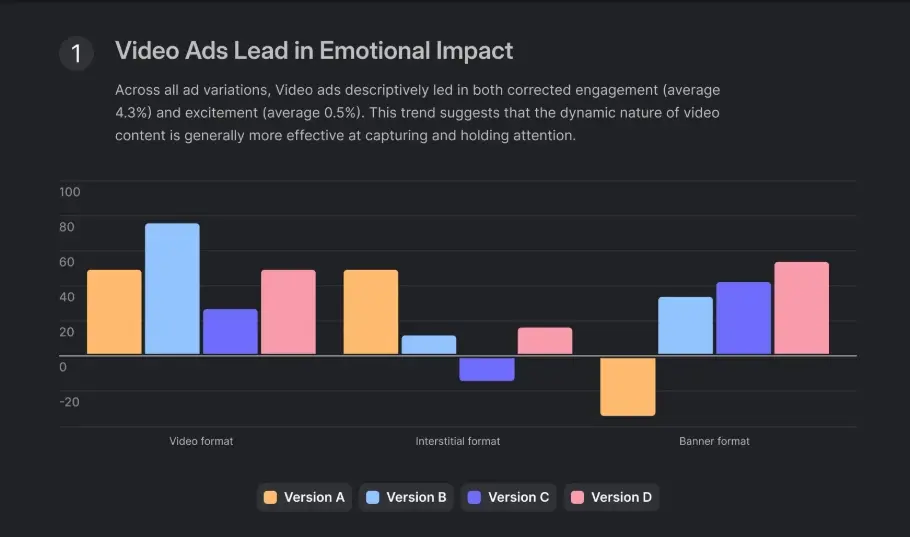
EEG-based audience testing can reveal fluctuations in attention and engagement throughout marketing experiences.
Key Takeaways
Focus group testing can be influenced by social dynamics and self-reporting limitations.
Consumer neuroscience provides objective measurements that complement traditional research methods.
EEG helps marketers evaluate audience attention and engagement throughout an experience.
Neuroscience-informed testing can improve creative and product decisions before launch.
Combining qualitative feedback with EEG data creates a more complete understanding of audience response.
The Hidden Limitations of Focus Group Testing
Focus groups excel at uncovering opinions, perceptions, motivations, and language that consumers use when discussing products or brands. However, marketers often treat participant comments as direct representations of future behavior when the relationship is far more complex.
Participants frequently explain their decisions after the fact, constructing rational explanations for reactions that may have been influenced by attention patterns, emotional responses, cognitive effort, or contextual factors they do not consciously recognize.
Research by Plassmann et al. (2015) suggests that neuroscience methods can provide information about implicit processes that are difficult to access through traditional research approaches. For marketing teams, this distinction matters because many purchase-related decisions and content responses occur rapidly and may not be fully captured through discussion alone.
Group settings can introduce additional challenges. Strong personalities may influence discussions, participants may align with perceived consensus opinions, and some individuals may be reluctant to share genuine reactions. These factors can create a gap between what marketers hear and how audiences actually respond when encountering content independently.
Why Objective Measurement Matters
The goal of consumer research is not simply to collect opinions. It is to reduce uncertainty and improve decision-making.
Consumer neuroscience introduces a different source of evidence by measuring physiological responses during exposure to advertisements, digital experiences, products, and media. EEG provides data that can be analyzed alongside survey responses, interviews, usability findings, and behavioral analytics.
According to Byrne et al. (2022), neuromarketing methodologies can capture implicit cognitive and emotional responses that consumers may not report directly. This additional perspective helps marketing teams evaluate not only what participants say, but also how engagement and attention fluctuate throughout an experience.
For agencies and internal marketing teams, this means recommendations can be supported by both qualitative interpretation and objective measurement rather than relying solely on self-reported feedback.
When Focus Groups and Neuroscience Disagree
One of the most valuable applications of consumer neuroscience occurs when traditional feedback and physiological responses point in different directions.
Imagine a focus group evaluating two advertising concepts. Participants may express a preference for one version because it aligns with their stated values or expectations. However, EEG analysis may reveal stronger attention and engagement during key moments of the alternative concept.
These situations create opportunities for deeper investigation. Instead of accepting surface-level feedback as definitive, teams can explore why discrepancies exist and determine which creative elements are driving audience responses.
Research by Milosavljevic and Cerf (2008) highlights the importance of attention as a meaningful variable in marketing research. Understanding where attention rises or falls can help teams optimize creative assets before media spending begins.
Real-World Examples of Predictive Value
The value of neuroscience extends beyond understanding audience reactions. It can also contribute to forecasting outcomes while adjustments are still possible.
For example, Christoforou et al. (2017) demonstrated that neural responses to movie trailers predicted substantial variation in box-office performance and significantly outperformed traditional screening methods. The study showed how audience-response measurements can provide useful signals before a product reaches the market.
A similar pattern emerged in music marketing research. Leeuwis et al. (2021) found that neural synchrony carried predictive value for future streaming success. These findings suggest that objective audience-response measures can support investment and optimization decisions while changes remain feasible.
Although these examples come from entertainment industries, the same principle applies to advertising, product launches, website experiences, and brand communications. Understanding audience engagement before launch can help reduce uncertainty and improve confidence in strategic decisions.
Consumer Neuroscience as Part of Modern Marketing Technology
Modern marketing technology has evolved far beyond campaign reporting and customer analytics. Organizations increasingly seek tools that help optimize performance before assets go live rather than diagnosing issues afterward.
Consumer neuroscience fits naturally into this shift. EEG makes neuroscience the cornerstone of user and product research by adding an unbiased layer to quantifiable data insights. Rather than replacing surveys, interviews, focus groups, or behavioral analytics, it strengthens them by providing additional evidence that can validate findings or reveal overlooked opportunities.
This approach is increasingly being adopted across advertising research, product development, user experience optimization, and audience testing programs, including neuroscience-informed workflows supported through Emotiv’s neuromarketing platform.
Conclusion
Focus group testing remains a valuable tool for understanding audience perceptions, motivations, and language. However, relying exclusively on participant discussions can leave important questions unanswered.
Consumer neuroscience provides an objective layer of measurement that complements traditional research methods by revealing patterns of attention, engagement, emotional response, and cognitive stress throughout an experience. For agencies and in-house marketing teams, combining these approaches can create a more complete foundation for decision-making.
Teams looking to evaluate audience response with neuroscience-informed insights can explore the capabilities of Emotiv Studio.
Sources
Byrne, M., et al. (2022). A systematic review of the prediction of consumer preference using EEG measures and machine-learning in neuromarketing research. Brain Informatics. https://doi.org/10.1186/s40708-022-00175-3
Christoforou, C., et al. (2017). Your Brain on the Movies: A Computational Approach for Predicting Box-office Performance from Viewer’s Brain Responses to Movie Trailers. Frontiers in Neuroinformatics. https://doi.org/10.3389/fninf.2017.00072
Leeuwis, N., et al. (2021). A Sound Prediction: EEG-Based Neural Synchrony Predicts Online Music Streams. Frontiers in Psychology. https://doi.org/10.3389/fpsyg.2021.672980
Milosavljevic, M., & Cerf, M. (2008). First Attention Then Intention: Insights from Computational Neuroscience of Vision. International Journal of Advertising. https://doi.org/10.2501/S0265048708080037
Plassmann, H., Venkatraman, V., Huettel, S., & Yoon, C. (2015). Consumer Neuroscience: Applications, Challenges, and Possible Solutions. Journal of Marketing Research. https://doi.org/10.1509/jmr.14.0048
For decades, focus group testing has been a cornerstone of marketing research. Agencies and in-house teams use it to gather opinions, evaluate creative concepts, and understand audience perceptions before investing in campaigns. While focus groups continue to offer valuable qualitative insights, many marketing teams are discovering their limitations when high-stakes decisions depend on accurate predictions of audience behavior.
The challenge is not that consumers intentionally provide misleading feedback. Rather, people often struggle to fully articulate why they respond positively or negatively to advertising, products, packaging, or digital experiences. Group dynamics, social desirability bias, dominant personalities, and retrospective rationalization can all influence outcomes. As a result, marketers may base decisions on feedback that only captures part of the audience experience.
This is one reason consumer neuroscience has become an increasingly important component of modern marketing technology stacks. By measuring attention, engagement, emotional response, and cognitive stress through EEG, marketing teams can add an objective layer of evidence alongside traditional qualitative and quantitative research. Instead of relying exclusively on what participants say, teams can also evaluate how audiences respond throughout an experience in real time.
EEG-based audience testing can reveal fluctuations in attention and engagement throughout marketing experiences.
Key Takeaways
Focus group testing can be influenced by social dynamics and self-reporting limitations.
Consumer neuroscience provides objective measurements that complement traditional research methods.
EEG helps marketers evaluate audience attention and engagement throughout an experience.
Neuroscience-informed testing can improve creative and product decisions before launch.
Combining qualitative feedback with EEG data creates a more complete understanding of audience response.
The Hidden Limitations of Focus Group Testing
Focus groups excel at uncovering opinions, perceptions, motivations, and language that consumers use when discussing products or brands. However, marketers often treat participant comments as direct representations of future behavior when the relationship is far more complex.
Participants frequently explain their decisions after the fact, constructing rational explanations for reactions that may have been influenced by attention patterns, emotional responses, cognitive effort, or contextual factors they do not consciously recognize.
Research by Plassmann et al. (2015) suggests that neuroscience methods can provide information about implicit processes that are difficult to access through traditional research approaches. For marketing teams, this distinction matters because many purchase-related decisions and content responses occur rapidly and may not be fully captured through discussion alone.
Group settings can introduce additional challenges. Strong personalities may influence discussions, participants may align with perceived consensus opinions, and some individuals may be reluctant to share genuine reactions. These factors can create a gap between what marketers hear and how audiences actually respond when encountering content independently.
Why Objective Measurement Matters
The goal of consumer research is not simply to collect opinions. It is to reduce uncertainty and improve decision-making.
Consumer neuroscience introduces a different source of evidence by measuring physiological responses during exposure to advertisements, digital experiences, products, and media. EEG provides data that can be analyzed alongside survey responses, interviews, usability findings, and behavioral analytics.
According to Byrne et al. (2022), neuromarketing methodologies can capture implicit cognitive and emotional responses that consumers may not report directly. This additional perspective helps marketing teams evaluate not only what participants say, but also how engagement and attention fluctuate throughout an experience.
For agencies and internal marketing teams, this means recommendations can be supported by both qualitative interpretation and objective measurement rather than relying solely on self-reported feedback.
When Focus Groups and Neuroscience Disagree
One of the most valuable applications of consumer neuroscience occurs when traditional feedback and physiological responses point in different directions.
Imagine a focus group evaluating two advertising concepts. Participants may express a preference for one version because it aligns with their stated values or expectations. However, EEG analysis may reveal stronger attention and engagement during key moments of the alternative concept.
These situations create opportunities for deeper investigation. Instead of accepting surface-level feedback as definitive, teams can explore why discrepancies exist and determine which creative elements are driving audience responses.
Research by Milosavljevic and Cerf (2008) highlights the importance of attention as a meaningful variable in marketing research. Understanding where attention rises or falls can help teams optimize creative assets before media spending begins.
Real-World Examples of Predictive Value
The value of neuroscience extends beyond understanding audience reactions. It can also contribute to forecasting outcomes while adjustments are still possible.
For example, Christoforou et al. (2017) demonstrated that neural responses to movie trailers predicted substantial variation in box-office performance and significantly outperformed traditional screening methods. The study showed how audience-response measurements can provide useful signals before a product reaches the market.
A similar pattern emerged in music marketing research. Leeuwis et al. (2021) found that neural synchrony carried predictive value for future streaming success. These findings suggest that objective audience-response measures can support investment and optimization decisions while changes remain feasible.
Although these examples come from entertainment industries, the same principle applies to advertising, product launches, website experiences, and brand communications. Understanding audience engagement before launch can help reduce uncertainty and improve confidence in strategic decisions.
Consumer Neuroscience as Part of Modern Marketing Technology
Modern marketing technology has evolved far beyond campaign reporting and customer analytics. Organizations increasingly seek tools that help optimize performance before assets go live rather than diagnosing issues afterward.
Consumer neuroscience fits naturally into this shift. EEG makes neuroscience the cornerstone of user and product research by adding an unbiased layer to quantifiable data insights. Rather than replacing surveys, interviews, focus groups, or behavioral analytics, it strengthens them by providing additional evidence that can validate findings or reveal overlooked opportunities.
This approach is increasingly being adopted across advertising research, product development, user experience optimization, and audience testing programs, including neuroscience-informed workflows supported through Emotiv’s neuromarketing platform.
Conclusion
Focus group testing remains a valuable tool for understanding audience perceptions, motivations, and language. However, relying exclusively on participant discussions can leave important questions unanswered.
Consumer neuroscience provides an objective layer of measurement that complements traditional research methods by revealing patterns of attention, engagement, emotional response, and cognitive stress throughout an experience. For agencies and in-house marketing teams, combining these approaches can create a more complete foundation for decision-making.
Teams looking to evaluate audience response with neuroscience-informed insights can explore the capabilities of Emotiv Studio.
Sources
Byrne, M., et al. (2022). A systematic review of the prediction of consumer preference using EEG measures and machine-learning in neuromarketing research. Brain Informatics. https://doi.org/10.1186/s40708-022-00175-3
Christoforou, C., et al. (2017). Your Brain on the Movies: A Computational Approach for Predicting Box-office Performance from Viewer’s Brain Responses to Movie Trailers. Frontiers in Neuroinformatics. https://doi.org/10.3389/fninf.2017.00072
Leeuwis, N., et al. (2021). A Sound Prediction: EEG-Based Neural Synchrony Predicts Online Music Streams. Frontiers in Psychology. https://doi.org/10.3389/fpsyg.2021.672980
Milosavljevic, M., & Cerf, M. (2008). First Attention Then Intention: Insights from Computational Neuroscience of Vision. International Journal of Advertising. https://doi.org/10.2501/S0265048708080037
Plassmann, H., Venkatraman, V., Huettel, S., & Yoon, C. (2015). Consumer Neuroscience: Applications, Challenges, and Possible Solutions. Journal of Marketing Research. https://doi.org/10.1509/jmr.14.0048
For decades, focus group testing has been a cornerstone of marketing research. Agencies and in-house teams use it to gather opinions, evaluate creative concepts, and understand audience perceptions before investing in campaigns. While focus groups continue to offer valuable qualitative insights, many marketing teams are discovering their limitations when high-stakes decisions depend on accurate predictions of audience behavior.
The challenge is not that consumers intentionally provide misleading feedback. Rather, people often struggle to fully articulate why they respond positively or negatively to advertising, products, packaging, or digital experiences. Group dynamics, social desirability bias, dominant personalities, and retrospective rationalization can all influence outcomes. As a result, marketers may base decisions on feedback that only captures part of the audience experience.
This is one reason consumer neuroscience has become an increasingly important component of modern marketing technology stacks. By measuring attention, engagement, emotional response, and cognitive stress through EEG, marketing teams can add an objective layer of evidence alongside traditional qualitative and quantitative research. Instead of relying exclusively on what participants say, teams can also evaluate how audiences respond throughout an experience in real time.
EEG-based audience testing can reveal fluctuations in attention and engagement throughout marketing experiences.
Key Takeaways
Focus group testing can be influenced by social dynamics and self-reporting limitations.
Consumer neuroscience provides objective measurements that complement traditional research methods.
EEG helps marketers evaluate audience attention and engagement throughout an experience.
Neuroscience-informed testing can improve creative and product decisions before launch.
Combining qualitative feedback with EEG data creates a more complete understanding of audience response.
The Hidden Limitations of Focus Group Testing
Focus groups excel at uncovering opinions, perceptions, motivations, and language that consumers use when discussing products or brands. However, marketers often treat participant comments as direct representations of future behavior when the relationship is far more complex.
Participants frequently explain their decisions after the fact, constructing rational explanations for reactions that may have been influenced by attention patterns, emotional responses, cognitive effort, or contextual factors they do not consciously recognize.
Research by Plassmann et al. (2015) suggests that neuroscience methods can provide information about implicit processes that are difficult to access through traditional research approaches. For marketing teams, this distinction matters because many purchase-related decisions and content responses occur rapidly and may not be fully captured through discussion alone.
Group settings can introduce additional challenges. Strong personalities may influence discussions, participants may align with perceived consensus opinions, and some individuals may be reluctant to share genuine reactions. These factors can create a gap between what marketers hear and how audiences actually respond when encountering content independently.
Why Objective Measurement Matters
The goal of consumer research is not simply to collect opinions. It is to reduce uncertainty and improve decision-making.
Consumer neuroscience introduces a different source of evidence by measuring physiological responses during exposure to advertisements, digital experiences, products, and media. EEG provides data that can be analyzed alongside survey responses, interviews, usability findings, and behavioral analytics.
According to Byrne et al. (2022), neuromarketing methodologies can capture implicit cognitive and emotional responses that consumers may not report directly. This additional perspective helps marketing teams evaluate not only what participants say, but also how engagement and attention fluctuate throughout an experience.
For agencies and internal marketing teams, this means recommendations can be supported by both qualitative interpretation and objective measurement rather than relying solely on self-reported feedback.
When Focus Groups and Neuroscience Disagree
One of the most valuable applications of consumer neuroscience occurs when traditional feedback and physiological responses point in different directions.
Imagine a focus group evaluating two advertising concepts. Participants may express a preference for one version because it aligns with their stated values or expectations. However, EEG analysis may reveal stronger attention and engagement during key moments of the alternative concept.
These situations create opportunities for deeper investigation. Instead of accepting surface-level feedback as definitive, teams can explore why discrepancies exist and determine which creative elements are driving audience responses.
Research by Milosavljevic and Cerf (2008) highlights the importance of attention as a meaningful variable in marketing research. Understanding where attention rises or falls can help teams optimize creative assets before media spending begins.
Real-World Examples of Predictive Value
The value of neuroscience extends beyond understanding audience reactions. It can also contribute to forecasting outcomes while adjustments are still possible.
For example, Christoforou et al. (2017) demonstrated that neural responses to movie trailers predicted substantial variation in box-office performance and significantly outperformed traditional screening methods. The study showed how audience-response measurements can provide useful signals before a product reaches the market.
A similar pattern emerged in music marketing research. Leeuwis et al. (2021) found that neural synchrony carried predictive value for future streaming success. These findings suggest that objective audience-response measures can support investment and optimization decisions while changes remain feasible.
Although these examples come from entertainment industries, the same principle applies to advertising, product launches, website experiences, and brand communications. Understanding audience engagement before launch can help reduce uncertainty and improve confidence in strategic decisions.
Consumer Neuroscience as Part of Modern Marketing Technology
Modern marketing technology has evolved far beyond campaign reporting and customer analytics. Organizations increasingly seek tools that help optimize performance before assets go live rather than diagnosing issues afterward.
Consumer neuroscience fits naturally into this shift. EEG makes neuroscience the cornerstone of user and product research by adding an unbiased layer to quantifiable data insights. Rather than replacing surveys, interviews, focus groups, or behavioral analytics, it strengthens them by providing additional evidence that can validate findings or reveal overlooked opportunities.
This approach is increasingly being adopted across advertising research, product development, user experience optimization, and audience testing programs, including neuroscience-informed workflows supported through Emotiv’s neuromarketing platform.
Conclusion
Focus group testing remains a valuable tool for understanding audience perceptions, motivations, and language. However, relying exclusively on participant discussions can leave important questions unanswered.
Consumer neuroscience provides an objective layer of measurement that complements traditional research methods by revealing patterns of attention, engagement, emotional response, and cognitive stress throughout an experience. For agencies and in-house marketing teams, combining these approaches can create a more complete foundation for decision-making.
Teams looking to evaluate audience response with neuroscience-informed insights can explore the capabilities of Emotiv Studio.
Sources
Byrne, M., et al. (2022). A systematic review of the prediction of consumer preference using EEG measures and machine-learning in neuromarketing research. Brain Informatics. https://doi.org/10.1186/s40708-022-00175-3
Christoforou, C., et al. (2017). Your Brain on the Movies: A Computational Approach for Predicting Box-office Performance from Viewer’s Brain Responses to Movie Trailers. Frontiers in Neuroinformatics. https://doi.org/10.3389/fninf.2017.00072
Leeuwis, N., et al. (2021). A Sound Prediction: EEG-Based Neural Synchrony Predicts Online Music Streams. Frontiers in Psychology. https://doi.org/10.3389/fpsyg.2021.672980
Milosavljevic, M., & Cerf, M. (2008). First Attention Then Intention: Insights from Computational Neuroscience of Vision. International Journal of Advertising. https://doi.org/10.2501/S0265048708080037
Plassmann, H., Venkatraman, V., Huettel, S., & Yoon, C. (2015). Consumer Neuroscience: Applications, Challenges, and Possible Solutions. Journal of Marketing Research. https://doi.org/10.1509/jmr.14.0048

Continue reading