
Automotive Advertising Testing with EEG Insights
H.B. Duran
Updated on
Jun 13, 2026
Automotive Advertising Testing with EEG Insights
H.B. Duran
Updated on
Jun 13, 2026
Automotive Advertising Testing with EEG Insights
H.B. Duran
Updated on
Jun 13, 2026
In today’s competitive market, automotive advertising success depends on more than reach, impressions, or click-through rates. Automotive manufacturers, dealership groups, and creative agencies face increasing pressure to understand how audiences respond to campaigns before significant media budgets are committed. The challenge is that consumer feedback often arrives after launch, and traditional surveys can be influenced by memory limitations, social desirability bias, or incomplete self-reporting.
As advertising channels continue to expand, teams must evaluate dealership websites, manufacturer websites, print advertisements, digital campaigns, video creative, and customer experience touchpoints with greater precision. The question is no longer whether a campaign will be seen, but whether it will effectively capture attention, maintain engagement, and support decision-making throughout the customer journey.
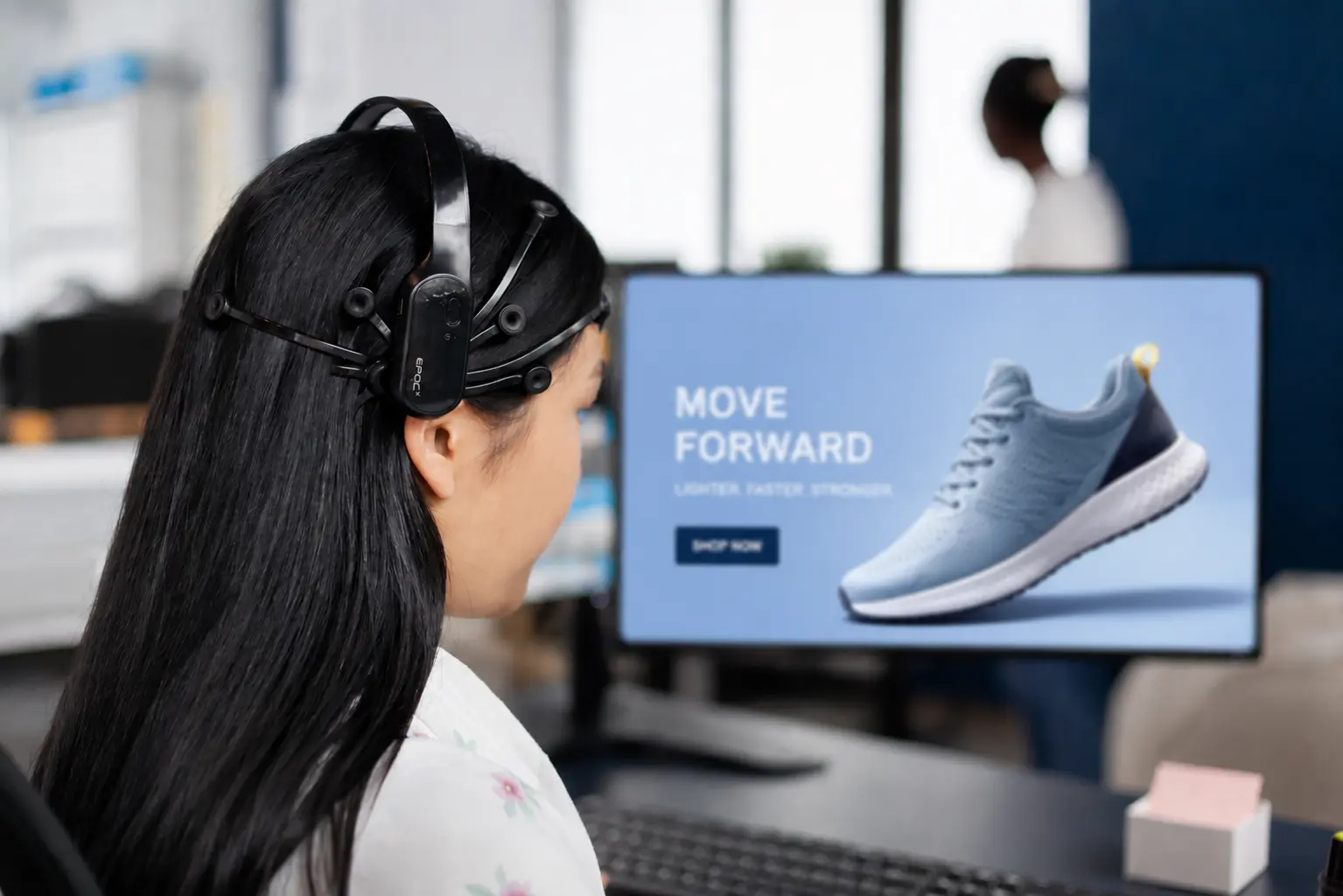
EEG-based audience testing provides an additional layer of insight by measuring cognitive and emotional responses as consumers interact with marketing materials. By understanding how audiences respond in real time, automotive marketers can identify opportunities to optimize creative assets before launch and reduce uncertainty in campaign decisions.
Key Takeaways
EEG testing provides objective measures of audience attention and engagement during ad exposure.
Automotive teams can evaluate dealership websites, manufacturer websites, print ads, digital ads, and video campaigns before launch.
Neuroscience-informed testing helps identify creative elements that support stronger audience response.
EEG data complements traditional surveys and behavioral analytics rather than replacing them.
Pre-launch optimization can improve confidence in creative and media investment decisions.
Why Traditional Automotive Advertising Metrics Leave Gaps
Most automotive marketing teams rely on a combination of surveys, focus groups, website analytics, conversion metrics, and campaign performance data. While these approaches provide valuable information, they often explain what consumers did rather than why they responded the way they did.
For example, a dealership website may show high traffic but low engagement on vehicle detail pages. A manufacturer may observe strong video completion rates but limited brand recall. A creative agency may receive positive survey feedback on a campaign concept, only to discover weak performance after launch.
These situations create uncertainty because traditional methods often depend on conscious recall and self-reporting. Consumers may struggle to accurately describe which moments captured their attention, caused confusion, or influenced their interest. As a result, marketers can miss important signals that affect campaign effectiveness.
How EEG Adds Context to Consumer Reactions
EEG testing introduces an additional layer of measurement by capturing neural activity associated with attention, engagement, interest, and cognitive workload while participants interact with marketing materials.
Rather than relying solely on what consumers remember afterward, teams can observe audience responses moment by moment. This creates opportunities to identify specific creative elements that contribute to stronger engagement or reveal points where attention declines.
For automotive organizations, this means evaluating a wide range of assets, including:
Dealership websites and vehicle inventory experiences
Manufacturer websites and model launch pages
Print advertising and direct mail campaigns
Digital display advertisements
Social media creative
Video advertising and television commercials
Brand storytelling campaigns
Customer journey touchpoints
When combined with behavioral analytics and traditional feedback, EEG data helps teams build a more complete understanding of audience response.
Testing Dealership and Manufacturer Websites Before Launch
Automotive websites often serve as the first meaningful interaction between consumers and a brand. Small design decisions can influence engagement, information processing, and overall user experience.
EEG-based testing allows teams to evaluate how visitors respond to homepage layouts, vehicle configuration tools, financing information, inventory search experiences, and lead-generation workflows.
For example, a dealership may discover that a promotional banner attracts attention but distracts users from key inventory search functions. Similarly, a manufacturer may identify areas of a model showcase page that generate high interest and areas where engagement consistently drops.
These findings can help digital teams prioritize changes based on actual audience response rather than assumptions alone.
Evaluating Print and Digital Creative Performance
Automotive advertising frequently depends on visual storytelling. Vehicle imagery, pricing information, promotional offers, and brand messaging must work together to communicate value quickly and effectively.
EEG testing can support creative evaluation by helping marketers understand how consumers process different ad variations. In an A/B testing environment, teams can compare layouts, messaging approaches, visual hierarchies, and promotional strategies to determine which version generates stronger engagement.
This approach can be particularly valuable when testing regional dealership campaigns, seasonal promotions, electric vehicle messaging, or new model launches where advertising budgets are substantial and performance expectations are high.
Understanding Audience Response to Automotive Video Advertising
Video remains one of the most influential formats in automotive advertising. Whether a campaign focuses on vehicle performance, safety, innovation, lifestyle positioning, or brand heritage, success often depends on maintaining audience engagement throughout the viewing experience.
EEG testing provides a frame-by-frame view of audience response, allowing marketers to identify moments that generate heightened interest or points where attention declines.
This level of insight can help creative teams answer practical questions:
Does the opening sequence capture attention quickly enough?
Which scenes generate the strongest audience engagement?
Do viewers remain engaged during product demonstrations?
Does the call-to-action appear at an effective moment?
These findings support more informed creative refinement before media spending begins.
Real-World Examples of EEG in Marketing Research
Organizations across industries have increasingly adopted neuroscience-informed research to better understand audience response. Through Emotiv’s neuromarketing research capabilities, organizations have explored how attention and engagement metrics can complement traditional market research methodologies when evaluating advertising, product experiences, and customer interactions.
A notable example comes from advertising neuroscience research published in Frontiers in Neuroscience by Cartocci et al. (2022), which demonstrated how EEG measurements can provide meaningful indicators of audience engagement and advertising effectiveness. The study highlighted the value of combining neural metrics with traditional evaluation approaches when assessing communication performance.
Another example appears in research published in Frontiers in Psychology by Pozharliev et al. (2019), which explored how neurophysiological measures contribute additional understanding of consumer responses beyond conventional self-report techniques. Findings suggested that physiological measurements can reveal dimensions of engagement that may not be fully captured through surveys alone.
For automotive marketers, these examples demonstrate how neuroscience-informed testing can serve as a complementary decision-support tool during campaign development and optimization.
Applying EEG Insights Across the Automotive Marketing Funnel
The greatest value often comes from integrating EEG testing into existing workflows rather than treating it as a standalone research activity.
Automotive organizations can use EEG insights to support:
Creative concept evaluation before production
A/B testing of digital and print assets
Website optimization initiatives
Video advertising refinement
Brand positioning research
Customer experience assessments
Campaign performance benchmarking
When combined with analytics, surveys, and business outcomes, these measurements can help teams make more confident decisions about creative investments and campaign execution.
Conclusion
As automotive advertising becomes increasingly data-driven, marketers need more than post-launch performance metrics to evaluate effectiveness. Understanding how consumers respond throughout their interaction with websites, advertisements, and brand experiences can provide valuable context for optimization efforts.
EEG-based testing offers automotive manufacturers, dealerships, and agencies an objective way to assess attention, engagement, and audience response across digital, print, and video assets. By identifying opportunities for improvement before campaigns launch, organizations can reduce uncertainty and strengthen creative decision-making.
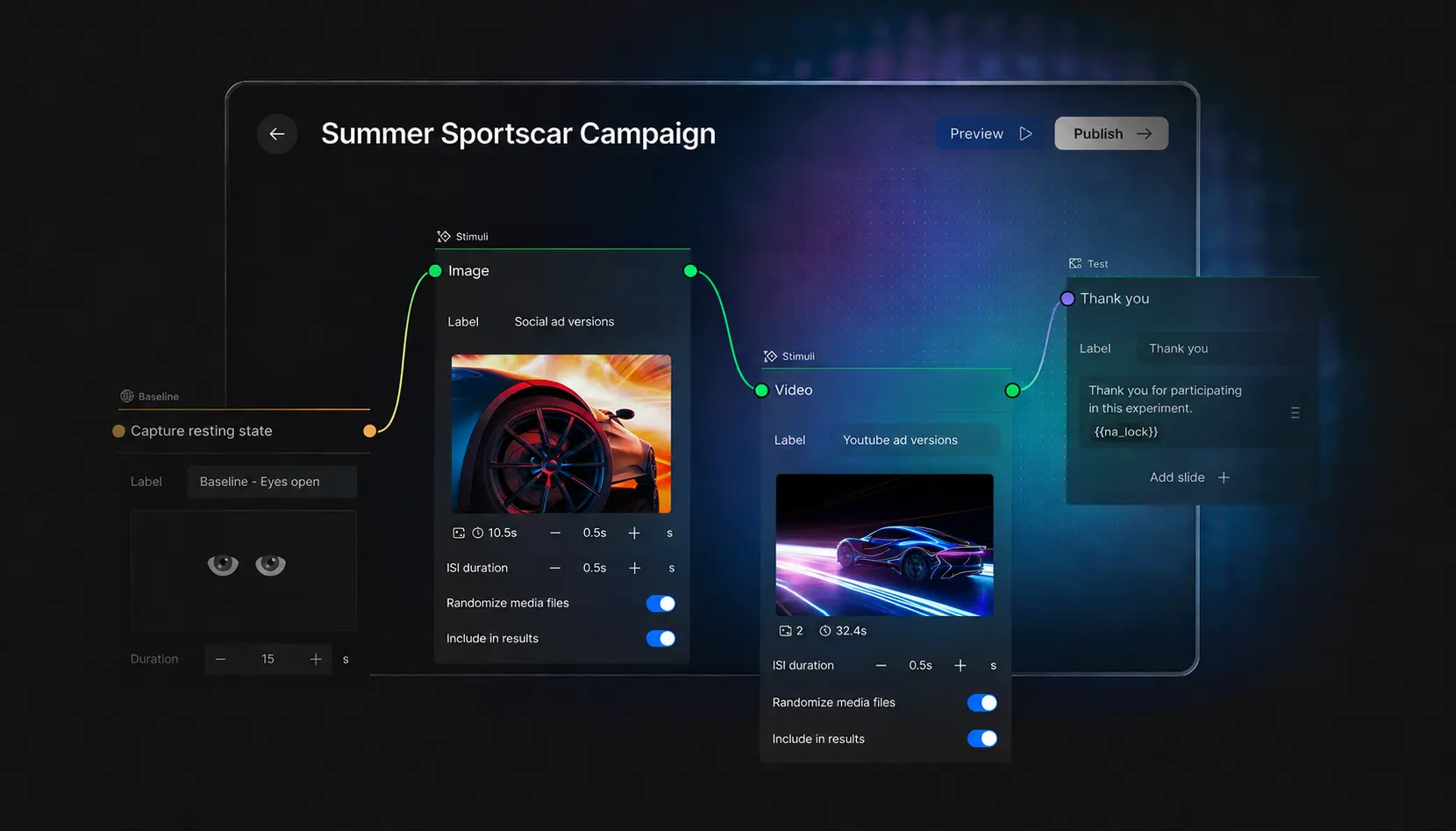
Teams looking to evaluate attention, engagement, and audience response before launch can explore the capabilities of Emotiv Studio.
Sources
Cartocci, G., et al. (2022). EEG-based indexes to evaluate advertising effectiveness. Frontiers in Neuroscience. Retrieved from https://www.frontiersin.org/articles/10.3389/fnins.2022.919450/full
Pozharliev, R., Verbeke, W., Van Strien, J. W., & Bagozzi, R. P. (2019). Consumer neuroscience: Applications and implications for marketing research. Frontiers in Psychology. Retrieved from https://www.frontiersin.org/articles/10.3389/fpsyg.2019.02685/full
In today’s competitive market, automotive advertising success depends on more than reach, impressions, or click-through rates. Automotive manufacturers, dealership groups, and creative agencies face increasing pressure to understand how audiences respond to campaigns before significant media budgets are committed. The challenge is that consumer feedback often arrives after launch, and traditional surveys can be influenced by memory limitations, social desirability bias, or incomplete self-reporting.
As advertising channels continue to expand, teams must evaluate dealership websites, manufacturer websites, print advertisements, digital campaigns, video creative, and customer experience touchpoints with greater precision. The question is no longer whether a campaign will be seen, but whether it will effectively capture attention, maintain engagement, and support decision-making throughout the customer journey.
EEG-based audience testing provides an additional layer of insight by measuring cognitive and emotional responses as consumers interact with marketing materials. By understanding how audiences respond in real time, automotive marketers can identify opportunities to optimize creative assets before launch and reduce uncertainty in campaign decisions.
Key Takeaways
EEG testing provides objective measures of audience attention and engagement during ad exposure.
Automotive teams can evaluate dealership websites, manufacturer websites, print ads, digital ads, and video campaigns before launch.
Neuroscience-informed testing helps identify creative elements that support stronger audience response.
EEG data complements traditional surveys and behavioral analytics rather than replacing them.
Pre-launch optimization can improve confidence in creative and media investment decisions.
Why Traditional Automotive Advertising Metrics Leave Gaps
Most automotive marketing teams rely on a combination of surveys, focus groups, website analytics, conversion metrics, and campaign performance data. While these approaches provide valuable information, they often explain what consumers did rather than why they responded the way they did.
For example, a dealership website may show high traffic but low engagement on vehicle detail pages. A manufacturer may observe strong video completion rates but limited brand recall. A creative agency may receive positive survey feedback on a campaign concept, only to discover weak performance after launch.
These situations create uncertainty because traditional methods often depend on conscious recall and self-reporting. Consumers may struggle to accurately describe which moments captured their attention, caused confusion, or influenced their interest. As a result, marketers can miss important signals that affect campaign effectiveness.
How EEG Adds Context to Consumer Reactions
EEG testing introduces an additional layer of measurement by capturing neural activity associated with attention, engagement, interest, and cognitive workload while participants interact with marketing materials.
Rather than relying solely on what consumers remember afterward, teams can observe audience responses moment by moment. This creates opportunities to identify specific creative elements that contribute to stronger engagement or reveal points where attention declines.
For automotive organizations, this means evaluating a wide range of assets, including:
Dealership websites and vehicle inventory experiences
Manufacturer websites and model launch pages
Print advertising and direct mail campaigns
Digital display advertisements
Social media creative
Video advertising and television commercials
Brand storytelling campaigns
Customer journey touchpoints
When combined with behavioral analytics and traditional feedback, EEG data helps teams build a more complete understanding of audience response.
Testing Dealership and Manufacturer Websites Before Launch
Automotive websites often serve as the first meaningful interaction between consumers and a brand. Small design decisions can influence engagement, information processing, and overall user experience.
EEG-based testing allows teams to evaluate how visitors respond to homepage layouts, vehicle configuration tools, financing information, inventory search experiences, and lead-generation workflows.
For example, a dealership may discover that a promotional banner attracts attention but distracts users from key inventory search functions. Similarly, a manufacturer may identify areas of a model showcase page that generate high interest and areas where engagement consistently drops.
These findings can help digital teams prioritize changes based on actual audience response rather than assumptions alone.
Evaluating Print and Digital Creative Performance
Automotive advertising frequently depends on visual storytelling. Vehicle imagery, pricing information, promotional offers, and brand messaging must work together to communicate value quickly and effectively.
EEG testing can support creative evaluation by helping marketers understand how consumers process different ad variations. In an A/B testing environment, teams can compare layouts, messaging approaches, visual hierarchies, and promotional strategies to determine which version generates stronger engagement.
This approach can be particularly valuable when testing regional dealership campaigns, seasonal promotions, electric vehicle messaging, or new model launches where advertising budgets are substantial and performance expectations are high.
Understanding Audience Response to Automotive Video Advertising
Video remains one of the most influential formats in automotive advertising. Whether a campaign focuses on vehicle performance, safety, innovation, lifestyle positioning, or brand heritage, success often depends on maintaining audience engagement throughout the viewing experience.
EEG testing provides a frame-by-frame view of audience response, allowing marketers to identify moments that generate heightened interest or points where attention declines.
This level of insight can help creative teams answer practical questions:
Does the opening sequence capture attention quickly enough?
Which scenes generate the strongest audience engagement?
Do viewers remain engaged during product demonstrations?
Does the call-to-action appear at an effective moment?
These findings support more informed creative refinement before media spending begins.
Real-World Examples of EEG in Marketing Research
Organizations across industries have increasingly adopted neuroscience-informed research to better understand audience response. Through Emotiv’s neuromarketing research capabilities, organizations have explored how attention and engagement metrics can complement traditional market research methodologies when evaluating advertising, product experiences, and customer interactions.
A notable example comes from advertising neuroscience research published in Frontiers in Neuroscience by Cartocci et al. (2022), which demonstrated how EEG measurements can provide meaningful indicators of audience engagement and advertising effectiveness. The study highlighted the value of combining neural metrics with traditional evaluation approaches when assessing communication performance.
Another example appears in research published in Frontiers in Psychology by Pozharliev et al. (2019), which explored how neurophysiological measures contribute additional understanding of consumer responses beyond conventional self-report techniques. Findings suggested that physiological measurements can reveal dimensions of engagement that may not be fully captured through surveys alone.
For automotive marketers, these examples demonstrate how neuroscience-informed testing can serve as a complementary decision-support tool during campaign development and optimization.
Applying EEG Insights Across the Automotive Marketing Funnel
The greatest value often comes from integrating EEG testing into existing workflows rather than treating it as a standalone research activity.
Automotive organizations can use EEG insights to support:
Creative concept evaluation before production
A/B testing of digital and print assets
Website optimization initiatives
Video advertising refinement
Brand positioning research
Customer experience assessments
Campaign performance benchmarking
When combined with analytics, surveys, and business outcomes, these measurements can help teams make more confident decisions about creative investments and campaign execution.
Conclusion
As automotive advertising becomes increasingly data-driven, marketers need more than post-launch performance metrics to evaluate effectiveness. Understanding how consumers respond throughout their interaction with websites, advertisements, and brand experiences can provide valuable context for optimization efforts.
EEG-based testing offers automotive manufacturers, dealerships, and agencies an objective way to assess attention, engagement, and audience response across digital, print, and video assets. By identifying opportunities for improvement before campaigns launch, organizations can reduce uncertainty and strengthen creative decision-making.
Teams looking to evaluate attention, engagement, and audience response before launch can explore the capabilities of Emotiv Studio.
Sources
Cartocci, G., et al. (2022). EEG-based indexes to evaluate advertising effectiveness. Frontiers in Neuroscience. Retrieved from https://www.frontiersin.org/articles/10.3389/fnins.2022.919450/full
Pozharliev, R., Verbeke, W., Van Strien, J. W., & Bagozzi, R. P. (2019). Consumer neuroscience: Applications and implications for marketing research. Frontiers in Psychology. Retrieved from https://www.frontiersin.org/articles/10.3389/fpsyg.2019.02685/full
In today’s competitive market, automotive advertising success depends on more than reach, impressions, or click-through rates. Automotive manufacturers, dealership groups, and creative agencies face increasing pressure to understand how audiences respond to campaigns before significant media budgets are committed. The challenge is that consumer feedback often arrives after launch, and traditional surveys can be influenced by memory limitations, social desirability bias, or incomplete self-reporting.
As advertising channels continue to expand, teams must evaluate dealership websites, manufacturer websites, print advertisements, digital campaigns, video creative, and customer experience touchpoints with greater precision. The question is no longer whether a campaign will be seen, but whether it will effectively capture attention, maintain engagement, and support decision-making throughout the customer journey.
EEG-based audience testing provides an additional layer of insight by measuring cognitive and emotional responses as consumers interact with marketing materials. By understanding how audiences respond in real time, automotive marketers can identify opportunities to optimize creative assets before launch and reduce uncertainty in campaign decisions.
Key Takeaways
EEG testing provides objective measures of audience attention and engagement during ad exposure.
Automotive teams can evaluate dealership websites, manufacturer websites, print ads, digital ads, and video campaigns before launch.
Neuroscience-informed testing helps identify creative elements that support stronger audience response.
EEG data complements traditional surveys and behavioral analytics rather than replacing them.
Pre-launch optimization can improve confidence in creative and media investment decisions.
Why Traditional Automotive Advertising Metrics Leave Gaps
Most automotive marketing teams rely on a combination of surveys, focus groups, website analytics, conversion metrics, and campaign performance data. While these approaches provide valuable information, they often explain what consumers did rather than why they responded the way they did.
For example, a dealership website may show high traffic but low engagement on vehicle detail pages. A manufacturer may observe strong video completion rates but limited brand recall. A creative agency may receive positive survey feedback on a campaign concept, only to discover weak performance after launch.
These situations create uncertainty because traditional methods often depend on conscious recall and self-reporting. Consumers may struggle to accurately describe which moments captured their attention, caused confusion, or influenced their interest. As a result, marketers can miss important signals that affect campaign effectiveness.
How EEG Adds Context to Consumer Reactions
EEG testing introduces an additional layer of measurement by capturing neural activity associated with attention, engagement, interest, and cognitive workload while participants interact with marketing materials.
Rather than relying solely on what consumers remember afterward, teams can observe audience responses moment by moment. This creates opportunities to identify specific creative elements that contribute to stronger engagement or reveal points where attention declines.
For automotive organizations, this means evaluating a wide range of assets, including:
Dealership websites and vehicle inventory experiences
Manufacturer websites and model launch pages
Print advertising and direct mail campaigns
Digital display advertisements
Social media creative
Video advertising and television commercials
Brand storytelling campaigns
Customer journey touchpoints
When combined with behavioral analytics and traditional feedback, EEG data helps teams build a more complete understanding of audience response.
Testing Dealership and Manufacturer Websites Before Launch
Automotive websites often serve as the first meaningful interaction between consumers and a brand. Small design decisions can influence engagement, information processing, and overall user experience.
EEG-based testing allows teams to evaluate how visitors respond to homepage layouts, vehicle configuration tools, financing information, inventory search experiences, and lead-generation workflows.
For example, a dealership may discover that a promotional banner attracts attention but distracts users from key inventory search functions. Similarly, a manufacturer may identify areas of a model showcase page that generate high interest and areas where engagement consistently drops.
These findings can help digital teams prioritize changes based on actual audience response rather than assumptions alone.
Evaluating Print and Digital Creative Performance
Automotive advertising frequently depends on visual storytelling. Vehicle imagery, pricing information, promotional offers, and brand messaging must work together to communicate value quickly and effectively.
EEG testing can support creative evaluation by helping marketers understand how consumers process different ad variations. In an A/B testing environment, teams can compare layouts, messaging approaches, visual hierarchies, and promotional strategies to determine which version generates stronger engagement.
This approach can be particularly valuable when testing regional dealership campaigns, seasonal promotions, electric vehicle messaging, or new model launches where advertising budgets are substantial and performance expectations are high.
Understanding Audience Response to Automotive Video Advertising
Video remains one of the most influential formats in automotive advertising. Whether a campaign focuses on vehicle performance, safety, innovation, lifestyle positioning, or brand heritage, success often depends on maintaining audience engagement throughout the viewing experience.
EEG testing provides a frame-by-frame view of audience response, allowing marketers to identify moments that generate heightened interest or points where attention declines.
This level of insight can help creative teams answer practical questions:
Does the opening sequence capture attention quickly enough?
Which scenes generate the strongest audience engagement?
Do viewers remain engaged during product demonstrations?
Does the call-to-action appear at an effective moment?
These findings support more informed creative refinement before media spending begins.
Real-World Examples of EEG in Marketing Research
Organizations across industries have increasingly adopted neuroscience-informed research to better understand audience response. Through Emotiv’s neuromarketing research capabilities, organizations have explored how attention and engagement metrics can complement traditional market research methodologies when evaluating advertising, product experiences, and customer interactions.
A notable example comes from advertising neuroscience research published in Frontiers in Neuroscience by Cartocci et al. (2022), which demonstrated how EEG measurements can provide meaningful indicators of audience engagement and advertising effectiveness. The study highlighted the value of combining neural metrics with traditional evaluation approaches when assessing communication performance.
Another example appears in research published in Frontiers in Psychology by Pozharliev et al. (2019), which explored how neurophysiological measures contribute additional understanding of consumer responses beyond conventional self-report techniques. Findings suggested that physiological measurements can reveal dimensions of engagement that may not be fully captured through surveys alone.
For automotive marketers, these examples demonstrate how neuroscience-informed testing can serve as a complementary decision-support tool during campaign development and optimization.
Applying EEG Insights Across the Automotive Marketing Funnel
The greatest value often comes from integrating EEG testing into existing workflows rather than treating it as a standalone research activity.
Automotive organizations can use EEG insights to support:
Creative concept evaluation before production
A/B testing of digital and print assets
Website optimization initiatives
Video advertising refinement
Brand positioning research
Customer experience assessments
Campaign performance benchmarking
When combined with analytics, surveys, and business outcomes, these measurements can help teams make more confident decisions about creative investments and campaign execution.
Conclusion
As automotive advertising becomes increasingly data-driven, marketers need more than post-launch performance metrics to evaluate effectiveness. Understanding how consumers respond throughout their interaction with websites, advertisements, and brand experiences can provide valuable context for optimization efforts.
EEG-based testing offers automotive manufacturers, dealerships, and agencies an objective way to assess attention, engagement, and audience response across digital, print, and video assets. By identifying opportunities for improvement before campaigns launch, organizations can reduce uncertainty and strengthen creative decision-making.
Teams looking to evaluate attention, engagement, and audience response before launch can explore the capabilities of Emotiv Studio.
Sources
Cartocci, G., et al. (2022). EEG-based indexes to evaluate advertising effectiveness. Frontiers in Neuroscience. Retrieved from https://www.frontiersin.org/articles/10.3389/fnins.2022.919450/full
Pozharliev, R., Verbeke, W., Van Strien, J. W., & Bagozzi, R. P. (2019). Consumer neuroscience: Applications and implications for marketing research. Frontiers in Psychology. Retrieved from https://www.frontiersin.org/articles/10.3389/fpsyg.2019.02685/full
Continue reading