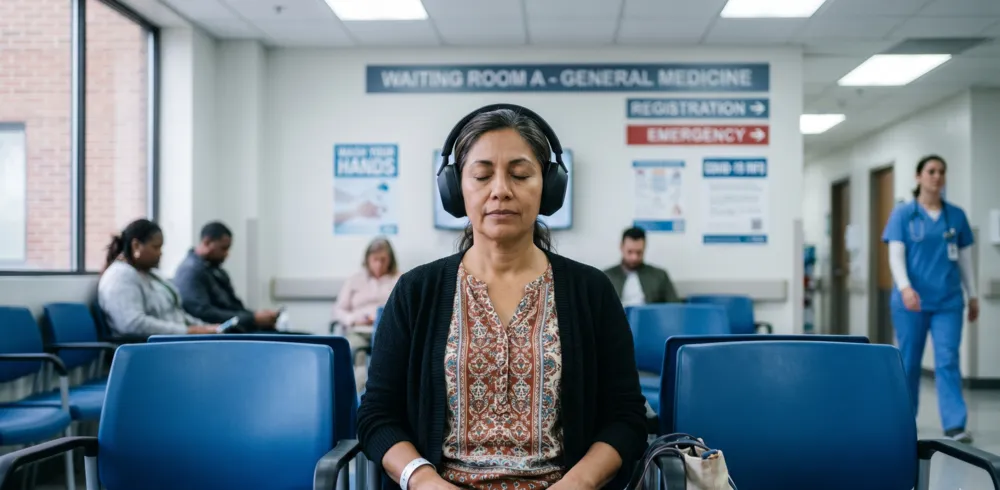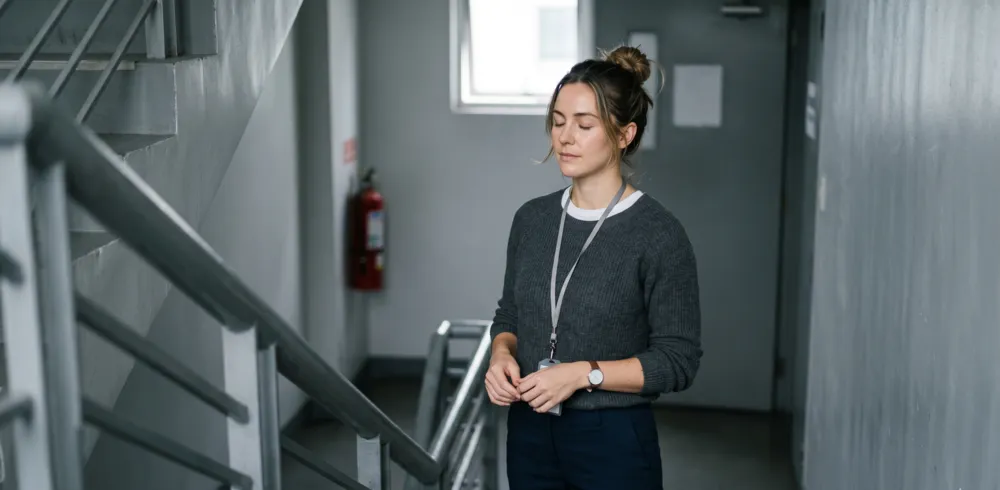
هل تشعر بتلك العقدة المألوفة من القلق تشدّ في صدرك؟ لست وحدك. يعاني كثير من الناس من القلق، ويمكنه حقًا أن يربك توازن جسمك كله.
والخبر الجيد هو أن أنفاسك أداة قوية. إن تعلم تقنيات التنفس العميق البسيطة للتعامل مع القلق يمكن أن يساعد على تهدئة جسدك وعقلك، ويعيدك إلى حالة أكثر اتزانًا.
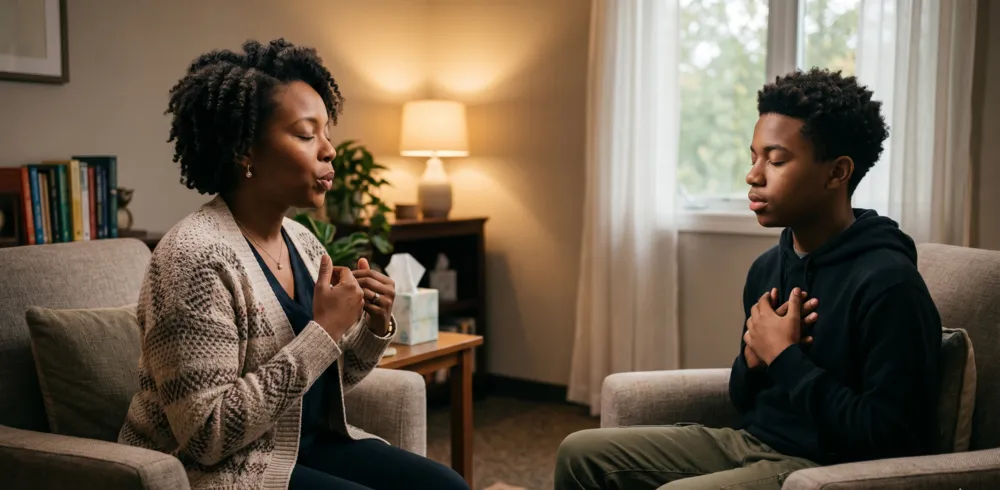
النقاط الأساسية
غالبًا ما تتغير أنماط تنفسك عندما تشعر بالقلق، مما قد يجعل الأعراض تبدو أسوأ. إن التحكم في تنفسك يمكن أن يساعد على كسر هذه الحلقة.
تُفعِّل تقنيات التنفس العميق استجابة الاسترخاء الطبيعية في جسمك، مما يساعد على تهدئة جهازك العصبي.
تتضمن تقنية التنفس 4-7-8 الشهيق لمدة 4، وحبس النفس لمدة 7، والزفير لمدة 8 عدات، مما يعزز الاسترخاء العميق.
يمكن أن يساعد التنفس من خلال الشفتين المضمومتين، حيث تزفر عبر شفاه مزمومة، على إبطاء تسارع نبضات القلب وجعل التنفس أكثر كفاءة.
يركز التنفس الحجابي أو تنفس «البطن» على استخدام الحجاب الحاجز لأخذ أنفاس أعمق وأكثر فاعلية، مما يمكن أن يقلل التوتر.
يهدف التنفس المتناغم، الذي يُمارَس غالبًا بعدد متساوٍ من الشهيق والزفير (مثل 6 ثوانٍ لكل منهما)، إلى موازنة العقل والجسم.
التنفس عبر فتحتي الأنف بالتناوب (نادي شودانا) هو أسلوب يوغي يمكن أن يساعد على تهدئة العقل وتقليل الأفكار القلقة.
إن العثور على مكان هادئ، والممارسة المنتظمة، واختيار وضعية مريحة هي مفاتيح جعل تمارين التنفس فعالة.
How Do Simple Breathing Exercises Tame a Stressed Nervous System?
When stress or anxiety takes hold, the body's natural 'fight or flight' response kicks in. This is a survival mechanism, but in modern life, it can get triggered too often, leaving us feeling constantly on edge.
Physical signs like a racing heart, shallow breathing, and muscle tension are all part of this response. It's like your body is preparing for a threat that isn't actually there.
However, the breath is unique because it sits at the intersection of automatic bodily functions and conscious control. While your breathing normally happens without you thinking about it, you can intentionally change it.
This ability to consciously influence your breath is a powerful tool for managing the body's stress response. By taking control of your breathing, you can send signals to your nervous system to calm down.
Here's how it works:
Interrupting the Cycle: Anxiety often creates a feedback loop. Physical symptoms of stress can lead to anxious thoughts, which in turn worsen the physical symptoms. Controlled breathing can break this cycle by directly addressing the physical sensations.
Engaging the Parasympathetic Nervous System: Deep, slow breathing, particularly with longer exhales, activates the parasympathetic nervous system. This is the body's 'rest and digest' system, which counteracts the 'fight or flight' response. It helps to slow the heart rate, lower blood pressure, and promote a sense of calm.
Physiological Changes: Regular practice of specific breathing techniques can lead to measurable changes. Studies suggest that controlled breathing can reduce resting heart rate and breathing frequency, which are indicators of a more relaxed state. This demonstrates a tangible shift in the body's overall physiology.
Learning to use your breath intentionally can be a straightforward yet effective way to manage feelings of stress and anxiety, bringing your body back to a more balanced state.
Which Specific Deep Breathing Techniques Provide Immediate Relief from Anxiety?
When anxiety strikes, sometimes the quickest way to regain a sense of control is by focusing on your breath. These techniques are designed to be simple and accessible, offering a way to interrupt the cycle of anxious thoughts and physical tension.
How Do You Practice the 4-7-8 Breathing Technique for Deep Relaxation?
This method, sometimes called "relaxing breath," is based on ancient yogic practices. It involves a specific count for inhaling, holding, and exhaling. The idea is to create a deliberate rhythm that can help slow down the body's stress response.
To practice, find a comfortable seated or lying position.
Place your tongue gently on the roof of your mouth, just behind your front teeth.
Inhale quietly through your nose for a count of 4, hold your breath for a count of 7, and then exhale forcefully through your mouth for a count of 8, making a soft "whoosh" sound.
Repeat this cycle a few times.
Some people might feel a slight lightheadedness initially, which is typically normal. It's often recommended to start with a limited number of rounds and gradually increase as comfort allows.
Why Is Pursed-Lip Breathing Effective for Slowing a Racing Heart Rate?
Pursed-lip breathing is a technique that can help manage shortness of breath and slow down a rapid heart rate. It's useful both when at rest and during activity. The core of this technique is controlling the exhale.
To do it, inhale slowly through your nose for about 2 seconds, keeping your mouth closed.
Then, purse your lips as if you were about to whistle or sip through a straw.
Exhale slowly through these pursed lips for a count of 4.
This controlled exhalation helps to make breathing more efficient, potentially reducing the body's effort during respiration and calming the nervous system.
How Do You Master Deep Diaphragmatic “Belly” Breathing to Calm Anxiety?
Diaphragmatic breathing, often called "belly breathing," focuses on engaging the diaphragm, the large muscle located at the base of the lungs. This type of breathing is considered more efficient than shallow chest breathing.
To practice, lie down or sit comfortably.
Place one hand on your chest and the other on your abdomen, just below the ribcage.
Inhale slowly through your nose, aiming to feel your abdomen expand and push your hand outward.
Your chest should remain relatively still.
As you exhale slowly through your mouth, your abdomen will contract.
Paying attention to the movement of your belly can help reinforce the correct pattern. This technique has been studied for its potential to reduce the negative effects of stress.
Which Breathing Exercises Help Re-Center the Mind and Improve Focus?
When feelings of anxiety arise, the mind can become scattered, making it difficult to concentrate. Certain breathing exercises are designed to help bring your attention back to the present moment and promote a sense of mental clarity.
These techniques work by influencing the body's physiological responses, which in turn can affect mental states.
What Is Coherent Breathing and How Does It Create Mind-Body Balance?
Coherent breathing, also known as resonant breathing, involves synchronizing breath with heart rate.
This practice typically involves breathing at a slow, steady rate, often around five to seven breaths per minute. The goal is to create a state where the rhythms of the breath and heart align, promoting a sense of calm and balance between the mind and body.
Neuroscientific research suggests that practicing coherent breathing can lead to reduced anxiety and improved emotional regulation. It's a method that encourages a more organized internal state, which can be beneficial when feeling overwhelmed.
How Does Alternate Nostril Breathing (Nadi Shodhana) Quiet the Anxious Mind?
Alternate Nostril Breathing, a practice rooted in yogic traditions, involves systematically breathing through one nostril at a time while the other is temporarily closed.
This technique is believed to balance the flow of energy in the body and calm the nervous system. By focusing on the distinct sensation of air moving through each nostril, the mind is drawn away from anxious thoughts and towards the physical act of breathing.
Studies have indicated that regular practice of Nadi Shodhana can contribute to lower stress levels, reduced heart rate, and an overall sense of mental well-being. It's a practice that requires gentle focus and can be a powerful tool for quieting mental chatter.
To practice Alternate Nostril Breathing:
Sit comfortably with your back straight but relaxed.
Use your right thumb to gently close your right nostril. Inhale slowly through your left nostril.
Close your left nostril with your right ring finger, release your thumb from the right nostril, and exhale slowly through your right nostril.
Inhale through your right nostril.
Close your right nostril with your thumb, release your ring finger from the left nostril, and exhale through your left nostril. This completes one cycle.
Continue for several minutes, aiming for a smooth, unhurried rhythm.
How Can You Make Your Anxiety Breathing Practice More Effective?
What Is the Best Environment and Timing for Daily Breathing Exercises?
To get the most out of any breathing exercise, finding a suitable environment is key. A place that is quiet and free from distractions allows for greater focus on the breath and the body's responses. T
his could be a dedicated meditation room, a quiet corner of your home, or even a peaceful spot outdoors. The goal is to minimize external interruptions so that internal awareness can be cultivated.
Creating a sanctuary for your practice, even a small one, can significantly deepen its impact.
When Is the Best Time of Day to Practice?
The optimal time for breathing exercises can vary based on individual needs and schedules. Some find that practicing first thing in the morning helps set a calm tone for the day. Others prefer to use these techniques in the evening to wind down before sleep.
Experimentation is often the best approach to determine what time aligns best with personal rhythms and stress patterns. Consistency, however, is generally more important than the specific time chosen.
Why Are Posture and Physical Positioning Important for Optimal Deep Breathing?
Proper posture supports effective breathing. When sitting, maintaining a straight but relaxed spine is recommended.
This can be achieved in a chair with feet flat on the floor or cross-legged on a cushion. If lying down, a neutral spine position with arms at the sides is often comfortable.
The key is to find a position that allows the diaphragm to move freely and the lungs to expand without restriction. Avoid any positions that create tension or discomfort.
What Should You Do if Deep Breathing Exercises Seem to Make Your Anxiety Worse?
It is not uncommon for some people to experience an initial increase in anxiety when first practicing deep breathing techniques. This can happen if the focus on bodily sensations brings underlying tension to the surface.
If this occurs, it may be helpful to:
Start with shorter practice durations. Begin with just a few minutes and gradually increase the time as comfort grows.
Focus on gentler techniques. Some methods, like pursed-lip breathing, can feel less intense than those involving breath holds.
Modify the exercises. If a specific count or hold feels overwhelming, adjust it to a level that feels manageable. For instance, shorten the exhale or skip the breath hold entirely.
Consider professional guidance. A therapist or trained breathing instructor can offer personalized support and help troubleshoot any difficulties.
How Do You Choose the Right Breathing Exercise for Your Specific Situation?
Which Quick Technique Is Most Effective Before a Stressful Public Event?
When facing an event that might trigger anxiety, like a presentation or a difficult conversation, a brief, focused breathing exercise can be very helpful.
The 4-7-8 technique, for instance, is often recommended for its ability to quickly induce a sense of calm. Performing this breathing pattern a few times can help slow a racing heart and quiet a busy mind, preparing you to approach the situation with more composure.
What Is the Most Effective Breath for Waking Up Anxious in the Middle of the Night?
Waking up unexpectedly during the night can be disorienting and lead to a spike in anxiety. For these moments, pursed-lip breathing can be particularly effective.
The controlled exhalation helps to slow the breath and activate the body's natural relaxation response, making it easier to drift back to sleep.
How Should You Breathe When You Feel a Panic Attack Starting?
Recognizing the early signs of a panic attack is key to managing it. When you feel one beginning, focusing on deep, diaphragmatic breathing, also known as belly breathing, can be beneficial.
This involves placing one hand on your chest and the other on your abdomen. As you inhale slowly through your nose, focus on expanding your belly outward, keeping your chest relatively still.
Then, exhale slowly through your mouth. The goal is to make the breath deep and slow, engaging the diaphragm. This conscious control over breathing can help interrupt the escalating physical symptoms of a panic attack.
Continuing this for several minutes can help to gradually reduce the intensity of the experience.
Final Thoughts on Integrating Deep Breathing into Your Anxiety Management Routine
So, we've looked at how anxiety can mess with your breathing, making you feel even worse. The good news is, simple breathing exercises can really help calm things down.
Techniques like 4-7-8 breathing or even just focusing on longer exhales can make a difference. They're free, easy to do anywhere, and can be a great tool to have in your pocket when you feel that anxiety creeping in.
It might take a little practice to find what works best for you, but making these breathing habits part of your routine can help you feel more in control and less overwhelmed.
References
Sasaki, K., & Maruyama, R. (2014). Consciously controlled breathing decreases the high-frequency component of heart rate variability by inhibiting cardiac parasympathetic nerve activity. The Tohoku journal of experimental medicine, 233(3), 155-163. https://doi.org/10.1620/tjem.233.155
Mittal, G., Pathania, M., Bhardwaj, P., Dhar, M., Khapre, M., & Mittal, S. (2025). An exploratory randomised trial to assess the effect of Nadi Shodhan Pranayama as an adjunct versus standard non-pharmacological management in hypertensives. Annals of Neurosciences, 09727531251318810.
Frequently Asked Questions
How does breathing relate to anxiety?
When you feel anxious, your breathing often becomes faster and shallower. This can make you feel even more worried. Learning special breathing techniques can help slow down your breathing, calm your body, and make you feel more in control.
Can breathing exercises completely stop anxiety?
Breathing exercises can't always make anxiety disappear entirely, but they are very good at reducing its symptoms. They help calm your nervous system, which can make you feel less worried and more able to handle stressful situations.
What are the main benefits of practicing breathing exercises for anxiety?
Practicing these exercises can help your body relax, lower your heart rate, and reduce blood pressure. They also offer a distraction from anxious thoughts and can help you sleep better. It's like giving your body a signal that it's safe to calm down.
How long should I practice breathing exercises?
Consistency is key. Even practicing for a few minutes each day can make a difference. For some techniques, like 4-7-8 breathing, doing it for a few rounds can provide immediate calm. For others, like resonance breathing, practicing for about 10 minutes may be more effective.
Where is the best place to practice these breathing techniques?
Ideally, find a quiet and comfortable spot where you won't be disturbed. This could be your bedroom, a quiet corner of a park, or even your car. However, many techniques can be done anywhere, even when you're moving.
What if breathing exercises make my anxiety feel worse?
Sometimes, focusing too much on your breath can initially increase anxiety. If this happens, try a very simple technique like just breathing normally for a bit, or try a technique with a longer exhale, which is often very calming. Don't force it; focus on gentle, easy breaths.
Are there breathing techniques for specific anxious moments, like before a big event?
Yes. For quick relief before a stressful event, techniques like box breathing (4-4-4) or pursed-lip breathing can be very helpful. They are designed to be done relatively quickly to help you regain a sense of calm.
تُعد Emotiv شركة رائدة في تقنيات الأعصاب، تساعد على تطوير أبحاث علم الأعصاب من خلال أدوات EEG وبيانات الدماغ سهلة الوصول.
كريستيان بورغوس