다른 주제 검색…

다른 주제 검색…

Starting a new physical practice can be a transformative experience for both your body and your mental clarity. These points provide a foundational understanding of what to expect when beginning your journey.

What is Yoga and Why Try It?

Yoga encompasses a diverse range of practices originating from ancient traditions that emphasize the unification of physical movement, disciplined breathing, and mental concentration.

Far from being merely a series of stretches, this practice promotes a holistic approach to balancing one's internal state. By engaging with mindfulness throughout your session, you learn to observe sensations without judgment, fostering a grounded sense of presence that often extends well beyond the mat.

The modern perception of this practice often focuses on physical conditioning, yet its roots reach into the study of brain health and emotional regulation. Many practitioners find that even brief, consistent sessions help bridge the gap between high-stress daily life and a state of intentional calm. This accessibility makes it a versatile tool for people at all levels of fitness, provided the practitioner approaches each movement with care and curiosity.

Understanding the neuroscience behind these techniques reveals why they are effective for stress reduction and self-regulation. As you begin to explore these foundational principles, you might discover that the goal is not to achieve the perfect pose but to cultivate a persistent, attentive connection with yourself.

This process is inherently personal, allowing you to tailor your journey based on what serves your physical and mental well-being in the moment.

Basic Yoga Poses for Beginners

Standing Poses (e.g., Mountain Pose, Warrior II)

Standing poses serve as the foundation for building strength, balance, and spatial awareness during your practice. These movements require active engagement of the legs and core, which helps in establishing a stable base.

For instance, Mountain Pose encourages you to stand tall with aligned joints, while Warrior II introduces lateral movement to build endurance in the thigh muscles.

Seated Poses (e.g., Easy Pose, Staff Pose)

Seated poses are excellent for settling into the body, focusing on breath, and preparing the mind for quieter stages of practice. These postures often target the hips and lower back, providing a way to alleviate tension from extended periods of desk work or inactivity.

Below is a simple table comparing common seated shapes for beginners.

Pose Name

Primary Focus

Typical Benefit

Easy Pose

Calm breathing

Hip relaxation

Staff Pose

Spine length

Posture support

Bound Angle

Inner thighs

Flexibility gain

Incorporating these shapes into your routine alongside home practice tips can significantly enhance your overall suppleness.

Restorative Poses (e.g., Child's Pose, Corpse Pose)

Restorative poses allow the body to release held tension and shift into a state of deep, parasympathetic rest.

Unlike active poses that demand muscle engagement, these shapes rely on passive gravity to facilitate relaxation; Child's Pose, for instance, provides a gentle opening for the shoulders and back.

Many people find that following a daily restorative yoga sequence helps integrate mental stillness after more demanding physical movement.

How Does One Select a Suitable Yoga Studio and Teacher?

Key Factors to Evaluate in a Yoga Studio

Evaluating a studio requires considering the atmosphere and the types of classes offered. Look for environments that prioritize safety and offer a variety of entry-level options that suit your specific needs.

A quality studio often displays the following characteristics:

  • A clear, non-intimidating schedule for newcomers

  • Teachers who emphasize anatomy and physiological alignment

  • A variety of props available for student use

  • A clean, quiet, and temperature-controlled space

Identifying these traits ensures you are stepping into a supportive community rather than one that prioritizes performance over learner safety.

What Qualities Define an Effective Yoga Teacher for Beginners?

An effective teacher for beginners should be able to provide clear, accessible language that helps you understand how to move safely and with proper alignment. Instead of focusing on advanced variations or complex sequences that might overwhelm a new student, they should prioritize foundational cues that prevent injury, build a strong base, and help you develop confidence in your practice.

Thus, it’s often recommended to look for instructors who actively check for form, offer constructive feedback, and are willing to provide simple, effective modifications to meet every student where they are, ensuring a positive and empowering learning experience for all.

How Can You Navigate the Physical and Mental Experience of a First Class?

What Should You Do If a Pose Is Too Difficult or Causes Discomfort?

It is entirely normal to feel that certain shapes are inaccessible during your initial sessions, and this is a common experience for many beginners.

If a pose causes sharp pain or extreme discomfort, it is crucial to prioritize your safety by exiting the position or asking the teacher for a gentler alternative that still allows you to engage with the practice. You have permission at all times to modify your movement to fit your unique range of motion and to honor your body's current capabilities, ensuring a safe and beneficial experience.

Why Is Savasana (Corpse Pose) an Integral Part of the Practice?

Savasana serves as the concluding phase of a session where the body integrates the work performed throughout the class, allowing for deep physical and mental recalibration. This period of profound stillness is far from passive; it is a vital, active time for the nervous system to consciously shift from the sympathetic "fight or flight" response into the parasympathetic "rest and digest" state.

By holding this position with mindful awareness, you allow the intricate physiological shifts that occur during the preceding movement sequences to fully stabilize and assimilate, thereby profoundly reinforcing and amplifying the cumulative benefits of the entire session.

Is It Normal to Feel Self-Conscious or Distracted?

Feeling self-conscious during your first sessions is a common and entirely understandable response to navigating new surroundings, encountering unfamiliar movements, and perhaps feeling a sense of vulnerability in a group setting.

Much of the practice, especially in the initial stages, involves learning to gently and patiently redirect your attention back to the anchor of your breath whenever your mind inevitably wanders into thoughts of the past or future, or when you begin to fall into the trap of comparing your progress, flexibility, or perceived abilities to those of others around you.

This continuous, mindful process of noticing distraction and gently refocusing is, in itself, a profound and core component of the discipline, cultivating a non-judgmental awareness that becomes significantly easier and more natural with consistent attendance and dedicated practice over time.

What Does EEG Research Reveal About the Restorative Effects of Savasana?

Contrary to casual descriptions of Savasana (Shavasan) as a quick emotional reset, objective electrophysiological data demonstrates that its anxiety-reducing benefits are achieved through systematic, long-term practice rather than a few brief minutes of rest. Furthermore, objective research does not track changes in cortisol or emotional processing networks, but instead focuses on direct indicators of central nervous system arousal and anxiety.

An electrophysiological study evaluating the impact of short-term Shavasan practice in young adults examined how a 12-week intervention of daily, 30-minute sessions modifies baseline brainwave architecture. By tracking resting-state EEG patterns using the standard 10–20 system, researchers measured two primary alpha-wave parameters, which serve as objective indicators of stress reactivity and tension:

  • Alpha Index (AI): The percentage of total time that the alpha rhythm dominates the occipital leads during a stabilized one-minute recording. Higher anxiety-proneness correlates with a less developed alpha index and an abundance of fast-wave activity.

  • Alpha Appearance Time (AAT): The latency period, measured in milliseconds, required for a sustained five-second alpha rhythm to reappear in the EEG immediately after an individual closes their eyes.

Following the 12-week training period using Datey’s structured autosuggestion and meditation technique, statistical analysis revealed highly significant modifications in the brain's electrical activity:

  • Increased Alpha Abundance: Practitioners demonstrated a statistically significant expansion of their Alpha Index, signaling a shift toward an abundant, well-developed resting alpha rhythm characteristic of a lower anxiety state.

  • Accelerated Alpha Recovery: Practitioners achieved a significant reduction in Alpha Appearance Time following eye closure, indicating a more resilient and rapid recovery from environmental visual stimulation back into a deeply relaxed state.

  • Absence of Control Group Shifts: A matched, untrained control group showed no statistically significant alterations in either Alpha Index or Alpha Appearance Time over the same 12-week period.

These changes demonstrate that consistent, dedicated Shavasan practice can systematically alter the brain's baseline electrical profile, reducing physiological anxiety and accelerating the transition from an alert state into one of deep, objective relaxation.

Yoga Props Used to Support and Modify Foundational Poses

How Do Blocks Provide Stability and Extension?

Blocks act as an extension of your reach, making floor-based poses reachable when your hamstrings or shoulders feel tight, or when you simply need a little extra support to deepen your practice. By adjusting the height of a block, you can bring the floor "closer" to you, which helps maintain a neutral spine and encourages proper engagement of your core muscles.

Using these tools allows for proper alignment, which is the cornerstone of a safe and effective daily habit, enabling you to explore a wider range of movements and build strength and flexibility with confidence.

When Should a Strap Be Used to Address Muscular Tightness?

Straps are particularly useful when you need to maintain a connection between limbs that might not comfortably reach each other yet, especially during poses that require significant flexibility or range of motion.

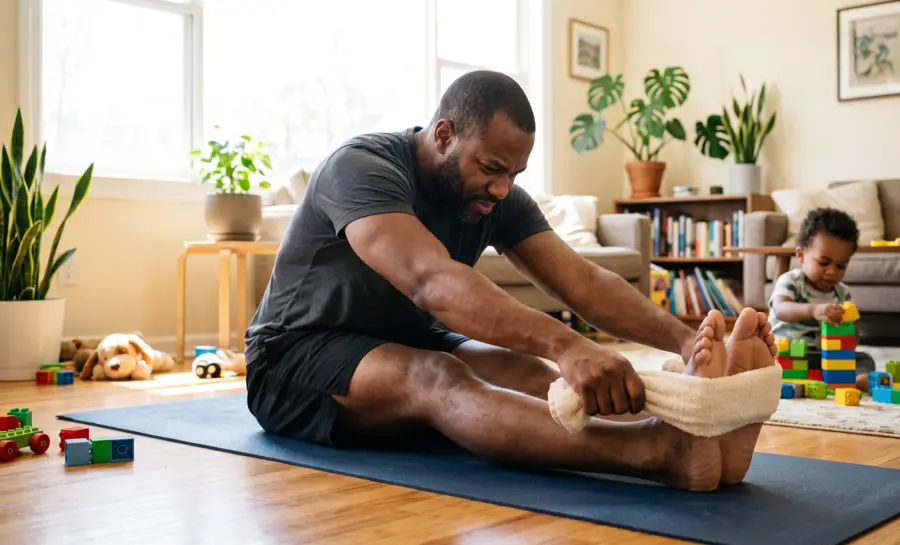
Using a strap effectively prevents you from overextending your joints, which can lead to injury, or forcing a rounded back to reach a foot during a forward fold, thereby compromising spinal alignment. By holding the ends of a strap, you can maintain straight arms and an open chest, which not only promotes better breathing by allowing for fuller inhales and exhales but also facilitates a deeper and more therapeutic muscle release, enhancing the overall benefits of your practice.

How Do Blankets and Bolsters Alleviate Joint Pressure?

Folding a blanket beneath your knees or sitting on a bolster can provide significant relief from joint stiffness, allowing the pelvis to tilt naturally and promoting a more aligned posture. These simple yet effective adjustments serve to remove the physical struggle often associated with holding a particular shape, thereby enabling you to redirect your energy and focus more intently on the underlying intention of the pose rather than being hindered by physical limitations.

Furthermore, the strategic use of padding ensures that even your most foundational postures feel profoundly supportive and remarkably comfortable, allowing for sustained engagement and deeper exploration throughout the entire duration of your practice.

In A Nutshell

Starting a yoga practice can easily feel intimidating, often accompanied by worries about flexibility, unfamiliar terms, or the pressure to match the person next to you in a studio. However, as both ancient tradition and modern neuroscience demonstrate, yoga is fundamentally an exercise in self-regulation rather than a performance sport.

By anchoring your journey in foundational poses, utilizing proper studio environments, and learning to patiently guide your attention back to your breath, you can effectively bypass the initial awkwardness and build a highly personalized, sustainable habit.

References

  1. Rajan, A. I. (2014). Effect of short term Shavasan practice on EEG pattern in young adults. International Journal of Scientific Research, 3(2), 406–408. https://doi.org/10.15373/22778179/FEB2014/133

Frequently Asked Questions

How often should a beginner practice?

Most experts suggest beginning with one or two short sessions per week to allow your body time to adapt to new movements and intensities.

Do I need to be flexible to start?

There is no requirement to be flexible when you begin, as the practice itself is a primary way to improve your range of movement over time.

What should I wear to a class?

Comfortable, breathable athletic clothing that allows you to move freely without being overly loose or restrictive is generally recommended.

Is it okay to eat before practicing?

It is often best to practice on an empty or lightly fueled stomach, allowing a few hours after a full meal to avoid digestive discomfort during inversions or twists.

Can people with injuries do yoga?

Many individuals practice while working with injuries, though it is always necessary to check with a healthcare provider and inform your instructor before beginning.

How do I stop comparing myself to others?

Focusing on the internal sensation of your breath and the specific alignment cues provided by the instructor helps shift your attention away from social comparison toward your own personal progress.

What is the best time of day to practice?

There is no objectively best time; consistency at a time that fits your personal schedule is more important than specific timing.

Emotiv는 접근 가능한 EEG 및 뇌 데이터 도구를 통해 신경과학 연구 발전을 돕는 선도적인 신경기술 기업입니다.

Christian Burgos

최신 소식

Aerial Yoga

Aerial yoga represents a blend of traditional movement and suspension, offering a unique approach to physical and mental wellness. This practice utilizes specialized equipment to facilitate movement while providing support for complex postures.

기사 읽기

요가하는 방법

일관된 홈 프랙티스를 만드는 것은 자기 조절 능력을 향상시키고 개인적인 성장을 촉진하는 강력하고 삶을 변화시키는 방법입니다. 이 과정을 성공적이고 지속 가능하게 만들기 위해서는, 요가 수련을 하는 동안 오랜 시간 동안 당신을 지지해 줄 진정으로 지속 가능하고 효과적인 접근 방식을 구축하는 데 필수적인 다섯 가지 핵심 요소가 있습니다.

기사 읽기

요가 디시플린 산스크리트어

요가는 정서적 및 인지적 자기 조절을 위한 구조화된 틀을 제공합니다. 고대 산스크리트어 개념과 현대 신경학적 발견의 교차점을 이해함으로써, 수련자들은 정신적 회복력 뒤에 숨겨진 메커니즘을 더 잘 이해할 수 있습니다.

기사 읽기

불안 장애를 위한 요가

불안의 심리적 및 신체적 증상을 다루는 것은 다차원적인 접근 방식을 필요로 합니다.

많은 실무자들은 신체 중심의 소매틱(somatic) 실천에 참여하는 것이 인지적 자각과 신체적 감각 사이의 간극을 좁히는 데 도움이 된다는 것을 알고 있습니다. 호흡과 신체에 집중함으로써, 사람들은 전반적인 임상 치료를 지원하는 차분한 자각의 기초를 세울 수 있습니다.

기사 읽기