Fordern Sie Ihr Gedächtnis heraus! Spielen Sie das neue N-Back-Spiel in der Emotiv-App

  • Fordern Sie Ihr Gedächtnis heraus! Spielen Sie das neue N-Back-Spiel in der Emotiv-App

  • Fordern Sie Ihr Gedächtnis heraus! Spielen Sie das neue N-Back-Spiel in der Emotiv-App

EEG Data Stream 101: A Practical Starter Guide

Heidi Duran

Teilen:

Controlling a computer with your thoughts or seeing how an advertisement truly makes someone feel sounds like science fiction. But it's happening right now, and the technology behind it is more accessible than ever. The key is the EEG data stream, a real-time flow of brain activity that acts as the fuel for these incredible applications. This live feed allows developers to build responsive brain-computer interfaces and gives researchers a direct window into cognitive processes as they unfold. This guide will walk you through what an EEG data stream is and how you can use it to power your own innovative projects.


View Products

Key Takeaways

  • An EEG system has three core parts: A successful project requires more than just a headset. You need the right hardware for your specific goal, software and APIs to transmit the data, and analysis tools to convert raw brain signals into understandable information.

  • Data streams fuel practical applications: Real-time brain data is the foundation for building a wide range of tools, including responsive brain-computer interfaces, new avenues for academic research, and applications that provide access to cognitive wellness insights.

  • Start your project with a clear plan: Set yourself up for success by first matching your hardware to your project's needs. Then, focus on correctly configuring your development environment and prioritizing a clean, high-quality data signal from the very beginning.

What is an EEG data stream?

An EEG data stream is a continuous, live feed of your brain's electrical activity, captured by an EEG device. I like to think of it as a river of information flowing directly from the sensors on a headset to your computer. This data represents the collective firing of neurons in your brain, providing a window into cognitive processes as they happen. This stream is the raw material for an incredible range of applications, from building responsive brain-computer interfaces that allow you to interact with technology in new ways, to conducting groundbreaking academic research.

This real-time flow of information is what makes modern EEG technology so powerful. Instead of just getting a static snapshot of brain activity, you get a dynamic, moment-by-moment view. This allows developers and researchers to create interactive experiences and gain deeper insights. For example, you could build an application that responds to your focus levels or create a piece of art that changes based on your emotional state. Whether you're exploring tools for cognitive wellness or analyzing how people react to marketing materials, the data stream is the fundamental element that makes it all possible. Understanding how to work with this stream is the first step toward building your own EEG-powered projects.

How does EEG data streaming work?

So, how does this data actually get from the headset to your software? The process works through a system where the EEG headset acts as a StreamOutlet, continuously sending out brain activity data. Your software, on the other hand, functions as a StreamInlet, ready to receive this flow of information. To keep the data fresh and relevant, this system often uses a "ring buffer." You can picture this like a conveyor belt that only has room for the most recent items. As new data comes in, the oldest data is pushed off, ensuring your application is always working with up-to-the-minute brain signals. This mechanism is key for any developer building real-time applications.

Real-time vs. offline data processing: What's the difference?

When working with EEG data, you'll hear two terms: real-time and offline processing. Offline processing is the traditional method: you record a session of brain activity, save it, and analyze it later. It’s like reviewing game footage after the match is over. Real-time processing, however, is a game-changer. It involves analyzing the EEG data stream as it’s being generated, allowing for immediate feedback and interaction. This is like a coach making decisions during the game based on what’s happening on the field. Our EmotivPRO software, for instance, lets you visualize data live and also record it for later, more detailed offline analysis, giving you the best of both worlds.

The building blocks of an EEG data streaming system

To build a functional EEG data streaming system, you need three core components working together. It starts with the right EEG hardware to detect brain signals. Then, you need software and APIs to transmit that data from the headset to your computer in real time. Finally, you need tools to process and analyze the raw data, turning it into understandable insights. Let's look at what each of these building blocks involves.

The right EEG hardware for streaming

Your EEG headset is the foundation of your entire system. The main difference between devices often comes down to the number of electrodes, or channels, they have. The number of channels determines how much information you can measure from the brain, typically ranging from just a few to over a hundred. For projects that require highly detailed data, a multi-channel headset like the Emotiv Flex is a great choice. For applications where portability is key, a device with fewer channels, like our Insight headset, can provide the necessary data without restricting movement. Choosing the right hardware really depends on the specific goals of your research or application.

Software and APIs that transmit the data

Once your hardware is capturing brain signals, you need a way to get that data onto your computer for use. This is where software and Application Programming Interfaces (APIs) come in. A real-time EEG data stream API gives you live access to brainwave data, which is essential for interactive applications like brain-computer interfaces or neurofeedback. Our software is designed to make this connection seamless. For developers, our APIs provide the flexibility to build custom applications, while our ready-to-use software helps researchers and enterprise partners turn brain data into actionable insights without writing a single line of code.

Tools for processing and analyzing data

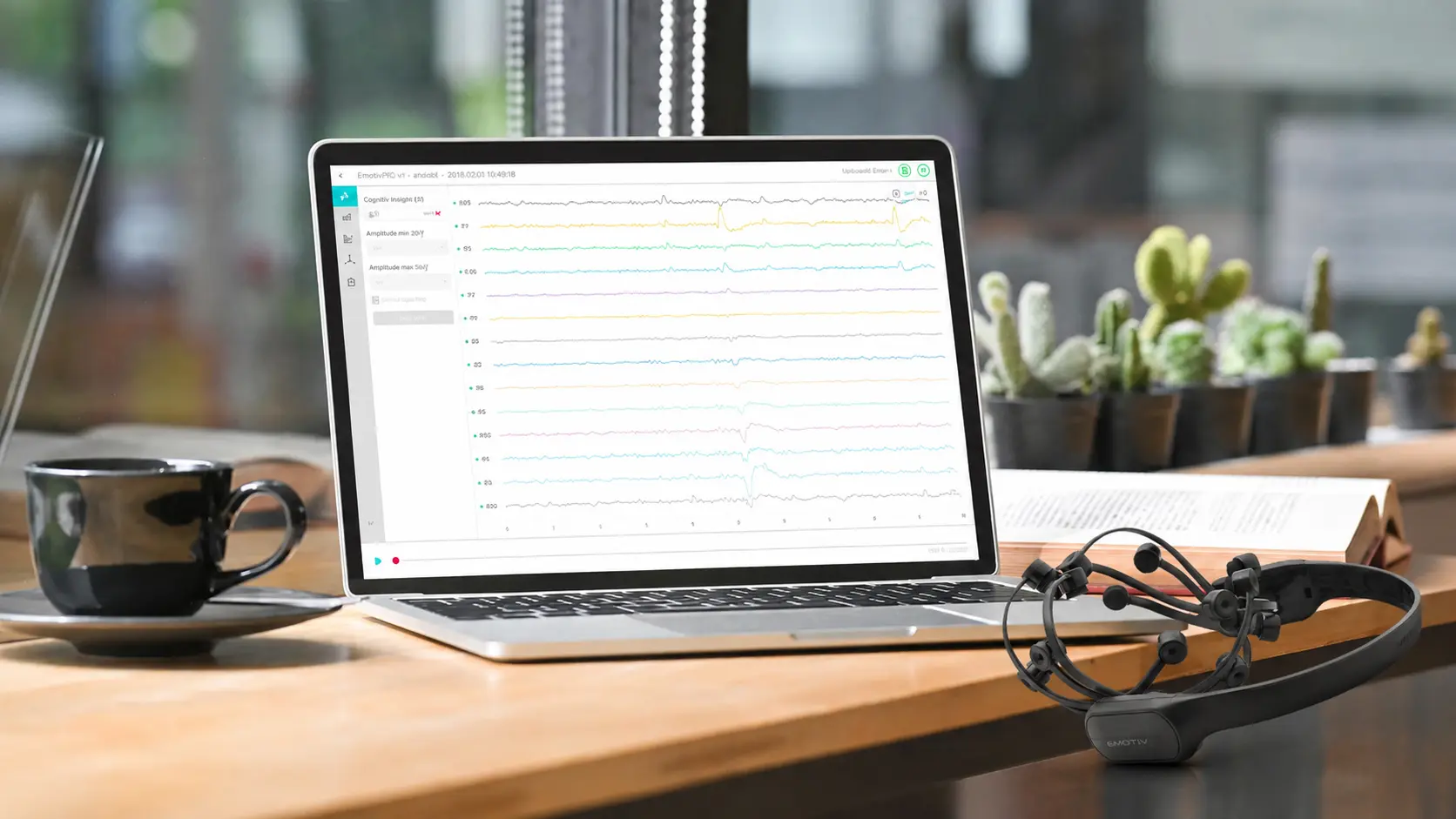
Raw EEG signals are full of noise from things like muscle movements or blinking. On their own, they don't tell you much. That's why processing and analysis tools are so critical. This software helps you clean the data by filtering out unwanted noise, a process that transforms a complex stream of signals into something you can interpret. Good analysis software also helps you visualize the data, making it easier to spot patterns and draw conclusions. For example, EmotivPRO lets you view raw EEG data, see performance metrics in real time, and mark specific events in your data stream for easier analysis later on.

How does EEG data streaming capture brain signals?

At its core, EEG data streaming is the process of translating the brain's electrical activity into a digital format that we can work with. Your brain cells, or neurons, communicate using tiny electrical impulses. When millions of them fire together, they generate an electrical field strong enough to be detected on the surface of the scalp. An EEG device is designed to pick up these signals, and a data stream is the continuous flow of that information from the headset to a computer.

The entire process can be broken down into three key stages. First, the raw brainwaves are captured by sensors and converted into a digital signal. Next, that digital information is sent wirelessly from the headset to your computer or mobile device. Finally, the raw data is filtered and processed by software to clean it up and make it ready for analysis. Each step is essential for turning faint electrical whispers from the brain into clear, actionable insights for research or building new applications. Understanding how this works is the first step toward using EEG technology in your own projects.

From brainwave to digital signal

The journey begins at the electrodes on the EEG headset. These small sensors make contact with your scalp and detect the faint electrical voltages produced by your brain activity. This raw, analog signal is similar to a continuous wave. The hardware inside the headset then acts as a translator, converting this analog wave into a digital signal, which is a series of numbers that a computer can read and process. This conversion happens in real time, allowing a live feed of brain activity to be streamed directly into an application. This real-time capability is what makes it possible to build powerful brain-computer interfaces and other interactive experiences.

Sending signals wirelessly

Once the brain's electrical activity is digitized, it needs to be sent to a device for processing and analysis. Early EEG systems required users to be physically tethered to a large computer, which limited their use to lab settings. Today, modern headsets use wireless technology like Bluetooth to transmit data seamlessly. This freedom of movement is a game-changer. It allows researchers to study brain activity in more natural environments and makes the technology much more practical for everyday use. Our headsets, from the portable MN8 earbuds to the multi-channel Epoc X, are all designed to be wireless, giving you the flexibility to collect data wherever you are.

Filtering and preparing the data

Raw EEG data is inherently noisy. The signals from the brain are incredibly small, and the electrodes can also pick up electrical activity from other sources. These are called artifacts, and they can come from muscle movements like blinking or clenching your jaw, or even from nearby electronic devices. To get meaningful insights, this noise has to be filtered out. This is where analysis software plays a crucial role. It applies algorithms to clean the data, remove artifacts, and transform the complex brainwave patterns into a more understandable format. Tools like our EmotivPRO software are designed to handle this heavy lifting, helping you visualize and interpret the data accurately.

What can you do with EEG data streams?

Once you have a clean, real-time stream of EEG data, the possibilities really open up. This is where the technical setup translates into real-world impact. From creating new ways for people to interact with technology to understanding the subconscious drivers of human behavior, EEG data streams are the foundation for innovation across many fields. The applications are incredibly diverse, but they all share a common goal: to use insights from the brain to build better tools, create more effective experiences, and expand our understanding of the human mind. Let's look at some of the most exciting ways this data is being used today.

Powering brain-computer interfaces

At its core, a brain-computer interface (BCI) translates brain activity into commands for a computer or device, essentially letting you control things with your mind. Real-time EEG data is the fuel for these systems. This technology has profound implications, especially for creating assistive devices that can restore communication and control for individuals with severe motor disabilities. By interpreting the brain's signals, developers can build applications that allow users to type on a screen, move a prosthetic limb, or interact with their environment in ways that were previously impossible. The potential to build brain-computer interfaces is one of the most transformative applications of EEG streaming.

Advancing academic research and education

For researchers in fields like neuroscience, psychology, and education, EEG data streams offer a direct window into cognitive processes. Instead of relying solely on behavioral observation, researchers can gather objective data on attention, cognitive load, and emotional responses as they happen. Portable EEG headsets allow these studies to move out of the lab and into more natural settings, like classrooms or homes. This makes it possible to explore brain function during real-world activities, leading to more robust and applicable findings. This data is invaluable for understanding learning processes, cognitive performance, and the neural basis of behavior.

Gaining insights with neuromarketing

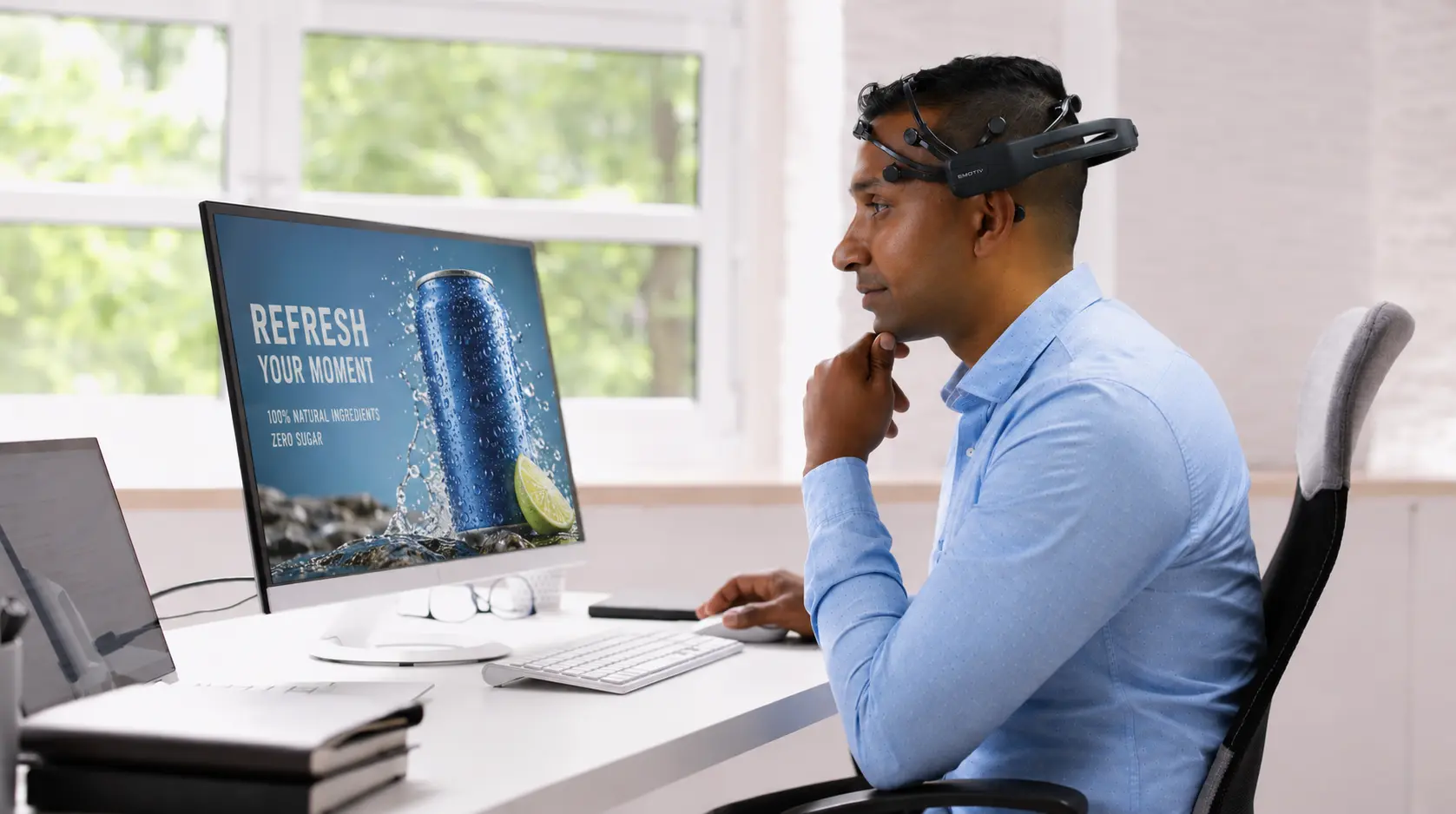
Why do some advertisements capture our attention while others fall flat? Neuromarketing uses EEG to answer questions like this by measuring consumers' unfiltered, subconscious reactions to products, brands, and marketing materials. By streaming EEG data while a person views an ad or interacts with a product, marketers can see moments of genuine emotional engagement, confusion, or excitement. These insights go far beyond what traditional surveys or focus groups can reveal. This data helps companies refine their marketing strategies to create more compelling and effective campaigns that truly resonate with their audience, building stronger brand connections.

Accessing cognitive wellness tools

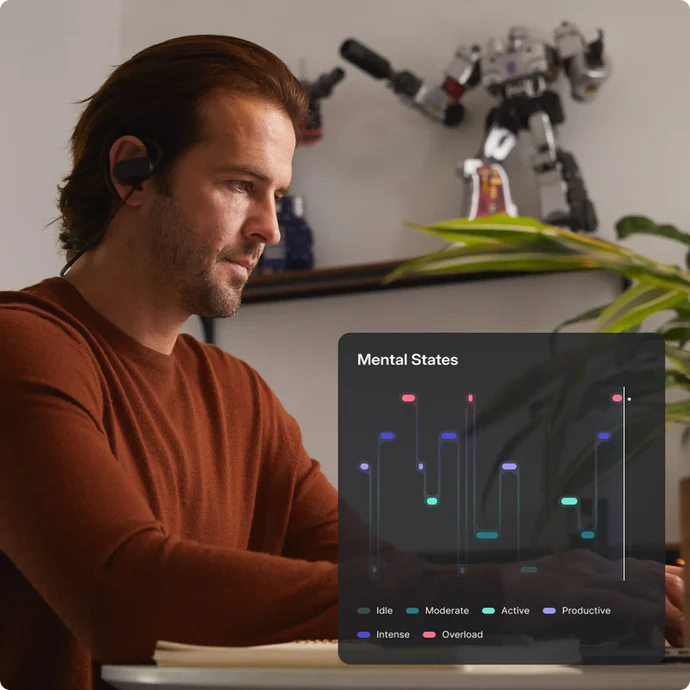
EEG data streams are also being used to create applications that provide access to cognitive wellness tools. These apps can offer live feedback on your mental states, helping you become more aware of your own patterns of focus, stress, or relaxation. For example, an application might use your brain data to guide you through a meditation exercise, providing real-time audio cues that respond to your level of calm. The goal isn't to diagnose or treat, but to provide you with personalized information. These tools empower you to better understand your own cognitive states and explore techniques for managing them through direct feedback on your mental states.

Common challenges in EEG data streaming

Working with EEG data streams is an exciting field, but it comes with a unique set of challenges. Getting clean, meaningful data from the brain to your application requires navigating a few common hurdles. From electrical interference to the simple fact that every brain is different, understanding these obstacles is the first step to overcoming them and building a successful project.

Managing signal noise and artifacts

One of the biggest challenges in any EEG application is dealing with noise. The electrical signals from the brain are incredibly small, and they can easily be contaminated by other, stronger signals. These unwanted signals, or "artifacts," can come from muscle activity like clenching your jaw, eye movements, or even electrical interference from nearby devices. These sources of noise can obscure the brain data you’re trying to analyze. Filtering out this noise is a critical step to ensure the accuracy and reliability of your results.

Handling data speed and bandwidth

For real-time applications like brain-computer interfaces, speed is everything. The system needs to process EEG data and provide a response almost instantly. Any significant delay, or latency, can disrupt the user experience and make the application feel unresponsive. This means your entire data streaming pipeline, from the headset to the final processing, must be highly efficient. You need to manage the flow of data effectively to ensure that computations happen quickly without overwhelming your system’s bandwidth. This is crucial for creating a seamless and interactive experience for the user.

Debunking common myths about EEG

When you start working with EEG, you'll likely run into some popular misconceptions about what the technology can do. A common myth is that EEG can "read minds" or interpret specific thoughts. In reality, EEG measures the collective electrical activity of large populations of neurons, not individual thoughts. It’s excellent for understanding states like focus or relaxation. Understanding the capabilities and limitations of EEG is key to setting realistic project goals and accurately communicating what your application can achieve.

Understanding why every brain is unique

No two brains are exactly alike, and this variability is reflected in EEG data. Factors like skull thickness, brain anatomy, and even a person's current mood can cause significant differences in brainwave patterns from one individual to another. Because of this, a one-size-fits-all approach rarely works. It's essential to recognize that individual differences in anatomy and physiology play a huge role. This is why calibration and establishing a personal baseline are often necessary steps to interpret EEG data accurately for any given user.

The language of EEG: Protocols and data formats

When you're working with data from multiple sources, like an EEG headset and an eye-movement sensor, you need them to speak the same language. This is where protocols and data formats come in. Think of them as the universal rulebook for communication between different devices and software. They ensure that every piece of data is timed correctly, labeled properly, and structured in a way that your analysis tools can understand. Without these standards, trying to combine and make sense of different data streams would be incredibly messy and unreliable.

An introduction to LSL and other standards

One of the most important standards in the research world is the Lab Streaming Layer, or LSL. It’s an open-source system designed to synchronize data from various devices over a local network. Imagine you’re running an experiment that combines EEG data with heart rate and motion capture. LSL acts as the conductor, ensuring every data point from each device is time-stamped with incredible precision. This synchronization of multimodal data is essential for understanding the complete picture of what’s happening in your experiment, allowing you to draw more accurate conclusions from your work.

How to integrate with APIs

APIs, or Application Programming Interfaces, are like standardized connectors that let different software programs talk to each other. The LSL API, for example, provides a consistent way for your EEG hardware and other sensors to connect to the LSL network. This simplifies the integration process, so you don't have to build a custom connection for every new piece of equipment you add to your setup. Our own developer platform provides APIs and SDKs that allow you to stream data from Emotiv headsets into your applications, making it easier to build flexible and powerful research tools.

Understanding data format specifications

Data format specifications are the "grammar" of your data stream. They define exactly how the data should be structured, from the order of the channels to the type of numerical values used. Following a clear specification ensures that the data you collect is clean, consistent, and ready for analysis. Protocols like LSL establish these rules to make sure that data from any compatible device can be accurately interpreted. By adhering to these standards, you can avoid common data-related headaches and ensure your research is both robust and reproducible.

Choosing your EEG streaming hardware

Selecting the right EEG hardware is the first and most critical step in setting up your data streaming system. The device you choose will define the quality and type of data you can collect, so it’s essential to match the hardware to your project’s goals. Whether you’re conducting in-depth academic research or building your first brain-computer interface, there’s a device designed for your needs. The main trade-off is usually between the number of channels, which affects data resolution, and portability. Let’s break down the main categories to help you find the perfect fit.

Professional multi-channel headsets

If your work demands high-density, research-grade data, a professional multi-channel headset is the way to go. These devices feature a larger number of sensors, providing greater spatial resolution and a more detailed picture of brain activity. Their design prioritizes data quality, making them ideal for lab environments where precision is paramount. Researchers often choose multi-channel systems for their flexibility and ability to integrate with other complex monitoring tools. For projects that require this level of detail, our Epoc X offers 14 channels, while the Flex headset provides up to 32 channels for the most demanding research applications.

Portable, consumer-friendly devices

For projects that take place outside of a traditional lab, portable and consumer-friendly devices offer incredible versatility. These headsets are designed for ease of use, comfort, and mobility, allowing you to collect data in real-world settings. While they have fewer channels, they are perfectly suited for applications in cognitive wellness, education, and neuromarketing. Some studies find that data from portable devices can be strengthened by averaging it across many trials. Our 5-channel Insight headset is a popular choice for its balance of performance and practicality, while our MN8 EEG earbuds offer a discreet way to access brain data on the go.

How to pick the right hardware for your project

To choose the hardware that best fits your project, you need a clear idea of your main requirements. Start by asking yourself a few key questions. First, what is your primary goal? Are you conducting foundational academic research that requires pristine data, or are you developing a consumer-facing application where ease of use is more important? Next, consider your environment. Will you be in a controlled lab or a dynamic, real-world setting? Finally, think about your budget and the technical needs of your project. The right hardware isn’t about having the most channels; it’s about finding the tool that gives you the best performance for your specific goals.

Finding the right software for EEG data streams

Once you have your hardware, the right software is what brings your EEG data stream to life. Think of it as the bridge between the raw electrical signals from the brain and the meaningful applications you want to build. Without it, you just have a collection of numbers; with the right software, you have insights, commands, and visualizations. Whether you're conducting academic research, developing a responsive brain-computer interface, or exploring cognitive wellness tools, your software choice will define what’s possible.

Different projects have different needs. A researcher might require a platform with robust tools for marking events, filtering noise, and exporting data for deep statistical analysis. A developer building a new BCI application will prioritize a flexible and well-documented API that allows them to pipe the data directly into their custom code. Someone interested in personal wellness might want a simple, intuitive app that presents brain data in an easy-to-understand format. The key is to find a platform that not only captures the data reliably but also gives you the tools to analyze and interact with it in a way that suits your specific goals. Let's look at the most important software features to consider.

Exploring developer platforms and SDKs

If your goal is to build custom applications, you’ll want to look for software that offers a robust Software Development Kit (SDK) and Application Programming Interfaces (APIs). These are the toolkits that let you get under the hood and work directly with the live brainwave data. Instead of being limited to pre-built features, you can create something entirely new. Platforms like our own Cortex API or the widely used Lab Streaming Layer (LSL) are designed to streamline this process. They provide the foundational code and protocols you need, making it much faster and easier to develop your own applications for research, BCI, or personal projects.

Visualizing data in real time

For many projects, seeing your EEG data as it’s being collected is absolutely essential. Real-time visualization allows you to immediately see, mark, and process brain signals, which is incredibly helpful for quality control. For example, you can spot an artifact from a blink or muscle movement the moment it happens and make a note or adjust your experiment accordingly. Software like our EmotivPRO platform is designed for exactly this purpose, providing a clear, intuitive interface for live data. It’s also important to check for compatibility. The best software works with a range of EEG headsets and can easily integrate with other analysis platforms or programming languages like Python, giving you maximum flexibility.

Integrating AI and machine learning

The combination of AI and EEG data is opening up exciting new possibilities for analysis. Machine learning models are excellent at sifting through vast amounts of data to identify complex patterns that might be difficult for a person to spot. In a research context, this can be a huge help. An AI model can highlight significant moments in lengthy recordings, saving you hours of manual review. Think of it as a helpful assistant that provides a "second opinion" on your data. This integration not only makes your analysis more efficient but is also a powerful tool for building more responsive and sophisticated brain-computer interface applications that can adapt to an individual's unique brain activity.

How to get started with EEG data streaming

Jumping into the world of EEG data streaming can feel like a big step, but it’s more accessible than you might think. With the right tools and a clear path, you can go from unboxing your headset to building your first brain-computer interface application. The key is to break the process down into manageable steps. Think of it as building with blocks: first, you lay the foundation by setting up your workspace, then you gather your tools by learning the right code, and finally, you follow the blueprint by applying best practices to ensure your project is solid.

This approach takes the guesswork out of the process. You don’t need a PhD in neuroscience to start experimenting. Whether your goal is to conduct academic research, explore neuromarketing insights, or simply build something amazing for yourself, the journey starts with these fundamental skills. We’ll walk through setting up your development environment, picking up the necessary programming languages, and implementing some pro tips that will save you headaches down the road. Let’s get you ready to stream your first brainwaves.

Set up your development environment

Before you can do anything with EEG data, you need to create a space for it to flow into. This starts with setting up your development environment. Your first step is to install the right software tools, known as SDKs (Software Development Kits), for your specific EEG headset. Our developer platform provides all the resources you need to get our hardware communicating with your computer. This initial setup is crucial because it creates the bridge that allows raw brainwave data from the headset to be sent to the applications you’ll build. Think of it as installing the right drivers for a new printer; without them, the hardware and software can’t talk to each other.

Learn the essential programming languages and libraries

Once your environment is ready, it’s time to start coding. You don’t need to be a master of every programming language, but having a good handle on one or two will make all the difference. Languages like Python, C++, and Java are popular choices in the BCI community because they have extensive libraries for data analysis and machine learning. Your app can then read the live data to show it, use artificial intelligence, or build BCI features. Many developers start with Python due to its straightforward syntax and powerful data science libraries like NumPy and Pandas, which are perfect for handling streams of EEG data.

Follow best practices for implementation

Writing the code is one thing; making sure it works reliably is another. Following a few best practices will help you build robust and effective applications. First, ensure data quality. Always make sure the signal from the EEG headset is strong and clean before you start streaming. Tools like our EmotivPRO software can help you visualize the signal quality in real time. Second, plan for problems. Think about how your app will handle disconnections or delays in the data stream. Building in error handling from the start ensures your application won’t crash if the headset temporarily loses connection, creating a much smoother user experience.

What's next for EEG data streaming?

The world of EEG data streaming is constantly evolving, moving toward a future where brain-sensing technology is more accessible, intuitive, and integrated into our daily lives. We're seeing a shift from purely lab-based equipment to devices that you can wear and use anywhere. This opens up incredible possibilities for developers, researchers, and anyone curious about the human brain. The core idea is to make gathering brain data as simple as tracking your steps with a fitness band.

This evolution is driven by a few key trends. First, hardware is becoming smaller and more comfortable, appearing in familiar forms like earbuds and discreet headbands. Second, as these devices become more common, the need for high-quality, reliable data remains paramount, especially for scientific and research applications. Finally, the real magic happens when we combine EEG data with other technologies, like virtual reality or other wearable sensors, to create richer, more immersive experiences. These advancements are paving the way for new applications in cognitive wellness, academic studies, and interactive entertainment that were once the stuff of science fiction.

New technologies and innovations on the horizon

One of the most exciting developments in EEG is its integration into everyday consumer electronics. Imagine earbuds that can not only play your favorite music but also give you insights into your focus or relaxation levels. Companies across the tech industry are exploring ways to embed EEG sensors into devices we already use, making brain-computer interfaces more practical and discreet than ever before.

This trend is all about accessibility. By building EEG into familiar form factors, we lower the barrier to entry for people who want to explore their own brain data. This innovation is at the heart of what we do at Emotiv, with products like our MN8 designed to provide access to cognitive wellness tools in a simple, wearable format. The goal is to make interacting with this technology feel completely natural.

Ensuring data quality for research

As EEG hardware becomes more portable and user-friendly, the question of data quality becomes even more critical. For an EEG data stream to be useful in a research context, it has to be clean, accurate, and reliable. This is why we focus on creating research-grade, portable EEG systems. The challenge is to deliver the precision of traditional lab equipment in a device that can be used in real-world environments, from classrooms to field studies.

Ensuring data quality starts with the hardware itself. A powerful EEG amplifier is essential for converting the tiny electrical signals from the brain into a clear digital format that software can analyze. By prioritizing high-quality components and sophisticated signal processing, we can make sure that even our most accessible devices provide data that researchers can trust. This commitment helps power new discoveries in academic research and education.

Integrating EEG with other wearable tech

The future of EEG data streaming isn't just about the brain; it's about understanding the whole person. That's why integrating EEG with other wearable technologies is such a promising frontier. When you combine brainwave data from an EEG headset with heart rate data from a smartwatch or eye-movement data from a VR headset, you get a much more complete picture of a user's cognitive and emotional state.

This fusion of data streams is unlocking new possibilities in many fields. For example, developers can create video games that adapt in real time to a player's focus or excitement levels. Researchers can study how cognitive load affects physical performance outside of a controlled lab setting. These integrated systems are the foundation for the next generation of personalized technology and truly interactive brain-computer interface applications.

Related Articles


View Products

Frequently Asked Questions

I'm not a coder. Can I still use EEG data streaming for my work? Absolutely. You don't need to be a developer to work with brain data. Our software, like EmotivPRO, is designed specifically for researchers and professionals who need to visualize, record, and analyze EEG data streams without writing any code. It provides a user-friendly interface that lets you see brain activity in real time, mark important events during an experiment, and export the data for further analysis, making the technology accessible to everyone.

How do I choose between a headset with many channels, like Flex, and one with fewer, like Insight? The best choice really depends on your project's goals. A headset with more channels, like our 32-channel Flex, gives you a more detailed, high-resolution map of brain activity, which is ideal for in-depth academic research. A device with fewer channels, like our 5-channel Insight, is more portable and quicker to set up, making it perfect for studies in real-world settings or for applications where mobility is key. It's less about which is better and more about which is the right tool for your specific questions.

You mentioned "noise" and "artifacts." How much of a problem is this in practice? Signal noise is a natural part of working with EEG, but it's a manageable challenge. Artifacts are simply unwanted electrical signals from things like blinking or muscle tension. Getting a clean signal starts with a good headset fit and proper sensor hydration. From there, software plays a huge role. Platforms like EmotivPRO have built-in filters that help clean the data as it streams, allowing you to focus on the brain signals you're actually interested in.

Can EEG technology actually read my specific thoughts? This is a common question, and the simple answer is no. EEG technology cannot read your mind or interpret specific thoughts. Instead, it measures the broad electrical activity of large populations of your brain cells firing together. This allows it to identify general cognitive states, such as your level of focus, stress, or relaxation. Think of it as understanding the overall mood of a crowd rather than listening to individual conversations.

What's the difference between real-time and offline data analysis? Real-time analysis means you are processing and interpreting the EEG data stream the moment it's generated. This is essential for interactive applications, like a brain-computer interface where you need an immediate response. Offline analysis is when you record the entire data stream first and then go back to study it later. This allows for a more detailed and thorough examination of the data, which is common in academic research. Many platforms, including ours, allow you to do both.

Controlling a computer with your thoughts or seeing how an advertisement truly makes someone feel sounds like science fiction. But it's happening right now, and the technology behind it is more accessible than ever. The key is the EEG data stream, a real-time flow of brain activity that acts as the fuel for these incredible applications. This live feed allows developers to build responsive brain-computer interfaces and gives researchers a direct window into cognitive processes as they unfold. This guide will walk you through what an EEG data stream is and how you can use it to power your own innovative projects.


View Products

Key Takeaways

  • An EEG system has three core parts: A successful project requires more than just a headset. You need the right hardware for your specific goal, software and APIs to transmit the data, and analysis tools to convert raw brain signals into understandable information.

  • Data streams fuel practical applications: Real-time brain data is the foundation for building a wide range of tools, including responsive brain-computer interfaces, new avenues for academic research, and applications that provide access to cognitive wellness insights.

  • Start your project with a clear plan: Set yourself up for success by first matching your hardware to your project's needs. Then, focus on correctly configuring your development environment and prioritizing a clean, high-quality data signal from the very beginning.

What is an EEG data stream?

An EEG data stream is a continuous, live feed of your brain's electrical activity, captured by an EEG device. I like to think of it as a river of information flowing directly from the sensors on a headset to your computer. This data represents the collective firing of neurons in your brain, providing a window into cognitive processes as they happen. This stream is the raw material for an incredible range of applications, from building responsive brain-computer interfaces that allow you to interact with technology in new ways, to conducting groundbreaking academic research.

This real-time flow of information is what makes modern EEG technology so powerful. Instead of just getting a static snapshot of brain activity, you get a dynamic, moment-by-moment view. This allows developers and researchers to create interactive experiences and gain deeper insights. For example, you could build an application that responds to your focus levels or create a piece of art that changes based on your emotional state. Whether you're exploring tools for cognitive wellness or analyzing how people react to marketing materials, the data stream is the fundamental element that makes it all possible. Understanding how to work with this stream is the first step toward building your own EEG-powered projects.

How does EEG data streaming work?

So, how does this data actually get from the headset to your software? The process works through a system where the EEG headset acts as a StreamOutlet, continuously sending out brain activity data. Your software, on the other hand, functions as a StreamInlet, ready to receive this flow of information. To keep the data fresh and relevant, this system often uses a "ring buffer." You can picture this like a conveyor belt that only has room for the most recent items. As new data comes in, the oldest data is pushed off, ensuring your application is always working with up-to-the-minute brain signals. This mechanism is key for any developer building real-time applications.

Real-time vs. offline data processing: What's the difference?

When working with EEG data, you'll hear two terms: real-time and offline processing. Offline processing is the traditional method: you record a session of brain activity, save it, and analyze it later. It’s like reviewing game footage after the match is over. Real-time processing, however, is a game-changer. It involves analyzing the EEG data stream as it’s being generated, allowing for immediate feedback and interaction. This is like a coach making decisions during the game based on what’s happening on the field. Our EmotivPRO software, for instance, lets you visualize data live and also record it for later, more detailed offline analysis, giving you the best of both worlds.

The building blocks of an EEG data streaming system

To build a functional EEG data streaming system, you need three core components working together. It starts with the right EEG hardware to detect brain signals. Then, you need software and APIs to transmit that data from the headset to your computer in real time. Finally, you need tools to process and analyze the raw data, turning it into understandable insights. Let's look at what each of these building blocks involves.

The right EEG hardware for streaming

Your EEG headset is the foundation of your entire system. The main difference between devices often comes down to the number of electrodes, or channels, they have. The number of channels determines how much information you can measure from the brain, typically ranging from just a few to over a hundred. For projects that require highly detailed data, a multi-channel headset like the Emotiv Flex is a great choice. For applications where portability is key, a device with fewer channels, like our Insight headset, can provide the necessary data without restricting movement. Choosing the right hardware really depends on the specific goals of your research or application.

Software and APIs that transmit the data

Once your hardware is capturing brain signals, you need a way to get that data onto your computer for use. This is where software and Application Programming Interfaces (APIs) come in. A real-time EEG data stream API gives you live access to brainwave data, which is essential for interactive applications like brain-computer interfaces or neurofeedback. Our software is designed to make this connection seamless. For developers, our APIs provide the flexibility to build custom applications, while our ready-to-use software helps researchers and enterprise partners turn brain data into actionable insights without writing a single line of code.

Tools for processing and analyzing data

Raw EEG signals are full of noise from things like muscle movements or blinking. On their own, they don't tell you much. That's why processing and analysis tools are so critical. This software helps you clean the data by filtering out unwanted noise, a process that transforms a complex stream of signals into something you can interpret. Good analysis software also helps you visualize the data, making it easier to spot patterns and draw conclusions. For example, EmotivPRO lets you view raw EEG data, see performance metrics in real time, and mark specific events in your data stream for easier analysis later on.

How does EEG data streaming capture brain signals?

At its core, EEG data streaming is the process of translating the brain's electrical activity into a digital format that we can work with. Your brain cells, or neurons, communicate using tiny electrical impulses. When millions of them fire together, they generate an electrical field strong enough to be detected on the surface of the scalp. An EEG device is designed to pick up these signals, and a data stream is the continuous flow of that information from the headset to a computer.

The entire process can be broken down into three key stages. First, the raw brainwaves are captured by sensors and converted into a digital signal. Next, that digital information is sent wirelessly from the headset to your computer or mobile device. Finally, the raw data is filtered and processed by software to clean it up and make it ready for analysis. Each step is essential for turning faint electrical whispers from the brain into clear, actionable insights for research or building new applications. Understanding how this works is the first step toward using EEG technology in your own projects.

From brainwave to digital signal

The journey begins at the electrodes on the EEG headset. These small sensors make contact with your scalp and detect the faint electrical voltages produced by your brain activity. This raw, analog signal is similar to a continuous wave. The hardware inside the headset then acts as a translator, converting this analog wave into a digital signal, which is a series of numbers that a computer can read and process. This conversion happens in real time, allowing a live feed of brain activity to be streamed directly into an application. This real-time capability is what makes it possible to build powerful brain-computer interfaces and other interactive experiences.

Sending signals wirelessly

Once the brain's electrical activity is digitized, it needs to be sent to a device for processing and analysis. Early EEG systems required users to be physically tethered to a large computer, which limited their use to lab settings. Today, modern headsets use wireless technology like Bluetooth to transmit data seamlessly. This freedom of movement is a game-changer. It allows researchers to study brain activity in more natural environments and makes the technology much more practical for everyday use. Our headsets, from the portable MN8 earbuds to the multi-channel Epoc X, are all designed to be wireless, giving you the flexibility to collect data wherever you are.

Filtering and preparing the data

Raw EEG data is inherently noisy. The signals from the brain are incredibly small, and the electrodes can also pick up electrical activity from other sources. These are called artifacts, and they can come from muscle movements like blinking or clenching your jaw, or even from nearby electronic devices. To get meaningful insights, this noise has to be filtered out. This is where analysis software plays a crucial role. It applies algorithms to clean the data, remove artifacts, and transform the complex brainwave patterns into a more understandable format. Tools like our EmotivPRO software are designed to handle this heavy lifting, helping you visualize and interpret the data accurately.

What can you do with EEG data streams?

Once you have a clean, real-time stream of EEG data, the possibilities really open up. This is where the technical setup translates into real-world impact. From creating new ways for people to interact with technology to understanding the subconscious drivers of human behavior, EEG data streams are the foundation for innovation across many fields. The applications are incredibly diverse, but they all share a common goal: to use insights from the brain to build better tools, create more effective experiences, and expand our understanding of the human mind. Let's look at some of the most exciting ways this data is being used today.

Powering brain-computer interfaces

At its core, a brain-computer interface (BCI) translates brain activity into commands for a computer or device, essentially letting you control things with your mind. Real-time EEG data is the fuel for these systems. This technology has profound implications, especially for creating assistive devices that can restore communication and control for individuals with severe motor disabilities. By interpreting the brain's signals, developers can build applications that allow users to type on a screen, move a prosthetic limb, or interact with their environment in ways that were previously impossible. The potential to build brain-computer interfaces is one of the most transformative applications of EEG streaming.

Advancing academic research and education

For researchers in fields like neuroscience, psychology, and education, EEG data streams offer a direct window into cognitive processes. Instead of relying solely on behavioral observation, researchers can gather objective data on attention, cognitive load, and emotional responses as they happen. Portable EEG headsets allow these studies to move out of the lab and into more natural settings, like classrooms or homes. This makes it possible to explore brain function during real-world activities, leading to more robust and applicable findings. This data is invaluable for understanding learning processes, cognitive performance, and the neural basis of behavior.

Gaining insights with neuromarketing

Why do some advertisements capture our attention while others fall flat? Neuromarketing uses EEG to answer questions like this by measuring consumers' unfiltered, subconscious reactions to products, brands, and marketing materials. By streaming EEG data while a person views an ad or interacts with a product, marketers can see moments of genuine emotional engagement, confusion, or excitement. These insights go far beyond what traditional surveys or focus groups can reveal. This data helps companies refine their marketing strategies to create more compelling and effective campaigns that truly resonate with their audience, building stronger brand connections.

Accessing cognitive wellness tools

EEG data streams are also being used to create applications that provide access to cognitive wellness tools. These apps can offer live feedback on your mental states, helping you become more aware of your own patterns of focus, stress, or relaxation. For example, an application might use your brain data to guide you through a meditation exercise, providing real-time audio cues that respond to your level of calm. The goal isn't to diagnose or treat, but to provide you with personalized information. These tools empower you to better understand your own cognitive states and explore techniques for managing them through direct feedback on your mental states.

Common challenges in EEG data streaming

Working with EEG data streams is an exciting field, but it comes with a unique set of challenges. Getting clean, meaningful data from the brain to your application requires navigating a few common hurdles. From electrical interference to the simple fact that every brain is different, understanding these obstacles is the first step to overcoming them and building a successful project.

Managing signal noise and artifacts

One of the biggest challenges in any EEG application is dealing with noise. The electrical signals from the brain are incredibly small, and they can easily be contaminated by other, stronger signals. These unwanted signals, or "artifacts," can come from muscle activity like clenching your jaw, eye movements, or even electrical interference from nearby devices. These sources of noise can obscure the brain data you’re trying to analyze. Filtering out this noise is a critical step to ensure the accuracy and reliability of your results.

Handling data speed and bandwidth

For real-time applications like brain-computer interfaces, speed is everything. The system needs to process EEG data and provide a response almost instantly. Any significant delay, or latency, can disrupt the user experience and make the application feel unresponsive. This means your entire data streaming pipeline, from the headset to the final processing, must be highly efficient. You need to manage the flow of data effectively to ensure that computations happen quickly without overwhelming your system’s bandwidth. This is crucial for creating a seamless and interactive experience for the user.

Debunking common myths about EEG

When you start working with EEG, you'll likely run into some popular misconceptions about what the technology can do. A common myth is that EEG can "read minds" or interpret specific thoughts. In reality, EEG measures the collective electrical activity of large populations of neurons, not individual thoughts. It’s excellent for understanding states like focus or relaxation. Understanding the capabilities and limitations of EEG is key to setting realistic project goals and accurately communicating what your application can achieve.

Understanding why every brain is unique

No two brains are exactly alike, and this variability is reflected in EEG data. Factors like skull thickness, brain anatomy, and even a person's current mood can cause significant differences in brainwave patterns from one individual to another. Because of this, a one-size-fits-all approach rarely works. It's essential to recognize that individual differences in anatomy and physiology play a huge role. This is why calibration and establishing a personal baseline are often necessary steps to interpret EEG data accurately for any given user.

The language of EEG: Protocols and data formats

When you're working with data from multiple sources, like an EEG headset and an eye-movement sensor, you need them to speak the same language. This is where protocols and data formats come in. Think of them as the universal rulebook for communication between different devices and software. They ensure that every piece of data is timed correctly, labeled properly, and structured in a way that your analysis tools can understand. Without these standards, trying to combine and make sense of different data streams would be incredibly messy and unreliable.

An introduction to LSL and other standards

One of the most important standards in the research world is the Lab Streaming Layer, or LSL. It’s an open-source system designed to synchronize data from various devices over a local network. Imagine you’re running an experiment that combines EEG data with heart rate and motion capture. LSL acts as the conductor, ensuring every data point from each device is time-stamped with incredible precision. This synchronization of multimodal data is essential for understanding the complete picture of what’s happening in your experiment, allowing you to draw more accurate conclusions from your work.

How to integrate with APIs

APIs, or Application Programming Interfaces, are like standardized connectors that let different software programs talk to each other. The LSL API, for example, provides a consistent way for your EEG hardware and other sensors to connect to the LSL network. This simplifies the integration process, so you don't have to build a custom connection for every new piece of equipment you add to your setup. Our own developer platform provides APIs and SDKs that allow you to stream data from Emotiv headsets into your applications, making it easier to build flexible and powerful research tools.

Understanding data format specifications

Data format specifications are the "grammar" of your data stream. They define exactly how the data should be structured, from the order of the channels to the type of numerical values used. Following a clear specification ensures that the data you collect is clean, consistent, and ready for analysis. Protocols like LSL establish these rules to make sure that data from any compatible device can be accurately interpreted. By adhering to these standards, you can avoid common data-related headaches and ensure your research is both robust and reproducible.

Choosing your EEG streaming hardware

Selecting the right EEG hardware is the first and most critical step in setting up your data streaming system. The device you choose will define the quality and type of data you can collect, so it’s essential to match the hardware to your project’s goals. Whether you’re conducting in-depth academic research or building your first brain-computer interface, there’s a device designed for your needs. The main trade-off is usually between the number of channels, which affects data resolution, and portability. Let’s break down the main categories to help you find the perfect fit.

Professional multi-channel headsets

If your work demands high-density, research-grade data, a professional multi-channel headset is the way to go. These devices feature a larger number of sensors, providing greater spatial resolution and a more detailed picture of brain activity. Their design prioritizes data quality, making them ideal for lab environments where precision is paramount. Researchers often choose multi-channel systems for their flexibility and ability to integrate with other complex monitoring tools. For projects that require this level of detail, our Epoc X offers 14 channels, while the Flex headset provides up to 32 channels for the most demanding research applications.

Portable, consumer-friendly devices

For projects that take place outside of a traditional lab, portable and consumer-friendly devices offer incredible versatility. These headsets are designed for ease of use, comfort, and mobility, allowing you to collect data in real-world settings. While they have fewer channels, they are perfectly suited for applications in cognitive wellness, education, and neuromarketing. Some studies find that data from portable devices can be strengthened by averaging it across many trials. Our 5-channel Insight headset is a popular choice for its balance of performance and practicality, while our MN8 EEG earbuds offer a discreet way to access brain data on the go.

How to pick the right hardware for your project

To choose the hardware that best fits your project, you need a clear idea of your main requirements. Start by asking yourself a few key questions. First, what is your primary goal? Are you conducting foundational academic research that requires pristine data, or are you developing a consumer-facing application where ease of use is more important? Next, consider your environment. Will you be in a controlled lab or a dynamic, real-world setting? Finally, think about your budget and the technical needs of your project. The right hardware isn’t about having the most channels; it’s about finding the tool that gives you the best performance for your specific goals.

Finding the right software for EEG data streams

Once you have your hardware, the right software is what brings your EEG data stream to life. Think of it as the bridge between the raw electrical signals from the brain and the meaningful applications you want to build. Without it, you just have a collection of numbers; with the right software, you have insights, commands, and visualizations. Whether you're conducting academic research, developing a responsive brain-computer interface, or exploring cognitive wellness tools, your software choice will define what’s possible.

Different projects have different needs. A researcher might require a platform with robust tools for marking events, filtering noise, and exporting data for deep statistical analysis. A developer building a new BCI application will prioritize a flexible and well-documented API that allows them to pipe the data directly into their custom code. Someone interested in personal wellness might want a simple, intuitive app that presents brain data in an easy-to-understand format. The key is to find a platform that not only captures the data reliably but also gives you the tools to analyze and interact with it in a way that suits your specific goals. Let's look at the most important software features to consider.

Exploring developer platforms and SDKs

If your goal is to build custom applications, you’ll want to look for software that offers a robust Software Development Kit (SDK) and Application Programming Interfaces (APIs). These are the toolkits that let you get under the hood and work directly with the live brainwave data. Instead of being limited to pre-built features, you can create something entirely new. Platforms like our own Cortex API or the widely used Lab Streaming Layer (LSL) are designed to streamline this process. They provide the foundational code and protocols you need, making it much faster and easier to develop your own applications for research, BCI, or personal projects.

Visualizing data in real time

For many projects, seeing your EEG data as it’s being collected is absolutely essential. Real-time visualization allows you to immediately see, mark, and process brain signals, which is incredibly helpful for quality control. For example, you can spot an artifact from a blink or muscle movement the moment it happens and make a note or adjust your experiment accordingly. Software like our EmotivPRO platform is designed for exactly this purpose, providing a clear, intuitive interface for live data. It’s also important to check for compatibility. The best software works with a range of EEG headsets and can easily integrate with other analysis platforms or programming languages like Python, giving you maximum flexibility.

Integrating AI and machine learning

The combination of AI and EEG data is opening up exciting new possibilities for analysis. Machine learning models are excellent at sifting through vast amounts of data to identify complex patterns that might be difficult for a person to spot. In a research context, this can be a huge help. An AI model can highlight significant moments in lengthy recordings, saving you hours of manual review. Think of it as a helpful assistant that provides a "second opinion" on your data. This integration not only makes your analysis more efficient but is also a powerful tool for building more responsive and sophisticated brain-computer interface applications that can adapt to an individual's unique brain activity.

How to get started with EEG data streaming

Jumping into the world of EEG data streaming can feel like a big step, but it’s more accessible than you might think. With the right tools and a clear path, you can go from unboxing your headset to building your first brain-computer interface application. The key is to break the process down into manageable steps. Think of it as building with blocks: first, you lay the foundation by setting up your workspace, then you gather your tools by learning the right code, and finally, you follow the blueprint by applying best practices to ensure your project is solid.

This approach takes the guesswork out of the process. You don’t need a PhD in neuroscience to start experimenting. Whether your goal is to conduct academic research, explore neuromarketing insights, or simply build something amazing for yourself, the journey starts with these fundamental skills. We’ll walk through setting up your development environment, picking up the necessary programming languages, and implementing some pro tips that will save you headaches down the road. Let’s get you ready to stream your first brainwaves.

Set up your development environment

Before you can do anything with EEG data, you need to create a space for it to flow into. This starts with setting up your development environment. Your first step is to install the right software tools, known as SDKs (Software Development Kits), for your specific EEG headset. Our developer platform provides all the resources you need to get our hardware communicating with your computer. This initial setup is crucial because it creates the bridge that allows raw brainwave data from the headset to be sent to the applications you’ll build. Think of it as installing the right drivers for a new printer; without them, the hardware and software can’t talk to each other.

Learn the essential programming languages and libraries

Once your environment is ready, it’s time to start coding. You don’t need to be a master of every programming language, but having a good handle on one or two will make all the difference. Languages like Python, C++, and Java are popular choices in the BCI community because they have extensive libraries for data analysis and machine learning. Your app can then read the live data to show it, use artificial intelligence, or build BCI features. Many developers start with Python due to its straightforward syntax and powerful data science libraries like NumPy and Pandas, which are perfect for handling streams of EEG data.

Follow best practices for implementation

Writing the code is one thing; making sure it works reliably is another. Following a few best practices will help you build robust and effective applications. First, ensure data quality. Always make sure the signal from the EEG headset is strong and clean before you start streaming. Tools like our EmotivPRO software can help you visualize the signal quality in real time. Second, plan for problems. Think about how your app will handle disconnections or delays in the data stream. Building in error handling from the start ensures your application won’t crash if the headset temporarily loses connection, creating a much smoother user experience.

What's next for EEG data streaming?

The world of EEG data streaming is constantly evolving, moving toward a future where brain-sensing technology is more accessible, intuitive, and integrated into our daily lives. We're seeing a shift from purely lab-based equipment to devices that you can wear and use anywhere. This opens up incredible possibilities for developers, researchers, and anyone curious about the human brain. The core idea is to make gathering brain data as simple as tracking your steps with a fitness band.

This evolution is driven by a few key trends. First, hardware is becoming smaller and more comfortable, appearing in familiar forms like earbuds and discreet headbands. Second, as these devices become more common, the need for high-quality, reliable data remains paramount, especially for scientific and research applications. Finally, the real magic happens when we combine EEG data with other technologies, like virtual reality or other wearable sensors, to create richer, more immersive experiences. These advancements are paving the way for new applications in cognitive wellness, academic studies, and interactive entertainment that were once the stuff of science fiction.

New technologies and innovations on the horizon

One of the most exciting developments in EEG is its integration into everyday consumer electronics. Imagine earbuds that can not only play your favorite music but also give you insights into your focus or relaxation levels. Companies across the tech industry are exploring ways to embed EEG sensors into devices we already use, making brain-computer interfaces more practical and discreet than ever before.

This trend is all about accessibility. By building EEG into familiar form factors, we lower the barrier to entry for people who want to explore their own brain data. This innovation is at the heart of what we do at Emotiv, with products like our MN8 designed to provide access to cognitive wellness tools in a simple, wearable format. The goal is to make interacting with this technology feel completely natural.

Ensuring data quality for research

As EEG hardware becomes more portable and user-friendly, the question of data quality becomes even more critical. For an EEG data stream to be useful in a research context, it has to be clean, accurate, and reliable. This is why we focus on creating research-grade, portable EEG systems. The challenge is to deliver the precision of traditional lab equipment in a device that can be used in real-world environments, from classrooms to field studies.

Ensuring data quality starts with the hardware itself. A powerful EEG amplifier is essential for converting the tiny electrical signals from the brain into a clear digital format that software can analyze. By prioritizing high-quality components and sophisticated signal processing, we can make sure that even our most accessible devices provide data that researchers can trust. This commitment helps power new discoveries in academic research and education.

Integrating EEG with other wearable tech

The future of EEG data streaming isn't just about the brain; it's about understanding the whole person. That's why integrating EEG with other wearable technologies is such a promising frontier. When you combine brainwave data from an EEG headset with heart rate data from a smartwatch or eye-movement data from a VR headset, you get a much more complete picture of a user's cognitive and emotional state.

This fusion of data streams is unlocking new possibilities in many fields. For example, developers can create video games that adapt in real time to a player's focus or excitement levels. Researchers can study how cognitive load affects physical performance outside of a controlled lab setting. These integrated systems are the foundation for the next generation of personalized technology and truly interactive brain-computer interface applications.

Related Articles


View Products

Frequently Asked Questions

I'm not a coder. Can I still use EEG data streaming for my work? Absolutely. You don't need to be a developer to work with brain data. Our software, like EmotivPRO, is designed specifically for researchers and professionals who need to visualize, record, and analyze EEG data streams without writing any code. It provides a user-friendly interface that lets you see brain activity in real time, mark important events during an experiment, and export the data for further analysis, making the technology accessible to everyone.

How do I choose between a headset with many channels, like Flex, and one with fewer, like Insight? The best choice really depends on your project's goals. A headset with more channels, like our 32-channel Flex, gives you a more detailed, high-resolution map of brain activity, which is ideal for in-depth academic research. A device with fewer channels, like our 5-channel Insight, is more portable and quicker to set up, making it perfect for studies in real-world settings or for applications where mobility is key. It's less about which is better and more about which is the right tool for your specific questions.

You mentioned "noise" and "artifacts." How much of a problem is this in practice? Signal noise is a natural part of working with EEG, but it's a manageable challenge. Artifacts are simply unwanted electrical signals from things like blinking or muscle tension. Getting a clean signal starts with a good headset fit and proper sensor hydration. From there, software plays a huge role. Platforms like EmotivPRO have built-in filters that help clean the data as it streams, allowing you to focus on the brain signals you're actually interested in.

Can EEG technology actually read my specific thoughts? This is a common question, and the simple answer is no. EEG technology cannot read your mind or interpret specific thoughts. Instead, it measures the broad electrical activity of large populations of your brain cells firing together. This allows it to identify general cognitive states, such as your level of focus, stress, or relaxation. Think of it as understanding the overall mood of a crowd rather than listening to individual conversations.

What's the difference between real-time and offline data analysis? Real-time analysis means you are processing and interpreting the EEG data stream the moment it's generated. This is essential for interactive applications, like a brain-computer interface where you need an immediate response. Offline analysis is when you record the entire data stream first and then go back to study it later. This allows for a more detailed and thorough examination of the data, which is common in academic research. Many platforms, including ours, allow you to do both.

Controlling a computer with your thoughts or seeing how an advertisement truly makes someone feel sounds like science fiction. But it's happening right now, and the technology behind it is more accessible than ever. The key is the EEG data stream, a real-time flow of brain activity that acts as the fuel for these incredible applications. This live feed allows developers to build responsive brain-computer interfaces and gives researchers a direct window into cognitive processes as they unfold. This guide will walk you through what an EEG data stream is and how you can use it to power your own innovative projects.


View Products

Key Takeaways

  • An EEG system has three core parts: A successful project requires more than just a headset. You need the right hardware for your specific goal, software and APIs to transmit the data, and analysis tools to convert raw brain signals into understandable information.

  • Data streams fuel practical applications: Real-time brain data is the foundation for building a wide range of tools, including responsive brain-computer interfaces, new avenues for academic research, and applications that provide access to cognitive wellness insights.

  • Start your project with a clear plan: Set yourself up for success by first matching your hardware to your project's needs. Then, focus on correctly configuring your development environment and prioritizing a clean, high-quality data signal from the very beginning.

What is an EEG data stream?

An EEG data stream is a continuous, live feed of your brain's electrical activity, captured by an EEG device. I like to think of it as a river of information flowing directly from the sensors on a headset to your computer. This data represents the collective firing of neurons in your brain, providing a window into cognitive processes as they happen. This stream is the raw material for an incredible range of applications, from building responsive brain-computer interfaces that allow you to interact with technology in new ways, to conducting groundbreaking academic research.

This real-time flow of information is what makes modern EEG technology so powerful. Instead of just getting a static snapshot of brain activity, you get a dynamic, moment-by-moment view. This allows developers and researchers to create interactive experiences and gain deeper insights. For example, you could build an application that responds to your focus levels or create a piece of art that changes based on your emotional state. Whether you're exploring tools for cognitive wellness or analyzing how people react to marketing materials, the data stream is the fundamental element that makes it all possible. Understanding how to work with this stream is the first step toward building your own EEG-powered projects.

How does EEG data streaming work?

So, how does this data actually get from the headset to your software? The process works through a system where the EEG headset acts as a StreamOutlet, continuously sending out brain activity data. Your software, on the other hand, functions as a StreamInlet, ready to receive this flow of information. To keep the data fresh and relevant, this system often uses a "ring buffer." You can picture this like a conveyor belt that only has room for the most recent items. As new data comes in, the oldest data is pushed off, ensuring your application is always working with up-to-the-minute brain signals. This mechanism is key for any developer building real-time applications.

Real-time vs. offline data processing: What's the difference?

When working with EEG data, you'll hear two terms: real-time and offline processing. Offline processing is the traditional method: you record a session of brain activity, save it, and analyze it later. It’s like reviewing game footage after the match is over. Real-time processing, however, is a game-changer. It involves analyzing the EEG data stream as it’s being generated, allowing for immediate feedback and interaction. This is like a coach making decisions during the game based on what’s happening on the field. Our EmotivPRO software, for instance, lets you visualize data live and also record it for later, more detailed offline analysis, giving you the best of both worlds.

The building blocks of an EEG data streaming system

To build a functional EEG data streaming system, you need three core components working together. It starts with the right EEG hardware to detect brain signals. Then, you need software and APIs to transmit that data from the headset to your computer in real time. Finally, you need tools to process and analyze the raw data, turning it into understandable insights. Let's look at what each of these building blocks involves.

The right EEG hardware for streaming

Your EEG headset is the foundation of your entire system. The main difference between devices often comes down to the number of electrodes, or channels, they have. The number of channels determines how much information you can measure from the brain, typically ranging from just a few to over a hundred. For projects that require highly detailed data, a multi-channel headset like the Emotiv Flex is a great choice. For applications where portability is key, a device with fewer channels, like our Insight headset, can provide the necessary data without restricting movement. Choosing the right hardware really depends on the specific goals of your research or application.

Software and APIs that transmit the data

Once your hardware is capturing brain signals, you need a way to get that data onto your computer for use. This is where software and Application Programming Interfaces (APIs) come in. A real-time EEG data stream API gives you live access to brainwave data, which is essential for interactive applications like brain-computer interfaces or neurofeedback. Our software is designed to make this connection seamless. For developers, our APIs provide the flexibility to build custom applications, while our ready-to-use software helps researchers and enterprise partners turn brain data into actionable insights without writing a single line of code.

Tools for processing and analyzing data

Raw EEG signals are full of noise from things like muscle movements or blinking. On their own, they don't tell you much. That's why processing and analysis tools are so critical. This software helps you clean the data by filtering out unwanted noise, a process that transforms a complex stream of signals into something you can interpret. Good analysis software also helps you visualize the data, making it easier to spot patterns and draw conclusions. For example, EmotivPRO lets you view raw EEG data, see performance metrics in real time, and mark specific events in your data stream for easier analysis later on.

How does EEG data streaming capture brain signals?

At its core, EEG data streaming is the process of translating the brain's electrical activity into a digital format that we can work with. Your brain cells, or neurons, communicate using tiny electrical impulses. When millions of them fire together, they generate an electrical field strong enough to be detected on the surface of the scalp. An EEG device is designed to pick up these signals, and a data stream is the continuous flow of that information from the headset to a computer.

The entire process can be broken down into three key stages. First, the raw brainwaves are captured by sensors and converted into a digital signal. Next, that digital information is sent wirelessly from the headset to your computer or mobile device. Finally, the raw data is filtered and processed by software to clean it up and make it ready for analysis. Each step is essential for turning faint electrical whispers from the brain into clear, actionable insights for research or building new applications. Understanding how this works is the first step toward using EEG technology in your own projects.

From brainwave to digital signal

The journey begins at the electrodes on the EEG headset. These small sensors make contact with your scalp and detect the faint electrical voltages produced by your brain activity. This raw, analog signal is similar to a continuous wave. The hardware inside the headset then acts as a translator, converting this analog wave into a digital signal, which is a series of numbers that a computer can read and process. This conversion happens in real time, allowing a live feed of brain activity to be streamed directly into an application. This real-time capability is what makes it possible to build powerful brain-computer interfaces and other interactive experiences.

Sending signals wirelessly

Once the brain's electrical activity is digitized, it needs to be sent to a device for processing and analysis. Early EEG systems required users to be physically tethered to a large computer, which limited their use to lab settings. Today, modern headsets use wireless technology like Bluetooth to transmit data seamlessly. This freedom of movement is a game-changer. It allows researchers to study brain activity in more natural environments and makes the technology much more practical for everyday use. Our headsets, from the portable MN8 earbuds to the multi-channel Epoc X, are all designed to be wireless, giving you the flexibility to collect data wherever you are.

Filtering and preparing the data

Raw EEG data is inherently noisy. The signals from the brain are incredibly small, and the electrodes can also pick up electrical activity from other sources. These are called artifacts, and they can come from muscle movements like blinking or clenching your jaw, or even from nearby electronic devices. To get meaningful insights, this noise has to be filtered out. This is where analysis software plays a crucial role. It applies algorithms to clean the data, remove artifacts, and transform the complex brainwave patterns into a more understandable format. Tools like our EmotivPRO software are designed to handle this heavy lifting, helping you visualize and interpret the data accurately.

What can you do with EEG data streams?

Once you have a clean, real-time stream of EEG data, the possibilities really open up. This is where the technical setup translates into real-world impact. From creating new ways for people to interact with technology to understanding the subconscious drivers of human behavior, EEG data streams are the foundation for innovation across many fields. The applications are incredibly diverse, but they all share a common goal: to use insights from the brain to build better tools, create more effective experiences, and expand our understanding of the human mind. Let's look at some of the most exciting ways this data is being used today.

Powering brain-computer interfaces

At its core, a brain-computer interface (BCI) translates brain activity into commands for a computer or device, essentially letting you control things with your mind. Real-time EEG data is the fuel for these systems. This technology has profound implications, especially for creating assistive devices that can restore communication and control for individuals with severe motor disabilities. By interpreting the brain's signals, developers can build applications that allow users to type on a screen, move a prosthetic limb, or interact with their environment in ways that were previously impossible. The potential to build brain-computer interfaces is one of the most transformative applications of EEG streaming.

Advancing academic research and education

For researchers in fields like neuroscience, psychology, and education, EEG data streams offer a direct window into cognitive processes. Instead of relying solely on behavioral observation, researchers can gather objective data on attention, cognitive load, and emotional responses as they happen. Portable EEG headsets allow these studies to move out of the lab and into more natural settings, like classrooms or homes. This makes it possible to explore brain function during real-world activities, leading to more robust and applicable findings. This data is invaluable for understanding learning processes, cognitive performance, and the neural basis of behavior.

Gaining insights with neuromarketing

Why do some advertisements capture our attention while others fall flat? Neuromarketing uses EEG to answer questions like this by measuring consumers' unfiltered, subconscious reactions to products, brands, and marketing materials. By streaming EEG data while a person views an ad or interacts with a product, marketers can see moments of genuine emotional engagement, confusion, or excitement. These insights go far beyond what traditional surveys or focus groups can reveal. This data helps companies refine their marketing strategies to create more compelling and effective campaigns that truly resonate with their audience, building stronger brand connections.

Accessing cognitive wellness tools

EEG data streams are also being used to create applications that provide access to cognitive wellness tools. These apps can offer live feedback on your mental states, helping you become more aware of your own patterns of focus, stress, or relaxation. For example, an application might use your brain data to guide you through a meditation exercise, providing real-time audio cues that respond to your level of calm. The goal isn't to diagnose or treat, but to provide you with personalized information. These tools empower you to better understand your own cognitive states and explore techniques for managing them through direct feedback on your mental states.

Common challenges in EEG data streaming

Working with EEG data streams is an exciting field, but it comes with a unique set of challenges. Getting clean, meaningful data from the brain to your application requires navigating a few common hurdles. From electrical interference to the simple fact that every brain is different, understanding these obstacles is the first step to overcoming them and building a successful project.

Managing signal noise and artifacts

One of the biggest challenges in any EEG application is dealing with noise. The electrical signals from the brain are incredibly small, and they can easily be contaminated by other, stronger signals. These unwanted signals, or "artifacts," can come from muscle activity like clenching your jaw, eye movements, or even electrical interference from nearby devices. These sources of noise can obscure the brain data you’re trying to analyze. Filtering out this noise is a critical step to ensure the accuracy and reliability of your results.

Handling data speed and bandwidth

For real-time applications like brain-computer interfaces, speed is everything. The system needs to process EEG data and provide a response almost instantly. Any significant delay, or latency, can disrupt the user experience and make the application feel unresponsive. This means your entire data streaming pipeline, from the headset to the final processing, must be highly efficient. You need to manage the flow of data effectively to ensure that computations happen quickly without overwhelming your system’s bandwidth. This is crucial for creating a seamless and interactive experience for the user.

Debunking common myths about EEG

When you start working with EEG, you'll likely run into some popular misconceptions about what the technology can do. A common myth is that EEG can "read minds" or interpret specific thoughts. In reality, EEG measures the collective electrical activity of large populations of neurons, not individual thoughts. It’s excellent for understanding states like focus or relaxation. Understanding the capabilities and limitations of EEG is key to setting realistic project goals and accurately communicating what your application can achieve.

Understanding why every brain is unique

No two brains are exactly alike, and this variability is reflected in EEG data. Factors like skull thickness, brain anatomy, and even a person's current mood can cause significant differences in brainwave patterns from one individual to another. Because of this, a one-size-fits-all approach rarely works. It's essential to recognize that individual differences in anatomy and physiology play a huge role. This is why calibration and establishing a personal baseline are often necessary steps to interpret EEG data accurately for any given user.

The language of EEG: Protocols and data formats

When you're working with data from multiple sources, like an EEG headset and an eye-movement sensor, you need them to speak the same language. This is where protocols and data formats come in. Think of them as the universal rulebook for communication between different devices and software. They ensure that every piece of data is timed correctly, labeled properly, and structured in a way that your analysis tools can understand. Without these standards, trying to combine and make sense of different data streams would be incredibly messy and unreliable.

An introduction to LSL and other standards

One of the most important standards in the research world is the Lab Streaming Layer, or LSL. It’s an open-source system designed to synchronize data from various devices over a local network. Imagine you’re running an experiment that combines EEG data with heart rate and motion capture. LSL acts as the conductor, ensuring every data point from each device is time-stamped with incredible precision. This synchronization of multimodal data is essential for understanding the complete picture of what’s happening in your experiment, allowing you to draw more accurate conclusions from your work.

How to integrate with APIs

APIs, or Application Programming Interfaces, are like standardized connectors that let different software programs talk to each other. The LSL API, for example, provides a consistent way for your EEG hardware and other sensors to connect to the LSL network. This simplifies the integration process, so you don't have to build a custom connection for every new piece of equipment you add to your setup. Our own developer platform provides APIs and SDKs that allow you to stream data from Emotiv headsets into your applications, making it easier to build flexible and powerful research tools.

Understanding data format specifications

Data format specifications are the "grammar" of your data stream. They define exactly how the data should be structured, from the order of the channels to the type of numerical values used. Following a clear specification ensures that the data you collect is clean, consistent, and ready for analysis. Protocols like LSL establish these rules to make sure that data from any compatible device can be accurately interpreted. By adhering to these standards, you can avoid common data-related headaches and ensure your research is both robust and reproducible.

Choosing your EEG streaming hardware

Selecting the right EEG hardware is the first and most critical step in setting up your data streaming system. The device you choose will define the quality and type of data you can collect, so it’s essential to match the hardware to your project’s goals. Whether you’re conducting in-depth academic research or building your first brain-computer interface, there’s a device designed for your needs. The main trade-off is usually between the number of channels, which affects data resolution, and portability. Let’s break down the main categories to help you find the perfect fit.

Professional multi-channel headsets

If your work demands high-density, research-grade data, a professional multi-channel headset is the way to go. These devices feature a larger number of sensors, providing greater spatial resolution and a more detailed picture of brain activity. Their design prioritizes data quality, making them ideal for lab environments where precision is paramount. Researchers often choose multi-channel systems for their flexibility and ability to integrate with other complex monitoring tools. For projects that require this level of detail, our Epoc X offers 14 channels, while the Flex headset provides up to 32 channels for the most demanding research applications.

Portable, consumer-friendly devices

For projects that take place outside of a traditional lab, portable and consumer-friendly devices offer incredible versatility. These headsets are designed for ease of use, comfort, and mobility, allowing you to collect data in real-world settings. While they have fewer channels, they are perfectly suited for applications in cognitive wellness, education, and neuromarketing. Some studies find that data from portable devices can be strengthened by averaging it across many trials. Our 5-channel Insight headset is a popular choice for its balance of performance and practicality, while our MN8 EEG earbuds offer a discreet way to access brain data on the go.

How to pick the right hardware for your project

To choose the hardware that best fits your project, you need a clear idea of your main requirements. Start by asking yourself a few key questions. First, what is your primary goal? Are you conducting foundational academic research that requires pristine data, or are you developing a consumer-facing application where ease of use is more important? Next, consider your environment. Will you be in a controlled lab or a dynamic, real-world setting? Finally, think about your budget and the technical needs of your project. The right hardware isn’t about having the most channels; it’s about finding the tool that gives you the best performance for your specific goals.

Finding the right software for EEG data streams

Once you have your hardware, the right software is what brings your EEG data stream to life. Think of it as the bridge between the raw electrical signals from the brain and the meaningful applications you want to build. Without it, you just have a collection of numbers; with the right software, you have insights, commands, and visualizations. Whether you're conducting academic research, developing a responsive brain-computer interface, or exploring cognitive wellness tools, your software choice will define what’s possible.

Different projects have different needs. A researcher might require a platform with robust tools for marking events, filtering noise, and exporting data for deep statistical analysis. A developer building a new BCI application will prioritize a flexible and well-documented API that allows them to pipe the data directly into their custom code. Someone interested in personal wellness might want a simple, intuitive app that presents brain data in an easy-to-understand format. The key is to find a platform that not only captures the data reliably but also gives you the tools to analyze and interact with it in a way that suits your specific goals. Let's look at the most important software features to consider.

Exploring developer platforms and SDKs

If your goal is to build custom applications, you’ll want to look for software that offers a robust Software Development Kit (SDK) and Application Programming Interfaces (APIs). These are the toolkits that let you get under the hood and work directly with the live brainwave data. Instead of being limited to pre-built features, you can create something entirely new. Platforms like our own Cortex API or the widely used Lab Streaming Layer (LSL) are designed to streamline this process. They provide the foundational code and protocols you need, making it much faster and easier to develop your own applications for research, BCI, or personal projects.

Visualizing data in real time

For many projects, seeing your EEG data as it’s being collected is absolutely essential. Real-time visualization allows you to immediately see, mark, and process brain signals, which is incredibly helpful for quality control. For example, you can spot an artifact from a blink or muscle movement the moment it happens and make a note or adjust your experiment accordingly. Software like our EmotivPRO platform is designed for exactly this purpose, providing a clear, intuitive interface for live data. It’s also important to check for compatibility. The best software works with a range of EEG headsets and can easily integrate with other analysis platforms or programming languages like Python, giving you maximum flexibility.

Integrating AI and machine learning

The combination of AI and EEG data is opening up exciting new possibilities for analysis. Machine learning models are excellent at sifting through vast amounts of data to identify complex patterns that might be difficult for a person to spot. In a research context, this can be a huge help. An AI model can highlight significant moments in lengthy recordings, saving you hours of manual review. Think of it as a helpful assistant that provides a "second opinion" on your data. This integration not only makes your analysis more efficient but is also a powerful tool for building more responsive and sophisticated brain-computer interface applications that can adapt to an individual's unique brain activity.

How to get started with EEG data streaming

Jumping into the world of EEG data streaming can feel like a big step, but it’s more accessible than you might think. With the right tools and a clear path, you can go from unboxing your headset to building your first brain-computer interface application. The key is to break the process down into manageable steps. Think of it as building with blocks: first, you lay the foundation by setting up your workspace, then you gather your tools by learning the right code, and finally, you follow the blueprint by applying best practices to ensure your project is solid.

This approach takes the guesswork out of the process. You don’t need a PhD in neuroscience to start experimenting. Whether your goal is to conduct academic research, explore neuromarketing insights, or simply build something amazing for yourself, the journey starts with these fundamental skills. We’ll walk through setting up your development environment, picking up the necessary programming languages, and implementing some pro tips that will save you headaches down the road. Let’s get you ready to stream your first brainwaves.

Set up your development environment

Before you can do anything with EEG data, you need to create a space for it to flow into. This starts with setting up your development environment. Your first step is to install the right software tools, known as SDKs (Software Development Kits), for your specific EEG headset. Our developer platform provides all the resources you need to get our hardware communicating with your computer. This initial setup is crucial because it creates the bridge that allows raw brainwave data from the headset to be sent to the applications you’ll build. Think of it as installing the right drivers for a new printer; without them, the hardware and software can’t talk to each other.

Learn the essential programming languages and libraries

Once your environment is ready, it’s time to start coding. You don’t need to be a master of every programming language, but having a good handle on one or two will make all the difference. Languages like Python, C++, and Java are popular choices in the BCI community because they have extensive libraries for data analysis and machine learning. Your app can then read the live data to show it, use artificial intelligence, or build BCI features. Many developers start with Python due to its straightforward syntax and powerful data science libraries like NumPy and Pandas, which are perfect for handling streams of EEG data.

Follow best practices for implementation

Writing the code is one thing; making sure it works reliably is another. Following a few best practices will help you build robust and effective applications. First, ensure data quality. Always make sure the signal from the EEG headset is strong and clean before you start streaming. Tools like our EmotivPRO software can help you visualize the signal quality in real time. Second, plan for problems. Think about how your app will handle disconnections or delays in the data stream. Building in error handling from the start ensures your application won’t crash if the headset temporarily loses connection, creating a much smoother user experience.

What's next for EEG data streaming?

The world of EEG data streaming is constantly evolving, moving toward a future where brain-sensing technology is more accessible, intuitive, and integrated into our daily lives. We're seeing a shift from purely lab-based equipment to devices that you can wear and use anywhere. This opens up incredible possibilities for developers, researchers, and anyone curious about the human brain. The core idea is to make gathering brain data as simple as tracking your steps with a fitness band.

This evolution is driven by a few key trends. First, hardware is becoming smaller and more comfortable, appearing in familiar forms like earbuds and discreet headbands. Second, as these devices become more common, the need for high-quality, reliable data remains paramount, especially for scientific and research applications. Finally, the real magic happens when we combine EEG data with other technologies, like virtual reality or other wearable sensors, to create richer, more immersive experiences. These advancements are paving the way for new applications in cognitive wellness, academic studies, and interactive entertainment that were once the stuff of science fiction.

New technologies and innovations on the horizon

One of the most exciting developments in EEG is its integration into everyday consumer electronics. Imagine earbuds that can not only play your favorite music but also give you insights into your focus or relaxation levels. Companies across the tech industry are exploring ways to embed EEG sensors into devices we already use, making brain-computer interfaces more practical and discreet than ever before.

This trend is all about accessibility. By building EEG into familiar form factors, we lower the barrier to entry for people who want to explore their own brain data. This innovation is at the heart of what we do at Emotiv, with products like our MN8 designed to provide access to cognitive wellness tools in a simple, wearable format. The goal is to make interacting with this technology feel completely natural.

Ensuring data quality for research

As EEG hardware becomes more portable and user-friendly, the question of data quality becomes even more critical. For an EEG data stream to be useful in a research context, it has to be clean, accurate, and reliable. This is why we focus on creating research-grade, portable EEG systems. The challenge is to deliver the precision of traditional lab equipment in a device that can be used in real-world environments, from classrooms to field studies.

Ensuring data quality starts with the hardware itself. A powerful EEG amplifier is essential for converting the tiny electrical signals from the brain into a clear digital format that software can analyze. By prioritizing high-quality components and sophisticated signal processing, we can make sure that even our most accessible devices provide data that researchers can trust. This commitment helps power new discoveries in academic research and education.

Integrating EEG with other wearable tech

The future of EEG data streaming isn't just about the brain; it's about understanding the whole person. That's why integrating EEG with other wearable technologies is such a promising frontier. When you combine brainwave data from an EEG headset with heart rate data from a smartwatch or eye-movement data from a VR headset, you get a much more complete picture of a user's cognitive and emotional state.

This fusion of data streams is unlocking new possibilities in many fields. For example, developers can create video games that adapt in real time to a player's focus or excitement levels. Researchers can study how cognitive load affects physical performance outside of a controlled lab setting. These integrated systems are the foundation for the next generation of personalized technology and truly interactive brain-computer interface applications.

Related Articles


View Products

Frequently Asked Questions

I'm not a coder. Can I still use EEG data streaming for my work? Absolutely. You don't need to be a developer to work with brain data. Our software, like EmotivPRO, is designed specifically for researchers and professionals who need to visualize, record, and analyze EEG data streams without writing any code. It provides a user-friendly interface that lets you see brain activity in real time, mark important events during an experiment, and export the data for further analysis, making the technology accessible to everyone.

How do I choose between a headset with many channels, like Flex, and one with fewer, like Insight? The best choice really depends on your project's goals. A headset with more channels, like our 32-channel Flex, gives you a more detailed, high-resolution map of brain activity, which is ideal for in-depth academic research. A device with fewer channels, like our 5-channel Insight, is more portable and quicker to set up, making it perfect for studies in real-world settings or for applications where mobility is key. It's less about which is better and more about which is the right tool for your specific questions.

You mentioned "noise" and "artifacts." How much of a problem is this in practice? Signal noise is a natural part of working with EEG, but it's a manageable challenge. Artifacts are simply unwanted electrical signals from things like blinking or muscle tension. Getting a clean signal starts with a good headset fit and proper sensor hydration. From there, software plays a huge role. Platforms like EmotivPRO have built-in filters that help clean the data as it streams, allowing you to focus on the brain signals you're actually interested in.

Can EEG technology actually read my specific thoughts? This is a common question, and the simple answer is no. EEG technology cannot read your mind or interpret specific thoughts. Instead, it measures the broad electrical activity of large populations of your brain cells firing together. This allows it to identify general cognitive states, such as your level of focus, stress, or relaxation. Think of it as understanding the overall mood of a crowd rather than listening to individual conversations.

What's the difference between real-time and offline data analysis? Real-time analysis means you are processing and interpreting the EEG data stream the moment it's generated. This is essential for interactive applications, like a brain-computer interface where you need an immediate response. Offline analysis is when you record the entire data stream first and then go back to study it later. This allows for a more detailed and thorough examination of the data, which is common in academic research. Many platforms, including ours, allow you to do both.