記憶力に挑戦しましょう!Emotiv Appで新しいN-Backゲームをプレイしましょう

他のトピックを検索...

他のトピックを検索...

自分の健康に何が起きているのかを見極めるのは、本当に混乱しやすいものです。特に、脳のように複雑なものになると、なおさらです。脳腫瘍について耳にすると、圧倒されてしまうのは簡単です。

でも、ここが大事なところです。実は、腫瘍が脳のどこにあるかによって、気づく可能性のある脳腫瘍の症状は大きく変わります。単なるばらばらの不調ではなく、影響を受けている脳の部位が、どんな症状が現れうるかの道しるべのようなものなのです。

このガイドでは、どこから来ているように見えるかに基づいて、これらの脳腫瘍の症状を整理し、少しわかりやすくします。

How Does a Brain Tumor Connect to Its Specific Symptoms?


Why Does Tumor Location Impact Health So Significantly?

When a brain tumor develops, its impact on a person's health isn't just about the tumor itself, but also where it's growing. The brain is organized into different areas, each responsible for specific functions.

The exact spot of a brain tumor significantly influences the symptoms that appear. A tumor in the frontal lobe might cause changes in personality or movement, while one in the occipital lobe could affect vision.

This is because the tumor can press on or damage the brain tissue in that particular region, interfering with its normal job.

In What Ways Does a Tumor Create Symptoms in the Body?

Brain tumors cause problems in a few main ways. First, as a tumor grows, it takes up space inside the skull. Since the skull is a fixed space, this growth can increase pressure on the brain.

This general pressure, known as increased intracranial pressure, can lead to symptoms like headaches, nausea, and vomiting, often worse in the morning. It can also cause general issues like fatigue or confusion.

Second, the tumor can directly damage or disrupt the brain tissue it's growing in or near. This damage interferes with the specific functions that part of the brain controls.

For example, if a tumor is in the area that handles language, a person might have trouble speaking or understanding words. The tumor can also affect nearby blood vessels, potentially leading to bleeding or swelling, which adds to the pressure and damage.

Finally, tumors can sometimes affect the brain's chemical signals or electrical activity. This can lead to things like seizures, which are sudden, uncontrolled bursts of electrical activity in the brain.

The specific symptoms a person experiences are a direct result of which brain functions are being interrupted by the tumor's presence and growth.

Which Symptoms are Linked to the Frontal Lobe?

The frontal lobe, situated at the front of the brain, is a major control center for many of our higher-level functions.

When a tumor develops here, it can significantly alter how a person thinks, behaves, and moves. These changes can sometimes be subtle initially, making them easy to overlook, but they can become more pronounced as the tumor grows.

How Do Frontal Lobe Tumors Change Personality and Judgment?

Tumors in the frontal lobe can disrupt the areas responsible for personality, decision-making, and impulse control. This can lead to noticeable shifts in how an individual acts and interacts with others.

Changes in personality are a key indicator of frontal lobe involvement. People might become uncharacteristically apathetic, showing less interest in activities they once enjoyed, or they could become more irritable or aggressive.

Moreover, judgment can be impaired, leading to poor decision-making or inappropriate social behavior, such as making insensitive comments or laughing at unsuitable times. Difficulty with planning and problem-solving, often referred to as executive function deficits, can also emerge, making it hard to organize tasks or think through consequences.

Can These Tumors Cause Problems With Movement and Motor Skills?

The frontal lobe also plays a role in controlling voluntary movement. Tumors in this region can affect motor pathways, potentially causing weakness or paralysis, often on the side of the body opposite to the tumor.

This can manifest as difficulties with coordination, balance, or performing fine motor tasks like writing or buttoning clothes. In some cases, people might experience changes in their gait or have trouble initiating movements.

Why Does a Tumor Cause Difficulties With Expressive Language?

For many people, the left side of the frontal lobe houses critical areas for speech production, like Broca's area. A tumor in this specific location can lead to expressive aphasia, where a person has trouble forming words or sentences, even though they understand what is being said.

They might speak in short, halting phrases or struggle to find the right words, which can be very frustrating. This difficulty in communicating can impact daily interactions and relationships.

What Signs Originate from the Parietal Lobe?

The parietal lobe is a significant part of the brain, situated behind the frontal lobe. It's like the brain's command center for processing sensory input – think touch, temperature, pain, and pressure. It also plays a big role in how we understand space, navigate our surroundings, and even in language and reading.

When a tumor grows in this area, it can really mess with these functions. You might notice some pretty distinct changes.

How Does This Disrupt Sensation, Touch, and Spatial Awareness?

One of the most common issues is a disruption in how sensory information is processed. This can mean feeling numbness or tingling in parts of the body, often on the side opposite to where the tumor is located. It's not just about touch, either; temperature and pain perception can also be affected.

Beyond just feeling things, the parietal lobe helps us understand where our body is in space. A tumor here can lead to difficulties with spatial awareness, making it harder to judge distances or coordinate movements. This can sometimes result in clumsiness or trouble with tasks requiring fine motor skills, like writing or buttoning a shirt.

Why Is There Difficulty With Reading, Writing, and Calculation?

Because the parietal lobe is involved in processing language and numbers, tumors in this region can cause problems with reading, writing, and arithmetic. Someone might find it hard to recognize words, follow lines of text, or perform simple calculations.

It’s not about losing the ability to see the words, but rather the brain’s capacity to interpret them correctly.

Is Confusion Between Left and Right a Common Symptom?

Another symptom that can arise from parietal lobe tumors is difficulty distinguishing between the left and right sides of the body or in space. This can contribute to disorientation and further complicate navigation and coordination.

What Happens When the Temporal Lobe is Affected?

The temporal lobe, situated on the sides of your head near your ears, plays a big role in how you hear, remember things, and process what you see and feel emotionally. When a tumor grows here, it can really mess with these functions.

It's not uncommon for people to notice changes in their memory or have trouble understanding emotions, either their own or others'.

What Memory and Emotional Regulation Issues May Arise?

Memory problems are a common sign of temporal lobe tumors. This might show up as difficulty recalling recent events or learning new information.

It can be pretty disorienting and affect daily life quite a bit. On top of that, the temporal lobe is involved in processing emotions.

So, a tumor here could lead to mood swings or trouble recognizing facial expressions and emotional cues in others.

Do These Tumors Cause Auditory Hallucinations or Hearing Problems?

Since the temporal lobe handles hearing, tumors in this area can cause a range of auditory issues. Some people report hearing sounds that aren't actually there, which are called auditory hallucinations.

Others might experience changes in their hearing, like difficulty understanding speech or perceiving sounds correctly. It can be quite unsettling to have your sense of hearing altered.

Why are Seizures and "Strange" Sensations Linked to the Temporal Lobe?

Tumors in the temporal lobe are particularly known for causing seizures. These seizures might not always look like the dramatic, full-body convulsions you see on TV. They can sometimes be more subtle, like a brief period of staring blankly, confusion, or experiencing unusual sensations.

These unusual feelings, sometimes described as a strange smell or a sense of déjà vu, can happen just before a seizure starts and are often called an aura. Diagnosing these issues typically involves neuroscience-based imaging tests like MRI scans to see the tumor and neurological exams to assess brain function.

Treatment approaches vary depending on the tumor's type, size, and location, and may include surgery, radiation therapy, or chemotherapy.

How is EEG Used to Understand and Localize Seizure Activity?

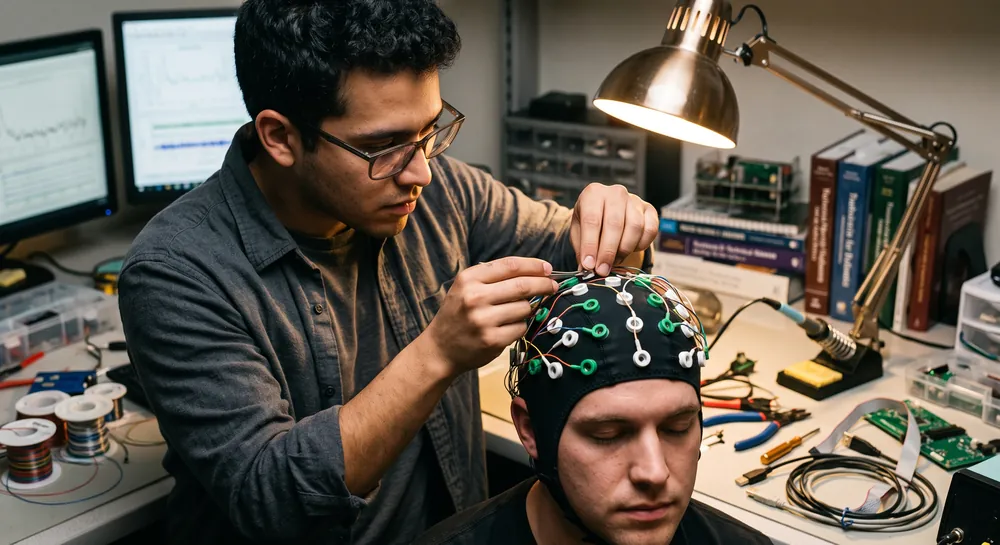
When a patient experiences the unexpected behavioral changes, strange sensory illusions, or physical convulsions characteristic of a temporal lobe seizure, medical professionals frequently rely on an electroencephalogram (EEG) to investigate the cause.

An EEG is a standard, non-invasive test that records the brain's continuous electrical activity, serving as the primary diagnostic tool to confirm that these alarming episodes are genuinely neurological in origin. It is important to note that an EEG is not used to diagnose the brain tumor itself; structural imaging tools like an MRI or CT scan are required to physically see and identify a mass.

Instead, the EEG is utilized specifically to evaluate the secondary electrical symptoms the tumor might be causing.

By capturing real-time electrical signals, the EEG helps neurologists pinpoint the exact origin of the abnormal electrical discharges—known as the seizure focus. When a tumor irritates the surrounding healthy tissue of the temporal lobe, it often triggers these localized electrical storms.

Mapping this functional electrical data alongside the structural images provided by an MRI gives the medical team a complete, comprehensive picture of the situation. It allows them to see not just where the physical mass is located, but exactly how its presence is actively disrupting the brain's delicate functional networks.

Which Vision Changes are Caused by the Occipital Lobe?

The occipital lobe, situated at the very back of your brain, is the primary hub for processing everything you see. When a tumor develops here, it can really mess with your vision in several ways.

Does an Occipital Lobe Tumor Lead to Partial or Complete Vision Loss?

Tumors in the occipital lobe can interfere with the visual pathways that run through this area. This interference can lead to a loss of vision, but it's often not a total blackout.

Instead, you might notice:

  • Visual field deficits: This means losing a portion of your sight. It could be half of your vision in one or both eyes (hemianopia) or a quarter of it (quadrantanopia). Sometimes, it just shows up as blind spots, called scotomas, in your field of vision. These deficits can make it tricky to navigate, like bumping into things you don't see coming.

  • Difficulty recognizing objects: Even if you can see something, you might struggle to identify what it is. This can extend to recognizing familiar faces, which can be quite unsettling.

Can a Brain Tumor Cause Visual Hallucinations or Distortions?

Beyond just losing vision, occipital lobe tumors can also cause you to see things that aren't there or see things in a distorted way. These can range from simple visual disturbances to more complex experiences:

  • Flashes of light: You might see sudden bursts or flickers of light, especially in your peripheral vision.

  • Complex hallucinations: Some people report seeing patterns, shapes, or even full images that have no external source. These are different from illusions, which are misinterpretations of things that are actually present.

  • Distorted perceptions: Straight lines might appear wavy, or objects might seem to change size or shape.

What are the Symptoms from Deeper Brain Structures?

Not all brain tumor symptoms come from the outer lobes of the brain. Some tumors affect deeper or lower brain structures that help control balance, coordination, eye movements, swallowing, breathing, and other basic body functions.

These symptoms can feel especially alarming because they may affect activities that usually happen automatically, such as walking steadily, speaking clearly, or swallowing safely.

Cerebellum: How are Balance, Coordination, and Dizziness Impacted?

The cerebellum sits at the lower back part of the brain and plays a major role in balance, posture, coordination, and smooth movement. When a tumor affects this region, symptoms often show up as problems with movement rather than changes in personality, memory, or vision.

A person might feel unusually unsteady, walk as if they are off balance, stumble more often, or struggle with tasks that require precise hand control, such as writing, typing, buttoning clothes, or brushing teeth.

Cerebellar tumors can also cause dizziness, nausea, vomiting, uncontrolled eye movements, or speech that sounds slow, slurred, or broken into uneven rhythms. These symptoms happen because the cerebellum helps the body adjust movement in real time.

When that system is disrupted, movements can become clumsy, poorly timed, or harder to control. Balance and coordination problems are commonly linked with tumors near the cerebellum, although dizziness alone can also come from many non-tumor causes, including inner ear problems, dehydration, migraine, medication effects, or blood pressure changes.

Brainstem: How are Core Functions Like Breathing and Swallowing Affected?

The brainstem connects the brain to the spinal cord and helps regulate essential functions such as breathing, heart rate, blood pressure, swallowing, facial movement, eye movement, and alertness. Because so many vital pathways pass through this compact area, even a small tumor in the brainstem can cause a wide range of symptoms.

Brainstem tumor symptoms may include:

  • Trouble swallowing

  • Slurred speech

  • Facial weakness or numbness

  • Double vision

  • Abnormal eye movements

  • Weakness or numbness in the arms or legs, balance problems

  • Headaches

  • Nausea

  • Changes in consciousness

In more serious cases, a brainstem tumor can interfere with breathing or swallowing, which is why symptoms in this area should be assessed urgently by a medical professional.

These symptoms do not automatically mean someone has brain cancer. Many brainstem-like symptoms can also happen with stroke, multiple sclerosis, infections, migraine, nerve disorders, or other neurological conditions.

However, new or worsening problems with swallowing, speech, breathing, facial weakness, double vision, or one-sided weakness should be treated as urgent warning signs that need medical evaluation.

Final Thoughts on Brain Tumor Symptoms

So, we've gone over how where a tumor is in the brain can really change the signs you might notice. Knowing these differences is pretty important for doctors trying to figure out what's going on and how to help.

Remember, a lot of these signs can pop up for other reasons too, so don't jump to conclusions. The main thing is, if something feels off or you're seeing symptoms that stick around or get worse, it's always best to get it checked out by a medical professional. They're the ones who can sort it out and get you the right brain health care if you need it.

Frequently Asked Questions

Why is the location of a brain tumor so important?

The brain has different parts that control different things. When a tumor grows in a specific spot, it can mess with the jobs that part of the brain is supposed to do. Knowing where the tumor is helps doctors figure out what symptoms you might have and how best to treat it.

Can a brain tumor cause personality changes?

Yes, sometimes. If a tumor is in the frontal lobe, which is at the front of your brain, it can affect how you act, your moods, and your decision-making. You might notice changes in personality or behavior.

What kind of problems can happen if a tumor is in the parietal lobe?

The parietal lobe helps you understand what you feel, like touch, and how things are arranged around you. A tumor here might make it hard to feel things correctly, understand directions, or even tell your left from your right. It can also affect reading and math skills.

How does a temporal lobe tumor affect someone?

The temporal lobe is important for memory and hearing. If a tumor is there, you might have trouble remembering things, understanding sounds, or even experience hearing things that aren't there. It can also lead to seizures.

What symptoms are linked to the occipital lobe?

The occipital lobe is mostly in charge of your vision. Tumors in this area can cause problems with seeing, like losing vision in part of your eye or seeing things that aren't real, like shapes or colors that aren't there.

Are headaches a common symptom of brain tumors?

Headaches can be a symptom, especially if they are new, severe, or different from headaches you've had before. They often happen because the tumor is putting pressure on the brain. However, many things can cause headaches, so it's important to see a doctor.

Do all brain tumors cause symptoms?

Not always. Very small tumors might not cause any noticeable symptoms at all. Symptoms usually appear as the tumor grows and starts to affect the brain's function or create pressure.

What should I do if I think I have symptoms of a brain tumor?

It's very important to talk to a doctor as soon as possible. They can do tests to figure out what's causing your symptoms and provide the right diagnosis and treatment plan.

Can brain tumors cause problems with movement?

Yes, depending on the location. Tumors in the frontal lobe or parietal lobe can affect the parts of the brain that control movement, leading to weakness or difficulty with coordination.

What are seizures related to brain tumors?

Seizures happen when there's a sudden burst of electrical activity in the brain. Brain tumors can irritate brain cells and trigger these seizures. They can feel different for everyone, from shaking to just a strange feeling.

Are symptoms like nausea and vomiting common with brain tumors?

Yes, nausea and vomiting can occur. This often happens because the tumor is increasing the pressure inside your head, which can affect these functions.

Emotivは、アクセス可能なEEGおよび脳データツールを通じて神経科学研究の進歩を助ける神経技術のリーダーです。

Emotiv

最新情報

脳がんの症状

この記事では、脳腫瘍の症状がどのように現れ、時間の経過とともに変化し、気づき始めたばかりの人にも、長期的に向き合っている人にも、何が起こるのかを見ていきます。これらの症状の経過をわかりやすく整理し、理解を深めるお手伝いをします。

記事を読む

脳がん

脳がんに向き合うことは、たくさんの情報を一度に受け止めるように感じられるかもしれません。これは複雑な話題であり、明確でわかりやすい情報を見つけることが大切です。

この記事では、脳がんについて知っておくべきことを、脳がんとは何かから治療法まで、わかりやすく整理してお伝えします。この病気についての理解が、ご本人やご家族にとって少しでも সহজくなることを目指しています。

記事を読む

依存症は病気ですか?

長い間、人々は依存症をどう考えるべきか確信がありませんでした。それは選択だったのでしょうか? 道徳的な欠陥だったのでしょうか? しかし、科学はこの問いを掘り下げており、その証拠はより明確な像を描き始めています。

この記事では、依存症が病気かどうかについて科学が何を示しているのかを見ていきます。その意味と、研究が何を明らかにしているのかを解説します。

記事を読む

電子タバコをやめる方法

ベイプをやめると決めることは、あなたの健康と幸福を取り戻すための重要な一歩です。習慣はさまざまな理由で始まったかもしれませんが、身体的・精神的な依存を伴う複雑なサイクルにすぐに陥ることがあります。

このガイドは、ベイプからきっぱり抜け出して二度と戻らないための実践的なアドバイスと洞察を提供します。

記事を読む