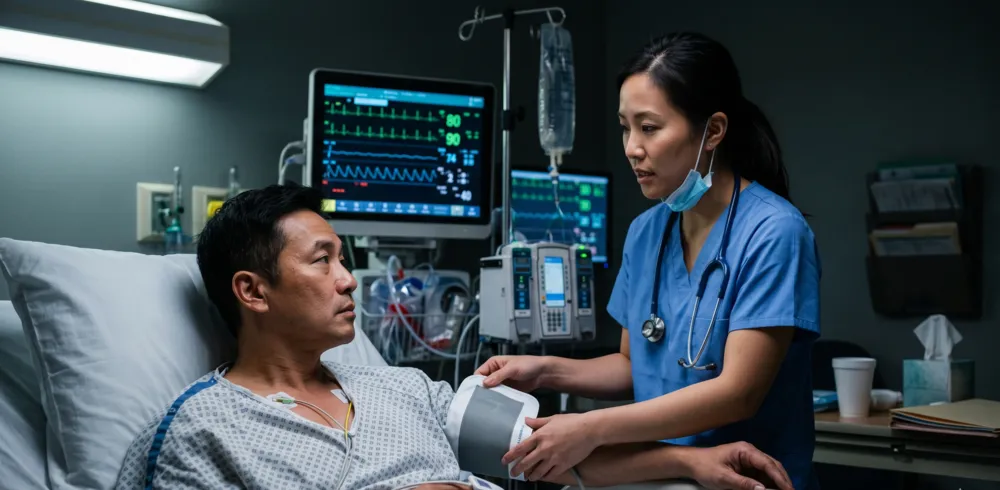
長期間にわたって大量に飲酒していた人が突然飲酒をやめると、体がショック状態に陥ることがあります。これはせん妄振戦、略してDTsと呼ばれる非常に深刻な状態になり得ます。これは緊急の医療対応が必要な、重度のアルコール離脱症状です。せん妄振戦で何が起こるのかを理解することは、対処方法を知るための最初の一歩です。
震顫せん妄を定義する中核的な症状とは何か?
震顫せん妄は、一般的なアルコール離脱症状とどのように異なるのか?
震顫せん妄(DTs)は、アルコール離脱時に経験する典型的な症状をはるかに超えた深刻な悪化を示します。標準的な離脱症状には手の震え、不安、睡眠障害などが含まれるのに対し、震顫せん妄はより深刻なレベルの神経学的および生理学的な混乱をもたらします。
主な相違点は、せん妄そのものの存在です。これは、軽度の離脱症状では通常見られない、意識や認知に重大な障害が生じる状態を特徴としています。
なぜ全般的な混乱や深刻な見当識障害が起こるのか?
震顫せん妄の最も顕著な特徴の一つは、蔓延する混乱状態です。震顫せん妄を経験している人は、しばしば自分が置かれている状況が分からなくなり、見慣れた人や場所を認識できなくなります。
時間感覚が著しく歪んでしまい、自分がどこにいるのか、今日が何曜日なのか分からなくなる見当識障害につながります。この認知機能障害は単なる物忘れにとどまらず、現実に対する認識や理解の根本的な崩壊と言えます。
鮮明な幻視、幻聴、幻触にはどのような特徴があるのか?
幻覚は、震顫せん妄の決定的な特徴です。これらの感覚体験は非常に鮮明で、強い苦痛を伴います。
そこに存在しないものが見えたり(幻視)、声や音が聞こえたり(幻聴)、虫が這っているように皮膚に感覚が走ったり(幻触)します。これらは単なる錯覚ではなく、当事者にとっては認識された現実です。
極度の興奮や自律神経の不安定さはどのように現れるのか?
震顫せん妄はしばしば、極度の興奮や落ち着きのなさを引き起こします。これは歩き回ったり、そわそわしたりすることから、暴力的な言動へと発展することもあります。この精神運動性の過活動に加え、自律神経系に重大な異常が生じます。
これにより、心拍数の急上昇(頻脈)、高血圧、発熱、そして大量の発汗といった症状が引き起こされます。これらの生理学的な変化は、体が極度のストレス状態にあることを示しています。
なぜ大発作(全般性強直間代発作)のリスクが高まるのか?
震顫せん妄に関連するもう一つの重大な症状は、一般に大発作と呼ばれる「全般性強直間代発作」のリスク増加です。これらの発作は、突然の意識喪失、筋肉の硬直、および律動的なけいれん運動を特徴とします。
離脱期における発作の発生は重大な兆候であり、震顫せん妄に潜む危険な神経学的不安定さを浮き彫りにしています。
震顫せん妄の症状は通常いつ頃発生するのか?
震顫せん妄は通常、アルコールを絶った直後には起こりません。最もリスクが高くなる特定の期間(重大な窓口とも呼ばれる)が存在します。この期間は通常、最後に飲酒してから数日後に始まり、さらに数日間に及ぶことがあります。
身体的にアルコールに依存している人の場合、身体はアルコールが存在する状態に慣れてしまっています。突然アルコールが取り除かれると、一時的に抑制されていた中枢神経系が過剰に活発化することがあります。この過剰な興奮状態は一瞬にして起こるわけではありません。むしろ、時間の経過とともに展開していくプロセスです。
一般的に、手の震え、不安、発汗などの軽度のアルコール離脱症状は、飲酒をやめてから6~12時間以内に始まることがあります。時間の経過とともに、これらの症状はより激しくなっていく可能性があります。12~24時間が経過する頃には、一部の人が「アルコール幻覚症」として知られる幻覚を経験し始める恐れがありますが、これは震顫せん妄で見られる深刻な混乱とは区別されます。
また、この離脱の初期から中期にかけて痙攣発作のリスクも著しく高まり、多くの場合24時間から48時間の間でピークに達します。
震顫せん妄が発生する最も一般的な時期は、最後のアルコール摂取から48時間から96時間(2~4日)の間です。これが典型的な期間ですが、震顫せん妄は時としてさらに後期、禁酒から最長で1週間後に現れることもある点を押さえておく必要があります。震顫せん妄が開始すると、その急性期は通常約3~4日間続きますが、場合によっては症状が1週間以上長引くこともあります。
このタイムラインは、アルコール離脱時に医療観察が非常に重要である理由を如実に示しています。医療従事者が痙攣発作や震顫せん妄などの重大な症状の発生を監視し、もし症状が現れた場合は速やかに介入できるようになります。
最初数日を過ぎればリスクは徐々に低下しますが、安全を確実にするため、継続的な観察がしばしば推奨されます。
震顫せん妄の最中、脳の内部では何が起こっているのか?
震顫せん妄はアルコール離脱症状の深刻な発現であり、脳内化学物質の大きな変化から引き起こされます。長年大量に飲酒していた人が突然その摂取をやめたり、大幅に減らしたりすると、その脳内化学物質のバランスが崩壊します。
通常、アルコールは神経系を落ち着かせるGABAと呼ばれる神経伝達物質の作用を強め、興奮性の神経伝達物質であるグルタミン酸の作用を減らすことで、中枢神経抑制剤として機能します。脳は、時間をかけてこの絶え間ないアルコールの存在に適応していきます。
この適応の過程でGABAに対する感受性が低下し、一方でグルタミン酸受容体の数や感受性が増加します。
GABAとグルタミン酸の不均衡がどのように症状を引き起こすのか?
アルコールが失われると、この繊細なバランスが乱されます。アルコールの存在に慣れていた脳は、GABAの鎮静作用が減少し、グルタミン酸の興奮作用に抗うものがなくなるため、興奮活性が急増します。
この神経伝達物質の不均衡こそが、震顫せん妄に見られる症状を推進する主な要因です。それはまるで、すでに加速しようとしている車のブレーキを外してしまうようなものです。脳は過剰な興奮状態に陥り、神経学的および生理学的な混乱の連鎖につながります。
脳の過剰興奮はどのようにして体全体のパニックを引き起こすのか?
この過度な脳の活性化は、脳内だけに留まりません。過剰なグルタミン酸の活性化は、神経細胞が過剰な刺激によって損傷または破壊される「興奮毒性」を引き起こす可能性があります。これはいくつかの異なる形で現れます。
自律神経系の過剰駆動: 脳が身体に対して常に「戦うか逃げるか」の戦闘状態にあるよう信号を送ります。これにより、心拍数の急上昇、高血圧、大量の発汗、そして発熱が起こります。
運動系の機能障害: 過多な興奮状態が運動皮質にまで波及し、手の震え、そして最も危険なことには全身の痙攣(大発作)を誘発します。
感覚処理の乱れ: 脳が感覚情報を正しく処理できなくなり、鮮明で、往々にして恐怖を伴う幻視、幻聴、幻触などの幻覚を引き起こします。
アルコール離脱を何度も繰り返すと、「キンドリング(Kindling)」と呼ばれる現象によってこのプロセスが悪化していく恐れがあります。その後の離脱を繰り返すたびに脳はアルコールの中断に対してより敏感になり、震顫せん妄のような深刻な症状を引き起こす閾値が下がっていきます。これにより、震顫せん妄を過去に経験したことのある人が、再び同じ症状を繰り返すリスクがなぜ高くなるのかが説明されます。
医師はどのようにして震顫せん妄を特定し、評価するのか?
医師はどのようにして震顫せん妄を特定し、評価するのか?
震顫せん妄の兆候が見られる患者が病院に到着すると、医療スタッフは原因を迅速に特定すべく速やかに介入します。これは迅速な対応を要する深刻な状況です。
医師はまず、その状態が重篤なアルコール離脱反応の一部であり、かつせん妄の兆候を示しているかを確認します。これには、意識の変化、混乱状態、思考や注意力に関する問題を検査することが含まれます。
震顫せん妄は、感染症や頭部外傷といった他の医学的な問題と並行して起こることもあるため、類似する他の原因が潜んでいないかも確認されます。心拍数、血圧、そして体温などのバイタルサインを非常に注視しながら、入念な身体検査を行うことが標準です。これらは震顫せん妄の発生に伴い、非常に不安定になることがあるためです。
また、手の震えや発汗といった、アルコール使用障害および離脱症状の物理的な兆候の評価も行います。目標は、震顫せん妄を特定し、命を脅かす可能性のある他の疾患を除外することです。
急性期を抜けた後の長期的な見通しは?
最初の震顫せん妄の危機を乗り越えた後の見通しは人によって異なります。早急かつ適切な医療ケアを受ければ、多くの人がその急性期から回復することができます。
しかし、回復期には依然として困難が伴う場合があります。睡眠障害や不安症といった長引く影響をしばらくの間経験する人もいます。また、痙攣発作、肺炎、あるいは脱水症状や電解質の不均衡に関連する問題など、震顫せん妄の発作中や発作後に合併症が発生するリスクもあります。
長期的なプランとしては、将来の離脱症状の再発を予防すること、およびその根本原因であるアルコール依存症に対処することへと焦点を移行していきます。これには多くの場合、依存症に対する継続的なサポートや治療が伴います。
CIWA-Arスケールは評価においてどのように使われるのか?
「改訂版アルコール離脱評価尺度(CIWA-Ar)」は、医療従事者がアルコール離脱症状の重症度を測るために広く用いている一般的な指標です。これは震顫せん妄自体のために特別に作られたものではありませんが、その主要な構成要素である離脱症状の進行度合を追跡する上で重宝されます。
このスケールは以下のような様々な症状を評価します:
吐き気と嘔吐
手の震え
発汗
不安
興奮
幻触、幻視、幻聴の障害
頭痛
時間・場所の感覚(見当識)と意識の曇り
個々の症状は評価スケールで採点され、その合計スコアによって医療スタッフは離脱の強さを算出します。この点数は治療方針の決定、特に症状を抑えて痙攣発作や震顫せん妄などの重篤な問題への悪化を防ぐための、お薬の使用を導く決定指標として役立てられます。
CIWA-Arを用いた定期的な再評価は、治療に対する患者側の反応を確認し、治療計画を必要に応じて調整するのに役立ちます。
脳波(EEG)は、けいれんや脳の活動を監視するのにどう役立つのか?
震顫せん妄は中枢神経系が非常にハイテンションになるのが特徴で、それにより痙攣発作を引き起こす危険が大きく高まります。よく知られた全般性強直間代発作は一見して分かりますが、重い離脱状態にある患者は「非けいれん性てんかん重積状態」に陥ることもあります。これは、体は震えなくとも持続発作が進んでいくもので、放っておくと重い神経系損傷を招く危険を秘めています。
集中治療室(ICU)の現場において、持続的脳波(EEG)は、こうした一見すると分からない脳内の異変をキャッチするための重要な脳科学に基づく診断アプローチとして役立ちます。リアルタイムに脳の電気信号を記録・計測できるため、患者が重い鎮静下にあり意思疎通を取れないような時でも、普通は見逃されてしまう異常なてんかん波放電を速やかに確認できます。
さらに発作の有無だけでなく、EEGのモニタリングは、患者の全体的な脳の興奮レベルを客観的なデータとして医療従事者に提示してくれます。これは例えば、プロポフォールや高用量のベンゾジアゼピン注射薬などを用いて重い睡眠鎮静管理を細かく調整していく時に力を発揮します。
この継続的な脳波チェックによってICUチームは正確な治療上のスイートスポットを見出し、余計な過剰鎮静の弊害を避けつつ、脳内の興奮を最適に抑えて身体へのダメージや血圧・脈拍パニック(自律神経の不適合)を防ぐことができます。
ただ念のため補足すると、EEGを導入すること自体は、通常のあらゆるアルコール離脱ケアに義務付けられた一般的な検査ではありません。ICUで行われるような極めて重篤かつ既存の治療法が効きにくい特殊な震顫せん妄のケースにのみ限って活用される、最先端の専門アプローチです。
震顫せん妄に対処する、病院で行われる一般的な医療体制は?
なぜベンゾジアゼピン系薬剤が最初の必須アプローチと考えられているのか?
震顫せん妄のある患者を治療する主な目標は、病院において過剰に興奮している神経系を穏やかに戻し、命に及ぶ事態を避けることにあります。
ベンゾジアゼピン系薬剤が、この用途のために最も優先して取り入れられる代表薬となります。これらのお薬は、脳の活動を落ち着かせるシグナルであるGABAの働きを増長させる効果を持ちます。
アルコール依存離脱時はこのGABAの効用が大幅に落ち込んでいるため、ベンゾジアゼピンが事実上その役割を代替・補填して、過活動になっていた脳内の環境を安定へと軌道修正してくれます。これは、お酒を断った段階で生じる脳内神経の一時的な不調そのものに直接関与するため、ゴールドスタンダードとして認められています。
なぜ栄養面と水分補給が重要とされるのか?
お薬だけでなく、健康維持を伴うサポート体制も非常に重要度を持ちます。震顫せん妄に陥る患者の多くは栄養が不足していたり、吐き気や発汗、水分摂取の不足などによって重い脱水に達していたりします。
それに対応して、病院では多くの場合点滴等を利用して速やかに水分バランスを正常に戻します。合わせて、患者に必要なミネラルや不足しがちなビタミンを適切に充填するための栄養バランス管理も非常に繊細に行われます。
ここで投与される代表格がチアミン(ビタミンB1)です。これは健やかな脳機能の維持に欠かせない極めて大事な補酵素で、(栄養供給で点滴される)糖類の分解代謝に伴う消耗から引き起こされるウェルニッケ脳症という重篤な事態を予防するためにも必要となります。
なぜ「刺激の少ない環境」が健全な回復期への一歩となるのか?
震顫せん妄の治療においては、患者に過剰な心労を感じさせない環境づくりもキーポイントを担います。部屋を静かに閉じ、照明を暗めに設定し、来客や病室への必要以上の出入りを極力減らすことなどが求められます。
外部から浴びる情報やシグナルを穏やかに削減してあげることで、興奮状態や脳の混乱が静まりやすくなり、本人に安心感を与える手助けとなります。さらに、不意の急変やその他の合併症に速やかに気づけるよう、バイタル測定やモニター看視を絶えず継続していくのが一般的な対応となります。
無事に震顫せん妄を克服した後、どのようなステップをたどるのか?
震顫せん妄は命に及ぶ深刻な事態ですが、医療スタッフによる正しい支援によって安全、確実に乗り切ることができる症状です。しかし、震顫せん妄期そのものを乗り切ったとしても、これはゴールではなく新たなスタート地点に過ぎません。
なぜなら根本的な解決、つまり背後にあるアルコール使用障害そのものに対処していくことが、次に控える真に大切な行動となるためです。これを成し遂げるために、医療スタッフのアドバイスに耳を傾けたり、自助グループに参加したり、依存症回復のための専門プログラムの扉を叩いたりする流れが必要になってきます。
これらのサポートを自ら段階的に得ていく姿勢は、震顫せん妄の恐ろしい再発リスクから自身を遠ざけ、今後の自分自身の尊厳ある健康なライフスタイル構築を強く導きます。常に忘れないでほしいのは、「周囲に助けを求めること自体が勇気の印」であり、回復への道筋をサポートしてくれる公的なリソースは広く存在しているということです。
よくある質問(FAQ)
そもそも震顫せん妄(DTs)とは正確に言うとどのような状態ですか?
「震顫せん妄(DTs)」とは、長く・大量にお酒を飲み続けていた方が急激に飲酒を中断した時などに起こり得る、大変生命に関わる狂乱性の離脱パニックのことです。脳や神経、体内器官が強く興奮状態に陥ることで、手の強い震えをはじめ、周りの状況が全く理解できなくなったり、実際には見聞きできない幻聴や幻視に取り囲まれるといった不調に見舞われます。
お酒をやめてからだいたいどれ位で、この重いせん妄の症状が現れ始めますか?
一般的には最後に飲酒をした段階から約2~4日後(48時間~96時間後)に始まることがほとんどです。しかし稀なケースなどでは、お酒を完全にやめてから約1週間程度進んだあたりで初めて症状が出るといった変動例も確認されています。
震顫せん妄においてどのような特徴的な兆候が観察されますか?
自他に対する著しい認知障害(自分が誰か、ここはどこかが理解できなくなる状況)、実在しない幻感覚の幻視や幻聴、激しい筋肉の揺れ(全身の震え)、心拍の急加速、異常な高血圧、極度の発熱、全身をぐっしょりと濡らすような発汗などが主な様子です。さらに、精神的に極度のパニックや激しい不穏状態に陥り、暴れてしまう状態などが連動することもあります。
いわゆるよく聞く一般的な離脱症状と、震顫せん妄は何が異なりますか?
通常の離脱であれば主に「気持ち悪さ、発汗、手のひらの震え、多少の気分の浮き沈み」程度に終息しますが、震顫せん妄は命のリスクを伴う点で一線を画します。全般的な見当識障害(狂乱混乱)や鮮烈な幻覚に加え、自律神経暴走(熱や脈拍の著しい制御不能)を伴います。痙攣発作や呼吸停止などに至るリスクが非常に大きな点で、ただの宿酔いや一般的な軽症の離脱反応とは全くの別物です。
これによって最悪の場合、生命を落とすことも考えられますか?
はい、早期の適切な病院での手当てを怠ると、命を落とすリスクが少なからず存在します。呼吸困難、自律神経の深刻な麻痺、持続するてんかん発作、ショック死、心室細動などの深刻な心肺事故の原因になり得ます。ただし、迅速な病院の初期対応を行えばその危険率は劇的に低下します。
DTsの発症中、脳内がそれほど過剰な大興奮に覆われるのは何が原因ですか?
普段お酒を常用していると、脳の活動バランスが人工的に抑制され続けます。そのお酒がふと消失すると、これまでずっと脳が必死に抵抗して稼働させようとしていた、興奮系を司る神経化学物質(グルタミン酸など)の活動が一気に暴走し、遮るものを失ってしまいます。この『脳のアクセルが強く踏みっぱなしになる状況』が生み出す結果こそが、異常な震え、痙攣、混乱、そして各所の強い幻覚の理由になっています。
ドクターはどのように震顫せん妄の診断診断を下すのでしょうか?
医師は、患者に直接現れている特徴、過去にお酒をどれくらい飲んでいたかという問診(家族同伴等)、身体検査等をトータルに照合して判断します。脳内の状態や各種離脱スコアを注意深く点群評価するとともに、類似の異常反応を起こし得る他の頭部外傷や脳出血、脳感染といった脳疾患が原因にないか「除外診断」を通しながら確定へと至ります。
震顫せん妄に対して最初に取り入れられる基本的な治療内容は何ですか?
一般的な主力手段として「ベンゾジアゼピン系抗不安薬」等の投与が行われます。これらが過度のアクセルの入った脳・神経活動を一時的に強く静めてGABA受容体機能に成り代わることによって、興奮による過度の不穏、激しい震え、また発生が懸念されるてんかん性痙攣から患者を安全に保護します。
これらのお薬の利用以外に、具体的にどんなサポート環境が必要ですか?
脱水状態を素早く緩和し、また不足している必須ビタミン(チアミンなど)を点滴で体内に復帰させていく処置が極めて大切です。さらに、外部からの少しの物音や閃光等も幻覚を煽るトリガーになるため、患者に快適な低刺激(薄暗く、極めて静静な専用ベッドルーム)を用意することが、不適合を最速で回復させる環境的な一助として深く機能します。
Emotivは、アクセスしやすいEEGおよび脳データツールを通じて神経科学研究の進展を支援するニューロテクノロジー分野のリーダーです。
免責事項:当ウェブサイトで提供される情報は教育および情報提供のみを目的としており、医師の診断や健康のアドバイスを意図したものではありません。このコンテンツには誤りが含まれている可能性があり、人生を左右するような健康、医療、またはライフスタイルに関する選択を行う際の根拠とすべきではありません。病状や治療に関する疑問については、常に医師またはその他の資格を有する医療提供者の助言を求めてください。
クリスティアン・ブルゴス