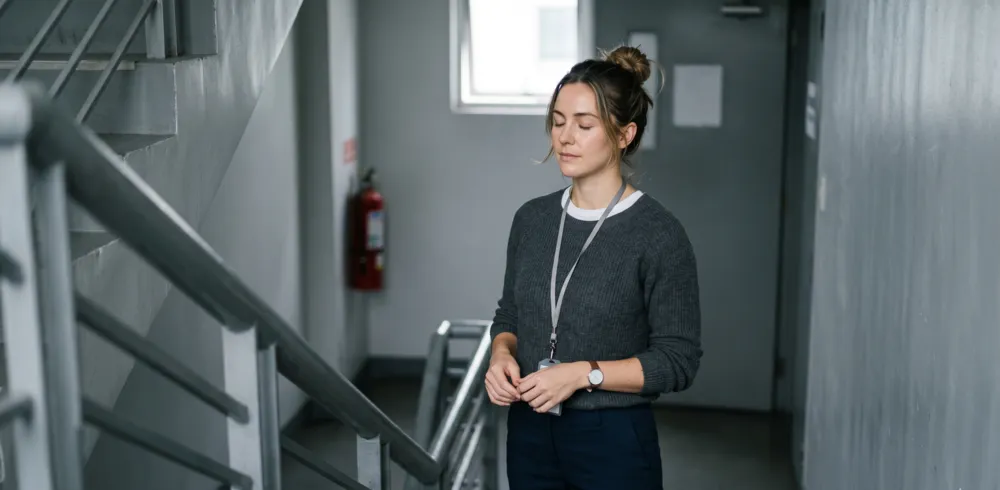
Merasa simpul kekhawatiran yang akrab itu mengencang di dada Anda? Anda tidak sendirian. Banyak orang mengalami kecemasan, dan hal itu benar-benar dapat membuat seluruh sistem Anda tidak seimbang.
Kabar baiknya adalah napas Anda adalah alat yang sangat ampuh. Mempelajari teknik pernapasan dalam sederhana untuk kecemasan dapat membantu menenangkan tubuh dan pikiran Anda, membawa Anda kembali ke keadaan yang lebih seimbang.
Bagaimana Latihan Pernapasan Sederhana Menjinakkan Sistem Saraf yang Stres?
Ketika stres atau kecemasan melanda, respons alami tubuh 'lawan atau lari' akan aktif. Ini adalah mekanisme bertahan hidup, tetapi dalam kehidupan modern, hal ini dapat terlalu sering terpicu, membuat kita merasa terus-menerus tegang.
Tanda-tanda fisik seperti jantung berdebar kencang, napas dangkal, dan ketegangan otot adalah bagian dari respons ini. Rasanya seperti tubuh Anda sedang bersiap menghadapi ancaman yang sebenarnya tidak ada.
Namun, napas itu unik karena berada di persimpangan antara fungsi tubuh otomatis dan kendali sadar. Meskipun pernapasan Anda biasanya terjadi tanpa Anda memikirkannya, Anda dapat mengubahnya secara sengaja.
Kemampuan untuk secara sadar memengaruhi napas Anda adalah alat yang ampuh untuk mengelola respons stres tubuh. Dengan mengendalikan pernapasan, Anda dapat mengirimkan sinyal ke sistem saraf Anda untuk tenang.
Berikut cara kerjanya:
Menghentikan Siklus: Kecemasan sering kali menciptakan lingkaran umpan balik. Gejala fisik stres dapat memicu pikiran cemas, yang pada gilirannya memperburuk gejala fisik tersebut. Pernapasan terkontrol dapat memutus siklus ini dengan mengatasi sensasi fisik secara langsung.
Mengaktifkan Sistem Saraf Parasimpatis: Pernapasan yang dalam dan lambat, terutama dengan embusan napas yang lebih panjang, mengaktifkan sistem saraf parasimpatis. Ini adalah sistem 'istirahat dan cerna' tubuh, yang melawan respons 'lawan atau lari'. Ini membantu memperlambat detak jantung, menurunkan tekanan darah, dan meningkatkan rasa tenang.
Perubahan Fisiologis: Latihan teratur teknik pernapasan tertentu dapat membawa perubahan yang terukur. Studi menunjukkan bahwa pernapasan terkontrol dapat mengurangi detak jantung istirahat dan frekuensi pernapasan, yang merupakan indikator keadaan yang lebih rileks. Ini menunjukkan pergeseran nyata dalam fisiologi tubuh secara keseluruhan.
Belajar menggunakan napas Anda secara sengaja dapat menjadi cara yang mudah namun efektif untuk mengelola perasaan stres dan cemas, membawa tubuh Anda kembali ke keadaan yang lebih seimbang.
Teknik Pernapasan Dalam Spesifik Mana yang Memberikan Redam Segera dari Kecemasan?
Saat kecemasan menyerang, terkadang cara tercepat untuk mendapatkan kembali rasa kendali adalah dengan fokus pada napas Anda. Teknik-teknik ini dirancang agar sederhana dan mudah diakses, menawarkan cara untuk menghentikan siklus pikiran cemas dan ketegangan fisik.
Bagaimana Anda Melatih Teknik Pernapasan 4-7-8 untuk Relaksasi Mendalam?
Metode ini, terkadang disebut "napas relaksasi," didasarkan pada praktik yoga kuno. Ini melibatkan hitungan tertentu untuk menarik napas, menahan, dan mengembuskan napas. Idenya adalah menciptakan ritme yang disengaja yang dapat membantu memperlambat respons stres tubuh.
Untuk berlatih, carilah posisi duduk atau berbaring yang nyaman.
Tempatkan lidah Anda dengan lembut di langit-langit mulut Anda, tepat di belakang gigi depan Anda.
Tarik napas perlahan melalui hidung dalam hitungan 4, tahan napas dalam hitungan 7, lalu embuskan napas kuat-kuat melalui mulut dalam hitungan 8, sambil membuat suara "desahan" lembut.
Ulangi siklus ini beberapa kali.
Beberapa orang mungkin merasakan sedikit pusing di awal, yang biasanya normal. Sering direkomendasikan untuk memulai dengan jumlah putaran yang terbatas dan secara bertahap meningkatkannya seiring kenyamanan yang dirasakan.
Mengapa Pernapasan dengan Bibir Mengerucut Efektif untuk Memperlambat Detak Jantung yang Cepat?
Pernapasan dengan bibir mengerucut (pursed-lip breathing) adalah teknik yang dapat membantu mengatasi sesak napas dan memperlambat detak jantung yang cepat. Ini berguna baik saat istirahat maupun selama beraktivitas. Inti dari teknik ini adalah mengontrol embusan napas.
Untuk melakukannya, tarik napas perlahan melalui hidung selama sekitar 2 detik, dengan mulut tertutup.
Kemudian, kerucutkan bibir Anda seolah-olah Anda akan bersiul atau menyeruput melalui sedotan.
Embuskan napas perlahan melalui bibir yang menguncup tersebut dalam hitungan 4.
Embusan napas terkontrol ini membantu membuat pernapasan lebih efisien, berpotensi mengurangi upaya tubuh selama bernapas dan menenangkan sistem saraf.
Bagaimana Anda Menguasai Pernapasan Diafragma “Perut” yang Dalam untuk Menenangkan Kecemasan?
Pernapasan diafragma, sering disebut "pernapasan perut," berfokus pada pelibatan diafragma, otot besar yang terletak di dasar paru-paru. Jenis pernapasan ini dianggap lebih efisien daripada pernapasan dada yang dangkal.
Untuk berlatih, berbaringlah atau duduklah dengan nyaman.
Letakkan satu tangan di dada dan tangan lainnya di perut, tepat di bawah tulang rusuk.
Tarik napas perlahan melalui hidung, rasakan perut Anda mengembang dan mendorong tangan Anda ke arah luar.
Dada Anda harus relatif tetap diam.
Saat Anda mengembuskan napas perlahan melalui mulut, perut Anda akan mengempis.
Memperhatikan gerakan perut Anda dapat membantu memperkuat pola yang benar. Teknik ini telah dipelajari karena potensinya untuk mengurangi efek negatif dari stres.
Latihan Pernapasan Mana yang Membantu Memusatkan Kembali Pikiran dan Meningkatkan Fokus?
Saat perasaan cemas muncul, pikiran bisa menjadi buyar, sehingga sulit untuk berkonsentrasi. Latihan pernapasan tertentu dirancang untuk membantu mengembalikan perhatian Anda ke momen saat ini dan meningkatkan kejernihan mental.
Teknik-teknik ini bekerja dengan memengaruhi respons fisiologis tubuh, yang pada gilirannya dapat memengaruhi keadaan mental.
Apa Itu Pernapasan Koheren dan Bagaimana Cara Menciptakan Keseimbangan Pikiran-Tubuh?
Pernapasan koheren, juga dikenal sebagai pernapasan resonan, melibatkan sinkronisasi napas dengan detak jantung.
Praktik ini biasanya melibatkan pernapasan dengan kecepatan yang lambat dan stabil, sering kali sekitar lima hingga tujuh napas per menit. Tujuannya adalah menciptakan keadaan di mana ritme napas dan jantung selaras, meningkatkan rasa tenang dan keseimbangan antara pikiran dan tubuh.
Penelitian neuroscience menunjukkan bahwa mempraktikkan pernapasan koheren dapat mengurangi kecemasan dan meningkatkan regulasi emosional. Ini adalah metode yang mendorong keadaan internal yang lebih teratur, yang dapat bermanfaat saat merasa kewalahan.
Bagaimana Pernapasan Hidung Bergantian (Nadi Shodhana) Menenangkan Pikiran yang Cemas?
Pernapasan Hidung Bergantian, sebuah praktik yang berakar pada tradisi yoga, melibatkan pernapasan secara sistematis melalui satu lubang hidung pada satu waktu sementara lubang hidung lainnya ditutup sementara.
Teknik ini diyakini dapat menyeimbangkan aliran energi dalam tubuh dan menenangkan sistem saraf. Dengan berfokus pada sensasi berbeda dari udara yang mengalir melalui setiap lubang hidung, pikiran dialihkan dari pikiran cemas dan diarahkan pada tindakan fisik bernapas.
Studi telah menunjukkan bahwa latihan teratur Nadi Shodhana dapat berkontribusi pada tingkat stres yang lebih rendah, penurunan detak jantung, dan rasa kesejahteraan mental secara keseluruhan. Ini adalah praktik yang membutuhkan fokus lembut dan dapat menjadi alat yang ampuh untuk menenangkan obrolan mental.
Untuk melatih Pernapasan Hidung Bergantian:
Duduklah dengan nyaman dengan punggung tegak namun rileks.
Gunakan ibu jari kanan Anda untuk menutup lubang hidung kanan Anda dengan lembut. Tarik napas perlahan melalui lubang hidung kiri Anda.
Tutup lubang hidung kiri Anda dengan jari manis kanan Anda, lepaskan ibu jari Anda dari lubang hidung kanan, dan embuskan napas perlahan melalui lubang hidung kanan Anda.
Tarik napas melalui lubang hidung kanan Anda.
Tutup lubang hidung kanan Anda dengan ibu jari Anda, lepaskan jari manis Anda dari lubang hidung kiri, dan embuskan napas melalui lubang hidung kiri Anda. Ini menyelesaikan satu siklus.
Lanjutkan selama beberapa menit, usahakan ritme yang lancar dan tidak terburu-buru.
Bagaimana Anda Dapat Membuat Latihan Pernapasan untuk Kecemasan Anda Lebih Efektif?
Apa Lingkungan dan Waktu Terbaik untuk Latihan Pernapasan Harian?
Untuk mendapatkan hasil maksimal dari setiap latihan pernapasan, menemukan lingkungan yang cocok adalah kuncinya. Tempat yang tenang dan bebas dari gangguan memungkinkan fokus yang lebih besar pada napas dan respons tubuh. T
Ini bisa berupa ruang meditasi khusus, sudut sunyi di rumah Anda, atau bahkan tempat yang damai di luar ruangan. Tujuannya adalah meminimalkan gangguan luar sehingga kesadaran internal dapat dipupuk.
Menciptakan tempat perlindungan untuk latihan Anda, meskipun kecil, dapat memperdalam dampaknya secara signifikan.
Kapan Waktu Terbaik dalam Sehari untuk Berlatih?
Waktu optimal untuk latihan pernapasan dapat bervariasi berdasarkan kebutuhan dan jadwal individu. Beberapa orang menemukan bahwa berlatih di pagi hari membantu membangun suasana tenang untuk hari itu. Yang lain lebih suka menggunakan teknik ini di malam hari untuk bersantai sebelum tidur.
Eksperimen sering kali menjadi pendekatan terbaik untuk menentukan waktu apa yang paling selaras dengan ritme pribadi dan pola stres Anda. Namun, konsistensi umumnya lebih penting daripada waktu spesifik yang dipilih.
Mengapa Postur dan Posisi Fisik Penting untuk Pernapasan Dalam yang Optimal?
Postur tubuh yang benar mendukung pernapasan yang efektif. Saat duduk, disarankan untuk menjaga tulang belakang tetap tegak namun rileks.
Ini dapat dicapai dengan duduk di kursi dengan kaki rata di lantai atau dengan menyilangkan kaki di atas bantal. Jika berbaring, posisi tulang belakang netral dengan lengan di samping tubuh sering kali terasa nyaman.
Kuncinya adalah menemukan posisi yang memungkinkan diafragma bergerak bebas dan paru-paru mengembang tanpa hambatan. Hindari posisi apa pun yang menimbulkan ketegangan atau ketidaknyamanan.
Apa yang Harus Anda Lakukan jika Latihan Pernapasan Dalam Tampaknya Membuat Kecemasan Anda Memburuk?
Bukan hal yang aneh bagi sebagian orang untuk mengalami peningkatan kecemasan di awal ketika baru pertama kali mempraktikkan teknik pernapasan dalam. Hal ini dapat terjadi jika fokus pada sensasi tubuh membawa ketegangan yang mendasari ke permukaan.
Jika ini terjadi, mungkin membantu untuk:
Mulai dengan durasi latihan yang lebih pendek. Mulailah dengan beberapa menit saja dan tingkatkan waktu secara bertahap seiring bertambahnya kenyamanan.
Fokus pada teknik yang lebih lembut. Beberapa metode, seperti pernapasan dengan bibir mengerucut, bisa terasa tidak terlalu intens dibandingkan dengan metode yang melibatkan penahanan napas.
Modifikasi latihan. Jika hitungan atau penahanan napas tertentu terasa memberatkan, sesuaikan ke tingkat yang terasa dapat dikelola. Misalnya, perpendek embusan napas atau lewati penahanan napas sama sekali.
Pertimbangkan bimbingan profesional. Seorang terapis atau instruktur pernapasan terlatih dapat menawarkan dukungan pribadi dan membantu mengatasi kesulitan yang dialami.
Bagaimana Anda Memilih Latihan Pernapasan yang Tepat untuk Situasi Spesifik Anda?
Teknik Cepat Mana yang Paling Efektif Sebelum Acara Publik yang Menegangkan?
Saat menghadapi acara yang dapat memicu kecemasan, seperti presentasi atau percakapan yang sulit, latihan pernapasan yang singkat dan terfokus bisa sangat membantu.
Teknik 4-7-8, misalnya, sering direkomendasikan karena kemampuannya untuk mendatangkan rasa tenang dengan cepat. Melakukan pola pernapasan ini beberapa kali dapat membantu memperlambat detak jantung yang cepat dan menenangkan pikiran yang sibuk, mempersiapkan Anda untuk menghadapi situasi dengan lebih tenang.
Apa Pernapasan Paling Efektif untuk Terbangun dengan Rasa Cemas di Tengah Malam?
Terbangun secara tidak terduga pada malam hari dapat membingungkan dan menyebabkan lonjakan kecemasan. Untuk momen-momen ini, pernapasan dengan bibir mengerucut bisa sangat efektif.
Embusan napas terkontrol membantu memperlambat napas dan mengaktifkan respons relaksasi alami tubuh, sehingga lebih mudah untuk kembali tidur.
Bagaimana Anda Harus Bernapas Saat Merasakan Serangan Panik Mulai Terjadi?
Mengenali tanda-tanda awal serangan panik adalah kunci untuk mengelolanya. Ketika Anda merasa serangan mulai terjadi, fokus pada pernapasan diafragma yang dalam, juga dikenal sebagai pernapasan perut, bisa sangat bermanfaat.
Ini melibatkan penempatan satu tangan di dada dan tangan lainnya di perut Anda. Saat Anda menarik napas perlahan melalui hidung, fokuslah untuk mengembangkan perut Anda ke luar, menjaga dada Anda relatif diam.
Kemudian, embuskan napas perlahan melalui mulut Anda. Tujuannya adalah membuat napas menjadi dalam dan lambat, dengan melibatkan diafragma. Kendali sadar atas pernapasan ini dapat membantu menghentikan meningkatnya gejala fisik dari serangan panik.
Melanjutkan ini selama beberapa menit dapat membantu mengurangi intensitas pengalaman tersebut secara bertahap.
Pemikiran Akhir tentang Mengintegrasikan Pernapasan Dalam ke dalam Rutinitas Manajemen Kecemasan Anda
Jadi, kita telah melihat bagaimana kecemasan dapat mengacaukan pernapasan Anda, membuat Anda merasa lebih buruk. Kabar baiknya adalah, latihan pernapasan sederhana benar-benar dapat membantu menenangkan situasi.
Teknik seperti pernapasan 4-7-8 atau bahkan sekadar fokus pada embusan napas yang lebih panjang dapat membuat perbedaan. Teknik-teknik ini gratis, mudah dilakukan di mana saja, dan dapat menjadi alat hebat untuk dimiliki di saku Anda saat Anda merasakan kecemasan itu mulai merayap masuk.
Mungkin perlu sedikit latihan untuk menemukan apa yang terbaik bagi Anda, tetapi menjadikan kebiasaan bernapas ini bagian dari rutinitas dapat membantu Anda merasa lebih memegang kendali dan tidak terlalu kewalahan.
Referensi
Sasaki, K., & Maruyama, R. (2014). Consciously controlled breathing decreases the high-frequency component of heart rate variability by inhibiting cardiac parasympathetic nerve activity. The Tohoku journal of experimental medicine, 233(3), 155-163. https://doi.org/10.1620/tjem.233.155
Mittal, G., Pathania, M., Bhardwaj, P., Dhar, M., Khapre, M., & Mittal, S. (2025). An exploratory randomised trial to assess the effect of Nadi Shodhan Pranayama as an adjunct versus standard non-pharmacological management in hypertensives. Annals of Neurosciences, 09727531251318810.
Pertanyaan yang Sering Diajukan
Bagaimana pernapasan berhubungan dengan kecemasan?
Saat Anda merasa cemas, pernapasan Anda sering kali menjadi lebih cepat and dangkal. Ini bisa membuat Anda merasa lebih khawatir. Mempelajari teknik pernapasan khusus dapat membantu memperlambat pernapasan Anda, menenangkan tubuh, dan membuat Anda merasa lebih memegang kendali.
Apakah latihan pernapasan dapat menghentikan kecemasan sepenuhnya?
Latihan pernapasan tidak selalu dapat menghilangkan kecemasan sepenuhnya, tetapi latihan tersebut sangat baik dalam mengurangi gejalanya. Latihan ini membantu menenangkan sistem saraf Anda, yang dapat membuat Anda merasa kurang khawatir dan lebih mampu menangani situasi stres.
Apa manfaat utama dari berlatih latihan pernapasan untuk kecemasan?
Mempraktikkan latihan ini dapat membantu tubuh Anda rileks, menurunkan detak jantung, dan mengurangi tekanan darah. Latihan ini juga mengalihkan perhatian dari pikiran cemas dan dapat membantu Anda tidur lebih baik. Ini seperti memberi sinyal pada tubuh Anda bahwa aman untuk tenang.
Berapa lama saya harus melatih latihan pernapasan?
Konsistensi adalah kuncinya. Bahkan berlatih selama beberapa menit setiap hari dapat membuat perbedaan. Untuk beberapa teknik, seperti pernapasan 4-7-8, melakukannya selama beberapa putaran dapat memberikan ketenangan segera. Untuk yang lain, seperti pernapasan resonansi, berlatih selama sekitar 10 menit mungkin lebih efektif.
Di mana tempat terbaik untuk melatih teknik pernapasan ini?
Idealnya, carilah tempat yang tenang dan nyaman di mana Anda tidak akan terganggu. Ini bisa di kamar tidur Anda, sudut taman yang tenang, atau bahkan di dalam mobil Anda. Namun, banyak teknik yang dapat dilakukan di mana saja, bahkan saat Anda sedang bergerak.
Bagaimana jika latihan pernapasan membuat kecemasan saya terasa lebih buruk?
Terkadang, berfokus terlalu banyak pada napas Anda pada awalnya dapat meningkatkan kecemasan. Jika ini terjadi, cobalah teknik yang sangat sederhana seperti bernapas normal saja untuk sementara waktu, atau cobalah teknik dengan embusan napas yang lebih lama, yang sering kali sangat menenangkan. Jangan dipaksakan; fokuslah pada napas yang lembut dan mudah.
Apakah ada teknik pernapasan untuk momen cemas tertentu, seperti sebelum acara besar?
Ya. Untuk kelegaan cepat sebelum acara yang membuat stres, teknik seperti pernapasan kotak (box breathing 4-4-4) atau pernapasan dengan bibir mengerucut bisa sangat membantu. Mereka dirancang untuk dilakukan dengan relatif cepat guna membantu Anda mendapatkan kembali rasa tenang.
Emotiv adalah pemimpin neuroteknologi yang membantu memajukan penelitian neurosains melalui alat EEG dan data otak yang mudah diakses.
Sanggahan Medis: Informasi yang disediakan di situs web ini hanya untuk tujuan edukasi dan informasi dan tidak dimaksudkan sebagai saran medis atau kesehatan. Konten ini mungkin mengandung kesalahan dan tidak boleh diandalkan untuk membuat keputusan kesehatan, medis, atau gaya hidup yang mengubah hidup. Selalu cari saran dari dokter Anda atau penyedia kesehatan berkualifikasi lainnya untuk setiap pertanyaan yang Anda miliki terkait kondisi medis atau perawatan.
Christian Burgos