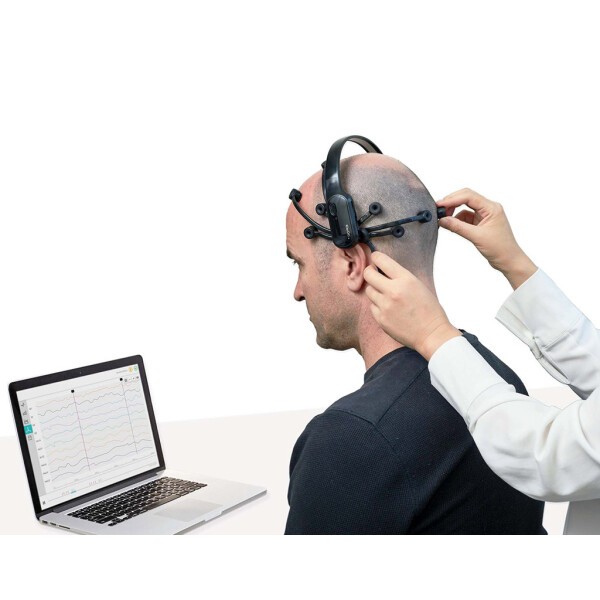
Emotiv Headset: The Ultimate Buyer's Guide
Emotiv
Updated on
Jan 29, 2026
Emotiv Headset: The Ultimate Buyer's Guide
Emotiv
Updated on
Jan 29, 2026
Emotiv Headset: The Ultimate Buyer's Guide
Emotiv
Updated on
Jan 29, 2026
So, you’re thinking about getting an EEG device. What can you actually do with it? The possibilities are far broader and more exciting than you might think. This technology is no longer confined to sterile research labs. An Emotiv headset is a versatile tool that opens up new avenues for creators, scientists, and anyone curious about the human brain. From conducting groundbreaking academic studies in real-world settings to building hands-free applications that respond to your thoughts, our technology is your entry point into applied neuroscience. Let's explore some of the most common and innovative ways people are using their headsets to change the world.
Key Takeaways
Your headset gathers the signals, but software makes them useful: The hardware captures raw brain data, but an application like EmotivPRO is what allows you to view, record, and analyze those signals to gain meaningful information for your project.
Choose your headset based on your project's needs: The 5-channel Insight is a great all-rounder for personal use and BCI development, while the 14-channel Epoc X and 32-channel Flex systems are built for the detailed data collection required in academic research.
A clean signal is key to getting reliable data: For the best results, always ensure your headset's sensors are properly hydrated before a session and try to work in an environment with minimal electronic interference.
How Do Emotiv Headsets Work?
Ever wonder how our headsets turn brain activity into data you can actually use? It all comes down to a powerful and well-established technology called electroencephalography, or EEG. Our devices make this science accessible, whether you're a researcher, developer, or just curious about the brain. Here’s a simple breakdown of how it all works, from the signals in your head to the data on your screen.
A Quick Look at EEG Technology
At its core, electroencephalography (EEG) is a way to listen in on the brain's electrical activity. Your brain is made up of billions of neurons that communicate using tiny electrical impulses. These signals are strong enough to be detected from the surface of your scalp. Our headsets use sensors to pick up these signals, giving you a non-invasive window into brain dynamics. This technology is used in many fields, from academic studies to neuromarketing, where it helps researchers understand responses to different stimuli. It’s a safe and established method for exploring the brain's fascinating electrical landscape.
How We Detect Brain Signals
Our headsets are designed to make contact with your scalp using carefully placed sensors. These sensors are what detect the faint electrical signals produced by your brain. Depending on the headset model, we use different types of sensors—from simple semi-dry polymers to saline-based or gel-based options—to ensure a quality connection. For example, our Insight headset was created for accessibility, with a lightweight fit and simple sensors that provide the data quality needed for projects in BCI or personal wellness exploration. The headset's job is to capture these raw signals accurately and wirelessly send them to your computer for the next step.
Processing Your Data in Real Time
Capturing brain signals is only half the story. To make that data useful, it needs to be processed and interpreted, which is where our software comes in. The headset acquires the raw data, but a subscription like EmotivPRO is what allows you to view, record, and analyze the raw EEG signals in real time. Our software transforms those complex electrical patterns into understandable metrics and visualizations. This turns a stream of raw data into actionable information you can use for your research, BCI project, or creative application, giving you the tools to work with brain data effectively.
A Guide to Our Headset Models
Choosing the right hardware is the first step in your journey with neurotechnology. We’ve designed a range of headsets to fit different needs, from simple, everyday use to complex, professional research. Each model offers a unique combination of channel count, sensor technology, and form factor, giving you the flexibility to match the tool to your specific goals. Whether you're a developer building the next generation of neuro-powered apps, a researcher conducting a detailed study, or just curious about what your brain data can reveal, there’s a headset here for you. Understanding the differences between them is key to making the right choice.
A higher channel count, for example, provides more detailed spatial information about brain activity, which is crucial for certain types of research that require localizing signals to specific brain regions. On the other hand, for everyday applications or projects focused on overall brain states, a lower channel count in a more convenient form factor might be all you need. We also offer different sensor technologies—from discreet earbuds to saline and gel-based caps—each with its own advantages in setup time and signal quality. This guide will break down each model, highlighting its key features and ideal use cases. Our goal is to give you a clear picture of what each headset can do, so you can feel confident in your choice. Let’s walk through our lineup.
MN8: 2-Channel EEG Earbuds
If you're looking for a simple and discreet way to begin exploring brain data, the MN8 is your starting point. These 2-channel EEG earbuds are designed for ultimate portability and ease of use, making them perfect for anyone new to the field. There’s no complex setup—just pop them in and you’re ready to go. The MN8 provides a straightforward introduction to EEG technology, allowing you to access brain data without the bulk of a traditional headset. It’s an ideal choice for developers creating applications for everyday use or individuals interested in accessible tools for cognitive wellness.
Insight: 5-Channel EEG Headset
The Insight headset strikes a fantastic balance between functionality and comfort. With five channels, it gathers more detailed brain data than our entry-level model while maintaining a sleek, wireless design that’s easy to wear for extended periods. This makes it a popular choice for both personal use and light research applications. The Insight is great for users who want to explore cognitive performance metrics and build applications that require a bit more data. Its user-friendly design and reliable performance make it a versatile tool for a wide range of projects, from wellness apps to interactive experiences.
Epoc X: 14-Channel EEG Headset
When your work demands high-resolution data in a mobile package, the Epoc X is the industry standard. This 14-channel wireless headset is built for professionals and researchers who need robust, detailed brain activity measurements for their studies. Its advanced capabilities support a wide variety of applications, from serious academic research to the development of sophisticated brain-computer interfaces. The Epoc X provides the professional-grade data quality required for peer-reviewed publications and groundbreaking innovation, all while offering the freedom of a wireless, easy-to-set-up device.
Flex Saline: 32-Channel EEG Headset
For the most detailed brain data collection, we offer the Flex Saline. This 32-channel wireless EEG cap system is designed for researchers who require comprehensive brain coverage and flexibility. The cap design allows you to customize electrode placement, tailoring the setup to the specific demands of your study. The saline-based sensors are quick to prepare and comfortable for participants, making the Flex Saline an excellent choice for academic and clinical research settings where high-density data is essential. It’s a powerful tool for anyone conducting in-depth neuroscience experiments.
Flex Gel: 32-Channel EEG Headset
Similar to its saline counterpart, the Flex Gel is a 32-channel system designed for advanced research applications. This model uses traditional gel-based electrodes, which are often preferred in lab environments for their excellent conductivity and signal quality. While the setup takes a bit more time, the payoff is exceptionally clean and precise data. The Flex Gel is ideal for studies where the highest possible signal fidelity is the top priority. Researchers working on nuanced experiments that require meticulous data analysis will find this headset to be an invaluable instrument for their work.
What Can You Do With an Emotiv Headset?
So, you have an EEG headset—or you’re thinking about getting one. What can you actually do with it? The possibilities are broader than you might think. Our technology is designed to be a versatile tool, opening up new avenues for researchers, creators, developers, and anyone curious about the human brain. From conducting groundbreaking studies outside of the lab to building hands-free applications, an Emotiv headset is your entry point into the world of applied neuroscience. Let's explore some of the most common and exciting ways people are using our devices.
For Academic Research and Education
Traditionally, brain research has been confined to sterile lab environments. Our portable EEG headsets change that. With a device like the Epoc X, it’s possible to study the brain in real-world situations, capturing more authentic data as people go about their day. This is a game-changer for academic research and education, allowing for studies in fields like psychology, ergonomics, and human-computer interaction to take place in dynamic, natural settings. Whether you're a university researcher exploring cognitive load in the workplace or an educator demonstrating brain activity to students, our tools make complex neuroscience accessible and practical.
Building Brain-Computer Interfaces
A brain-computer interface, or BCI, is a direct communication pathway between the brain’s electrical activity and an external device. It sounds like science fiction, but it’s very real. With an Emotiv headset, you can use your brain activity to control digital things hands-free. This opens up incredible possibilities for assistive technology, helping individuals with motor impairments interact with their environment in new ways. Developers and hobbyists also build brain-computer interfaces for immersive gaming, interactive art installations, and other mind-controlled applications. It’s a field buzzing with innovation, and our technology provides a powerful yet accessible starting point.
Gaining Insights with Neuromarketing
How do people really feel about an advertisement, a product design, or a user experience? Surveys and focus groups can only tell you so much. Neuromarketing offers a deeper layer of insight by measuring subconscious, unfiltered reactions. By using an Emotiv headset, organizations can see how attention, engagement, and emotional responses change from moment to moment. This allows them to develop more effective marketing campaigns and user-centric products based on genuine, nuanced feedback. Instead of just asking what people think, you can gain insights into what they truly experience, leading to better decisions and stronger connections with your audience.
Accessing Cognitive Wellness Tools
Understanding your own mind is a powerful journey. Our headsets are designed to be accessible tools for personal exploration. They combine a comfortable, lightweight fit with the data quality needed for meaningful projects in personal wellness. You can observe your brain’s patterns during different activities, like meditation or focused work, to see what’s happening behind the scenes. The goal isn't to diagnose or treat, but to provide a window into your own cognitive processes. By giving you access to cognitive wellness tools, our technology supports self-discovery and helps you build a more informed relationship with your own mental state.
Creating with Our Developer Tools
If you're a developer interested in creating applications that use real-time brain data, we have the tools you need to get started. Our Software Development Kit (SDK) gives you access to the raw EEG data and performance metrics from our headsets, allowing you to integrate them into your own projects. You can build anything from adaptive games that respond to a player's focus level to wellness apps that visualize brain activity during mindfulness exercises. We provide extensive documentation and support for our developer community, empowering you to innovate and push the boundaries of what's possible with brain-computer interface technology.
How to Choose the Right Emotiv Headset
Picking the right EEG headset feels a lot like choosing any new piece of tech—it all comes down to what you want to accomplish. Are you just starting to explore brain-computer interfaces, or are you conducting a complex academic study? Your goals will point you toward the perfect device. To make the decision easier, let’s break down the key factors to consider, from the number of channels to the type of sensors and overall comfort. This guide will help you compare our models and find the one that fits your project, your budget, and your workflow.
For Beginners: Where to Start
If you're new to EEG or looking for a device that’s incredibly easy to use, the Emotiv Insight is your best starting point. We designed it for accessibility, with a lightweight fit and simple semi-dry sensors that make setup a breeze. You can get it up and running in just a couple of minutes. But don’t let its simplicity fool you—the Insight’s 5 channels provide the data quality you need for meaningful projects. It’s a fantastic all-rounder, whether you’re exploring personal wellness tools, building your first BCI application, or gathering data for a classroom project. It strikes the perfect balance between user-friendliness and performance.
For Researchers: Professional-Grade Tools
When your work demands high-density, research-grade data, you need a more powerful tool. The Emotiv Epoc X is an excellent choice for serious scientific applications. This 14-channel wireless EEG headset is built for researchers who need robust and reliable brain data without being tethered to a lab. It delivers the advanced performance required for peer-reviewed studies while maintaining the wireless freedom and user-friendly design that Emotiv is known for. If you’re working in academic research, neuromarketing, or advanced BCI development, the Epoc X provides the detailed insights you need to push your work forward.
Understanding Channel Count and Data Quality
The "channel count" of an EEG headset refers to the number of sensors collecting data from your scalp. Think of it like pixels in a camera: more channels give you a more detailed, higher-resolution picture of brain activity. A 5-channel headset like the Insight is great for capturing broad patterns and is perfect for many BCI and wellness applications. For more granular academic research, a 14-channel device like the Epoc X or a 32-channel Flex headset allows you to pinpoint activity in more specific brain regions. Your choice depends on the level of detail your project requires.
Comparing Sensor Tech and Setup
Our headsets use a few different types of sensors, and your choice will affect setup time and use cases. The Emotiv Insight uses semi-dry polymer sensors, which means you don’t need any messy gel or saline solution. The setup takes only a minute or two, making it ideal for quick, repeated use. For more traditional research applications, our Flex headsets are available with saline or gel-based sensors. Saline sensors offer a great connection with a simple salt-water solution, while gel sensors are a standard in clinical settings, often used for long-duration recordings where maintaining a strong, stable signal is critical.
Factoring in Comfort and Battery Life
If you plan on running long experiments or using your headset throughout the day, comfort and battery life are key. A lightweight and ergonomic design, like that of the Emotiv Insight, ensures you can wear it for extended periods without distraction. Battery performance is just as important. The Insight, for example, can last up to 20 hours on a single charge, giving you the freedom to conduct long sessions or use it multiple times without constantly needing to recharge. When you’re exploring cognitive wellness tools or running back-to-back research participants, a long-lasting battery makes all the difference.
Meet the Software That Powers Your Headset
An Emotiv headset is a powerful tool for gathering brain data, but the real magic happens when you pair it with our software. Think of the headset as the hardware that captures the raw signals and the software as the interpreter that translates those signals into meaningful information. The headset collects the brain signals, but you need our software to see and understand the data. This hardware-software ecosystem is what makes exploring the brain so accessible. Whether you're a researcher setting up a complex experiment, a developer building a new application, or just someone curious about their own cognitive patterns, we have a software solution designed to help you achieve your goals.
Our software suite is built on years of research and development, designed to be both powerful for professionals and intuitive for newcomers. We believe that everyone should have the opportunity to learn from their own brain data, which is why we’ve created a range of applications that cater to different needs and skill levels. From the moment you put on your headset, our software works to provide a seamless experience, handling the complex signal processing so you can focus on the insights. You can move from simply observing your focus levels during a work session to programming a device to respond to your thoughts. This flexibility is central to our mission. Each application serves a different purpose, from simple visualization to advanced analysis and control. Let's walk through the different options available and see which one is the right fit for you.
Getting Started with the Emotiv App
If you're new to EEG, the Emotiv App is your perfect starting point. It’s designed for personal use and connects wirelessly to your headset via Bluetooth, giving you the freedom to see your brain data from almost anywhere. The app provides a clear, visual representation of your brain activity, showing you metrics like your focus or relaxation levels in real time. It’s an intuitive way to begin exploring how your brain responds to different activities, environments, and mental states. The app does the heavy lifting, turning complex brain signals into easy-to-understand insights, so you can focus on learning more about yourself without getting bogged down in technical details.
Diving Deeper with EmotivPRO
For those conducting formal studies or in-depth analysis, EmotivPRO is our advanced, AI-powered software for brain research. This platform is built to handle everything from experiment setup to data analysis. With EmotivPRO, you can view, record, and analyze raw EEG signals directly from your headset. It allows you to measure performance metrics and transform raw data into actionable information for your research or development work. It’s a comprehensive tool that gives you the control and precision needed for scientific applications, helping you manage every step of your data collection and interpretation process. It's the go-to choice for academics and professionals who need robust data for their work.
Exploring EmotivBCI
Ready to connect your mind to the digital world? Our EmotivBCI software is the key to building a brain-computer interface. This application lets you translate your brain activity into commands that can control other devices and applications. You can train a personal profile to recognize your mental commands—like thinking "push" or "pull"—or even your facial expressions. Once trained, EmotivBCI can send these commands over a network to interact with anything from smart home devices to custom software. It’s a fascinating way to explore the practical applications of BCI and experiment with a new form of human-computer interaction, putting you at the forefront of this exciting technology.
Building Your Own Apps with Our SDK
If you're a developer, our software tools are designed to help you innovate. We offer a Software Development Kit (SDK) that gives you the resources to create your own applications using real-time brain data from Emotiv headsets. The SDK is designed to help you map brain data streams and save settings, making it much easier to integrate our hardware with third-party software. This opens up a world of possibilities for creating custom experiences, from interactive art installations to new tools that provide access to cognitive wellness exercises. You can find all the documentation and support you need on our dedicated developer portal.
Visualizing Your Brain Data
Understanding your brain data starts with being able to see it clearly. Our software provides a dynamic, visual representation of your brain's electrical activity, letting you watch your brainwaves in real time. In the Emotiv App, for example, you can see how your brain responds as you shift from a focused task to a relaxing one. Once your headset sensors have a good connection—indicated by a solid color in the app—you can inspect the raw EEG data streams and see the signals for yourself. This direct visualization is incredibly powerful, whether you're learning about your own cognitive patterns or gathering data for a neuromarketing study. It transforms abstract data into something tangible and understandable.
Tips for Getting the Best Results
Getting clean, reliable brain data is the key to any successful project, whether you're conducting research or building a new application. Your Emotiv headset is a powerful tool, but like any sensitive instrument, a little setup and care go a long way. Think of it like tuning a guitar before you play—a few simple steps can make all the difference in the quality of your output. These tips will help you prepare your device, understand your environment, and interpret your data, ensuring you get the best possible results from every session.
Making Sense of Your Data
Your headset is brilliant at acquiring brain data, but the hardware is only half of the equation. To truly understand what’s going on, you need the right software. The raw EEG signals your headset collects are complex, and making sense of them is where our software comes in. A subscription to a platform like EmotivPRO is essential for viewing, recording, and analyzing these signals in real time. It transforms the electrical data from your brain into actionable information and clear visualizations, giving you the power to conduct meaningful research and development. Without it, you’re just collecting data; with it, you’re gaining insight.
A Quick Guide to Setup and Calibration
A great session starts with a great setup. The most important step is ensuring a solid connection between the sensors and your scalp. Before putting on your headset, take the saline solution from your kit and thoroughly wet the felt pads on the sensors. Don’t be shy—go around the headset twice to make sure they are completely soaked.
Once the headset is on, open the Emotiv App to check the signal quality map. This map uses a simple color code to show your connection status for each sensor:
Black: No signal
Red: Bad
Orange: Poor
Light Green: Okay
Dark Green: Good
Aim for all sensors to be dark green for the highest quality data.
How Your Environment Affects Signal Quality
Your brain signals are incredibly subtle, and your headset is sensitive enough to pick them up. Unfortunately, it can also pick up electrical noise from your surroundings. Common household electronics like TVs, monitors, and even Wi-Fi routers can create interference that can affect your data quality. If you notice signal loss or noise in your data, the first step is to move away from other electronics. Sometimes, the computer you’re connected to can be a source of interference. If you suspect this is the case, try using a USB extension cable to move the universal USB receiver further away from your computer’s electrical components.
Pointers for Your First Few Sessions
Getting started with EEG can feel a bit strange at first, and that’s perfectly normal. Give yourself time to get comfortable. We designed our headsets, like the Insight, to be lightweight and easy to wear so you can conduct sessions without distraction. The semi-dry polymer sensors are made for accessibility, combining ease of use with the 5-channel data quality needed for projects in BCI, academic research, or personal wellness exploration. For your first few sessions, just focus on getting a good sensor connection and getting used to the feeling of the headset. The more you use it, the more the process will become second nature.
The Bottom Line: Cost and Community Feedback
Choosing the right technology is about more than just features; it's also about finding a solution that fits your budget and has a trusted reputation. We believe in transparency, which is why we're open about our pricing and proud of the community that has grown around our work. From individual developers to large research institutions, our goal is to provide accessible, high-quality tools for exploring the human brain. Let's break down the costs and what others are saying to help you find the perfect fit for your project.
A Look at Our Pricing
We offer a range of headsets to match different project scopes and budgets. For those getting started or focusing on specific cognitive states, our MN8 earbuds are available for $399. The 5-channel Insight headset is priced at $499, offering a great balance of data and ease of use. For more detailed research, the 14-channel Epoc X is $999. Our most advanced systems, the 32-channel Flex headsets, start at $1,899, providing the comprehensive data required for demanding scientific studies. This tiered pricing ensures you only pay for the capabilities you need.
Discounts for Research and Education
We are deeply committed to supporting the next wave of scientific discovery. That's why we offer special pricing and packages for students, educators, and academic institutions. We want to put professional-grade tools in the hands of those who are pushing the boundaries of neuroscience, psychology, and human-computer interaction. By making our technology more accessible, we hope to foster innovation and learning in classrooms and labs around the world. If you're part of an educational or research organization, be sure to explore our programs for academic research and education.
What Our Community Is Saying
The trust of the research community is something we've worked hard to earn. Our headsets have become a staple in the field because of their reliability and accessibility. In fact, studies have shown that a significant majority of published research using comparable wireless EEG devices relies on Emotiv technology. This widespread adoption in peer-reviewed studies speaks to the quality and consistency of the data our headsets provide. Researchers and developers choose our tools because they deliver dependable results, allowing them to focus on their work without questioning their equipment.
Finding the Right Value for You
Ultimately, the right headset is the one that gives you the data you need at a price that makes sense for your goals. For many, the MN8 provides incredible value. At just $399, it’s an ideal tool for anyone interested in measuring focus and attention in real-world environments, from developers creating adaptive applications to individuals using our cognitive wellness tools. Whether you're just starting or leading a complex study, our aim is to make brain research easier and more approachable. We're here to help you find the device that aligns perfectly with your vision and budget.
Related Articles
Frequently Asked Questions
Do I need to buy software separately, or does the headset work on its own? Think of the headset and software as a team. The headset is responsible for capturing your brain's raw electrical signals, but our software is what translates that complex data into something you can see and work with. To view, record, and analyze your brain activity, you'll need a subscription to a platform like EmotivPRO. The hardware gathers the information, and the software gives you the tools to understand it.
What's the main difference between the sensor types like gel, saline, and semi-dry? The choice of sensor really comes down to the needs of your project. Our Insight headset uses semi-dry polymer sensors, which are perfect for quick and easy setup with no mess. For more in-depth research, our Flex headsets offer saline or gel options. Saline sensors provide a great connection using a simple saltwater solution, while gel is the traditional standard in lab settings, known for providing excellent signal quality during long recording sessions.
Which headset is the best starting point for a beginner? If you're just getting started, I almost always recommend the Insight headset. It was designed to be incredibly user-friendly, with a lightweight fit and a setup process that takes only a couple of minutes. Its five channels provide plenty of high-quality data for exploring personal wellness tools, learning about your own brain patterns, or building your first brain-computer interface application without being overwhelming.
Can I really use these headsets to control other devices? Yes, you absolutely can. That's the exciting field of brain-computer interfaces, or BCI. Using our EmotivBCI software, you can train a profile to recognize specific mental commands or even facial expressions. Once the system learns your patterns, it can send those commands to interact with other software, smart home devices, or creative projects you build yourself.
How do I make sure I'm getting good, clean data? Getting high-quality data starts with a great setup. The most critical step is ensuring the sensors have a solid connection to your scalp, which means thoroughly wetting the sensor pads with saline solution. Use our Emotiv App to check the color-coded signal map and aim for all sensors to be dark green. It's also helpful to be aware of your surroundings, as electrical noise from other electronics can sometimes cause interference.
So, you’re thinking about getting an EEG device. What can you actually do with it? The possibilities are far broader and more exciting than you might think. This technology is no longer confined to sterile research labs. An Emotiv headset is a versatile tool that opens up new avenues for creators, scientists, and anyone curious about the human brain. From conducting groundbreaking academic studies in real-world settings to building hands-free applications that respond to your thoughts, our technology is your entry point into applied neuroscience. Let's explore some of the most common and innovative ways people are using their headsets to change the world.
Key Takeaways
Your headset gathers the signals, but software makes them useful: The hardware captures raw brain data, but an application like EmotivPRO is what allows you to view, record, and analyze those signals to gain meaningful information for your project.
Choose your headset based on your project's needs: The 5-channel Insight is a great all-rounder for personal use and BCI development, while the 14-channel Epoc X and 32-channel Flex systems are built for the detailed data collection required in academic research.
A clean signal is key to getting reliable data: For the best results, always ensure your headset's sensors are properly hydrated before a session and try to work in an environment with minimal electronic interference.
How Do Emotiv Headsets Work?
Ever wonder how our headsets turn brain activity into data you can actually use? It all comes down to a powerful and well-established technology called electroencephalography, or EEG. Our devices make this science accessible, whether you're a researcher, developer, or just curious about the brain. Here’s a simple breakdown of how it all works, from the signals in your head to the data on your screen.
A Quick Look at EEG Technology
At its core, electroencephalography (EEG) is a way to listen in on the brain's electrical activity. Your brain is made up of billions of neurons that communicate using tiny electrical impulses. These signals are strong enough to be detected from the surface of your scalp. Our headsets use sensors to pick up these signals, giving you a non-invasive window into brain dynamics. This technology is used in many fields, from academic studies to neuromarketing, where it helps researchers understand responses to different stimuli. It’s a safe and established method for exploring the brain's fascinating electrical landscape.
How We Detect Brain Signals
Our headsets are designed to make contact with your scalp using carefully placed sensors. These sensors are what detect the faint electrical signals produced by your brain. Depending on the headset model, we use different types of sensors—from simple semi-dry polymers to saline-based or gel-based options—to ensure a quality connection. For example, our Insight headset was created for accessibility, with a lightweight fit and simple sensors that provide the data quality needed for projects in BCI or personal wellness exploration. The headset's job is to capture these raw signals accurately and wirelessly send them to your computer for the next step.
Processing Your Data in Real Time
Capturing brain signals is only half the story. To make that data useful, it needs to be processed and interpreted, which is where our software comes in. The headset acquires the raw data, but a subscription like EmotivPRO is what allows you to view, record, and analyze the raw EEG signals in real time. Our software transforms those complex electrical patterns into understandable metrics and visualizations. This turns a stream of raw data into actionable information you can use for your research, BCI project, or creative application, giving you the tools to work with brain data effectively.
A Guide to Our Headset Models
Choosing the right hardware is the first step in your journey with neurotechnology. We’ve designed a range of headsets to fit different needs, from simple, everyday use to complex, professional research. Each model offers a unique combination of channel count, sensor technology, and form factor, giving you the flexibility to match the tool to your specific goals. Whether you're a developer building the next generation of neuro-powered apps, a researcher conducting a detailed study, or just curious about what your brain data can reveal, there’s a headset here for you. Understanding the differences between them is key to making the right choice.
A higher channel count, for example, provides more detailed spatial information about brain activity, which is crucial for certain types of research that require localizing signals to specific brain regions. On the other hand, for everyday applications or projects focused on overall brain states, a lower channel count in a more convenient form factor might be all you need. We also offer different sensor technologies—from discreet earbuds to saline and gel-based caps—each with its own advantages in setup time and signal quality. This guide will break down each model, highlighting its key features and ideal use cases. Our goal is to give you a clear picture of what each headset can do, so you can feel confident in your choice. Let’s walk through our lineup.
MN8: 2-Channel EEG Earbuds
If you're looking for a simple and discreet way to begin exploring brain data, the MN8 is your starting point. These 2-channel EEG earbuds are designed for ultimate portability and ease of use, making them perfect for anyone new to the field. There’s no complex setup—just pop them in and you’re ready to go. The MN8 provides a straightforward introduction to EEG technology, allowing you to access brain data without the bulk of a traditional headset. It’s an ideal choice for developers creating applications for everyday use or individuals interested in accessible tools for cognitive wellness.
Insight: 5-Channel EEG Headset
The Insight headset strikes a fantastic balance between functionality and comfort. With five channels, it gathers more detailed brain data than our entry-level model while maintaining a sleek, wireless design that’s easy to wear for extended periods. This makes it a popular choice for both personal use and light research applications. The Insight is great for users who want to explore cognitive performance metrics and build applications that require a bit more data. Its user-friendly design and reliable performance make it a versatile tool for a wide range of projects, from wellness apps to interactive experiences.
Epoc X: 14-Channel EEG Headset
When your work demands high-resolution data in a mobile package, the Epoc X is the industry standard. This 14-channel wireless headset is built for professionals and researchers who need robust, detailed brain activity measurements for their studies. Its advanced capabilities support a wide variety of applications, from serious academic research to the development of sophisticated brain-computer interfaces. The Epoc X provides the professional-grade data quality required for peer-reviewed publications and groundbreaking innovation, all while offering the freedom of a wireless, easy-to-set-up device.
Flex Saline: 32-Channel EEG Headset
For the most detailed brain data collection, we offer the Flex Saline. This 32-channel wireless EEG cap system is designed for researchers who require comprehensive brain coverage and flexibility. The cap design allows you to customize electrode placement, tailoring the setup to the specific demands of your study. The saline-based sensors are quick to prepare and comfortable for participants, making the Flex Saline an excellent choice for academic and clinical research settings where high-density data is essential. It’s a powerful tool for anyone conducting in-depth neuroscience experiments.
Flex Gel: 32-Channel EEG Headset
Similar to its saline counterpart, the Flex Gel is a 32-channel system designed for advanced research applications. This model uses traditional gel-based electrodes, which are often preferred in lab environments for their excellent conductivity and signal quality. While the setup takes a bit more time, the payoff is exceptionally clean and precise data. The Flex Gel is ideal for studies where the highest possible signal fidelity is the top priority. Researchers working on nuanced experiments that require meticulous data analysis will find this headset to be an invaluable instrument for their work.
What Can You Do With an Emotiv Headset?
So, you have an EEG headset—or you’re thinking about getting one. What can you actually do with it? The possibilities are broader than you might think. Our technology is designed to be a versatile tool, opening up new avenues for researchers, creators, developers, and anyone curious about the human brain. From conducting groundbreaking studies outside of the lab to building hands-free applications, an Emotiv headset is your entry point into the world of applied neuroscience. Let's explore some of the most common and exciting ways people are using our devices.
For Academic Research and Education
Traditionally, brain research has been confined to sterile lab environments. Our portable EEG headsets change that. With a device like the Epoc X, it’s possible to study the brain in real-world situations, capturing more authentic data as people go about their day. This is a game-changer for academic research and education, allowing for studies in fields like psychology, ergonomics, and human-computer interaction to take place in dynamic, natural settings. Whether you're a university researcher exploring cognitive load in the workplace or an educator demonstrating brain activity to students, our tools make complex neuroscience accessible and practical.
Building Brain-Computer Interfaces
A brain-computer interface, or BCI, is a direct communication pathway between the brain’s electrical activity and an external device. It sounds like science fiction, but it’s very real. With an Emotiv headset, you can use your brain activity to control digital things hands-free. This opens up incredible possibilities for assistive technology, helping individuals with motor impairments interact with their environment in new ways. Developers and hobbyists also build brain-computer interfaces for immersive gaming, interactive art installations, and other mind-controlled applications. It’s a field buzzing with innovation, and our technology provides a powerful yet accessible starting point.
Gaining Insights with Neuromarketing
How do people really feel about an advertisement, a product design, or a user experience? Surveys and focus groups can only tell you so much. Neuromarketing offers a deeper layer of insight by measuring subconscious, unfiltered reactions. By using an Emotiv headset, organizations can see how attention, engagement, and emotional responses change from moment to moment. This allows them to develop more effective marketing campaigns and user-centric products based on genuine, nuanced feedback. Instead of just asking what people think, you can gain insights into what they truly experience, leading to better decisions and stronger connections with your audience.
Accessing Cognitive Wellness Tools
Understanding your own mind is a powerful journey. Our headsets are designed to be accessible tools for personal exploration. They combine a comfortable, lightweight fit with the data quality needed for meaningful projects in personal wellness. You can observe your brain’s patterns during different activities, like meditation or focused work, to see what’s happening behind the scenes. The goal isn't to diagnose or treat, but to provide a window into your own cognitive processes. By giving you access to cognitive wellness tools, our technology supports self-discovery and helps you build a more informed relationship with your own mental state.
Creating with Our Developer Tools
If you're a developer interested in creating applications that use real-time brain data, we have the tools you need to get started. Our Software Development Kit (SDK) gives you access to the raw EEG data and performance metrics from our headsets, allowing you to integrate them into your own projects. You can build anything from adaptive games that respond to a player's focus level to wellness apps that visualize brain activity during mindfulness exercises. We provide extensive documentation and support for our developer community, empowering you to innovate and push the boundaries of what's possible with brain-computer interface technology.
How to Choose the Right Emotiv Headset
Picking the right EEG headset feels a lot like choosing any new piece of tech—it all comes down to what you want to accomplish. Are you just starting to explore brain-computer interfaces, or are you conducting a complex academic study? Your goals will point you toward the perfect device. To make the decision easier, let’s break down the key factors to consider, from the number of channels to the type of sensors and overall comfort. This guide will help you compare our models and find the one that fits your project, your budget, and your workflow.
For Beginners: Where to Start
If you're new to EEG or looking for a device that’s incredibly easy to use, the Emotiv Insight is your best starting point. We designed it for accessibility, with a lightweight fit and simple semi-dry sensors that make setup a breeze. You can get it up and running in just a couple of minutes. But don’t let its simplicity fool you—the Insight’s 5 channels provide the data quality you need for meaningful projects. It’s a fantastic all-rounder, whether you’re exploring personal wellness tools, building your first BCI application, or gathering data for a classroom project. It strikes the perfect balance between user-friendliness and performance.
For Researchers: Professional-Grade Tools
When your work demands high-density, research-grade data, you need a more powerful tool. The Emotiv Epoc X is an excellent choice for serious scientific applications. This 14-channel wireless EEG headset is built for researchers who need robust and reliable brain data without being tethered to a lab. It delivers the advanced performance required for peer-reviewed studies while maintaining the wireless freedom and user-friendly design that Emotiv is known for. If you’re working in academic research, neuromarketing, or advanced BCI development, the Epoc X provides the detailed insights you need to push your work forward.
Understanding Channel Count and Data Quality
The "channel count" of an EEG headset refers to the number of sensors collecting data from your scalp. Think of it like pixels in a camera: more channels give you a more detailed, higher-resolution picture of brain activity. A 5-channel headset like the Insight is great for capturing broad patterns and is perfect for many BCI and wellness applications. For more granular academic research, a 14-channel device like the Epoc X or a 32-channel Flex headset allows you to pinpoint activity in more specific brain regions. Your choice depends on the level of detail your project requires.
Comparing Sensor Tech and Setup
Our headsets use a few different types of sensors, and your choice will affect setup time and use cases. The Emotiv Insight uses semi-dry polymer sensors, which means you don’t need any messy gel or saline solution. The setup takes only a minute or two, making it ideal for quick, repeated use. For more traditional research applications, our Flex headsets are available with saline or gel-based sensors. Saline sensors offer a great connection with a simple salt-water solution, while gel sensors are a standard in clinical settings, often used for long-duration recordings where maintaining a strong, stable signal is critical.
Factoring in Comfort and Battery Life
If you plan on running long experiments or using your headset throughout the day, comfort and battery life are key. A lightweight and ergonomic design, like that of the Emotiv Insight, ensures you can wear it for extended periods without distraction. Battery performance is just as important. The Insight, for example, can last up to 20 hours on a single charge, giving you the freedom to conduct long sessions or use it multiple times without constantly needing to recharge. When you’re exploring cognitive wellness tools or running back-to-back research participants, a long-lasting battery makes all the difference.
Meet the Software That Powers Your Headset
An Emotiv headset is a powerful tool for gathering brain data, but the real magic happens when you pair it with our software. Think of the headset as the hardware that captures the raw signals and the software as the interpreter that translates those signals into meaningful information. The headset collects the brain signals, but you need our software to see and understand the data. This hardware-software ecosystem is what makes exploring the brain so accessible. Whether you're a researcher setting up a complex experiment, a developer building a new application, or just someone curious about their own cognitive patterns, we have a software solution designed to help you achieve your goals.
Our software suite is built on years of research and development, designed to be both powerful for professionals and intuitive for newcomers. We believe that everyone should have the opportunity to learn from their own brain data, which is why we’ve created a range of applications that cater to different needs and skill levels. From the moment you put on your headset, our software works to provide a seamless experience, handling the complex signal processing so you can focus on the insights. You can move from simply observing your focus levels during a work session to programming a device to respond to your thoughts. This flexibility is central to our mission. Each application serves a different purpose, from simple visualization to advanced analysis and control. Let's walk through the different options available and see which one is the right fit for you.
Getting Started with the Emotiv App
If you're new to EEG, the Emotiv App is your perfect starting point. It’s designed for personal use and connects wirelessly to your headset via Bluetooth, giving you the freedom to see your brain data from almost anywhere. The app provides a clear, visual representation of your brain activity, showing you metrics like your focus or relaxation levels in real time. It’s an intuitive way to begin exploring how your brain responds to different activities, environments, and mental states. The app does the heavy lifting, turning complex brain signals into easy-to-understand insights, so you can focus on learning more about yourself without getting bogged down in technical details.
Diving Deeper with EmotivPRO
For those conducting formal studies or in-depth analysis, EmotivPRO is our advanced, AI-powered software for brain research. This platform is built to handle everything from experiment setup to data analysis. With EmotivPRO, you can view, record, and analyze raw EEG signals directly from your headset. It allows you to measure performance metrics and transform raw data into actionable information for your research or development work. It’s a comprehensive tool that gives you the control and precision needed for scientific applications, helping you manage every step of your data collection and interpretation process. It's the go-to choice for academics and professionals who need robust data for their work.
Exploring EmotivBCI
Ready to connect your mind to the digital world? Our EmotivBCI software is the key to building a brain-computer interface. This application lets you translate your brain activity into commands that can control other devices and applications. You can train a personal profile to recognize your mental commands—like thinking "push" or "pull"—or even your facial expressions. Once trained, EmotivBCI can send these commands over a network to interact with anything from smart home devices to custom software. It’s a fascinating way to explore the practical applications of BCI and experiment with a new form of human-computer interaction, putting you at the forefront of this exciting technology.
Building Your Own Apps with Our SDK
If you're a developer, our software tools are designed to help you innovate. We offer a Software Development Kit (SDK) that gives you the resources to create your own applications using real-time brain data from Emotiv headsets. The SDK is designed to help you map brain data streams and save settings, making it much easier to integrate our hardware with third-party software. This opens up a world of possibilities for creating custom experiences, from interactive art installations to new tools that provide access to cognitive wellness exercises. You can find all the documentation and support you need on our dedicated developer portal.
Visualizing Your Brain Data
Understanding your brain data starts with being able to see it clearly. Our software provides a dynamic, visual representation of your brain's electrical activity, letting you watch your brainwaves in real time. In the Emotiv App, for example, you can see how your brain responds as you shift from a focused task to a relaxing one. Once your headset sensors have a good connection—indicated by a solid color in the app—you can inspect the raw EEG data streams and see the signals for yourself. This direct visualization is incredibly powerful, whether you're learning about your own cognitive patterns or gathering data for a neuromarketing study. It transforms abstract data into something tangible and understandable.
Tips for Getting the Best Results
Getting clean, reliable brain data is the key to any successful project, whether you're conducting research or building a new application. Your Emotiv headset is a powerful tool, but like any sensitive instrument, a little setup and care go a long way. Think of it like tuning a guitar before you play—a few simple steps can make all the difference in the quality of your output. These tips will help you prepare your device, understand your environment, and interpret your data, ensuring you get the best possible results from every session.
Making Sense of Your Data
Your headset is brilliant at acquiring brain data, but the hardware is only half of the equation. To truly understand what’s going on, you need the right software. The raw EEG signals your headset collects are complex, and making sense of them is where our software comes in. A subscription to a platform like EmotivPRO is essential for viewing, recording, and analyzing these signals in real time. It transforms the electrical data from your brain into actionable information and clear visualizations, giving you the power to conduct meaningful research and development. Without it, you’re just collecting data; with it, you’re gaining insight.
A Quick Guide to Setup and Calibration
A great session starts with a great setup. The most important step is ensuring a solid connection between the sensors and your scalp. Before putting on your headset, take the saline solution from your kit and thoroughly wet the felt pads on the sensors. Don’t be shy—go around the headset twice to make sure they are completely soaked.
Once the headset is on, open the Emotiv App to check the signal quality map. This map uses a simple color code to show your connection status for each sensor:
Black: No signal
Red: Bad
Orange: Poor
Light Green: Okay
Dark Green: Good
Aim for all sensors to be dark green for the highest quality data.
How Your Environment Affects Signal Quality
Your brain signals are incredibly subtle, and your headset is sensitive enough to pick them up. Unfortunately, it can also pick up electrical noise from your surroundings. Common household electronics like TVs, monitors, and even Wi-Fi routers can create interference that can affect your data quality. If you notice signal loss or noise in your data, the first step is to move away from other electronics. Sometimes, the computer you’re connected to can be a source of interference. If you suspect this is the case, try using a USB extension cable to move the universal USB receiver further away from your computer’s electrical components.
Pointers for Your First Few Sessions
Getting started with EEG can feel a bit strange at first, and that’s perfectly normal. Give yourself time to get comfortable. We designed our headsets, like the Insight, to be lightweight and easy to wear so you can conduct sessions without distraction. The semi-dry polymer sensors are made for accessibility, combining ease of use with the 5-channel data quality needed for projects in BCI, academic research, or personal wellness exploration. For your first few sessions, just focus on getting a good sensor connection and getting used to the feeling of the headset. The more you use it, the more the process will become second nature.
The Bottom Line: Cost and Community Feedback
Choosing the right technology is about more than just features; it's also about finding a solution that fits your budget and has a trusted reputation. We believe in transparency, which is why we're open about our pricing and proud of the community that has grown around our work. From individual developers to large research institutions, our goal is to provide accessible, high-quality tools for exploring the human brain. Let's break down the costs and what others are saying to help you find the perfect fit for your project.
A Look at Our Pricing
We offer a range of headsets to match different project scopes and budgets. For those getting started or focusing on specific cognitive states, our MN8 earbuds are available for $399. The 5-channel Insight headset is priced at $499, offering a great balance of data and ease of use. For more detailed research, the 14-channel Epoc X is $999. Our most advanced systems, the 32-channel Flex headsets, start at $1,899, providing the comprehensive data required for demanding scientific studies. This tiered pricing ensures you only pay for the capabilities you need.
Discounts for Research and Education
We are deeply committed to supporting the next wave of scientific discovery. That's why we offer special pricing and packages for students, educators, and academic institutions. We want to put professional-grade tools in the hands of those who are pushing the boundaries of neuroscience, psychology, and human-computer interaction. By making our technology more accessible, we hope to foster innovation and learning in classrooms and labs around the world. If you're part of an educational or research organization, be sure to explore our programs for academic research and education.
What Our Community Is Saying
The trust of the research community is something we've worked hard to earn. Our headsets have become a staple in the field because of their reliability and accessibility. In fact, studies have shown that a significant majority of published research using comparable wireless EEG devices relies on Emotiv technology. This widespread adoption in peer-reviewed studies speaks to the quality and consistency of the data our headsets provide. Researchers and developers choose our tools because they deliver dependable results, allowing them to focus on their work without questioning their equipment.
Finding the Right Value for You
Ultimately, the right headset is the one that gives you the data you need at a price that makes sense for your goals. For many, the MN8 provides incredible value. At just $399, it’s an ideal tool for anyone interested in measuring focus and attention in real-world environments, from developers creating adaptive applications to individuals using our cognitive wellness tools. Whether you're just starting or leading a complex study, our aim is to make brain research easier and more approachable. We're here to help you find the device that aligns perfectly with your vision and budget.
Related Articles
Frequently Asked Questions
Do I need to buy software separately, or does the headset work on its own? Think of the headset and software as a team. The headset is responsible for capturing your brain's raw electrical signals, but our software is what translates that complex data into something you can see and work with. To view, record, and analyze your brain activity, you'll need a subscription to a platform like EmotivPRO. The hardware gathers the information, and the software gives you the tools to understand it.
What's the main difference between the sensor types like gel, saline, and semi-dry? The choice of sensor really comes down to the needs of your project. Our Insight headset uses semi-dry polymer sensors, which are perfect for quick and easy setup with no mess. For more in-depth research, our Flex headsets offer saline or gel options. Saline sensors provide a great connection using a simple saltwater solution, while gel is the traditional standard in lab settings, known for providing excellent signal quality during long recording sessions.
Which headset is the best starting point for a beginner? If you're just getting started, I almost always recommend the Insight headset. It was designed to be incredibly user-friendly, with a lightweight fit and a setup process that takes only a couple of minutes. Its five channels provide plenty of high-quality data for exploring personal wellness tools, learning about your own brain patterns, or building your first brain-computer interface application without being overwhelming.
Can I really use these headsets to control other devices? Yes, you absolutely can. That's the exciting field of brain-computer interfaces, or BCI. Using our EmotivBCI software, you can train a profile to recognize specific mental commands or even facial expressions. Once the system learns your patterns, it can send those commands to interact with other software, smart home devices, or creative projects you build yourself.
How do I make sure I'm getting good, clean data? Getting high-quality data starts with a great setup. The most critical step is ensuring the sensors have a solid connection to your scalp, which means thoroughly wetting the sensor pads with saline solution. Use our Emotiv App to check the color-coded signal map and aim for all sensors to be dark green. It's also helpful to be aware of your surroundings, as electrical noise from other electronics can sometimes cause interference.
So, you’re thinking about getting an EEG device. What can you actually do with it? The possibilities are far broader and more exciting than you might think. This technology is no longer confined to sterile research labs. An Emotiv headset is a versatile tool that opens up new avenues for creators, scientists, and anyone curious about the human brain. From conducting groundbreaking academic studies in real-world settings to building hands-free applications that respond to your thoughts, our technology is your entry point into applied neuroscience. Let's explore some of the most common and innovative ways people are using their headsets to change the world.
Key Takeaways
Your headset gathers the signals, but software makes them useful: The hardware captures raw brain data, but an application like EmotivPRO is what allows you to view, record, and analyze those signals to gain meaningful information for your project.
Choose your headset based on your project's needs: The 5-channel Insight is a great all-rounder for personal use and BCI development, while the 14-channel Epoc X and 32-channel Flex systems are built for the detailed data collection required in academic research.
A clean signal is key to getting reliable data: For the best results, always ensure your headset's sensors are properly hydrated before a session and try to work in an environment with minimal electronic interference.
How Do Emotiv Headsets Work?
Ever wonder how our headsets turn brain activity into data you can actually use? It all comes down to a powerful and well-established technology called electroencephalography, or EEG. Our devices make this science accessible, whether you're a researcher, developer, or just curious about the brain. Here’s a simple breakdown of how it all works, from the signals in your head to the data on your screen.
A Quick Look at EEG Technology
At its core, electroencephalography (EEG) is a way to listen in on the brain's electrical activity. Your brain is made up of billions of neurons that communicate using tiny electrical impulses. These signals are strong enough to be detected from the surface of your scalp. Our headsets use sensors to pick up these signals, giving you a non-invasive window into brain dynamics. This technology is used in many fields, from academic studies to neuromarketing, where it helps researchers understand responses to different stimuli. It’s a safe and established method for exploring the brain's fascinating electrical landscape.
How We Detect Brain Signals
Our headsets are designed to make contact with your scalp using carefully placed sensors. These sensors are what detect the faint electrical signals produced by your brain. Depending on the headset model, we use different types of sensors—from simple semi-dry polymers to saline-based or gel-based options—to ensure a quality connection. For example, our Insight headset was created for accessibility, with a lightweight fit and simple sensors that provide the data quality needed for projects in BCI or personal wellness exploration. The headset's job is to capture these raw signals accurately and wirelessly send them to your computer for the next step.
Processing Your Data in Real Time
Capturing brain signals is only half the story. To make that data useful, it needs to be processed and interpreted, which is where our software comes in. The headset acquires the raw data, but a subscription like EmotivPRO is what allows you to view, record, and analyze the raw EEG signals in real time. Our software transforms those complex electrical patterns into understandable metrics and visualizations. This turns a stream of raw data into actionable information you can use for your research, BCI project, or creative application, giving you the tools to work with brain data effectively.
A Guide to Our Headset Models
Choosing the right hardware is the first step in your journey with neurotechnology. We’ve designed a range of headsets to fit different needs, from simple, everyday use to complex, professional research. Each model offers a unique combination of channel count, sensor technology, and form factor, giving you the flexibility to match the tool to your specific goals. Whether you're a developer building the next generation of neuro-powered apps, a researcher conducting a detailed study, or just curious about what your brain data can reveal, there’s a headset here for you. Understanding the differences between them is key to making the right choice.
A higher channel count, for example, provides more detailed spatial information about brain activity, which is crucial for certain types of research that require localizing signals to specific brain regions. On the other hand, for everyday applications or projects focused on overall brain states, a lower channel count in a more convenient form factor might be all you need. We also offer different sensor technologies—from discreet earbuds to saline and gel-based caps—each with its own advantages in setup time and signal quality. This guide will break down each model, highlighting its key features and ideal use cases. Our goal is to give you a clear picture of what each headset can do, so you can feel confident in your choice. Let’s walk through our lineup.
MN8: 2-Channel EEG Earbuds
If you're looking for a simple and discreet way to begin exploring brain data, the MN8 is your starting point. These 2-channel EEG earbuds are designed for ultimate portability and ease of use, making them perfect for anyone new to the field. There’s no complex setup—just pop them in and you’re ready to go. The MN8 provides a straightforward introduction to EEG technology, allowing you to access brain data without the bulk of a traditional headset. It’s an ideal choice for developers creating applications for everyday use or individuals interested in accessible tools for cognitive wellness.
Insight: 5-Channel EEG Headset
The Insight headset strikes a fantastic balance between functionality and comfort. With five channels, it gathers more detailed brain data than our entry-level model while maintaining a sleek, wireless design that’s easy to wear for extended periods. This makes it a popular choice for both personal use and light research applications. The Insight is great for users who want to explore cognitive performance metrics and build applications that require a bit more data. Its user-friendly design and reliable performance make it a versatile tool for a wide range of projects, from wellness apps to interactive experiences.
Epoc X: 14-Channel EEG Headset
When your work demands high-resolution data in a mobile package, the Epoc X is the industry standard. This 14-channel wireless headset is built for professionals and researchers who need robust, detailed brain activity measurements for their studies. Its advanced capabilities support a wide variety of applications, from serious academic research to the development of sophisticated brain-computer interfaces. The Epoc X provides the professional-grade data quality required for peer-reviewed publications and groundbreaking innovation, all while offering the freedom of a wireless, easy-to-set-up device.
Flex Saline: 32-Channel EEG Headset
For the most detailed brain data collection, we offer the Flex Saline. This 32-channel wireless EEG cap system is designed for researchers who require comprehensive brain coverage and flexibility. The cap design allows you to customize electrode placement, tailoring the setup to the specific demands of your study. The saline-based sensors are quick to prepare and comfortable for participants, making the Flex Saline an excellent choice for academic and clinical research settings where high-density data is essential. It’s a powerful tool for anyone conducting in-depth neuroscience experiments.
Flex Gel: 32-Channel EEG Headset
Similar to its saline counterpart, the Flex Gel is a 32-channel system designed for advanced research applications. This model uses traditional gel-based electrodes, which are often preferred in lab environments for their excellent conductivity and signal quality. While the setup takes a bit more time, the payoff is exceptionally clean and precise data. The Flex Gel is ideal for studies where the highest possible signal fidelity is the top priority. Researchers working on nuanced experiments that require meticulous data analysis will find this headset to be an invaluable instrument for their work.
What Can You Do With an Emotiv Headset?
So, you have an EEG headset—or you’re thinking about getting one. What can you actually do with it? The possibilities are broader than you might think. Our technology is designed to be a versatile tool, opening up new avenues for researchers, creators, developers, and anyone curious about the human brain. From conducting groundbreaking studies outside of the lab to building hands-free applications, an Emotiv headset is your entry point into the world of applied neuroscience. Let's explore some of the most common and exciting ways people are using our devices.
For Academic Research and Education
Traditionally, brain research has been confined to sterile lab environments. Our portable EEG headsets change that. With a device like the Epoc X, it’s possible to study the brain in real-world situations, capturing more authentic data as people go about their day. This is a game-changer for academic research and education, allowing for studies in fields like psychology, ergonomics, and human-computer interaction to take place in dynamic, natural settings. Whether you're a university researcher exploring cognitive load in the workplace or an educator demonstrating brain activity to students, our tools make complex neuroscience accessible and practical.
Building Brain-Computer Interfaces
A brain-computer interface, or BCI, is a direct communication pathway between the brain’s electrical activity and an external device. It sounds like science fiction, but it’s very real. With an Emotiv headset, you can use your brain activity to control digital things hands-free. This opens up incredible possibilities for assistive technology, helping individuals with motor impairments interact with their environment in new ways. Developers and hobbyists also build brain-computer interfaces for immersive gaming, interactive art installations, and other mind-controlled applications. It’s a field buzzing with innovation, and our technology provides a powerful yet accessible starting point.
Gaining Insights with Neuromarketing
How do people really feel about an advertisement, a product design, or a user experience? Surveys and focus groups can only tell you so much. Neuromarketing offers a deeper layer of insight by measuring subconscious, unfiltered reactions. By using an Emotiv headset, organizations can see how attention, engagement, and emotional responses change from moment to moment. This allows them to develop more effective marketing campaigns and user-centric products based on genuine, nuanced feedback. Instead of just asking what people think, you can gain insights into what they truly experience, leading to better decisions and stronger connections with your audience.
Accessing Cognitive Wellness Tools
Understanding your own mind is a powerful journey. Our headsets are designed to be accessible tools for personal exploration. They combine a comfortable, lightweight fit with the data quality needed for meaningful projects in personal wellness. You can observe your brain’s patterns during different activities, like meditation or focused work, to see what’s happening behind the scenes. The goal isn't to diagnose or treat, but to provide a window into your own cognitive processes. By giving you access to cognitive wellness tools, our technology supports self-discovery and helps you build a more informed relationship with your own mental state.
Creating with Our Developer Tools
If you're a developer interested in creating applications that use real-time brain data, we have the tools you need to get started. Our Software Development Kit (SDK) gives you access to the raw EEG data and performance metrics from our headsets, allowing you to integrate them into your own projects. You can build anything from adaptive games that respond to a player's focus level to wellness apps that visualize brain activity during mindfulness exercises. We provide extensive documentation and support for our developer community, empowering you to innovate and push the boundaries of what's possible with brain-computer interface technology.
How to Choose the Right Emotiv Headset
Picking the right EEG headset feels a lot like choosing any new piece of tech—it all comes down to what you want to accomplish. Are you just starting to explore brain-computer interfaces, or are you conducting a complex academic study? Your goals will point you toward the perfect device. To make the decision easier, let’s break down the key factors to consider, from the number of channels to the type of sensors and overall comfort. This guide will help you compare our models and find the one that fits your project, your budget, and your workflow.
For Beginners: Where to Start
If you're new to EEG or looking for a device that’s incredibly easy to use, the Emotiv Insight is your best starting point. We designed it for accessibility, with a lightweight fit and simple semi-dry sensors that make setup a breeze. You can get it up and running in just a couple of minutes. But don’t let its simplicity fool you—the Insight’s 5 channels provide the data quality you need for meaningful projects. It’s a fantastic all-rounder, whether you’re exploring personal wellness tools, building your first BCI application, or gathering data for a classroom project. It strikes the perfect balance between user-friendliness and performance.
For Researchers: Professional-Grade Tools
When your work demands high-density, research-grade data, you need a more powerful tool. The Emotiv Epoc X is an excellent choice for serious scientific applications. This 14-channel wireless EEG headset is built for researchers who need robust and reliable brain data without being tethered to a lab. It delivers the advanced performance required for peer-reviewed studies while maintaining the wireless freedom and user-friendly design that Emotiv is known for. If you’re working in academic research, neuromarketing, or advanced BCI development, the Epoc X provides the detailed insights you need to push your work forward.
Understanding Channel Count and Data Quality
The "channel count" of an EEG headset refers to the number of sensors collecting data from your scalp. Think of it like pixels in a camera: more channels give you a more detailed, higher-resolution picture of brain activity. A 5-channel headset like the Insight is great for capturing broad patterns and is perfect for many BCI and wellness applications. For more granular academic research, a 14-channel device like the Epoc X or a 32-channel Flex headset allows you to pinpoint activity in more specific brain regions. Your choice depends on the level of detail your project requires.
Comparing Sensor Tech and Setup
Our headsets use a few different types of sensors, and your choice will affect setup time and use cases. The Emotiv Insight uses semi-dry polymer sensors, which means you don’t need any messy gel or saline solution. The setup takes only a minute or two, making it ideal for quick, repeated use. For more traditional research applications, our Flex headsets are available with saline or gel-based sensors. Saline sensors offer a great connection with a simple salt-water solution, while gel sensors are a standard in clinical settings, often used for long-duration recordings where maintaining a strong, stable signal is critical.
Factoring in Comfort and Battery Life
If you plan on running long experiments or using your headset throughout the day, comfort and battery life are key. A lightweight and ergonomic design, like that of the Emotiv Insight, ensures you can wear it for extended periods without distraction. Battery performance is just as important. The Insight, for example, can last up to 20 hours on a single charge, giving you the freedom to conduct long sessions or use it multiple times without constantly needing to recharge. When you’re exploring cognitive wellness tools or running back-to-back research participants, a long-lasting battery makes all the difference.
Meet the Software That Powers Your Headset
An Emotiv headset is a powerful tool for gathering brain data, but the real magic happens when you pair it with our software. Think of the headset as the hardware that captures the raw signals and the software as the interpreter that translates those signals into meaningful information. The headset collects the brain signals, but you need our software to see and understand the data. This hardware-software ecosystem is what makes exploring the brain so accessible. Whether you're a researcher setting up a complex experiment, a developer building a new application, or just someone curious about their own cognitive patterns, we have a software solution designed to help you achieve your goals.
Our software suite is built on years of research and development, designed to be both powerful for professionals and intuitive for newcomers. We believe that everyone should have the opportunity to learn from their own brain data, which is why we’ve created a range of applications that cater to different needs and skill levels. From the moment you put on your headset, our software works to provide a seamless experience, handling the complex signal processing so you can focus on the insights. You can move from simply observing your focus levels during a work session to programming a device to respond to your thoughts. This flexibility is central to our mission. Each application serves a different purpose, from simple visualization to advanced analysis and control. Let's walk through the different options available and see which one is the right fit for you.
Getting Started with the Emotiv App
If you're new to EEG, the Emotiv App is your perfect starting point. It’s designed for personal use and connects wirelessly to your headset via Bluetooth, giving you the freedom to see your brain data from almost anywhere. The app provides a clear, visual representation of your brain activity, showing you metrics like your focus or relaxation levels in real time. It’s an intuitive way to begin exploring how your brain responds to different activities, environments, and mental states. The app does the heavy lifting, turning complex brain signals into easy-to-understand insights, so you can focus on learning more about yourself without getting bogged down in technical details.
Diving Deeper with EmotivPRO
For those conducting formal studies or in-depth analysis, EmotivPRO is our advanced, AI-powered software for brain research. This platform is built to handle everything from experiment setup to data analysis. With EmotivPRO, you can view, record, and analyze raw EEG signals directly from your headset. It allows you to measure performance metrics and transform raw data into actionable information for your research or development work. It’s a comprehensive tool that gives you the control and precision needed for scientific applications, helping you manage every step of your data collection and interpretation process. It's the go-to choice for academics and professionals who need robust data for their work.
Exploring EmotivBCI
Ready to connect your mind to the digital world? Our EmotivBCI software is the key to building a brain-computer interface. This application lets you translate your brain activity into commands that can control other devices and applications. You can train a personal profile to recognize your mental commands—like thinking "push" or "pull"—or even your facial expressions. Once trained, EmotivBCI can send these commands over a network to interact with anything from smart home devices to custom software. It’s a fascinating way to explore the practical applications of BCI and experiment with a new form of human-computer interaction, putting you at the forefront of this exciting technology.
Building Your Own Apps with Our SDK
If you're a developer, our software tools are designed to help you innovate. We offer a Software Development Kit (SDK) that gives you the resources to create your own applications using real-time brain data from Emotiv headsets. The SDK is designed to help you map brain data streams and save settings, making it much easier to integrate our hardware with third-party software. This opens up a world of possibilities for creating custom experiences, from interactive art installations to new tools that provide access to cognitive wellness exercises. You can find all the documentation and support you need on our dedicated developer portal.
Visualizing Your Brain Data
Understanding your brain data starts with being able to see it clearly. Our software provides a dynamic, visual representation of your brain's electrical activity, letting you watch your brainwaves in real time. In the Emotiv App, for example, you can see how your brain responds as you shift from a focused task to a relaxing one. Once your headset sensors have a good connection—indicated by a solid color in the app—you can inspect the raw EEG data streams and see the signals for yourself. This direct visualization is incredibly powerful, whether you're learning about your own cognitive patterns or gathering data for a neuromarketing study. It transforms abstract data into something tangible and understandable.
Tips for Getting the Best Results
Getting clean, reliable brain data is the key to any successful project, whether you're conducting research or building a new application. Your Emotiv headset is a powerful tool, but like any sensitive instrument, a little setup and care go a long way. Think of it like tuning a guitar before you play—a few simple steps can make all the difference in the quality of your output. These tips will help you prepare your device, understand your environment, and interpret your data, ensuring you get the best possible results from every session.
Making Sense of Your Data
Your headset is brilliant at acquiring brain data, but the hardware is only half of the equation. To truly understand what’s going on, you need the right software. The raw EEG signals your headset collects are complex, and making sense of them is where our software comes in. A subscription to a platform like EmotivPRO is essential for viewing, recording, and analyzing these signals in real time. It transforms the electrical data from your brain into actionable information and clear visualizations, giving you the power to conduct meaningful research and development. Without it, you’re just collecting data; with it, you’re gaining insight.
A Quick Guide to Setup and Calibration
A great session starts with a great setup. The most important step is ensuring a solid connection between the sensors and your scalp. Before putting on your headset, take the saline solution from your kit and thoroughly wet the felt pads on the sensors. Don’t be shy—go around the headset twice to make sure they are completely soaked.
Once the headset is on, open the Emotiv App to check the signal quality map. This map uses a simple color code to show your connection status for each sensor:
Black: No signal
Red: Bad
Orange: Poor
Light Green: Okay
Dark Green: Good
Aim for all sensors to be dark green for the highest quality data.
How Your Environment Affects Signal Quality
Your brain signals are incredibly subtle, and your headset is sensitive enough to pick them up. Unfortunately, it can also pick up electrical noise from your surroundings. Common household electronics like TVs, monitors, and even Wi-Fi routers can create interference that can affect your data quality. If you notice signal loss or noise in your data, the first step is to move away from other electronics. Sometimes, the computer you’re connected to can be a source of interference. If you suspect this is the case, try using a USB extension cable to move the universal USB receiver further away from your computer’s electrical components.
Pointers for Your First Few Sessions
Getting started with EEG can feel a bit strange at first, and that’s perfectly normal. Give yourself time to get comfortable. We designed our headsets, like the Insight, to be lightweight and easy to wear so you can conduct sessions without distraction. The semi-dry polymer sensors are made for accessibility, combining ease of use with the 5-channel data quality needed for projects in BCI, academic research, or personal wellness exploration. For your first few sessions, just focus on getting a good sensor connection and getting used to the feeling of the headset. The more you use it, the more the process will become second nature.
The Bottom Line: Cost and Community Feedback
Choosing the right technology is about more than just features; it's also about finding a solution that fits your budget and has a trusted reputation. We believe in transparency, which is why we're open about our pricing and proud of the community that has grown around our work. From individual developers to large research institutions, our goal is to provide accessible, high-quality tools for exploring the human brain. Let's break down the costs and what others are saying to help you find the perfect fit for your project.
A Look at Our Pricing
We offer a range of headsets to match different project scopes and budgets. For those getting started or focusing on specific cognitive states, our MN8 earbuds are available for $399. The 5-channel Insight headset is priced at $499, offering a great balance of data and ease of use. For more detailed research, the 14-channel Epoc X is $999. Our most advanced systems, the 32-channel Flex headsets, start at $1,899, providing the comprehensive data required for demanding scientific studies. This tiered pricing ensures you only pay for the capabilities you need.
Discounts for Research and Education
We are deeply committed to supporting the next wave of scientific discovery. That's why we offer special pricing and packages for students, educators, and academic institutions. We want to put professional-grade tools in the hands of those who are pushing the boundaries of neuroscience, psychology, and human-computer interaction. By making our technology more accessible, we hope to foster innovation and learning in classrooms and labs around the world. If you're part of an educational or research organization, be sure to explore our programs for academic research and education.
What Our Community Is Saying
The trust of the research community is something we've worked hard to earn. Our headsets have become a staple in the field because of their reliability and accessibility. In fact, studies have shown that a significant majority of published research using comparable wireless EEG devices relies on Emotiv technology. This widespread adoption in peer-reviewed studies speaks to the quality and consistency of the data our headsets provide. Researchers and developers choose our tools because they deliver dependable results, allowing them to focus on their work without questioning their equipment.
Finding the Right Value for You
Ultimately, the right headset is the one that gives you the data you need at a price that makes sense for your goals. For many, the MN8 provides incredible value. At just $399, it’s an ideal tool for anyone interested in measuring focus and attention in real-world environments, from developers creating adaptive applications to individuals using our cognitive wellness tools. Whether you're just starting or leading a complex study, our aim is to make brain research easier and more approachable. We're here to help you find the device that aligns perfectly with your vision and budget.
Related Articles
Frequently Asked Questions
Do I need to buy software separately, or does the headset work on its own? Think of the headset and software as a team. The headset is responsible for capturing your brain's raw electrical signals, but our software is what translates that complex data into something you can see and work with. To view, record, and analyze your brain activity, you'll need a subscription to a platform like EmotivPRO. The hardware gathers the information, and the software gives you the tools to understand it.
What's the main difference between the sensor types like gel, saline, and semi-dry? The choice of sensor really comes down to the needs of your project. Our Insight headset uses semi-dry polymer sensors, which are perfect for quick and easy setup with no mess. For more in-depth research, our Flex headsets offer saline or gel options. Saline sensors provide a great connection using a simple saltwater solution, while gel is the traditional standard in lab settings, known for providing excellent signal quality during long recording sessions.
Which headset is the best starting point for a beginner? If you're just getting started, I almost always recommend the Insight headset. It was designed to be incredibly user-friendly, with a lightweight fit and a setup process that takes only a couple of minutes. Its five channels provide plenty of high-quality data for exploring personal wellness tools, learning about your own brain patterns, or building your first brain-computer interface application without being overwhelming.
Can I really use these headsets to control other devices? Yes, you absolutely can. That's the exciting field of brain-computer interfaces, or BCI. Using our EmotivBCI software, you can train a profile to recognize specific mental commands or even facial expressions. Once the system learns your patterns, it can send those commands to interact with other software, smart home devices, or creative projects you build yourself.
How do I make sure I'm getting good, clean data? Getting high-quality data starts with a great setup. The most critical step is ensuring the sensors have a solid connection to your scalp, which means thoroughly wetting the sensor pads with saline solution. Use our Emotiv App to check the color-coded signal map and aim for all sensors to be dark green. It's also helpful to be aware of your surroundings, as electrical noise from other electronics can sometimes cause interference.